


How to Retain Unparalleled Quality After Master Artisan Exits?
For over two decades in the rarefied world of haute couture, I've witnessed the profound impact a single master artisan can have on a house's reputation. Their hands, honed by years of practice, hold not just skill but the very soul of a brand's unparalleled quality. The moment news of an impending departure arrives, it's not just a personnel change; it's an existential threat to the legacy of craftsmanship.
The pain point is palpable: a looming fear that the intricate stitches, the unique drape, the 'je ne sais quoi' that defines your brand's excellence, will walk out the door with them. This isn't about replacing a cog in a machine; it's about safeguarding an irreplaceable artistic heritage that has taken generations to build and perfect. The challenge is immense, the stakes incredibly high for any house committed to true luxury.
In this definitive guide, I will share the strategies, frameworks, and expert insights I've developed and observed in leading ateliers. You'll learn not just how to mitigate risk, but how to transform a potential crisis into an opportunity for strengthening your brand's foundation, ensuring that the essence of your unparalleled quality endures, no matter who moves on.
Understanding the Unique Challenge of Artisan Succession in Haute Couture
The departure of a master artisan in haute couture is unlike any other talent loss. These individuals possess what I call 'tacit knowledge' – skills that are deeply ingrained, often intuitive, and incredibly difficult to articulate or codify. It's the feel for a fabric, the precise tension of a stitch, the artistic judgment that elevates a garment from beautiful to breathtaking. This isn't taught in textbooks; it's passed down, often through decades of observation and hands-on guidance.
The danger is not merely a dip in production capacity, but a degradation of the very DNA of your brand's quality. This is particularly true for houses specializing in intricate embellishments, unique construction techniques, or signature finishes. Losing such a master can mean losing a piece of the brand's soul, impacting everything from design execution to client perception and market value.
The Proactive Playbook: Documenting Tacit Knowledge Before It's Lost
The first and most critical step is proactive documentation. Waiting until an artisan announces their departure is often too late. As an industry specialist, I advocate for a continuous, respectful process of knowledge capture that becomes an integral part of your atelier's operations.
Creating a Digital Craftsmanship Archive
This isn't about creating a dry manual; it's about building a living, breathing repository of your brand's unique techniques. It requires a thoughtful, multi-faceted approach.
- High-Definition Video Tutorials: Systematically film masters executing key processes, from initial pattern cutting for a specific silhouette to complex embroidery stitches or unique finishing techniques. Focus on hand movements, tool usage, and verbal explanations of 'why' certain steps are performed.
- 3D Scanning and Digital Blueprints: For unique constructions or intricate embellishments, utilize 3D scanning technology to create digital models. These can be annotated with material specifications, tension points, and construction sequences, offering a precise visual and technical guide.
- Detailed Schematic Drawings and Annotations: Encourage masters to create or review highly detailed technical drawings, adding their personal annotations, tips, and tricks that aren't immediately obvious from standard patterns. This captures the 'secrets' of their craft.
- Material Science & Handling Guides: Document the specific ways different luxury materials (silks, exotic leathers, laces) are handled, cut, pressed, and stitched to achieve your house's signature look. This includes temperature settings, needle types, and specific lubricants.
- Interview & Oral History Transcripts: Conduct structured interviews with your master artisans. Ask about their creative process, problem-solving approaches, and the 'feel' they look for in a perfectly executed piece. Transcribe these sessions to capture invaluable insights.
Mentorship & Apprenticeship Programs: The Living Legacy
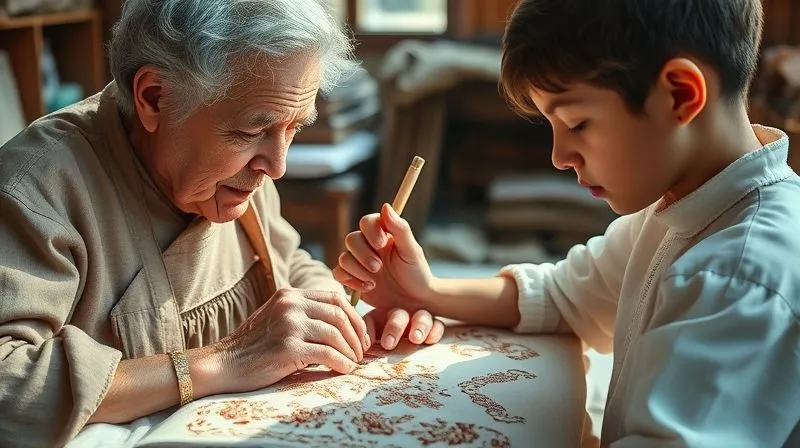
While digital archives are crucial, nothing replaces the direct transfer of skill. Mentorship programs are the bedrock of retaining unparalleled quality. I've seen brands thrive by investing deeply here.
Establish formal apprenticeship pathways where junior artisans are paired directly with masters for extended periods. This involves not just observing, but actively participating, under close supervision. Regular feedback loops, structured learning objectives, and milestone assessments are vital for successful knowledge transfer. This also fosters a sense of belonging and continuity within the atelier.
Standardization Without Sacrificing Soul: Crafting Protocols for Excellence
The word 'standardization' can sound anathema to haute couture, but it's about establishing benchmarks for unparalleled quality, not stifling creativity. It's about ensuring consistency in the foundational elements, freeing up creative energy for true innovation.
Develop rigorous, yet flexible, quality control protocols that are specific to your house's unique craftsmanship. These protocols should be co-created with your existing master artisans, capturing their subjective judgment in objective terms wherever possible. This includes defining acceptable tolerances for seam allowances, stitch density, fabric matching, and embellishment placement. Regular internal audits against these benchmarks become crucial.
| Process Area | Master Artisan Standard | Succession Protocol |
|---|---|---|
| Pattern Making | Hand-draped, bespoke fit, 0.5mm tolerance on key seams | Digital 3D pattern validation, expert review against 3D scan, 0.75mm tolerance during initial stages |
| Embroidery | Invisible knotting, uniform tension, seamless transitions between thread types | Microscope inspection for knotting, tension gauge checks, digital reference library for thread matching |
| Finishing & Pressing | Seamless edge, no puckering, fabric memory perfectly set | Thermal imaging for heat distribution, specific pressing templates, sensory checks by quality council |
Cultivating the Next Generation: Strategic Talent Identification and Nurturing
To retain unparalleled quality, you must continuously invest in your talent pipeline. This goes beyond simply hiring new staff; it's about identifying individuals with the innate aptitude for haute couture and nurturing their growth over years.
Internal Skill Development vs. External Recruitment
While external recruitment can bring fresh perspectives, the most effective strategy for preserving core craftsmanship is often internal development. Look for promising junior artisans who demonstrate meticulousness, patience, an eye for detail, and a deep respect for traditional techniques.
- Early Identification Program: Implement a system to identify high-potential individuals early in their careers within the atelier. Look for those who naturally gravitate towards complex tasks and show initiative in learning.
- Customized Development Plans: Work with identified talents to create personalized growth plans. These should include rotations through different departments, exposure to various masters, and specialized training workshops.
- External Masterclasses & Workshops: Supplement internal training with opportunities for artisans to attend high-level masterclasses from renowned experts outside your house. This broadens their skill set and exposes them to diverse perspectives while reinforcing core principles.
- Performance & Skill Assessment: Regularly assess the development of emerging talents against the benchmarks established by your masters. Provide constructive feedback and additional resources to address any gaps.
Leveraging Technology: When Tradition Meets Innovation
In haute couture, technology isn't meant to replace the human touch, but to augment it, ensuring precision and consistency that supports unparalleled quality. It's about smart integration, not wholesale automation.
I've seen forward-thinking houses use CAD (Computer-Aided Design) for intricate pattern making, allowing for precise adjustments and perfect symmetry before a single piece of fabric is cut. 3D printing can be invaluable for prototyping complex embellishments or hardware, allowing for rapid iteration and refinement without the cost and time of traditional methods. Digital pattern-making systems can store and recall precise measurements and alterations for bespoke clients, ensuring consistency across multiple fittings and future commissions.
Furthermore, virtual reality (VR) and augmented reality (AR) are beginning to play a role in training. Imagine an apprentice being able to 'overlay' a master's precise hand movements onto their own view while practicing a delicate stitch. This blend of tradition and innovation is key to evolving while preserving the core essence of craftsmanship. For more insights on technology's role in luxury fashion, consider resources like The Business of Fashion.
The 'Quality Council': Establishing an Internal Guardian of Craftsmanship
To institutionalize unparalleled quality, I strongly recommend establishing a 'Quality Council' or 'Atelier Guardians' committee. This isn't a bureaucratic body; it's a living embodiment of your brand's commitment to excellence.
This council should comprise senior artisans, department heads, and perhaps even a representative from the design team. Their role is to be the ultimate arbiters of quality, regularly reviewing finished pieces, assessing new techniques, and ensuring adherence to the house's standards. They also play a crucial role in mentoring emerging talent and in the continuous refinement of your quality protocols.
"Quality is not an act, it is a habit." – Aristotle. In the context of haute couture, this means instilling a collective responsibility for excellence, where every hand involved understands their role in upholding the brand's reputation.
Case Study: Elysian Atelier's Seamless Transition
Elysian Atelier, renowned for its intricate beadwork, faced a crisis when their 70-year-old master embroiderer announced her retirement. Instead of panic, they activated a pre-existing succession plan. For two years prior, a dedicated 'heir apparent' had worked side-by-side with the master, meticulously documenting techniques via video and 3D models. The atelier's Quality Council met weekly to review the apprentice's progress and compare her work against the master's benchmarks. When the master finally retired, the transition was so seamless that clients reported no discernible change in the unparalleled quality of the beadwork. This proactive approach, combining documentation with intensive mentorship and peer review, saved Elysian Atelier's signature craft.
Fostering a Culture of Continuous Learning and Adaptation
The world of fashion is ever-evolving, and even haute couture must adapt. Maintaining unparalleled quality isn't about rigid adherence to the past, but about continuous improvement rooted in core principles. Encourage experimentation within established boundaries and foster a culture where learning from mistakes is valued.
Regular workshops, cross-departmental skill-sharing sessions, and even external critiques can keep your atelier vibrant and innovative. As marketing guru Seth Godin often says, the best brands are those that continuously learn and adapt. This applies equally to the craft behind the brand. For more on fostering a learning culture, you might explore resources like Harvard Business Review.
Frequently Asked Questions (FAQ)
Q: How long does it typically take to train a new master artisan? A: The timeline varies significantly based on the complexity of the craft and the individual's aptitude, but generally, it's a multi-year process, often ranging from 5 to 10 years of dedicated mentorship and practice to reach a true master level in haute couture. It's an investment, not a quick fix.
Q: Can technology truly replace the 'feel' or intuition of a master artisan? A: No, not entirely. Technology can aid in precision, documentation, and even some aspects of training, but the innate artistic judgment, the 'feel' for materials, and the creative problem-solving of a master artisan remain uniquely human. Technology should be seen as a powerful tool to support and enhance, not replace, human skill.
Q: What if our master artisan is resistant to documenting their techniques? A: This is a common challenge. It requires a delicate, respectful approach. Emphasize that documentation is about preserving their legacy, not replacing them. Frame it as a way to ensure their unique contribution lives on. Offer incentives, involve them in the 'teaching' aspect, and ensure the process is collaborative and not intrusive. Building trust is paramount.
Q: How do we measure the 'unparalleled quality' to ensure it's retained? A: Measurement involves a blend of objective and subjective criteria. Objective metrics include adherence to technical specifications (stitch count, seam consistency), while subjective measures involve regular review by a 'Quality Council' (as discussed above), client feedback, and critical assessment by design directors against established aesthetic benchmarks. Consistency across all these aspects is key.
Q: Is it always necessary to have a dedicated apprentice for each master? A: While ideal for direct knowledge transfer, it's not always feasible. A more flexible model might involve a pool of highly skilled junior artisans who rotate through mentorships with different masters, gaining broad exposure before specializing. The key is consistent, structured interaction and learning.
Key Takeaways and Final Thoughts
Retaining unparalleled quality after a master artisan exits is one of the most significant challenges in haute couture. It demands foresight, strategic investment, and a deep respect for the craft. Here are the critical takeaways:
- Proactive Documentation: Start capturing tacit knowledge long before any departures are imminent, using a blend of video, 3D models, and detailed schematics.
- Invest in Mentorship: Formal apprenticeship and mentorship programs are the most effective way to transfer complex skills and preserve the human element of craftsmanship.
- Standardize Smartly: Implement quality protocols that define excellence without stifling the creative soul of your brand.
- Cultivate Talent: Continuously identify, train, and nurture the next generation of artisans with customized development plans.
- Embrace Technology Thoughtfully: Leverage tools like CAD and 3D printing to enhance precision and consistency, supporting rather than replacing human skill.
- Establish a Quality Council: Create an internal body dedicated to safeguarding and championing your brand's standards of excellence.
- Foster Learning: Cultivate an atelier culture that values continuous learning, adaptation, and shared knowledge.
The legacy of your haute couture house is built stitch by delicate stitch, year after year. The departure of a master artisan is a moment of truth, a test of your commitment to that legacy. By implementing these strategies, you not only ensure continuity but also strengthen the very foundation of your brand, guaranteeing that its unparalleled quality remains a beacon of excellence for generations to come. It's an ongoing journey, but one that defines true luxury.
Recommended Reading
- 7 Pro Tips: How to Pack Professional Fashion Accessories Without Damage
- 7 Proven Strategies: How to Reduce Excess Inventory of Unsold Teen Fashion Apparel?
- 5 Steps to Ethically Source Sustainable Fabrics for Streetwear Drops
- 7 Proven Strategies: Halting Fast Fashion's Replication of Couture Designs
- 7 Proven Strategies: Ensuring Beauty Tech Delivers Measurable Client Results



Your email address will not be published. Required fields are marked *