

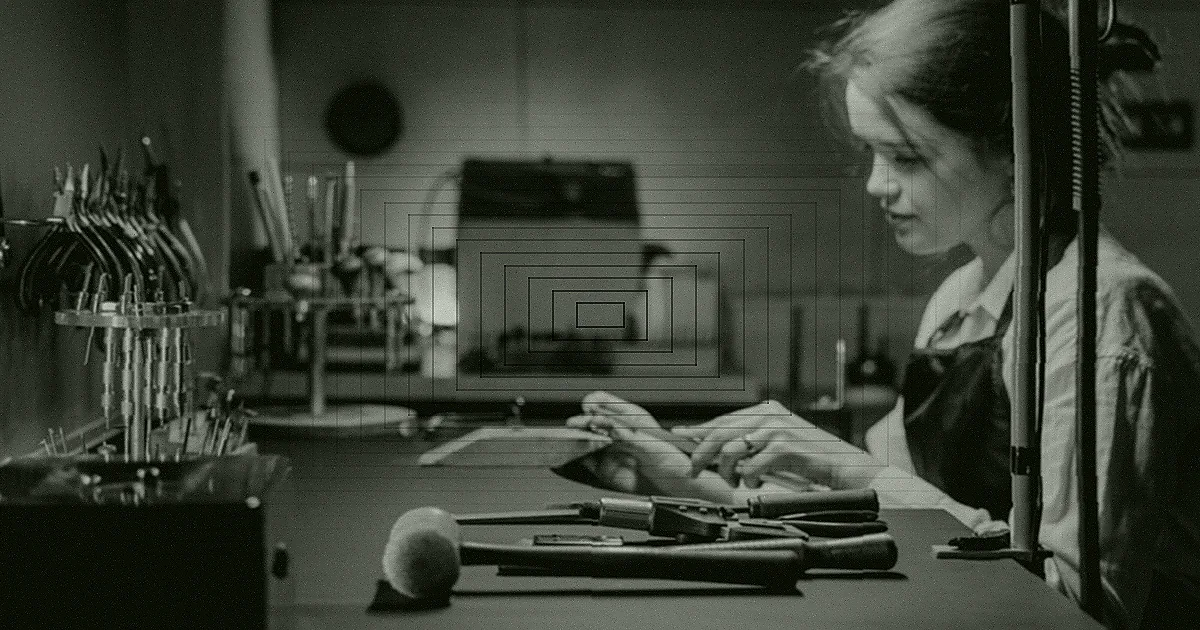
What to do when bespoke jewelry clients demand endless revisions?
For over two decades in the intricate world of bespoke jewelry design, I've witnessed the profound joy of bringing a client's dream to life – a unique piece that tells their story. But I've also seen a recurring challenge that can dim that joy, turning a passion project into a source of immense frustration and financial strain for designers: the seemingly endless cycle of client revisions.
This isn't just about a picky client; it's a systemic issue that often stems from misaligned expectations, unclear processes, and a lack of defined boundaries. It leads to burnout, eroded profit margins, and, most damagingly, a creative block that stifles the very essence of bespoke artistry. Designers pour their heart and soul into each piece, only to find themselves endlessly tweaking, often for no additional compensation.
In this definitive guide, I will share the strategies, frameworks, and hard-won wisdom I've accumulated to navigate this treacherous terrain. You'll learn not just to cope, but to thrive, by implementing proactive measures, mastering client communication, and valuing your expertise. We'll explore actionable solutions to ensure your bespoke jewelry projects remain profitable, creatively fulfilling, and respectful of your invaluable time.
The Root Cause: Why Clients Demand Endless Revisions
Before we can fix the problem, we must understand its origins. Clients don't typically set out to be difficult; their actions often stem from a combination of factors related to their emotional investment and a lack of clarity in the design process. As designers, recognizing these underlying causes empowers us to address them proactively rather than reactively.
Lack of Clarity and Communication
One of the primary drivers of endless revisions is often a fundamental disconnect in understanding. Clients may struggle to articulate their vision precisely, or designers might not fully capture the nuanced desires. This ambiguity at the outset creates a shaky foundation upon which the entire project rests, making it prone to shifting goalposts and subsequent revisions as the client's 'true' vision slowly emerges.
Emotional Investment & Decision Paralysis
Bespoke jewelry isn't just a purchase; it's often a deeply personal, emotionally charged investment. Whether it's an engagement ring, an anniversary gift, or a piece commemorating a significant life event, clients feel immense pressure to get it "perfect." This emotional weight can lead to indecision, second-guessing, and a fear of commitment, manifesting as continuous requests for minor alterations or even complete overhauls.
Undefined Process & Boundaries
Without a clear, structured design process and explicit boundaries, clients can feel empowered to demand changes indefinitely. If the designer doesn't outline when and how revisions occur, how many are included, and what constitutes an additional charge, the client will naturally assume flexibility is limitless. This lack of structure creates an open invitation for scope creep and revision fatigue.
"In bespoke design, the absence of a defined boundary is an invitation for endless exploration, often at the designer's expense. Clarity is not just a courtesy; it's a necessity for mutual respect and profitability."
Strategy 1: Fortify Your Foundation with an Ironclad Contract
From my experience, the single most powerful tool against endless revisions is a meticulously crafted contract. This isn't just a legal formality; it's a blueprint for the entire project, setting expectations and defining responsibilities for both parties. It’s the professional bedrock that protects your time, your profit, and your creative integrity.
Define Scope and Deliverables Explicitly
Your contract must clearly outline exactly what the client is purchasing. This includes the specific type of jewelry, materials, gemstones, design elements, and the number of design concepts to be presented. Ambiguity here is your enemy. Be as granular as possible, leaving no room for assumptions about what is or isn't included in the initial quoted price.
Revision Limits and Fee Structure
This is perhaps the most critical clause. Explicitly state the number of revision rounds included in the initial project fee (e.g., "up to two rounds of minor revisions on the CAD model"). Crucially, detail the cost for additional revisions beyond this limit. This clause acts as a powerful deterrent and ensures you're compensated for extra work. Specify what constitutes a "minor" versus a "major" revision, with major changes potentially incurring a new design fee or project restart fee.
Clear Approval Stages
Break down the project into distinct phases, each requiring explicit client approval before moving to the next. For example: concept approval, CAD model approval, wax model approval, and final sign-off before casting. Stipulate that once a stage is approved, subsequent changes to that stage may incur additional costs. This prevents clients from revisiting earlier decisions once significant work has been done.
"A strong contract isn't about distrust; it's about clarity. It transforms vague expectations into actionable agreements, protecting both the client's investment and the designer's valuable time."
For guidance on drafting robust legal agreements, I often advise consulting resources like legal templates for creative professionals or engaging with a specialized attorney. Forbes offers excellent insights into the importance of solid contracts for small businesses.
| Clause | Standard Inclusion | Additional Cost |
|---|---|---|
| Design Concept Revisions | 2 rounds of minor revisions on initial sketches/mood board. | Hourly rate of $X/hour or 15% of design fee per additional round. |
| CAD Model Revisions | 2 rounds of minor revisions on 3D CAD renders. | Hourly rate of $X/hour or 20% of design fee per additional round. |
| Wax Model/Prototype Revisions | 1 round of minor adjustments if required post-CAD approval. | Hourly rate of $X/hour plus material costs for new prototype. |
| Design Change Post-Approval | None. | Major design changes after CAD/wax approval may result in a new design fee or project restart at designer's discretion. |
Strategy 2: The Art of the Initial Consultation: Setting Expectations
The initial consultation is your first, best opportunity to shape the client's experience and manage their expectations. It's not just about gathering information; it's about establishing your expertise, defining the parameters of the collaboration, and building trust. Think of it as laying the psychological groundwork for a smooth process.
Active Listening and Vision Alignment
Beyond hearing what the client says, engage in active listening to understand the emotions and stories behind their requests. Ask probing questions: "What feeling do you want this piece to evoke?" or "Tell me about the person who will wear this." Use visual references, mood boards, and even existing jewelry pieces as benchmarks. The goal is to align your understanding of their vision as closely as possible from day one, minimizing subjective interpretation later on.
Educating the Client on the Bespoke Process
Many clients are unfamiliar with the complexities of bespoke jewelry creation. Take the time to walk them through your entire process, from initial sketch to final polish. Explain the technical limitations, the time commitment, and the sequential nature of design stages. Emphasize that each stage builds on the last and that significant changes later on can be costly and time-consuming. This education empowers them to make informed decisions and appreciate your expertise.
Visual Aids and Prototyping
Leverage visual tools early. Show examples of your past work, utilize mood boards with different styles and aesthetics, and discuss stone options with actual samples. If feasible, a simple sketch or even a rough physical prototype can bridge the gap between abstract ideas and tangible reality. The more concrete you can make the initial concept, the less room there is for misinterpretation.

"The first conversation is not just about ideas; it's about building a shared reality. When clients truly understand the journey, they respect its milestones and limitations."
Strategy 3: Structured Design Phases with Gated Approvals
A well-defined design process with clear, "gated" approval points is essential. Each gate represents a commitment from the client, locking down decisions before moving to the next, more labor-intensive stage. This systematic approach reduces the likelihood of clients revisiting earlier decisions and ensures progressive project advancement.
Concept Sketching & Mood Board Approval
Begin with conceptual work: sketches, mood boards, and material selections. Present 2-3 distinct directions based on the initial consultation. The client chooses one to develop further. Once approved, this concept becomes the foundation. Revisions at this stage are typically easier and less costly, so encourage thorough feedback here. This is where you confirm the overall aesthetic and direction.
CAD/Wax Model Presentation & Feedback Rounds
After concept approval, translate the chosen design into a detailed CAD model and high-fidelity renders, or a physical wax model. This is where the design truly takes shape. Present this with a clear explanation of how it aligns with the approved concept. Allow for the contractually agreed-upon number of revision rounds (e.g., two) specifically for minor adjustments to dimensions, stone settings, or surface details. Emphasize that approval at this stage means proceeding to production.
Final Design Sign-Off & Production Lock-Down
Once the CAD or wax model is approved, secure a final, explicit sign-off from the client. This is the moment of commitment. Clearly state that no further changes can be made without incurring significant additional costs, potentially requiring a complete restart of the production process. This "lock-down" is crucial for preventing late-stage scope creep and protecting your production schedule.
- Initial Consultation & Briefing: Understand client vision, establish budget, discuss timeline.
- Concept Development & Approval: Present sketches, mood boards. Client approves overall direction.
- Detailed CAD/Wax Design & Revision Rounds: Create 3D model/wax. Conduct up to 2 rounds of minor revisions.
- Final Design Approval & Sign-Off: Client gives explicit written approval for production.
- Production Phase: Casting, stone setting, finishing. No further design changes.
- Final Quality Check & Delivery: Present finished piece.
Implementing a structured approach like this is a fundamental principle in project management. As detailed by project management experts, clear phase gates are vital for controlling scope and managing stakeholder expectations. Harvard Business Review often discusses the importance of structured project phases in various industries, which is highly applicable to bespoke design.
Strategy 4: Mastering Communication: Feedback Protocols and Empathy
Effective communication is the lifeblood of any successful client relationship, especially in bespoke design. It's not just about what you say, but how you listen, interpret, and guide the conversation. Establishing clear feedback protocols coupled with genuine empathy can significantly reduce revision cycles.
Establishing a Clear Feedback Channel
Designate a primary method for feedback (e.g., email, scheduled video calls, in-person meetings). Avoid fragmented communication across multiple platforms (texts, DMs, random calls), which can lead to missed information and confusion. Request feedback in writing whenever possible, as it creates a clear record and encourages clients to articulate their thoughts more precisely.
Translating Vague Feedback into Actionable Steps
Clients often use subjective language: "It needs more sparkle," or "I want it to feel more elegant." Your role is to translate this into concrete design instructions. Ask clarifying questions: "When you say 'more sparkle,' do you mean larger diamonds, more pavé, or a different cut?" or "What specific elements make something 'elegant' to you?" Provide visual examples to guide their answers, helping them pinpoint exactly what they want rather than leaving it open to interpretation.
The Power of "No" (with alternatives)
Sometimes, a client's request is impractical, technically impossible, or compromises the integrity of the design or your brand. Learning to say "no" professionally and empathetically is crucial. Explain why a request isn't feasible, and always offer alternative solutions that achieve a similar desired effect. For example, "While we can't make the shank quite that thin without compromising its durability, we could taper it significantly and use a stronger alloy to give a similar delicate aesthetic."

"The most skilled designers don't just create; they interpret. They listen beyond the words, understand the emotion, and guide the client toward a tangible, achievable vision, even if it means gently steering them away from impractical requests."
Strategy 5: Pricing for Profitability: Valuing Your Time and Expertise
One of the hardest lessons I learned early in my career was that underpricing my work meant subsidizing endless revisions. Your pricing strategy must reflect not just the materials and labor, but also your design expertise, the time spent on client management, and the inherent value of a custom piece. This is where many designers falter, leading to significant profit erosion.
Transparent Pricing Models: Hourly vs. Project-Based
Consider whether an hourly rate or a project-based fee is more appropriate for your bespoke work. For highly unpredictable projects, an hourly rate (with an estimated range) might be safer. However, for most bespoke pieces, a project-based fee, clearly itemizing design, materials, and labor, works best – but it must factor in your projected time for revisions. Always be transparent about what's included and what incurs extra charges.
Charging for Additional Revisions: The 'Over-Allowance' Fee
As discussed in the contract section, this is non-negotiable. Once the included revision rounds are exhausted, additional changes must trigger an additional fee. Communicate this clearly and firmly. You might charge an hourly rate for extra design time, or a flat fee per additional round. This not only compensates you but also encourages clients to be more decisive and thoughtful with their feedback, knowing their requests have a tangible cost.
The Cost of Indecision: Educating the Client
Help clients understand the financial implications of their indecision. Explain that late-stage changes can mean re-ordering materials, re-casting, or significant additional labor, all of which have direct cost impacts. Frame it as protecting their investment by making timely decisions. This isn't about shaming them, but about respectful education on the realities of the production process.
Case Study: "Gemstone Dreams" Studio Reduces Revision Overload
Gemstone Dreams, a bespoke jewelry studio specializing in unique engagement rings, faced significant profit drains due to clients demanding 5-7 revision rounds on average. Their owner, Anya, implemented two key changes: First, she revised her contracts to include a strict "2 CAD revisions, then hourly rate" clause. Second, she introduced a mandatory "Vision Alignment Workshop" as part of the initial consultation, where clients spent an hour with her exploring design aesthetics using physical samples and mood boards. Within six months, their average revision rounds dropped to 2.5, significantly boosting their per-project profitability and reducing designer burnout. This resulted in a 20% increase in net profit per bespoke piece and greater job satisfaction for her team.
Understanding the economics of your design process is crucial. Articles from business resources like Inc.com provide valuable insights into pricing strategies that ensure profitability for creative businesses.
| Pricing Model | Pros | Cons | Best For |
|---|---|---|---|
| Flat Project Fee | Predictable for client, simplifies billing, encourages efficiency. | Risk of underpricing if scope creep occurs, harder for highly ambiguous projects. | Well-defined projects with clear deliverables and revision limits. |
| Hourly Rate | Compensates for all time spent, flexible for evolving projects. | Less predictable for client, can feel open-ended, may disincentivize client efficiency. | Projects with evolving requirements, or when the client values flexibility over fixed cost. |
| Hybrid (Flat + Hourly Overages) | Balances predictability with protection, ensures fair compensation for extra work. | Requires clear definition of base scope and overage triggers. | Most bespoke jewelry projects, combining the best of both models. |
Strategy 6: Leveraging Technology: CAD, Renders, and Virtual Prototyping
Modern technology has revolutionized how bespoke jewelry is designed and approved. Harnessing tools like Computer-Aided Design (CAD) software, high-fidelity rendering, and even 3D printing can dramatically reduce the need for physical revisions by providing clients with incredibly accurate pre-visualizations. This is about making the invisible, visible, long before precious metals are cut.
High-Fidelity Renders for Pre-Visualization
CAD software allows you to create photorealistic images of the proposed jewelry piece from multiple angles, often indistinguishable from actual photographs. These renders can showcase different metal finishes, stone types, and even how the piece would look on a hand. Presenting these detailed visuals helps clients truly understand the final product, allowing them to make informed decisions and identify potential issues early, before any physical production begins.
3D Printing for Tactile Feedback
Beyond digital renders, creating a physical resin or wax model using 3D printing offers an unparalleled level of feedback. Clients can hold the piece, feel its weight, assess its proportions, and even try it on. This tactile experience often resolves lingering doubts or abstract concerns, as they can physically interact with a tangible representation of their design. It's a powerful way to bridge the gap between imagination and reality.
Virtual Try-On Experiences (if applicable)
Some advanced platforms and software are beginning to offer virtual try-on experiences, using augmented reality (AR) to overlay a 3D model of the jewelry onto a client's hand or body via a smartphone camera. While still emerging for bespoke, this technology holds immense potential for future client approvals, allowing for a highly immersive pre-purchase experience that minimizes uncertainty.

"Technology isn't just a tool for creation; it's a powerful bridge for communication. High-fidelity visualizations eliminate guesswork, transforming abstract ideas into concrete realities that clients can confidently approve."
Strategy 7: The Psychological Edge: Guiding Client Decisions
Beyond contracts and communication, understanding basic human psychology can be a game-changer in managing client expectations and guiding them toward decisive approvals. As designers, we are not just creators but also facilitators of decisions.
Limiting Choices (The Paradox of Choice)
While clients appreciate options, too many can lead to decision paralysis and an endless loop of "what ifs." Instead of presenting 10 different stone shapes or 5 distinct design directions, curate 2-3 of the strongest, most relevant options. Frame these choices clearly, highlighting the pros and cons of each. This helps clients focus and feel confident in their selection, rather than overwhelmed by an abundance of possibilities. As Barry Schwartz eloquently argues in "The Paradox of Choice," more options don't always lead to greater satisfaction; often, they lead to anxiety and regret.
Anchoring and Framing Techniques
Use anchoring to your advantage. When discussing pricing for revisions, for example, frame the cost of additional changes against the original value and complexity of the piece. You might say, "Given the intricacy of this design, the cost for an additional revision round is X, which ensures we maintain the highest quality without impacting the original timeline." Framing the discussion around quality and efficiency can make the cost seem more reasonable. Similarly, when presenting options, subtly 'anchor' their attention to your preferred (or most suitable) design by presenting it first or highlighting its benefits more prominently.
Building Trust and Rapport
Ultimately, a client who trusts you implicitly is less likely to demand endless revisions. Trust is built through consistent professionalism, clear communication, delivering on promises, and demonstrating genuine care for their vision. When clients feel you are truly invested in creating their perfect piece and have their best interests at heart, they are more likely to defer to your expert judgment and be decisive in their approvals.

The psychology behind decision-making is a rich field. Understanding concepts like the paradox of choice can profoundly impact how you interact with clients. For more insights, I recommend exploring resources that delve into behavioral economics and consumer psychology, such as articles found on sites like The American Psychological Association or books on the subject.
Frequently Asked Questions (FAQ)
Q: What if a client insists on a complete redesign after the CAD approval stage? This is precisely why your contract needs explicit clauses. Politely remind them of the signed agreement and the associated costs for significant changes at this late stage. Explain that a complete redesign constitutes a new project, and you'd be happy to discuss a new proposal and timeline, but that the current project is locked for production. Offer to put the current project on hold while they consider, but do not proceed without a new agreement and payment for the new scope.
Q: How do I handle a client who becomes emotional or aggressive when I enforce revision limits? Remain calm and professional. Reiterate that your process is in place to ensure the highest quality and timely delivery for all clients, and that the terms were mutually agreed upon. Empathize with their desire for perfection, but firmly state your boundaries. If the situation escalates, consider bringing in a third party (e.g., a senior colleague if you're part of a larger studio) or, in extreme cases, respectfully declining to continue the project, refunding any portion due per your contract terms. Document all communications.
Q: Should I offer a "premium" package with unlimited revisions? While it might seem appealing, "unlimited" often translates to "unprofitable." If you choose to offer such a package, ensure its price point is exceptionally high to genuinely cover the potential for extensive additional work. More importantly, define "unlimited" – does it mean unlimited rounds of minor changes, or unlimited major changes? I generally advise against it, as it rarely benefits the designer and can still lead to client dissatisfaction if their expectations of "unlimited" exceed what's practical or possible. Focus on structured, limited revisions with clear costs for overages instead.
Q: How can I prevent clients from "shopping around" with my designs once I've provided sketches or CADs? Your contract should explicitly state that all intellectual property (designs, sketches, CAD files) remains yours until full payment and final delivery of the physical piece. Include a clause that prohibits the client from using your designs or concepts to solicit bids from other jewelers. Consider requiring a non-refundable design fee upfront that covers your initial creative work, regardless of whether they proceed with you for production. Watermarking digital files can also be a deterrent.
Q: What if a client is simply indecisive and can't make up their mind even with limited options? This often points to decision paralysis. In such cases, gently guide them by re-emphasizing their initial vision and motivations. Ask them to prioritize what's most important to them in the piece. You might need to make a strong recommendation as the expert: "Based on your desire for X and Y, I strongly recommend option A because it best achieves these goals while maintaining the integrity of the design." Sometimes, clients need you to make the final push. If indecision persists beyond the agreed-upon revision limits, the additional revision fee will naturally encourage a decision.
Key Takeaways and Final Thoughts
Navigating the intricate dance of bespoke jewelry design, particularly when clients demand endless revisions, is a challenge every designer faces. But it doesn't have to be a source of constant stress or financial drain. By implementing the strategies we've discussed, you can transform your design process into one that is both creatively fulfilling and financially sustainable.
- Fortify with Contracts: An ironclad contract is your first line of defense, explicitly defining scope, revisions, and costs.
- Master the Consultation: Set clear expectations and build trust from day one through active listening and client education.
- Structure Your Process: Implement gated approval phases to lock down decisions progressively, preventing late-stage changes.
- Communicate with Precision: Establish clear feedback channels and learn to translate vague requests into actionable design steps.
- Price for Profit: Value your expertise by incorporating revision costs into your pricing model and charging for overages.
- Leverage Technology: Utilize CAD, renders, and 3D printing for superior visualization and early problem detection.
- Employ Psychology: Guide client decisions by limiting choices, framing options, and building unwavering trust.
Remember, your bespoke jewelry studio is a business built on passion, skill, and unique artistry. Protecting your time and valuing your expertise isn't just about financial health; it's about preserving your creative spirit. By proactively managing client expectations and establishing clear boundaries, you'll not only deliver stunning, personalized pieces but also foster a more respectful, efficient, and ultimately more enjoyable design journey for both yourself and your cherished clients. Take control of your process, and watch your business, and your passion, truly shine.
Recommended Reading
- 7 Strategies to Slash Biodegradable Fabric Scaling Costs & Boost Innovation
- Unlock Your Vision: Solving Creative Blocks in Fashion Shoot Direction Once and For All
- Unlock Youthful Radiance: 7 Proven Pillars of Anti-Aging Beauty
- Unlock Deeper Rest: How Blue Light Glasses Transform Executive Sleep
- Haute Couture as Art: 7 Proven Strategies for Elite Collectors




Your email address will not be published. Required fields are marked *