


How to Reduce Warranty Claims Linked to Specific Eyewear Materials?
For over two decades in the dynamic world of eyewear fashion, I've seen countless brilliant designs and innovative brands launch with immense potential, only to be undermined by a silent, insidious drain: persistent warranty claims. Often, the root cause isn't a design flaw or a manufacturing oversight in general, but a specific, recurring issue tied directly to the materials chosen and how they're managed.
This problem isn't just a minor annoyance; it's a significant erosion of profit margins, a dent in brand reputation, and a continuous source of operational headaches. The cost of processing a single warranty claim, from return shipping to replacement and administrative overhead, can quickly outweigh the initial profit of several sales, creating a negative cycle that's hard to break.
In this definitive guide, I will share the actionable frameworks, hard-won insights, and strategic approaches I've developed and witnessed succeed in the industry. My goal is to equip you with the knowledge to not just react to warranty claims, but to proactively prevent them, specifically by mastering your eyewear materials.
The Hidden Costs of Material-Related Warranty Claims
Before we dive into solutions, let's truly understand the magnitude of the problem. Material-related warranty claims are more than just a line item on an expense report; they represent a multifaceted drain on your business. I've observed companies underestimate these costs time and again, focusing solely on the direct replacement cost and overlooking the broader impact.
- Direct Financial Losses: This includes the cost of the replacement product, shipping both ways, labor for processing returns, and often, the loss of the original sale's profit.
- Reputational Damage: Each claim is a negative customer experience. In today's interconnected world, negative reviews and word-of-mouth can spread rapidly, eroding trust and discouraging potential new customers. A brand known for durable, high-quality eyewear builds loyalty; one plagued by material failures struggles to retain it.
- Operational Inefficiencies: Processing returns diverts valuable resources – staff time, warehouse space, and logistical efforts – away from core business activities like sales, marketing, and product development. This creates bottlenecks and increases overall operational costs.
- Loss of Customer Lifetime Value (CLV): A customer who experiences a material failure is less likely to make a repeat purchase. The long-term value of that customer, including future sales and referrals, is often lost.
- Strained Supplier Relationships: Frequent claims can lead to difficult conversations with suppliers, potential disputes, and a breakdown in trust, making future collaborations challenging.
"In my experience, addressing material-related warranty claims isn't just about saving money; it's about safeguarding your brand's integrity and securing its long-term future in a competitive market."
Decoding Material Failure: A Forensic Approach
To effectively reduce warranty claims, you must first understand *why* materials fail. This requires a systematic, almost forensic, approach to analyzing returned products. It's not enough to simply note 'broken frame'; you need to pinpoint the specific failure mode and link it back to the material properties and manufacturing process.
Common Failure Modes by Eyewear Material
Each material has its unique strengths and weaknesses, and understanding these is paramount. I've categorized common issues I've observed across various popular eyewear materials:
| Material Type | Common Failure Modes | Contributing Factors |
|---|---|---|
| Acetate (Cellulose Acetate) | Brittleness/Snapping (especially at stress points), Discoloration/Fading, Delamination (layers separating), Poor Screw Retention | Improper curing, excessive heat exposure, low-quality plasticizer, poor joint design, inadequate polishing. |
| Metal (Titanium, Stainless Steel, Monel) | Fatigue fractures (especially at hinges/welds), Corrosion/Tarnishing, Plating peeling, Spring hinge failure | Insufficient annealing, improper welding/brazing, poor surface treatment, low-grade alloys, excessive stress on thin sections. |
| TR90 (Grilamid TR90) | Brittle fracture (cold temperatures), Deformation/Warping (high temperatures), Surface scratching, Hinge loosening | Improper injection molding parameters, inadequate UV stabilizers, poor quality virgin polymer, design too thin in critical areas. |
| Nylon (Polyamide) | Stress cracking, poor dimensional stability (warping), surface degradation | Exposure to certain chemicals, UV degradation, improper molding, design with sharp internal corners. |
| Wood/Bamboo | Splitting, delamination, moisture damage, hinge failure due to material softness | Improper sealing/finishing, inadequate wood treatment, poor lamination techniques, unsuitable hinge integration. |
When a product is returned, don't just replace it. Document it meticulously. Photograph the failure point. Attempt to replicate the failure under controlled conditions if possible. This data is your goldmine for preventing future issues.
Proactive Material Selection and Supplier Vetting
The journey to reducing warranty claims begins long before a product hits the market – it starts with the careful selection of your materials and the diligent vetting of your suppliers. I've consistently seen that cutting corners here inevitably leads to higher costs down the line.
- Define Material Specifications Rigorously: Don't just ask for 'acetate.' Specify the exact grade, density, flexural strength, heat deflection temperature, UV resistance, and chemical resistance required for your design. Work with material scientists if necessary.
- Multi-Tiered Supplier Vetting: Beyond price, evaluate suppliers on their quality control processes, certifications (e.g., ISO 9001), material sourcing transparency, and track record. Request material data sheets (MDS) and Certificates of Analysis (COA) for every batch.
- Pilot Batch Testing: Before committing to large-scale production, always order a pilot batch. Subject these samples to your own rigorous in-house testing, mirroring real-world conditions as closely as possible.
- Audit Supplier Facilities: Whenever feasible, conduct physical audits of your suppliers' manufacturing facilities. Observe their QC procedures, storage conditions for raw materials, and overall operational cleanliness. This provides invaluable insight into their commitment to quality.
- Establish Clear Communication Channels: Set up regular communication protocols with your suppliers. Discuss material performance, potential issues, and upcoming design changes. A collaborative relationship fosters trust and proactively addresses problems.
According to a report by Deloitte on supply chain resilience, companies that invest in robust supplier relationship management and risk assessment are significantly better positioned to mitigate disruptions and quality issues. This principle holds especially true for material quality in eyewear.
Implementing Robust Quality Control & Testing Protocols
Even with the best materials and suppliers, a robust internal quality control system is your last line of defense. This isn't about catching every single defect, but about establishing a system that statistically minimizes the likelihood of defective products reaching your customers.
Enhanced Incoming Material Inspection
Your QC process should begin the moment raw materials or components arrive at your facility (or your manufacturer's). Don't assume perfection. Implement a sampling plan (e.g., AQL - Acceptable Quality Limit) to inspect a statistically significant portion of each incoming batch. Check for: dimensional accuracy, color consistency, surface defects, and material integrity. For critical components like hinges, consider performance tests.
In-Process Quality Checks
Quality isn't inspected in; it's built in. Regular checks at various stages of the manufacturing process – from initial cutting or molding to polishing, assembly, and final inspection – are crucial. This helps identify and rectify issues early, preventing waste and ensuring consistency. Empower your production line staff to stop the line if they detect a recurring material-related flaw.
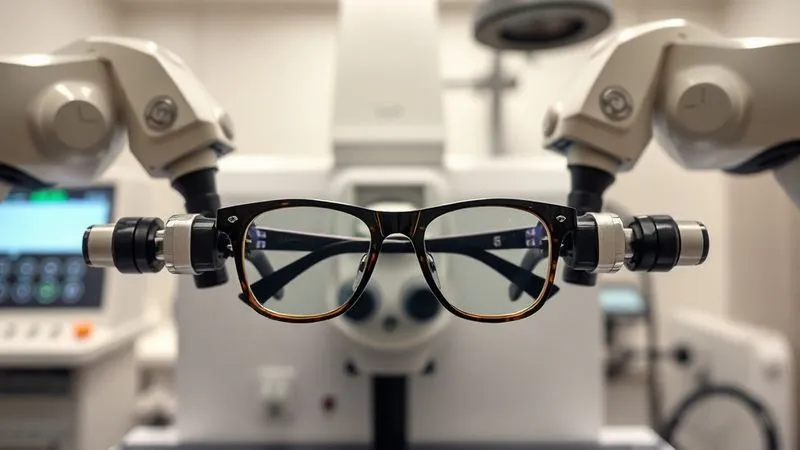
Accelerated Life Cycle Testing (ALT)
This is where you push your eyewear to its breaking point, simulating years of wear and tear in a condensed timeframe. ALT can involve:
- Drop Tests: Simulate accidental drops from various heights onto different surfaces.
- Flexural Fatigue Tests: Repeatedly bending temples or frames to assess material fatigue and hinge durability.
- Temperature Cycling: Exposing frames to extreme hot and cold temperatures to test material stability and joint integrity.
- UV Exposure Tests: Simulating prolonged sun exposure to check for color fading, material degradation, and brittleness.
- Chemical Resistance Tests: Applying common chemicals (e.g., sunscreen, hairspray, sweat) to test material reaction.
The Power of Data: Analytics for Predictive Prevention
In my career, the most successful brands have been those that treat warranty data not as an unfortunate consequence, but as a rich source of actionable intelligence. Simply put, if you don't know *what* is failing, *where*, and *why*, you can't fix it. This is where robust data analytics becomes your most powerful tool.
Tracking Warranty Data with Precision
Implement a system – whether it's a sophisticated CRM, a dedicated warranty management software, or even a well-structured spreadsheet – to meticulously log every single warranty claim. Crucial data points include:
- Date of purchase and date of claim
- Specific product model and batch number
- Detailed description of the failure (e.g., 'left temple snapped at hinge,' 'lens coating peeling,' 'frame discolored')
- Reported cause (if provided by customer or technician)
- Material of the failed component
- Location of sale (retailer, online, region)
- Categorize Failure Types: Develop a standardized taxonomy for material-related failures. Instead of 'broken,' use 'Acetate: temple snap at hinge point,' 'Titanium: weld fatigue on bridge.' This granular detail is vital.
- Identify Patterns and Trends: Analyze the data for recurring issues. Is a particular material failing more often in a specific model? Is a certain batch of frames experiencing an unusual number of claims? Are claims spiking after a change in supplier or manufacturing process?
- Correlate with Production Data: Link warranty data back to your production records. Which supplier provided the material for that batch? Which machine processed it? This helps pinpoint the exact origin of the defect.
- Calculate Failure Rates by Material/Model: Quantify the problem. Knowing that Model X, made with Material Y, has a 3% warranty claim rate compared to the industry average of 0.5% provides a clear target for improvement.
Case Study: How 'Luxe Optics' Slashed Acetate Frame Claims
Luxe Optics, a premium eyewear brand, faced a rising tide of warranty claims related to their popular acetate frames – specifically, temples snapping near the hinge. Their initial approach was reactive, simply replacing frames. However, by implementing the data analytics framework I've described, they discovered a critical pattern:
Their data showed a disproportionate number of claims originated from frames produced in Q3 of the previous year. Further investigation, correlating warranty data with production logs, revealed that during that quarter, they had temporarily switched to a new, cheaper acetate supplier due to supply chain issues. The material from this supplier had a slightly different chemical composition and lower flexural strength than their usual high-grade acetate.
By identifying this specific material and supplier link, Luxe Optics immediately ceased using the substandard material, recalled any unsold frames from that batch, and re-established their stringent material specification and testing protocols with their primary supplier. Within six months, their acetate frame warranty claims dropped by over 60%, saving them hundreds of thousands in replacement costs and preserving their luxury brand image. This resulted in a significant improvement in customer satisfaction and a stronger, more resilient supply chain.
Design for Durability: Engineering Out Weaknesses
Sometimes, the material itself isn't inherently flawed, but its application within the design creates a vulnerability. As an expert, I've often advised designers and engineers to think beyond aesthetics and consider the long-term structural integrity of their eyewear.
Material Thickness & Reinforcement
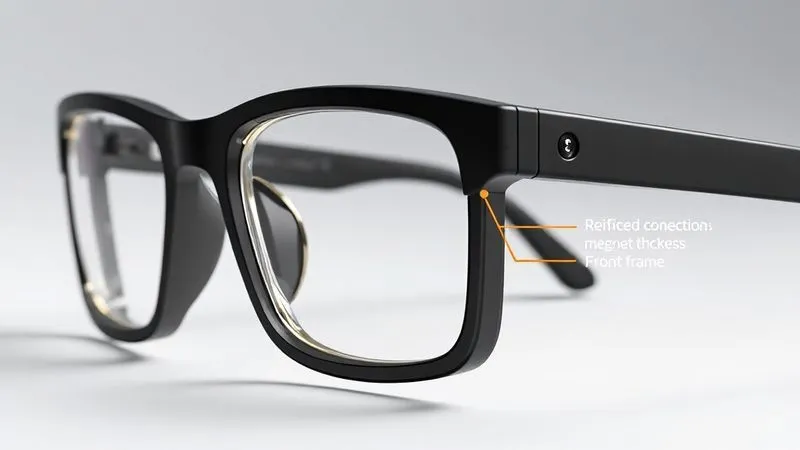
Thin sections, especially in acetate or plastic frames, are natural stress concentrators. Evaluate if slightly increasing material thickness in critical areas (e.g., temple ends, bridge connections) could significantly improve durability without compromising aesthetics or adding excessive weight. For metal frames, consider reinforcing weld points or using stronger alloys in high-stress zones.
Hinge and Joint Design Optimization
Hinges are arguably the most vulnerable point on any pair of glasses. Many material failures occur around the hinge due to repeated stress. This isn't always a material defect but a design flaw in how the hinge is integrated or the forces it's expected to withstand.
- Anchoring: Ensure hinges are securely anchored within the frame material, whether through embedded metal cores, robust riveting, or integrated molding.
- Stress Distribution: Design the surrounding material to distribute stress evenly, avoiding sharp angles or abrupt changes in thickness that can create weak points.
- Spring Hinge Quality: If using spring hinges, specify high-quality springs and ensure their housing is robust and doesn't put undue pressure on the frame material over time.
Empowering Your Team: Training and Feedback Loops
Your team, from design to sales, plays a crucial role in preventing warranty claims. I've found that informed and empowered employees are your best advocates for quality and durability.
- Material Science Training: Educate your design, production, and quality control teams on the properties, limitations, and best practices for working with each material. Understanding why acetate can become brittle or why titanium needs specific welding techniques is invaluable.
- Product Knowledge for Sales Staff: Train your sales associates to understand the durability features of different materials. They can then guide customers to eyewear that best suits their lifestyle, reducing mismatches that lead to premature wear and tear. They can also educate customers on proper care, which can extend product life.
- Customer Service Feedback: Ensure your customer service team is trained to capture detailed information about warranty claims. They are on the front lines and hear the unfiltered feedback. Establish a clear process for this feedback to be escalated to design, production, and quality control teams.
- Continuous Improvement Culture: Foster an environment where identifying problems and suggesting solutions is encouraged, not penalized. Regular cross-departmental meetings to review warranty data and brainstorm preventative measures can be incredibly effective.
"The collective intelligence of your team, when properly channeled through effective feedback loops, is an unmatched asset in the continuous battle against material-related failures."
As Harvard Business Review often emphasizes, empowering employees and fostering a culture of continuous learning and feedback directly contributes to operational excellence and product quality.
Frequently Asked Questions (FAQ)
Question: What's the most common material-related warranty claim you've encountered in eyewear?
Answer: In my extensive experience, hinge-related failures, particularly on acetate and plastic frames, are incredibly common. This often isn't just a hinge defect but a material failure around the hinge's anchoring point, caused by repeated stress or improper design integration. For metal frames, it's often fatigue fractures at weld points or plating issues.
Question: Is it always about choosing the 'strongest' material to reduce claims?
Answer: Not necessarily. While strength is important, it's about choosing the *right* material for the specific application and design intent, and then ensuring its quality and proper processing. For example, a flexible TR90 frame might be less prone to impact breakage than a rigid acetate frame, but it might warp under high heat. Durability is a balance of material properties, design, and manufacturing quality, not just brute strength.
Question: How can small brands without large R&D budgets implement effective material testing?
Answer: Small brands can start by leveraging their suppliers' testing data and certifications. Beyond that, focus on practical, in-house accelerated life cycle testing with simple jigs that simulate common stresses (e.g., repeatedly opening/closing temples). User trials with a trusted group can also provide valuable feedback. Consider partnering with a specialized third-party testing lab for critical validation tests, which can be more cost-effective than building your own lab.
Question: How often should I review my material suppliers and their quality?
Answer: I recommend a formal review at least annually, but ongoing monitoring is essential. If you see a sudden spike in material-related warranty claims, that should trigger an immediate, in-depth review of the implicated material supplier. Regular communication and spot-checks are also vital for maintaining consistent quality.
Question: Can customer education play a role in reducing material claims?
Answer: Absolutely! While you can't prevent all misuse, educating customers on proper care (e.g., avoiding extreme temperatures, using a case, cleaning methods) can significantly extend the life of their eyewear and reduce claims related to neglect or improper handling. This is especially true for delicate materials like wood or specialized coatings.
Key Takeaways and Final Thoughts
Reducing warranty claims linked to specific eyewear materials is not a quick fix; it's a strategic imperative that requires a holistic approach across your entire value chain. From the initial design concept to post-sales support, every step offers an opportunity to build in durability and mitigate risk.
- Embrace Data: Your warranty claims are not just complaints; they are invaluable data points waiting to be analyzed for patterns and root causes.
- Vet Relentlessly: Be uncompromising in your material selection and supplier vetting. Quality starts at the source.
- Test Rigorously: Implement comprehensive quality control and accelerated life cycle testing to proactively identify weaknesses.
- Design Smart: Engineer durability into your products, considering material properties and stress points from the outset.
- Empower Your Team: Educate and involve your entire team in the pursuit of quality, from design to customer service.
By adopting these strategies, you won't just reduce your warranty claims; you'll enhance your brand's reputation, foster deeper customer loyalty, and ultimately, build a more resilient and profitable eyewear business. The investment in quality always pays dividends in the long run.
Recommended Reading
- 7 Proven Ways to Stop Costume Jewelry Allergic Reactions & Irritation
- 7 Ways to Revitalize Your Outdated Tailored Suit (Still Fits!)
- Ultimate Guide: Best Men's Wallet Styles For Minimalist Carry
- 7 Strategies to Pivot Eyewear Stock When a Trend Dies Suddenly
- 7 Practical Steps: Sustainable Fast Womenswear Cycles Revealed





Your email address will not be published. Required fields are marked *