

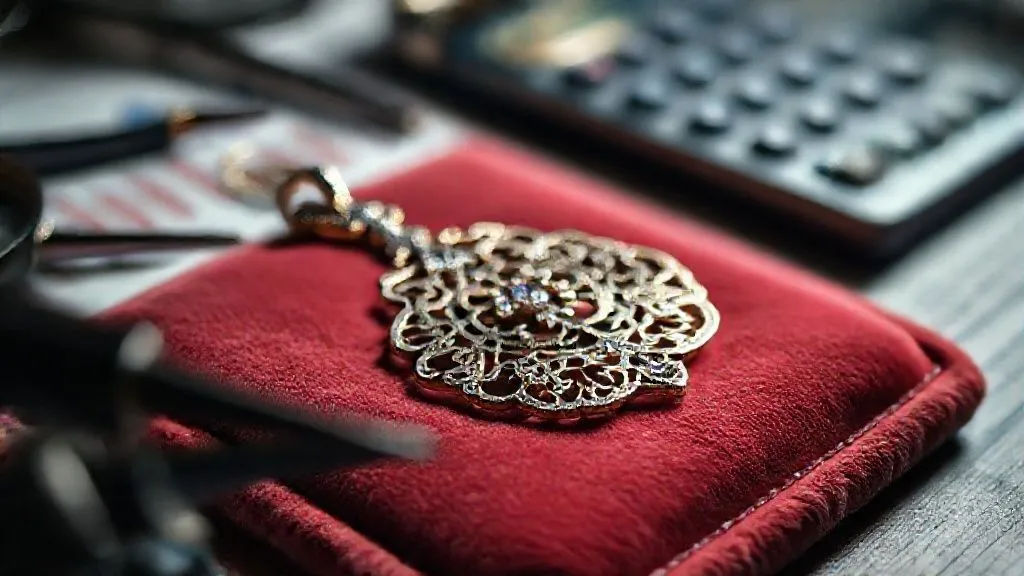
How to ensure profit on labor-intensive custom jewelry designs?
For over two decades in the bespoke jewelry industry, I've witnessed firsthand the incredible passion and unparalleled skill that goes into creating truly unique, labor-intensive custom pieces. It’s a calling, an art form, and for many, a dream business. Yet, I've also seen countless talented designers and jewelers struggle, their passion slowly eroded by financial strain. The core issue? A fundamental misunderstanding of how to accurately value, price, and manage the intricate, time-consuming nature of custom work.
The problem is pervasive: designers pour their heart and soul into a piece, spending countless hours perfecting every detail, only to realize at the end that their profit margin is razor-thin, or worse, non-existent. This isn't just about covering material costs; it's about valuing your unique creative vision, your years of honed skill, and the meticulous labor involved in bringing a client's dream to life. The emotional investment often overshadows the financial acumen required for sustainable growth.
In this definitive guide, I'll share the actionable frameworks, real-world insights, and expert strategies I've developed and refined over my career. You'll learn not just how to cover your costs, but how to truly ensure profit on labor-intensive custom jewelry designs, transforming your passion into a thriving, financially rewarding enterprise. We'll delve into everything from precise costing to strategic pricing models, workflow optimization, and mastering client communication, ensuring every bespoke creation contributes positively to your bottom line.
The Foundation: Accurate Costing & Value Perception
Before you can even think about profit, you must understand your true costs. This goes far beyond the price of gold or a gemstone. In custom, labor-intensive jewelry, your time, expertise, and operational overhead are often the most significant, yet most frequently undervalued, components.
Beyond Materials: Quantifying Your Time and Expertise
Your time is your most valuable asset. Failing to track it meticulously is like leaving money on the table. Every minute spent sketching, sourcing, communicating, fabricating, and finishing needs to be accounted for. This isn't just for pricing; it's for understanding the true efficiency of your process.
- Implement Robust Time Tracking: Use a digital tool (e.g., Harvest, Toggl, Clockify) or even a simple spreadsheet to log every minute spent on a project. Break it down by task: design, CAD, wax carving, casting prep, setting, polishing, client communication, administrative tasks.
- Establish an Hourly Rate: Determine a realistic hourly rate for your labor. This rate should not just cover your desired income but also contribute to your business's operating expenses and profit margin. Don't undervalue your specialized skills; a master jeweler's time is worth significantly more than minimum wage.
- Factor in Design Fees: For complex custom work, a non-refundable design fee is crucial. This compensates you for the initial creative conceptualization, sketches, and consultations, even if the project doesn't proceed to fabrication.
"The biggest mistake I've seen jewelers make is treating their time as an infinite resource. It's finite, it's valuable, and it must be priced accordingly. Your expertise isn't free; it's a premium component of your offering."
Understanding Your True Overhead
Overhead costs are the silent killers of profitability if not properly allocated. These are the expenses incurred regardless of whether you're working on a specific piece. Ignoring them means every piece you sell is subsidizing your business, rather than contributing to its growth.
Think about rent, utilities, insurance, marketing, website maintenance, software subscriptions, tools and equipment depreciation, and even your annual professional development. These must be absorbed by your sales. A common approach is to calculate an 'overhead recovery rate' per hour or per project.
| Overhead Category | Monthly Cost |
|---|---|
| Studio Rent/Mortgage | $1,500 |
| Utilities (Electricity, Water, Gas) | $300 |
| Insurance (Business, Liability) | $150 |
| Marketing & Advertising | $200 |
| Software Subscriptions (CAD, CRM) | $100 |
| Tool Maintenance & Depreciation | $75 |
| Professional Development/Training | $50 |
| Miscellaneous Supplies | $125 |
| Total Monthly Overhead | $2,500 |
To accurately integrate overhead into your pricing, you first need to sum your total monthly or annual overhead. Then, estimate your productive working hours for that same period. Dividing total overhead by productive hours gives you an hourly overhead burden. This rate should be added to your labor rate. For more detailed guidance, consider resources like Harvard Business Review on pricing strategy, which often touch upon the importance of comprehensive cost analysis.

Strategic Pricing Models for Bespoke Work
Once you know your costs, the next critical step is to apply a pricing model that ensures profitability without alienating your target market. For 'How to ensure profit on labor-intensive custom jewelry designs?', this isn't a one-size-fits-all solution; it requires nuance.
The "Cost-Plus" Fallacy and Why it Fails Custom Jewelry
Many jewelers default to a simple 'cost-plus' model: total materials + total labor + overhead + a fixed percentage markup. While straightforward, this approach severely undervalues custom work. It focuses purely on inputs, ignoring the unique value, artistry, and emotional connection a bespoke piece offers. It also fails to account for market demand, brand prestige, or the client's perceived value. This often leads to underpricing complex pieces and leaving significant profit on the table.
Value-Based Pricing: Aligning Price with Perceived Worth
Value-based pricing is the cornerstone of profitability for custom, labor-intensive jewelry. It means setting prices primarily based on the client's perceived value of the product, rather than solely on your costs. This requires understanding your target client, their budget, and what they truly value in a custom piece.
- Understand Your Client's Budget & Expectations: During initial consultations, gently probe their budget range. This isn't about setting your price to their maximum but understanding the scope of what they expect and what you can deliver within that.
- Highlight Unique Selling Propositions (USPs): Emphasize the unique design, the rarity of materials, your specific artistic style, the story behind the piece, and the unparalleled craftsmanship. These elements elevate perceived value beyond mere material weight.
- Educate on the Process: Walk clients through the labor-intensive steps: the hand-drawn sketches, the intricate CAD modeling, the lost-wax casting, the meticulous hand-setting, and the final polish. This transparency justifies the price by revealing the depth of skill and time involved.
Tiered Pricing and Design Fees
Implementing a tiered pricing structure for design complexity or service levels can be highly effective. This allows you to cater to different client needs and budgets while ensuring you're compensated for varying levels of effort. For example, a simple custom engraving might be one tier, a full bespoke design with multiple CAD revisions another, and an intricate, multi-gemstone piece a premium tier.
Design fees, as mentioned, are paramount. They protect your time and creative intellectual property upfront. They should be non-refundable and potentially applied as a credit towards the final piece if the project proceeds. This filters out non-serious inquiries and ensures you're compensated for your initial creative output.
Case Study: How 'Gemma Fine Jewels' Transformed Profitability with Tiered Pricing
Gemma Fine Jewels, a boutique custom jeweler specializing in engagement rings, struggled with consistent profitability. They were using a basic cost-plus model and often found themselves spending 20+ hours on initial design concepts for clients who never committed. Their average profit margin on custom pieces was hovering around 15%, barely sustainable.
By implementing a tiered design fee structure – a $250 fee for initial sketches, a $750 fee for 3D CAD renders with two revisions, and a $1,500 premium design package for highly complex pieces with unlimited revisions and a wax model – they saw a dramatic shift. Clients were more committed from the outset, understanding the value of the design process. Their average custom piece profit margin jumped to 30% within six months, as they were now adequately compensated for their design expertise, even if a project didn't proceed to fabrication. This strategy directly addressed how to ensure profit on labor-intensive custom jewelry designs by valuing the initial creative investment.
Streamlining the Custom Design Workflow
Inefficiency is a silent profit killer. A disorganized or protracted workflow for custom pieces not only eats into your time but can also lead to client frustration. Optimizing your process is key to ensuring higher margins and a smoother experience.
From Consultation to CAD: Optimizing Each Stage
Every step of the custom jewelry creation process can be streamlined. Think about creating templates, checklists, and standardized procedures for recurring tasks.
- Standardized Consultation Forms: Use a detailed questionnaire to gather client preferences, budget, timeline, and inspiration during the initial consultation. This minimizes back-and-forth later.
- Defined Design Phase: Establish clear milestones for sketches, CAD models, and revisions. Limit the number of free revisions and clearly communicate costs for additional changes.
- Efficient Sourcing: Develop strong relationships with reliable suppliers for materials and gemstones. Maintain an organized inventory or a system for quick, accurate sourcing.
- Batching Tasks: If possible, batch similar tasks (e.g., all CAD work for the week, all polishing) to improve efficiency and reduce setup/teardown time.
Client Communication and Expectation Management
Clear, consistent communication is paramount in custom work. Misunderstandings lead to rework, delays, and unhappy clients—all of which erode profit. A robust client agreement or contract is non-negotiable.
- Formalize Agreements: Use a detailed contract outlining the design process, payment schedule, revision policy, estimated timeline, and material specifications. Both parties must sign this.
- Provide Regular Updates: Keep the client informed at each major milestone (e.g., "Your design is complete for review," "The CAD model is ready," "Casting is complete"). This manages expectations and builds trust.
- Visual Approvals: For design and CAD stages, require explicit written approval (email is sufficient) from the client for each stage before proceeding. This protects you against claims of miscommunication later.

Leveraging Technology and Specialized Tools
In the modern jewelry industry, technology is not just a luxury; it's a necessity for efficiency, precision, and ultimately, profitability. Embracing specialized tools can dramatically reduce labor time and improve accuracy, directly impacting your bottom line.
CAD/CAM for Efficiency and Precision
Computer-Aided Design (CAD) and Computer-Aided Manufacturing (CAM) have revolutionized custom jewelry. CAD allows for rapid iteration of designs, precise measurements, and realistic renderings for client approval. CAM technologies, like 3D printing for wax models, translate digital designs into physical forms with unparalleled accuracy, significantly reducing the labor involved in traditional wax carving.
- Faster Design Iteration: CAD software allows you to make design changes quickly, saving hours compared to manual sketching and model making.
- Client Visualization: High-quality renders help clients visualize their piece accurately, reducing the need for physical prototypes and managing expectations.
- Precision Manufacturing: CAM ensures that your designs are executed with exact precision, minimizing material waste and rework.
Investing in CAD/CAM software and equipment, or outsourcing these services, can be a game-changer for 'How to ensure profit on labor-intensive custom jewelry designs?'. Learn more about the impact of technology on jewelry manufacturing from industry leaders like JCK Online.
Project Management Software for Custom Orders
Managing multiple custom projects simultaneously can quickly become overwhelming without the right tools. Project management software (e.g., Asana, Trello, Monday.com) can help you keep track of every detail, deadline, and client communication.
- Centralized Information: All project details, client notes, design files, and communication are stored in one place, accessible to your team.
- Task Management: Break down projects into smaller tasks, assign deadlines, and track progress, ensuring nothing falls through the cracks.
- Client Portals: Some software offers client portals, allowing clients to view updates, approve designs, and communicate directly within the platform, streamlining the approval process.
Marketing Your Unique Value, Not Just Your Price
For custom, labor-intensive jewelry, your marketing strategy must shift from commodity-based selling to value-based storytelling. You're not just selling metal and stones; you're selling artistry, legacy, and a deeply personal experience. This is crucial for how to ensure profit on labor-intensive custom jewelry designs.
Crafting Compelling Narratives Around Your Creations
Every custom piece has a story, and it's your job to tell it. When clients understand the narrative—the inspiration, the challenges overcome, the meticulous craftsmanship—they perceive a higher value, justifying a premium price.
- Share the "Making Of": Document the process with high-quality photos and videos. Show the initial sketch, the CAD model, the wax carving, the casting, and the hand-finishing. This transparency builds appreciation for the labor involved.
- Highlight Client Stories: With client permission, share the personal stories behind their custom pieces. What did the piece symbolize? What occasion was it for? This creates emotional resonance and showcases your ability to translate personal meaning into tangible art.
- Emphasize Craftsmanship: Use language that speaks to the rarity of your skills. Talk about traditional techniques, ethical sourcing, and the unique artistic vision you bring to each piece.
Building a Brand that Commands Premium Pricing
Your brand is more than just a logo; it's the sum of every client interaction, your aesthetic, your reputation, and your unique selling proposition. A strong brand allows you to command higher prices because clients trust your expertise and value your distinctive style.
- Consistent Aesthetic: Develop a consistent visual and stylistic aesthetic across all your designs and marketing materials. This helps clients recognize and appreciate your signature style.
- Exceptional Client Experience: From the first inquiry to post-delivery follow-up, provide an unparalleled, personalized experience. Word-of-mouth and glowing testimonials are powerful drivers for premium clientele.
- Thought Leadership: Position yourself as an expert. Share your insights on industry trends, design philosophy, or material knowledge through blog posts, workshops, or social media. As marketing guru Seth Godin often says, "People do not buy goods and services. They buy relations, stories, and magic." Your brand should embody this magic.
Managing Client Revisions and Scope Creep
One of the most insidious ways profit erodes in custom work is through uncontrolled revisions and scope creep. Clients, often unaware of the time and effort involved, can inadvertently push for endless changes. Your ability to manage this effectively is critical for how to ensure profit on labor-intensive custom jewelry designs.
Setting Clear Boundaries and Revision Policies
Prevention is better than cure. Your client agreement should explicitly detail your revision policy. This needs to be communicated clearly and consistently from the very first consultation.
- Define Revision Stages: Specify at which stages revisions are permitted (e.g., initial sketch, CAD model).
- Limit Free Revisions: State the exact number of free revisions included at each stage (e.g., "up to two rounds of revisions on the CAD model").
- Clarify What Constitutes a Revision: Distinguish between minor tweaks and significant design changes that require a complete re-do, which should incur additional charges.
This clear framework helps manage client expectations and empowers you to enforce boundaries without feeling uncomfortable.
Implementing Change Order Fees
When a client requests changes beyond the agreed-upon scope or number of revisions, it's essential to implement a change order fee. This isn't about penalizing the client; it's about valuing your time and ensuring you're compensated for additional labor and potential material wastage.
- Transparent Pricing: Have a clear, pre-defined rate for change orders (e.g., an hourly rate for additional design time, a percentage of the original cost for significant material changes).
- Document All Changes: Any requested change, along with its associated cost and impact on the timeline, should be documented and approved by the client in writing before you proceed.
- Educate, Don't Confront: Frame the discussion around the impact on the project's timeline and cost rather than as a personal imposition. "To accommodate this change, it will require X additional hours of design work, costing Y, and will extend the delivery by Z days. Would you like to proceed?"
"Firm boundaries, clearly communicated and consistently enforced, are not about being rigid; they are about respecting your craft, your time, and ultimately, your business's financial health. They are the bedrock of profitable custom work."
Continuous Analysis and Adaptation
The journey to consistent profitability in labor-intensive custom jewelry is not a one-time fix; it's an ongoing process of learning, measuring, and adapting. To truly ensure profit on labor-intensive custom jewelry designs, you must regularly review your performance and refine your strategies.
Tracking Key Performance Indicators (KPIs)
What gets measured gets managed. Identifying and tracking specific KPIs will give you invaluable insights into the health and efficiency of your custom jewelry business.
| KPI | Description | Target |
|---|---|---|
| Average Profit Margin per Custom Piece | Tracks the net profit as a percentage of revenue for each custom project. | 30-40% |
| Average Time per Custom Piece (Labor Hours) | Measures the total labor hours invested per custom project. | Reduce by 10% through optimization |
| Client Acquisition Cost (CAC) for Custom | Cost to acquire one custom jewelry client. | Keep below 15% of average project value |
| Design Revision Rate | Percentage of projects requiring more than the allotted free revisions. | Below 10% |
| Material Waste Percentage | Ratio of wasted material to total material used per project. | Minimize to <5% |
| Client Satisfaction Score (CSAT) | Measures client happiness with the custom process and final product. | 4.5/5 or higher |
By regularly reviewing these KPIs, you can identify bottlenecks, areas of inefficiency, and opportunities for improvement. For instance, if your "Design Revision Rate" is consistently high, it might indicate a need to refine your initial consultation process or improve client visualization tools.
Post-Project Review and Process Improvement
After each significant custom project, take the time to conduct a brief post-mortem. This reflective practice is crucial for continuous improvement.
- Assess Performance: How did the project perform against your initial estimates for time, materials, and profit?
- Identify Bottlenecks: Were there any stages that took longer than expected? Why?
- Gather Feedback: Internally, and where appropriate, externally from the client. What went well? What could have been better?
- Implement Changes: Based on your review, update your processes, templates, or pricing models. This iterative approach is how you build a robust and consistently profitable custom jewelry business.
According to a Deloitte study on business efficiency, companies that regularly review and optimize their processes see an average of 15-20% improvement in operational efficiency. This directly translates to better profit margins for labor-intensive work. Continuous learning and adaptation are not merely buzzwords; they are essential business practices.

Frequently Asked Questions (FAQ)
How do I handle clients who only focus on price? When a client is solely focused on price, it's often an indication that they don't fully understand or appreciate the value of custom, labor-intensive work. Your role is to educate them. Shift the conversation from cost to value, craftsmanship, and the unique story of a bespoke piece. Highlight your expertise, the quality of your materials, and the personalized experience. If they still only focus on the lowest price, they might not be your ideal client for high-profit custom work. It's okay to politely decline projects that don't align with your pricing structure, as taking them on can be detrimental to your profitability and morale.
Is it ever okay to offer discounts on custom work? Generally, I advise against discounting custom, labor-intensive work. Discounts can devalue your brand and the perceived worth of your craftsmanship. Instead of discounts, consider adding value: perhaps a complimentary engraving, an upgraded presentation box, or a free annual cleaning service. If you must adjust the price, offer to simplify the design or suggest alternative, less costly materials rather than simply reducing your margin. This maintains the integrity of your pricing and still ensures you're compensated for your labor and skill.
What's the biggest mistake jewelers make in pricing custom pieces? The single biggest mistake is underestimating their own time and expertise, and failing to account for all overhead costs. Many jewelers are passionate artists first and business owners second, leading them to undervalue the immense labor, skill, and specialized knowledge that goes into each unique piece. They often just cover materials and a basic labor rate, forgetting about design time, client communication, administrative tasks, marketing, insurance, and the profit margin necessary for business growth and reinvestment.
How much should I charge for design consultations? For complex custom work, a design consultation should absolutely be charged for. The fee can vary based on your expertise and market, but a common range is $100-$300 for an initial in-depth consultation. This fee compensates you for your time, initial creative input, and helps filter out non-serious inquiries. Ideally, this fee can be applied as a credit towards the final project cost if the client proceeds, making it a commitment rather than an extra expense in their eyes.
When should I turn down a custom project? You should turn down a custom project if it doesn't align with your aesthetic or skill set, if the client's budget is unrealistic for their vision, if their expectations are unmanageable (e.g., unreasonable deadlines, excessive revisions), or if you simply don't have the capacity to deliver exceptional work. Saying 'no' to the wrong project frees up your time and energy to say 'yes' to the right ones—those that are profitable, creatively fulfilling, and align with your brand.
Key Takeaways and Final Thoughts
Ensuring profit on labor-intensive custom jewelry designs is not an art; it's a science, backed by meticulous planning, strategic pricing, and disciplined execution. It requires a shift in mindset from simply being a skilled artisan to also being a shrewd business owner. Your passion and craftsmanship are invaluable, but they must be supported by a robust financial framework.
- Master Your Costs: Accurately track every hour and factor in all overhead.
- Embrace Value-Based Pricing: Price for perceived worth, not just inputs.
- Optimize Your Workflow: Streamline processes and manage client expectations with clear contracts.
- Leverage Technology: Use CAD/CAM and project management tools for efficiency.
- Market Your Value: Tell compelling stories and build a premium brand.
- Continuously Analyze & Adapt: Use KPIs and post-project reviews to refine your approach.
Remember, your unique creations are a testament to your talent and dedication. Don't let financial oversight diminish their worth or your business's potential. By implementing these expert strategies, you can transform your custom jewelry venture into a thriving, sustainable enterprise, allowing your artistry to flourish while securing the financial rewards you truly deserve. Embrace these principles, and watch your passion for jewelry design become a consistently profitable reality.
Recommended Reading
- 7 Proven Steps: Preventing Irreversible Damage to Vintage Textiles
- The Ultimate Guide: Why Do Your Belts Keep Cracking and How to Prevent It?
- The Ultimate Men's Capsule Wardrobe for Travel: Pack Light & Right!
- 7 Proven Strategies: What to Do When Seasonal Hat Inventory Stalls?
- Timeless Elegance: How to Build Your Dream Wardrobe Now!


Your email address will not be published. Required fields are marked *