

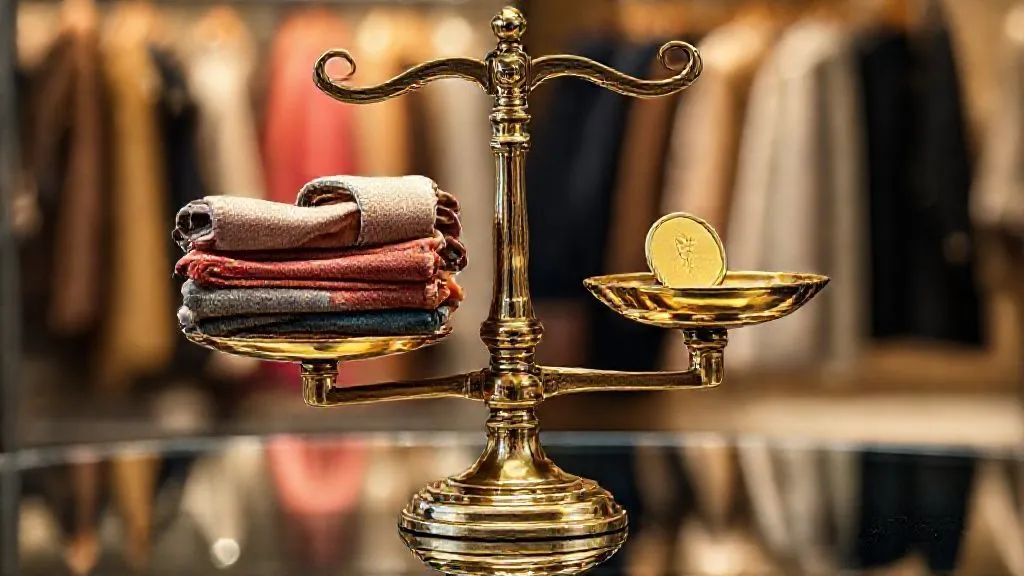
How to Maintain Objectivity in Paid Fashion Reviews?
For over 15 years in the dynamic world of fashion blogging and influence, I've witnessed a profound shift: the rise of paid partnerships. While these collaborations offer incredible opportunities for creators and brands alike, they also introduce a significant challenge – the delicate tightrope walk between monetization and maintaining journalistic integrity. It's a dilemma that can quickly erode the trust you've painstakingly built with your audience.
The core problem, as I see it, isn't just about financial compensation; it's about the subtle, often unconscious pressures that can sway an opinion. Readers are savvier than ever; they can sniff out inauthenticity from a mile away. When a review feels overly positive or lacks genuine critique, it doesn't just damage the blogger's reputation; it undermines the entire industry's credibility. This is why learning how to maintain objectivity in paid fashion reviews is not just good practice, it's essential for long-term success.
This guide isn't just another list of tips. Instead, I'll arm you with practical frameworks, real-world strategies, and expert insights drawn from years in the trenches. We'll explore actionable steps, ethical considerations, and innovative approaches to ensure your paid fashion reviews remain as valuable, honest, and trustworthy as your unpaid content. Let's dive deep into safeguarding your most precious asset: your audience's trust.
The Ethical Imperative: Why Objectivity Matters More Than Ever
In today's hyper-connected world, consumer cynicism toward advertising is at an all-time high. Audiences crave authenticity and genuine recommendations, especially when making purchase decisions in a saturated market like fashion. The moment your audience perceives a review as biased or overly promotional due to a paid partnership, you risk losing their trust – perhaps permanently.
This isn't merely a theoretical concern; it's a measurable decline in engagement and influence. According to the Edelman Trust Barometer, trust in influencers has fluctuated significantly, highlighting the importance of maintaining a clear, unbiased voice. Your credibility is your currency, and every compromised review is a withdrawal from that vital account.
"Trust is the new marketing. It's not about what you sell, but the story you tell and the integrity with which you tell it." – Seth Godin (paraphrased)
I've seen countless talented creators struggle because they prioritized short-term gains over long-term integrity. Understanding the profound impact of objectivity on your brand's longevity and influence is the first, non-negotiable step toward mastering paid reviews.
Building a Foundation: Transparent Disclosure & Clear Boundaries
The bedrock of any ethical paid review is transparency. It's not enough to simply state 'ad' or 'sponsored content'; true transparency goes deeper, informing your audience about the nature of your partnership without ambiguity. This isn't just about following legal guidelines; it's about respecting your audience.
The Disclosure Dilemma: Beyond a Hashtag
Many creators view disclosure as a mere formality, a tiny #ad in the caption. But in my experience, effective disclosure is prominent, unambiguous, and consistent across all platforms. It sets the stage for an honest review, managing audience expectations from the outset.
- Prominent Placement: Ensure disclosure is visible at the very beginning of the content (e.g., top of a blog post, verbally at the start of a video, clearly labeled in stories).
- Clear Language: Use phrases like "This post contains a paid partnership with [Brand Name]" or "Sponsored by [Brand Name]" rather than vague terms.
- Consistency Across Channels: Apply the same disclosure standards to your blog, Instagram, YouTube, TikTok, and any other platform.
- Educate Your Audience: Occasionally explain *why* you disclose and what it means for your review process, reinforcing your commitment to honesty.
Setting Review Parameters with Brands: Your Non-Negotiables
Before you even agree to a paid collaboration, you must establish clear boundaries with the brand regarding your editorial independence. This is where many creators falter, fearing they might lose the deal. But a reputable brand will respect your integrity; if they don't, they're not the right partner.
I always advise my mentees to have a 'non-negotiables' list. This includes the right to express honest opinions, the ability to highlight both pros and cons, and the understanding that final review approval rests with you, not the brand. It's about agreeing on *what* will be reviewed, not *how* it will be reviewed.

Here's a template for key terms to discuss:
| Aspect | Your Stance | Brand Expectation (Common) |
|---|---|---|
| Content Approval | Final editorial control rests with creator; brand can review for factual inaccuracies, not opinion. | Brand wants full approval before publishing. |
| Payment Structure | Flat fee preferred, not tied to sales or positive sentiment. | Commission-based or positive review contingent. |
| Product Return | Product can be kept or donated after review. | Product must be returned. |
| Review Tone | Authentic, honest, including pros and cons. | Solely positive, brand-message focused. |
| Disclosure | Prominent, clear, consistent across platforms. | Minimal, often hidden or vague. |
| Timeline | Realistic timeline for thorough testing. | Often rushed, demanding quick turnaround. |
The Review Process: A Methodology for Unbiased Assessment
Maintaining objectivity isn't just about what you say; it's fundamentally about how you *do* things. A structured, systematic approach to testing and evaluating fashion products is crucial. This methodology minimizes subjective bias and provides a consistent framework for all your reviews, paid or otherwise.
Standardized Testing & Evaluation Criteria
I always recommend developing a checklist of criteria that you apply to every product within a specific category. For instance, when reviewing a handbag, my criteria might include material quality, stitching, hardware durability, functional compartments, weight, comfort of strap, aesthetic versatility, and overall value for money. This isn't about rigid science, but about consistency.
- Material Quality: Fabric composition, leather grain, feel, durability.
- Craftsmanship: Stitching, seams, finishing, attention to detail.
- Fit & Sizing: How true to size, comfort, range of motion (for apparel).
- Functionality: Pockets, closures, ease of use, practicality in daily life.
- Durability: How it holds up to wear and washing over time.
- Aesthetic Appeal: Design, color accuracy, versatility with different outfits.
- Value for Money: Is the price justified by quality, design, and longevity?
- Sustainability/Ethical Practices: (If relevant to your niche and audience)
The 'Blind Test' Approach (Where Possible)
While not always feasible in fashion, consider elements of a 'blind test.' For example, if reviewing different brands of a basic item (like a white t-shirt or denim jeans), could you remove brand labels during initial wear tests? This helps you focus purely on the product's attributes without the preconceived notions associated with a brand name or price point.
Even if a full blind test isn't possible, consciously try to separate the brand's marketing hype from the actual product experience. Focus on sensory details – how the fabric feels, how the garment drapes, the sound of a zipper, the weight of a shoe. These tangible experiences are less susceptible to external influence.

Navigating Brand Pressure: Saying No Gracefully
So, you've established your boundaries, and you've got a solid review methodology. What happens when a brand, despite initial agreements, pushes for a more positive spin or asks you to omit negative feedback? This is where your integrity truly gets tested. I've been there, and I can tell you, saying 'no' is a powerful act of self-preservation for your brand.
Case Study: The 'Glamour Garb' Incident
Years ago, I collaborated with a relatively new luxury brand, 'Glamour Garb,' on a review of their new collection of silk blouses. My initial assessment found the silk quality to be excellent, but the stitching on several pieces was inconsistent, and the sizing ran unusually small. When I submitted my draft, the brand's PR manager insisted I remove any mention of stitching issues or sizing discrepancies, arguing it would "confuse" their target audience and that "minor inconsistencies" were normal for new collections.
I politely but firmly explained that my audience trusted me for honest reviews, and omitting crucial details would compromise that trust. I offered to highlight the positive aspects extensively and frame the sizing as needing careful consultation of their size chart, suggesting they address the stitching internally for future collections. They pushed back, even threatening to withhold payment. I stood my ground, explaining that my reputation was non-negotiable and that an authentic review, even with minor critiques, would ultimately build more long-term credibility for both of us than a sugar-coated one.
Ultimately, they relented. My review went live, highlighting the luxurious feel of the silk while transparently noting the sizing and minor stitching issues. The brand actually saw a surge in sales, partly because my audience appreciated the honesty, and Glamour Garb received valuable feedback. This experience solidified my belief that integrity, not blind positivity, is the true path to influence.
"Your reputation is the sum of your actions. Guard it fiercely, especially when money is on the table." – Industry Veteran's Wisdom (Me)
When faced with pressure, always refer back to your initial agreement and your brand values. Remind the brand of the shared goal: to build trust with consumers. If a brand insists on a level of positivity you cannot genuinely provide, be prepared to walk away. It's a difficult choice, but one that pays dividends in the long run.
Leveraging Data & Peer Review for Validation
Objectivity isn't just about your personal experience; it can be strengthened by external validation. Incorporating broader data points, user-generated content, and comparative analysis can lend significant weight to your reviews and further reduce perceived bias. This approach moves your reviews from subjective opinion to informed assessment.
Incorporating User-Generated Content (UGC)
Before, during, or after your review process, actively seek out and consider user-generated content (UGC) related to the product. What are other customers saying? Are there common praises or complaints that align with or contradict your findings? Tools like social listening platforms or simply browsing product reviews on retailer sites can provide a wealth of external perspectives.
While your review remains your unique voice, acknowledging and cross-referencing with broader consumer sentiment shows a commitment to a holistic understanding of the product. This also resonates strongly with audiences, as they see you're not operating in a vacuum. As reported by Nielsen, consumers trust recommendations from people they know, and UGC often feels like those trusted recommendations.
The Power of Comparative Analysis
Rarely does a fashion product exist in a vacuum. Most items have competitors or alternatives. A truly objective review often involves a degree of comparative analysis. How does this paid handbag collaboration stack up against a similar bag you reviewed last month? How does the fabric quality compare to another brand at a similar price point?
This doesn't mean every review needs to be a full-blown comparative battle, but intelligent referencing provides context and demonstrates a deeper understanding of the market. It shows your audience that you're not just reviewing *this* item, but you're an expert who understands its place within the broader fashion landscape. This adds immense value and reinforces your authoritative voice.
The Long Game: Cultivating a Reputation for Integrity
In the fast-paced world of influencer marketing, it's easy to get caught up in the immediate metrics: likes, comments, conversions. However, I've learned that the most successful and enduring careers in fashion blogging are built on something far more foundational: an unshakeable reputation for integrity. This is your ultimate competitive advantage, especially when learning how to maintain objectivity in paid fashion reviews.
Think of your reputation as a long-term investment. Every decision you make regarding a paid partnership, every word you write in a review, contributes to this cumulative asset. A single compromised review can cost you far more than the payment it brought in, eroding years of trust and making it harder to attract high-quality, ethical brand partners in the future.
"Authenticity is not something you have; it's something you cultivate, day by day, decision by decision." – Adapted from personal branding philosophy
Brands are increasingly seeking out creators who are known for their honest, unbiased opinions. They understand that a truly objective review, even if it contains minor critiques, carries far more weight and drives more genuine engagement than a purely promotional piece. Your integrity becomes a selling point, attracting brands who value genuine influence over fleeting hype.
By consistently prioritizing objectivity, you position yourself as a thought leader and a trusted voice in the fashion industry. This opens doors to more meaningful collaborations, higher fees, and a loyal, engaged community that values your perspective above all else. It's about building a legacy, not just a paycheck.

Financial Structures That Support Objectivity
The way you structure your payment agreements can significantly impact your ability to maintain objectivity. Certain financial models inherently reduce the pressure to deliver an overwhelmingly positive review, allowing you more freedom to be honest.
Flat Fees vs. Commission-Based Models
In my experience, opting for a flat fee payment structure is almost always preferable for maintaining objectivity in paid fashion reviews. When you're paid a set amount for your work, regardless of the review's sentiment or the sales it generates, the financial incentive to exaggerate positives or omit negatives is greatly reduced. Your compensation is for your time, expertise, and reach, not for being a salesperson.
Conversely, commission-based models (e.g., a percentage of sales generated through your unique link) can create a direct conflict of interest. While enticing, they subtly pressure you to be overly positive, as your income directly correlates with how effectively you convince your audience to buy. This can lead to a subconscious bias that's hard to overcome.
Diversifying Income Streams
Another crucial strategy is to avoid becoming overly reliant on any single brand or type of paid partnership. When a significant portion of your income comes from one source, it becomes incredibly difficult to critique that brand honestly, as you risk jeopardizing your financial stability. Diversifying your income streams—through ad revenue, affiliate marketing (where you choose products you genuinely love), digital product sales, consulting, or other brand collaborations—provides a buffer.
This financial independence empowers you to say 'no' to partnerships that don't align with your values or to walk away from brands that pressure you. It reinforces your position as an independent expert, not a brand's mouthpiece, which ultimately strengthens your ability to maintain objectivity in paid fashion reviews.
Frequently Asked Questions (FAQ)
Question: How do I handle a brand that insists on edits that would compromise my objectivity? This is a common challenge. My advice is to refer back to your initial contract or agreement. Politely remind them of your commitment to honest reviews and your audience's trust. Offer to rephrase constructive criticism to be more palatable (e.g., "While the fit was snug for my body type, it might be perfect for a more petite frame" instead of "The sizing is completely off"), but never remove factual observations or genuine critique. If they remain unyielding, be prepared to decline the partnership and forfeit the payment, explaining that your integrity is non-negotiable. This is often a difficult but necessary step.
Question: Is it ever okay to give a negative review in a paid post? Yes, absolutely! An entirely positive review, especially in a paid context, can often feel disingenuous. If a product has genuine flaws, it is your duty to highlight them, albeit constructively and professionally. Focus on providing balanced feedback that helps your audience make informed decisions. A truly honest review, even with valid criticisms, can build more trust than a sugar-coated one. Frame critiques as observations or areas for improvement, rather than outright condemnations.
Question: What if my audience calls out bias in one of my paid reviews? Transparency and accountability are key. If your audience perceives bias, address it directly and honestly. Thank them for their feedback, reiterate your commitment to objectivity, and explain your review process. If you genuinely feel you might have been subconsciously influenced, acknowledge it and commit to improving. Don't get defensive; use it as an opportunity to reinforce your values and strengthen your connection with your community.
Question: How much should I charge for an objective review compared to a purely promotional post? I believe an objective, well-researched, and honest review, especially one that includes critical analysis, is often more valuable than a purely promotional piece. It requires more effort, thought, and courage. Therefore, your fees should reflect this value. There shouldn't necessarily be a separate 'objective review' fee, but rather your standard rates should already account for the high-quality, truthful content you provide. If anything, a brand seeking genuine feedback should be willing to pay a premium for your integrity.
Question: Can I review products I genuinely love, even if paid? Absolutely! In fact, these are often the best collaborations. The goal isn't to be cynical or to find fault where there is none. The goal is to be honest. If you genuinely love a product and it aligns with your brand, a paid partnership allows you to share that enthusiasm with your audience while still being transparent about the collaboration. The key is that your positive review stems from genuine appreciation and thorough testing, not solely from the payment. Your authentic passion will shine through and resonate with your audience.
Key Takeaways and Final Thoughts
Navigating the landscape of paid fashion reviews requires a delicate balance of business acumen, ethical fortitude, and an unwavering commitment to your audience. As an experienced industry specialist, I've seen firsthand that true, lasting success in this niche isn't built on fleeting trends or inflated praise, but on the solid foundation of trust and authenticity.
- Prioritize Transparency: Always disclose paid partnerships clearly and prominently.
- Establish Clear Boundaries: Define your editorial independence with brands upfront.
- Adopt a Methodology: Implement a standardized process for testing and evaluation.
- Cultivate Courage: Be prepared to say 'no' to brand pressures that compromise your integrity.
- Leverage External Validation: Use UGC and comparative analysis to bolster your findings.
- Invest in Your Reputation: See objectivity as your most valuable long-term asset.
- Structure for Freedom: Favor flat fees and diversify income to reduce financial pressure.
Remember, your audience is intelligent and discerning. They value your honest opinion far more than any perfectly polished, overly positive endorsement. By consistently upholding the principles of objectivity, you not only safeguard your own brand but also elevate the entire fashion blogging industry. Stay true to your voice, trust your instincts, and continue to build a legacy of genuine influence. The future of fashion reviews depends on your integrity.
Recommended Reading
- 7 Pro Secrets: How to Prevent Intricate Gel Nail Art Chipping?
- 5 Expert Steps: Pairing a Cathedral Veil with Your Minimalist Gown
- Fashion Affiliate Slump? 7 Steps to Recover Commissions Post-Update
- Mastering Menswear: 7 Ways to Blend Classic Style & Modern Trends
- Stale Fashion Blog Outfits? 7 Fresh Angles to Innovate Your Content Now




Your email address will not be published. Required fields are marked *