


How to Accurately Predict Upcoming Streetwear Trends for My Brand?
For over two decades in the dynamic world of menswear, particularly streetwear, I've seen countless brands rise and fall. Many attribute success to luck, but I can tell you, with absolute certainty, that sustainable growth in this industry is rarely accidental. It's built on a foundation of acute observation, strategic analysis, and a profound understanding of cultural currents.
The streetwear landscape is a volatile beast, a whirlwind of fleeting fads and enduring movements. Brands often stumble, investing heavily in collections that miss the mark, or worse, arrive too late. This misstep isn't just costly; it erodes brand credibility and alienates a hyper-aware consumer base. The pain point is real: how do you consistently hit the bullseye when the target is constantly moving?
This guide isn't about guesswork; it's about providing you with a systematic, data-driven framework and the expert insights you need to confidently predict upcoming streetwear trends for your brand. We'll explore actionable strategies, real-world case studies, and the critical tools that separate trend-setters from trend-followers. Let's equip you to not just react, but to anticipate and shape the future of streetwear.
Beyond the Hype: Understanding Streetwear's Core Drivers
Before we even discuss prediction, we must understand what fuels streetwear. It's not just about clothing; it's a cultural phenomenon, a mirror reflecting the aspirations, anxieties, and identities of a generation. In my experience, brands that only focus on the aesthetic miss the deeper currents that drive long-term trends.
Streetwear's evolution is intrinsically linked to several key drivers:
- Youth Culture & Identity: The desire for self-expression and belonging among younger demographics.
- Music & Art: Hip-hop, electronic music, graffiti, and street art movements have always been powerful catalysts.
- Technology: From social media's role in trend dissemination to advancements in fabric and production.
- Socio-Political Climate: Global events, social justice movements, and environmental concerns frequently manifest in design and messaging.
- Niche Communities: Skateboarding, gaming, vintage collectors – these often incubate micro-trends before they go mainstream.
"Streetwear is the most direct sartorial reflection of youth culture; to understand its future, you must first understand the pulse of the streets themselves." - My personal observation from years in the industry.
Ignoring these foundational elements is like trying to navigate a ship without understanding the ocean currents. Your brand needs to be culturally fluent, not just fashion-forward.
The Art of Observation: Where Trends Begin
The most powerful trend prediction tool isn't an algorithm; it's the human eye, trained by experience and curiosity. I've always emphasized that true insights come from being present, both physically and digitally, in the spaces where culture is being forged.
Deep Dive into Subcultures and Micro-Communities
Forget the runways for a moment. The real innovation often bubbles up from the underground. I've seen countless times how a style born in a specific subculture, perhaps a niche music scene or a local skate park, eventually permeates mainstream fashion.
- Identify Niche Online Hubs: Explore Reddit communities focused on specific aesthetics (e.g., 'techwear,' 'dark academia streetwear'), Discord servers for gaming or music genres, and specialized forums. Pay attention to the language, the shared visual references, and the emerging desires.
- Attend Local Events: From underground art shows to pop-up markets, music festivals, and skate competitions, these are fertile grounds for spotting nascent styles. Observe what people are genuinely wearing, not what they're paid to wear.
- Follow Micro-Influencers & Enthusiasts: These individuals often have smaller but highly engaged audiences and are early adopters, willing to experiment. Their authenticity is a goldmine for insights.
Global Street Style Spotting
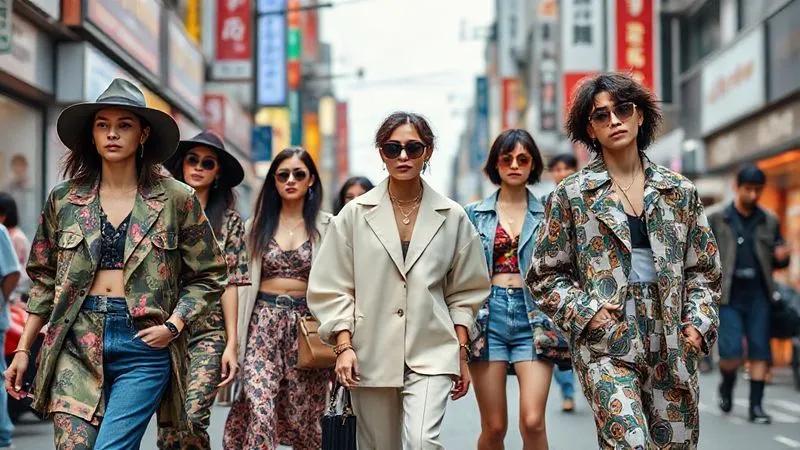
Major metropolitan areas are perpetual trend incubators. Cities like Tokyo, Seoul, London, and New York each have distinct streetwear identities, yet they also influence each other in a global feedback loop. Analyzing street style photography from these hubs is crucial.
Look beyond individual outfits. Identify recurring themes, silhouettes, color palettes, and accessory choices. Are oversized fits still dominant, or are more tailored looks emerging? What kind of footwear is gaining traction? These visual patterns, when observed across multiple cities and contexts, start to form a narrative.
Data-Driven Insights: Leveraging Analytics for Foresight
While observation is foundational, intuition alone isn't enough to accurately predict upcoming streetwear trends for my brand. In today's hyper-connected world, data provides the empirical validation needed to move from a 'hunch' to a strategic decision. My advice: blend qualitative observation with quantitative analysis.
Social Listening & Sentiment Analysis
Social media platforms are unparalleled reservoirs of real-time consumer sentiment. Tools designed for social listening can track mentions, hashtags, and engagement around specific styles, brands, or cultural movements.
- Identify Key Platforms: Beyond Instagram, consider TikTok for viral trends, X (formerly Twitter) for cultural conversations, and Pinterest for aesthetic moodboarding.
- Track Relevant Keywords & Hashtags: Monitor terms like #streetwearstyle, #mensfashion, #sustainablefashion, #vintagestreetwear, as well as emerging slang or brand names.
- Analyze Sentiment: Are conversations positive, negative, or neutral? What specific aspects are people praising or criticizing? This goes beyond mere mentions; it delves into the emotional resonance.
- Monitor Influencer Engagement: Which styles are generating the most likes, comments, and shares for key influencers in your niche? Look for organic engagement, not just sponsored posts.
Here's a simplified look at how social data can be structured for analysis:
| Metric | Trend A (Last Month) | Trend A (This Month) | Trend B (Last Month) | Trend B (This Month) |
|---|---|---|---|---|
| Engagement Rate | 3.2% | 4.8% | 5.1% | 3.9% |
| Mentions Volume | 15,000 | 28,000 | 32,000 | 18,000 |
| Positive Sentiment | 65% | 78% | 72% | 60% |
E-commerce & Sales Data Analysis
Your own sales data is a goldmine. What's selling out? What's collecting dust? Look at product page views, conversion rates, and return reasons. But don't stop there. Analyze competitors' best-sellers (using tools that estimate sales data) and broader market reports.
For a deeper dive into market insights, I often refer to comprehensive industry reports. For example, Deloitte's annual 'The State of Fashion' report provides invaluable macro-level trends that can inform your micro-level streetwear strategy.
The Macro & Micro: Connecting Global Shifts to Local Impact
Streetwear doesn't exist in a vacuum. Major global shifts – be they economic, environmental, or technological – inevitably trickle down and influence consumer behavior, shaping what people want to wear. To accurately predict upcoming streetwear trends for my brand, I always consider the interplay between these macro forces and their micro manifestations.
For instance, the growing global consciousness around climate change has fueled the rise of sustainable streetwear. The demand for transparency, ethical production, and recycled materials isn't just a niche; it's becoming a significant market driver.
Case Study: "Eco-Threads" and Sustainable Streetwear
Consider 'Eco-Threads,' a fictional mid-sized streetwear brand. For years, they focused solely on aesthetics and affordability. However, after noticing a consistent uptick in social media conversations around 'green fashion' and declining engagement on their fast-fashion drops, their trend prediction team identified a macro shift towards sustainability.
They pivoted, investing in organic cotton, recycled polyester blends, and transparent supply chains. They communicated their eco-friendly initiatives clearly, using storytelling around their production process. The result? A 35% increase in customer loyalty within 18 months, a significant boost in positive media mentions, and a growing segment of environmentally conscious consumers actively seeking out their products. This wasn't a gamble; it was a data-informed response to a macro trend impacting their target demographic.
Understanding the broader context is vital. Resources like McKinsey's 'State of Fashion' reports frequently highlight these overarching shifts, providing a crucial lens through which to view emergent streetwear styles.
Collaborations & Influencer Strategy: Amplifying and Validating Trends
In streetwear, collaborations are more than just marketing stunts; they are powerful trend validators and accelerants. A well-executed collaboration can elevate a nascent style, introduce a brand to new audiences, and solidify its position within a cultural movement. Similarly, working with the right influencers can provide unparalleled insight and reach.
Identifying Authentic Collaborators
The key word here is 'authentic.' Forced collaborations often fall flat. Look for partners whose brand ethos, creative vision, or audience genuinely align with yours and the trend you're exploring. This could be:
- A niche artist or musician whose aesthetic resonates.
- Another small, complementary brand with a loyal following.
- A non-profit organization whose mission aligns with your brand values (e.g., sustainability, social justice).
These partnerships aren't just about selling product; they're about co-creating culture and validating new directions.
Micro vs. Macro Influencers
While macro-influencers offer broad reach, micro-influencers often provide deeper engagement and more authentic trend validation. They are typically seen as more trustworthy by their followers, making them excellent barometers for emerging styles. Engage with them to understand their perspectives and see what they're genuinely excited about.
Iteration and Adaptation: The Agile Brand Approach
The streetwear industry moves at a blistering pace. What's 'in' today can be 'out' tomorrow. My most crucial advice for brands is to cultivate an agile mindset. Stagnation is a death sentence; continuous adaptation is survival.
Rapid Prototyping and Capsule Collections
Don't commit to massive production runs based on a single trend prediction. Instead, adopt a strategy of rapid prototyping and capsule collections. This allows you to test the waters with smaller batches, gauge consumer response, and iterate quickly.
- Design & Develop: Create small, focused collections around a specific predicted trend.
- Launch & Monitor: Release these capsules with targeted marketing and closely track sales, social media engagement, and customer feedback.
- Analyze & Adapt: Use the data to refine designs, scale successful items, or pivot away from underperforming ones.
Feedback Loops and Community Engagement
Your customers are your most valuable source of feedback. Create channels for direct engagement:
- Surveys & Polls: Ask about preferences, desired products, and stylistic opinions.
- Social Media Q&A: Use Instagram Stories or live sessions to directly interact.
- Community Forums: Foster spaces where loyal customers can share ideas and provide input.
"In streetwear, stagnation is the silent killer. The brands that thrive are those that listen, learn, and are unafraid to pivot quickly." - A core principle for longevity in this fast-paced market.
Building Your Trend Prediction Framework: An Actionable Blueprint
Bringing all these elements together requires a structured approach. Here's how to accurately predict upcoming streetwear trends for my brand by establishing a robust, repeatable framework within your organization:
- Define Your Brand Identity & Target Consumer: Before you can predict trends, you must know who you are and who you're speaking to. What are your core values? What aesthetic defines you? This filters out irrelevant noise.
- Establish Diverse Trend Monitoring Channels: Don't rely on a single source. Combine street style observation, social listening, e-commerce analytics, and industry reports. Assign specific team members to monitor different channels.
- Implement Regular Data Synthesis & Reporting: Schedule weekly or bi-weekly meetings to synthesize findings from all sources. Create concise reports that highlight emerging patterns, validated trends, and potential risks.
- Foster Cross-Functional Collaboration: Trend prediction isn't just for the design team. Involve marketing, sales, and even production. Each department offers a unique perspective and can contribute to a more holistic understanding.
- Develop a "Test & Learn" Mindset: Embrace small-scale experiments (capsule collections, limited drops) to validate predictions before committing significant resources. Learn from both successes and failures.
- Stay Nimble and Adaptable: The streetwear landscape is fluid. Be prepared to adjust your strategy based on new information. Don't fall in love with a trend; fall in love with the process of discovery.
To help you structure your internal process, consider a checklist like this:
| Activity | Frequency | Responsible Team | Key Output |
|---|---|---|---|
| Street Style Scouting (Online/Offline) | Weekly | Design/Marketing | Visual Moodboards, Pattern Identification |
| Social Listening & Sentiment Analysis | Daily/Weekly | Marketing/Analytics | Trend Alerts, Engagement Reports |
| E-commerce Data Review (Internal/Competitor) | Bi-Weekly | Sales/Analytics | Sales Performance, Product Demand Shifts |
| Industry Report Analysis | Monthly/Quarterly | Strategy/Leadership | Macro Trend Summaries, Strategic Direction |
| Cross-Functional Trend Meeting | Bi-Weekly | All | Actionable Insights, Collection Briefs |
For further insights into market dynamics and consumer behavior, external market research firms like WGSN offer incredibly detailed trend forecasts and analysis, which can complement your internal efforts.
Frequently Asked Questions (FAQ)
How often should I reassess my trend predictions and adjust my brand's strategy? Given the rapid pace of streetwear, I recommend a formal reassessment at least quarterly, with continuous, informal monitoring weekly. For fast-moving micro-trends, daily checks on social media are advisable. Your agility in response is as critical as your initial prediction.
What if a predicted trend fails to gain traction after I've invested in it? This is an inevitable part of the process. The key is to minimize risk through agile development, like capsule collections. If a trend underperforms, analyze why (was the timing off? Was the execution flawed? Was the initial prediction inaccurate?) and use those learnings to refine your framework. Don't view it as a failure, but as valuable data for future predictions.
Can small brands truly compete with larger players in accurately predicting trends? Absolutely. Small brands often have an advantage in their agility and closer connection to niche communities. While larger brands have more resources for data, smaller brands can excel in authentic observation and rapid response, often being the first to tap into genuinely nascent trends before they hit the mainstream.
How important is intuition versus data in trend prediction? Both are indispensable. Intuition, honed by years of experience and deep cultural immersion, helps you spot the initial spark. Data provides the validation, quantifies the potential, and informs the 'how' and 'when' of your strategy. Relying solely on one without the other is a recipe for either missed opportunities or costly mistakes.
What are the most common pitfalls brands make when trying to predict streetwear trends? The biggest pitfalls include: relying solely on personal taste, chasing every fleeting fad without understanding its root, failing to integrate macro-cultural shifts, ignoring their own sales data, and lacking the agility to pivot. Also, mistaking a celebrity endorsement for an organic trend is a common and expensive error.
Key Takeaways and Final Thoughts
Accurately predicting upcoming streetwear trends for your brand isn't about having a crystal ball; it's about building a robust, multi-faceted system that combines astute human observation with rigorous data analysis. It's a continuous cycle of learning, adapting, and innovating.
- Immerse Yourself in Culture: Understand the true drivers beyond just clothing.
- Blend Observation with Data: Use both qualitative and quantitative insights.
- Embrace Agility: Test, learn, and iterate with capsule collections.
- Foster Collaboration: Internally and externally, with influencers and other brands.
- Stay Curious & Open-Minded: The next big thing often comes from unexpected places.
The streetwear industry rewards the vigilant, the culturally aware, and the strategically nimble. By implementing the frameworks and insights I've shared, you're not just predicting the future; you're actively positioning your brand to be a part of shaping it. Go forth, observe, analyze, and create the next wave of iconic streetwear.
Recommended Reading
- The Ultimate Guide: How to Choose Comfortable Fabrics for Kids Wear
- How to Innovate Next-Level Haute Couture: 7 Strategies to Evade Stagnation
- Unlock Your Style: How to Build a Minimalist Casual Streetwear Wardrobe
- 7 Strategies: How to Prevent Logomania Burnout in Streetwear Brands?
- 7 Strategies to Slash Biodegradable Fabric Scaling Costs & Boost Innovation



Your email address will not be published. Required fields are marked *