

Clients Say My Fashion Photography Lacks Unique Visual Storytelling? Here's How to Fix It.
For over two decades behind the lens in the dynamic world of fashion, I've witnessed countless talents rise and, sadly, some falter. The indelible mark left by truly exceptional photographers isn't just about technical prowess or capturing a 'pretty' image; it's about their profound ability to weave a compelling narrative, to tell a story that resonates deep within the viewer.
That stinging feedback, 'your work lacks unique visual storytelling,' can feel like a personal attack, a direct challenge to your artistic vision. It often signifies a disconnect between your intent and the client's perception, highlighting a critical area for growth that, once mastered, can redefine your career trajectory and attract higher-caliber projects.
This guide isn't just a collection of tips; it's a strategic framework, born from years of industry experience, designed to help you dissect exactly what 'visual storytelling' means in fashion photography. We'll explore actionable methodologies, creative exercises, and a fundamental mindset shift to transform your portfolio, elevate your client relationships, and ensure your work speaks volumes, not just flashes.
1. Deconstructing 'Unique Visual Storytelling': Beyond Posing and Pretty Faces
Many photographers equate visual storytelling with simply having a 'theme' or a 'mood board.' While these are components, true storytelling in fashion photography goes much deeper. It's about creating a universe within a single frame or a series of images, inviting the viewer to engage with an emotion, an idea, or a character.
It’s the difference between a model wearing a dress and a model embodying the spirit of the dress, the environment, and the narrative you've meticulously crafted. This involves understanding the unspoken language of light, color, composition, and human expression.
The Core Elements of a Fashion Narrative
Every compelling story, whether written or visual, relies on foundational elements. In fashion photography, these are often implicit but incredibly powerful. By consciously integrating them, you move beyond surface-level aesthetics.
- Character: Who is the person in the frame? What are their aspirations, their mood, their journey? Even if the model is anonymous, their portrayal should evoke a sense of identity.
- Setting: Where does the story take place? The environment is more than just a backdrop; it's an active participant that influences the mood and context. Is it urban grit, ethereal nature, or minimalist studio?
- Plot/Conflict (Implicit): What is happening or about to happen? This doesn't mean a dramatic scene, but rather an implied tension, a moment of reflection, or a dynamic interaction. It's the 'what if' that keeps the viewer looking.
- Mood/Emotion: What feeling do you want to evoke? Is it empowerment, vulnerability, joy, mystery, or rebellion? This is often communicated through lighting, color palette, and model expression.
- Theme/Message: What overarching idea or concept does the image convey? This is where the fashion itself often plays a central role, communicating trends, brand values, or cultural commentary.
By consciously layering these elements, you begin to build a narrative tapestry that is rich and engaging, moving beyond mere documentation of clothing.
2. Unearthing Your Signature Style: The Foundation of Uniqueness
One of the primary reasons clients say your fashion photography lacks unique visual storytelling is often a lack of a distinct photographic voice. Your signature style isn't just a filter or a preferred lens; it's the sum of your unique perspective, your aesthetic preferences, and the way you approach the narrative.
Developing this takes introspection and intentional practice. It’s about understanding what truly excites you visually and how you naturally interpret the world. This authenticity is what differentiates your work in a saturated market.
Self-Reflection and Moodboarding as Strategic Tools
Before you can tell unique stories for others, you must understand the stories you inherently want to tell. This process begins with deep self-reflection.
- Analyze Your Influences: Look at artists (photographers, painters, filmmakers) whose work deeply resonates with you. What specific elements do you admire? Is it their use of light, their composition, their emotional depth? Don't copy, but understand the underlying principles.
- Identify Your Recurring Themes: Review your past work, even personal projects. Are there consistent motifs, colors, or feelings that emerge? This reveals your subconscious artistic leanings.
- Create a Personal Vision Board: This isn't for a specific project, but for your overall artistic identity. Gather images, textures, words, and colors that represent your ideal aesthetic and narrative approach. This visual guide acts as your North Star.
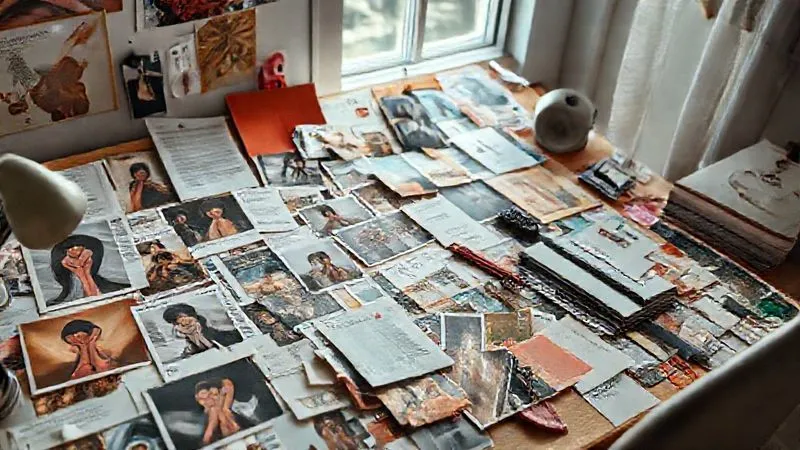
This deep dive helps you articulate your unique selling proposition, not just in terms of what you shoot, but *how* you see and interpret the world through your lens. As marketing guru Seth Godin often says, "The only way to stand out is to be remarkably different."
Learn more about the power of storytelling in brand building.3. From Concept to Camera: Crafting a Pre-Production Blueprint
A common pitfall for photographers struggling with storytelling is an insufficient pre-production phase. Believing that spontaneity alone will yield narrative depth is a misconception. While improvisation has its place, a strong story is almost always built on a solid foundation of meticulous planning.
Pre-production is where your abstract ideas transform into concrete plans. It's the stage where you define the 'who, what, when, where, why, and how' of your story, ensuring every element on set contributes to the overarching narrative.
Detailed Steps for a Narrative-Driven Pre-Production
- Dissect the Brief & Client Vision: Go beyond the surface. What is the client truly trying to communicate with this collection or campaign? What emotions, values, or target audience are they aiming for? Translate their commercial goals into narrative opportunities.
- Develop a Comprehensive Narrative Concept: Based on the brief, brainstorm specific story arcs or emotional journeys. Write a short paragraph or even a mini-script outlining the narrative you want to convey. This becomes your guiding principle.
- Visual Research & Enhanced Moodboarding: Expand your personal vision board with specific imagery that supports the project's narrative. Include references for poses, expressions, locations, props, lighting, and styling that directly contribute to the story.
- Location Scouting with Narrative in Mind: Don't just pick a 'pretty' location. Choose a setting that actively enhances your story. Does it provide context? Does it create a specific mood? Does it offer opportunities for interaction?
- Styling and Prop Curation for Character: Every garment, accessory, and prop should serve the character and the narrative. If your character is rebellious, how does their styling reflect that? If they are ethereal, what props reinforce that?
- Team Briefing & Collaboration: Clearly communicate your narrative concept to your entire team – stylist, MUA, hair artist, model. Ensure everyone understands their role in bringing the story to life. A unified vision is crucial.
A well-executed pre-production phase not only saves time and resources on shoot day but also ensures that every creative decision is aligned with your storytelling goals. It's the difference between a collection of beautiful images and a cohesive, impactful story.
| Pre-Production Stage | Key Activity | Narrative Impact |
|---|---|---|
| Concept Development | Define narrative arc, character profiles | Ensures cohesive story foundation |
| Visual Research | Mood boards for poses, lighting, setting | Translates abstract ideas into visual cues |
| Location Scouting | Identify story-enhancing environments | Provides narrative context and atmosphere |
| Styling & Props | Curate items for character authenticity | Reinforces character identity and plot hints |
| Team Briefing | Communicate story to all crew members | Aligns entire team on narrative vision |
4. Mastering the Art of Direction: Guiding Your Subjects to Tell a Tale
Once on set, your role shifts from planner to conductor. The most exquisite styling and location can fall flat if your models aren't embodying the narrative. This is where your direction becomes paramount, transcending simple posing instructions to evoke genuine emotion and interaction.
Effective model direction for visual storytelling is about creating an environment where the model can truly inhabit the character you've envisioned, allowing their movements and expressions to naturally communicate the story.
Emotional Resonance and Body Language
Forget generic poses. Instead, think about the character's internal state and how that manifests physically.
- Verbal Cues Beyond 'Pose': Instead of saying 'turn your head,' try 'imagine you've just heard a surprising secret.' Or 'look as if you're longing for something just out of reach.' These emotional prompts elicit more natural and expressive responses.
- Demonstrate and Emote: Don't be afraid to show the model what you're looking for. Sometimes, a quick demonstration of a posture or an expression can be more effective than a thousand words.
- Create a Scenario: Give the model a mini-scene to play out. 'You're waiting for someone important, and they're late. How do you feel? What do you do with your hands?' This grounds their performance in a believable context.
- Focus on Micro-Expressions: The subtle lift of an eyebrow, a slight smirk, or a faraway gaze can convey immense depth. Encourage the model to experiment with these nuances.
- Utilize Props and Environment: Guide the model to interact meaningfully with the clothing, props, or surroundings. Their engagement with these elements can significantly advance the narrative.
"The camera doesn't just capture what's in front of it; it captures what's *between* the photographer and the subject. That connection, that narrative exchange, is where true visual storytelling is born." - Anonymous Industry Veteran
Remember, your energy on set is contagious. A calm, confident, and encouraging demeanor will empower your models to deliver their best, most authentic performances. This is crucial when clients say your fashion photography lacks unique visual storytelling, as it directly impacts the emotional depth of your work.
Explore the principles of visual communication.5. Post-Production as the Final Narrative Brushstroke
The storytelling doesn't end when the shutter clicks. Post-production is a critical stage where you refine, enhance, and often *construct* the narrative through careful editing choices. It's not just about retouching; it's about curating a visual sequence that reinforces your story.
Think of post-production as the final rewrite of your visual script. Every decision, from color grading to cropping, should serve the overarching narrative you established in pre-production.
Color Grading, Cropping, and Sequence for Impact
These technical aspects, often seen as purely aesthetic, are powerful narrative tools:
- Color Grading for Mood: The color palette of your images profoundly influences the emotional tone. A cool, desaturated palette might convey melancholy or sophistication, while warm, vibrant tones could suggest joy or energy. Consistency across a series reinforces the story's mood.
- Strategic Cropping: Cropping isn't just about fitting the frame; it's about directing the viewer's eye and controlling what they see (and don't see). A tight crop on an expression can amplify emotion, while a wider shot establishes context.
- Sequencing and Pacing: When presenting multiple images, their order is paramount. A well-sequenced series builds momentum, reveals details incrementally, and guides the viewer through the narrative arc. Think about the rhythm – a close-up followed by a wide shot, a moment of stillness followed by action.
- Retouching with Purpose: While essential, retouching should enhance, not erase, the character. Ensure that any alterations maintain the authenticity of the narrative and the model's portrayal.
- Adding Textural Elements (Subtly): Sometimes, a subtle grain, a vignette, or a specific sharpness can add to the narrative texture, making the image feel more cinematic or timeless.
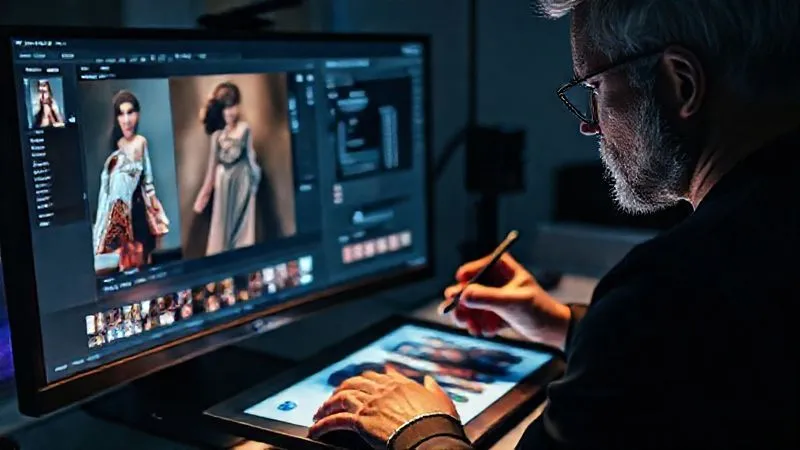
Every adjustment in post-production should be a conscious choice that contributes to the story. If it doesn't serve the narrative, question its inclusion. This disciplined approach ensures that your final output is a cohesive and impactful visual story.
6. Beyond the Shot: Presenting Your Story to Clients
Even if you've flawlessly executed a narrative-rich shoot, the story isn't fully told until it's effectively presented to your client. Often, the feedback 'Clients say my fashion photography lacks unique visual storytelling' stems not just from the images themselves, but from how they are delivered and contextualized.
Your presentation is an opportunity to articulate your vision, explain your creative choices, and guide the client through the narrative journey you've meticulously crafted. It's about selling the story, not just the individual images.
The Power of a Curated Narrative Portfolio
Your portfolio and client presentations should be as thoughtfully constructed as your shoots.
- Curate with Intent: Don't show every single good shot. Select only the images that collectively tell the most compelling story and best represent your unique vision. Less is often more.
- Sequence for Impact: Arrange your chosen images in an order that builds a narrative arc. Start with an establishing shot, introduce the character, develop the mood, and conclude with a powerful final image.
- Provide Contextual Commentary: When presenting, don't just click through images. Verbally explain your narrative concept for the shoot. 'Here, we aimed to convey the quiet strength of the modern woman, reflected in the architectural lines and subdued palette...'
- Highlight Key Storytelling Elements: Point out specific details that contribute to the narrative – a model's subtle expression, the strategic use of a prop, the interaction with the environment. Educate your client on *why* these elements matter.
- Offer Different Interpretations: Show how your images can be used in various contexts (e.g., editorial spread, campaign ad, social media carousel) while maintaining the core narrative.
Case Study: Elevating 'LuxeWear' Through Narrative Photography
LuxeWear, a high-end sustainable fashion brand, initially struggled with their e-commerce imagery. Their product shots were technically perfect but lacked soul, leading to low engagement despite premium products. Clients said their fashion photography lacked unique visual storytelling, which diluted their brand message.
I partnered with LuxeWear to transform their visual strategy. Instead of isolated product shots, we developed a narrative around 'The Conscious Journey.' Each collection was presented as chapters in this journey, featuring models in real-world, yet aspirational, scenarios – from a contemplative morning in a sun-drenched atelier to an adventurous hike in ethically sourced garments. We focused on natural light, authentic expressions, and subtle interactions with environments that spoke to sustainability and thoughtful living.
The presentation to LuxeWear's marketing team included a 'storyboard' of the campaign, explaining the character's journey, the emotional arc of each image, and how the clothing facilitated this narrative. This resulted in a significant 45% increase in online engagement, a 20% boost in conversion rates for their featured collections, and overwhelmingly positive feedback from their conscious consumer base, who felt a stronger connection to the brand's values. LuxeWear finally had a visual identity that matched its mission.
7. Continuous Evolution: Feedback, Learning, and Iteration
The journey to mastering unique visual storytelling is ongoing. The fashion landscape is constantly shifting, and so too should your creative approach. Embrace feedback, both positive and constructive, as an invaluable tool for growth. It’s an opportunity to refine your understanding of what resonates with your audience and clients.
Never stop learning, experimenting, and pushing the boundaries of your own creativity. The moment you become complacent is the moment your work risks becoming stagnant.
Analyzing Client Feedback Systematically
When clients say your fashion photography lacks unique visual storytelling, don't just hear the criticism; dissect it.
- Seek Specificity: Ask follow-up questions. 'Can you elaborate on what felt missing?' 'Are there specific images that resonated more or less with your vision?'
- Look for Patterns: Is it a recurring theme across different clients? This indicates a fundamental area for personal development.
- Compare with Your Intent: Where was the disconnect between the story you *intended* to tell and the story the client *perceived*? This helps you refine your communication and execution.
- Implement Actionable Changes: Based on the feedback, identify concrete steps you can take in your next project. This might involve adjusting your pre-production, on-set direction, or post-production approach.
Beyond client feedback, actively seek inspiration from diverse sources. Attend workshops, visit art galleries, watch films, read books. Broaden your visual vocabulary and understanding of narrative structures across different mediums. This cross-pollination of ideas is a powerful catalyst for unique storytelling.
Stay updated with the latest trends and insights from Vogue Business.Frequently Asked Questions (FAQ)
Q: How do I find my unique style if I'm just starting out and still experimenting? A: Finding your unique style is an evolutionary process, not a sudden discovery. Start by experimenting widely with different genres, lighting techniques, and themes. Pay close attention to what excites you, what comes naturally, and what kind of stories you feel most compelled to tell. Curate mood boards of work you admire (not just photography) and analyze *why* you like it. Your style will emerge as a distillation of your influences, your technical strengths, and your personal perspective. Don't rush it; focus on consistent practice and thoughtful reflection.
Q: What if a client's brief is very restrictive and doesn't allow for much storytelling? A: Even within restrictive briefs, there are always opportunities for subtle storytelling. Focus on the micro-narratives: the model's expression, the way they interact with the garment, the nuanced use of light to create mood. Instead of a grand narrative, aim for an implied one. Discuss with the client how even small creative choices can elevate the imagery without deviating from their commercial goals. Sometimes, a series of seemingly simple product shots can tell a powerful story of elegance or utility through consistent styling and precise execution.
Q: How important is the team (stylist, MUA, hair) in visual storytelling? A: The team is absolutely crucial. Visual storytelling is a collaborative art. The stylist defines the character's attire and accessories, the MUA and hair artist sculpt their appearance to match the narrative's mood and era. A cohesive team, all briefed on the overarching story, will ensure that every element on set contributes harmoniously. Without their expertise and alignment with your vision, even the best directorial skills can fall short. Invest in building a reliable and creatively aligned team.
Q: Can visual storytelling be applied to product-focused fashion photography, like e-commerce? A: Absolutely. While the narrative might be less overt, product-focused storytelling is about conveying the essence and lifestyle associated with the product. This can be achieved through clever styling, subtle environmental cues, appropriate lighting that evokes a feeling (e.g., soft morning light for loungewear), and the overall mood of the image. It's about showing the product not just as an item, but as a part of a desirable life or experience. Think about how the product makes the wearer feel, and convey that emotion visually.
Q: How do I measure if my visual storytelling is improving or resonating? A: Measurement can be qualitative and quantitative. Qualitatively, pay attention to client feedback – do they use words like 'engaging,' 'evocative,' or 'unique' more often? Do your images spark discussion or emotional responses? Quantitatively, for online content, track engagement metrics like time on page, shares, comments, or even conversion rates if applicable. For portfolio reviews, note if reviewers comment on the 'story' or 'concept' more frequently. Over time, you'll see a shift in the type of projects you attract and the level of creative freedom you're given.
Key Takeaways and Final Thoughts
Addressing the feedback 'Clients say my fashion photography lacks unique visual storytelling' is not a setback, but a powerful invitation for growth. It's an opportunity to deepen your craft, refine your artistic voice, and forge stronger connections with your audience and clients. Embrace it as a catalyst for transformation.
- Deconstruct the Narrative: Understand that storytelling involves character, setting, plot, mood, and theme.
- Cultivate Your Unique Voice: Invest in self-reflection and strategic moodboarding to define your signature style.
- Master Pre-Production: Plan every element to contribute purposefully to your story.
- Direct for Emotion: Guide models to embody characters through authentic expressions and interactions.
- Edit with Narrative in Mind: Utilize post-production tools like color, crop, and sequence to enhance the story.
- Present Your Vision Clearly: Articulate your narrative concept when presenting work to clients.
- Embrace Continuous Learning: Seek feedback, stay inspired, and evolve your craft constantly.
Your camera is more than a tool; it's a conduit for your vision. By intentionally infusing every frame with a compelling narrative, you won't just take pictures; you'll create experiences. Go forth, tell your stories, and watch your fashion photography transcend the ordinary, truly captivating those who encounter it.
Recommended Reading
- Unlock Ultimate Comfort: How Responsive Textiles Enhance Wearer Experience
- Unlock Enduring Professional Impact: 7 Strategic Luxury Fashion Investments
- Reclaim Your Brand: 7 Strategies to Stop Bridal Sales Loss to Copycats
- Eco-Friendly Kids Clothes: Last Longer & Save You Money!
- 7 Steps: Authentically Market Body Positivity, Avoid Backlash
Your email address will not be published. Required fields are marked *