

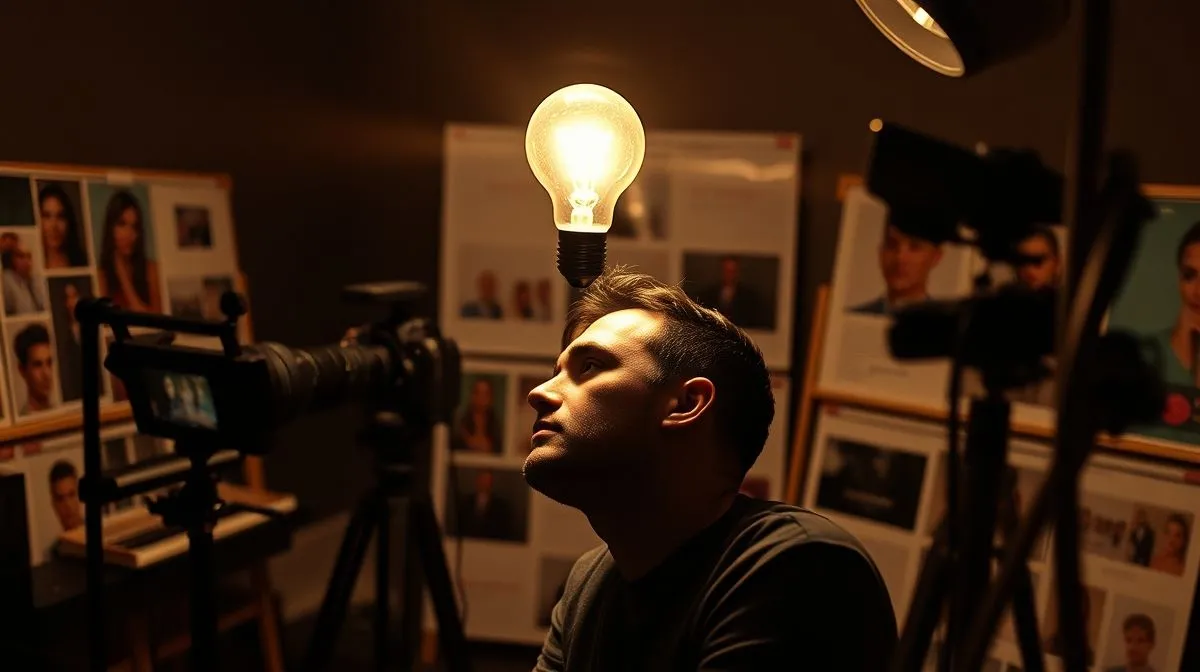
Solving Creative Blocks in Fashion Shoot Direction: Reignite Your Vision
Have you ever stood on a bustling set, surrounded by a talented crew, beautiful models, and a wardrobe brimming with potential, only to find your mind utterly blank? The energy is palpable, the clock is ticking, and yet, the visionary spark that usually guides your every move seems to have vanished. It’s a moment every fashion shoot director dreads: the creative block. It’s more than just a momentary lapse; it’s a paralyzing silence in the usually vibrant symphony of ideas.
This isn't just a minor inconvenience; it's a critical challenge in an industry that thrives on innovation and fresh perspectives. The fashion world demands constant evolution, and when a director's creative well runs dry, it can halt entire productions, impact reputations, and even derail careers. The problem isn't a lack of talent, but often an unseen barrier that prevents that talent from flowing freely.
This comprehensive guide is designed to equip you with the strategies and mindset necessary for solving creative blocks in fashion shoot direction. By the end of this reading, you will understand the roots of creative stagnation, learn proactive techniques to prevent its onset, discover dynamic on-set methods for immediate inspiration, and cultivate a resilient creative practice that ensures your vision remains vibrant and unstoppable.
The Genesis of Stagnation: Understanding Creative Blocks
Every creative professional, regardless of their experience, will encounter the dreaded creative block. In the high-stakes world of fashion shoot direction, this isn't just an inconvenience; it can be a significant professional hurdle. Understanding the roots of these blocks is the first step toward dismantling them.
Common Triggers for Fashion Shoot Blocks
Creative blocks often stem from a combination of internal and external pressures. One common trigger is perfectionism. The relentless pursuit of an 'ideal' image can lead to paralysis, where no idea feels good enough to execute. This self-imposed pressure can stifle innovation and risk-taking, which are vital in fashion photography.
- Lack of inspiration: Sometimes, the creative well simply runs dry. This can be due to repetition in projects, a lack of exposure to new stimuli, or an inability to connect with the subject matter on a deeper level.
- Burnout and fatigue: The demanding schedules, long hours, and constant pressure in the fashion industry can lead to mental and physical exhaustion. A tired mind struggles to generate novel ideas.
- Fear of failure or judgment: The fear that a new concept won't be well-received by clients or peers can lead directors to stick to safe, uninspired choices, or worse, to no choices at all.
- Overwhelm from choices: Paradoxically, too many options or too much information can also be paralyzing. The sheer volume of trends, styles, and creative possibilities can make it difficult to focus on a single, compelling direction.
Understanding these triggers is crucial for effectively addressing and solving creative blocks in fashion shoot direction. It allows you to address the root cause rather than just the symptoms.
The Psychological Impact on Directors
Creative blocks are not just about a temporary lack of ideas; they can have profound psychological effects. They can lead to feelings of inadequacy, frustration, and even anxiety. For a fashion director whose identity is deeply intertwined with their creative output, this can be particularly damaging. According to a general understanding of creative processes, such blocks are often linked to cognitive rigidity and emotional stress. For more on the general phenomenon of creative blocks, you can refer to resources like Wikipedia's article on Creative Block.
- Loss of confidence: Repeatedly facing a block can erode self-belief, making future creative endeavors seem daunting.
- Procrastination: The fear of confronting the block can lead to delaying tasks, exacerbating the problem.
- Reduced enjoyment: What was once a passion can become a source of stress and dread.
Recognizing these psychological dimensions helps in approaching the problem with empathy and strategic intervention, fostering a healthier creative environment.
Proactive Strategies: Preventing Blocks Before They Strike
The best way to deal with a creative block is to prevent it from happening in the first place. Proactive planning and a structured approach to pre-production can significantly reduce the likelihood of creative stagnation on set.
The Power of a Comprehensive Mood Board
A mood board is far more than just a collection of pretty pictures; it's the visual blueprint of your vision. It serves as a constant reference point and a source of inspiration. A well-constructed mood board should:
- Include diverse elements: colors, textures, historical references, art, film stills, and even abstract concepts.
- Tell a story: Ensure the elements coalesce into a cohesive narrative or aesthetic.
- Be a living document: Allow it to evolve as new ideas emerge during the planning phase.
This foundational work ensures that when you step onto set, you have a clear, tangible direction to guide your decisions, minimizing guesswork and creative dead ends.
Collaborative Brainstorming with Your Team
Creativity is rarely a solitary pursuit, especially in fashion. Leveraging the collective intelligence of your team – stylists, photographers, set designers, and even models – can unlock unforeseen possibilities. Organize structured brainstorming sessions where:
- All ideas are welcome, no matter how unconventional.
- Constructive feedback is encouraged, but judgment is suspended during the initial ideation phase.
- Roles are defined, but creative input is fluid.
This collaborative approach not only enriches the creative pool but also builds a stronger team dynamic, fostering an environment where everyone feels invested in the project's success. For general principles on effective group ideation, exploring resources on brainstorming techniques can be beneficial.
Location Scouting and Prop Sourcing as Inspiration
The environment and objects within a shoot can be powerful muses. Don't view location scouting and prop sourcing as mere logistical tasks; treat them as creative explorations. A unique location might dictate a specific narrative, or an unusual prop could spark an entirely new concept for posing or lighting. Spend time immersing yourself in potential spaces and handling props, allowing their inherent qualities to speak to your creative instincts.
On-Set Breakthroughs: Dynamic Techniques for Immediate Inspiration
Despite the best pre-production, creative blocks can still strike on set. When they do, quick, decisive action is necessary. These techniques are designed to reignite your vision in the heat of the moment.
Embracing Flexibility and Improvisation
Sometimes, the greatest ideas emerge from deviations from the plan. If a concept isn't working, don't force it. Instead, embrace flexibility:
- Change the angle: A simple shift in camera perspective can completely alter the mood and message of a shot.
- Experiment with lighting: Play with shadows, highlights, and different light sources. Unexpected lighting can transform an ordinary scene into something extraordinary.
- Introduce a new element: A forgotten prop, a piece of clothing, or even a sudden weather change can become the catalyst for a fresh idea.
The ability to improvise and adapt is a hallmark of an experienced fashion director, enabling them to navigate unforeseen challenges and turn them into creative opportunities.
Changing Perspectives: Angles, Lenses, and Lighting
When you feel stuck, physically alter your perspective. Get down low, climb high, shoot through objects, or use reflections. Each new viewpoint offers a different story. Similarly, changing lenses can drastically change the feeling of an image – from the expansive view of a wide-angle to the intimate compression of a telephoto. Experiment with:
- Focal lengths: How does a portrait shot on a 35mm lens differ from one on an 85mm?
- Aperture: Play with depth of field to draw focus or create ethereal blurs.
- Light modifiers: Softboxes, grids, reflectors, or even just a piece of white board can dramatically reshape light and shadow, injecting new life into a stagnant scene.
These technical shifts are often the simplest yet most effective ways of breaking a creative impasse.
Harnessing the Model's Energy and Input
Your model is an integral part of the creative process, not just a canvas. Engage with them. Ask them for their interpretation of the mood, or encourage them to experiment with poses and expressions. Their unique energy and understanding of their body can provide unexpected inspiration. Sometimes, the most compelling shots emerge from moments of genuine interaction and collaboration between director and model. Allowing the model to contribute can be a powerful method for unlocking new directions when solving creative blocks in fashion shoot direction.
Beyond the Lens: Post-Production as a Creative Catalyst
The creative process doesn't end when the camera stops clicking. Post-production offers another crucial layer for refining your vision and even overcoming previous creative hurdles.
The Art of Curated Selection
Faced with thousands of images, the selection process can be daunting. Instead of looking for 'perfect' shots, look for shots that tell a story, evoke emotion, or possess an unexpected element. Sometimes, an image that felt uninspired on set can reveal its potential during the selection process when viewed with fresh eyes and in context with other frames. Don't be afraid to discard what doesn't serve the narrative, no matter how technically 'good' it is.
Creative Retouching and Grading as a Storytelling Tool
Post-production software is not just for fixing flaws; it's a powerful creative tool. Use retouching to enhance textures, refine details, and sculpt light. Color grading can completely transform the mood of an image, shifting from gritty realism to dreamy surrealism. Think of it as painting with light and color, adding another dimension to your original vision. This stage can often rescue a shoot that felt creatively challenged on set, allowing new interpretations to emerge.
Cultivating a Resilient Creative Mindset for Long-Term Success
Sustainable creativity isn't about avoiding blocks entirely, but about building resilience and a routine that supports continuous inspiration. This involves both professional development and personal well-being.
The Importance of Breaks and Digital Detox
In our hyper-connected world, constant stimulation can lead to creative fatigue. Regular breaks, especially from screens, are essential. Step away from your work, go for a walk, engage in a completely different activity, or simply sit in silence. This allows your subconscious mind to process information and make new connections, often leading to 'aha!' moments when you least expect them.
- Schedule regular, short breaks throughout your workday.
- Dedicate specific times to disconnect from all digital devices.
- Engage in hobbies unrelated to your profession to refresh your perspective.
Continuous Learning and Inspiration Seeking
The world of fashion and art is constantly evolving. To stay creatively sharp, you must be a perpetual student. This doesn't mean just following trends; it means actively seeking out diverse sources of inspiration:
- Visit art galleries, museums, and historical archives.
- Read books on art history, philosophy, and psychology.
- Explore other creative disciplines like dance, music, or architecture.
- Attend workshops or masterclasses to learn new techniques.
The more you feed your mind with varied inputs, the richer your creative output will be. For a broader understanding of the field, consider exploring the history and evolution of fashion photography.
Building a Resilient Creative Practice
A resilient creative practice involves routines and habits that support your well-being and creative flow. This includes:
- Setting boundaries: Learn to say no to projects that don't align with your vision or that might lead to burnout.
- Maintaining physical health: Adequate sleep, nutrition, and exercise are fundamental for cognitive function and creative energy.
- Reflecting on past work: Regularly review your portfolio, not just to admire it, but to identify patterns, strengths, and areas for growth.
By investing in yourself, you are investing in your long-term creative capacity, making you less susceptible to debilitating blocks.
Learning from Adversity: Case Studies and Common Pitfalls
Even the most celebrated fashion directors have faced creative challenges. Understanding how they navigated these moments, and recognizing common mistakes, can provide invaluable lessons.
Iconic Shoots Born from Adversity
Many legendary fashion campaigns and editorials were born out of initial creative struggles or unforeseen obstacles. For instance, a sudden change in weather might have forced a shoot indoors, leading to a more intimate and stylized outcome than originally planned. Or a limited budget might have pushed a team to innovate with everyday objects, resulting in groundbreaking minimalist aesthetics. These stories underscore that creative blocks are not dead ends, but often detours that can lead to more unique and compelling destinations if approached with an open mind and resilience.
The Pitfalls of Overthinking and Perfectionism
One of the most common mistakes when facing a creative block is to fall deeper into overthinking. The paralysis of analysis can be crippling. Similarly, an obsessive pursuit of perfection can prevent any idea from ever seeing the light of day. Remember that creativity often thrives on spontaneity and imperfection. Sometimes, the 'perfect' shot is the enemy of the 'good enough' shot that captures the essence of a moment. Learn to trust your instincts and allow for happy accidents.
Ignoring Your Intuition
Your intuition, honed by years of experience and a deep understanding of aesthetics, is a powerful tool. When a concept feels off, or a particular direction doesn't resonate, don't ignore that gut feeling. Pushing through a direction that feels fundamentally wrong will only exacerbate a creative block. Instead, pause, reflect, and allow your intuition to guide you towards a more authentic and compelling path.
Frequently Asked Questions (FAQ)
How do I know if I'm experiencing a creative block or just fatigue? Creative blocks often manifest as a complete lack of ideas or an inability to execute concepts, even when you have energy. Fatigue, on the other hand, makes you feel tired and unmotivated, but you might still have ideas; you just lack the drive to pursue them. Addressing fatigue (rest, nutrition) can sometimes resolve what seems like a block.
Can personal life stress impact my creative direction? Absolutely. Our creative minds are deeply intertwined with our emotional and mental well-being. Stress, anxiety, or personal difficulties can significantly deplete your creative reserves and make it harder to access imaginative thought processes. Addressing personal stress is crucial for maintaining creative flow.
What's the fastest way to get a quick burst of inspiration on set? Try changing one significant variable: the model's pose, the lighting setup, or even the music playing on set. Sometimes, a physical change in the environment or a shift in the sensory input can immediately break a mental rut. A quick walk away from the immediate scene can also offer a fresh perspective.
Should I force myself to work through a block? Generally, no. Forcing creativity often leads to frustration and uninspired work. It's usually more productive to step away, engage in a non-creative activity, or seek new external stimuli. However, 'showing up' to work consistently, even when uninspired, can sometimes trigger a breakthrough, so it's a balance between discipline and self-compassion.
How important is team chemistry in preventing creative blocks? Extremely important. A supportive, collaborative, and communicative team environment fosters psychological safety, allowing directors to take risks and experiment without fear of judgment. This open atmosphere significantly reduces the likelihood of creative blocks and enhances overall creative output.
Recommended Reading
- Unlocking the Past: How to Tell if Vintage Jewelry is Truly Valuable
- The Avant-Garde: How Haute Couture Challenges Traditional Art Boundaries
- Unveiling the Future: How Advanced Textile Technologies Are Slaying Fashion Waste
- Ultimate Guide: Athleisure Wear for Long Flights & Total Comfort
- Unlock the Secret: How to Safely Wash Your Conductive Fabric Clothing
Conclusion
Solving creative blocks in fashion shoot direction is not about finding a magic bullet, but about understanding the multifaceted nature of creativity itself. It involves a blend of meticulous planning, on-the-fly improvisation, strategic post-production, and a profound commitment to personal well-being and continuous learning. By embracing these strategies, you can transform the daunting challenge of creative stagnation into an opportunity for growth, innovation, and ultimately, a more fulfilling and impactful artistic career. Remember, every block is a temporary pause, an invitation to explore new paths and deepen your creative well. Go forth, experiment, and let your unique vision illuminate the world of fashion.

Your email address will not be published. Required fields are marked *