


How to Stop Fast Fashion Replicating Exclusive Couture Designs?
For over two decades in the rarefied world of haute couture, I've had the profound privilege of witnessing the breathtaking artistry, the meticulous craftsmanship, and the sheer visionary genius that defines truly exclusive designs. I’ve seen garments that are not just clothes, but wearable art, born from countless hours of dedication and unparalleled skill. Each stitch, each embellishment, each silhouette tells a story, a narrative deeply personal to its creator.
However, I've also borne witness to the heartbreaking flip side: the relentless, often brazen, assault of fast fashion. It's a phenomenon that preys on innovation, dilutes originality, and ultimately undermines the very essence of what makes haute couture so special. Designers pour their souls into creating something unique, only to see it appear on racks worldwide, stripped of its quality, its narrative, and its integrity, often within weeks. This erosion of value isn't just an economic blow; it's a moral one, leaving creators feeling violated and their visions diminished.
This article isn't just a lament; it's a battle plan. Drawing from my extensive experience in the luxury fashion sector and deep dives into intellectual property law, I will unveil a comprehensive framework of actionable strategies, legal bastions, and innovative defenses. My aim is to equip you with the knowledge and tools to effectively protect your exclusive designs and preserve the sanctity of haute couture against the pervasive tide of replication.
Understanding the Anatomy of Design Piracy
Before we can truly defend against replication, we must understand its mechanisms. Fast fashion's success hinges on rapid trend adoption and mass production at minimal cost. This model often sidesteps ethical considerations, leading to direct copies or 'inspired' designs that sail perilously close to infringement, exploiting legal ambiguities and the sheer speed of their operations.
The Legal Loopholes Fast Fashion Exploits
The core challenge lies in the distinction between an 'idea' and its 'expression' within intellectual property law. While a specific cut or silhouette might be an idea, the unique combination of elements – fabric, embellishment, construction, and overall aesthetic – constitutes the expression. Fast fashion often targets the 'idea' or makes just enough alterations to claim originality, exploiting the high bar for proving direct copyright infringement in fashion. They operate in a grey area, where inspiration blurs into imitation, making prosecution complex and costly for individual couture houses.
“The battle against fast fashion replication isn't just legal; it's a strategic chess match where understanding the opponent's moves is paramount.”
I've seen countless instances where a distinctive pleating technique or a novel sleeve construction, once the hallmark of a couture collection, appears in a modified form on the high street. These subtle shifts are often deliberate, designed to evade straightforward legal challenges. It requires a nuanced understanding of design elements and their protection.
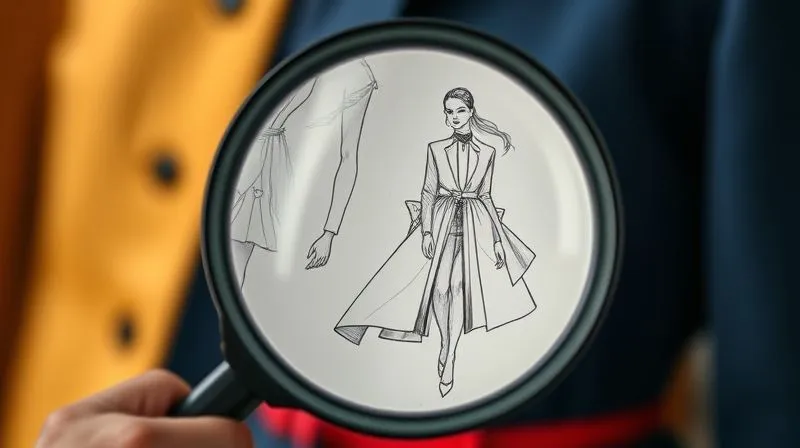
Fortifying Your Intellectual Property: Legal Bastions
The first line of defense is a robust intellectual property (IP) strategy. This isn't just about filing papers; it's about strategically leveraging legal frameworks to create an impenetrable shield around your creative output.
1. Proactive Copyright Registration & Design Patents
Many designers mistakenly believe their work is automatically protected. While copyright exists upon creation, formal registration provides stronger legal standing and allows for statutory damages. Design patents, though more expensive and time-consuming, protect the ornamental design of an article of manufacture and are incredibly powerful for unique, non-functional aesthetic elements.
- Document Everything: From initial sketches to final prototypes, maintain a meticulous log of your design process, including dates, names, and witnesses. This creates a clear paper trail of originality.
- Register Early: As soon as a design is finalized and before public display, pursue copyright registration. In the U.S., this is done through the U.S. Copyright Office. For international protection, explore options via the World Intellectual Property Organization (WIPO).
- Identify Key Elements for Design Patents: Not every design is patentable. Focus on truly novel and non-obvious ornamental features. For instance, a unique buckle design or an innovative fabric manipulation technique could be a candidate. Consult with an IP attorney specializing in fashion law.
- Consider Trade Dress: For a consistent aesthetic or 'look and feel' of a brand that has acquired secondary meaning in the consumer's mind, trade dress protection can be invaluable.
2. Strategic Trademarking Beyond Logos
Trademarks protect brand names, logos, and slogans. However, in couture, strategic trademarking can extend to distinctive patterns, unique textile prints, or even specific color combinations that become synonymous with your brand. Think of the iconic check pattern or a particular shade of red. These elements, when consistently used and marketed, can gain trademark protection, adding another layer of defense against direct visual appropriation.
Case Study: Defending 'The Lumina Gown'
I recall working with 'Atelier Éclat,' a niche couture house renowned for its innovative use of light-reflecting fabrics. Their signature piece, 'The Lumina Gown,' featured a proprietary weave and intricate, hand-placed crystal formations that created a mesmerizing, iridescent effect. Within months of its debut, a major fast fashion retailer released a strikingly similar dress, albeit with cheap synthetic fabrics and printed patterns simulating the crystals. Atelier Éclat had proactively registered the specific crystal formation pattern as a design patent and documented their unique fabric weave, alongside copyrighting the overall design. This robust IP portfolio allowed them to issue a swift and effective cease and desist letter, backed by a credible threat of litigation. The fast fashion retailer, recognizing the strength of Éclat's legal position, quickly withdrew the infringing product from sale and paid a settlement, demonstrating the power of proactive protection.
Innovative Digital Defenses: The Blockchain & AI Frontier
The digital age presents both challenges and unparalleled opportunities for design protection. Leveraging cutting-edge technology can provide irrefutable proof of creation and sophisticated monitoring capabilities.
Leveraging Blockchain for Design Provenance
Blockchain technology offers an immutable, time-stamped record of your design's creation. By 'minting' a digital representation of your design (sketches, CAD files, photos) onto a blockchain, you create an unalterable proof of existence and ownership. This serves as a powerful deterrent and critical evidence in any dispute.
- Digital Fingerprinting: Create high-resolution digital files of your designs at various stages of development.
- Blockchain Registration Platforms: Utilize platforms that specialize in IP protection on blockchain. These services timestamp your creation, providing an irrefutable record of when the design came into existence.
- Secure Documentation: Store all associated metadata – designers involved, materials used, inspiration – alongside the blockchain entry.
AI-Powered Design Recognition and Monitoring
AI algorithms can now 'learn' the unique visual characteristics of your designs. Imagine an AI tirelessly scanning the internet, social media, and e-commerce sites for visual matches or highly similar patterns to your registered designs. This proactive monitoring allows for early detection of potential infringements, enabling a rapid response before replication becomes widespread.
Several startups are emerging in this space, offering services that go beyond simple reverse image searches, using advanced computer vision to identify stylistic similarities that a human might miss. This technology is a game-changer for identifying mass-produced copies quickly.

Cultivating an Ecosystem of Scarcity and Exclusivity
Beyond legal and technological defenses, the very business model of haute couture intrinsically protects against fast fashion. Its core tenets of scarcity, craftsmanship, and bespoke experience are antithetical to mass production.
Limited Editions and Bespoke Experiences
Fast fashion thrives on volume. Haute couture, by definition, thrives on rarity. By emphasizing limited editions, unique collaborations, and one-of-a-kind bespoke commissions, couture houses create a product that cannot be easily replicated or mass-marketed. The value lies not just in the design, but in its exclusivity and the personal connection it fosters.
This approach transforms the garment from a mere product into an experience, a piece of art, a personal statement. Consumers of haute couture aren't just buying a dress; they're investing in a piece of history, a unique narrative, and unparalleled craftsmanship. This inherent value is something fast fashion can never truly replicate, no matter how similar the visual design.
The Power of Narrative and Brand Storytelling
In a world saturated with visual information, the story behind a design becomes its most potent defense. When consumers understand the inspiration, the hours of handwork, the rare materials, and the vision of the designer, the act of purchasing a cheap copy feels less like a savvy bargain and more like a betrayal of artistry. Building a strong brand narrative through compelling content, behind-the-scenes glimpses, and designer interviews creates an emotional moat around your creations.
As The Business of Fashion often highlights, the emotional connection and perceived value of luxury goods are often more powerful than the physical product itself. Cultivating this connection makes a copy feel hollow.
Supply Chain Vigilance and Ethical Sourcing
A significant vulnerability for many brands lies within their supply chain. Unscrupulous manufacturers or suppliers can easily leak designs or even produce unauthorized copies for third parties. Tightening control here is crucial.
Securing Your Production Pipeline
Every step, from initial fabric sourcing to final garment assembly, must be secured. This means ironclad non-disclosure agreements (NDAs) with all suppliers, manufacturers, and even individual artisans. These agreements should clearly define what constitutes proprietary information and the severe penalties for breach. Furthermore, conduct regular, unannounced audits of your manufacturing facilities to ensure compliance with these agreements and to prevent unauthorized production runs.
I've advised clients to implement a 'segmented' production approach where different parts of a complex design are manufactured by different entities, ensuring no single party has the complete blueprint. This adds a layer of security, though it can increase logistical complexity.
Transparency as a Deterrent
Embracing transparency in your supply chain can also act as a deterrent. By publicly championing ethical sourcing and fair labor practices, you highlight the stark contrast with fast fashion's often opaque and exploitative methods. This not only builds consumer trust but also makes it harder for replicators to hide their origins or claim similar ethical standards.
Collaborating with organizations like Textile Exchange for certified materials and sustainable practices can further bolster this position, demonstrating a commitment that goes beyond mere aesthetics.
| Aspect | Vulnerable Practice | Secure Practice |
|---|---|---|
| Design Secrecy | Verbal agreements, few NDAs | Ironclad NDAs, digital tracking, segmented production |
| Material Sourcing | Generic suppliers, no audits | Verified ethical suppliers, full traceability, proprietary materials |
| Production Monitoring | Irregular checks, trust-based | Real-time monitoring, security protocols, unannounced audits |
| Employee Training | Basic awareness | Comprehensive IP training, strict confidentiality clauses |
Engaging the Consumer: Education and Advocacy
Ultimately, the consumer holds immense power. Educating them about the true cost of fast fashion and the value of original design can shift buying habits and create a hostile environment for replicators.
Empowering the Connoisseur to Choose Authenticity
Many consumers are unaware of the intellectual property theft inherent in fast fashion. By creating compelling content that highlights the creative process, the skill involved, and the ethical implications of buying copies, couture houses can empower their clientele to make informed, conscientious choices. This isn't about shaming, but about celebrating authenticity and craftsmanship.
Highlight the difference in quality, longevity, and the story behind the garment. A truly discerning client will appreciate the investment in a piece that stands the test of time, both aesthetically and physically, rather than a fleeting imitation.
Supporting Industry-Wide Anti-Piracy Initiatives
No single brand can fight this battle alone. Support and participate in industry coalitions and legal advocacy groups that are dedicated to protecting fashion IP. Organizations like the Fashion Law Institute at Fordham Law School are at the forefront of shaping legal discourse and advocating for stronger protections. Collective action amplifies individual efforts and can influence policy changes.
Strategic Enforcement: When to Act, How to Litigate
Despite all preventative measures, infringements may still occur. Knowing when and how to enforce your rights is critical.
Cease and Desist Orders: The First Salvo
Often, a well-crafted cease and desist letter from a reputable IP attorney is enough to deter smaller infringers. It puts them on notice and signals your seriousness. For larger fast fashion entities, it serves as a formal declaration of your intent to protect your IP. The key is to act swiftly; delays can weaken your case.
I've seen these letters prevent a small ripple of infringement from becoming a tidal wave. The timing and clarity of the message are crucial. It's about demonstrating that you are vigilant and prepared to defend your creative territory.
Choosing Your Battles: Impact vs. Cost
Litigation is expensive and time-consuming. Not every instance of replication warrants a full-blown lawsuit. I always advise my clients to weigh the potential impact of the infringement against the cost and resources required for legal action. Prioritize cases where the replication is direct, widespread, and significantly damages your brand's reputation or market share. Sometimes, a public statement or a targeted social media campaign highlighting the infringement can be more effective and cost-efficient than a lawsuit.

The Future of Couture Protection: A Proactive Stance
The landscape of fashion and technology is constantly evolving. Staying ahead means anticipating future challenges and continuously adapting your defense strategies.
Anticipating Trends in Replication Techniques
Fast fashion is increasingly sophisticated, leveraging AI for design generation and advanced manufacturing techniques. Couture houses must invest in R&D to understand these evolving threats. This could involve exploring new materials that are harder to replicate, or developing unique construction methods that defy mass production. Collaboration with academic institutions and tech companies can foster innovation in protective measures.
For instance, the rise of 3D printing and digital pattern sharing presents new avenues for infringement, but also new opportunities for digital watermarking and secure design file management.
Fostering Collaborative Industry Standards
The most effective long-term solution lies in collective action. Advocating for stronger intellectual property laws globally, establishing industry-wide best practices for design protection, and fostering a culture of respect for originality are paramount. This involves dialogue with policymakers, collaboration between luxury brands, and a unified front against exploitation.
As Harvard Business Review suggests, consumer consciousness is growing. Tapping into this collective desire for authenticity and ethical production can create a powerful force against fast fashion's unsustainable model.
| Strategy Category | Current Approach | Future Vision |
|---|---|---|
| Legal Frameworks | Reactive litigation, national focus | Proactive global registration, international harmonization, stronger enforcement treaties |
| Technological Defenses | Limited digital monitoring, manual searches | AI-driven design recognition, blockchain provenance, digital watermarking |
| Brand & Consumer | Exclusivity through price | Value through narrative, consumer advocacy, experiential luxury, ethical consumption campaigns |
| Supply Chain | Basic NDA enforcement | End-to-end digital traceability, secure manufacturing hubs, certified ethical suppliers |
Frequently Asked Questions (FAQ)
Is it really possible to copyright a dress design? Yes, but with nuances. In the U.S., copyright protects 'original works of authorship,' and this can extend to dress designs, particularly their unique ornamental features or textile prints, provided they are separable from the garment's functional aspects. The overall cut or silhouette itself is generally considered functional and thus harder to copyright, but the specific artistic expression of a design can be protected. Formal registration strengthens your claim significantly.
How effective are cease and desist letters against global fast fashion giants? Their effectiveness varies. For smaller, less established fast fashion brands, a well-drafted cease and desist from a reputable law firm can be very effective in prompting them to withdraw infringing products. For larger, multinational corporations, they may be less deterred, viewing it as a cost of doing business. However, it's a crucial first step, establishing your legal position and often leading to negotiations or paving the way for further legal action.
What role does social media play in both design theft and protection? Social media is a double-edged sword. It's often the first place designers showcase new collections, making them vulnerable to immediate replication. However, it's also a powerful tool for monitoring, enabling rapid identification of infringements. More importantly, it can be used for public advocacy, allowing brands to highlight instances of copying, educate their audience on IP protection, and rally support, often leading to consumer backlash against the replicator.
Can fast fashion brands simply make minor alterations to avoid infringement? This is a common tactic. Fast fashion brands often make subtle changes to designs – altering a seam, changing a fabric, or slightly modifying an embellishment – to argue that their design is not a direct copy. The legal threshold for proving infringement typically requires 'substantial similarity,' and these minor alterations aim to fall just outside that definition. This is why a comprehensive IP strategy, protecting multiple elements of a design (patterns, specific features, overall aesthetic), is crucial.
What's the cost implication for a small couture house to protect its IP globally? Protecting IP globally can be prohibitively expensive for smaller houses, as it often requires registration in multiple jurisdictions. This is why a strategic approach is vital: prioritize your most unique and valuable designs, focus on key markets where your brand has significant presence or where replication is most rampant, and leverage international treaties like the Hague Agreement for industrial designs where applicable to streamline the process. Blockchain registration offers a more cost-effective global proof of existence.
Key Takeaways and Final Thoughts
- Proactive IP Strategy: Don't wait for infringement. Register copyrights, pursue design patents, and strategically trademark unique elements before a design is launched.
- Leverage Technology: Embrace blockchain for irrefutable proof of creation and AI for continuous, global design monitoring.
- Cultivate Scarcity & Story: Emphasize bespoke experiences, limited editions, and compelling brand narratives to create intrinsic value that fast fashion cannot replicate.
- Secure Your Supply Chain: Implement rigorous NDAs, conduct regular audits, and champion transparency to prevent leaks and unauthorized production.
- Educate and Advocate: Empower your consumers to choose authenticity and join industry-wide efforts to strengthen IP protection and ethical practices.
The fight against fast fashion replicating exclusive couture designs is multifaceted, requiring vigilance, legal acumen, technological adoption, and a deep commitment to ethical practice. As someone who has dedicated their career to the preservation of true artistry in fashion, I firmly believe that by implementing these strategies, couture houses can not only defend their creative legacy but also inspire a future where originality is celebrated, protected, and revered. Your designs are more than just garments; they are a testament to human ingenuity. Let's ensure their stories are told, not stolen.
Recommended Reading
- 7 Steps: Master Haute Couture Client Expectations in Consultations
- Unveiling the Secret: Why Choose Organic Cotton for Your Baby's Clothing?
- Unraveling the Fabric: What Challenges Hinder Sustainable Textile Innovation?
- 7 Proven Strategies: Slash Returns of Poorly Fitting Workout Clothes
- Unlock Your Style: How to Chicly Dress Diverse Body Types (7 Pro Tips)




Your email address will not be published. Required fields are marked *