


How to Ethically Source Sustainable Fabrics for Streetwear Drops?
For over 15 years, I've navigated the complex and exhilarating landscape of fashion, particularly within the dynamic realm of streetwear. What started as an edgy subculture has blossomed into a global phenomenon, yet with its growth, I've seen a pervasive challenge emerge: the struggle for genuine sustainability amidst a demand for rapid, fresh drops. Many brands, both nascent and established, grapple with the fundamental question of how to ethically source sustainable fabrics for streetwear drops without compromising their core identity or bottom line.
The problem is multifaceted: an opaque global supply chain, the allure of cheaper, less ethical alternatives, and the ever-present threat of 'greenwashing' make it incredibly difficult for brands to make truly responsible choices. Consumers are savvier than ever, demanding transparency and authenticity, and a misstep can cost a brand its reputation and market share. This isn't just about environmental impact; it's about human rights, fair wages, and building a business that stands for something more than just profit.
In this definitive guide, I'll draw upon my extensive experience to provide you with a clear, actionable framework. We'll explore the critical steps, delve into practical strategies, and uncover the certifications and partnerships that will empower your streetwear brand to ethically source sustainable fabrics for streetwear drops. My goal is to equip you with the knowledge to build a responsible, resilient, and respected brand that truly makes a difference.
Understanding the 'Why': Beyond Greenwashing to Genuine Impact
Before we dive into the 'how,' it's crucial to solidify the 'why.' In my experience, many brands approach sustainability as a marketing trend rather than a fundamental shift in operations. This superficial engagement often leads to greenwashing, a practice that savvy consumers increasingly reject.
The True Cost of Fast Fashion
The allure of cheap, trendy clothing has a devastating hidden cost. According to the Textile Exchange, the textile industry is a major contributor to global pollution, consuming vast amounts of water, energy, and chemicals, and generating significant waste. From raw material extraction to dyeing and finishing, each stage of the conventional supply chain leaves an indelible mark. I've witnessed firsthand the environmental degradation in regions where textile production is concentrated, and it's a sobering reminder of our collective responsibility.
Beyond environmental concerns, there are severe social implications. The drive for low costs often translates into exploitative labor practices, unsafe working conditions, and poverty wages for garment workers in developing nations. This isn't just a moral failing; it's a systemic issue that ethical sourcing aims to dismantle.
Consumer Demand and Brand Reputation
Today's streetwear consumer, particularly the younger demographic, is highly conscious of social and environmental issues. They don't just buy clothes; they buy into a brand's values. A recent Deloitte study highlighted that nearly a third of consumers have stopped purchasing from brands due to ethical or sustainability concerns. Your brand's reputation, once built on hype and aesthetics, now equally depends on its integrity.
Ethical sourcing isn't just 'nice to have'; it's becoming a competitive necessity. Brands that genuinely commit to sustainability build deeper trust, foster stronger loyalty, and attract a growing segment of the market that aligns with their values. This isn't just about avoiding negative press; it's about proactive brand building and future-proofing your business.
Expert Insight: "True sustainability isn't an add-on; it's the bedrock of a resilient, respected brand. It requires a fundamental shift from transactional thinking to a long-term, impact-driven strategy that resonates with the conscious consumer."
Step 1: Define Your Ethical & Sustainable Fabric Criteria
The first tangible step in how to ethically source sustainable fabrics for streetwear drops is to clearly define what 'ethical' and 'sustainable' mean for your brand. This isn't a one-size-fits-all definition; it needs to align with your brand's specific values, target audience, and design aesthetic. I always advise my clients to start here, as it provides a compass for all subsequent decisions.
Prioritizing Fabric Types
The world of sustainable fabrics is vast and ever-evolving. You need to select materials that not only meet your design requirements but also have a demonstrably lower environmental and social footprint. Here are some top contenders I frequently recommend for streetwear:
- Organic Cotton: Grown without harmful pesticides or synthetic fertilizers, it's a classic for comfort and durability.
- Hemp: Requires minimal water and no pesticides, grows quickly, and offers excellent strength and breathability.
- Recycled Polyester (rPET): Made from plastic waste, diverting it from landfills and oceans. Ideal for performance wear components.
- Tencel™ Lyocell/Modal: Derived from sustainably sourced wood pulp using a closed-loop production process that recycles solvents and water.
- Recycled Cotton: Reduces textile waste and the need for virgin cotton production.
Consider the entire lifecycle of the fabric – from raw material cultivation or collection to processing, dyeing, and end-of-life. Each stage presents different challenges and opportunities for sustainability.
Certifications That Matter
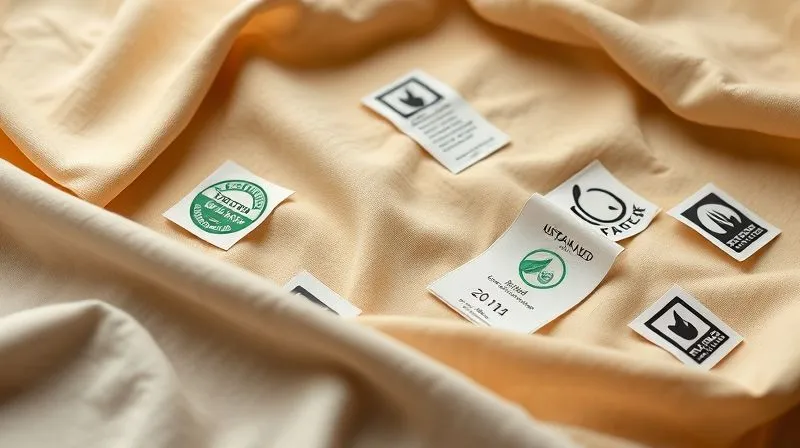
Navigating claims of sustainability can be overwhelming. This is where third-party certifications become your best friend. They provide independent verification that a fabric or product meets specific environmental and social standards. I cannot stress enough the importance of these certifications for building trust and avoiding greenwashing.
- Global Organic Textile Standard (GOTS): The gold standard for organic fibers, ensuring ecological and social criteria throughout the entire textile supply chain, from fiber harvesting to manufacturing.
- Oeko-Tex Standard 100: Certifies that textiles are free from harmful substances, covering all stages of production.
- Fair Trade Certified™: Focuses on social responsibility, ensuring fair wages, safe working conditions, and community development for farmers and workers.
- Recycled Content Standard (RCS) & Global Recycled Standard (GRS): Verifies the presence and amount of recycled material in a final product, and addresses social, environmental, and chemical practices.
- Bluesign®: A holistic system that eliminates harmful substances from the beginning of the manufacturing process and sets standards for environmentally friendly and safe production.
Look for suppliers who can provide these certifications for their materials. This isn't just paperwork; it's proof of their commitment.
Step 2: Navigating the Supply Chain: Transparency is Key
Once you know what fabrics you're looking for, the next hurdle in how to ethically source sustainable fabrics for streetwear drops is understanding and navigating the supply chain. This is often the most challenging aspect, as traditional supply chains can be incredibly convoluted and opaque. Transparency isn't just a buzzword here; it's the foundation of ethical sourcing.
Mapping Your Supply Chain
You can't manage what you don't understand. My advice is always to map out your supply chain as thoroughly as possible. This means going beyond your direct supplier to understand where their raw materials come from, where the spinning, weaving, dyeing, and finishing happen, and who is involved at each stage.
- Identify Tiers: Start with your Tier 1 supplier (the garment manufacturer). Then ask them about their Tier 2 suppliers (fabric mills, dye houses), and Tier 3 (yarn spinners, raw material producers).
- Request Documentation: Ask for lists of their sub-suppliers, addresses, and relevant certifications. Be persistent.
- Visual Tools: Use flowcharts or digital tools to visualize the journey of your fabric from fiber to finished garment.
This process can be time-consuming, especially for smaller brands, but it's an indispensable step. The more you know, the better equipped you are to identify potential risks and ensure ethical practices.
Direct Sourcing vs. Fabric Agents
When it comes to finding suppliers, you generally have two main routes:
- Direct Sourcing: Contacting mills and manufacturers directly. This offers greater control and potential cost savings but requires more legwork, expertise, and often higher MOQs.
- Fabric Agents/Brokers: Companies that specialize in connecting brands with fabric suppliers. They can simplify the process, especially for smaller brands, but may add a layer of cost and distance you from the direct source.
I often see brands struggle with this choice. For streetwear, which often values unique textures and specific finishes, direct relationships can be invaluable for innovation and custom development, but agents can be a great starting point for smaller runs or when time is of the essence.
Expert Insight: "Don't be afraid to ask tough questions. A truly ethical supplier will welcome your scrutiny and be eager to share their processes and certifications. Red flags often appear when information is withheld or vague."
| Aspect | Pros | Cons |
|---|---|---|
| Direct Sourcing | Greater control, potential cost savings, direct relationship with mill, higher transparency potential | Higher MOQs, more time-consuming, requires internal expertise, complex logistics |
| Fabric Agent | Access to diverse suppliers, reduced legwork, lower MOQs often available, simplified logistics | Added cost, less direct control over supply chain, potential for less transparency, may not specialize in ethical sourcing |
Step 3: Vetting Suppliers: Due Diligence and Audits
Once you've identified potential suppliers, the critical next phase in how to ethically source sustainable fabrics for streetwear drops is rigorous vetting. This isn't just about checking a box; it's about building trust and ensuring that their practices align with your brand's ethical commitments. In my career, I've seen brands make costly mistakes by skipping or superficializing this step.
Asking the Right Questions
Beyond asking for certifications, engage in detailed conversations with potential suppliers. Here's a checklist of questions I advise my clients to ask:
- What specific sustainability initiatives do you have in place (e.g., water recycling, renewable energy, waste reduction)?
- Can you provide details on your labor practices, including wages, working hours, and employee benefits?
- Do you have a code of conduct for your own suppliers? How do you enforce it?
- What are your policies on child labor, forced labor, and discrimination?
- How do you manage chemical use and wastewater treatment?
- Are you open to third-party audits or factory visits from our team?
- How do you trace your raw materials to their origin?
Their willingness to answer these questions transparently and provide supporting documentation speaks volumes about their genuine commitment.
The Power of Third-Party Audits
While self-reported data is a start, independent third-party audits provide an unbiased assessment of a supplier's social and environmental performance. Organizations like Sedex (Supplier Ethical Data Exchange) and BSCI (Business Social Compliance Initiative) conduct audits that cover labor standards, health and safety, environmental management, and business ethics. Requesting access to these audit reports is a non-negotiable step.
If a supplier doesn't have recent audits, consider making it a condition of partnership that they undergo one. This demonstrates your serious commitment and helps them improve their own practices, benefiting everyone involved.
Case Study: Urban Threads Co.
Urban Threads Co., a burgeoning streetwear brand, initially struggled with finding truly ethical suppliers. Their first collection used 'eco-friendly' claims that were difficult to verify. After a critical customer inquiry, their founder, Maya, realized they needed a more robust approach. She implemented a strict vetting process, requiring all potential fabric mills to provide GOTS and Fair Trade certifications, along with their last two Sedex audit reports. For suppliers without recent audits, Maya offered to co-fund a new audit, demonstrating her commitment. One key supplier, a hemp fabric mill in Vietnam, initially hesitated but agreed. The audit revealed minor issues with waste management, which Urban Threads Co. collaboratively helped them address with new equipment and training. This proactive approach not only ensured ethical sourcing but also strengthened their partnership, leading to a truly transparent and impactful collection that resonated deeply with their audience.

Step 4: Building Long-Term Relationships & Impact
Ethical sourcing isn't a one-off transaction; it's about cultivating enduring relationships. In my years, I've seen that the most successful sustainable streetwear brands are those that view their suppliers as true partners, not just vendors. This approach fosters trust, encourages continuous improvement, and ultimately leads to a more resilient and ethical supply chain.
Collaborative Partnerships
Once you've vetted and selected your suppliers, invest in building strong, collaborative relationships. This means:
- Fair Contracts: Ensure your contracts are equitable, offering stable orders and fair payment terms.
- Open Communication: Maintain regular dialogue, sharing your brand's vision and listening to their challenges and insights.
- Shared Goals: Work together to set and achieve sustainability targets, such as reducing water usage or improving energy efficiency.
When suppliers feel valued and are part of your journey, they are far more likely to go the extra mile to meet ethical and sustainable standards.
Investing in Supplier Development
For some smaller or emerging suppliers, reaching the highest ethical and sustainable standards might be a journey. Consider how your brand can support their development. This could involve:
- Providing training on best practices in waste management or labor relations.
- Connecting them with resources for sustainable technology upgrades.
- Offering long-term commitments that allow them to invest in their own sustainability initiatives.
This kind of investment not only strengthens your supply chain but also contributes positively to the communities where your products are made. It's a testament to genuine impact beyond just compliance.
Expert Insight: "The most impactful change happens not through demands, but through partnership. When you empower your suppliers to be better, you elevate your entire brand's ethical footprint."
Step 5: Marketing Your Ethical Stance Authentically
You've done the hard work of how to ethically source sustainable fabrics for streetwear drops, now it's time to share your story. However, this step requires careful navigation to avoid the very greenwashing you've worked so hard to avoid. Authenticity is paramount.
Storytelling with Integrity
Your brand's sustainability journey is a powerful narrative. Tell it with honesty and detail. Instead of vague claims, provide specific examples:
- Highlight the specific certifications your fabrics hold (e.g., "Our organic cotton hoodies are GOTS certified.")
- Share the stories of your suppliers and the communities they support (e.g., "Meet the artisans in [Country] who weave our hemp fabrics.")
- Detail the environmental benefits (e.g., "Our recycled polyester saves X plastic bottles from landfills per garment.")
Use your website, social media, and packaging to educate your audience. Transparency builds trust, and trust builds loyalty. I've found that consumers appreciate the effort and honesty, even if your journey isn't perfect yet.
Avoiding Greenwashing Pitfalls
Be precise with your language. Avoid:
- Vague terms: "Eco-friendly," "natural," "sustainable" without specific proof.
- Irrelevant claims: Highlighting one small sustainable aspect while ignoring larger issues (e.g., "Our hang tags are recycled!" for a fast-fashion brand).
- Exaggeration: Overstating the environmental benefits of your products.
Focus on verifiable facts and measurable impact. If you're still working towards a goal, be transparent about that too. Consumers respect brands that are on a journey of continuous improvement, not just those claiming perfection.

Overcoming Common Challenges in Ethical Sourcing
As an industry specialist, I know that the path to ethical sourcing isn't without its bumps. Brands frequently encounter challenges, but with foresight and strategy, these can be navigated effectively.
Cost vs. Value
One of the most immediate concerns I hear is about the perceived higher cost of sustainable and ethically produced fabrics. It's true that certified organic cotton or fair-trade materials often have a higher upfront price than conventional alternatives. However, it's crucial to shift perspective from 'cost' to 'value.'
Ethical sourcing reduces long-term risks associated with supply chain disruptions, reputational damage, and potential regulatory changes. It also enhances brand equity, allowing for premium pricing and attracting a loyal customer base willing to pay more for values-aligned products. As Harvard Business Review often highlights, sustainability is increasingly a driver of competitive advantage and financial performance.
Minimum Order Quantities (MOQs)
Many sustainable fabric mills, particularly those specializing in niche or certified materials, have higher MOQs compared to conventional suppliers. This can be a barrier for smaller streetwear brands. My advice here is multi-pronged:
- Collaborate: Explore opportunities to partner with other small brands to meet MOQs.
- Fabric Agents: As discussed, agents often aggregate orders and can help access smaller quantities.
- Focus on Core: Start with a limited range of core sustainable fabrics for your flagship products, then expand.
- Build Relationships: As you grow and build trust, suppliers may become more flexible with MOQs.
Geographical Complexities
The global nature of textile production means your supply chain might span multiple continents, each with its own regulations, labor laws, and cultural nuances. This adds layers of complexity to oversight and communication. Leverage technology for supply chain mapping and communication, and consider working with local partners or consultants in key production regions who understand the specific context.
| Challenge | Solution | Benefit |
|---|---|---|
| High Initial Cost | View as long-term investment, premium pricing potential, reduced brand risk | Enhanced brand equity, loyal customer base, competitive advantage |
| MOQ Constraints | Collaborate with other brands, use fabric agents, focus on core products initially | Access to high-quality sustainable materials, gradual scaling of production |
| Supply Chain Complexity | Utilize supply chain mapping tools, engage local experts, robust communication protocols | Increased transparency, reduced ethical risks, stronger global partnerships |
Frequently Asked Questions (FAQ)
Q: Is ethical sourcing always more expensive for streetwear brands? While the initial cost of sustainable and ethically produced fabrics can be higher, I've found that brands often recoup this through increased brand loyalty, premium pricing potential, and reduced risks associated with reputational damage or supply chain disruptions. It's an investment in your brand's long-term viability and positive impact.
Q: How do I start if I'm a small streetwear brand with limited resources? Begin small but strategically. Focus on one or two key pieces in your collection using certified sustainable fabrics. Prioritize transparency and tell your story authentically. Look for fabric agents who can help with smaller MOQs, and actively seek out local or regional suppliers to minimize logistical complexities and build direct relationships. Incremental steps are better than inaction.
Q: What's the fundamental difference between 'organic' and 'recycled' fabrics, and which is better for streetwear? Organic fabrics (like organic cotton or hemp) are derived from natural fibers grown without harmful pesticides or synthetic fertilizers, focusing on reducing agricultural impact. Recycled fabrics (like rPET or recycled cotton) are made from pre- or post-consumer waste, focusing on diverting materials from landfills and reducing the need for virgin resources. Both are excellent for streetwear, and the 'better' choice depends on your specific design needs, sustainability goals, and the environmental footprint you aim to minimize most. Often, a blend of both can be highly effective.
Q: How can I ensure fair labor practices in my supply chain, especially for dyeing and finishing? This is crucial. Beyond requiring certifications like Fair Trade, insist on third-party social audits (e.g., Sedex, BSCI reports) from all tiers of your supply chain, not just the final garment assembly. Conduct regular check-ins, establish a clear code of conduct with your suppliers, and foster open communication channels for workers to report issues. True fair labor requires continuous vigilance and commitment.
Q: What are some emerging sustainable materials that streetwear brands should keep an eye on? The innovation in sustainable textiles is exciting! Look out for materials like mushroom leather (Mylo™), algae-based dyes, citrus and pineapple leaf fibers (Piñatex®), and fabrics made from agricultural waste. These offer unique textures and properties that could push the boundaries of streetwear design while minimizing environmental impact. Staying informed through industry reports and textile innovation expos is key.
Key Takeaways and Final Thoughts
Embarking on the journey of how to ethically source sustainable fabrics for streetwear drops is a commitment, a challenge, and ultimately, a profound opportunity. It's a path that demands diligence, transparency, and a willingness to look beyond conventional practices. But as I've seen countless times, the rewards—in terms of brand integrity, consumer loyalty, and genuine positive impact—are immeasurable.
- Define Your Criteria: Clearly articulate what 'ethical' and 'sustainable' mean for your brand, leveraging key certifications.
- Map Your Supply Chain: Demand transparency from every tier, understanding the full journey of your fabrics.
- Vet Rigorously: Ask tough questions and utilize third-party audits to verify supplier claims.
- Build Relationships: Foster collaborative, long-term partnerships with your suppliers, empowering them to grow ethically.
- Market Authentically: Share your story with integrity, providing verifiable details and avoiding greenwashing.
The streetwear industry has always been about pushing boundaries and challenging the status quo. Now, it's time to apply that same innovative spirit to building a truly responsible future. Your brand has the power to influence not just trends, but also the very fabric of our world. Embrace this challenge, lead with purpose, and create drops that are as impactful as they are stylish.
Recommended Reading
- 5 Critical Reasons Your Unique Handmade Jewelry Isn't Selling (And How to Fix Them)
- Unearthing Obscure Costume Details: A Filmmaker's 7-Step Research Guide
- 7 Pillars: How to Assemble a Power Wardrobe for High-Stakes Meetings
- Cracking the Code: What Are the Secrets to Streetwear Influencer Success?
- Verify Vintage: 7 Steps to Ethically Authenticate Apparel for Profit



Your email address will not be published. Required fields are marked *