

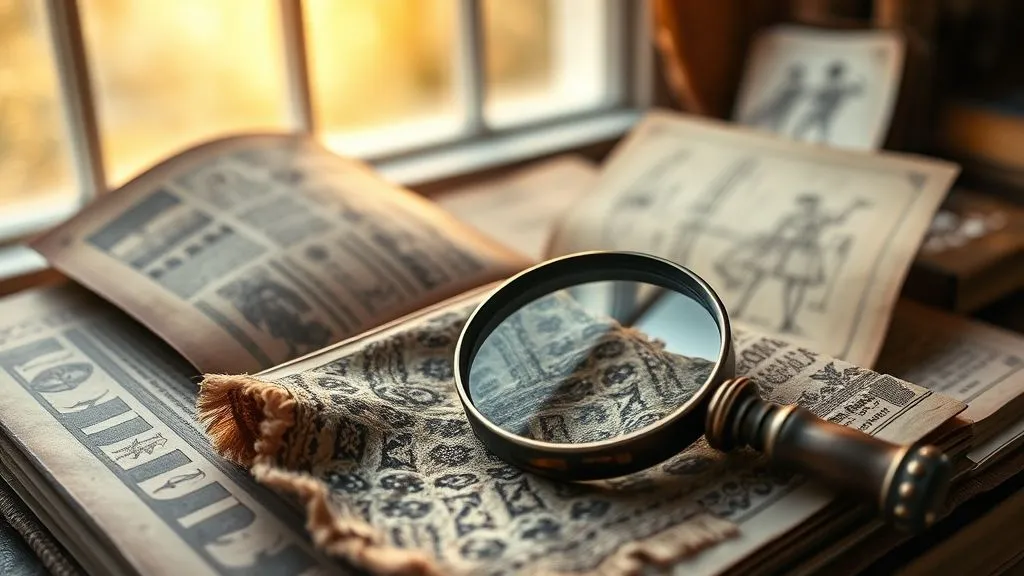
How to Find Obscure Historical Costume Details for Authentic Film?
For over two decades in the demanding world of costume design for film and television, I've witnessed the profound impact—both positive and negative—that historical accuracy has on a production. I've seen masterful period pieces transport audiences entirely, and I've cringed at anachronisms that shatter the illusion, pulling viewers right out of the narrative. The difference often lies not in grand gestures, but in the subtle, often obscure, details that truly define an era.
The common pain point for many filmmakers and costume designers is the challenge of moving beyond the readily available, surface-level historical information. While the major silhouettes and iconic pieces are well-documented, it's the specific trims, the precise way a garment drapes, the texture of an unseen lining, or the nuances of a regional accessory that elevate a costume from 'period-inspired' to truly authentic. This struggle to unearth the 'unseen' details can lead to generic designs that lack the soul and specificity required for a truly immersive cinematic experience.
In this definitive guide, I will share my battle-tested strategies and frameworks for how to find obscure historical costume details for authentic film. We'll explore actionable research methods, delve into the often-overlooked corners of historical documentation, and discuss how to interpret scarce evidence to breathe life into your characters' wardrobes. Prepare to transform your approach to historical costume research, moving from broad strokes to breathtaking precision.
Beyond the Obvious: The Deep Dive into Primary Sources
When embarking on a quest for authenticity, my first port of call is always primary sources. These are the untouched windows into the past, offering unfiltered glimpses that secondary interpretations, however well-researched, can never fully replicate. It’s here that the most obscure details often hide in plain sight.
Archival Gold: Letters, Diaries, and Inventories
Personal writings like letters and diaries often contain casual mentions of clothing, fabrics, or accessories that illuminate daily life in a way no formal fashion plate can. Estate inventories, wills, and household records are treasure troves, listing garments item by item, sometimes even describing their condition, color, and fabric. These documents can reveal the prevalence of certain materials, the value placed on specific items, and even the names of obscure garment types.
- Identify Key Figures and Regions: Focus your search on individuals or families relevant to your film's setting and social class.
- Access Digital Archives: Many national and university archives have digitized vast collections. Search terms like 'estate inventory [year/century]' or 'letters [historical figure]' plus 'clothing' or 'garment'.
- Scrutinize for Specifics: Look beyond the main item. Does a letter mention a 'striped silk ribbon' or 'buttons of bone'? Does an inventory specify 'linen shifts' or 'a velvet cloak lined with fur'?
- Cross-Reference: Compare descriptions across multiple sources to build a more complete picture of common practices vs. unique items.
Visual Veracity: Paintings, Photographs, and Fashion Plates
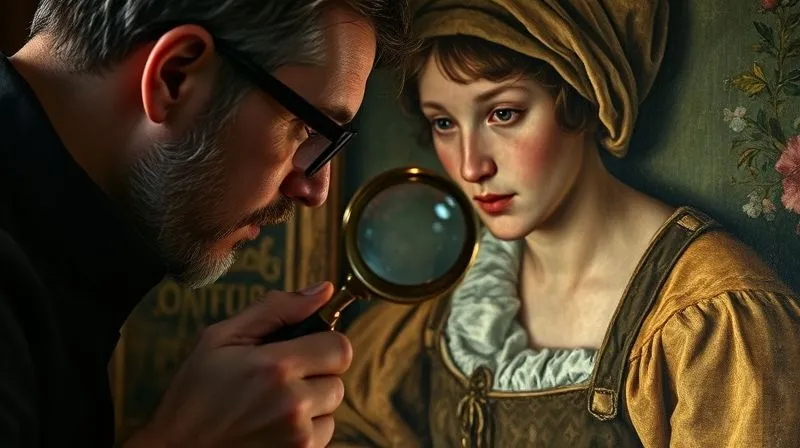
While fashion plates provide idealized versions of garments, historical paintings, particularly genre scenes and portraits of less prominent individuals, can offer a more candid view of how clothing was actually worn, draped, and moved. Early photographs, though limited to specific eras, are invaluable for their unvarnished reality, capturing texture, wear, and the subtle ways people adorned themselves.
I always emphasize examining the background figures, the servants, the street vendors, and the children in these visual records. Their clothing, often less formal and less idealized, can reveal utilitarian details, regional variations, and the true 'lived-in' appearance of garments.
The Material Truth: Textiles, Trims, and Textures
The fabric itself speaks volumes. Understanding the textiles available in a specific period, their weaving techniques, dyeing processes, and how they were treated, is fundamental to authentic costume design. This is often where the most obscure yet impactful details lie.
Decoding Fabric Weaves and Dyes
It's not enough to know that a dress was 'silk.' Was it a heavy brocade, a delicate taffeta, a sheer gauze, or a ribbed faille? The weave structure affects drape, sheen, and how light interacts with the fabric. Similarly, natural dyes produced a different palette and intensity than later synthetic dyes. Researching period-appropriate dyes can inform subtle color shifts and variations that modern fabrics often lack.
The Significance of Seams and Construction
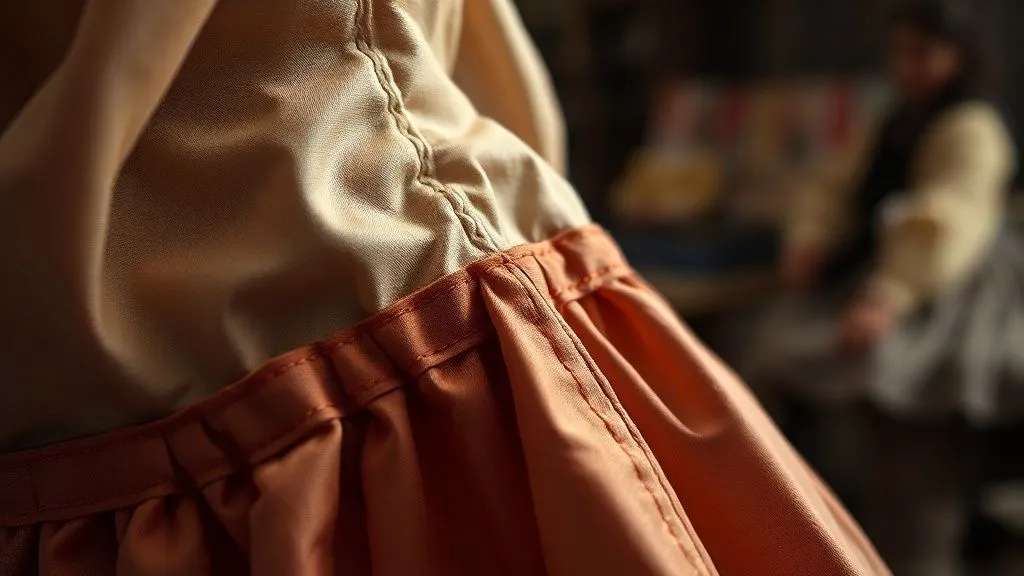
Hand-stitched seams look and behave differently than machine-stitched ones. The construction techniques—how sleeves were set, how bodices were shaped, the methods for finishing edges—all evolved over time. Obscure historical costume details often manifest in these seemingly mundane aspects of garment creation. For instance, the prevalence of flat-felled seams in utilitarian garments or specific types of pleating for fullness.
Case Study: How 'The Silent Thread' Mastered Textile Authenticity
The independent film 'The Silent Thread,' set in a 19th-century textile mill, faced a tight budget but an unyielding commitment to authenticity. The costume designer, understanding the importance of fabric, dedicated weeks to researching period-appropriate cotton weaves, linen textures, and the specific types of checks and stripes common in working-class attire. Instead of using modern factory-produced fabrics, they sourced small batches of historically accurate reproductions and even had some hand-woven. This meticulous attention to textile detail, including the slightly uneven weave and muted dye colors, created an undeniable sense of realism that resonated deeply with critics and audiences, elevating the film's visual storytelling despite its limited resources. The subtle imperfections became powerful markers of authenticity.
| Textile Type | Common Period Usage | Key Characteristics |
|---|---|---|
| Linen | Ancient Egypt to Present (undergarments, utilitarian) | Strong, absorbent, wrinkles easily, natural slub texture |
| Wool | Ancient times to Present (outerwear, suiting) | Warm, durable, various weaves (tweed, broadcloth, serge) |
| Silk | Medieval Europe onwards (luxury, formalwear) | Smooth, lustrous, drapes well, takes dye richly, various weaves (taffeta, satin, brocade) |
| Cotton | 17th Century onwards (increasingly common, workwear, everyday) | Soft, breathable, absorbent, takes dye well, various weaves (calico, muslin, denim) |
Unseen Layers: Undergarments and Their Impact on Silhouette
One of the most frequently overlooked areas in historical costume is the foundation beneath the visible garment. Undergarments are not merely hidden; they are the architectural framework that dictates the entire silhouette, posture, and movement of a period costume. Without accurate underpinnings, even the most beautiful outer garment will look fundamentally wrong.
Corsetry, Crinolines, and Bustles: More Than Just Foundation
A 19th-century gown without its appropriate corset will lack the period-specific posture and bust shaping. A mid-Victorian dress without a crinoline will collapse. A late-Victorian dress without a bustle will lose its distinctive rear projection. Researching the construction, materials, and evolution of these undergarments is crucial. This includes understanding the number of bones in a corset, the type of cording used in a petticoat, or the specific cages and padding that created the desired shape. These are prime examples of how to find obscure historical costume details for authentic film, as they often go unmentioned in general fashion histories.
The Hidden Language of Linings and Padding
Beyond the major structural elements, consider the subtle impact of linings and padding. A jacket might be lined with silk for luxury or linen for practicality. Padding in shoulders or hems could alter the drape or weight. These interior details, though unseen by the camera, contribute to the garment's overall feel and how it moves on the actor, which is ultimately conveyed to the audience.
As costume historian and author Sarah Lorraine often emphasizes, "The undergarments are the ghost of the body beneath, shaping and supporting, and without them, the outer garment is an empty shell lacking the true spirit of the era."
Beyond the Garment: Accessories, Hair, and Makeup as Narrative Tools
Authenticity doesn't stop at the main costume; it extends to every element that completes the look. Accessories, hairstyles, and makeup are powerful non-verbal communicators of social status, personal taste, and period-specific aesthetics. They are often where the most charmingly obscure details reside.
The Devil in the Details: Jewelry, Gloves, and Footwear
The type of jewelry worn (paste vs. real gems, specific motifs), the length and material of gloves, the heel height and toe shape of footwear, or the style of a handbag – these are all indicators of time and place. For example, a specific type of chatelaine worn by a housekeeper in the 18th century or a particular style of button boot popular for walking in the 1890s can instantly ground a character in their historical context. Don't forget the subtle details like how a hat was pinned or how a shawl was draped.
Hairstyles and Cosmetics: A Social Barometer
Hair was rarely left 'natural' in most historical periods. Researching the specific styles, partings, and adornments (ribbons, combs, nets) is vital. Similarly, makeup, even when subtle, followed distinct trends. Was a pale complexion desirable? Were eyebrows plucked thin or left bushy? Were lips colored with specific pigments? These details, often overlooked, are critical for creating a truly authentic period appearance. For more on the evolution of accessories, you might explore the Metropolitan Museum of Art's digital collections.
Leveraging Digital Archives and Niche Online Communities
The digital age has revolutionized historical research, making previously inaccessible resources available to anyone with an internet connection. This is a game-changer for how to find obscure historical costume details for authentic film.
The Power of Digitized Collections
Many major museums, libraries, and universities worldwide have digitized their collections, offering high-resolution images of garments, textiles, fashion plates, and historical documents. Websites like the Victoria and Albert Museum's fashion collection, the Kyoto Costume Institute Digital Archives, and various national archives provide an unparalleled wealth of visual and textual information. Utilize advanced search filters for specific dates, materials, or garment types.
Engaging with Historical Reenactment and Costume History Forums
Niche online communities dedicated to historical reenactment, living history, and academic costume history are invaluable. These forums and social media groups are often populated by passionate individuals who have spent years meticulously researching and recreating historical garments. They can offer insights into construction techniques, material availability, and obscure details that might not be published in traditional academic texts. Always approach these communities with respect, and be prepared to share your own research questions.
The Art of Interpretation: When Sources Conflict or Are Scarce
No matter how diligent your research, you will inevitably encounter gaps, conflicting information, or outright scarcity of sources for certain periods or regions. This is where the art of interpretation comes into play, balancing academic rigor with creative problem-solving.
Embracing Educated Speculation and Creative Problem-Solving
When direct evidence is missing, look for analogous situations. What were people wearing in neighboring regions? What materials were available? What were the social conventions of the time? An educated guess, grounded in broad historical understanding and informed by available evidence, is far better than inventing something anachronistic. This might involve inferring details from surviving fragments of textiles or extrapolating from related visual evidence.
The "Period Feel" vs. Absolute Historical Accuracy
It's important to differentiate between creating a convincing "period feel" and achieving absolute, museum-level historical accuracy. For film, the former is often paramount. Sometimes, a detail that is 100% accurate might look 'wrong' or distracting to a modern audience. Your goal is to transport the audience, not to lecture them. A good costume designer knows when to make a subtle adjustment for visual storytelling while retaining the essence of the period. This requires a deep understanding of the rules before you can thoughtfully break them.
In my experience, the most authentic costumes are not necessarily those that replicate every stitch perfectly, but those that capture the spirit, the social language, and the lived reality of the era through their materials, construction, and wear. It's about telling a story with fabric and form.
Collaborating with Experts: Historians, Curators, and Craftspeople
You don't have to be an expert in every historical period or every textile technique. One of the most powerful strategies for how to find obscure historical costume details for authentic film is to consult with those who dedicate their lives to these niche areas.
The Indispensable Role of Academic Consultations
Reach out to university professors specializing in historical textiles, fashion history, or social history of your specific period. Museum curators, particularly those in textile and costume departments, are goldmines of information. They have direct access to artifacts and often possess highly specialized knowledge about their construction, provenance, and conservation. A brief consultation can save weeks of independent research and uncover details you might never find otherwise.
Learning from Living History Practitioners
Individuals involved in living history or historical reenactment groups often possess practical, hands-on knowledge of how garments were made and worn. They understand the ergonomics of historical clothing, the way certain fabrics drape, and the challenges of period construction. Their insights can be invaluable for bringing a costume to life beyond just its visual appearance.
Field Research and Experiential Learning: Bringing History to Life
There's no substitute for direct engagement with historical artifacts and the physical experience of historical clothing. This hands-on approach can reveal obscure details that are impossible to glean from books or digital images alone.
Museum Visits and Conservation Labs
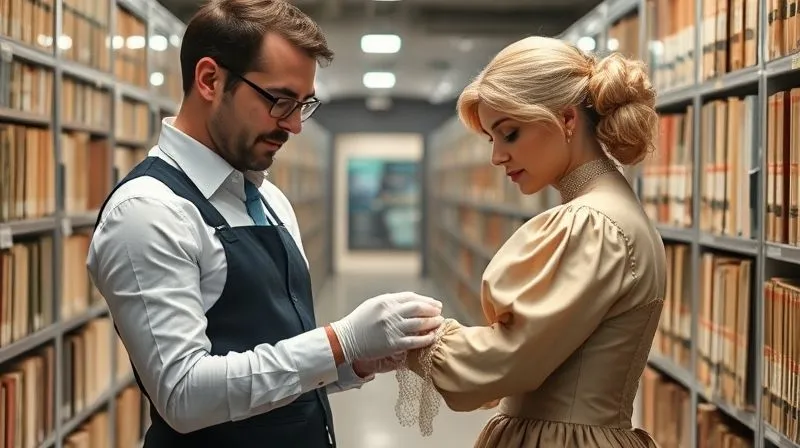
Whenever possible, visit museums with strong textile and costume collections. Request to view garments up close, perhaps even with a curator's guidance. Pay attention to the inside of garments: the linings, the seam finishes, the hidden fastenings, and the signs of wear and repair. Conservation labs, if accessible, offer a unique perspective on the materials and construction of historical pieces. They often document every stitch and fiber.
Recreating and Experiencing Period Garments
For truly deep understanding, consider attempting to recreate a simple period garment or accessory yourself. Even a basic hand-stitched shift or a historically accurate cap can teach you an immense amount about the materials, techniques, and the 'feel' of historical clothing. This experiential learning often reveals subtle details about drape, fit, and movement that are crucial for an authentic portrayal on screen. For an example of extensive historical costume research and recreation, explore the Koshka the Cat blog, which meticulously documents historical dressmaking.
| Research Method | Pros | Cons |
|---|---|---|
| Primary Source Archival Search | Unfiltered historical truth, unique details | Time-consuming, requires interpretation, limited access for some resources |
| Textile & Construction Analysis | Deep understanding of material properties, movement | Requires specialized knowledge, access to physical samples or high-res images |
| Expert Consultation | Access to highly specialized knowledge, saves time | Can be costly, availability of experts varies |
| Experiential Recreation | First-hand understanding of wear and construction | Time-intensive, requires sewing skills and materials |
Frequently Asked Questions (FAQ)
How much deviation from historical accuracy is acceptable for film? This is a nuanced decision. Generally, major anachronisms in silhouette or prominent details are highly distracting. Subtle deviations for practical reasons (e.g., actor comfort, lighting, camera movement) or to enhance visual storytelling are often acceptable, provided they don't fundamentally alter the period's essence. The key is to understand the historical truth first, then make informed decisions about where and why to deviate, always aiming for a convincing 'period feel' over absolute scientific accuracy.
What if no visual evidence exists for a specific obscure detail I'm researching? When visual evidence is absent, you must rely more heavily on textual descriptions (letters, inventories), archaeological findings, and comparative analysis with similar regions or periods where documentation might be richer. Educated speculation, grounded in a thorough understanding of the period's social norms, technological capabilities, and material availability, becomes essential. It's about building a logical inference based on the best available indirect evidence.
How do I manage time for such extensive research on a tight film schedule? Start early! Research should ideally begin in pre-production, long before principal photography. Prioritize the most critical characters and scenes for deep dives. Leverage digital archives and expert consultations efficiently. Build a strong research team if possible, delegating specific areas. And remember, sometimes the 'perfect' detail must be sacrificed for the 'good enough' if time is truly a constraint, but always make that an informed choice.
Can modern materials be used to replicate historical fabrics for authenticity? Yes, but with careful consideration. Modern fabrics often have different weights, drapes, and finishes due to industrial manufacturing. Look for modern materials that mimic the texture, weave, and hand-feel of historical equivalents. For example, a heavy linen-blend might substitute for a historical coarse linen, or a matte silk crepe for a historical wool challis. Avoid obviously synthetic-looking fabrics or those with a sheen not present in the period. Dyeing modern natural fabrics (like cotton or linen) with period-appropriate colors can also help.
Where can I find rare historical patterns or sewing guides? Specialized costume history organizations, university libraries with textile collections, and independent historical pattern companies are excellent resources. Digital archives sometimes include scans of original tailor's manuals or fashion magazines that contain patterns. Online communities for historical sewing often share resources and adaptations of historical patterns. These can be incredibly useful for understanding construction and scale.
Key Takeaways and Final Thoughts
- Prioritize Primary Sources: Dig deep into letters, inventories, and diverse visual records to find unique details.
- Understand the Material World: Research period textiles, dyes, and construction techniques for authentic texture and drape.
- Build from the Inside Out: Accurate undergarments are non-negotiable for achieving the correct historical silhouette.
- Embrace the Full Ensemble: Don't overlook accessories, hair, and makeup; they are powerful period markers.
- Harness Digital Power: Utilize online archives and niche communities for unparalleled access to information.
- Collaborate with Experts: Historians, curators, and craftspeople are invaluable resources for specialized knowledge.
- Engage Experientially: Museum visits and hands-on recreation deepen your understanding of historical garments.
Mastering how to find obscure historical costume details for authentic film is not a trivial pursuit; it's an act of profound dedication to storytelling. It's about respecting the past, honoring the characters, and ultimately, creating a cinematic experience that resonates with truth. By applying these strategies, you're not just dressing actors; you're resurrecting an era, stitch by painstaking stitch, and inviting your audience to step fully into its world. Embrace the detective work, celebrate the discoveries, and watch as your films achieve a new level of visual and narrative richness.
Recommended Reading
- 5 Crucial Steps: Prevent Sole Separation in Artisan Footwear Now!
- 7 Proven Strategies to Differentiate Your Bridal Brand in a Saturated Market
- Unlock Loyalty: How to Build a Thriving Fashion Blog Reader Community
- 5 Rapid Fixes for Razor Burn Before Your Big Client Meeting
- 5 Expert Strategies: Wear Smart Accessories Without Looking Inappropriate

Your email address will not be published. Required fields are marked *