

Why Aren't My Unique Handmade Jewelry Designs Attracting Buyers?
For over two decades in the dynamic world of jewelry design and retail, I've had the privilege of witnessing incredible talent flourish, but also the heartbreaking sight of exceptionally unique, handcrafted pieces gathering dust. Many passionate artisans pour their heart and soul into creating something truly special, only to face the perplexing question: Why isn't anyone buying?
It's a frustrating paradox, isn't it? You've meticulously designed, sourced, and crafted a piece that feels like an extension of your artistic spirit, unlike anything else on the market. Yet, despite its individuality, it fails to resonate with potential customers. This isn't a reflection of your talent; it's often an indicator that a few crucial pieces of the business puzzle are missing or misaligned.
In this definitive guide, I'm going to pull back the curtain on the common, yet often overlooked, reasons why even the most unique handmade jewelry designs struggle to attract buyers. We'll explore actionable frameworks, real-world insights, and expert advice to help you transform your passion into a thriving business, ensuring your beautiful creations find the appreciative homes they deserve.
Beyond Uniqueness: Understanding Marketable Appeal
The Pitfall of "Art for Art's Sake" in a Commercial World
I've seen this mistake countless times: a designer creates something breathtakingly original, but it exists in a vacuum. While artistic expression is paramount, in the commercial realm, uniqueness alone isn't enough. Your designs must also possess marketable appeal – a quality that speaks to a specific desire or need within your target audience.
Many artists fall into the trap of believing that if their work is truly unique, it will automatically attract buyers. However, the market doesn't always reward sheer originality if it doesn't also solve a problem, fulfill a fantasy, or align with current aesthetic trends in some way. It's about finding the intersection of your unique vision and what your ideal customer actually wants to wear or gift.
To bridge this gap, you need to understand the difference between creating for yourself and creating for a customer. This doesn't mean compromising your artistic integrity, but rather channeling it into designs that resonate. Consider:
- Wearability: Is the piece comfortable, practical, and suitable for everyday wear or specific occasions?
- Trend Awareness: Does it subtly tap into current fashion trends without being a copycat?
- Problem-Solving: Does it offer a solution (e.g., hypoallergenic materials, versatile design)?
- Emotional Connection: Does it evoke a feeling, memory, or aspiration?
Actionable Steps: Conducting Gentle Market Research
- Observe & Listen: Pay attention to what people are wearing, what styles are popular on social media, and what questions customers ask at craft fairs.
- Analyze Best-Sellers: Look at what's selling well on platforms like Etsy or in independent boutiques. What common themes, materials, or price points emerge?
- Engage Your Audience: Use social media polls, direct messages, or casual conversations to ask potential buyers what they look for in jewelry.
- Seek Feedback: Show your designs to a small, trusted group (not just friends and family) and ask for honest, constructive criticism on appeal, wearability, and perceived value.
"The sweet spot for commercial success in handmade jewelry lies where your authentic artistic voice meets a clearly identified market desire. It's not about selling out; it's about connecting."
According to a recent study published by Harvard Business Review on product-market fit, businesses that deeply understand their customer's needs and align their offerings accordingly consistently outperform those that focus solely on internal innovation. This principle is equally vital for handmade jewelry.

Crafting a Compelling Brand Narrative and Identity
More Than a Logo: The Soul of Your Brand
In a crowded market, simply having unique designs isn't enough; you need a unique story. Your brand narrative is the invisible thread that connects your jewelry to your customer's heart. Without a clear, compelling story, your unique pieces risk becoming just another item in a sea of beautiful things.
Think about your favorite brands. They don't just sell products; they sell an experience, a lifestyle, a set of values. For handmade jewelry, this is even more critical. Customers want to know the person behind the piece, the inspiration, the journey, and the values embedded in their purchase. This builds trust, fosters loyalty, and justifies higher price points.
A strong brand story encompasses:
- Your "Why": What drives you to create?
- Your Process: The care, skill, and time invested in each piece.
- Your Materials: Sourcing, ethical considerations, quality.
- Your Inspiration: The muse behind your collections.
- Your Values: Sustainability, community, empowerment, etc.
Actionable Steps: Developing Your Brand Voice
- Define Your Core Message: What is the single most important thing you want customers to feel or understand about your brand?
- Identify Your Brand Personality: Is it whimsical, elegant, rustic, bold, minimalist? Ensure this personality is consistent across all your communications.
- Write Your "Origin Story": How did you start? What challenges have you overcome? What makes your journey unique?
- Weave it Everywhere: Integrate your story into your website's "About Us" page, product descriptions, social media captions, and packaging.
As marketing guru Seth Godin often emphasizes, in a world full of choices, people don't buy what you do; they buy why you do it. Your brand story is your "why."
The Silent Sales Killer: Poor Photography
Your Product Image is Your First Impression (and Often the Last)
I've seen countless incredible pieces of jewelry completely undermined by subpar photography. In the digital age, your product photos are your storefront, your salesperson, and your brand ambassador all rolled into one. If your images are dark, blurry, poorly composed, or inconsistent, you are inadvertently telling potential buyers that your unique handmade jewelry is of low quality or not worth their investment.
Even the most exquisite, one-of-a-kind design will struggle to attract buyers if it doesn't look professional and enticing in photographs. Buyers can't touch, feel, or try on your jewelry online. Their entire perception of its beauty, quality, and value is based solely on your images. This is where many talented designers inadvertently sabotage their own sales.
Common photography mistakes include:
- Poor Lighting: Harsh shadows, yellow tints, or insufficient light.
- Cluttered Backgrounds: Distracting elements that take away from the jewelry.
- Inconsistent Styling: Different backgrounds, lighting, or angles across products.
- Lack of Detail: Not showing texture, craftsmanship, or scale.
- Unrealistic Colors: Jewelry appearing different in photos than in real life.
Actionable Steps: Elevating Your Jewelry Photography
- Invest in Good Lighting: Natural daylight is often best. If not available, use a lightbox or two softbox lights. Avoid direct flash.
- Create a Clean Background: Use a simple, neutral background (white, grey, wood, or a solid color that complements the jewelry).
- Show Scale & Wearability: Include at least one photo of the jewelry being worn or next to a common object (e.g., a coin) to give a sense of size.
- Capture Multiple Angles & Details: Show the front, back, clasp, texture, and any unique features. Macro shots are excellent for showing craftsmanship.
- Edit Professionally: Use photo editing software (Lightroom, Photoshop, or even free apps like Snapseed) to adjust brightness, contrast, color balance, and sharpness.
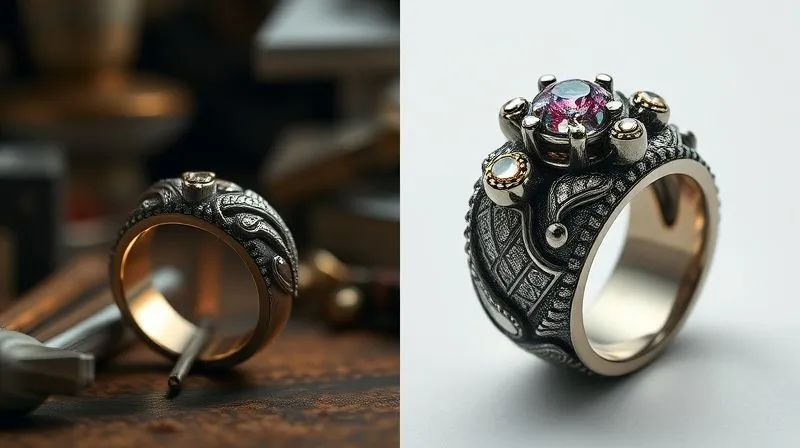
Are You Talking to the Right People? Defining Your Ideal Customer
The Danger of "Everyone is My Customer"
One of the most common misconceptions I encounter is the belief that unique designs appeal to everyone. This couldn't be further from the truth. When you try to appeal to everyone, you end up appealing to no one. Your unique handmade jewelry isn't attracting buyers because you're shouting into a void, rather than whispering to your ideal customer.
A broad marketing approach is incredibly inefficient and ineffective. Your resources (time, money, energy) are spread too thin, and your message gets lost. Instead, you need to identify your ideal customer – the specific person who genuinely appreciates your aesthetic, values your craftsmanship, and is willing to pay your prices.
Understanding your ideal customer allows you to:
- Tailor Your Designs: Create pieces that truly resonate with their style and needs.
- Craft Specific Marketing Messages: Speak directly to their desires, fears, and aspirations.
- Choose the Right Sales Channels: Go where your ideal customer shops (online marketplaces, specific boutiques, social media platforms).
- Set Appropriate Pricing: Understand their budget and perceived value.
Actionable Steps: Creating Customer Personas
- Demographics: Who are they? (Age, gender, location, income, occupation, education).
- Psychographics: What are their interests, hobbies, values, lifestyle, pain points, and aspirations?
- Buying Habits: Where do they shop for jewelry? What influences their purchasing decisions? How much are they willing to spend?
- Motivation: Why would they buy your unique handmade jewelry? (Self-expression, gift, special occasion, investment, ethical choice).
- Give Them a Name: Create a fictional profile (e.g., "Eco-Conscious Emily," "Minimalist Mark") to make them feel real.
| Targeting Type | Marketing Message | Customer Resonance | Conversion Rate |
|---|---|---|---|
| Broad (Everyone) | Buy Beautiful Jewelry! | Low, generic | Poor |
| Niche (Ideal Customer) | Hand-forged silver for the modern minimalist. | High, specific | Strong |
Strategic Pricing: Reflecting Value, Not Just Cost
The Art and Science of Jewelry Pricing
I've observed that many talented handmade jewelry designers either severely underprice their work (due to lack of confidence or fear of not selling) or occasionally overprice it (due to an inflated sense of uniqueness without market validation). Both scenarios lead to designs not attracting buyers.
Underpricing devalues your craftsmanship, artistic vision, and time. It also signals to potential buyers that your product might be of lower quality, even if it's exceptional. Overpricing, on the other hand, can alienate your target audience, making them feel your unique piece isn't worth the investment, especially if your brand story or photography doesn't justify the premium.
Effective pricing is a strategic balance that considers:
- Material Costs: All components, including findings, packaging, and shipping supplies.
- Labor Costs: Your hourly rate for design, creation, finishing, and photography/marketing.
- Overhead: Studio rent, tools, utilities, website fees, marketing costs.
- Perceived Value: What your target customer believes the piece is worth based on quality, uniqueness, brand story, and presentation.
- Market Comparison: What similar quality pieces are selling for.
- Profit Margin: The amount you need to reinvest in your business and pay yourself a living wage.
Case Study: 'Gemma's Gems' Reimagines Pricing
Gemma, a talented silversmith, was selling her intricate pieces for barely above material cost. She felt her unique designs weren't valued, often hearing comments like "that's nice, but a bit pricey." After realizing she was only accounting for materials and not her 20+ hours of labor, unique design IP, and the premium quality of her ethically sourced stones, she implemented a value-based pricing model. By carefully articulating her process, unique design philosophy, and commitment to sustainability in her marketing, she increased her average price point by 40%. Initially, she feared backlash, but her sales actually increased by 25% within six months, attracting a more discerning clientele who appreciated the true value. This demonstrated that the right audience *will* pay for perceived value and transparent quality.
Actionable Steps: Calculating Your Price
- Calculate Total Cost: Sum up all material costs + your hourly rate (e.g., $25-50/hour) multiplied by creation time + a portion of your overhead.
- Add Profit Margin: Multiply your total cost by 2 or 2.5 (or even 3 for wholesale) to get your wholesale price, then again for retail.
- Market Research: Compare your calculated price to similar quality items from competitors targeting your niche. Adjust if necessary, but don't undersell your value.
- Communicate Value: Ensure your product descriptions and brand story justify your price. Explain the craftsmanship, unique materials, and time invested.
For more insights into strategic pricing, consider resources from Forbes Business section on small business economics.
| Component | Value |
|---|---|
| Material Cost (Silver, Stone) | $35 |
| Labor (10 hours @ $30/hr) | $300 |
| Overhead (per piece) | $15 |
| Total Cost | $350 |
| Wholesale Price (Total Cost x 2) | $700 |
| Retail Price (Wholesale x 2) | $1400 |
Optimizing Your Marketplace: Choosing the Right Sales Channels
From Etsy to Exclusive Boutiques: Finding Your Fit
Even the most unique handmade jewelry designs, perfectly photographed, branded, and priced, won't sell if they're not visible in the right places. Many designers make the mistake of putting all their eggs in one basket (e.g., only Etsy) or spreading themselves too thin across too many unsuitable channels. Your sales channels must align with your brand, your ideal customer, and your business goals.
I've witnessed firsthand how a designer can struggle on a mass-market platform, only to thrive when they shift to a more curated online gallery or a select few high-end boutiques. The key is to be strategic about where you present your work. Different channels attract different types of buyers with varying expectations and budgets.
Consider the pros and cons of various channels:
- Online Marketplaces (Etsy, Amazon Handmade): Pros: Large audience, built-in traffic. Cons: High competition, fees, difficult to stand out, can devalue unique pieces.
- Your Own Website (Shopify, Squarespace): Pros: Full control, higher profit margins, strong brand building. Cons: Requires driving your own traffic, initial setup cost.
- Craft Fairs & Art Shows: Pros: Direct customer interaction, immediate sales, feedback. Cons: Time-consuming, travel, unpredictable weather/traffic.
- Consignment & Boutiques: Pros: Physical presence, curated audience, less direct selling for you. Cons: Lower profit margins, reliant on store owner's sales skills.
- Wholesale: Pros: Larger orders, broader distribution. Cons: Requires consistent production, significant discount on retail price.
Actionable Steps: Evaluating Channel Suitability
- Revisit Your Ideal Customer: Where do they naturally shop for jewelry? Online? Local boutiques? High-end galleries?
- Analyze Your Brand: Does your brand aesthetic fit the vibe of the platform or store? A minimalist, high-end design might struggle on a very rustic craft fair.
- Consider Your Capacity: Can you produce enough inventory for wholesale? Do you have the time for craft fairs?
- Start Small, Test, and Scale: Don't try to be everywhere at once. Choose 1-2 primary channels, master them, and then strategically expand.
Proactive Marketing: Moving Beyond Passive Promotion
The Myth of "If You Build It, They Will Come"
This is perhaps the most painful truth for many artisans: creating unique handmade jewelry, no matter how exquisite, is only half the battle. The other half, and often the more challenging one, is actively marketing it. Many designers operate on the "build it and they will come" philosophy, expecting that simply listing their items will lead to sales. This passive approach is a primary reason why unique designs aren't attracting buyers.
In today's hyper-competitive digital landscape, you have to be your own biggest advocate and marketer. You need to actively seek out your audience, engage with them, and consistently remind them of the value and beauty of your creations. Marketing isn't about being pushy; it's about connecting, educating, and inspiring.
Effective marketing strategies for handmade jewelry go beyond simple product listings:
- Content Marketing: Blog posts about your process, inspiration, or styling tips.
- Email Marketing: Building a list and sending newsletters with new collections, behind-the-scenes glimpses, or exclusive offers.
- Social Media Engagement: Not just posting product shots, but sharing your story, engaging with comments, and running polls.
- Collaborations: Partnering with fashion bloggers, stylists, or other complementary brands.
- SEO (Search Engine Optimization): Using relevant keywords in your product titles, descriptions, and blog posts to help people find you on Google.
Actionable Steps: Crafting a Marketing Strategy
- Plan Your Content: Create a content calendar for social media posts, blog articles, and email newsletters. Mix product shots with lifestyle, behind-the-scenes, and educational content.
- Engage Consistently: Post regularly on platforms where your ideal customer spends time. Respond to comments and messages promptly.
- Build an Email List: Offer an incentive (e.g., a discount code, a free guide) to encourage sign-ups on your website.
- Tell Stories Visually: Use Instagram Reels, TikTok, or YouTube Shorts to showcase your process, the story behind a piece, or styling ideas.
- Learn Basic SEO: Research keywords relevant to your jewelry and incorporate them naturally into your online listings and website content.
"Marketing is the bridge between your unique creation and the customer who desperately wants it but doesn't know it exists yet. Build that bridge, and they will cross it."
For a comprehensive guide on digital marketing for small businesses, explore resources like Shopify's marketing guides.

Frequently Asked Questions (FAQ)
Q: How do I know if my designs are truly unique or just different? A: True uniqueness often stems from a combination of your personal aesthetic, distinct techniques, and the story behind your creation. While "different" might mean a slight variation on a trend, "unique" implies a singular vision that's hard to replicate. Conduct thorough market research to see what else is out there. If you can confidently articulate what sets your pieces apart in terms of concept, craftsmanship, or narrative, you're likely on the path to true uniqueness. Ask yourself: "Could another artisan easily replicate this piece and its underlying message?" If the answer is no, you're likely onto something truly unique.
Q: What's the fastest way to improve my jewelry photography on a budget? A: The quickest impact comes from mastering natural light. Position your jewelry near a large window (but not in direct sunlight) with a white foam board or reflector opposite to bounce light back and eliminate shadows. Use a clean, simple background (white paper, a smooth piece of wood, or velvet cloth). Your smartphone camera can achieve excellent results with good lighting and careful composition. Focus on sharp detail, correct color, and consistent branding. Many free editing apps like Snapseed or Google Photos can help refine your images without costly software.
Q: Should I lower my prices if my jewelry isn't selling? A: Not necessarily. Lowering prices can sometimes devalue your work and attract the wrong kind of buyer. First, re-evaluate your brand story, photography, and target audience. Are you effectively communicating the value that justifies your current price? Are your photos professional? Is your ideal customer aware of your pieces? If these elements are strong, but sales are still slow, consider offering a limited-time promotion or a small discount on a specific collection to test elasticity, rather than permanently slashing prices across the board. Often, the problem isn't the price itself, but the perceived value.
Q: How important is social media for handmade jewelry sales? A: Social media is incredibly important, but not just for direct sales. It's a powerful tool for brand building, storytelling, community engagement, and driving traffic to your sales channels. Platforms like Instagram and Pinterest are highly visual and ideal for showcasing jewelry. Focus on consistent branding, high-quality visuals, behind-the-scenes content, and genuine engagement. Don't just post; interact, ask questions, and build relationships. While sales might not happen directly on the platform, social media often serves as the initial touchpoint that leads to a purchase elsewhere.
Q: What's the biggest mistake new handmade jewelry designers make? A: In my experience, the single biggest mistake is underestimating the "business" side of a creative venture. Many focus 90% on creation and 10% on everything else (marketing, branding, pricing, sales channels). While passion for design is essential, neglecting the strategic aspects of running a business will inevitably lead to frustration. Treat your handmade jewelry venture as a serious business from day one, dedicating time to learning and implementing effective strategies for branding, photography, marketing, and sales, alongside your creative process.
Key Takeaways and Final Thoughts
Navigating the journey of selling unique handmade jewelry can feel like a labyrinth, but it's far from insurmountable. If your unique handmade jewelry designs aren't attracting buyers, it's rarely a sign of lacking talent; it's almost always an indication that one or more foundational business elements need refinement. We've explored critical areas that, when addressed, can transform your passion into a profitable and sustainable enterprise.
- Marketable Uniqueness: Ensure your unique vision also aligns with what your ideal customer desires.
- Compelling Brand Story: Weave a narrative that connects emotionally and builds trust.
- Professional Photography: Let your visuals speak volumes about the quality and beauty of your work.
- Defined Target Audience: Speak directly to the people who will truly appreciate and buy your pieces.
- Strategic Pricing: Price for value, reflecting your skill, time, and materials, not just cost.
- Optimized Sales Channels: Be where your ideal customer shops, both online and offline.
- Proactive Marketing: Actively promote your work, build connections, and tell your story.
Remember, success in the handmade jewelry market isn't about luck; it's about a strategic, holistic approach that blends artistic integrity with sound business practices. Take these insights, apply them diligently, and watch as your unique handmade jewelry designs finally find the spotlight and the appreciative buyers they deserve. Your journey is just beginning, and with these tools, you're well-equipped to make it a remarkable one.
Recommended Reading
- 7 Key Factors: How to Choose a Versatile Men's Watch for Diverse Business Settings
- Unlock Ultimate Comfort: How Responsive Textiles Enhance Wearer Experience
- Unlocking the Future: How Self-Healing Fabrics Extend Garment Lifespan
- Mastering Elegance: Your Ultimate Guide to a Thorough Luxury Fashion Review
- 7 Power Dress Strategies: How to Dress for Critical Presentations

Your email address will not be published. Required fields are marked *