

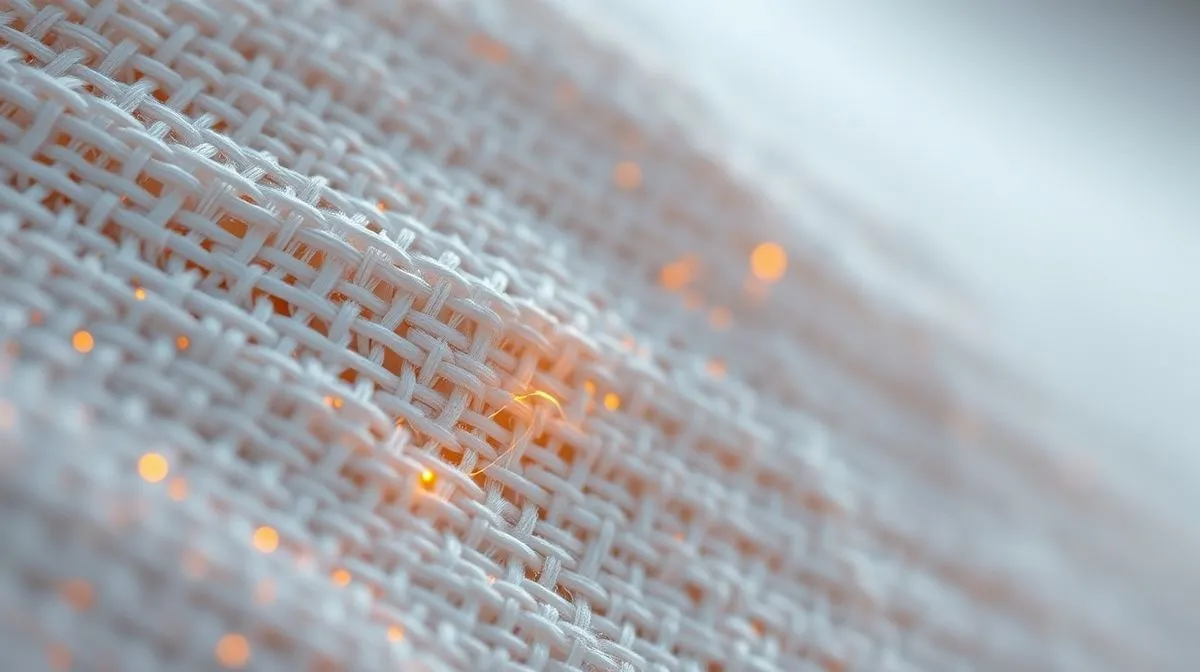
How Do Self-Healing Fabrics Extend Garment Lifespan? Unveiling the Future of Apparel
Imagine a world where your favorite pair of jeans never ripped, your high-performance athletic wear seamlessly repaired itself after a snag, or a tear in your tent fabric vanished as if by magic. For decades, the wear and tear of everyday life have dictated the lifespan of our garments, leading to a relentless cycle of consumption and disposal. This constant demand for new clothing not only strains our wallets but also places an immense burden on the environment.
The core problem lies in the inherent fragility of conventional textiles when faced with minor damage. A small tear can quickly escalate, rendering a garment unwearable long before its material integrity truly fails. This leads to vast amounts of textile waste, contributing significantly to landfill accumulation and resource depletion.
But what if garments could mend themselves? This article will delve deep into the fascinating world of self-healing fabrics, exploring the groundbreaking science behind them and precisely how do self-healing fabrics extend garment lifespan. By the end of this comprehensive guide, you will understand the mechanisms, benefits, and future potential of this revolutionary technology that promises to transform the fashion industry and our relationship with clothing.
Understanding the Core Science Behind Self-Healing Fabrics
At its heart, self-healing fabric technology is a marvel of material science, drawing inspiration from biological systems like human skin or tree bark. These materials possess an inherent ability to repair damage autonomously, or with minimal external intervention. The magic often lies at the molecular level, leveraging advanced polymer chemistry and intelligent material design.
The concept hinges on embedding or integrating specialized components within the fabric structure that are activated upon damage. When a tear or puncture occurs, these components respond, initiating a repair process that restores the material's integrity and functionality. This isn't just about superficial mending; it's about rebuilding the damaged internal structure of the textile.
The Role of Polymers and Smart Materials
The backbone of most self-healing fabrics is advanced polymer science. Polymers, long chains of repeating molecular units, can be engineered with specific properties. In self-healing applications, these polymers might be designed to:
- Contain microcapsules filled with healing agents.
- Possess intrinsic healing capabilities, where the polymer chains themselves can re-bond.
- Form part of a vascular network that delivers repair agents.
These 'smart' materials are programmed to react to external stimuli – in this case, physical damage. The precision with which these reactions are controlled determines the effectiveness and efficiency of the self-healing process, making textile repair an integrated feature rather than an external intervention. For a broader understanding of smart textiles, you can refer to resources like Wikipedia's page on Smart Textiles.
Bio-inspired Design Principles
Many innovations in self-healing materials are directly inspired by nature. Think of how a cut on your skin heals, or how a tree seals a wound. These natural processes involve complex chemical reactions and structural reorganizations. Scientists are mimicking these principles to create synthetic materials that exhibit similar regenerative properties.
This biomimicry is crucial because natural healing systems are often efficient, robust, and self-sufficient. By understanding the underlying mechanisms in biological systems, researchers can design more effective and sustainable self-healing textile solutions. This interdisciplinary approach, combining biology, chemistry, and engineering, is what drives this exciting field forward.
The Diverse Mechanisms of Fabric Self-Repair
While the goal of self-healing fabrics is consistent – to repair damage – the methodologies employed can vary significantly. Each mechanism has its advantages and is suited for different applications and types of textiles. Understanding these distinctions is key to appreciating the versatility of this technology.
Microcapsule-Based Systems
One of the most widely researched and promising approaches involves embedding microscopic capsules within the fabric fibers. These capsules are filled with a healing agent, often a liquid monomer, and a catalyst. When the fabric is damaged, the capsules rupture, releasing the healing agent. This agent then comes into contact with the catalyst, initiating a polymerization reaction that effectively glues the torn fibers back together.
- Process: Damage ruptures capsules, releasing monomer and catalyst.
- Outcome: Polymerization creates a strong bond, mending the tear.
- Analogy: Like a tiny, self-deploying superglue system within the fabric.
This method has shown great promise for repairing small punctures and tears, significantly extending the functional lifespan of the garment. The challenge lies in ensuring the capsules are robust enough not to rupture prematurely but fragile enough to break upon damage.
Intrinsic Self-Healing Polymers
Some advanced polymers possess an inherent ability to self-heal without the need for separate healing agents. These materials are designed so that their molecular bonds can reform after being broken, often with the application of a mild stimulus like heat or pressure. This is akin to the material itself having a memory of its original state and the ability to revert to it.
- Mechanism: Reversible molecular bonds (e.g., hydrogen bonds, Diels-Alder reactions).
- Activation: Often requires external factors like heat, light, or pH change.
- Benefit: No depletion of healing agents; can potentially heal multiple times.
This approach offers the potential for indefinite healing cycles, making it incredibly durable and sustainable. Research into these polymers, sometimes referred to as 'vitrimers,' is at the cutting edge of material science. Leading research institutions, such as those publishing in journals like Nature Materials Science, frequently feature breakthroughs in this area.
Vascular Network Systems
Mimicking the circulatory system of living organisms, vascular network systems involve creating a network of microchannels within the fabric. These channels contain healing agents that are released into the damaged area when the network is compromised. The agents then react to seal the breach, much like blood clotting in a wound.
- Structure: Interconnected microchannels throughout the textile.
- Function: Delivers healing agents directly to the site of damage.
- Advantage: Can potentially heal larger areas and complex damage.
This method offers a more controlled delivery of healing agents and can be effective for more significant damage. The complexity of manufacturing these intricate networks is a current challenge, but the potential for robust, multi-cycle repair is immense.
Beyond Durability: The Broader Benefits of Self-Healing Textiles
While the primary advantage of self-healing fabrics is their ability to extend garment lifespan, the implications stretch far beyond simple durability. This technology promises to revolutionize several aspects of modern life, from environmental sustainability to economic efficiency and enhanced user experience.
Environmental Impact and Sustainability
The fashion industry is a significant contributor to global pollution and waste. Fast fashion, characterized by cheap, disposable clothing, exacerbates this problem. Self-healing textiles offer a powerful antidote:
- Reduced Textile Waste: Fewer damaged garments end up in landfills.
- Lower Resource Consumption: Less need for new raw materials, water, and energy for manufacturing.
- Decreased Carbon Footprint: Manufacturing new clothes is energy-intensive; extending garment life reduces this demand.
By making clothes last longer, self-healing technology directly supports a circular economy model, where resources are kept in use for as long as possible, minimizing waste and pollution. This is a critical step towards a truly sustainable fashion future.
Economic Advantages for Consumers and Industry
For consumers, the benefit is clear: clothes that last longer mean less frequent replacements, leading to significant cost savings over time. Investment in a high-quality, self-healing garment could prove more economical than repeatedly buying cheaper, less durable alternatives.
For industries, while the initial manufacturing cost might be higher, the long-term value proposition is compelling. Brands can differentiate themselves with superior product longevity, building customer loyalty and reducing warranty claims. Furthermore, industries relying on specialized textiles, such as protective gear or industrial uniforms, can achieve substantial savings by extending the life of expensive, critical items.
Enhanced Durability and Performance
Beyond simply lasting longer, self-healing fabrics can maintain their performance characteristics even after minor damage. A conventional fabric might lose its water resistance or structural integrity after a small tear, but a self-healing version would restore these properties. This is particularly crucial for:
- Protective Apparel: Maintaining integrity in uniforms for emergency services or military personnel.
- Outdoor Gear: Ensuring tents, jackets, and backpacks remain functional in harsh conditions.
- High-Performance Sportswear: Retaining stretch, breathability, and support throughout the garment's life.
This capability ensures that the garment continues to perform as intended, offering consistent reliability and safety.
Real-World Applications and Pioneering Examples
The potential applications of self-healing fabric technology are vast and extend beyond everyday fashion. From specialized industrial uses to life-saving medical applications, these smart textiles are set to make a significant impact across various sectors.
High-Performance Apparel and Outdoor Gear
Imagine a mountaineer's jacket that automatically seals a rip from a jagged rock, or a cyclist's shorts that repair themselves after a fall. Self-healing fabrics are ideal for:
- Sportswear: Enhancing durability for intense activities.
- Outdoor Clothing: Providing resilience against tears and abrasions in challenging environments.
- Footwear: Extending the life of shoe uppers and specialized components.
Brands are already exploring prototypes for these applications, recognizing the demand for gear that can withstand extreme conditions and offer unparalleled longevity. This directly addresses the question of how do self-healing fabrics extend garment lifespan in demanding environments.
Medical Textiles and Healthcare
The healthcare sector stands to benefit immensely from self-healing materials. Applications include:
- Smart Bandages: That can self-seal if a tear occurs, maintaining sterility.
- Surgical Sutures: That could potentially self-repair if strained.
- Biomedical Implants: Where self-healing properties could improve longevity and reduce complications.
These innovations could lead to safer, more effective medical devices and improved patient outcomes, demonstrating the critical impact of this technology beyond consumer goods.
Military and Protective Gear
For military personnel, firefighters, and industrial workers, protective clothing is a matter of safety and survival. Self-healing textiles can offer:
- Enhanced Protection: Maintaining the integrity of uniforms and gear in hazardous situations.
- Reduced Replacement Cycles: Leading to significant cost savings for defense and emergency services.
- Improved Reliability: Ensuring critical protective features are always functional.
The ability of these fabrics to autonomously repair damage means that protective gear can offer continuous, unwavering performance when it matters most.
Everyday Fashion and Future Trends
While high-tech applications are exciting, the ultimate vision is for self-healing fabrics to become commonplace in everyday fashion. Imagine a wardrobe where clothes rarely need patching or discarding due to minor damage. This shift would foster a more mindful approach to clothing, valuing longevity over disposability.
As manufacturing costs decrease and the technology matures, we can expect to see self-healing properties integrated into a wider range of consumer garments, from casual wear to formal attire, ushering in a new era of durable and sustainable fashion.
Challenges and the Road Ahead for Self-Healing Technologies
Despite the immense promise, self-healing fabric technology is still evolving and faces several hurdles before widespread adoption. Addressing these challenges is crucial for its successful integration into mainstream manufacturing and consumer markets.
Cost and Manufacturing Scalability
Currently, the production of self-healing materials can be complex and expensive, particularly for methods involving intricate microcapsule embedding or advanced polymer synthesis. To become commercially viable, these processes need to be scaled up efficiently and cost-effectively. Researchers are actively working on:
- Developing simpler, more economical synthesis routes for healing agents.
- Improving the efficiency of incorporating healing mechanisms into existing textile manufacturing processes.
- Exploring sustainable and abundant raw materials to reduce production costs.
Bringing down the price point is essential for these fabrics to move from niche, high-performance applications to everyday garments.
Durability of Healing Cycles and Longevity
A key question is how many times a self-healing fabric can repair itself effectively. Some mechanisms might only be capable of a single repair, while others promise multiple healing cycles. Ensuring that the repaired area is as strong and functional as the original material, and that the healing agents do not degrade over time or through washing, is a significant challenge. Continued research focuses on:
- Increasing the number of effective healing cycles.
- Enhancing the mechanical strength and durability of the healed region.
- Ensuring the long-term stability and effectiveness of embedded healing agents.
The goal is to create fabrics that can truly withstand the rigors of repeated use and repair.
Consumer Adoption and Education
Even with perfected technology, consumer acceptance is vital. People need to understand what self-healing fabrics are, how they work, and what benefits they offer. Education will be key to overcoming skepticism and encouraging adoption. This includes:
- Clear labeling and marketing that explains the technology.
- Demonstrating the tangible benefits of extended garment life and sustainability.
- Addressing any concerns about the safety or environmental impact of the healing agents.
Building trust and familiarity with this innovative textile technology will be an ongoing process.
Caring for Self-Healing Garments: A New Paradigm
As self-healing fabrics become more prevalent, our understanding of garment care might need to evolve. While the technology aims for autonomous repair, specific care instructions could still be crucial to optimize their performance and longevity. For instance, some intrinsic self-healing polymers might require a specific heat application to initiate repair, or certain washing detergents could potentially interfere with healing agents.
Manufacturers will likely provide clear guidelines on how to best care for these advanced textiles, ensuring that consumers can maximize the benefits of their self-repairing clothing. This could include recommendations for washing temperatures, drying methods, or even specific 're-healing' processes if required. Ultimately, the goal is to make caring for these garments as simple and intuitive as possible, while still leveraging their unique capabilities to significantly extend garment lifespan.
Frequently Asked Questions (FAQ)
Will self-healing fabrics be expensive? Initially, self-healing fabrics may come at a premium due to the advanced technology and manufacturing processes involved. However, as production scales and research progresses, costs are expected to decrease, making them more accessible to the general public. The long-term savings from less frequent replacements can also offset the initial investment.
How many times can a self-healing fabric repair itself? The number of healing cycles depends on the specific technology used. Some microcapsule-based systems may be limited to one or a few repairs as the healing agent is depleted. Intrinsic self-healing polymers, however, have the potential for multiple or even indefinite repair cycles, often requiring an external stimulus like heat.
Are the healing agents used in these fabrics safe? Researchers prioritize safety and environmental impact. Healing agents are rigorously tested to ensure they are non-toxic and eco-friendly. The goal is to create materials that are safe for both wearers and the planet throughout their entire lifecycle.
Can self-healing fabrics repair large tears or holes? Currently, most self-healing technologies are more effective at repairing small punctures, snags, and minor tears. Repairing large holes or extensive damage remains a significant challenge, though vascular network systems show promise for more substantial repairs. The focus is on preventing small damages from escalating.
When can I expect to buy self-healing clothes? While some specialized self-healing products are already on the market (e.g., in medical or military applications), widespread availability in everyday fashion is still some years away. As research advances and manufacturing becomes more efficient, we can expect to see more consumer-ready self-healing garments emerging in the next decade.
Recommended Reading
- Eco-Friendly Kids Clothes: Last Longer & Save You Money!
- Ultimate Guide: Best Men's Skincare Routine for Sensitive Skin
- Is Virtual Try-On Accurate for Clothes? The Surprising Truth!
- 1950s Dress Styles: Find Your Perfect Fit for Any Body Type!
- Unleash Your True Self: How to Develop a Unique Personal Street Style
Conclusion
The advent of self-healing fabrics marks a pivotal moment in the evolution of textiles. By integrating the ability to autonomously repair minor damage, these innovative materials directly address the critical issue of garment longevity and textile waste. We've explored the intricate science, the diverse mechanisms, and the profound benefits that extend beyond mere durability, impacting environmental sustainability, economic efficiency, and performance across various sectors. The answer to how do self-healing fabrics extend garment lifespan lies in their intelligent design, allowing them to resist the natural degradation that plagues conventional clothing.
While challenges remain in terms of cost and scalability, the trajectory of this technology is clear: towards a future where our clothes are not just worn, but truly live longer, reducing our environmental footprint and redefining our relationship with fashion. Embracing self-healing textiles means investing in a more durable, sustainable, and ultimately, smarter wardrobe for tomorrow.


Your email address will not be published. Required fields are marked *