

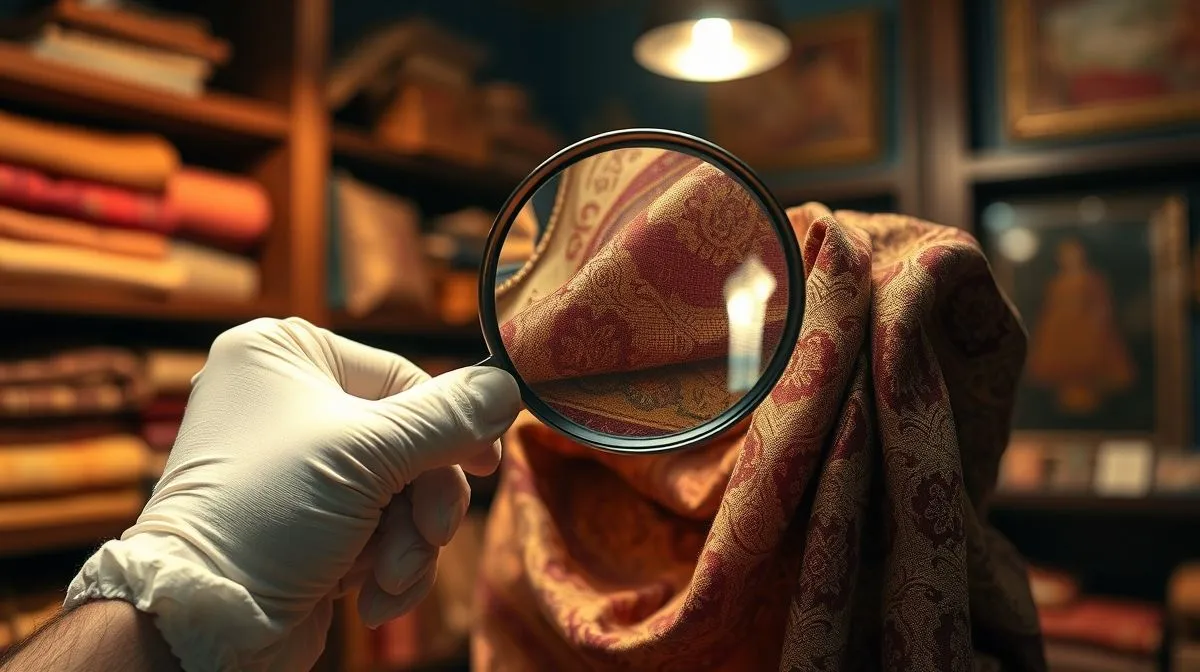
How to Ethically Authenticate Rare Vintage Apparel for Resale Profits?
For over two decades in the sustainable fashion and vintage resale industry, I’ve witnessed the transformative power of a truly authentic vintage piece. There's a thrill in discovering a rare garment, a tangible link to history, that transcends mere fabric and thread. Yet, amidst this burgeoning market, a significant challenge persists: the proliferation of fakes and misrepresentations, which can quickly erode trust and devalue genuine finds.
The problem is multi-layered. For sellers, misidentifying a reproduction as authentic vintage can lead to reputational damage, financial loss, and even legal repercussions. For buyers, the fear of investing in a counterfeit diminishes confidence in the entire vintage ecosystem, making them hesitant to pay premium prices for truly rare items. This lack of clear, ethical authentication standards creates a murky environment where integrity is constantly under siege.
That's precisely why I've distilled my extensive experience into this comprehensive guide. You’re about to learn not just how to identify authentic rare vintage apparel, but how to do so with an unwavering commitment to ethical practices. We'll explore actionable frameworks, delve into real-world case studies, and uncover expert insights that will empower you to authenticate with confidence, ensuring both your profits and your reputation remain intact.
The Imperative of Ethical Authentication in Vintage Resale
Before we dive into the 'how-to,' let's firmly establish the 'why.' In a market increasingly driven by conscious consumerism, ethical authentication isn't merely a best practice; it's a fundamental pillar of sustainability and trust. When you ethically authenticate, you're not just verifying a garment's age; you're upholding the integrity of its history, respecting the craftsmanship, and building an unbreakable bond of trust with your clientele.
My experience has shown me that cutting corners on authenticity is a short-sighted strategy. A single misidentified item can unravel years of meticulous brand building. Conversely, a reputation built on rigorous, transparent authentication attracts discerning buyers willing to pay a premium for guaranteed authenticity. According to a recent report by the Business of Fashion, transparency and authenticity are top drivers for consumer purchasing decisions, particularly in the resale market, underscoring their direct impact on profitability and brand longevity.
The true currency in the vintage market isn't just the garment itself, but the trust you inspire through unwavering integrity in every authentication. This trust, once earned, becomes your most valuable asset.
Phase 1: Deep Dive into Provenance – Tracing the Garment's History
Provenance is the bedrock of vintage authentication. It's the story of the garment, its journey through time, and often, the most challenging aspect to verify. Think of yourself as a historical detective; every detail matters.
1. Researching Brand History and Production Eras
Every reputable vintage piece comes from a specific era and a specific brand with its own unique history. Your first step is to become intimately familiar with the brand's evolution. This includes:
- Logo and Label Changes: Brands often altered their logos, tags, and internal labels over time. Knowing when a particular font, fabric tag, or specific logo design was in use can instantly narrow down a garment's age. For instance, early Chanel labels look vastly different from those post-1970.
- Designer Signatures: Many influential designers had specific markings, stitching patterns, or signature details. Knowing these nuances can be a strong indicator of authenticity.
- Production Locations and Dates: Research where and when a brand produced its items during certain periods. A 'Made in France' label on a piece supposedly from the 1920s might be a red flag if the brand didn't have French production until later.
I always advise compiling a personal database of brand histories relevant to your niche. This foundational knowledge is invaluable.
2. Scrutinizing Previous Ownership & Documentation
The ideal scenario is a garment accompanied by documented history. While rare, these pieces command the highest value.
- Original Receipts or Bills of Sale: These are golden. They provide concrete proof of purchase date and location.
- Letters of Authenticity: For very high-value items, some original owners may have obtained letters of authenticity from the brand or a reputable appraiser. Always cross-reference these documents.
- Photographs & Family Histories: Old photographs showing the garment in wear, or anecdotal histories from the original owner or their family, can provide compelling, albeit circumstantial, evidence. Always record this information meticulously.
When documentation is absent, which is often the case, you must rely heavily on the physical characteristics of the garment itself.
Case Study: The 'Whispering Silk' Scarf
I once had a client present a beautiful silk scarf, purportedly a rare Hermès design from the 1930s. The print was exquisite, but a faint, almost invisible signature was obscured by wear. The client had inherited it from her grandmother, a known collector of luxury goods. While no direct receipt existed, she provided a trove of old family photos. In one, taken in 1938, her grandmother was clearly wearing *that exact scarf*. This visual provenance, combined with a forensic analysis of the silk's weave and the hand-rolled edges typical of Hermès from that era, provided irrefutable proof of its authenticity. This scarf, initially valued at a few hundred dollars, fetched over $5,000 at auction due to its verified history and condition.
Phase 2: Meticulous Material and Construction Analysis
Once you've exhausted provenance, your focus shifts to the garment itself. This is where your tactile and visual senses become your most powerful tools. Every fiber, stitch, and button tells a story.
1. Fabric Composition and Weave Examination
Understanding vintage textiles is crucial. Fabrics have evolved significantly over the decades. I’ve often advised my mentees to develop a 'fabric library' of their own, handling different silks, wools, rayons, and cottons from various eras.
- Natural Fibers: True vintage silk feels different from modern silk; it often has a more substantial hand, a richer luster, and specific aging patterns. Similarly, vintage wools and cottons might exhibit variations in weave density, slubbing, or dye absorption that are distinct to their period.
- Synthetic Fibers: The introduction and evolution of synthetics like rayon, nylon, and polyester are key timeline markers. For example, nylon was popularized after WWII, and polyester became widespread in the 1960s. Finding polyester in a garment claimed to be from the 1930s is an immediate red flag.
- Weave and Dye: Examine the weave pattern closely. Is it consistent with period-appropriate methods? Are the dyes vibrant yet aged, or do they look suspiciously new?
For a deeper dive into textile identification, I recommend resources like the Victoria and Albert Museum's textile collections, which offer extensive historical context.
2. Stitching, Seams, and Finishing Techniques
The way a garment is put together reveals a wealth of information about its age and quality. This is where craftsmanship truly shines, or fails.
- Hand Stitching vs. Machine Stitching: Before the widespread industrialization of garment production, much was done by hand. Look for subtle irregularities in hand stitching, whereas machine stitching will be perfectly uniform. Many high-end vintage pieces feature exquisite hand-finishing, even if the primary construction is machine-sewn.
- Seam Finishes: Examine seam allowances. Are they raw, pinked, bound, or French seamed? French seams, for instance, were common in high-quality garments for a clean interior finish. Overlocking (serging) became common much later.
- Hemming Techniques: Hand-stitched hems, blind hems, and specific types of machine hems can indicate a garment's age.
In my experience, a genuine vintage piece, especially from a designer, will often display an attention to detail in its construction that is rarely replicated in fakes.
3. Hardware and Embellishments – Buttons, Zippers, Clasps
Hardware components are often the easiest tells for a trained eye.
- Zippers: Specific zipper brands (e.g., Talon, Conmar, Crown, Eclair) were prevalent in different eras. Their pull-tab designs, metal composition, and even the size of the teeth can pinpoint a decade. A modern plastic zipper on a garment claiming to be from the 1940s is a definite counterfeit indicator.
- Buttons: Material (bakelite, celluloid, glass, real horn, shell), manufacturing marks, and attachment methods (shank, two-hole, four-hole) vary by era. Authentic vintage buttons often have a unique patina and weight.
- Clasps and Buckles: Look for patent numbers, specific metal alloys, or unique design elements that were popular during a particular period.
Never underestimate the story a zipper pull or a button can tell. These small details are often the weakest links in a counterfeiter's chain, as they require specialized knowledge to replicate authentically.
Phase 3: Unraveling the Narrative – Style, Design, and Fit Verification
Beyond the tangible elements, a garment's aesthetic congruence with its purported era is a powerful authentication tool. This requires a strong grasp of fashion history.
1. Era-Specific Design Elements and Silhouettes
Fashion is cyclical, but specific silhouettes, necklines, sleeve types, skirt lengths, and embellishment styles are inextricably linked to certain decades. A keen understanding of fashion history allows you to spot anachronisms.
- Silhouette: Is the waistline where it should be for a 1950s dress? Does the shoulder pad size align with a 1980s power suit?
- Trims and Details: The type of lace, embroidery, beading, or appliqué used can be era-specific. Certain types of pleating or gathering techniques were also more prevalent in particular periods.
- Fabric Prints and Colors: While some patterns are timeless, many prints (e.g., Art Deco geometrics, psychedelic swirls, bold florals) and color palettes strongly define specific decades.
Consulting resources like the Metropolitan Museum of Art's Costume Institute collection can be invaluable for visual reference.
2. Condition Assessment and Patina Interpretation
Authentic wear is a beautiful thing in vintage; artificial aging is a fraud. Distinguishing between the two requires a discerning eye.
- Natural Patina: Over time, fabrics fade, metals tarnish, and leather softens. This natural aging process creates a unique 'patina' that is incredibly difficult to fake. Look for even fading, gentle softening of fibers, and natural wear patterns at cuffs, collars, and hems.
- Artificial Distress: Counterfeiters often try to simulate age through chemical washes, abrasive treatments, or forced creasing. These usually result in unnatural, uniform wear, or damage that doesn't align with how a garment would naturally age.
- Repairs and Alterations: Many vintage garments have been repaired or altered over their lifespan. These can be indicators of authenticity if the repairs themselves are vintage or done with period-appropriate techniques. However, poorly done or obviously modern repairs on an otherwise 'perfect' piece can be a red flag.
3. Sizing and Fit Standards Across Decades
Modern sizing is vastly different from vintage sizing. A vintage size 10 might be a modern size 2 or 4. Understanding these discrepancies is crucial for both authentication and resale.
- Measurements: Always rely on actual garment measurements rather than tag sizes. Vintage clothing was often more tailored and less forgiving in fit.
- Tailoring Considerations: Many vintage pieces were custom-made or heavily altered to fit the original owner perfectly. This individuality can be a sign of true vintage quality.
Phase 4: Leveraging Expert Networks and Digital Tools
Even the most seasoned expert knows their limits. Building a network and utilizing digital resources can significantly bolster your authentication process.
1. Consulting with Reputable Appraisers and Conservators
For high-value, complex, or historically significant pieces, don't hesitate to seek professional help. This is an investment in authenticity.
- When to Consult: If you're dealing with a rare haute couture piece, a garment with significant historical provenance, or a designer piece from an era you're less familiar with, a professional appraisal is warranted.
- How to Find Experts: Look for appraisers accredited by reputable organizations like the Appraisers Association of America (AAA) or the International Society of Appraisers (ISA), specializing in textiles and fashion. Conservators at major museums can also offer insights.
They possess specialized equipment and knowledge to conduct forensic analyses far beyond what a typical reseller can achieve.
2. Utilizing Online Databases and Forums
The internet is a vast repository of information, but discernment is key.
- Brand Archives: Many luxury brands maintain extensive online archives of their past collections, including runway shows, advertising campaigns, and product catalogs. These are invaluable for cross-referencing.
- Museum Collections: Digital collections of major fashion museums (like the V&A, Met, Kyoto Costume Institute) offer high-resolution images and detailed descriptions of historical garments.
- Specialized Forums and Communities: Engage with online communities dedicated to specific vintage niches. While not always 'expert' sources, they can offer crowdsourced knowledge and point you toward obscure resources. Always verify information from forums with multiple sources.
Phase 5: Ethical Disclosure and Transparent Resale Practices
Authentication isn't just about identifying; it's about communicating that identification with integrity. Ethical disclosure is the final, non-negotiable step in building a trustworthy vintage business.
1. Documenting Every Authentication Step
Create an 'authentication dossier' for every piece you sell, especially rare ones. This not only builds trust but also serves as your due diligence.
- Photographic Evidence: Take detailed photos of labels, stitching, hardware, unique flaws, and any provenance documents.
- Detailed Notes: Record your findings for each phase of authentication – fabric composition, measurements, historical research, and any expert consultations.
- Condition Reports: Be explicit about the garment's condition, noting any flaws, repairs, or alterations.
This dossier can be shared with potential buyers, offering them complete transparency and confidence in their purchase.
2. Crafting Honest and Detailed Product Descriptions
Your product listing is your final opportunity to convey authenticity and build trust. This is where you put your ethical commitment into practice.
- Be Explicit: Clearly state what you know about the garment's history, era, and authenticity.
- Disclose Flaws: Never hide imperfections. Detail every stain, tear, or repair. Use high-quality photos to illustrate them.
- Explain Authentication Methods: Briefly describe the steps you took to authenticate the item. For example, 'Authenticated based on period-correct Talon zipper, hand-rolled hem, and documented provenance from 1950s family estate.'
Transparency is not just a policy; it's a powerful marketing tool in the vintage world. When you are open about your authentication process, you empower buyers to make informed decisions, transforming them into loyal advocates.
Frequently Asked Questions (FAQ)
Q: How do I tell if a designer label itself is fake on vintage apparel? A: Fake labels are a common issue. Beyond researching the brand's specific label variations by era (font, material, stitching, location on the garment), look for common tells: poor quality stitching, incorrect spelling, generic or flimsy fabric for the label itself, or placement that seems off. Many high-end brands used specific serial numbers or unique identifiers on their labels during certain periods. Familiarize yourself with these details for the brands you specialize in.
Q: What if a garment has no tags or labels? Can it still be authenticated? A: Absolutely, but it becomes significantly more challenging and relies heavily on physical analysis. You'll need to focus intensely on construction techniques (seams, hems, darts), fabric type and weave, hardware (buttons, zippers), and the garment's overall silhouette and design elements to place it within a specific era. Provenance (if any) becomes even more critical. For very high-value pieces, professional textile analysis might be necessary.
Q: Is it ethical to restore a damaged vintage piece before reselling? A: Yes, it is ethical and often encouraged, provided you are completely transparent about the restoration. High-quality, professional restoration can preserve a garment and increase its value. However, you must clearly disclose all repairs and alterations in your product description, ideally with 'before' and 'after' photos or a detailed report of the work done. Misrepresenting a restored piece as pristine is unethical.
Q: How much should I invest in authentication tools? A: You can start lean. A good quality jeweler's loupe or magnifying glass (10x-30x magnification) is essential for examining fibers and stitching. A UV light can sometimes reveal repairs or hidden markings. A comprehensive library of fashion history books and access to online museum archives are more valuable than expensive gadgets. For high-volume or high-value businesses, investing in textile analysis software or professional appraisal services may be warranted.
Q: What's the biggest mistake new vintage sellers make in authentication? A: The biggest mistake is assuming rather than verifying. Many new sellers rely on anecdotal evidence or wishful thinking. They might see a familiar brand name and assume authenticity without deep inspection. Rushing the process, failing to document findings, or being afraid to admit when a piece is a reproduction are common pitfalls. Always approach every item with a healthy dose of skepticism and a commitment to rigorous, multi-faceted verification.
Recommended Reading
- Unlock the Secret: How to Balance Oversized Streetwear for a Perfect Look
- Craft Believable Characters: Costume Design Secrets Revealed!
- How to Maintain Luxury Brand Exclusivity for Designer Heels? 7 Proven Pillars.
- 7 Pillars: Preserving High-End Fashion Exclusivity in Digital Spaces
- Unlock Peak Performance: Why Moisture-Wicking is Crucial for Activewear Comfort
Key Takeaways and Final Thoughts
- Knowledge is Power: Invest time in learning brand histories, fashion eras, and textile science. This foundational knowledge is your most valuable authentication tool.
- Go Beyond the Label: True authentication looks at provenance, construction, materials, and design details – not just the tag.
- Document Everything: Maintain meticulous records and photographic evidence for every step of your authentication process.
- Transparency is Non-Negotiable: Clearly disclose all findings, flaws, and repairs to build unwavering trust with your buyers.
- Embrace the Network: Don't hesitate to consult experts or leverage online resources for complex items.
The journey of authenticating rare vintage apparel is a blend of science, art, and detective work. It requires patience, a keen eye, and an unwavering commitment to ethical practice. By embracing the comprehensive framework I've outlined, you're not just ensuring the profitability of your resale business; you're becoming a custodian of fashion history, preserving its integrity for future generations. Go forth, authenticate with confidence, and let your ethical practices be the hallmark of your success in the thriving world of sustainable vintage fashion.



Your email address will not be published. Required fields are marked *