

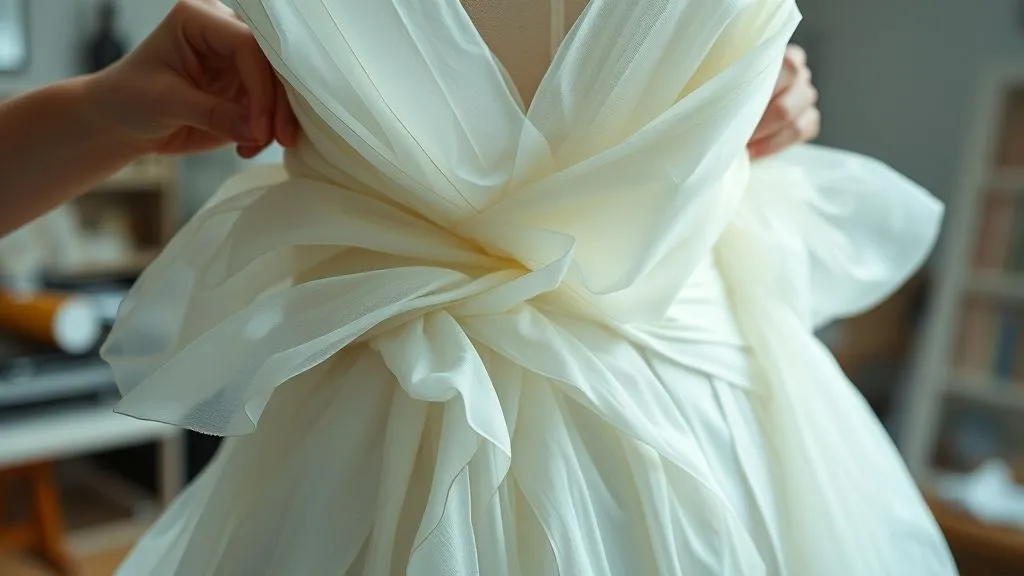
How to Precisely Execute Avant-Garde Haute Couture Design Visions?
For over two decades in the rarefied air of haute couture, I’ve had the privilege—and sometimes the challenge—of witnessing the birth of truly avant-garde visions. I’ve seen concepts so audacious, so boundary-pushing, that they seemed almost impossible to translate from the ethereal realm of imagination into tangible, wearable art. Yet, the true mastery, I’ve learned, lies not just in the brilliance of the initial idea, but in the unwavering precision of its execution.
The inherent paradox of avant-garde haute couture is its audacious nature, often defying conventional garment construction, material properties, and even the human form itself. This often leaves designers, particularly those pushing the envelope, grappling with a significant pain point: how to bridge the chasm between a radical, abstract design vision and a flawless, structurally sound, and breathtaking physical garment. It's a journey fraught with technical hurdles, material uncertainties, and the constant threat of a brilliant concept faltering in its realization.
This comprehensive guide is born from countless hours spent in ateliers, observing, refining, and innovating. I will demystify the complex process of how to precisely execute avant-garde haute couture design visions, offering you a structured framework, actionable steps, and invaluable insights that I’ve gathered throughout my career. Prepare to transform your most daring concepts into awe-inspiring realities, ensuring every stitch, every fold, and every material choice serves your grand artistic narrative.
Deconstructing the Vision: From Abstract Idea to Tangible Blueprint
The journey of executing an avant-garde haute couture design begins long before any fabric is cut. It starts with an intense, almost forensic, deconstruction of the initial vision. In my experience, many aspiring couturiers rush past this critical phase, eager to get to the 'making,' only to find their efforts unraveling later. This foundational stage is about translating the intangible into a comprehensive, multi-faceted blueprint.
The Genesis of a Concept: Beyond the Sketch
An avant-garde concept is rarely a single, definitive sketch. It's a constellation of ideas, emotions, and philosophical underpinnings. I always encourage designers to immerse themselves fully in this initial phase, exploring every facet of their inspiration. This means moving beyond a simple drawing to a more holistic exploration of the design's core.
- Conceptual Mood Boards: These aren't just pretty pictures. They are curated collections of textures, colors, architectural forms, historical references, philosophical texts, and even scientific diagrams that articulate the emotional and intellectual landscape of the design.
- Material Exploration Swatches: Begin collecting and experimenting with potential materials early. How do they drape? How do they hold form? What are their inherent limitations or unexpected strengths?
- Sculptural Miniatures: Often, a small-scale, three-dimensional model can reveal structural challenges or opportunities that a flat sketch cannot. Think of it as an architectural model for your garment.
- Narrative Development: What story does this garment tell? Understanding its narrative arc helps in making cohesive design choices throughout the execution process.
Translating Abstraction: The Power of Advanced Draping and Toiling
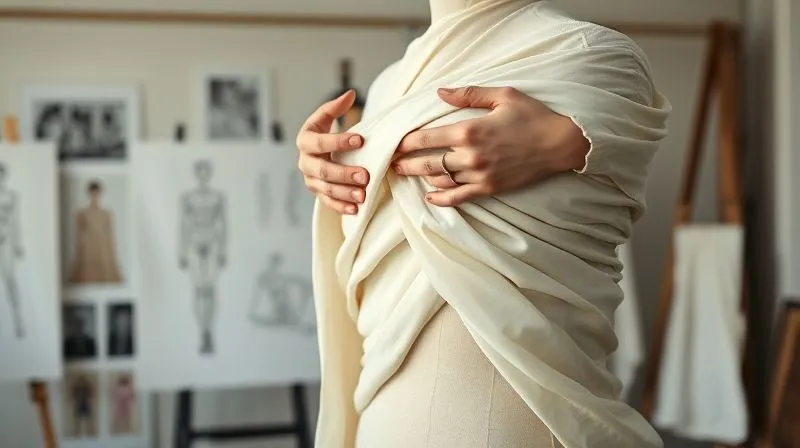
Once the conceptual groundwork is laid, the next step is to begin translating that abstraction into a physical form. For avant-garde designs, traditional flat patternmaking often falls short. This is where advanced draping, often referred to as 'toiling,' becomes an indispensable tool. It allows for a dynamic, iterative process of form-finding directly on the mannequin.
- Initial Muslin Drape for Silhouette: Start with a basic muslin to establish the overall volume, proportion, and primary silhouette. Don't aim for perfection; focus on the general form.
- Experiment with Scale and Proportion: Once the basic form is established, begin playing with exaggerated scale, unconventional proportions, and how these interact with the body. This is where the 'avant-garde' truly starts to emerge.
- Introduce Structural Elements: As the form solidifies, start integrating placeholder structural elements – wires, stiffeners, internal frameworks – to see how they impact the drape and overall silhouette.
- Refine with Specific Fabric Weights: Before committing to the final, often expensive, haute couture fabric, create multiple toiles using materials that closely mimic the weight, drape, and stiffness of your intended textiles. This helps anticipate how the final fabric will behave.
“The toile is not merely a practice run; it is the conversation between your vision and reality, a dialogue where the fabric speaks back, guiding your hand towards precision.” – My personal mantra in the atelier.
This iterative draping process is crucial for understanding the three-dimensional complexities of your vision. It allows you to foresee challenges and innovate solutions before they become costly mistakes.
Material Innovation and Strategic Sourcing for Unconventional Forms
The very essence of avant-garde haute couture often lies in its radical use of materials. To precisely execute avant-garde haute couture design visions, one must move beyond the conventional textile lexicon. This requires a deep dive into material science and a strategic approach to sourcing.
Beyond Silk and Satin: Embracing Novel Textures and Structures
The traditional haute couture atelier is synonymous with silks, satins, and laces. However, avant-garde demands a broader, more experimental palette. I've seen breathtaking results emerge from the innovative application of materials ranging from laser-cut metals and bioplastics to smart textiles that react to environmental changes. The key is to understand the inherent properties of these materials and how they can serve your design's structural and aesthetic needs.
- Material Science Fundamentals: Develop a basic understanding of properties like tensile strength, flexibility, translucency, and thermal responsiveness. This knowledge empowers you to select materials that can genuinely support your vision.
- Textile Engineering Exploration: Look into fabrics with integrated technologies, such as fiber optics for illumination, or those designed for specific structural rigidity or flexibility.
- Sustainable Innovation: The future of avant-garde also lies in sustainability. Explore recycled plastics, mushroom leathers, or lab-grown textiles that offer novel properties while minimizing environmental impact.
Navigating Supply Chains: Ethical and Technical Considerations
Sourcing unconventional materials presents its own set of challenges. Rare, custom-developed, or technologically advanced textiles often come with longer lead times, higher costs, and specific handling requirements. Establishing strong relationships with specialized suppliers and manufacturers is paramount.
I always emphasize the importance of ethical sourcing, even when dealing with experimental materials. Research the origins and production methods of your chosen textiles. Transparency in the supply chain not only aligns with modern values but also provides crucial information about material consistency and quality. Furthermore, understanding the technical specifications from your suppliers is vital. A slight variation in a material’s thickness or weave can drastically alter how it behaves during construction, impacting the precision of your final garment. For insights into cutting-edge textile developments, explore resources like WGSN's material forecasts.
| Material Type | Avant-Garde Application | Key Property for Design |
|---|---|---|
| Bioplastic (PLA) | Sculptural armor, transparent layering | Rigid, moldable, translucent, lightweight |
| Carbon Fiber Fabric | Internal scaffolding, extreme structural forms | High strength-to-weight ratio, stiff, can be woven |
| Laser-Cut Silicone | Flexible scales, intricate surface texture | Elastic, durable, precise cutting, tactile |
| Smart Textiles (e.g., Chromatic Fabrics) | Dynamic color change, interactive surfaces | Responsive to stimuli (heat, light, electricity) |
The Atelier's Alchemy: Precision Patternmaking and Construction Techniques
With a deconstructed vision and innovative materials in hand, the atelier becomes a laboratory of precision. This is where the most complex challenges of how to precisely execute avant-garde haute couture design visions are met head-on through advanced patternmaking and construction techniques.
Advanced Patternmaking: Engineering the Impossible
Traditional flat patternmaking, while fundamental, often struggles to accommodate the volumetric and often anti-gravitational forms characteristic of avant-garde designs. Here, the patternmaker transforms into an engineer, using a blend of computational design and empirical knowledge.
- 3D Pattern Software: Programs like CLO3D or Marvelous Designer allow for digital prototyping, simulating fabric drape and fit in a virtual environment. This can significantly reduce physical toile iterations.
- Generative Design Principles: Borrowing from architecture, designers can use algorithms to generate complex, organic forms that are then translated into pattern pieces. This is particularly useful for intricate tessellations or interlocking structures.
- Flat Pattern Manipulation for Volume: Mastering techniques like slash-and-spread, pivot points, and dart manipulation to create extreme volume, asymmetry, and unconventional garment sections that defy standard body contours.
- Reverse Engineering: Sometimes, a sculptural form is achieved through draping, and then the challenge is to reverse-engineer flat patterns from that three-dimensional form, often by taping the toile and then cutting it apart.
The goal is to create patterns that not only represent the design but also anticipate the behavior of the chosen avant-garde material during construction. Leading ateliers, such as those featured in publications like Vogue's Haute Couture coverage, consistently demonstrate this blend of artistry and engineering.
Mastering Unconventional Seams and Finishes
Just as the patterns evolve, so too must the construction methods. Standard seams may not suffice for materials that are rigid, delicate, or require seamless integration. Precision in this phase is paramount, as flaws are magnified in avant-garde designs.
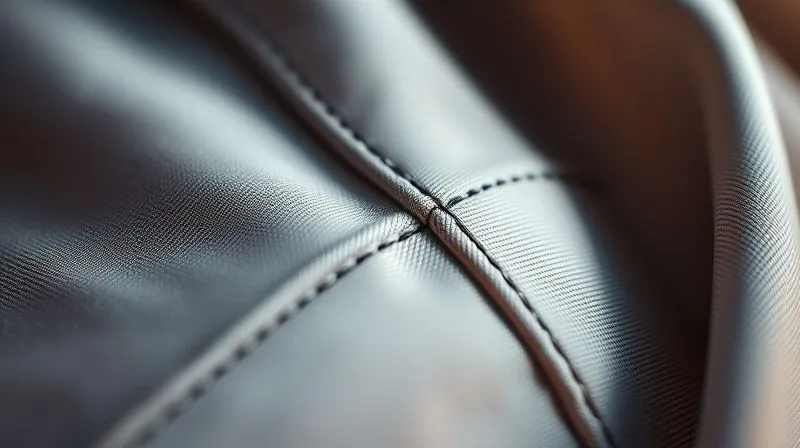
- Bonded Seams: For materials like neoprene or certain leathers, heat bonding or specialized adhesives can create smooth, strong, and virtually invisible seams that maintain the material's integrity and sleekness.
- Laser Welding/Cutting: For synthetic or metallic fabrics, laser technology offers unparalleled precision in cutting intricate patterns and even welding seams, eliminating the need for traditional stitching.
- Invisible Supports: Integrating internal structures like lightweight boning, flexible wiring, or even 3D-printed lattices directly into the seam allowances or interlinings, ensuring the garment's form is maintained without external distraction.
- Articulated Panels: For designs with rigid elements, incorporating small, hidden hinges or flexible inserts at joints (shoulders, elbows, knees) allows for a greater range of motion without compromising the overall silhouette.
Every construction choice must contribute to the overall vision, ensuring structural integrity while maintaining the avant-garde aesthetic. This often means developing bespoke techniques for each unique garment.
Structural Integrity and Wearability: The Unseen Engineering
One of the most profound challenges in executing avant-garde haute couture is ensuring that a visually arresting design is also structurally sound and, crucially, wearable. The most breathtaking vision can crumble if its internal architecture is weak. This is the unseen engineering that underpins true haute couture artistry.
The Architecture of Garments: Internal Support Systems
Think of an avant-garde gown not just as fabric, but as a habitable sculpture. To achieve gravity-defying shapes, exaggerated volumes, or rigid forms, a robust internal support system is indispensable. This is where the couturier becomes an architect, designing frameworks that are both strong and discreet.
- Bespoke Corsetry and Crinolines: Far beyond historical reproductions, modern corsetry can be custom-engineered from lightweight, high-performance materials to provide specific support and shaping for the torso. Crinolines can be constructed from flexible plastics or even carbon fiber rods to create immense volume without excessive weight.
- Integrated Boning and Wiring: Strategic placement of boning (steel, plastic, or even specialized flexible composites) can define edges, create curves, and prevent collapse. Fine wires can be integrated into fabric layers to achieve subtle sculptural effects.
- Lightweight Frameworks: For truly monumental pieces, internal frameworks made from materials like aluminum, titanium, or specialized polymers can be designed to bear the garment's weight and maintain its form. These must be meticulously balanced to ensure wearer comfort.
- Interlinings and Understructures: Layers of stiff buckram, horsehair canvas, or custom-molded foam can be used to give specific areas of the garment rigidity and shape, acting as an invisible foundation.
“The paradox of haute couture engineering is to make the strongest structure appear weightless, the most complex framework feel effortless. It’s the art of the invisible.” – A principle I've always upheld.
Ergonomics in Art: Ensuring the Garment Moves with the Body
While avant-garde designs push boundaries, they must still respect the human form to some degree, especially if they are intended for movement, such as on a runway. Ignoring ergonomics can lead to garments that are uncomfortable, restrictive, or even unsafe. The challenge is finding the sweet spot where artistic vision meets practical wearability.
- Kinetic Design Principles: Consider how the garment will move. Are there natural points of articulation in the body that can be mirrored in the design? Can panels be designed to flex or flow with the wearer?
- Articulated Joints: For designs with rigid elements, incorporating small, hidden hinges or flexible inserts at joints (shoulders, elbows, knees) allows for a greater range of motion without compromising the overall silhouette.
- Weight Distribution: Evenly distributing the weight of heavy embellishments or structural components is critical for comfort and balance. Shoulder pads, waistbands, and internal harnesses can help manage this.
- Breathability and Comfort: Despite unconventional materials, consider the inner lining and contact points with the skin. Using breathable, soft materials where the garment touches the body can significantly enhance wearability.
Case Study: Elysian Couture's "Nebula Gown"
Elysian Couture, a visionary atelier renowned for its ethereal creations, faced a daunting challenge with their "Nebula Gown." The design called for a vast, cloud-like silhouette that appeared to float weightlessly around the wearer, devoid of visible support. Traditional methods resulted in either a heavy, cumbersome garment or one that collapsed under its own artistic ambition. By integrating aerospace-grade carbon fiber filaments into a hidden substructure, meticulously shaped and strategically placed, they achieved unparalleled strength with minimal weight. Furthermore, the outer layers were composed of laser-cut, heat-bonded organza panels, creating a delicate, translucent effect. This innovative blend of high-tech engineering and exquisite textile artistry allowed the gown to maintain its breathtaking, ethereal form while allowing the model unrestricted movement, resulting in a paradigm shift for structural haute couture and a piece that garnered global acclaim.
The Iterative Process: From Mock-up to Masterpiece
The journey to precisely execute avant-garde haute couture design visions is rarely linear. It is, by its very nature, an iterative process of creation, critique, and refinement. Embracing this cyclical approach is essential for transforming a promising mock-up into a truly flawless masterpiece.
Prototyping and Fitting: The Continuous Loop of Refinement
Even with advanced digital tools, there is no substitute for the physical interaction with the garment on a human form. This is where the design truly comes to life and reveals its needs.
- Multiple Toiles and Mock-ups: Beyond the initial draping, expect to create several full-scale mock-ups. Each iteration should use materials closer to the final fabric in terms of weight and drape, allowing for precise adjustments.
- Rigorous Fitting Sessions: Conduct fittings with the actual model who will wear the garment, if possible. Their unique body mechanics and posture will reveal how the garment truly behaves. Document every adjustment with photographs and detailed notes.
- Digital Fitting Integration: Use 3D pattern software to input measurements from fittings and make virtual adjustments. This can streamline the physical toile process and allow for quick exploration of different design modifications.
- Movement Analysis: Observe the garment in motion. Does it flow as intended? Are there any points of tension or restriction? Avant-garde designs often have a performative aspect, and their movement is part of their artistry.
Feedback Integration: Listening to the Fabric and the Client
A true artisan knows when to listen—not just to the client, but also to the material itself. The fabric will often tell you what it wants to do, and sometimes, the most precise execution involves adapting your initial vision to the material's inherent properties.
- Designer's Intuition: Develop a keen sense of how different materials behave. Trust your instincts when a particular construction method feels forced or unnatural for the fabric.
- Client Feedback: While avant-garde designs are often concept-driven, the client's comfort and confidence in wearing the piece are vital. Incorporate their feedback on fit, feel, and functionality where appropriate.
- Peer Review: In a collaborative atelier setting, seeking input from other skilled artisans can provide fresh perspectives and uncover solutions to complex problems.
This iterative cycle of design, prototype, fit, and refine is what elevates a good concept to an exceptional execution. For further reading on iterative design principles applicable to creative fields, consider resources like Harvard Business Review's articles on design thinking.
Embellishment and Surface Artistry: Elevating the Narrative
In avant-garde haute couture, embellishment is rarely an afterthought; it is an integral part of the design vision, often defining the garment’s narrative and pushing the boundaries of surface artistry. To precisely execute avant-garde haute couture design visions, embellishments must be approached with the same level of conceptual rigor and technical precision as the garment’s structure.
Beyond Adornment: Integrated Surface Design
For avant-garde work, embellishments aren't merely decorative additions; they are often structural components, narrative devices, or extensions of the garment's form. This requires a holistic approach where surface design is conceived concurrently with the silhouette.
- Algorithmic Embroidery: Utilizing computational design to generate complex, non-repeating embroidery patterns that can be executed with robotic precision, creating textures that are both organic and alien.
- 3D Printing Directly onto Fabric: Experimenting with flexible 3D printing filaments to create raised textures, sculptural elements, or even functional components directly on the fabric surface, blurring the lines between textile and sculpture.
- Kinetic Embellishments: Incorporating elements that move, shimmer, or react to the wearer's motion or environment, adding a dynamic, performative dimension to the garment. Think of delicate feathers engineered to vibrate or sequins designed to catch light in an unusual way.
- Deconstructed Textiles: Rather than adding, sometimes the avant-garde approach is to subtract or manipulate the existing fabric itself—fraying, laser-cutting, burning, or chemically treating—to create intricate surface patterns and textures.
The Hand of the Artisan: Preserving Craft in Innovation
Despite the influx of technology, the human touch remains irreplaceable in haute couture. The unique sensitivity, judgment, and skill of the artisan are what imbue a garment with soul, even when executing the most futuristic designs. The challenge is to find the perfect synergy between machine precision and human artistry.
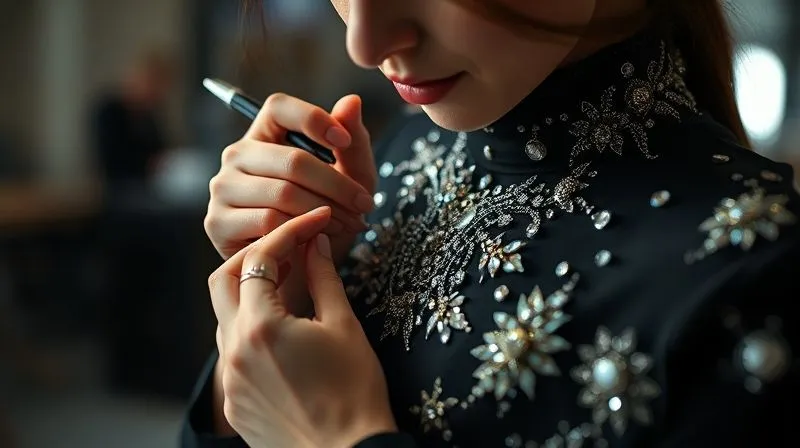
I’ve witnessed master embroiderers spend hundreds of hours on a single panel, their hands working with an almost spiritual devotion. This level of dedication cannot be replicated by a machine. It's about combining the efficiency and precision of digital tools for complex pattern generation or laser cutting, with the nuanced, irreplaceable skill of hand-finishing, delicate beadwork, or bespoke embellishment application. This fusion ensures that even the most avant-garde piece retains the hallmark of haute couture: unparalleled craftsmanship and a profound human connection.
Documentation and Preservation: Safeguarding the Artistic Legacy
The final, yet often overlooked, step in how to precisely execute avant-garde haute couture design visions is meticulous documentation and thoughtful preservation. An avant-garde piece is not just a garment; it is a significant artistic and technical achievement that deserves to be recorded and protected for posterity.
Archiving the Process: A Blueprint for Future Innovation
Every avant-garde design is a journey of problem-solving and innovation. Documenting this journey creates an invaluable archive, not only for the specific piece but also as a reference for future projects. This blueprint of knowledge is critical for maintaining the atelier's intellectual capital.
- Technical Drawings: Create detailed technical flats and construction diagrams, annotating every seam, dart, and internal structure.
- Material Specifications: Keep precise records of all materials used, including supplier information, fiber content, weight, and any special treatments or finishes.
- Construction Notes: Document the specific techniques employed, challenges encountered, and solutions devised for each unique aspect of the garment. This includes custom patterns, bespoke tools, or unconventional assembly methods.
- Photography and Videography: Capture the garment at various stages of construction, highlighting intricate details, internal structures, and the overall evolution of the design.
- Fitting Records: Maintain detailed notes and photographs from all fitting sessions, including any adjustments made to the pattern or construction.
This comprehensive archive ensures that the precision of execution is not lost to time but becomes a foundation for future artistic endeavors. It’s a testament to the journey of creation, often as compelling as the final garment itself.
Caring for the Avant-Garde: Longevity and Exhibit Considerations
Unlike conventional garments, avant-garde pieces often feature fragile, unconventional, or composite materials that require specialized care. Ensuring their longevity for exhibition or private collection is a crucial aspect of their execution.
- Custom Storage Solutions: Many avant-garde pieces cannot be folded or hung like regular clothing. Custom-built mannequins, acid-free archival boxes, or climate-controlled display cases may be necessary to maintain their structural integrity.
- Specialized Cleaning: Traditional dry cleaning or washing may be detrimental. Research and develop specific cleaning protocols for each material, often involving delicate hand-cleaning or specialized conservation techniques.
- Environmental Controls: Fluctuations in temperature, humidity, and light can degrade unconventional materials. Advise on optimal storage and display environments to prevent deterioration.
- Handling Protocols: Establish clear guidelines for handling the garment, especially for complex or delicate structures, to prevent accidental damage.

Frequently Asked Questions (FAQ)
Q: How do I balance artistic freedom with the practicalities of construction in avant-garde haute couture? A: This is the eternal dance of the avant-garde designer. I've found the key lies in an iterative, experimental approach. Don't let practical limitations stifle your initial vision, but be prepared to engage in a rigorous dialogue with your materials and construction methods. Often, true innovation emerges when you push against the perceived boundaries of practicality, finding novel solutions that serve both the artistic concept and the structural demands. It’s about being adaptable without compromising your core vision, often requiring bespoke techniques and material combinations.
Q: What role does technology play in executing truly avant-garde visions? A: Technology is an increasingly indispensable partner. 3D design software for patternmaking and simulation, laser cutting for intricate details, 3D printing for custom components, and even smart textiles all empower designers to achieve levels of precision and complexity previously unimaginable. However, technology should always be a tool in service of the artistic vision, not the vision itself. The most compelling avant-garde pieces seamlessly blend high-tech innovation with traditional artisanal skill, creating something truly unique.
Q: How can I ensure the durability and longevity of garments made from unconventional materials? A: Ensuring durability requires a deep understanding of your chosen materials. Research their properties, potential degradation factors (light, humidity, chemicals), and consult with material scientists or conservation experts if necessary. Integrating robust internal structures, using specialized bonding or sealing techniques, and developing custom care instructions are all crucial. For exhibition pieces, meticulous archival storage in climate-controlled environments is essential. It's about proactive preservation from the design stage onward.
Q: Is it possible for emerging designers to enter the avant-garde haute couture space without vast resources? A: While haute couture traditionally demands significant resources, emerging designers can innovate resourcefully. Focus on one or two truly groundbreaking techniques, master them, and create a smaller, impactful collection. Leverage digital tools for prototyping to reduce material waste. Seek collaborations with material innovators or specialized artisans. The avant-garde spirit is about pushing boundaries, not necessarily about limitless budgets. A strong, unique vision and exceptional craftsmanship can attract attention and resources over time.
Q: What are the most common pitfalls when attempting to execute highly complex designs? A: The most common pitfalls I've observed include insufficient conceptualization (rushing to make without a clear blueprint), underestimating material properties (forcing a material to do what it cannot), neglecting internal structure (leading to collapse or poor drape), and insufficient prototyping/fitting (leading to ill-fitting or uncomfortable garments). A lack of meticulous documentation also hinders future learning and refinement. Addressing these early and systematically is crucial for success.
Key Takeaways and Final Thoughts
The journey of how to precisely execute avant-garde haute couture design visions is an exhilarating fusion of unrestrained creativity and meticulous engineering. It demands a designer who is not only a visionary artist but also a skilled technician, a resourceful innovator, and a patient artisan. Throughout my career, I’ve learned that the true magic happens when these seemingly disparate roles converge, transforming the impossible into the breathtakingly real.
- Deconstruct and Blueprint: Begin with an exhaustive conceptualization and translation of your abstract vision into a detailed, multi-faceted plan.
- Innovate with Materials: Embrace unconventional textiles and understand their scientific properties, sourcing them strategically and ethically.
- Master Atelier Alchemy: Employ advanced patternmaking and construction techniques, developing bespoke solutions for unique challenges.
- Engineer for Integrity: Design robust, yet invisible, internal support systems and consider ergonomics for wearability.
- Embrace Iteration: Utilize prototyping, multiple fittings, and continuous refinement as non-negotiable steps.
- Elevate with Surface Artistry: Integrate embellishments as a core part of the design narrative, blending technology with artisanal skill.
- Document and Preserve: Meticulously archive your process and plan for the long-term care of your creations.
The world of haute couture thrives on audacious visions, but it is precision in execution that truly distinguishes a fleeting idea from an enduring masterpiece. As you embark on your next avant-garde creation, remember that every challenge is an opportunity for innovation, and every meticulous detail contributes to the profound artistry of your final garment. Go forth, create, and let your precise execution speak volumes.
Recommended Reading
- Mastering Minimalist Fashion Photography: 7 Steps to a Distinctive Aesthetic
- Authenticate Vintage Eyewear: 5 Steps to Profitable Online Resale
- Unlock Deeper Rest: How Blue Light Glasses Transform Executive Sleep
- 5 Causes & Cures: Under-Breast Rash from Sports Bras in Humid Gyms
- 7 Blockchain Strategies: Verify Fashion Sustainability Authentically

Your email address will not be published. Required fields are marked *