

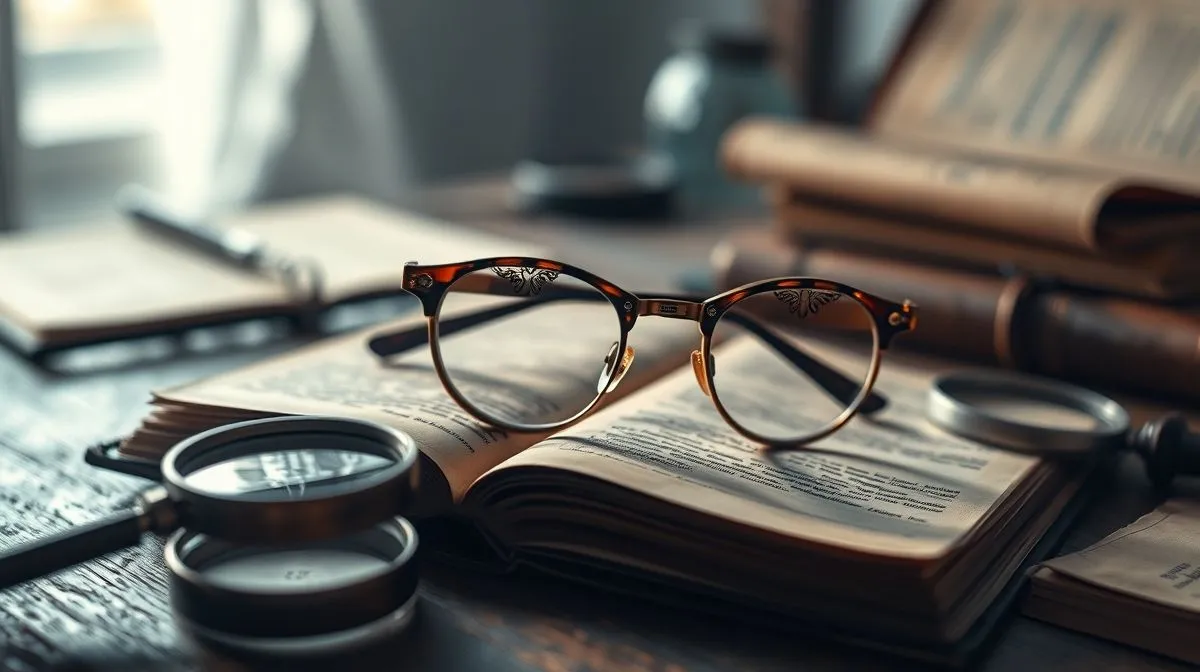
How to Authenticate Vintage Eyewear for Profitable Resale Online?
For over 15 years in the dynamic world of eyewear fashion, I've witnessed the exhilarating highs of discovering a rare, pristine vintage piece, and the crushing lows of encountering convincing, yet ultimately worthless, counterfeits. The allure of vintage eyewear is undeniable – it's a tangible link to history, a statement of individuality, and, crucially for many, a significant investment opportunity. But the path to profitable resale online is fraught with peril, primarily the ever-present threat of inauthentic items.
The problem is rampant: a market flooded with replicas, 'Frankenstein' frames cobbled together from disparate parts, and outright fakes passed off as genuine treasures. Without a robust authentication process, you risk not just losing money, but damaging your reputation as a seller, eroding trust with your buyers, and missing out on the substantial profits that truly authentic pieces command. It's a high-stakes game where knowledge isn't just power; it's your only shield.
This comprehensive guide is born from my years of hands-on experience and deep dives into the archives of iconic eyewear houses. I'm going to equip you with the actionable frameworks, insider tips, and expert insights necessary to confidently authenticate vintage eyewear. You'll learn to distinguish the genuine article from the deceptive imitation, ensuring every piece you acquire and list for sale is a verified, valuable asset, ready for profitable resale online.
Understanding the Vintage Eyewear Market Landscape
Before we dive into the granular details of authentication, it’s crucial to understand the ecosystem you're operating within. The vintage eyewear market isn't a monolith; it's a nuanced tapestry of eras, styles, and brands, each with its own authentication quirks. My journey began by simply appreciating unique frames, but quickly evolved into a dedicated study of their origins, materials, and manufacturing techniques.
Defining "Vintage" and "Antique" Eyewear
While often used interchangeably, there's a distinction. Generally, items considered "antique" are 100 years or older. "Vintage," on the other hand, typically refers to items that are at least 20 years old but less than 100. In eyewear, this means a pair of frames from the 1920s might be antique, while a pair from the 1980s or 90s would be vintage. Understanding this helps in categorizing and, ultimately, valuing your finds. The older the piece, often the more unique and demanding of specialized authentication.
Why Authentication Matters: Risk vs. Reward
The stakes are high. An unauthenticated piece, even if genuinely vintage, will fetch a fraction of the price it deserves. A fake, however, can lead to chargebacks, negative reviews, and a complete loss of investment. On the flip side, a rigorously authenticated pair of vintage Cazals or Ray-Ban Wayfarers from a specific era can command premium prices, sometimes thousands of dollars. As an expert, I've seen sellers turn a modest investment into a significant profit margin purely by guaranteeing authenticity.
The Foundation: Research & Provenance
Every successful authentication begins long before you even touch a pair of frames. It starts with meticulous research. Think of yourself as a historical detective; the more clues you gather about a particular model or brand, the more robust your authentication will be.
Deep Dive into Brand History and Models
This is where the real work begins. You need to become intimately familiar with the brands you intend to specialize in. What were their signature styles? What materials did they use during specific decades? Did their logos or markings change over time? These details are your first line of defense against fakes.
- Explore Brand Archives: Many established eyewear brands maintain online archives or have historical books detailing their collections. Luxottica, Safilo, and Marcolin, for example, have extensive histories.
- Consult Vintage Catalogs & Advertisements: Original sales catalogs, magazine ads, and even old film stills can provide invaluable visual references for models, colors, and features.
- Join Expert Forums & Communities: Online communities dedicated to vintage eyewear collecting are treasure troves of shared knowledge. Just be discerning about the advice you receive, always cross-referencing.
Sourcing Strategy: Where to Find Genuine Pieces
Your sourcing strategy directly impacts your authentication burden. While flea markets and estate sales can yield incredible finds, they also carry higher risks. Reputable auction houses, established vintage dealers, and specialized online platforms often pre-authenticate their items, reducing your legwork. However, these sources usually come with a higher price tag. Balance your risk tolerance with your profit aspirations.
The Art of Visual Inspection: A Multi-Point Checklist
Once you have a piece in hand, visual inspection is your primary tool. This isn't just about looking; it's about seeing, feeling, and understanding the nuances of craftsmanship from a bygone era. I always approach a new piece with a jeweler's loupe and a very critical eye.
Frame Materials and Construction Quality
The materials used in vintage eyewear varied greatly by era and manufacturer. Learning to identify these is crucial. For instance, early plastics like celluloid and Bakelite have different properties than later acetates. Metals like rolled gold, sterling silver, or specific alloys have distinct weights and patinas.
- Celluloid: Often has a distinct smell (like camphor) when gently rubbed, and can show signs of degradation (crystallization, yellowing).
- Acetate: Modern, stable plastic, often with vibrant colors and patterns. Vintage acetate often feels denser and has a unique aging quality.
- Metals: Look for hallmarks on gold-filled or sterling silver frames. Plated metals may show wear. The weight and feel should be consistent with the purported material.
- Construction: Examine joints, hinges, and seams. Vintage craftsmanship, especially from high-end manufacturers, was often incredibly precise, with minimal gaps or rough edges. Screws should fit snugly and be of appropriate size and material for the era.
Hardware: Hinges, Screws, and Nose Pads
These small details can be huge tells. Many vintage manufacturers used specific types of hinges (e.g., seven-barrel hinges), unique screw head designs, or particular nose pad materials (e.g., glass, mother-of-pearl, or specific plastics). Fakes often cut corners here.
Expert Insight: "Always check the screws. Counterfeiters often use generic, ill-fitting screws that are too long, too short, or made of a different metal than the rest of the frame. Original screws were often custom-made or carefully selected to match the frame's aesthetic and material integrity."
Lenses: Originality and Markings
While lenses are often replaced over time, original vintage lenses can add significant value. Look for brand logos etched into the lens (e.g., the small "BL" for Bausch & Lomb on vintage Ray-Bans), specific tints, or even original prescription lenses. The quality of the lens material itself can also be an indicator.
Decoding Markings and Hallmarks: The Eyewear DNA
The inscriptions on vintage eyewear are like its DNA, providing a blueprint of its origin, model, and sometimes even its production date. This is one of the most critical steps in authenticating vintage eyewear for profitable resale online.
Manufacturer's Stamps and Logos
Every major brand has distinct logos and stamps. These often changed slightly over decades. For instance, early Ray-Ban logos differed from later ones, and some brands used specific fonts or placements. Familiarize yourself with these historical variations. Are the stamps crisp and clear, or blurry and inconsistent? Fakes often have poorly rendered or incorrect logos.
Model Numbers and Production Codes
Many vintage frames, especially from the mid-20th century onwards, will have model numbers, size indicators (e.g., 50-20-140 for lens width, bridge width, temple length), and sometimes even production codes stamped on the inner temples or bridge. Cross-reference these numbers with known brand catalogs or historical databases. An incorrect model number for a given style is a red flag.
Country of Origin and "Made In" Stamps
The "Made In" stamp is a powerful authenticator. For example, many iconic vintage frames were made in France, Italy, or Germany. If a frame purporting to be a vintage Persol (Italian) says "Made in China," you likely have a fake or a much newer, non-vintage reproduction. Be aware that some brands had manufacturing facilities in different countries over time, so research is key.
Case Study: How "RetroSpecs & Co." Authenticated a Rare Piece
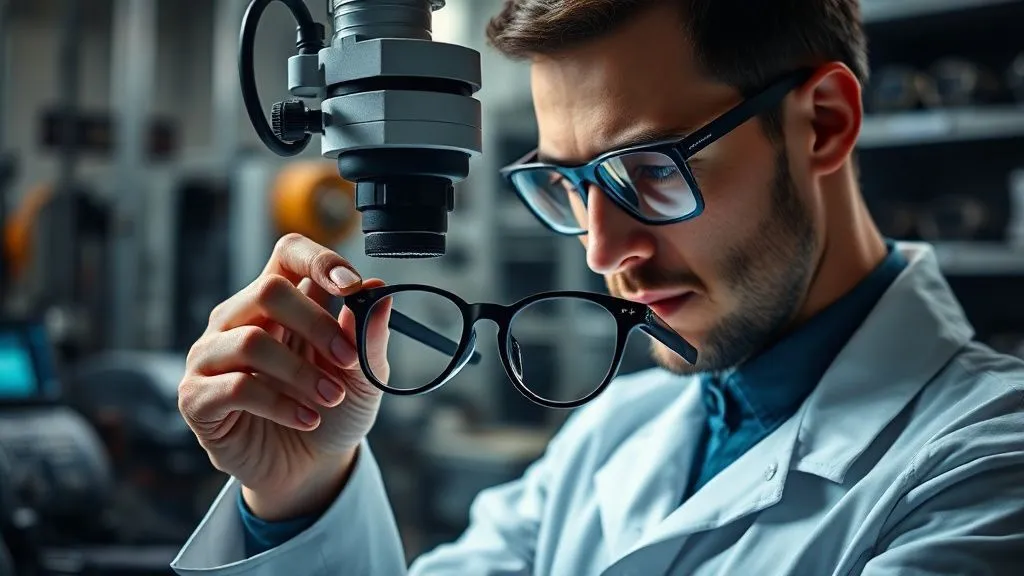
RetroSpecs & Co., a renowned vintage eyewear dealer, recently acquired a pair of frames purported to be ultra-rare 1960s Cartier. Initial visual inspection was promising, but the faint markings on the inner temple were critical. By comparing the specific Cartier hallmark, serial number font, and 'Made in France' stamp against their extensive internal database of verified pieces and historical Cartier documentation, they identified a subtle discrepancy in the serial number's digit spacing. Further microscopic analysis revealed an alteration, confirming it was a high-quality replica. This prevented a multi-thousand dollar loss and reinforced their reputation for unwavering authenticity, underscoring why expertise in decoding these minute details is paramount.
The Feel and Fit Test: Beyond What Meets the Eye
Beyond visual cues, how a pair of vintage glasses feels in your hand and on your face can tell you a lot. This is where your tactile senses come into play, informed by experience.
Weight, Balance, and Ergonomics
Genuine vintage frames, especially those made with quality materials like thick acetate or specific metals, often have a distinct weight and balance. Fakes often feel flimsy, too light, or poorly balanced. Put them on: do they sit correctly? Are they symmetrical? High-end vintage frames were engineered for comfort and durability, a characteristic often missing in mass-produced replicas.
Distinctive Features and Patented Designs
Many vintage brands incorporated unique, patented features. This could be a specific hinge mechanism, an adjustable nose pad system, or a unique temple design. For example, some vintage frames have spring-loaded hinges that retract smoothly, a detail rarely replicated with precision in fakes. Knowing these brand-specific innovations can immediately confirm or deny authenticity.
Advanced Authentication Techniques: When to Seek Expert Help
While the steps above will cover most authentication needs for profitable resale online, some pieces, especially extremely rare or high-value items, warrant more advanced scrutiny.
Spectroscopic Analysis and Material Testing
For truly high-stakes authentication, scientific methods can be employed. Techniques like X-ray fluorescence (XRF) can determine the exact elemental composition of metals and plastics, verifying if they match the materials known to be used by a specific manufacturer during a particular era. While not practical for every reseller, understanding its existence is important for comprehensive authentication. More details on material science can be found on reputable academic sources like Nature's Materials Science collection, illustrating the depth of material analysis.
Professional Appraisals and Certification
If you're dealing with an exceptionally valuable or historically significant piece, consider a professional appraisal from a recognized expert in vintage eyewear or a reputable antique appraiser. They can provide a certificate of authenticity, which adds immense value and trust for your buyers. This is an investment that pays dividends for top-tier items.
Common Pitfalls and How to Avoid Them
Even with a keen eye, the vintage eyewear market presents challenges. Recognizing these common traps will save you time, money, and reputational damage.
Identifying "Frankenstein" Frames
These are frames assembled from parts of different pieces. For example, genuine fronts paired with replica temples, or mismatched lenses. Always check that all components – frames, temples, hinges, and screws – appear consistent in age, wear, material, and markings. Discrepancies are a major warning sign.
The Perils of Incomplete Documentation
A lack of original cases, cleaning cloths, or even sales receipts (if acquiring from original owners) isn't necessarily a deal-breaker, but it does mean your authentication burden is higher. Be wary of sellers who can't provide any context for their pieces, especially if the price seems too good to be true. Remember, consumer protection agencies like the Federal Trade Commission (FTC) advise caution when deals seem suspicious.
Don't Fall for Emotional Purchases
It's easy to get swept away by the beauty or perceived rarity of a piece. However, maintain a detached, analytical mindset during the authentication process. Stick to your checklist, cross-reference your research, and don't let excitement cloud your judgment. A disciplined approach is key to profitable resale online.
Pricing Your Authenticated Vintage Eyewear for Profit
Once you've confidently authenticated a piece, the next step is pricing it strategically for maximum profit. This isn't guesswork; it's a blend of market knowledge and careful valuation.
Market Research and Comparative Analysis
Look at what similar, authenticated pieces have sold for recently on reputable platforms like eBay (completed listings), specialized vintage eyewear sites, and auction results. Pay attention to brand, model, condition, and rarity. This gives you a realistic price range. For insights into the broader vintage luxury market, publications like Forbes' luxury section often feature articles on valuation trends.
The Role of Condition and Rarity
A pristine, unworn (NOS - New Old Stock) piece will always command a higher price than one with significant wear, scratches, or missing parts. Rarity is also a huge factor. A mass-produced model from the 80s will be less valuable than a limited-edition collaboration or a particularly unusual design from an obscure, high-quality manufacturer. Be honest and transparent about condition in your listings, and price accordingly.
Frequently Asked Questions (FAQ)
Q: How can I tell if vintage plastic frames are celluloid or acetate? A: Celluloid often has a slight camphor-like smell when rubbed vigorously with a cloth, and can be more brittle or prone to crystallization over time. Acetate generally feels more stable, less prone to yellowing, and lacks the distinct smell. However, the most reliable method for precise identification is often through professional material testing.
Q: Are vintage lenses safe to wear, or should I replace them? A: Many vintage lenses, especially from before the 1980s, may not offer modern UV protection or impact resistance. While some collectors prefer original lenses for authenticity, for daily wear, I strongly recommend replacing them with modern, UV-protective prescription or sunglass lenses. This protects the buyer's eyes and allows for profitable resale online without liability concerns.
Q: What's the best way to clean vintage frames without damaging them? A: Use a very soft microfiber cloth and a gentle, pH-neutral soap (like mild dish soap) diluted with water. Avoid harsh chemicals, alcohol, or abrasive materials. For metal frames, a soft brush can help with intricate details. Always dry thoroughly. For deeply embedded dirt or oxidation, professional cleaning by an optician is recommended.
Q: How do I handle minor repairs on vintage frames before selling? A: For minor issues like loose screws or simple adjustments, a gentle touch and appropriate tools are fine. However, anything more complex – like soldering broken metal, repairing cracks in plastic, or replacing hinges – should be left to experienced opticians or eyewear repair specialists. Improper repairs can devalue a piece significantly. Transparently disclose any repairs to potential buyers.
Q: Is it worth authenticating lower-value vintage eyewear? A: Absolutely. While the profit margin might be smaller, the principle remains the same. Building a reputation for authenticity, regardless of price point, will lead to repeat customers and positive reviews. Even a $50 pair of authenticated vintage frames contributes to your credibility and can still be part of a profitable resale online strategy.
Recommended Reading
- Unlock Your Radiance: Discovering Your Unique Personalized Beauty Needs
- Best Sneakers for Walking All Day: Ultimate Comfort Guide
- Unlock the Secret: How to Prevent Platinum Jewelry from Scratching Easily
- 5 Proven Strategies: Differentiating Your Costume Jewelry Brand in a Saturated Market
- Unlock the Secret to Sustainable Vintage Clothing Care: A Definitive Guide
Key Takeaways and Final Thoughts
Mastering the art of authenticating vintage eyewear is not just a skill; it's an investment in your business and your reputation. The market for unique, high-quality vintage frames continues to grow, and those who can confidently verify authenticity will always be at the forefront of this lucrative niche. Remember these critical points:
- Research is Paramount: Know your brands, models, and historical manufacturing techniques inside out.
- Inspect Meticulously: Every detail, from hinges to hallmarks, tells a story.
- Decode the DNA: Markings, stamps, and codes are your strongest allies.
- Trust Your Gut (Informed by Experience): How a piece feels and fits is often a subtle but strong indicator.
- Leverage Expert Help: Don't hesitate to seek professional appraisal for high-value items.
The journey to confidently authenticate vintage eyewear for profitable resale online is an ongoing learning process, filled with fascinating discoveries. Embrace the challenge, hone your skills, and you'll not only uncover hidden gems but also build a thriving business built on trust and genuine value. Happy hunting, and may your vintage finds always be authentic and immensely profitable!


Your email address will not be published. Required fields are marked *