

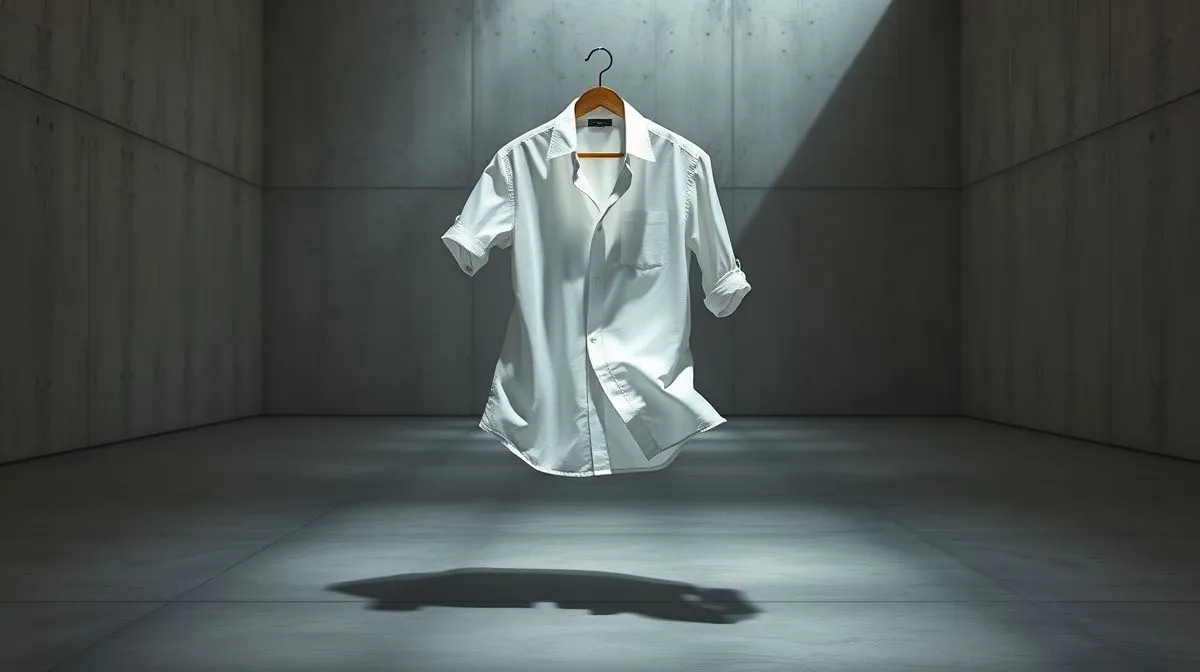
How to achieve a distinctive minimalist fashion aesthetic in photography?
Achieving a truly distinctive minimalist fashion aesthetic in photography goes far beyond simply removing elements from your frame. In my experience, it's about a profound understanding of visual hierarchy, intentionality, and the power of suggestion. It's not just "less is more"; it's "every single element is critical, and nothing is superfluous."
The core philosophy here is one of deliberate choice. Every decision, from the garment selection to the angle of light, must serve to enhance the primary subject and the overarching mood, rather than merely exist within the frame.
To truly master this aesthetic, consider these fundamental pillars:
-
Mastering Negative Space as a Subject: Think of negative space not as an empty void, but as an active compositional element. It guides the eye, creates balance, and often adds a sense of calm or grandeur. I often advise my students to "photograph the space around the subject" as much as the subject itself. For example, a model standing alone against a vast, uncluttered wall isn't just a model in front of a wall; it's a study of form, isolation, and the interplay between human presence and architectural scale.
-
The Power of a Limited Palette: Strict adherence to a monochromatic or analogous color scheme is paramount. This isn't about avoiding color, but about using it with extreme precision. Consider how a single pop of a muted primary color against a backdrop of greys and whites can draw immediate, unwavering attention to a specific detail – a handbag, a shoe, or the model's eyes. It creates a visual anchor.
-
Emphasizing Texture and Form: When colors are stripped back, texture and form become your primary tools for visual interest. The weave of a linen shirt, the sharp crease of tailored trousers, the subtle sheen of leather – these details must be exquisitely rendered. Use light to sculpt these elements, highlighting their tactile qualities and creating depth in an otherwise simple composition.
-
Light as Your Primary Sculptor: In minimalist photography, light isn't just illumination; it's a co-creator. Harsh, directional light can create dramatic shadows and define strong architectural lines within the clothing or setting, adding tension. Soft, diffused light, conversely, can create a sense of ethereal calm and highlight subtle fabric textures without harshness. Understanding how light interacts with surfaces is critical to bringing out the essence of your subject.
-
Strategic Styling, Not Just Simple Styling: Minimalist fashion styling isn't about boring clothes. It's about selecting pieces with clean lines, exceptional tailoring, and often, a timeless quality. Each garment, each accessory, must be chosen for its contribution to the overall narrative and aesthetic, never as a mere adornment. A common mistake I see is equating minimalism with plainness; instead, think of it as elevated simplicity, where quality and cut speak volumes.
-
Subtle Expression and Posing: The model's posture and expression should reflect the quiet confidence and intentionality of the minimalist aesthetic. Avoid overly dynamic or dramatic poses. Instead, favor contemplative gazes, subtle shifts in weight, and poses that emphasize the lines of the body and the garment. The model becomes an integral part of the composition, a living sculpture within the frame.
-
Disciplined Post-Production: Your editing process should reinforce the clean, precise aesthetic. This means meticulous cleanup of distractions, subtle color grading to enhance your chosen palette, and a focus on maintaining natural textures and tones. Resist the urge for heavy filters or over-processing; the goal is refinement, not transformation.
“Minimalism in photography isn't about what you take out; it's about what you leave in, and why. Every remaining element must pull its weight, contributing meaningfully to the story or emotion you wish to evoke.”
Consider the work of photographers like Irving Penn's "Small Trades" series or even some of Peter Lindbergh's earlier, starker portraits. They exemplify how a pared-down approach can amplify character and form. Penn, for instance, used simple backdrops to isolate his subjects, forcing the viewer to focus on their attire, tools, and expressions, turning everyday workers into iconic figures.
To put this into practice, I always recommend a "pre-visualization purge." Before even picking up the camera, spend time with your concept. Sketch out compositions, create detailed mood boards focusing on textures, light, and negative space. Ask yourself: "If I could only include three elements in this frame, what would they be, and why?" This exercise forces a level of intentionality that translates directly to a distinctive minimalist outcome.
Another practical tip involves your gear. While any camera can technically achieve minimalist results, opting for prime lenses (e.g., a 50mm or 85mm) encourages you to move and compose thoughtfully, rather than relying on zoom. This physical interaction with your subject and environment inherently fosters a more deliberate, minimalist approach to framing.
A common pitfall I observe is confusing minimalism with emptiness or lack of effort. True minimalism requires immense thought and precision. It’s easy to create a bland image by removing elements without understanding how the remaining ones interact. The distinction lies in the *purpose* behind each inclusion and exclusion.
Another error is the assumption that a busy scene can be "fixed" into minimalism in post-production. While editing is crucial for refinement, the foundational minimalist aesthetic must be captured in-camera. It starts with the location, the styling, the lighting, and the model's interaction with the space. Post-processing is the polish, not the primary tool for transformation.
How important is lighting in creating a minimalist aesthetic?
In my fifteen years behind the lens, I've come to understand that lighting isn't merely important in minimalist fashion photography; it is, quite frankly, the **cornerstone** upon which the entire aesthetic is built. It's the silent, invisible sculptor that defines form, texture, and mood, often with fewer elements than any other photographic style. Without a masterful command of light, minimalism collapses into emptiness rather than intentional simplicity. Think of light in this context as your primary design tool. Where other styles might rely on elaborate sets, props, or complex styling, minimalist photography strips all that away, leaving the garment and model exposed. This vulnerability demands that every curve, every fold, every shadow is meticulously crafted by light to convey the intended message. It's about revealing essence, not obscuring it.A common mistake I see emerging photographers make is equating minimalism with "easy lighting." They think bright, even light is sufficient. However, true minimalist lighting is often far more complex in its subtlety and precision. It requires an understanding of how light interacts with surfaces, creates depth, and defines negative space. It's not about how much light you use, but **how you use it**.
Here’s why light holds such paramount importance:- Sculpting Form and Silhouette: In minimalism, the shape and drape of the garment are paramount. Light, especially directional light, is essential for creating contours, highlighting the natural fall of fabric, and defining the model’s posture without resorting to heavy styling or complex poses. A single, well-placed light can transform a flat piece of fabric into a three-dimensional marvel.
- Emphasizing Texture: When visual clutter is removed, texture becomes a key player. Whether it’s the subtle sheen of silk, the coarse weave of linen, or the intricate pattern of a knit, light at an oblique angle can dramatically accentuate these details, giving the image a tactile quality that engages the viewer.
- Defining Negative Space: Minimalist compositions thrive on negative space. Lighting helps to isolate the subject from the background, creating clean lines and clear boundaries that enhance the sense of spaciousness and calm. It can create gradients on a seamless background that guide the eye without adding distractions.
- Controlling Mood and Emotion: Even with a pared-back aesthetic, light dictates the emotional resonance. Soft, diffused light might evoke serenity and elegance, while stark, hard light can create drama, tension, or a bold, graphic statement. The choice of light quality profoundly influences the narrative.
- Intentional Shadow Play: Shadows are not deficiencies to be eliminated; they are integral compositional elements in minimalist photography. Strategically placed shadows can create depth, pattern, and a sense of intrigue, becoming as important as the illuminated areas themselves.
In my experience, working with a single, large light source, like a parabolic umbrella or a large softbox, often yields the most compelling minimalist results. This allows for a broad, soft fall-off that gently sculpts the subject and creates subtle gradients on the background, enhancing the sense of depth without harshness. Alternatively, for a more graphic and stark aesthetic, a focused hard light source can produce dramatic, clean shadows that become part of the composition.
"In minimalist fashion photography, light doesn't just illuminate; it edits. It strips away the superfluous, leaving only the essential, the beautiful, and the true form."
Consider the work of photographers like Peter Lindbergh or Richard Avedon, whose black and white portraits, though not always strictly fashion, exemplify the power of light to define and elevate a subject with minimal fuss. Their mastery of light and shadow created iconic images that transcended mere representation, revealing character and form in its purest state. This ethos translates directly to minimalist fashion, where the garment itself becomes the character, illuminated with surgical precision.
Can you use color in minimalist fashion photography?
The notion that minimalist fashion photography is strictly confined to black and white is, in my experience, a significant misconception. While monochrome certainly embodies a profound simplicity, color, when wielded with precision and intent, can elevate a minimalist image to an even more distinctive and evocative level. It's not about the absence of color, but rather the **purposeful and restrained application** of it. In mastering this, you must understand that color in minimalism serves not as a decorative flourish, but as a core element of the narrative, form, or emotion you wish to convey. Every hue, every saturation level, and every placement must be a deliberate decision, contributing to the overall simplicity and impact rather than detracting from it. Think of it as a carefully chosen accent note in a sparse musical composition – powerful because of its isolation. Here's how I approach integrating color into a minimalist framework: * **The Restricted Palette:** I almost always advocate for a highly limited color scheme. This could mean a **monochromatic palette** (various shades and tones of a single color), an **analogous palette** (colors adjacent on the color wheel, creating harmony), or the very strategic use of a single **complementary accent** against a neutral or subdued background. * **Color as a Focal Point:** A single, bold splash of color against an otherwise neutral or desaturated backdrop immediately draws the eye, becoming the indisputable focal point. This is incredibly powerful for highlighting a garment's detail, a model's feature, or a specific emotion. * **Strategic Background Integration:** Sometimes, the color resides not in the subject, but in a carefully chosen background element – a painted wall, a single colored prop, or even natural light casting a specific hue. This uses color to simplify the frame, guiding the viewer's gaze and defining the space. The key, as with all aspects of minimalism, is to ensure that the chosen colors simplify the message, not complicate it. A common mistake I observe is the introduction of too many hues, which instantly shatters the minimalist illusion and introduces visual noise. Instead, we aim for a dialogue between form, texture, light, and a very select few colors."Color in minimalist photography is not about filling the void; it's about defining the void with a whisper, not a shout. It's the silent protagonist in a story of elegant restraint."Consider the impact of a single, vibrant red dress against a stark, concrete backdrop. The red isn't just a color; it becomes an **iconic statement**, a symbol of passion, power, or individuality, amplified by the surrounding emptiness. This is far more potent than if the background were cluttered with other colors or elements. The contrast isn't just visual; it's conceptual, making the subject's color the undisputed star. When post-processing, I often lean towards slightly desaturating all but the hero color, or carefully adjusting the vibrance to ensure the colors feel natural yet impactful, never garish. This finesse ensures that the chosen hues support the minimalist aesthetic rather than overwhelming it. To effectively weave color into your minimalist fashion photography, consider these steps: 1. **Start with a Neutral Base:** Begin with a foundation of whites, grays, blacks, or earthy tones for your set, styling, or location. 2. **Select Your Hero Color:** Choose one or, at most, two accent colors that will carry the weight of the image's emotional or narrative intent. 3. **Consider Color Psychology:** Think about what emotion or message your chosen color evokes (e.g., blue for serenity, yellow for optimism, red for passion). 4. **Utilize Negative Space:** Allow ample negative space around your colored element to amplify its presence and prevent visual clutter. 5. **Experiment with Tone and Saturation:** Play with different levels of brightness, darkness, and intensity of your chosen color to find the perfect balance that speaks to minimalism. Remember, the goal is always to refine and distill. If a color doesn't serve a clear, impactful purpose, it likely doesn't belong. When executed thoughtfully, color becomes an incredibly powerful tool for creating distinctive, memorable minimalist fashion imagery that truly stands out.
Reading Recommendations:
- The Secret to Preserving Vintage Silk Heirlooms: A Home Guide
- Beat Digital Eye Strain: 7 Stylish Eyewear Solutions for Professionals
- Unlocking Feminine Style: The Essential Characteristics You Need to Know
- Unveiling the Secrets: How Intricate Embellishments Are Crafted in Haute Couture
- The Ultimate Guide: How to Properly Break In New Men's Running Shoes
Key Points and Final Thoughts
Having guided countless photographers through the journey of finding their distinct voice, I've observed that mastering minimalist fashion photography isn't merely about stripping away elements; it's about the profound art of deliberate inclusion. It's about making every single component – from light to texture, expression to negative space – work harder, speak louder, and resonate with deeper meaning.
In my experience, the true challenge and reward lie in the discipline of restraint. It forces you to critically evaluate the essence of your subject and the story you wish to tell. A common misconception I encounter is equating minimalism with emptiness; the most powerful minimalist images are anything but empty – they are brimming with carefully orchestrated intention.
True minimalism in fashion photography is not the absence of something, but the presence of everything that matters.
Consider the impact of a single, perfectly placed shadow or the subtle curve of a model's hand. These are not accidental details; they are the result of meticulous planning and an acute awareness of how each element contributes to the overall narrative. This level of precision is what elevates a simple shot to an iconic one.
Here are some final considerations I often share with my mentees:
- The Power of the Unseen: Remember that what you *don't* show can be as powerful, if not more powerful, than what you do. Negative space isn't just empty background; it's an active participant, guiding the eye and creating a sense of calm or tension.
- Intentional Imperfection: Sometimes, a slight, almost imperceptible flaw – a stray hair, a wrinkle in fabric – can add a layer of authenticity and humanity that prevents a minimalist image from feeling sterile. It’s about controlled imperfection, not sloppiness.
- Beyond the Frame: Think about the story that extends beyond your viewfinder. What emotions are evoked? What questions are left unanswered? A truly distinctive minimalist image often sparks curiosity and encourages prolonged engagement.
- The Editor's Eye: Cultivate a ruthless editing eye. After a shoot, ask yourself: "Does this element *absolutely* need to be here?" If the answer isn't a resounding yes, it likely doesn't belong. This applies to both on-set styling and post-production.
Over the years, I've seen how photographers who truly embrace these principles develop a signature style that is instantly recognizable and deeply impactful. Their work often stands out in a crowded visual landscape precisely because of its clarity and focus. Think of photographers like Peter Lindbergh or Richard Avedon in their more pared-back moments – their images, though simple in composition, are incredibly rich in emotional depth and timeless appeal.
Ultimately, mastering this aesthetic is a continuous journey of refinement. It requires patience, a keen eye for detail, and the courage to strip away the superfluous. By focusing on the essential, you don't just create beautiful photographs; you craft compelling visual statements that transcend fleeting trends and leave a lasting impression.


Your email address will not be published. Required fields are marked *