


How to Engineer Gravity-Defying Structural Haute Couture Silhouettes?
For over two decades in the rarefied world of haute couture, I've had the privilege of witnessing – and contributing to – some of the most ambitious sartorial creations. I’ve seen designers dream of impossible forms, only to watch them struggle against the relentless pull of gravity. The frustration of seeing a visionary concept literally collapse under its own weight is a common narrative in studios striving for the extraordinary.
The inherent challenge in creating truly structural, gravity-defying haute couture lies not just in aesthetic vision, but in the profound technical and material limitations that fashion, at its core, often presents. How do you imbue a textile with the rigidity of sculpture, the lightness of air, and the fluidity required for movement, all while ensuring comfort and durability? This is the perplexing problem that separates the merely beautiful from the truly revolutionary.
This guide isn't just about design; it's about engineering. I will take you through the advanced principles, innovative materials, and architectural thinking essential to master the art of structural haute couture. We'll explore actionable frameworks, dissect real-world (and fictional) case studies, and unlock the expert insights necessary to transform your boldest visions into breathtaking, gravity-defying realities.
Understanding the Foundation: Beyond Fabric and Thread
Before we delve into specific techniques, we must first shift our perspective. To truly engineer gravity-defying structural haute couture, you must adopt an architectural mindset. Forget, for a moment, the traditional drapes and flows of fabric; instead, think of the garment as a habitable structure, a wearable sculpture designed to interact with space.
The Architectural Mindset in Couture
In my experience, the most successful structural pieces emerge from a design process that mirrors architecture. It begins with understanding load-bearing points, stress distribution, and the intrinsic properties of your 'building materials'. A dress is not just a covering; it can be a cantilevered form, a suspension bridge, or a self-supporting dome. This perspective allows us to approach challenges like volume, rigidity, and stability with a fresh, problem-solving lens, moving beyond the two-dimensional pattern cutting into three-dimensional construction.
Gravity as a Design Partner (or Foe)
Gravity is an inescapable force, but it doesn't have to be your adversary. Instead, learn to understand its effects on different materials and forms. By anticipating how gravity will act on a particular silhouette, you can design *with* it, using its pull to create tension, or engineering structures that actively counteract it. This involves a deep understanding of physics, even at an intuitive level, to create illusions of weightlessness or impossible stability. It's about predicting where a form might sag or collapse and preemptively reinforcing or redesigning that element.
Innovative Materials: The Unsung Heroes of Structure
The quest for gravity-defying silhouettes begins with the right materials. Traditional silks and chiffons have their place, but achieving true structural integrity often requires looking beyond the conventional. This is where material science becomes a designer's most potent ally.
Synthetics and Composites: A New Frontier
The advent of advanced synthetics and composite materials has revolutionized what’s possible in haute couture. Think beyond simple polyesters. We're talking about incredibly lightweight yet rigid substances like carbon fiber, often seen in aerospace and high-performance sports, or specialized polymers that can be molded and set into complex, self-supporting forms. These materials offer unparalleled strength-to-weight ratios, allowing for large, dramatic volumes that would be impossible with traditional fabrics. I've personally experimented with micro-filaments woven with metallic threads, creating fabrics that hold their shape with minimal internal support.
Smart Textiles and Bioplastics
The future of structural couture also lies in smart textiles and sustainable alternatives. Shape-memory alloys, for instance, can be integrated into garments to allow for dynamic, transformative silhouettes that change shape with temperature or electrical current. Imagine a gown that blossoms or retracts on command. Furthermore, the growing demand for sustainability has pushed innovation in bioplastics and bio-composites derived from renewable resources, offering similar structural benefits with a reduced environmental footprint. According to a study published in Nature Reviews Materials, advances in bio-inspired and smart materials are rapidly expanding their applications across industries, including fashion.

Engineering Inner Structures: The Skeleton of the Silhouette
Just as a skyscraper relies on its steel skeleton, a gravity-defying couture piece requires a meticulously engineered internal structure. This is where the true artistry of construction meets the rigor of engineering.
Boning and Corsetry: Reimagined
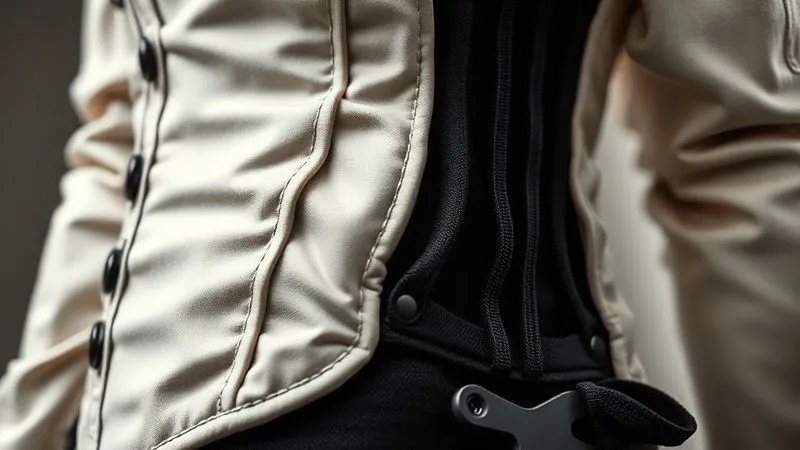
While traditional boning and corsetry have been mainstays for shaping the body, their application in structural couture is far more expansive. Modern boning, often made from flexible plastics, spring steel, or even lightweight carbon fiber rods, can be strategically placed to create external volumes, support cantilevered elements, or define sharp, geometric angles. It's not just about cinching the waist; it’s about building a three-dimensional framework that dictates the garment's overall form, independent of the wearer's body.
Internal Frameworks: From Cage Crinolines to 3D Printing
The historical cage crinoline was an early, albeit rudimentary, attempt at structural volume. Today, we have far more sophisticated methods. Internal frameworks can range from intricate wire armatures (often made from annealed steel or aluminum for lightness) to custom-designed, 3D-printed lattices. These lattices, precisely designed using CAD software, can be incredibly lightweight yet immensely strong, forming the hidden scaffolding that gives a garment its impossible shape. They allow for complex curves and sharp angles that simply couldn't be achieved through fabric manipulation alone.
| Support Material | Characteristics | Application in Couture |
|---|---|---|
| Traditional Boning (Steel/Plastic) | Flexible, body-shaping, moderate support | Corsetry, bodice shaping, gentle volume |
| Carbon Fiber Rods/Sheets | Extremely lightweight, high tensile strength, rigid | Cantilevered elements, large sculptural forms, sharp angles |
| 3D-Printed Lattices (PLA/Nylon) | Customizable, complex geometries, lightweight, strong | Internal scaffolding, self-supporting structures, intricate details |
| Wire Armatures (Aluminum/Steel) | Malleable, good for organic shapes, moderate strength | Sculptural elements, flexible internal supports, prototypes |
“The most profound structural couture pieces are like icebergs: 90% of their engineering prowess is hidden beneath the surface, meticulously planned and expertly executed to create an illusion of effortless form.”
The Art of Suspension and Balance: Counteracting Gravity
Achieving a truly gravity-defying look isn't just about building rigid structures; it's about cleverly distributing weight and creating visual illusions that defy expectation. This is where design acumen and engineering principles converge.
Weight Distribution and Counterweights
Imagine a mobile; its beauty lies in its delicate balance. Similarly, in structural couture, understanding and manipulating weight distribution is crucial. Heavy elements might need to be strategically placed closer to the body's center of gravity or counterbalanced by lighter, outward-reaching forms. Sometimes, hidden counterweights – small, dense elements sewn into specific areas – can subtly shift the garment's balance, preventing it from tipping or sagging. This requires careful calculation and extensive prototyping to find the perfect equilibrium.
Illusion of Weightlessness: Transparency and Lightness
Beyond physical engineering, creating an illusion of weightlessness is a powerful design tool. Utilizing transparent or translucent materials like organza, tulle, or sheer plastics for outer layers, while the heavier support structure remains concealed, can make a massive silhouette appear light and ethereal. Layering these light fabrics over a strong, minimalist frame gives the impression of volume without bulk. The interplay of light and shadow on these surfaces further enhances the ethereal quality, making the structure seem to float.
Here are actionable steps to achieve optimal suspension and balance:
- Map Load Points: Identify where the garment's weight will naturally pull. These are your primary stress points.
- Integrate Internal Harnesses: For very heavy or expansive structures, a discreet internal harness system can distribute weight across the shoulders, hips, or even the entire torso, rather than just from a single point.
- Utilize Cantilever Principles: Design elements that extend horizontally without visible support by anchoring them firmly to a rigid base structure within the garment.
- Experiment with Material Density: Pair high-density, strong materials for internal frameworks with low-density, visually light materials for external presentation.
- Test with Movement: A static garment might balance perfectly, but how does it move? Ensure the balance holds during walking, sitting, and posing to prevent instability.
- Apply Counter-Leverage: Design opposing forces. For example, a heavy element extending forward might be balanced by a slightly lighter, but strategically placed, element extending backward.
- Refine Prototyping: Use inexpensive mock-ups (muslin, cardboard, foam) to repeatedly test and adjust structural balance before committing to final materials.
From Concept to Creation: A Practical Framework
The journey from a bold vision to a wearable, gravity-defying masterpiece is iterative and demanding. It requires a structured approach, blending digital precision with hands-on craftsmanship.
Iterative Prototyping and Digital Design
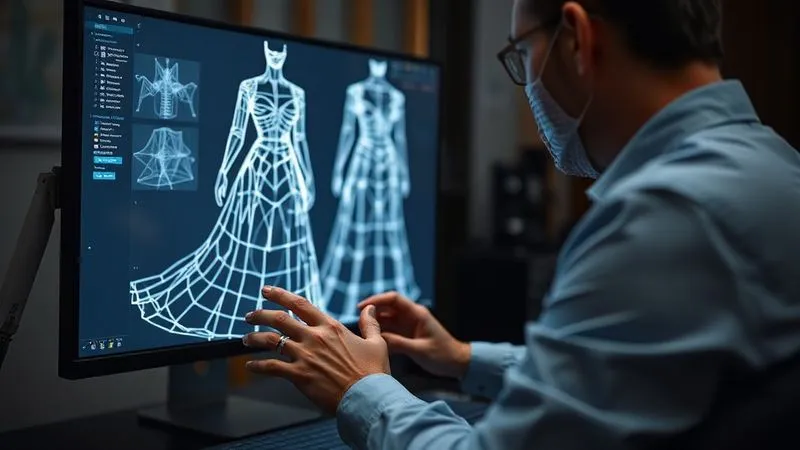
In my studio, the process invariably begins with extensive digital design. Using advanced CAD (Computer-Aided Design) software, we can create 3D models of the garment, allowing us to visualize complex structures, test their stability, and even simulate how fabrics will drape over internal frameworks. This digital stage enables rapid iteration and problem-solving without wasting expensive materials. Once the digital model is refined, physical prototyping begins – often with scaled models, followed by full-scale mock-ups in less costly materials like industrial felt, foam, or even heavy-duty paper. Each prototype reveals new challenges and opportunities, leading to continuous refinement.
Case Study: "The Zenith Gown"
How a Visionary Design Defied Gravity
I recall a particularly challenging project for a client who envisioned a gown with a colossal, spherical skirt that appeared to float around the wearer, entirely detached from the waist. Traditional methods failed; the sheer volume caused immediate collapse. By implementing a multi-stage process, we succeeded. First, a lightweight but rigid aluminum armature was custom-formed to the desired sphere, then digitally scanned. Next, a 3D-printed lattice of bio-nylon was designed in CAD to perfectly encapsulate the armature, creating a self-supporting internal cage that distributed the weight evenly across a hidden internal harness. Finally, layers of sheer, iridescent organza were draped and attached at specific anchor points on the lattice, creating the illusion of a floating cloud. The result was a breathtaking silhouette that moved with grace, entirely defying its monumental scale. This project underlined the critical need for an integrated approach to engineering and design.
The Role of Advanced CAD/CAM and 3D Printing in Couture
The integration of advanced technologies like CAD/CAM (Computer-Aided Design/Computer-Aided Manufacturing) and 3D printing is not just an advantage; it's becoming a necessity for pushing the boundaries of structural haute couture. These tools offer precision, customization, and efficiency that manual methods simply cannot match.
Precision and Complexity Unleashed
CAD software allows designers to create incredibly complex geometries with millimeter precision. This is vital when engineering intricate internal frameworks or designing components that must fit together flawlessly to form a stable structure. The ability to visualize and manipulate these forms in a virtual environment means designers can explore shapes and structures that would be impossible to draft by hand. CAM then translates these digital designs into instructions for manufacturing machinery, ensuring that physical components match the digital blueprint exactly.
Rapid Prototyping for Structural Integrity
3D printing, a key component of CAM, has transformed the prototyping process. Instead of laboriously constructing models by hand, designers can print highly detailed, custom-fit components – from intricate internal lattice structures to bespoke joint connectors – within hours. This rapid prototyping capability allows for immediate testing of structural integrity, weight distribution, and fit. If a component fails or needs adjustment, a revised version can be printed quickly, significantly accelerating the design cycle and enabling a level of structural refinement previously unattainable. This iterative, data-driven approach is fundamental to creating truly robust and gravity-defying pieces. As Forbes Tech Council highlighted, 3D printing is revolutionizing various aspects of the fashion industry, from mass customization to haute couture.
| Feature | Traditional Methods | CAD/3D Printing |
|---|---|---|
| Design Complexity | Limited by manual skill and material manipulation | Virtually limitless, intricate geometries, organic forms |
| Precision & Fit | Subject to human error, approximations | Millimeter-perfect, exact replication, custom sizing |
| Prototyping Speed | Weeks to months for complex structures | Hours to days for functional prototypes |
| Material Usage | Higher waste from cutting, fitting, and adjustments | Optimized material use, minimal waste (additive manufacturing) |
| Structural Integrity Testing | Trial and error with physical mock-ups | Digital simulations, rapid physical testing of components |
Beyond the Runway: Practical Considerations for Wearability and Longevity
A haute couture piece, however structurally magnificent, must still be wearable. The ultimate goal is not just an awe-inspiring static display, but a garment that can be worn, moved in, and cherished for years to come. This means addressing practical concerns often overlooked in the pursuit of pure spectacle.
Ergonomics and Movement
A structural garment should not imprison the wearer. Consideration for human anatomy and movement is paramount. Internal structures must be designed to accommodate the body's natural range of motion, avoiding pressure points or restrictive areas. This often involves strategic articulation points within rigid frameworks, or the use of flexible materials in areas requiring movement. Ensuring breathability through material choice and ventilation is also key, especially for voluminous pieces where air circulation might be limited. The weight of the garment, while controlled, must also be manageable for the wearer, distributed comfortably to prevent fatigue.
Maintenance and Preservation
These are not everyday garments; they are works of art. As such, structural couture requires specialized care. Designers must consider how the garment will be cleaned, stored, and transported without compromising its intricate structure. Are components detachable for easier maintenance? Can the garment be folded or must it be stored flat or hung in a specific way? Providing detailed care instructions and even custom storage solutions (like specialized mannequins or padded crates) is part of the professional service. The longevity of a gravity-defying piece depends not only on its initial engineering but also on its ongoing preservation. A well-engineered piece should last for generations, a testament to its craftsmanship and foresight.
The Future of Architectural Couture: Pushing Boundaries
The journey of engineering gravity-defying structural haute couture is far from over. As technology and material science continue to advance, the possibilities for truly revolutionary designs are expanding exponentially. This is an exciting frontier for designers willing to embrace innovation.
Bio-integrated Structures
Imagine garments that grow their own support structures, or textiles that respond to environmental cues. Research into bio-integrated materials, where living organisms or bio-mimetic principles are used to create self-assembling or self-repairing structures, holds immense promise. This could lead to couture pieces with dynamic, evolving forms that are inherently sustainable and responsive.
AI-Driven Design for Optimization
Artificial intelligence is poised to become an invaluable partner in the design process. AI algorithms can analyze complex structural requirements, optimize material usage, and even generate novel forms that human designers might not conceive. From simulating stress points to designing the most efficient internal lattice structures, AI can accelerate the engineering phase, allowing designers to focus on aesthetic vision while ensuring structural integrity. The synergy between human creativity and AI precision will unlock unprecedented capabilities in creating truly impossible silhouettes.
Frequently Asked Questions (FAQ)
What's the biggest challenge in engineering gravity-defying haute couture? The primary challenge lies in balancing extreme rigidity and structural integrity with the need for lightness and, ideally, some degree of wearer comfort and movement. Achieving monumental volume without excessive weight or bulk requires a sophisticated understanding of material science, internal engineering, and often, an illusionist's touch.
How do you ensure wearability and comfort in such rigid garments? Wearability is addressed through ergonomic design of internal structures, strategic padding at contact points, and the careful distribution of weight across the body via hidden harnesses. Selecting materials that allow for some flexibility in movement-critical areas and ensuring proper ventilation are also crucial. It's a meticulous process of fitting and adjustment.
Is it possible for gravity-defying couture to be sustainable? Absolutely. While the initial investment in advanced materials and technology can be high, the emphasis on longevity, craftsmanship, and often bespoke fabrication inherently promotes sustainability. Furthermore, the increasing use of recycled polymers, bioplastics, and bio-composites offers exciting avenues for creating structural pieces with a reduced environmental footprint. The goal is to create timeless art, not fast fashion.
What essential tools or skills are required for a designer to excel in this niche? Beyond traditional fashion design skills, proficiency in 3D CAD software (like Rhino, SolidWorks, or CLO 3D), a foundational understanding of engineering principles (statics, material science), and hands-on experience with advanced fabrication techniques (like 3D printing, laser cutting, and specialized welding/bonding for composites) are invaluable. A collaborative spirit, often working with engineers and material scientists, is also key.
How long does it typically take to create a complex gravity-defying couture piece? The timeline can vary dramatically depending on the complexity of the design and the availability of specialized resources. From initial concept and digital modeling to prototyping, material sourcing, and final construction, such a piece can take anywhere from six months to several years to complete. It is a labor-intensive process, demanding patience, precision, and relentless problem-solving.
Key Takeaways and Final Thoughts
- Adopt an Architectural Mindset: View garments as structures, not just fabric.
- Embrace Innovative Materials: Leverage synthetics, composites, and smart textiles for unparalleled strength and lightness.
- Engineer Robust Internal Structures: Utilize advanced boning, wire armatures, and 3D-printed lattices as the hidden skeleton.
- Master Balance and Illusion: Strategically distribute weight and employ transparent layers to create the perception of weightlessness.
- Leverage Digital Tools: CAD/CAM and 3D printing are indispensable for precision, complexity, and rapid prototyping.
- Prioritize Wearability and Longevity: Design for comfort, movement, and provide clear guidance for preservation.
Engineering gravity-defying structural haute couture is a journey that demands unwavering vision, technical prowess, and an insatiable curiosity for innovation. It's about transcending the conventional boundaries of fashion, transforming fabric and form into breathtaking, architectural statements. As I've seen throughout my career, the most impactful creations are born from a willingness to challenge the impossible. By integrating these advanced engineering principles and embracing cutting-edge technologies, you are not just designing clothes; you are sculpting the future of fashion itself. Go forth and defy gravity.
Recommended Reading
- The Secret to Preserving Vintage Silk Heirlooms: A Home Guide
- Unlock the Secret: How to Properly Clean & Maintain School Uniforms for Longevity
- The Ultimate Guide: How to Choose Effective Anti-Aging Eye Cream?
- 7 Proven Strategies: Maximize Profit Selling Rare 1970s Vintage Apparel
- 5 Proven Strategies: Scaling Daily Fashion Content Without Losing Quality



Your email address will not be published. Required fields are marked *