

How to Document Haute Couture Heritage Techniques Before They're Lost?
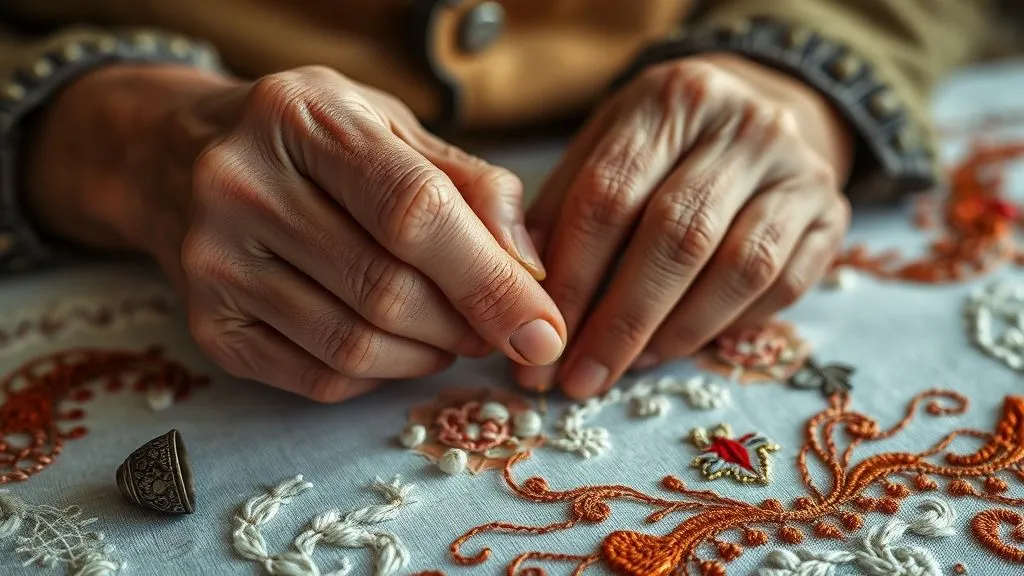
For over three decades in the fashion world, particularly within the hallowed halls of haute couture, I've witnessed a silent tragedy unfolding. It's not about fleeting trends or commercial failures; it's the quiet erosion of irreplaceable knowledge – the intricate handwork, the bespoke patterns, the whispered secrets of master artisans passed down through generations. These aren't just techniques; they are the very soul of couture, embodying centuries of artistry and innovation.
The urgency to act is palpable. Many of these heritage techniques reside solely in the hands and minds of an aging generation of couturiers and specialized artisans. Once they retire or pass on, without systematic and thoughtful intervention, that knowledge risks being lost forever – like an unwritten chapter of fashion history simply vanishing into the ether. This problem isn't theoretical; I've seen countless instances where a unique skill, once a house signature, became impossible to replicate because its intricacies were never properly documented.
This guide offers a robust, actionable framework for how to document haute couture heritage techniques before they're lost. Drawing from my extensive experience, I'll provide expert insights, practical steps, and even a mini case study to empower you to safeguard these invaluable skills, ensuring the legacy of haute couture endures for future generations. It’s a call to action, a blueprint for preservation, and a testament to the enduring power of meticulous craftsmanship.
Understanding the Imperative: Why Documentation Matters Now More Than Ever
The notion of 'heritage' in haute couture extends beyond vintage garments; it encompasses the intangible processes, the specialized tools, and the unique skills that bring these creations to life. Without a concerted effort to document these elements, we risk a significant cultural and economic loss. The value isn't just sentimental; it's deeply practical.
The Fragility of Oral Tradition
Historically, couture techniques were passed down through rigorous apprenticeships and oral tradition. While invaluable for hands-on learning, this method is inherently fragile. A single gap in the chain can mean an entire technique is forgotten, as details are lost in translation or simply not recorded. I've observed first-hand how a slight deviation, a forgotten nuance in a stitch or a fabric manipulation, can alter the entire character of a couture piece.
Economic Value and Brand Integrity
For couture houses, these heritage techniques are often proprietary, defining their brand identity and justifying their exclusivity. Documenting them secures intellectual property, protects against imitation, and allows for the authentic revival of house codes. It also provides a robust training framework for new generations of artisans, maintaining a consistent standard of excellence.
A master artisan's knowledge is not just skill; it's a living archive that, if left unrecorded, is perpetually at risk of silent disappearance.
Moreover, thorough documentation can unlock new creative avenues, allowing designers to revisit and reinterpret historical techniques with a contemporary vision. It’s not about stifling innovation but providing a rich, authentic foundation upon which to build. This strategic preservation elevates a brand's narrative and reinforces its commitment to true craftsmanship.
Phase 1: Strategic Planning – Laying the Foundation for Preservation
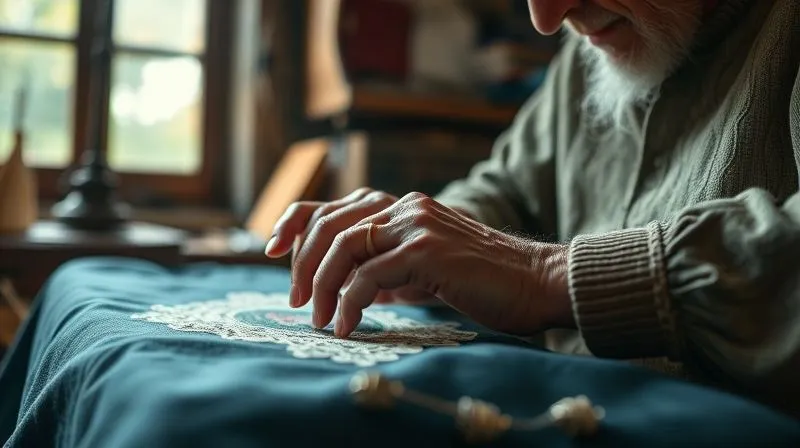
Before any needle touches fabric or camera starts rolling, a meticulous planning phase is essential. This isn't a casual endeavor; it's an archaeological excavation of skill, requiring foresight and structure. In my experience, haphazard attempts at documentation often lead to incomplete records and wasted resources.
Assembling Your 'Heritage Preservation' Task Force
You'll need a multidisciplinary team. This includes master artisans (the knowledge holders), conservators, photographers/videographers, technical illustrators, and project managers. Each role is critical. The conservator, for instance, understands the material science and preservation aspects, while the project manager ensures timelines and resources are optimized. It's a collaborative symphony, not a solo performance.
Defining Scope and Prioritization
It's impossible to document everything at once. You must define a clear scope. What specific techniques are most endangered? Which are central to your brand's identity? Prioritize based on:
- Rarity: How many living artisans still possess this skill?
- Complexity: How intricate and multi-faceted is the technique?
- Impact: How critical is this technique to the house's signature aesthetic or historical narrative?
- Urgency: Is the primary knowledge holder nearing retirement or in poor health?
I often advise creating a 'risk assessment' matrix for each technique to guide this prioritization. This structured approach ensures that the most vulnerable and valuable skills are addressed first. For further insights into cultural preservation methodologies, I highly recommend exploring resources from established institutions like UNESCO's Intangible Cultural Heritage program.
Phase 2: Comprehensive Data Collection – Capturing Every Nuance
This is where the real work of capturing knowledge begins. It requires patience, precision, and an understanding that every detail, no matter how small, could be crucial to future generations attempting to replicate the technique.
Visual Documentation: The Power of Sight
Visual records are paramount for haute couture, where tactile and visual elements are inseparable. High-quality photography and videography are non-negotiable.
- High-Resolution Photography: Capture every stage of the technique from multiple angles. Focus on hand positions, tool usage, stitch formation, and fabric manipulation. Use macro lenses for extreme detail.
- Slow-Motion Videography: Record artisans at work, emphasizing the rhythm and flow of their movements. Slow-motion allows for meticulous analysis of complex actions that might be missed at normal speed.
- 360-Degree Views: For three-dimensional elements like sculpted forms or intricate embellishments, consider 3D scanning or photogrammetry to create interactive models.
Ensure consistent lighting and a clean background to minimize distractions. The goal is clarity and comprehensive coverage, leaving no room for ambiguity.
Textual & Oral Histories: The Stories Behind the Stitches
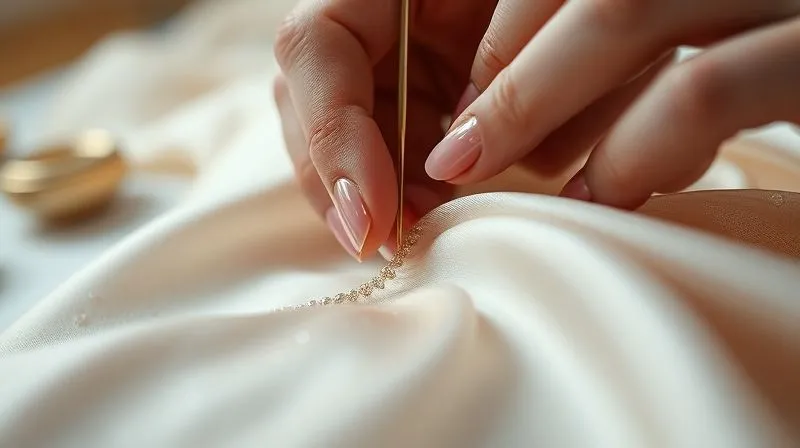
While visuals show 'how,' textual and oral accounts explain 'why.' Conduct in-depth interviews with artisans, capturing their personal stories, the history of the technique, and the nuances that cannot be visually represented.
- Structured Interviews: Use a prepared set of questions, but allow for organic conversation. Ask about the 'feel' of the fabric, the 'sound' of the needle, the 'intuition' behind a decision.
- Transcription and Annotation: Transcribe all interviews meticulously. Annotate with timestamps linking to relevant video segments.
- Artisan's Own Notes: Encourage artisans to keep their own journals or sketches. Their personal insights are invaluable.
Material & Tool Archiving: The Tangible Legacy
Document not just the process, but the physical elements. This includes specific fabrics, threads, embellishments, and especially the unique tools often adapted or handmade by artisans. Catalog their properties, origins, and how they interact with the technique.
| Tool Name | Material | Specific Use | Origin/History |
|---|---|---|---|
| Tambour Hook | Wood/Metal | Lunéville embroidery, beadwork | 18th century, France |
| Awl (Poinçon) | Steel/Wood | Creating holes for lacing/eyelets | Ancient, adapted for leather/fabric |
| Milliner's Needle | Steel | Hatmaking, fine fabric manipulation | 19th century, specialized for millinery |
| Pinking Shears | Steel | Preventing fabric fraying | Mid-19th century, industrial innovation |
Phase 3: Methodical Documentation – Structuring the Unstructured
Raw data is only half the battle. The true challenge lies in transforming a wealth of visual and anecdotal information into a coherent, replicable, and understandable format. This phase is about creating a 'Rosetta Stone' for each technique.
Developing a Standardized Documentation Protocol
Consistency is key. Create templates for documenting each technique, including sections for:
- Technique Name & History
- Required Tools & Materials
- Step-by-Step Instructions (with cross-references to visuals)
- Common Challenges & Troubleshooting
- Artisan's Notes & Personal Insights
- Glossary of Specific Terms
Consistency in documentation is the silent guardian of complex knowledge, ensuring that subtle nuances are captured and understood across time and interpretation.
The Art of Technical Drawing and Pattern Making
Beyond photographs, precise technical drawings and pattern pieces are indispensable. These provide exact measurements, construction lines, and a clarity that even the best photograph can't always convey. They are the blueprints of couture.
For complex draping or sculptural forms, consider drafting patterns that illustrate how the fabric is manipulated on a three-dimensional form. This often involves flat pattern making combined with moulage techniques. Some of the most intricate couture pieces rely on highly specialized pattern engineering that is an art form in itself. For an excellent resource on the foundations of this craft, explore books and courses on technical fashion drawing and pattern cutting, such as those offered by institutions like London College of Fashion.
Mini Case Study: The 'Étoile Atelier' Revival
Étoile Atelier, a venerable Parisian couture house, faced a critical challenge: the intricate 'Fleur de Nuit' embroidery technique, a signature of their eveningwear, was on the brink of extinction. The last master artisan, Madame Dubois, was set to retire, and her knowledge was largely unrecorded. The house's creative director, fearing a permanent loss, initiated a rapid documentation project.
They assembled a small task force: Madame Dubois, a textile conservator, a dedicated videographer, and a technical illustrator. Over six intense months, they meticulously filmed every step of the 'Fleur de Nuit' technique in ultra-high definition, from the preparation of the silk organza base to the precise placement of each sequin and bead. Madame Dubois provided detailed oral histories, explaining the 'feel' of the tension, the 'rhythm' of the stitch, and the subtle variations for different fabrics. The illustrator translated these into precise, annotated technical drawings, creating a 50-page protocol.
The result? Not only was the 'Fleur de Nuit' technique fully documented, but a new generation of apprentices, working under Madame Dubois's final guidance, were able to learn it with unprecedented clarity. The atelier successfully launched a collection featuring the revived technique, reinforcing their heritage and attracting new clientele. This project not only preserved a technique but revitalized a core aspect of their brand identity, demonstrating that timely documentation is an investment in both heritage and future commercial success.
Phase 4: Digital Archiving and Accessibility – Securing the Future
Once captured and structured, this invaluable data needs to be stored in a way that ensures its long-term preservation and accessibility. The digital realm offers powerful solutions, but it comes with its own set of considerations.
Choosing the Right Digital Asset Management (DAM) System
A robust Digital Asset Management (DAM) system is crucial. It's not just a hard drive; it's a sophisticated database designed to store, categorize, and retrieve large volumes of media files and documents. Look for systems that offer:
- High storage capacity and scalability
- Advanced metadata tagging capabilities
- Version control and audit trails
- Secure access controls and user permissions
- Compatibility with various file formats (video, image, text, 3D models)
The choice of DAM system will significantly impact the usability and longevity of your archive. It’s an investment that pays dividends in future discoverability and protection.
Metadata and Indexing: Making Information Discoverable
Without proper metadata, even the most comprehensive archive becomes a digital haystack. Every file – every image, video clip, and document – must be tagged with detailed, consistent metadata. This includes:
- Technique name, artisan's name, date of documentation
- Keywords describing tools, materials, stitches, and processes
- Cross-references to related techniques or garments
- Historical context and associated collections
Standardized vocabularies (thesauri) should be used to ensure consistency across the entire archive. This meticulous indexing is what makes the information genuinely searchable and useful for future researchers, designers, and artisans.
Ensuring Long-Term Digital Preservation
Digital files are not immune to decay. Technology evolves, formats become obsolete, and hardware fails. A long-term digital preservation strategy is vital. This involves:
- Regular data backups to multiple, geographically dispersed locations
- Migration of files to new formats as technology evolves (e.g., from older video codecs to current standards)
- Redundancy in storage solutions (e.g., cloud storage, tape archives)
- Adherence to digital preservation standards set by institutions like the Library of Congress.
Digital archives are not merely storage; they are accessible legacies. Their true value is unlocked when they are meticulously maintained and actively used to inspire and educate.
Phase 5: Knowledge Transfer and Education – Keeping the Flame Alive
Documentation is a crucial first step, but it's only truly successful if the knowledge is actively transferred and utilized. The goal isn't just to archive techniques but to ensure they continue to be practiced and evolved.
Apprenticeship Programs and Mentorship
The most effective way to transfer tacit knowledge is through direct, hands-on apprenticeship. Use the documented protocols as a foundation, but pair new artisans with existing masters. The documentation provides a structured curriculum, while the master offers the invaluable nuances of touch, feel, and intuition.
Workshops and Masterclasses
Organize specialized workshops and masterclasses, open to aspiring artisans, designers, and even passionate enthusiasts. These can be short, intensive sessions focused on a single technique, utilizing the documented materials as teaching aids. This broadens the reach and creates a wider pool of skilled practitioners.
Creating Educational Resources
Develop comprehensive educational resources from your documented materials: textbooks, online courses, interactive modules, and even public exhibitions. These resources can be shared with fashion schools and cultural institutions, disseminating the knowledge far beyond the walls of a single atelier.
| Technique | Master Artisan | Apprentice Name | Status | Documentation Utilized |
|---|---|---|---|---|
| Plissé Soleil | Madame Sylvie | Juliette | In Training, 6 Months | Video tutorial, technical drawings |
| Featherwork (Plumasserie) | Monsieur Pierre | Léo | Certified, 2 Years | Oral history transcripts, material archive |
| Biais Cutting | Madame Renée | Sophie | Advanced, 1 Year | Photography series, step-by-step guide |
Phase 6: Legal and Ethical Considerations – Protecting Intellectual Property
As you embark on documenting these priceless techniques, it's vital to navigate the legal and ethical landscape. Haute couture often involves proprietary knowledge, and respecting the creators and houses is paramount.
Copyrights and Trademarks in Couture Techniques
While a technique itself is often difficult to copyright, its specific documentation (videos, drawings, written protocols) can be. Houses should ensure clear ownership of these documented assets. Furthermore, signature design elements or specific applications of a technique can be protected by design patents or trademarks. Consult legal counsel to understand how best to protect your documented heritage. For broader understanding of IP in creative industries, sources like the World Intellectual Property Organization (WIPO) offer valuable insights.
Attribution and Ethical Sourcing of Knowledge
Always attribute knowledge to the master artisans who are its custodians. Their names, stories, and contributions should be prominently acknowledged within the documentation. If techniques are sourced from cultural traditions outside of the immediate house, ensure proper ethical sourcing protocols are followed, respecting the origin communities and their rights. This builds trust and ensures the authenticity of the heritage being preserved.
Respect for the artisan and their intellectual contribution is the foundation of true preservation, extending the legacy beyond mere technique to encompass the human story.
Overcoming Common Pitfalls in Heritage Documentation
No large-scale preservation project is without its challenges. Recognizing and preparing for these hurdles can make all the difference in achieving success.
Resistance to Change and Secrecy
Some master artisans, having guarded their 'secrets' for decades, may be reluctant to fully share. Building trust, emphasizing the legacy aspect, and ensuring proper attribution are crucial. I've found that demonstrating how documentation can secure their personal legacy and prevent the technique from dying with them is often a powerful motivator.
Lack of Funding and Resources
Comprehensive documentation is resource-intensive. Seek grants from cultural heritage organizations, partner with academic institutions for research support, or integrate documentation into the brand's sustainability and heritage initiatives. Highlight the long-term value and ROI to secure internal funding.
Maintaining Authenticity vs. Modern Interpretation
The goal is to preserve, not to freeze. Documentation provides the authentic blueprint, allowing future generations to understand the original intent. This then empowers them to make informed decisions about how to reinterpret or adapt techniques for contemporary design, ensuring the heritage remains vibrant and relevant, rather than a museum piece.
Frequently Asked Questions (FAQ)
How do I convince a master artisan to share their 'secrets' if they're hesitant? Building trust is paramount. Start by emphasizing that documentation is about securing their legacy, ensuring their unique skills are remembered and taught, rather than lost. Offer to involve them deeply in the process, giving them control over how their knowledge is presented, and ensure proper attribution and respect for their intellectual property. Sometimes, a phased approach, starting with less 'secretive' techniques, can build confidence.
What's the biggest mistake organizations make when starting a documentation project? The biggest mistake is underestimating the time, resources, and specialized expertise required. Many projects fail due to a lack of proper planning, inadequate funding, or assigning the task to individuals without the necessary technical or interpersonal skills. Rushing the process or failing to involve the artisans meaningfully also leads to incomplete or inaccurate documentation.
How much does a comprehensive documentation project typically cost? Costs vary wildly depending on the complexity of the techniques, the number of artisans involved, the technology used (e.g., 3D scanning vs. basic video), and the duration. A small project focusing on one technique might cost tens of thousands, while a large-scale, multi-technique initiative could easily run into hundreds of thousands or even millions. It's an investment, requiring a detailed budget for personnel, equipment, software, and long-term storage.
Can digital documentation truly capture the tactile nature and 'feel' of haute couture techniques? While digital documentation can't fully replicate the tactile experience, it can get remarkably close. High-resolution video with close-ups of texture, slow-motion capture of hand movements, and detailed verbal descriptions from artisans about the 'feel' of materials or the 'tension' of a stitch can convey significant information. Combining this with physical samples and hands-on workshops provides the most comprehensive understanding.
What role do fashion schools and academic institutions play in this preservation effort? Fashion schools and academic institutions are crucial partners. They can provide research expertise, specialized equipment for digital capture, and a structured environment for teaching and disseminating documented techniques. Collaborations can lead to student projects focused on documentation, curriculum development for heritage crafts, and academic publications that further legitimize and share these invaluable skills.
Key Takeaways and Final Thoughts
The intricate world of haute couture is a testament to human ingenuity and dedication, but its most precious assets – the heritage techniques – are fragile. My journey through this exquisite industry has taught me that proactive, meticulous documentation is not merely an option; it's an urgent necessity. It's how we ensure that the whispers of the past become the foundational knowledge for the future.
- Plan Meticulously: Assemble a diverse team and prioritize techniques based on urgency and impact.
- Capture Comprehensively: Utilize high-quality visuals, detailed oral histories, and material archiving.
- Structure Systematically: Develop standardized protocols and integrate precise technical drawings.
- Archive Securely: Implement robust Digital Asset Management (DAM) and long-term preservation strategies.
- Transfer Actively: Foster knowledge transfer through apprenticeships, workshops, and educational resources.
- Protect Ethically: Address legal and ethical considerations, ensuring attribution and intellectual property rights.
Remember, documenting haute couture heritage techniques before they're lost is more than a technical task; it's an act of profound respect for artistry, history, and the human spirit. By embracing these steps, we don't just preserve the past; we empower the future of fashion to continue its extraordinary narrative, one meticulously documented stitch at a time. The legacy you help secure today will define the beauty and innovation of tomorrow.
Recommended Reading
- Chafe-Free Ultras: 7 Design Principles for Activewear That Prevents Blisters
- 7 Legal Shields: Protect Your Unique Jewelry from Fast Fashion Copying
- Unveiling the Secret: What is the Process of Creating a Haute Couture Gown?
- Slash Sampling Costs: 7 Ways 3D Fashion Design Software Delivers ROI
- Mastering Kids' Activewear: 7 Designs for Rapid Growth & Perfect Fit


Your email address will not be published. Required fields are marked *