

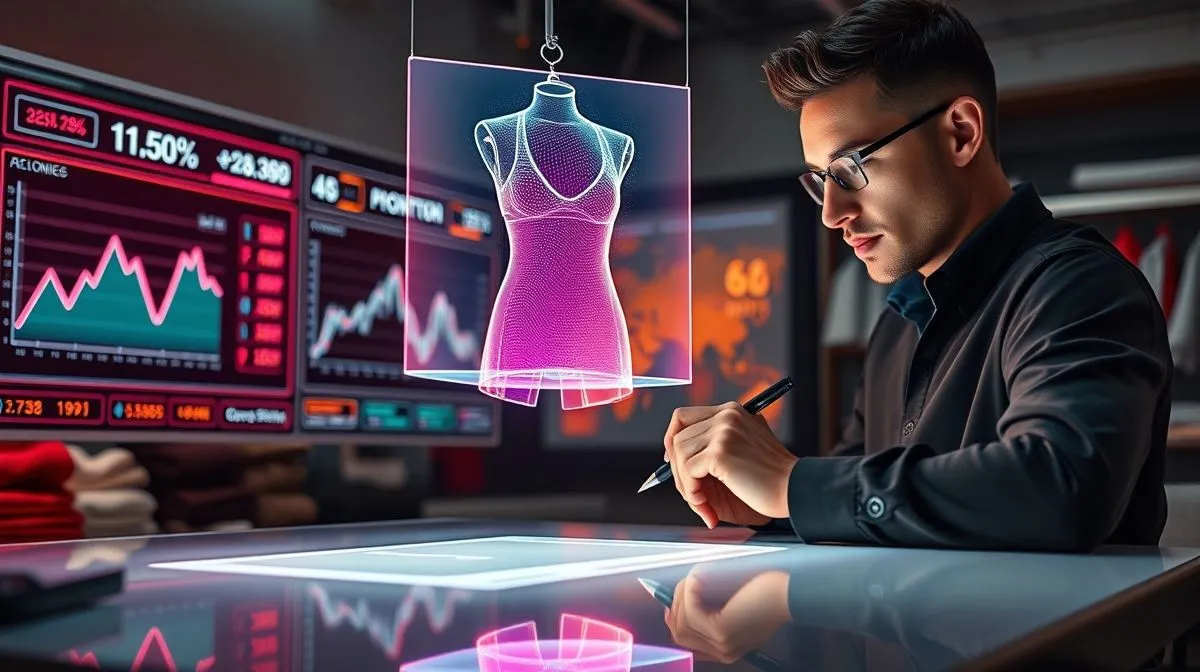
How to reduce sampling costs using 3D fashion design software?
For over 15 years navigating the intricate currents of fashion technology, I've witnessed countless brands, from emerging startups to established giants, grapple with a silent, insidious budget killer: the traditional sampling process. It’s a necessary evil, or so it seemed, until recently.
The cycle of physical sample creation – sketching, pattern making, fabric sourcing, cutting, sewing, shipping, fitting, and repeating – isn't just time-consuming; it's a financial black hole. Each iteration adds to material waste, labor costs, logistics expenses, and perhaps most critically, delays time-to-market. These mounting costs erode profit margins and stifle innovation, leaving many brands feeling perpetually behind.
But what if I told you there's a proven paradigm shift that can dramatically transform this financial drain into a strategic advantage? In this deep dive, I'll reveal precisely how to reduce sampling costs using 3D fashion design software, offering actionable frameworks, a realistic case study, and expert insights drawn from my decades in the field. Prepare to unlock a future where efficiency, sustainability, and profitability converge.
The Hidden Costs of Traditional Sampling: Why We Need a Change
Before we dive into the solution, it’s crucial to truly understand the depth of the problem. Many brands only account for the direct costs of a sample – the fabric, the trim, the cut-and-sew labor. However, the true cost is far more extensive.
- Material Waste: Each physical sample, especially early iterations, often ends up as landfill. This isn't just fabric; it's the energy and resources that went into its production.
- Labor & Time Overheads: Pattern makers, sample room technicians, designers, merchandisers, and even executives spend countless hours on physical sample reviews, corrections, and coordination. This is time that could be spent on innovation or market analysis.
- Shipping & Logistics: Sending samples across continents for approval adds significant freight costs, customs duties, and a considerable carbon footprint. Expedited shipping alone can decimate a budget.
- Delays & Missed Opportunities: Every delay in the sampling process pushes back launch dates, potentially missing seasonal trends or peak sales windows. The opportunity cost of not being first-to-market can be immense.
- Travel Expenses: For brands with global supply chains, flying designers or product developers to factories for fittings adds another layer of expense and environmental impact.
“The most expensive sample is the one you didn’t need to make. Understanding the full lifecycle cost of physical samples, including the environmental and opportunity costs, reveals an urgent need for digital transformation.”
According to a report by Deloitte, digital transformation in fashion can lead to significant cost reductions across the value chain. Sampling is a prime candidate for such transformation because of its repetitive, resource-intensive nature.
Understanding 3D Fashion Design Software: More Than Just Pretty Pictures
At its core, 3D fashion design software empowers designers to create, visualize, and iterate garments virtually, eliminating or drastically reducing the need for physical prototypes. It's not just about creating a pretty render; it's about simulating fabric drape, fit, and movement with remarkable accuracy.
Think of it as a virtual fitting room, pattern-making studio, and textile lab rolled into one. Here are its key functionalities:
- Virtual Pattern Making: Designers can create 2D patterns digitally, which are then 'sewn' onto a 3D avatar.
- Fabric Simulation: Advanced algorithms simulate how different fabrics (e.g., silk, denim, knit) will drape, stretch, and fall, factoring in their physical properties like weight, elasticity, and thickness.
- Virtual Draping & Fitting: Garments can be fitted directly onto customizable 3D avatars, allowing designers to check fit, proportion, and balance from all angles without a single stitch of physical fabric.
- Textile & Print Application: Digital fabrics, prints, and graphics can be applied and iterated instantly.
- Renderings & Animations: High-quality photorealistic images and even animated catwalks can be generated for marketing, sales, and internal reviews.
- Collaboration Tools: Most platforms offer cloud-based collaboration, allowing teams and external partners (factories, buyers) to review and comment in real-time.
The transition from a purely physical workflow to one augmented by 3D technology requires a shift in mindset, but the rewards are profound. It's a fundamental change in how to reduce sampling costs using 3D fashion design software, turning a cost center into a competitive advantage.
Direct Cost Reductions: Where 3D Software Makes an Immediate Impact
The most tangible benefit of adopting 3D fashion design software is the direct reduction in sampling expenses. Let's break down where these savings materialize:
Reduced Physical Sample Quantity
This is the most obvious and significant saving. Instead of creating multiple physical samples (first proto, fit sample, PP sample, TOP sample), brands can often reduce this to just one final physical confirmation sample, or even none for simpler styles. The majority of iterations happen digitally.
Consider this streamlined process:
- Concept & Initial Sketch: Digital.
- 2D Pattern Creation & Virtual Sew-Up: Done in 3D software.
- Virtual Fitting & Iteration (Design/Fit/Fabric): Unlimited iterations in 3D, without material cost.
- Digital Review & Approval: Internal and external stakeholders review photorealistic 3D renders.
- Final Physical Sample (Optional): Only if absolutely necessary for tactile confirmation or complex embellishments.
- Production: Approved digital files sent directly to manufacturers.
Lower Material Waste
Every physical sample consumes fabric, trims, and notions. By reducing the number of physical samples, brands dramatically cut down on material waste. This not only saves money but also aligns with growing consumer and regulatory demands for sustainable practices.
Decreased Shipping & Logistics
Fewer physical samples mean fewer shipments. This translates to substantial savings on courier fees, customs duties, and handling charges. For global supply chains, these savings can be immense. Additionally, the reduced carbon footprint contributes to a brand's sustainability goals.
Faster Iteration Cycles
The speed at which designers can make changes and see them reflected in a 3D model is unparalleled. A change that might take days or weeks with physical samples (due to pattern adjustments, re-cutting, re-sewing, and shipping) can be done in minutes or hours in 3D. This agility directly reduces labor costs associated with prolonged development cycles.
Indirect Savings & Efficiency Gains: The Ripple Effect of Digitalization
While direct cost savings are compelling, the true power of 3D fashion design software lies in its indirect benefits, which often have a far greater impact on overall profitability and brand health.
Improved Collaboration & Communication
3D models provide a universal visual language. Designers, merchandisers, sales teams, and manufacturers can all view and interact with the same digital prototype, leading to clearer communication and fewer misunderstandings. This reduces costly errors and rework.
Enhanced Design Accuracy & Consistency
Virtual prototyping allows designers to fine-tune every detail – from seam placement to zipper length – with pixel-perfect precision. This leads to higher quality, more consistent garments, reducing returns and increasing customer satisfaction.
Reduced Human Error
Automated processes within 3D software, such as automatic pattern grading, minimize the potential for human error that can occur in manual pattern adjustments or physical sample creation.
Faster Time-to-Market
By drastically shortening the sampling phase, products can move from concept to market much faster. This means brands can respond quickly to trends, capitalize on fleeting opportunities, and avoid markdown cycles, ultimately boosting sales and profit margins. As Harvard Business Review often highlights, agility is a key competitive advantage in today's fast-paced markets.
Case Study: EcoThread Apparel's Virtual Transformation
EcoThread Apparel, a sustainable activewear brand, faced exorbitant sampling costs due to their commitment to complex, eco-friendly fabrics. Each physical sample iteration cost them over $800 in materials and labor, plus two weeks in transit. They were generating an average of 5-6 physical samples per style, leading to significant delays and budget overruns.
By integrating 3D design software, they moved from an average of 5 physical samples per style to just 1 final confirmation sample. This shift, combined with faster digital approvals, reduced their sampling spend by an astonishing 75% within the first year. This freed up capital for sustainable material R&D and accelerated their product launch cycles by 30%, allowing them to capture market share on new trends much faster. Their carbon footprint from sampling also saw a dramatic reduction, enhancing their brand's ethical standing.
Streamlining the Design-to-Production Workflow: A Holistic Approach
The true genius of 3D fashion design software is its ability to integrate seamlessly across the entire product lifecycle, creating a unified digital workflow from initial sketch to final production. This holistic approach is fundamental to understanding how to reduce sampling costs using 3D fashion design software in a sustainable way.
Digital Pattern Making & Integration
Many 3D software solutions integrate directly with 2D CAD pattern-making systems. This means patterns can be drafted in 2D, instantly visualized in 3D, and then sent back to 2D for final production-ready grading and marker making. This eliminates the need for physical pattern manipulation during design iterations.
Virtual Fit Sessions for Global Teams
Imagine conducting a fit session with your manufacturer in Vietnam while your design team is in New York, and your sales team is in Milan – all simultaneously reviewing the same 3D garment on a virtual avatar. This dramatically cuts down on travel, shipping, and time zone delays, accelerating the approval process.
Direct-to-Manufacturer Communication
Once a 3D garment is approved, the digital file can be sent directly to the manufacturer. This file contains all necessary information: patterns, material specifications, construction details, and even 3D renders that serve as clear visual instructions. This reduces ambiguity and the need for multiple physical prototypes for clarity.
Leveraging Digital Assets for Sales & Marketing
Beyond production, the high-quality 3D renders generated during the design phase can be repurposed for pre-sales, e-commerce listings, and marketing campaigns even before the physical product exists. This reduces the need for expensive photoshoots and shortens the sales cycle, further contributing to ROI.
Embracing Sustainability: An Unsung Benefit of Virtual Prototyping
While cost reduction is often the primary driver for adopting 3D software, its environmental benefits are equally compelling and increasingly vital for modern brands. The fashion industry is notoriously resource-intensive, and 3D technology offers a powerful antidote.
- Reduced Material Consumption: As discussed, fewer physical samples mean less fabric, thread, and trims ending up as waste. This lessens demand on raw material production.
- Lower Carbon Footprint: Drastically reduced shipping of samples translates directly to lower greenhouse gas emissions from air and sea freight.
- Less Chemical Use: The dyeing and finishing processes for fabrics are significant polluters. By reducing overall fabric consumption, the associated chemical usage also decreases.
- Promoting Circularity: By encouraging a more precise design process and reducing waste, 3D tools support the principles of a circular economy, where resources are kept in use for as long as possible.
“Sustainability is no longer a niche concern; it’s a business imperative. 3D fashion design software offers a rare win-win: cutting costs while simultaneously reducing environmental impact.”
Organizations like the Ellen MacArthur Foundation consistently emphasize the need for systemic change in the fashion industry to move towards circularity. 3D design software is a tangible tool that facilitates this transition, proving that profitability and planetary responsibility can go hand-in-hand.
Overcoming Implementation Hurdles: Your Path to a Seamless Transition
Adopting any new technology comes with its challenges. While the benefits of 3D fashion design software are clear, successful implementation requires careful planning and strategic execution. I've seen brands stumble here, not due to the software itself, but due to insufficient preparation.
Initial Investment & ROI Calculation
The software itself, along with necessary hardware (powerful computers, potentially VR headsets), represents an upfront cost. It's crucial to perform a thorough ROI analysis, factoring in both direct and indirect savings, to justify the investment. Often, the payback period is surprisingly short.
Training & Skill Development
Your design team will need training. While many designers are digitally savvy, 3D garment design requires specific skills. Invest in comprehensive training programs. Many software providers offer robust training modules, and online courses are readily available. Start with a pilot program involving a few key team members to build internal champions.
Resistance to Change
Humans are creatures of habit. Some designers might initially resist moving away from tactile, physical creation. Emphasize the benefits – more creative freedom, less repetitive work, faster iteration – and involve them in the selection and training process. Show them how it enhances, rather than replaces, their craft.
Integration with Existing Systems
Ensure the 3D software can integrate with your existing PLM (Product Lifecycle Management) or ERP (Enterprise Resource Planning) systems to maintain a cohesive data flow across your organization.
“The biggest barrier to digital transformation isn’t the technology; it’s the culture. Foster an environment of learning and experimentation, and your team will embrace the change.”
Measuring ROI: Proving the Value of Your 3D Investment
To truly understand the impact of your investment and continue optimizing your processes, it's essential to measure the Return on Investment (ROI) of your 3D fashion design software. This isn't just about initial cost savings, but continuous improvement.
- Baseline Comparison: Before implementation, document your average sampling costs per style, including materials, labor, shipping, and lead times.
- Track Direct Savings: Monitor the reduction in the number of physical samples created and the associated material and shipping costs.
- Quantify Time Savings: Measure how much faster design iterations are completed and how much earlier products reach the market. Assign a monetary value to this 'speed to market' advantage.
- Reduce Rework & Errors: Track the decrease in production errors or returns attributable to clearer communication enabled by 3D visuals.
- Improved Sustainability Metrics: Quantify reductions in fabric waste and carbon emissions from shipping, which can be valuable for ESG reporting.
- Qualitative Benefits: Don't overlook the less tangible benefits like improved team morale, enhanced creativity, and a more modern brand image.
By consistently tracking these metrics, you can clearly demonstrate how to reduce sampling costs using 3D fashion design software, justifying your investment and building a compelling case for further digital innovation. For more insights on measuring technology ROI, consider resources from leading consultancies like Forbes Technology Council.
Frequently Asked Questions (FAQ)
Q: Is 3D software suitable for all types of garments and fabrics? A: While 3D software has made incredible advancements, its suitability can vary. Simple garments (t-shirts, jeans) are very straightforward. Complex garments (highly draped evening gowns, intricate tailoring) require more skill and advanced software features. Fabric simulation is highly sophisticated, but some highly textured or embellished materials may still benefit from a final physical sample for tactile confirmation. For the vast majority of mainstream apparel, 3D software is highly effective.
Q: What's the typical ROI timeframe for 3D fashion software? A: In my experience, brands often see a positive ROI within 12 to 24 months. This depends heavily on the initial investment, the volume of samples produced, and the efficiency of the implementation. Larger brands with high sample volumes might see it much faster. The indirect benefits, like faster time-to-market, can accelerate this significantly.
Q: Do I still need any physical samples after implementing 3D design? A: For many brands, the goal is to reduce physical samples to one, final confirmation sample (TOP sample) before mass production. This allows for final tactile checks, color accuracy verification on the actual material, and a last-minute physical fit test. For simpler items or direct-to-consumer models, it's increasingly possible to go 'sample-less' entirely, relying solely on approved 3D assets.
Q: How steep is the learning curve for designers? A: The learning curve varies by software and individual aptitude. For designers already familiar with 2D CAD or other digital design tools, it can be relatively quick (weeks to a few months for proficiency). For those new to digital pattern-making, it might take longer. Investing in structured training and allowing time for practice is crucial. Most modern 3D software aims for intuitive interfaces.
Q: What are the key software options and how do I choose? A: Leading software options include Browzwear, CLO3D, Optitex, and Marvelous Designer, among others. Choosing the right one depends on your specific needs: your budget, the complexity of your designs, integration requirements, and the level of realism you need. I always recommend requesting demos, evaluating their training and support, and considering their community and ecosystem. Many offer trial periods, which are invaluable for testing fit.
Recommended Reading
- Unlock Your Sparkle: How to Choose Jewelry Trends for Your Personal Style
- Draping Dreams: Best Fabric for Textile Art Costumes REVEALED!
- Unveiling the Secret: How to Clean Delicate Theatrical Stage Costumes Like a Pro
- Unleash Your Potential: How Compression Clothing Enhances Athletic Performance
- Unveiling the Secret: Why Choose Organic Cotton for Your Baby's Clothing?
Key Takeaways and Final Thoughts
The traditional sampling process, while deeply ingrained in fashion, is an outdated, costly, and unsustainable practice. The question is no longer if fashion brands should adopt 3D design software, but how quickly they can integrate it to stay competitive and relevant.
- Cost Reduction is Real: 3D software directly slashes material, labor, and shipping costs associated with physical samples.
- Efficiency is Key: It accelerates design cycles, improves communication, and speeds up time-to-market.
- Sustainability is a Bonus: By reducing waste and carbon footprint, it aligns your brand with modern ethical imperatives.
- Strategic Imperative: It's not just a tool; it's a strategic shift that enhances collaboration, accuracy, and overall profitability.
- Invest in People: Successful implementation hinges on training your team and managing the cultural shift effectively.
In my decades in this industry, I've seen firsthand how technology, when strategically applied, can revolutionize entire workflows. Embracing 3D fashion design software isn't just about saving money; it's about future-proofing your brand, fostering innovation, and building a more agile, sustainable, and profitable future. The journey to truly understand how to reduce sampling costs using 3D fashion design software begins now, and the rewards are well worth the effort. Step into the future of fashion; it’s already here.



Your email address will not be published. Required fields are marked *