

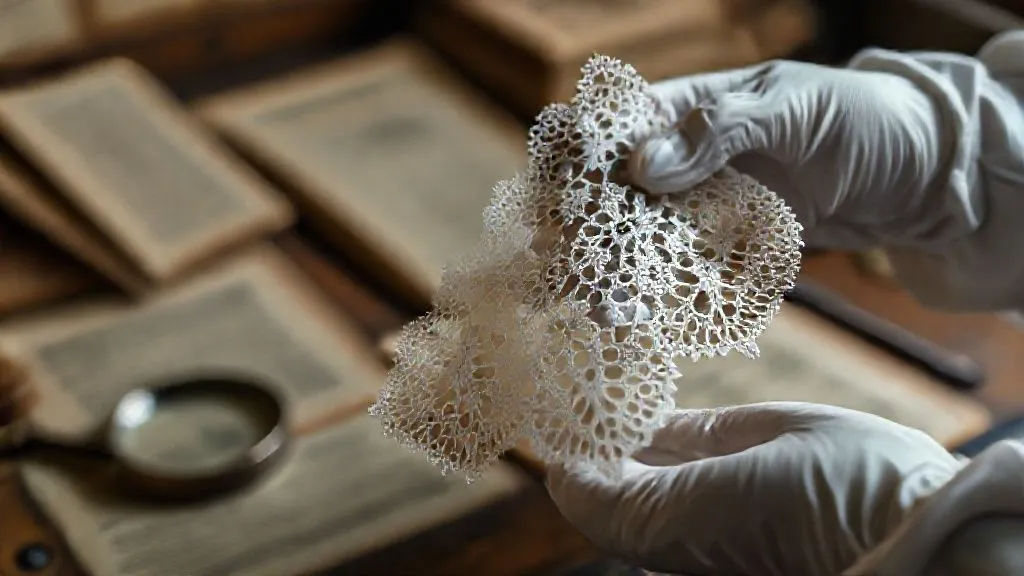
How to Authenticate Provenance of Vintage Haute Couture Lace Sources?
For over two decades in the rarefied world of haute couture, I've had the privilege of handling some of the most exquisite textiles ever created. I've also witnessed the heartbreak and financial pitfalls associated with misidentified or unauthenticated pieces. The allure of vintage haute couture lace is undeniable, but its true value, both historical and monetary, hinges entirely on its verifiable provenance.
The challenge of authenticating vintage haute couture lace sources is multifaceted. It's not just about identifying the lace type; it's about connecting a delicate piece of textile to a specific designer, collection, or historical period. Without rigorous authentication, a priceless artifact can be reduced to mere fabric, carrying significant risks for collectors, institutions, and even fashion houses.
In this definitive guide, I will share the rigorous framework I've developed over years of experience. We'll delve into actionable steps, from tactile examination to scientific analysis and deep archival research, equipping you with the expert insights needed to confidently authenticate the provenance of these magnificent textile treasures.
Understanding the Essence of Haute Couture Lace
Before we embark on the journey of authentication, it’s crucial to grasp what truly elevates haute couture lace above other exquisite textiles. It's not merely about beauty; it's about unparalleled craftsmanship, the use of rare and often bespoke materials, and its intrinsic connection to a specific designer's vision and a moment in fashion history.
Haute couture lace embodies a legacy of human artistry, where generations of skilled artisans meticulously hand-wove or hand-embroidered threads into breathtaking patterns. These pieces were often commissioned exclusively for specific collections, making their origins incredibly distinct and valuable. Think of the intricate Chantilly lace gracing a Dior gown from the 1950s or the sculptural Alençon lace adorning a Worth creation from the Belle Époque.
The Initial Assessment: Visual and Tactile Clues
My first step in evaluating any piece of vintage lace is always a thorough visual and tactile examination. This initial assessment provides a wealth of information, often revealing immediate clues about its age, construction, and potential origins. You're looking for signs of handwork versus machine production, the nature of the fibers, and the tell-tale patina of age.
Begin by observing the overall uniformity of the lace. Hand-made lace, by its very nature, will exhibit subtle variations in tension, stitch size, and pattern repetition that are absent in machine-made counterparts. Machine lace, while often beautiful, typically displays a flawless, mechanical regularity.
Examining Construction and Stitching
Delving deeper, I scrutinize the actual construction. Consider the specific techniques employed. Is it a bobbin lace, like Chantilly or Honiton, characterized by intricate weaving and twisting of threads? Or is it a needlepoint lace, such as Alençon or Brussels Point de Gaze, built up with stitches on a foundation fabric?
- Ground Net Analysis: Examine the mesh or ground of the lace. Is it a fine, hexagonal tulle (common in Chantilly)? Or a denser, often buttonholed ground (typical of Alençon)? The consistency and method of creating this ground can be a strong indicator.
- Motif Attachment: For laces composed of separately made motifs applied to a net, observe how these motifs are attached. Hand-sewn attachments will often show tiny, irregular stitches, while machine applications are typically uniform and sometimes visible from the reverse.
- Cordonnet or Gimp: Many haute couture laces feature a raised outline (cordonnet or gimp) around motifs. Note its material (silk, horsehair, cotton), its consistency, and how it's applied. A hand-padded cordonnet in Alençon lace, for instance, is a hallmark of authenticity and skill.
- Irregularities as Proof: Don't dismiss minor imperfections. A slightly uneven stitch, a tiny knot, or a minute variation in pattern can often be compelling evidence of handcraftsmanship and human touch, distinguishing it from mass-produced items.
"The true soul of haute couture lace isn't just in its visual beauty, but in the nuanced 'feel' of it – the way it drapes, the subtle give of its fibers, and the whisper of its history under your fingertips. This tactile connection is invaluable."
Finally, consider the fiber itself. Is it silk, linen, or cotton? Haute couture lace almost exclusively favored natural fibers until well into the 20th century. Look for the sheen of silk, the crispness of linen, or the softness of cotton. Synthetic fibers would immediately raise a red flag for older pieces.
Microscopic and Scientific Analysis: Beyond the Naked Eye
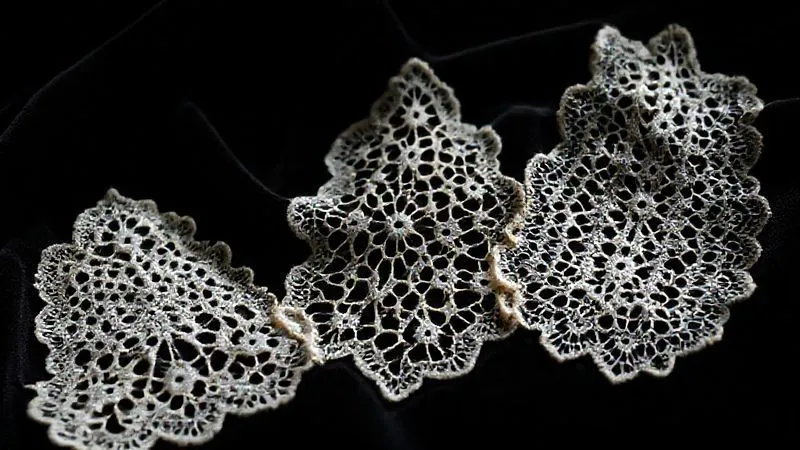
While visual and tactile assessments are critical, they are often insufficient for definitive authentication. To truly authenticate provenance of vintage haute couture lace sources, we must delve into the microscopic and scientific realm. This is where the unseen details reveal profound truths about a textile's age, composition, and origin.
Modern textile forensics offers an array of non-destructive and minimally invasive techniques. These methods provide objective data that can corroborate or challenge initial hypotheses, lending scientific authority to your findings. I always recommend engaging a specialized textile laboratory for this phase.
The Role of Textile Forensics
Textile forensics involves a suite of techniques:
- Fiber Microscopy: Under a powerful microscope, the unique structural characteristics of different fibers become apparent. Silk fibers, for example, have a smooth, triangular cross-section, while cotton exhibits a flat, twisted ribbon-like appearance. Age and degradation patterns can also be observed.
- Dye Analysis: Identifying the dyes used can be a powerful dating tool. Natural dyes (e.g., indigo, cochineal) were prevalent before the mid-19th century. The presence of synthetic dyes, like aniline dyes, can help pinpoint the earliest possible production date. Techniques like High-Performance Liquid Chromatography (HPLC) can analyze dye components.
- Elemental Analysis (e.g., XRF): X-ray Fluorescence (XRF) can identify trace elements in the fibers or metallic threads, which can sometimes link a textile to a specific geographical origin or historical period based on mineral content in the water or soil where the fiber grew.
- Carbon Dating (with caution): Radiocarbon dating can provide a broad age range for organic materials. However, it requires a small sample destruction and has a margin of error. It's typically reserved for extremely valuable pieces where other methods are inconclusive.
According to textile conservation experts at the Metropolitan Museum of Art's Textile Conservation department, combining multiple analytical techniques provides the most robust evidence for dating and identifying textile materials. It's a cross-referencing process that builds an undeniable chain of evidence.
Here’s a quick reference for distinguishing common fibers under basic observation and with a burn test, which can be done on a tiny, inconspicuous loose thread if absolutely necessary and without risking damage to the main piece:
| Fiber Type | Microscopic View Characteristics | Burn Test Reaction |
|---|---|---|
| Silk | Smooth, triangular cross-section, natural luster, fine diameter | Burns slowly, curls away, smells like burning hair, leaves brittle black ash |
| Linen | Irregular cross-section, nodes/bamboo-like appearance, visible lengthwise striations | Burns quickly, smells like burning paper, leaves fine grey ash |
| Cotton | Flat, twisted ribbon-like structure (convolutions), kidney-bean cross-section | Burns quickly, smells like burning paper, leaves soft grey ash |
| Rayon (Viscose) | Smooth, uniform, often circular cross-section, striations | Burns quickly, smells like burning paper, leaves soft grey ash |
| Nylon | Smooth, uniform, often circular or trilobal cross-section | Melts, drips, smells like celery, leaves hard, round bead |
Archival Research: Unearthing the Paper Trail
The most compelling evidence for how to authenticate provenance of vintage haute couture lace sources often lies not in the fibers themselves, but in the historical records. Archival research is a painstaking yet immensely rewarding endeavor, connecting your physical piece of lace to documented history.
My approach involves meticulously sifting through fashion house archives, museum collections, and historical publications. This process aims to find specific references to the lace type, its suppliers, or its use in particular collections or garments.
- Designer Archives: Many major haute couture houses maintain extensive archives. These can include original design sketches, fabric swatches (often with supplier notes), collection notes, invoices from lace makers, and even photographs of finished garments. Accessing these often requires specific permissions or working with accredited institutions.
- Museum Collections: Institutions like the Victoria and Albert Museum in London or the Costume Institute at the Metropolitan Museum of Art house vast collections of haute couture and textiles. Their detailed cataloging can provide invaluable comparison points for lace patterns, construction, and dating.
- Historical Fashion Publications: Vintage fashion magazines (e.g., Vogue, Harper's Bazaar) and exhibition catalogs from the relevant era can showcase specific garments featuring certain laces. Look for detailed descriptions, designer credits, and dates.
- Lace Maker Records: Some historic lace manufacturers (e.g., Dognin & Cie, Hurel) also maintained archives of their designs and client lists. If you suspect a specific manufacturer, researching their history can yield results.
Case Study: Verifying the 'Duchess' Lace
I once consulted on a breathtaking piece of Brussels Point de Gaze lace, attributed to a significant 19th-century French couturier and rumored to have belonged to a European duchess. The lace itself was undoubtedly exquisite and period-appropriate. However, its specific provenance was unverified.
Our initial visual and microscopic analysis confirmed it was indeed a high-quality, hand-made Brussels lace of the period. But to link it to the couturier and the duchess, we embarked on extensive archival research. We discovered entries in the couturier's ledger from 1892 detailing a commission for a gown for the said duchess, specifically mentioning 'Point de Gaze, rose point motifs.' Further, a detailed drawing of the gown in the couturier's sketchbooks featured lace with identical motifs to our sample.
This cross-referencing of physical evidence with documentary proof allowed us to definitively authenticate the lace's provenance, elevating its historical significance and value exponentially. It wasn't just 'vintage lace'; it was 'the Duchess's Brussels Point de Gaze, by [Couturier X], 1892.'

Identifying Signature Motifs and Regional Characteristics
Just as artists have signature brushstrokes, master lace makers and ateliers often developed distinctive motifs, patterns, and construction methods that serve as unique identifiers. Recognizing these regional or workshop-specific characteristics is a sophisticated skill developed through extensive exposure and study.
Each major lace-making region or type developed its own aesthetic and technical language. Learning these nuances is fundamental to authenticating provenance of vintage haute couture lace sources. For example, the delicate floral sprays of Brussels Point de Gaze are distinctly different from the bold, sculptural forms of Venetian Point.
Regional Lace Signatures: A Quick Reference
- Chantilly Lace (France): Known for its fine silk bobbin lace, often black, with delicate floral sprays, scrolling patterns, and a distinctive hexagonal ground net. Motifs are often outlined in heavier, untwisted silk threads.
- Alençon Lace (France): A needlepoint lace, often white or ivory, characterized by a dense, buttonholed ground and a raised, padded cordonnet (outline) around its floral or figural motifs, creating a sculptural effect.
- Brussels Lace (Belgium): Encompasses various types, including Point de Gaze (needlepoint, known for 'rose point' motifs and a very fine hexagonal net) and Duchesse (bobbin lace, often with flowing scrolls and detached motifs connected by brides).
- Honiton Lace (England): A bobbin lace where individual motifs (sprigs) are made separately and then applied to a net ground. Often features naturalistic floral designs like roses, shamrocks, and thistles.
- Venetian Point Lace (Italy): Early needlepoint lace, known for its bold, sculptural, and often architectural designs. Early forms (Gros Point) had no ground net, relying on connecting bars (brides); later forms (Point de Venise) introduced a more open ground.
By comparing your lace to documented examples of these specific types and their characteristic motifs, you can significantly narrow down its potential origin. This requires a strong visual library and a keen eye for detail.
| Lace Type | Origin/Era | Key Characteristics |
|---|---|---|
| Chantilly | France, 18th-19th Century | Fine silk bobbin lace, delicate hexagonal ground, floral motifs outlined in heavier silk, often black |
| Alençon | France, 17th Century onwards | Needlepoint lace, raised padded cordonnet outlining motifs, fine net ground, often white or ivory |
| Brussels Point de Gaze | Belgium, 19th Century | Needlepoint lace, rose point motifs, very fine hexagonal net ground, often with raised work and picots |
| Honiton | England, 17th-19th Century | Bobbin lace, detached motifs (sprigs) applied to a net ground, often floral or naturalistic designs |
| Venetian Point | Italy, 16th-18th Century | Needlepoint lace, bold, sculptural designs, often with raised patterns (gros point), no ground net |
Expert Consultation and Professional Appraisals
Even with extensive personal research, there comes a point where expert consultation becomes indispensable. For truly valuable or historically significant pieces, engaging a professional appraiser or textile historian specializing in antique lace is a non-negotiable step in the authentication process.
These specialists possess a depth of knowledge, access to private archives, and a network of contacts that are simply unavailable to most individuals. They have handled countless pieces, seen the subtleties, and understand the market value implications of verified provenance.
When seeking an expert:
- Look for Specialization: Ensure the expert's primary area of expertise is antique textiles, specifically lace, and ideally haute couture. A general antiques appraiser may not have the granular knowledge required.
- Check Credentials and Affiliations: Reputable experts are often affiliated with professional organizations like the Appraisers Association of America or academic institutions.
- Request References: Ask for references from museums, auction houses, or other collectors they have worked with.
- Understand the Scope: Clarify what the appraisal or consultation will cover – a verbal opinion, a detailed written report, or scientific testing recommendations.
A professional appraisal not only confirms authenticity but also establishes a market value, which is crucial for insurance, sales, or estate planning. It's an investment that protects the integrity and value of your acquisition.
Mitigating Risks: Common Pitfalls and Forgeries
The allure and value of vintage haute couture lace inevitably attract those who seek to profit from deception. Forgeries and misrepresentations are a constant risk in this niche, making vigilance and a healthy skepticism paramount. I've seen countless pieces presented with compelling but ultimately fabricated stories.
One of the most common pitfalls is the misidentification of machine-made lace as handmade. As machine technology advanced, particularly from the late 19th century onwards, it became incredibly adept at mimicking traditional lace patterns. While often beautiful, machine lace lacks the historical and artistic value of true haute couture hand-made pieces.
- The 'Too Good to Be True' Rule: If a piece of lace is offered at an incredibly low price for its purported age and quality, proceed with extreme caution. Genuine vintage haute couture lace is rare and commands a premium.
- Lack of Documentation: Be wary of pieces with no accompanying provenance documentation, especially if the seller cannot provide a credible chain of custody. While some genuine pieces may lack perfect records, it adds significant risk.
- Modern Repairs and Alterations: A piece might be genuinely old, but extensive modern repairs or alterations can significantly diminish its authenticity and value. Distinguish between sympathetic historical repair and crude modern intervention.
- Falsified Labels: While haute couture lace rarely carries specific labels, if a piece of fabric is presented with a designer label, verify its authenticity. Labels can be easily sewn onto unrelated textiles.
"In the world of exquisite textiles, trust is earned through verifiable evidence, not just compelling narratives. Always question, always investigate, and always prioritize objective data over romanticized tales."
Developing an 'eye' for inconsistencies is vital. Look for perfectly uniform stitches in a piece claimed to be 18th-century, or synthetic fibers in a supposed pre-1850 lace. These are immediate red flags that warrant deeper investigation and scientific analysis.
Building Your Own Expertise: A Lifelong Journey
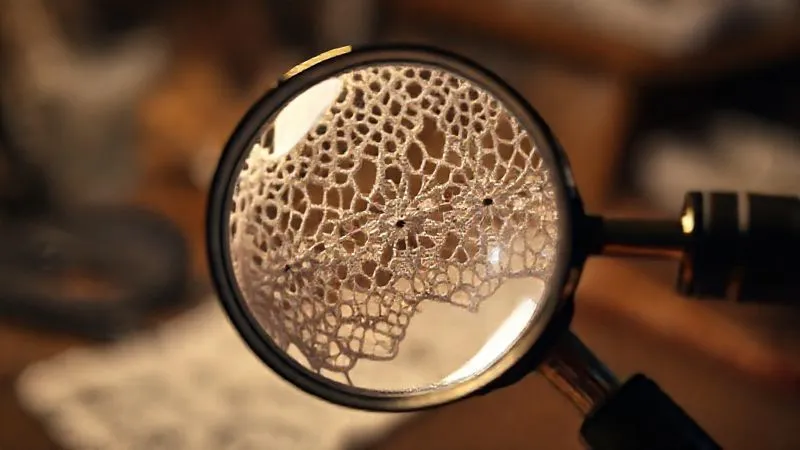
Authenticating provenance of vintage haute couture lace sources is not a skill learned overnight; it's a lifelong journey of learning, observation, and hands-on experience. My own expertise has been honed over decades, through countless hours spent in archives, examining textiles, and consulting with fellow specialists.
For aspiring collectors or enthusiasts, I encourage you to actively cultivate your knowledge:
- Read Extensively: Immerse yourself in books, academic journals, and reputable online resources dedicated to textile history, lace identification, and haute couture.
- Visit Museums and Exhibitions: Spend time observing authenticated pieces in museum collections. Pay attention to their construction, materials, and the way they are displayed and described.
- Handle Samples: If possible, seek opportunities to handle genuine antique lace samples. Develop your tactile sense for different fibers and construction methods. Attend workshops or study groups.
- Start Small: Begin your collecting journey with less valuable pieces where the risk of misidentification is lower. This allows you to practice your authentication skills without significant financial exposure.
- Network: Connect with other collectors, textile historians, and conservators. The shared knowledge and insights within a community are invaluable.
Every piece of lace you examine, every archive you delve into, and every expert you consult adds another layer to your understanding. This continuous engagement is what truly builds an expert eye and the confidence to authenticate these magnificent historical textiles.
Frequently Asked Questions (FAQ)
Q: How much does professional authentication of vintage haute couture lace cost? The cost can vary significantly based on the complexity of the piece, the depth of research required, and the expert's reputation. A basic verbal opinion might be a few hundred dollars, while a comprehensive written report involving scientific analysis could range from a few thousand to upwards of ten thousand dollars. It's an investment commensurate with the piece's potential value.
Q: Can I authenticate lace myself using only online resources? While online resources are excellent for preliminary research and visual comparison, they are rarely sufficient for definitive authentication of high-value haute couture lace. The tactile, microscopic, and archival elements require hands-on expertise and access that online platforms cannot fully replicate. It's best used as a starting point.
Q: What if my vintage lace has no clear markings or known history? Many genuine vintage haute couture lace pieces lack explicit markings. In such cases, the authentication process relies heavily on a combination of visual/tactile assessment, microscopic analysis of fibers and dyes, and extensive comparative research against documented historical examples. This is where an experienced expert's 'eye' and scientific data become most critical.
Q: What's the difference between vintage and antique lace, and does it impact authentication? Generally, 'antique' refers to items 100 years or older, while 'vintage' refers to items typically 20-99 years old. This distinction can impact the expected materials, construction techniques, and available historical records. Older antique laces (pre-1850) will almost exclusively use natural fibers and hand techniques, while later vintage pieces might show transitional technologies or early synthetics, making authentication considerations slightly different for each category.
Q: How does the condition of the lace affect its provenance authentication? While condition doesn't directly invalidate provenance, severe damage, extensive repairs, or missing sections can make authentication more challenging as crucial identifying features might be lost or altered. However, a piece in poor condition with verifiable provenance can still be historically significant, though its monetary value might be reduced.
Key Takeaways and Final Thoughts
Authenticating the provenance of vintage haute couture lace sources is a journey that demands patience, precision, and an unwavering commitment to detail. It's a blend of art, science, and historical detective work that ultimately reveals the true story behind these magnificent textiles.
- Embrace a Multi-Disciplinary Approach: Combine visual, tactile, microscopic, and archival methods for the most robust authentication.
- Prioritize Objective Evidence: Always seek scientific data and documented records to corroborate any assumptions.
- Cultivate Your Expertise: Continuous learning and hands-on experience are invaluable for developing your 'expert eye.'
- Leverage External Expertise: Don't hesitate to consult with specialized textile historians and appraisers for high-value pieces.
- Beware of Forgeries: Maintain a healthy skepticism and be aware of common deceptive practices in the market.
Each authenticated piece of haute couture lace is not just a textile; it's a tangible link to fashion history, a testament to human artistry, and a unique narrative waiting to be told. By mastering the art of authentication, you not only protect your investments but also contribute to the preservation and understanding of this exquisite heritage. Continue your journey with curiosity and diligence, and you will unlock the hidden stories woven into every delicate thread.
Recommended Reading
- Unlocking Actor Flow: 7 Keys to Mobile Fantasy Armor Design
- Mastering Skin Tones: 7 Steps to Fix Editorial Inconsistencies
- 5 Proven Strategies: Guarding Your Sneaker Brand from Counterfeits
- The Secret to Soothing Comfort: How to Choose Newborn Clothes for Sensitive Skin
- Client Doubts Authenticity? 5 Steps to Reassure & Resolve Handbag Concerns



Your email address will not be published. Required fields are marked *