

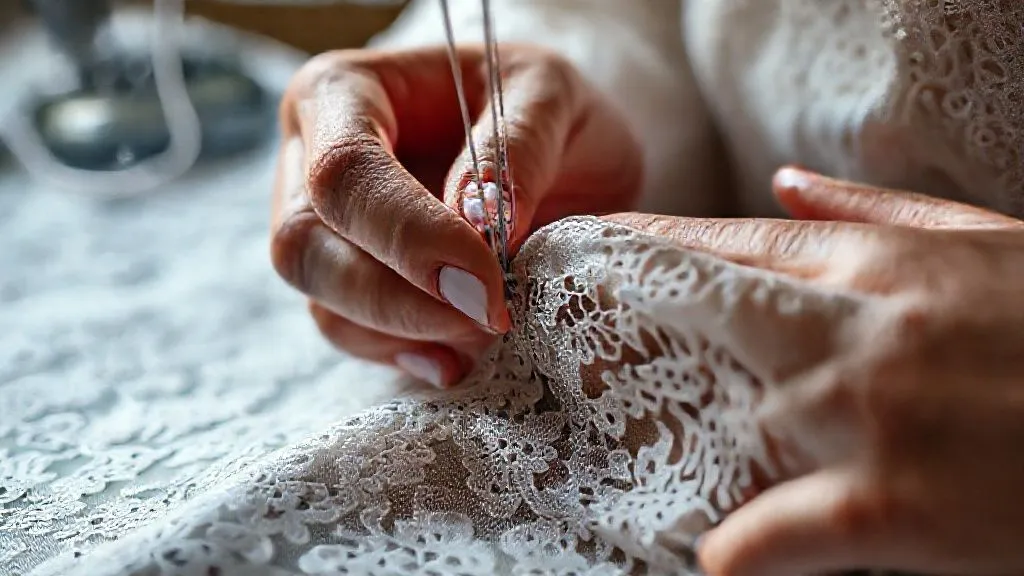
Ensuring Perfect Haute Couture Hand-Sewn Detail Consistency?
For over two decades, I've had the distinct privilege of witnessing the magic and the meticulousness that define haute couture. From the hushed ateliers of Paris to the bustling workshops of emerging luxury brands, I've seen masterpieces born from countless hours of handwork. Yet, I've also observed the silent killer of perfection: inconsistency. A single misaligned bead, a slightly uneven stitch, or a variation in tension can, in the unforgiving world of haute couture, diminish a garment from extraordinary to merely exceptional—a distinction that, to a true connoisseur, is paramount.
The problem isn't a lack of skill; it's often a lack of a cohesive, repeatable system. Artisans, though immensely talented, can fall into individual rhythms, leading to subtle variations across a single garment or, worse, across a collection. This struggle with achieving absolute uniformity in hand-sewn details is a profound pain point, impacting not just the aesthetic integrity but also the brand's reputation for unparalleled quality.
In this definitive guide, I will share the five critical pillars that, in my extensive experience, are non-negotiable for `Ensuring perfect haute couture hand-sewn detail consistency?`. We will delve into actionable frameworks, real-world insights, and expert techniques that move beyond mere skill to cultivate a culture of unwavering precision, transforming your atelier's output into a symphony of flawless handwork.
Pillar 1: The Unseen Foundation – Material Mastery & Preparation
Before a single stitch is made, the journey towards consistency begins with an intimate understanding and respectful preparation of your materials. This foundational step is often overlooked, yet it dictates the very possibility of achieving perfect hand-sewn details.
Fabric Acclimatization and Grain Perfection
Fabrics, especially the luxurious silks, wools, and laces used in haute couture, are living entities. They react to temperature, humidity, and handling. Ignoring their intrinsic properties is an invitation to inconsistency. I've seen countless projects derailed because the fabric wasn't given time to 'settle.'
- Acclimatization: Upon arrival, unroll and allow fabrics to rest for at least 24-48 hours in the atelier's typical working environment. This allows them to adjust to ambient humidity and temperature, minimizing post-sewing distortion.
- Grain Line Verification: Before cutting, meticulously check the fabric's true grain. Gentle tugging on the bias can help reveal any skew. For critical pieces, consider blocking or steaming to relax the weave into its natural, stable state.
- Pre-Shrinking (When Necessary): For natural fibers, a gentle pre-shrinking process (e.g., steaming) can prevent future dimensional changes that would compromise detail consistency.
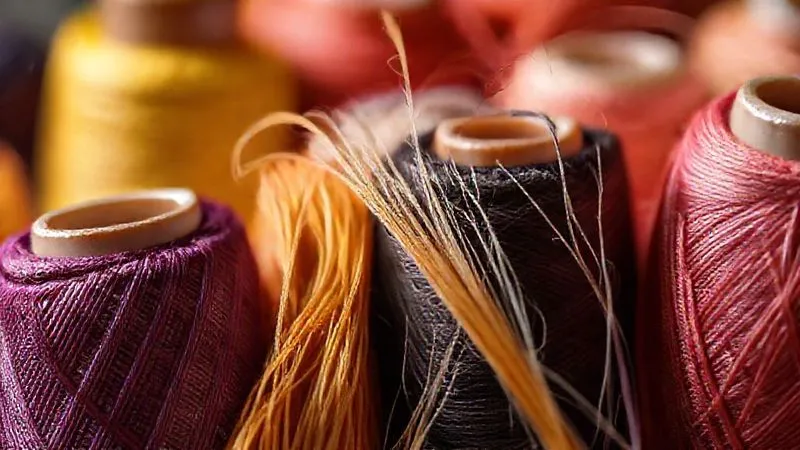
Thread Selection & Conditioning
The thread is the lifeblood of hand-sewn details. Its quality, fiber content, and preparation are as crucial as the fabric itself. Using the wrong thread, or an unconditioned one, is a common pitfall I've observed.
"The thread is not merely a connector; it is an integral part of the garment's narrative. Its strength, sheen, and pliability must harmonize perfectly with the fabric to ensure the longevity and beauty of every hand-sewn detail."
- Fiber Match: Always match thread fiber to fabric fiber (e.g., silk thread for silk fabric, cotton for cotton). This ensures similar shrinkage rates and wear characteristics.
- Strength & Fineness: Choose a thread strong enough to secure the detail but fine enough to be virtually invisible, maintaining the integrity of the design.
- Waxing/Conditioning: For many hand-sewing applications, especially with silk or delicate threads, running the thread through beeswax or a specialized thread conditioner significantly reduces tangling, strengthens the thread, and creates a smoother glide, leading to more consistent stitches.
Precision Marking Techniques
Accuracy in marking is the non-negotiable blueprint for consistent hand-sewn details. Freehand approximation is the enemy of perfection. I advocate for methods that are precise, temporary, and fabric-appropriate.
- Tailor's Tacks: For delicate fabrics or areas where chalk might distort, tailor's tacks (loose thread loops) are invaluable for transferring pattern markings precisely.
- Vanishing Inks & Pencils: Modern vanishing or water-soluble pens offer fine lines that disappear. Always test on a scrap of your specific fabric first to ensure no ghosting or staining.
- Laser Marking (for industrial applications): While less common in traditional haute couture ateliers, some specialized workshops use laser projection for complex embroidery or placement guides, offering unparalleled precision without touching the fabric. This can be a game-changer for repetitive, intricate patterns, ensuring perfect alignment across multiple pieces. For more on advanced textile marking, see Textile World's insights on marking technologies.
Pillar 2: The Artisan's Mindset & Method – Technique & Ergonomics
Even with the finest materials, consistency ultimately rests in the hands of the artisan. This pillar focuses on refining the human element, ensuring that technique is not just skilled, but also repeatable, and that the working environment supports sustained precision.
Ergonomic Workspace Design
I've witnessed artisans hunched over their work for hours, their bodies contorted. This leads to fatigue, strain, and inevitably, a decline in consistency. A well-designed workspace isn't a luxury; it's a necessity for high-level handwork.
- Optimal Lighting: Natural light is ideal, supplemented by adjustable, color-corrected task lighting to minimize eye strain and accurately perceive colors and details.
- Posture Support: Ergonomic chairs, adjustable tables, and even specialized sewing horses ensure the artisan maintains a comfortable, stable posture, reducing fatigue in the back, neck, and shoulders.
- Tool Proximity: Essential tools (needles, thimbles, snips) should be within easy reach, minimizing unnecessary movement and maintaining focus on the work.
Developing a Consistent Hand: Practice & Muscle Memory
Achieving a truly consistent stitch is akin to a musician mastering a complex piece; it requires deliberate practice to build muscle memory and a finely tuned sensory awareness. It's not just about knowing *how* to make a stitch, but *feeling* the correct tension and rhythm.
- Targeted Drills: Dedicate time to practicing specific stitches (e.g., prick stitch, fell stitch, buttonhole stitch) on scrap fabric, focusing solely on uniformity of length, depth, and tension.
- Tension Control Exercises: Use varying fabric weights and threads to consciously practice maintaining consistent tension. This develops a 'feel' for the ideal pressure.
- Slow & Deliberate Repetition: Encourage artisans to work slowly and mindfully, especially on new or challenging details. Speed will naturally follow consistency, not precede it.
The Rhythm of the Stitch: Pace and Precision
In the quiet intensity of the atelier, I've observed that the most consistent artisans often possess a natural, almost meditative rhythm to their work. Rushing is a direct path to inconsistency. Encourage a mindful approach.
"Haute couture hand-sewing is not a race; it is a meditation. Each stitch is a breath, each detail a moment of profound concentration. Consistency is born from this deliberate pace, not from hurried execution."
- Avoid Distractions: A calm, focused environment minimizes interruptions that can break an artisan's rhythm and compromise stitch consistency.
- Scheduled Breaks: Regular, short breaks prevent mental and physical fatigue, allowing artisans to return to their work with renewed focus and a steady hand.
- Self-Awareness: Teach artisans to recognize when their pace is becoming erratic or their attention is waning, and to take a moment to reset.
Pillar 3: Blueprinting Perfection – Standardization & Documentation
While haute couture celebrates individuality, the execution of its details demands a universal standard within the atelier. This pillar focuses on creating a shared language and documented benchmarks for perfection, ensuring that every artisan understands and can replicate the expected level of consistency.
Creating Detailed Stitch Guides & Samples
Verbal instructions, no matter how clear, can be misinterpreted. Visual and tactile references are indispensable for `Ensuring perfect haute couture hand-sewn detail consistency?` across different hands and over time. I call this the 'atelier bible' for a reason.
- Physical Stitch Samples: For every recurring hand-sewn detail (e.g., hem finishes, buttonhole types, embellishment application), create exemplary physical samples. These should be mounted, labeled, and accessible, serving as the ultimate reference for desired aesthetic and technical execution.
- Digital Documentation: Complement physical samples with high-resolution photographs, close-up videos, and written specifications detailing thread type, stitch length, tension, and any specific techniques. This creates a searchable, consistent knowledge base.
Standard Operating Procedures (SOPs) for Handwork
Breaking down complex hand-sewn details into clear, sequential steps removes ambiguity and provides a repeatable framework. This is especially vital for intricate embellishments or structural elements where variation is unacceptable.
| Detail/Task | Key Steps | Consistency Checkpoints | |
|---|---|---|---|
| Hand-Rolled Hem (Silk Organza) | 1. Trim to 0.5cm allowance. 2. Finger-roll twice (2mm). 3. Blind stitch with single silk thread. 4. Stitch length: 1-2mm. 5. Tension: Medium-light. | Even roll width, invisible stitches, no puckering, consistent drape. | |
| French Seam (Chiffon) | 1. Wrong sides together, 3mm seam. 2. Trim close. 3. Right sides together, press. 4. 5mm seam enclosing raw edge. 5. Hand-press. | Even seam width, no fraying visible, perfectly straight, flexible. | |
| Bead Embellishment (Seed Beads) | 1. Use beading needle & invisible thread. 2. Secure each bead/small cluster individually. 3. Backstitch every 2-3 beads. 4. Follow design template precisely. | Even spacing, secure attachment, consistent orientation, no slack in thread. | |
| Hand-Sewn Zipper (Invisible) | 1. Baste zipper. 2. Use prick stitch along seam line. 3. Match teeth perfectly at top. 4. Use matching silk thread. | Invisible stitches, smooth closure, no puckering, perfectly aligned. | Test thread color on fabric scrap. |
By defining these steps, artisans have a clear roadmap. This doesn't stifle creativity but rather frees it by ensuring the underlying structure is robustly consistent. For further reading on quality management in luxury production, consider resources from organizations like the Harvard Business Review, which often publishes articles on process optimization.
Case Study: The "Lumière Gown" Project
A few years ago, a prominent couture house I advised faced a significant challenge with their signature 'Lumière Gown.' This piece featured thousands of hand-applied crystal beads, creating an ethereal shimmer. The initial prototypes showed stunning work, but as production scaled, subtle inconsistencies emerged in bead orientation and spacing across different artisans. The overall effect, while still beautiful, lacked the absolute, shimmering uniformity that was the hallmark of the design.
To address this, we implemented a structured approach based on clear documentation. First, a master artisan created a definitive sample of the beadwork, which was then photographed under various lighting conditions and meticulously measured. This became the new standard. Next, we developed a simple, visual SOP detailing the exact stitch type, thread tension, and bead orientation for each section of the gown. Artisans were then required to complete a small, documented practice panel that was cross-checked against the master sample.
The result was transformative. Within two weeks, the atelier achieved a 98% consistency rate in bead application, significantly reducing rework and enhancing the final garment's brilliance. This success wasn't due to new talent, but to providing existing talent with clear, consistent guidelines and a shared vision of perfection.
Pillar 4: Cultivating Craftsmanship – Training & Mentorship
Haute couture craftsmanship is a legacy, passed down through generations of skilled hands. This pillar emphasizes the human element of knowledge transfer, ensuring that the art of consistent handwork is not only preserved but actively nurtured and evolved within the atelier.
Structured Apprenticeship Programs
In my experience, the most successful ateliers are those that invest deeply in their apprentices. True consistency isn't taught in a day; it's absorbed over years under the guidance of a master. A formal apprenticeship program is crucial for `Ensuring perfect haute couture hand-sewn detail consistency?` in the long run.
- One-on-One Mentorship: Pair new artisans with experienced masters who can provide direct, continuous feedback and demonstrate techniques firsthand.
- Progressive Skill Development: Structure the apprenticeship to gradually introduce more complex hand-sewn details, building foundational skills before moving to advanced techniques.
- Historical Context: Immerse apprentices in the history and philosophy of haute couture, instilling a deep respect for the craft and the standards of excellence. Many renowned fashion institutions, like the École de la Chambre Syndicale de la Couture Parisienne, emphasize this traditional model.
Continuous Skill Development & Workshops
Even seasoned artisans benefit from continuous learning. The world of textiles and techniques evolves, and so too should the skills within the atelier. Regular workshops keep skills sharp and introduce new methods for achieving consistency.
- Refresher Courses: Periodically conduct workshops to reinforce fundamental techniques, ensuring no 'bad habits' have crept in over time.
- Advanced Technique Exploration: Introduce workshops on new materials, innovative embellishment methods, or specialized historical techniques, fostering a culture of continuous improvement.
- Cross-Training: Encourage artisans to learn different aspects of hand-sewing within the atelier. A broader understanding of the entire garment construction process can enhance an individual's appreciation for consistency in their specific role.
Peer Review & Collaborative Feedback Loops
While mentorship is top-down, peer review fosters a horizontal exchange of knowledge and a collective responsibility for consistency. It creates an environment where shared expertise elevates everyone's work.
"In the atelier, every eye is a guardian of perfection. Peer review is not about fault-finding, but about shared growth, ensuring that the collective standard of consistency is always upheld and improved upon."
- Structured Review Sessions: Implement regular, informal sessions where artisans can review each other's work (e.g., a specific section of hand-sewn detail) and offer constructive feedback based on the established SOPs and samples.
- Anonymous Feedback Mechanisms: For sensitive areas, an anonymous feedback system can encourage honest critique and suggestions for improvement.
- Celebrate Consistency: Publicly acknowledge and celebrate artisans who consistently demonstrate exceptional detail work, reinforcing the value of precision within the team.
Pillar 5: The Unyielding Eye – Quality Control & Iteration
The final pillar is the unwavering commitment to scrutiny. Even with the best preparation, technique, and training, human error can occur. A robust quality control process, followed by a willingness to iterate and refine, is the ultimate safeguard for `Ensuring perfect haute couture hand-sewn detail consistency?`.
Multi-Stage Inspection Protocols
Quality control should not be a single endpoint check; it must be integrated throughout the entire hand-sewing process. I advocate for a multi-stage approach, where different eyes review the work at critical junctures.
- Pre-Assembly Inspection: Before any hand-sewn details are permanently integrated, inspect individual components for marking accuracy, initial stitch quality, and material integrity.
- Mid-Process Spot Checks: During intensive hand-sewing (e.g., intricate embroidery, extensive beadwork), supervisors or senior artisans should conduct regular spot checks to catch inconsistencies early.
- Final Detail Scrutiny: A dedicated quality control specialist, often with a fresh pair of eyes, performs a comprehensive review of all hand-sewn details against the design specifications and atelier standards before the garment is deemed complete.
Magnification & Illumination for Detail Scrutiny
The human eye, no matter how trained, has limitations. For haute couture, where micro-details define perfection, specialized tools are essential for thorough inspection.
- Magnifying Lamps: High-quality magnifying lamps with adjustable light settings allow for close examination of stitch length, tension, and any minute imperfections.
- Jeweler's Loupes/Microscopes: For extremely fine work, such as micro-beading or intricate lace repair, a jeweler's loupe or even a low-power microscope can reveal details invisible to the naked eye.
- Light Boxes: For sheer fabrics or designs with internal structures, using a light box can reveal hidden inconsistencies or shadows created by uneven handwork.
Data-Driven Consistency Tracking (When Applicable)
While haute couture is an art, some aspects of consistency can benefit from a quantitative approach. Simple metrics can highlight areas needing improvement.
- Rework Rate: Track the percentage of hand-sewn details that require correction or complete re-doing. A high rework rate signals systemic consistency issues.
- Time Per Detail: While not a direct measure of quality, significant variations in the time taken for identical details across artisans might indicate differing levels of consistency or efficiency.
- Feedback Categorization: Categorize feedback from quality control (e.g., 'uneven stitch length,' 'bead misalignment') to identify recurring problems and target training efforts. For more on integrating quality metrics, see industry best practices from organizations like ISO (International Organization for Standardization).
The Art of Imperceptible Correction
Despite all precautions, imperfections can occur. The mark of a true haute couture atelier is not just preventing mistakes, but knowing how to correct them flawlessly. This requires judgment and a mastery of 'invisible repair.'
- Early Intervention: The earlier an inconsistency is identified, the easier and less invasive the correction.
- Matching Original Work: Corrections must be executed with the same level of precision and technique as the original, ensuring the repair is utterly imperceptible.
- Knowing When to Redo: Sometimes, a correction will compromise the integrity or aesthetic. In such cases, the difficult but necessary decision to completely redo a section must be made.
Frequently Asked Questions (FAQ)
Question: How do I train new artisans to maintain consistency quickly in a fast-paced atelier?
Answer: While 'quickly' is relative in haute couture, accelerate consistency by emphasizing foundational drills (Pillar 2) and rigorous use of detailed SOPs and physical samples (Pillar 3) from day one. Assign a dedicated mentor (Pillar 4) who can provide constant, real-time feedback. Start them on less critical, repetitive tasks to build muscle memory and confidence before moving to highly visible details. Regular, structured practice sessions focused solely on uniformity, rather than speed, will yield faster, more reliable results in the long run.
Question: What's the biggest mistake ateliers make regarding hand-sewn consistency?
Answer: In my experience, the single biggest mistake is underestimating the power of standardization and documentation (Pillar 3). Many ateliers rely heavily on the tacit knowledge of their senior artisans, believing that 'artistry can't be documented.' While artistry is indeed unique, the *technical execution* of details can and must be standardized. Without clear, visual, and written guides, consistency becomes a matter of individual interpretation rather than a unified atelier standard, leading to variations that accumulate across a collection.
Question: Can technology (like laser marking) truly aid hand-sewn consistency without losing the 'hand-done' feel?
Answer: Absolutely. Technology, when used judiciously, can enhance consistency without diminishing the 'hand-done' feel. Laser marking, for instance, provides unparalleled precision for placement guides, ensuring that intricate hand-embroidery or beadwork starts from a perfectly identical blueprint every time. The handwork itself remains entirely manual, but the foundation on which it is built is flawlessly consistent. It's about leveraging technology for precise groundwork, allowing the artisan's hand to focus purely on the beauty of the stitch, not the anxiety of placement.
Question: How do different fabrics impact hand-sewn detail consistency?
Answer: Different fabrics profoundly impact consistency due to their varying weaves, weights, and fiber content. For example, silk chiffon's slippery nature demands extreme finesse and specialized tension control, while a sturdy wool might require a stronger thread and different needle. Delicate laces demand invisible mending techniques, whereas a structured brocade allows for more defined stitches. The key is thorough material mastery (Pillar 1) – understanding each fabric's unique properties, selecting appropriate tools and threads, and adapting techniques accordingly to maintain uniformity.
Question: What role does the designer play in ensuring consistency from the start?
Answer: The designer's role is foundational. Their vision, communicated through clear design sketches, technical flats, and detailed specifications, sets the initial standard for consistency. Designers must be intimately aware of what is technically achievable by hand and specify details with precision (e.g., 'a 2mm prick stitch' versus 'small stitches'). Collaboration with the atelier head is crucial from the outset to ensure that the design's intricate details are not only beautiful but also inherently designed for consistent hand-execution, avoiding later compromises.
Key Takeaways and Final Thoughts
Achieving perfect haute couture hand-sewn detail consistency is not an elusive art; it is a discipline forged through a holistic approach. It demands unwavering attention to every stage, from the moment fabric enters the atelier to the final scrutinizing glance before a garment graces a client.
- Master Your Materials: Respect and prepare your fabrics and threads with meticulous care.
- Refine the Artisan's Hand: Cultivate consistent technique through ergonomic workspaces, deliberate practice, and a mindful pace.
- Blueprint Perfection: Standardize and document every hand-sewn detail, creating a shared language of excellence.
- Nurture Talent: Invest in structured training, mentorship, and continuous skill development.
- Scrutinize Relentlessly: Implement multi-stage quality control, leveraging magnification and data, with a commitment to flawless correction.
In the world of haute couture, perfection is not merely desired; it is expected. By embracing these five pillars, you are not just `Ensuring perfect haute couture hand-sewn detail consistency?`—you are safeguarding a legacy of unparalleled craftsmanship and elevating every creation to its highest potential. This journey requires patience, dedication, and a shared passion for the sublime. The reward, however, is a garment that whispers tales of exquisite artistry, stitched into every flawless detail.
Recommended Reading
- 7 Metrics: Measuring Real Social Impact of Empowerment Fashion Lines
- 7 Proven Strategies: Solving Porosity Issues in Intricate Jewelry Castings
- How to Translate Abstract Mood Boards into Executable Fashion Shoots: 7 Steps
- 5 Backstage Costume Crisis Fixes: Rapid Repairs During a Show
- 5 Strategies: Refreshing Classic Accessories for Modern Luxury Appeal




Your email address will not be published. Required fields are marked *