

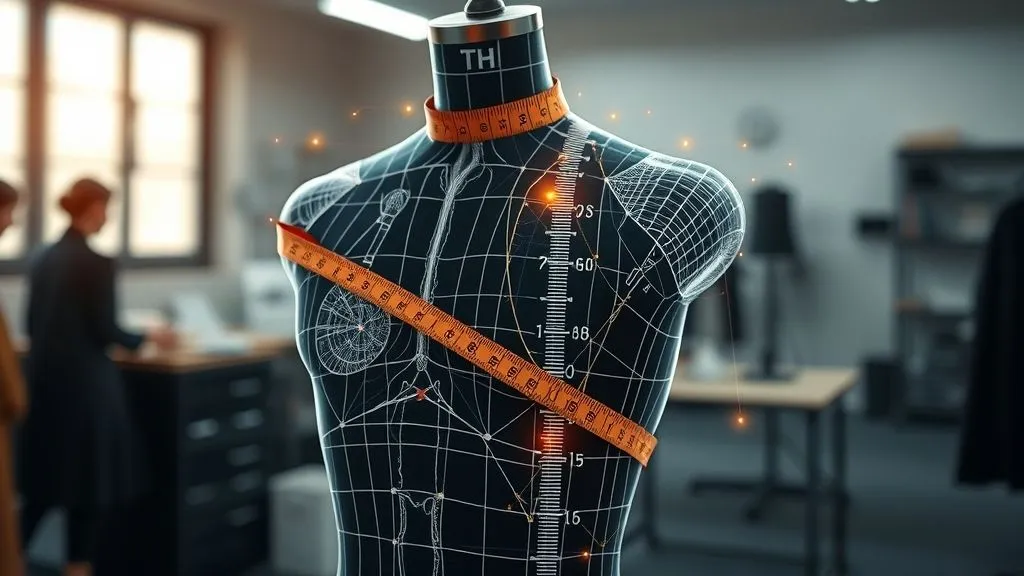
Solving Fit Discrepancies in Custom Apparel from Digital Body Data?
For over 15 years in the fashion technology space, I've witnessed the incredible promise of digital body data for custom apparel. We've moved from the rudimentary tape measure to sophisticated 3D body scanners, promising a new era of perfect fit. Yet, despite these advancements, I've seen countless brands struggle with a persistent, costly problem: fit discrepancies that lead to customer dissatisfaction, high return rates, and a significant dent in profitability.
The allure of made-to-measure clothing, powered by precise digital measurements, is undeniable. Customers crave garments that feel as if they were sculpted just for them. However, the journey from raw digital body data to a perfectly fitting physical garment is fraught with challenges. Many companies invest heavily in scanning technology, only to find that the data, while seemingly accurate, doesn't always translate into the expected comfort and aesthetic perfection.
In this definitive guide, I will pull back the curtain on the root causes of these fit issues. More importantly, I will provide you with a comprehensive, actionable framework, drawing from my extensive experience and real-world case studies. We'll explore expert strategies to bridge the gap between digital precision and physical perfection, ensuring your custom apparel truly lives up to its personalized promise.
The Double-Edged Sword: Why Digital Body Data Isn't Always Perfect
The first step in
- Scanner Limitations: Different scanning technologies (structured light, photogrammetry, millimeter wave) have varying resolutions, capture speeds, and environmental sensitivities. A scanner optimized for medical applications might not be ideal for fashion, where subtle drape and posture are critical.
- Environmental Factors: Lighting, background clutter, and even temperature can subtly affect scan quality. A poorly lit environment can introduce shadows that distort measurements, while an unstable platform can lead to blurred data points.
- Pose Variations: The way a person stands during a scan significantly impacts measurements. A slight slouch, a rotated shoulder, or even different breathing patterns can alter key anthropometric points. Standardizing poses is crucial, but human variability makes it a constant challenge.
- Data Interpretation & Processing: Raw scan data is often a mesh of millions of points. Extracting meaningful measurements, identifying landmarks, and smoothing out noise requires sophisticated algorithms. Errors in these processing steps can cascade into significant fit issues down the line.
"Digital body data is a powerful tool, but it's only as good as its capture, processing, and interpretation. Neglect any of these stages, and you're building a house on sand." - An Experienced Industry Specialist
Understanding these inherent limitations isn't about discrediting the technology; it's about acknowledging the challenges so we can develop robust strategies to overcome them. It's about moving beyond simply acquiring data to truly understanding and optimizing its application.
Standardizing Data Capture: The First Line of Defense
In my experience, many fit discrepancies can be traced back to inconsistent data capture. Think of it like baking: if your ingredients aren't measured precisely, your cake won't turn out right, no matter how good the recipe. Standardizing your data capture protocols is paramount for
Consistent Scan Protocols
This is where the 'science' meets the 'art' of data collection. We need to minimize variables wherever possible. Here are actionable steps:
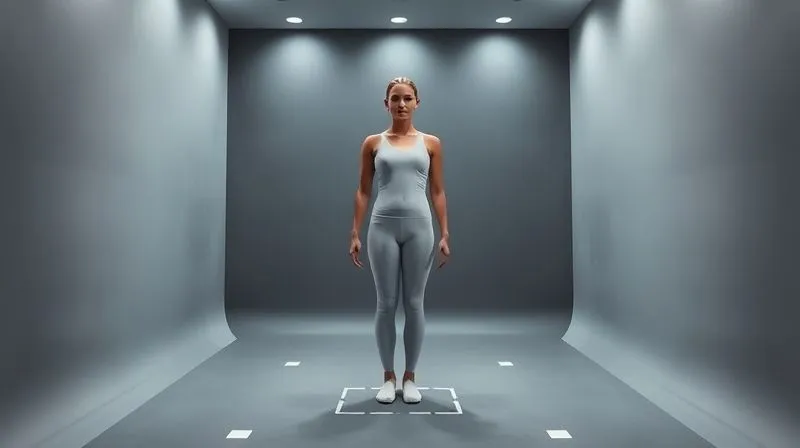
- Controlled Environment: Conduct scans in a dedicated space with consistent, diffused lighting and a neutral, uncluttered background. Minimize external disturbances and ensure stable temperatures.
- Standardized Poses: Define 2-3 specific, repeatable poses (e.g., 'neutral standing,' 'arms slightly abducted,' 'seated'). Provide clear visual and verbal instructions to the customer. Consider using a visual overlay within the scanner interface to guide pose accuracy.
- Multiple Scans & Averaging: Capture 2-3 scans per individual. Modern software can then average these scans, reducing random errors and providing a more robust dataset. This simple step can dramatically improve data reliability.
- Calibration & Maintenance: Regularly calibrate your 3D body scanner according to manufacturer guidelines. Just like any precision instrument, proper maintenance ensures consistent performance.
- Pre-Scan Briefing: Educate customers on the process. Explain the importance of minimal, form-fitting clothing (e.g., cycling shorts, sports bra) and removing bulky accessories or hair ties that might interfere with measurements.
Implementing these protocols requires discipline, but the payoff in reduced fit errors and increased customer satisfaction is immense. For a deeper dive into body scanning standards, you might find research from institutions like NIST (National Institute of Standards and Technology) insightful, as they often contribute to metrology guidelines.
From Raw Data to Actionable Insights: Advanced Processing Techniques
Once you have captured the digital body data, the next critical phase is processing it. Raw data, much like raw ingredients, needs refinement before it can be truly useful. This is where advanced algorithms come into play, transforming a cloud of points into precise, actionable measurements for pattern making.
Noise Reduction & Smoothing Algorithms
Scans often contain 'noise' – stray data points or minor surface irregularities. Effective noise reduction and smoothing algorithms are essential to create a clean, accurate body model. Over-smoothing can erase crucial anatomical details, while under-smoothing leaves artifacts that can lead to incorrect measurements. The goal is a balance that preserves key features.
Feature Extraction & Landmark Identification Accuracy
The real magic happens when software accurately identifies anthropometric landmarks (e.g., bust point, waist, hip, shoulder width). Modern AI and machine learning models are increasingly sophisticated at this, but they still require robust training data. In my experience, manual verification of automatically identified landmarks is a vital quality control step, especially for initial setup and complex body shapes.
Case Study: How 'PerfectFit Co.' Refined its Data Pipeline
PerfectFit Co., a bespoke suit manufacturer, initially struggled with a 25% alteration rate for digitally measured garments. Their raw scan data was inconsistent, leading to frequent pattern adjustments post-production. By implementing a two-pronged approach – first, standardizing their scanning environment and poses, and second, investing in advanced data processing software that included AI-driven landmark identification with a manual verification layer – they saw a dramatic improvement. Within six months, their alteration rate dropped to under 5%, and customer satisfaction scores soared. This wasn't just about the technology; it was about the rigorous process of refining their data pipeline to ensure every measurement was as accurate as possible.
Here’s a simplified look at the impact of data processing:
| Metric | Before Processing | After Processing |
|---|---|---|
| Accuracy of Key Measurements | ±1.5 cm | ±0.3 cm |
| Pattern Generation Time | 15 min (manual adj) | 5 min (automated) |
| First-Time Fit Rate | 75% | 95% |
Bridging the Gap: The Art & Science of Digital Pattern Adaptation
Even with pristine digital body data, the leap to a perfectly fitting garment pattern requires significant expertise. This is where the 'art' of fashion design meets the 'science' of computational geometry. The challenge of
Parametric Design & Generative AI for Pattern Making
Parametric design tools allow pattern makers to create dynamic patterns that automatically adjust based on input measurements. Instead of drafting a new pattern for every customer, a base pattern is developed with built-in rules and relationships between points. When new body data is fed in, the pattern intelligently scales and reshapes. Generative AI takes this a step further, learning from vast datasets of body shapes and successful garment patterns to propose optimal pattern pieces, even for highly complex designs.
Virtual Try-On & Simulation Feedback Loops
The advent of accurate 3D garment simulation software has been a game-changer. It allows designers to "virtually try on" a digital garment on a customer's 3D avatar *before* any fabric is cut. This provides invaluable feedback on fit, drape, tension, and movement. It allows for iterative adjustments in the digital realm, significantly reducing the need for costly physical samples.
- Data Input: Customer's processed 3D body data is imported.
- AI Pattern Generation: Parametric or AI-driven software generates an initial 2D pattern.
- Virtual Simulation: The 2D pattern is "stitched" onto the 3D avatar using physics-based simulation, accounting for fabric properties.
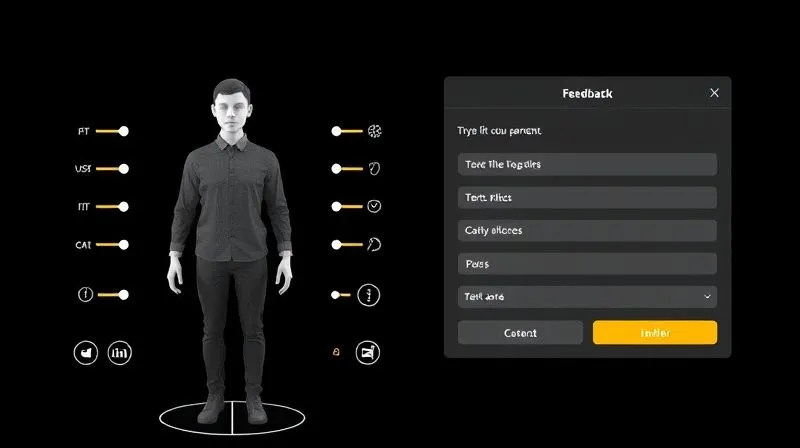
- Designer & Customer Feedback: Visual inspection, stress mapping, and virtual movement analysis are conducted. Customers can even participate in virtual try-ons to provide feedback.
- Iterative Refinement: Based on feedback, the pattern is adjusted digitally, and the simulation is re-run until optimal fit is achieved.
This iterative digital process is crucial for fine-tuning patterns. For more on the technical aspects of parametric design in fashion, explore resources from leading academic institutions or industry publications like The Business of Fashion.
The Human Element: Integrating Feedback for Iterative Improvement
Even the most advanced algorithms cannot perfectly replicate the subjective experience of "fit" and "comfort." This is where the human element, combined with intelligent systems, becomes indispensable for
Micro-Adjustments & Customer Feedback Loops
Initial digital patterns provide a strong foundation, but micro-adjustments are often needed. This is where a structured customer feedback mechanism is vital. After a customer receives their custom garment, don't just hope for the best. Actively solicit feedback:
- Targeted Surveys: Ask specific questions about fit in key areas (shoulders, waist, sleeve length, overall comfort, range of motion).
- Visual Feedback: Encourage customers to submit photos or even short videos of themselves wearing the garment, highlighting any areas of concern.
- Fit Diaries: For high-value or complex garments, consider a "fit diary" where customers record their experiences over a few days or wears.
This qualitative data, while subjective, provides invaluable insights that quantitative measurements alone cannot. It helps identify common fit preferences or recurring issues that might stem from specific body shapes or garment styles.
Machine Learning for Fit Prediction Refinement
Here's where the synergy between human feedback and AI truly shines. Every piece of customer feedback, every return reason, every alteration note is a data point. Machine learning algorithms can analyze this vast dataset to identify patterns and correlations between digital body measurements, garment patterns, and perceived fit issues. Over time, the AI can learn to:
- Predict Common Problem Areas: "Customers with X body shape often find the sleeves too tight on this particular jacket style."
- Suggest Pattern Adjustments: Automatically recommend modifications to the pattern for certain body types or garment designs based on historical success rates.
- Personalize Fit Rules: Move beyond generic grading rules to create highly personalized pattern adjustments.
"The journey to perfect fit is not a destination, but a continuous iteration. Embrace feedback, learn from every garment, and let data guide your evolution." - An Experienced Industry Specialist
This continuous learning loop transforms every customer interaction into an opportunity to improve the next garment. It's a powerful way to leverage collective experience for individual perfection.
Quality Assurance Beyond the Digital Realm
While digital tools are incredibly powerful, the final product exists in the physical world. Therefore, robust quality assurance that extends beyond the screen is non-negotiable for
Prototyping and Physical Fit Verification
For new styles or particularly complex custom orders, physical prototyping remains a critical step. While virtual try-ons drastically reduce the need for multiple physical samples, a single prototype can reveal issues that are hard to detect digitally:
- Fabric Behavior: How does the chosen fabric drape, stretch, and recover? Does it behave as expected in 3D simulation?
- Construction Nuances: Are seams smooth? Do darts lie flat? Are closures functional and comfortable?
- Wearer Comfort: The subjective feel and comfort cannot be fully replicated in a virtual environment.
Creating a "fit block" or a muslin prototype allows for final adjustments on a real human model, ensuring the digital pattern translates perfectly to the physical garment. This also provides an opportunity to test different fabrications.
Material Properties & Draping Simulation
The properties of the chosen fabric – its weight, stiffness, elasticity, and weave – profoundly impact how a garment fits and drapes. Advanced 3D simulation software can incorporate these material properties to predict drape and tension more accurately. However, the input data for these properties must be precise. This often requires:
- Material Libraries: Building a comprehensive digital library of your fabrics, including their physical properties measured through specialized testing.
- Real-World Testing: Periodically verifying simulation results against physical prototypes to fine-tune material parameters within the software.
Understanding and accurately inputting these material properties into your digital tools is key to achieving a realistic virtual representation and, consequently, a better physical fit. For more on textile science and material characterization, sources like Textile Research Journal offer valuable insights.
The Future of Custom Fit: Personalization at Scale
The journey to
Emerging technologies promise to refine our approach even further:
- Haptic Feedback Systems: Imagine virtual try-ons where you can *feel* the fabric and the garment's tension on your avatar. This technology is still nascent but holds immense potential.
- Advanced AI & Generative Design: AI will move beyond just adapting patterns to generating entirely new, optimized garment designs from scratch, based on individual body data and stylistic preferences.
- Hyper-Personalized Fit Rules: Machine learning models will become so sophisticated that they can predict not just a standard fit, but a customer's *preferred* fit (e.g., "I like my shirts slightly looser in the chest"), integrating this into the pattern.
- Distributed Manufacturing: Localized, on-demand manufacturing centers, coupled with digital body data, could allow for rapid production of custom garments closer to the consumer, reducing shipping times and environmental impact.
The industry is rapidly shifting towards a model where mass customization is not just a niche, but a standard expectation. Brands that master the integration of digital body data with intelligent design and production pipelines will be the ones to thrive in this new landscape. As a veteran in this space, I believe the biggest advancements will come from an even deeper integration of AI, material science, and personalized customer interaction. The future of fashion is bespoke, and it's built on data.
Frequently Asked Questions (FAQ)
Is 3D body scanning truly accurate enough for bespoke tailoring? Yes, with proper protocols. While raw scanner data can have minor inaccuracies, when combined with standardized capture methods, advanced processing algorithms for noise reduction and landmark identification, and a final human verification step, 3D body scanning provides measurements that are often more precise and comprehensive than traditional manual tailoring. The key is in the entire data pipeline, not just the scanner itself.
How do material properties affect digital fit predictions? Material properties, such as stretch, stiffness, drape, and weight, significantly influence how a garment will behave on the body. Advanced 3D simulation software can incorporate these properties to predict fabric behavior more accurately. However, the accuracy of these predictions relies heavily on having precise, measured data for each fabric type in your digital library. Without accurate material data, even the best body scan won't yield a perfect digital drape.
What role does AI play in reducing fit discrepancies? AI plays a transformative role. It can automate the precise extraction of measurements from raw scan data, identify anthropometric landmarks with higher accuracy, and even generate optimized garment patterns based on individual body shapes and historical fit data. Crucially, AI-driven machine learning models can analyze customer feedback and alteration data to continuously refine fit prediction algorithms, making the system smarter and more personalized over time.
What's the biggest challenge in scaling custom apparel production with digital data? The biggest challenge is often the integration of disparate systems – from body scanning and data processing to pattern generation, 3D simulation, and manufacturing. Ensuring seamless data flow and interoperability between these technologies, while maintaining high levels of accuracy and personalization, requires significant investment in robust software infrastructure and a clear, unified strategy. Another challenge is managing the vast amount of unique data points for each customer efficiently.
How can small businesses implement these technologies without a huge budget? Small businesses can start by leveraging cloud-based 3D body scanning services or partnering with service providers who offer on-demand scanning and data processing. For pattern adaptation, look for parametric design software that offers tiered pricing or subscription models. Virtual try-on solutions are also becoming more accessible. The key is to start small, focus on one key area of improvement (e.g., better data capture), and scale as you see tangible benefits and ROI. Collaboration and utilizing existing service ecosystems can significantly reduce upfront costs.
Key Takeaways and Final Thoughts
The pursuit of perfect fit in custom apparel, powered by digital body data, is a complex but incredibly rewarding endeavor. My journey through this niche has shown me that success lies not just in acquiring the latest technology, but in a holistic, disciplined approach to data management and customer-centric design.
- Data Quality is Paramount: Inconsistent data capture is the enemy of perfect fit. Standardize your scanning protocols rigorously.
- Processing Transforms Raw Data: Invest in robust algorithms for noise reduction, landmark identification, and data extraction to turn raw scans into actionable insights.
- Digital Pattern Adaptation is Both Art & Science: Leverage parametric design and AI for intelligent pattern generation, but always validate with virtual simulations.
- The Human Feedback Loop is Non-Negotiable: Actively solicit and integrate customer feedback, then use machine learning to refine your fit predictions continuously.
- Physical QA Remains Essential: Don't neglect prototyping and physical fit verification, especially for new designs and challenging fabrics.
The future of fashion is undeniably custom, and digital body data is its cornerstone. By meticulously addressing the challenges of
Recommended Reading
- 7 Proven Strategies: Stocking Womenswear for All Ages Without Alienation
- Unlock Peak Results: 7 Steps to Master Anti-Aging Product Layering
- 7 Steps to Advise Clients on Adapting Beauty for Fashion Trends
- 7 Steps: Advise Clients on Glasses for Their Personal Brand?
- 7 Critical Checks: Greenwashing-Proof Your Organic Cotton Supply Chain Now





Your email address will not be published. Required fields are marked *