

How to Subtly Elevate My Formal Wear to Stand Out Professionally?
For over 15 years in the menswear industry, advising countless professionals from budding executives to seasoned board members, I've observed a common challenge: many men wear formal attire, but only a select few truly master the art of professional distinction. It's not about flashing brand names or wearing the loudest tie; it's about a quiet confidence that emanates from every meticulously considered detail. The goal isn't to be noticed for being different, but for being undeniably superior.
The problem, as I see it, isn't a lack of effort, but often a lack of precise guidance. Most men understand the basics of a suit and tie, but they struggle with the nuance—the subtle shifts that transform an outfit from 'acceptable' to 'authoritative'. They want to project competence, reliability, and leadership, but fear either blending into the corporate sea or, worse, appearing ostentatious. This delicate balance is often misunderstood, leading to missed opportunities to communicate gravitas through one's personal presentation.
In this definitive guide, I will peel back the layers of conventional formal wear to reveal the actionable frameworks and expert insights you need. We'll explore specific, often overlooked, elements of tailoring, fabric choice, strategic accessorizing, and mindful grooming. By the end, you'll possess a clear roadmap to subtly elevate your formal wear to stand out professionally, ensuring your attire consistently reinforces your professional presence and credibility.
The Unseen Power of Impeccable Fit: Beyond Off-the-Rack
The foundation of all sartorial elegance, especially in formal wear, is fit. I've seen countless men invest in expensive suits only to have them diminish their presence because of poor fit. A suit that doesn't fit properly, regardless of its brand or fabric, screams 'ill-prepared' or 'unaware.' It's the single most impactful factor in how your formal wear is perceived, yet it's often the most neglected.
The Tailoring Imperative
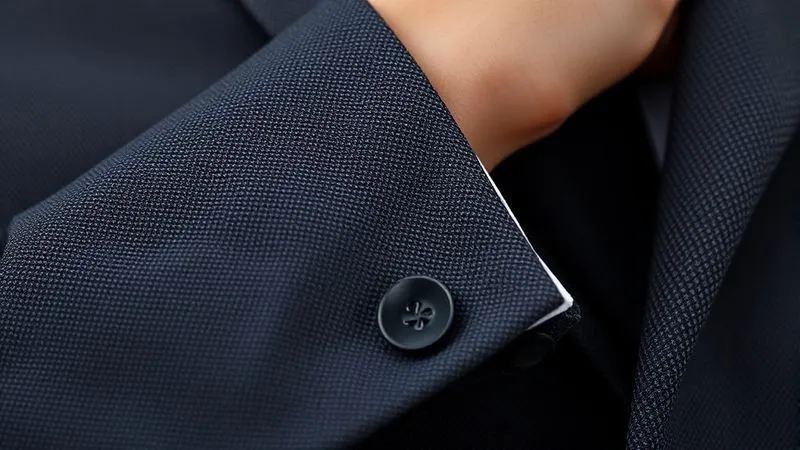
Think of tailoring not as an expense, but as an investment in your professional brand. A good tailor can transform an off-the-rack garment into something that looks custom-made for you. This isn't about vanity; it's about precision and projection. The shoulders of your jacket should sit perfectly, neither puckering nor hanging over. The jacket sleeves should allow a quarter to a half-inch of your shirt cuff to show. The jacket length should just cover your derriere, hitting around the knuckle of your thumb when your arms are relaxed.
Your trousers are equally critical. They should sit comfortably at your natural waist, without needing a belt to stay up. The break—where the trouser hem meets your shoe—should be minimal, a slight crease at the front, or no break at all for a more contemporary look. Avoid excessive fabric pooling at the ankles. The seat and thigh should be neat, not baggy, allowing for movement without stretching tightly. And for your shirts, ensure the collar sits snug but not tight, and the cuffs meet your wrist bone, allowing for a watch without being too loose.
"A perfectly tailored suit is not just clothing; it's a second skin that empowers you. It's the ultimate non-verbal cue that you pay attention to detail and value presentation, critical traits in any professional setting."
Here are key fit points to discuss with your tailor:
- Shoulders: Must be flush with your natural shoulder line.
- Jacket Length: Should cover your seat, hitting at mid-thumb.
- Sleeve Length: ¼ to ½ inch of shirt cuff visible.
- Waist Suppression: A gentle taper at the waist for a flattering silhouette.
- Trouser Waist: Sits comfortably, no belt needed to hold them up.
- Trouser Break: Minimal or no break for a modern, clean line.
- Shirt Collar: Snug enough for one finger to fit comfortably.
- Shirt Cuffs: Meet your wrist bone, allowing for a watch.
Fabric & Texture: The Silent Language of Luxury
Once the fit is perfected, the next subtle differentiator lies in the fabric. This is where your formal wear begins to truly communicate quality and discernment without uttering a single word. Most people can instinctively tell the difference between a cheap fabric and a high-quality one, even if they can't articulate why. It's in the drape, the feel, the way it catches the light.
Choosing Wisely
For suits, focus on high-quality wools. Terms like 'Super 100s' to 'Super 150s' refer to the fineness of the wool fiber; higher numbers mean finer, softer, and often more delicate fabric. A Super 120s or 130s wool offers an excellent balance of luxury, drape, and durability for daily professional wear. Consider subtle weaves like birdseye, sharkskin, or a fine pinstripe to add depth and visual interest without being loud. These aren't flashy patterns; they're textural nuances that catch the eye upon closer inspection.
Don't overlook the texture of your supporting pieces. A high-quality cotton dress shirt with a subtle twill or pinpoint oxford weave feels and looks superior to a standard broadcloth. For ties, explore grenadine silk, a fabric with a distinctive open, woven texture that adds depth and sophistication. Contrast textures judiciously—a smooth silk tie against a subtly textured wool suit, for instance, creates a richer, more dynamic ensemble than matching smooth-on-smooth.
- Wool Grades: Super 120s-150s for suits – excellent drape and feel.
- Subtle Weaves: Birdseye, sharkskin, fine pinstripe for understated elegance.
- High-Quality Cotton: Twill or pinpoint oxford for shirts.
- Textural Ties: Grenadine silk adds depth and sophistication.
- Cashmere Blends: For topcoats or blazers, signal quiet luxury.
According to experts at Savile Row, the choice of fabric dictates not just comfort and longevity, but also the perceived value and formality of a garment. It's an investment that pays dividends in how you're perceived.
The Art of Strategic Accessorizing: Less is More, Better is Best
Accessories are the exclamation points of your formal wear, but in professional settings, they should be subtle, not shouting. This is where many men falter, either over-accessorizing or choosing items that detract from their professional image. The goal is to select pieces that enhance your overall presentation, adding polish and personality without distraction.
Watches: A Statement of Time and Taste
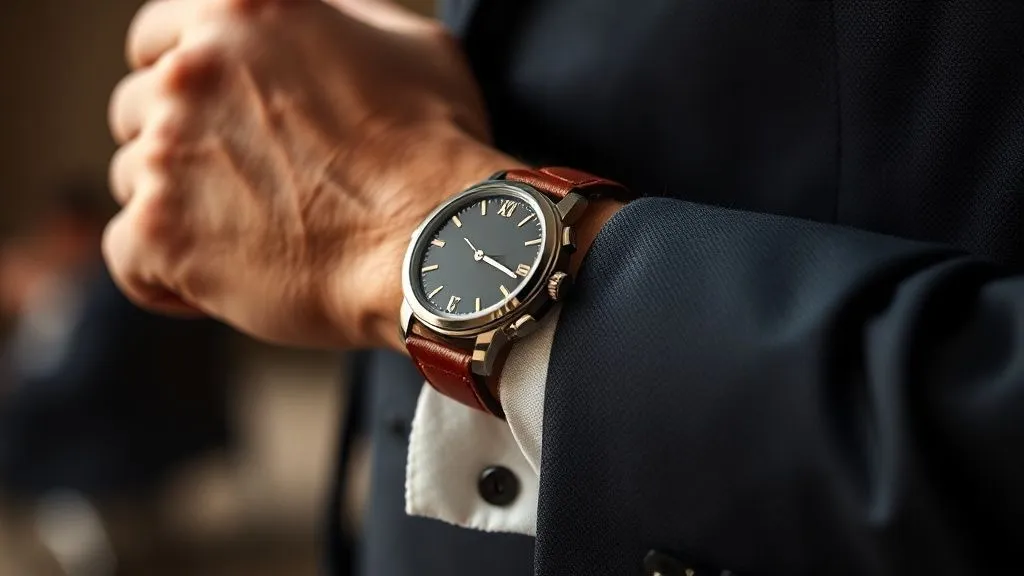
A classic, understated timepiece is a powerful accessory. Opt for a watch with a clean dial, a modest case size, and a high-quality leather strap (matching your belt and shoes) or a subtle metal bracelet. Avoid oversized, overly sporty, or excessively flashy watches in formal business environments. A watch subtly peeking out from under your cuff signals punctuality and a refined taste.
Pocket Squares: The Flash of Personality
A pocket square is a fantastic way to introduce a touch of color, pattern, and personality. The key is subtlety. A simple white linen square with a presidential fold is always appropriate. For more flair, consider a silk square with a subtle pattern, perhaps echoing a color in your tie or shirt, folded in a puff style. Crucially, don't perfectly match your pocket square to your tie; aim for coordination or complementary contrast.
Cufflinks: Details That Speak Volumes
If your shirt has French cuffs, cufflinks are a necessity. Choose elegant, simple designs in silver, gold, or subtle enamel. Avoid novelty cufflinks, as they can undermine your professional gravitas. Classic designs communicate sophistication and attention to detail.
Belts & Shoes: The Foundation of Your Ensemble
These two elements are non-negotiable for professional polish. Always match the color and finish of your belt to your shoes. Black leather with black leather, brown with brown. Invest in high-quality leather shoes (oxfords, derbies, or loafers in appropriate settings) that are well-maintained and polished. Scuffed or worn shoes can single-handedly ruin an otherwise perfect outfit.
"True style isn't about what you add, but what you refine. Every accessory should serve to elevate, not overpower, your professional presence. It's about quiet confidence, not loud declarations."
Here’s how strategic accessories can make an impact:
| Accessory | Subtle Impact | Pro Tip |
|---|---|---|
| Watch | Signals punctuality, refined taste | Classic, understated design; match strap to leather accessories. |
| Pocket Square | Adds personality, visual interest | Coordinate, don't match, with tie; consider linen or silk. |
| Cufflinks | Communicates attention to detail | Simple, elegant designs in metal or subtle enamel. |
| Belt & Shoes | Grounds the outfit, shows polish | Always match color and finish; invest in quality and care. |
Mastering the Collar & Tie: Framing Your Professional Persona
The collar and tie are central to your formal presentation, framing your face and setting the tone for your upper body. Their specific choices—style, width, knot—can subtly communicate your understanding of professional aesthetics and attention to detail. This is often where men can easily make a misstep, choosing a tie that's too wide, a knot that's too bulky, or a collar that doesn't flatter their face.
Collar Styles: Matching Face Shape and Occasion
Different collar styles suit different face shapes and levels of formality. A point collar is versatile and classic. A spread collar (where the points are wider apart) is more modern and accommodates larger tie knots. A cutaway collar is even wider, best suited for those with narrower faces or who prefer a bolder statement. Ensure your collar points sit under your jacket lapels, never on top.
Tie Selection: Width, Knot, and Material
The width of your tie should generally be proportional to the width of your jacket lapels. A standard tie width is typically between 2.75 to 3.25 inches. For knots, the Four-in-Hand is universally elegant and unobtrusive. The Half-Windsor offers a slightly larger, more symmetrical knot without being overly bulky. Avoid overly large knots like the Full Windsor for most professional settings unless you have a particularly wide spread collar and a preference for it. Material-wise, silk is the standard, but explore grenadine for texture or knit ties for a slightly more relaxed (but still professional) feel.
- Four-in-Hand Knot: Classic, slender, slightly asymmetrical. Ideal for most collars.
- Half-Windsor Knot: Medium-sized, symmetrical, sophisticated. Good for spread collars.
- Pratt (Shelby) Knot: Neat, medium-sized, symmetrical. Excellent with slightly wider collars.
For a deeper dive into tie knots and their appropriate usage, I often recommend resources like The Art of Manliness, which offers comprehensive visual guides.
The Power of Understated Color & Pattern Coordination
While a perfectly fitted suit in a luxurious fabric forms the canvas, the colors and patterns you choose are the subtle brushstrokes that define your professional image. The goal is harmony, not clash; sophistication, not flash. Many men stick to solids, fearing to venture into patterns, but a thoughtful integration of subtle patterns can significantly elevate your formal wear to stand out professionally.
Building a Versatile Palette
Your core formal wardrobe should be built around versatile, authoritative colors: navy, charcoal grey, and various shades of medium grey. These are the workhorses. For shirts, white and light blue are indispensable. Pale pink, lavender, or subtle creams can add a touch of personality when appropriate. The rule of thumb: dark suit, lighter shirt. When introducing a tie, it should either complement the suit and shirt or offer a subtle contrast that ties the whole look together.
Introducing Subtle Patterns
Don't shy away from patterns, but employ them judiciously. A subtle pinstripe suit with a solid white shirt and a patterned tie (perhaps a foulard or a repp stripe) can create a dynamic yet professional look. Alternatively, a solid navy suit with a subtly checked shirt and a solid tie can also work. The key is to vary the scale of your patterns. If your suit has a fine stripe, your shirt might have a wider check, and your tie a small, intricate pattern. Avoid pairing large patterns with large patterns, or identical patterns of the same scale, as this creates visual noise.
Case Study: How 'Nexus Solutions' Refined Their Executive Image
Nexus Solutions, a mid-sized consulting firm, approached me with a common problem: their executives, while brilliant, often blended into client meetings. Their formal wear was correct, but lacked distinction. We implemented a subtle elevation strategy focusing on fit, fabric, and coordinated color/pattern. By ensuring all executives had their suits professionally tailored, upgrading their shirt fabrics to high-thread-count cotton, and introducing tasteful, non-matching pocket squares and sophisticated tie patterns, their client perception shifted dramatically. Within six months, they reported increased client confidence and a noticeable improvement in internal perception of leadership presence. The change wasn't about new brands, but about refined details—how to subtly elevate my formal wear to stand out professionally, indeed.

Grooming & Poise: The Unsung Heroes of Presentation
Even the most perfectly tailored, high-quality formal wear can be undermined by poor grooming or lack of poise. These are the final, often overlooked, layers of polish that solidify your professional image. They are the ultimate subtle differentiators, communicating respect for yourself and for those you interact with.
Hair & Facial Hair: Sharp and Maintained
Your haircut should be neat, professional, and regularly maintained. Avoid overgrown styles that appear unkempt. If you sport facial hair, ensure it's meticulously trimmed, shaped, and clean. A well-groomed beard or mustache adds character; a scraggly one detracts. The goal is intentionality in your appearance.
Nails & Skin: Attention to Detail
Pay attention to your hands. Nails should be clean and trimmed. Dry, cracked skin or unkempt cuticles can be distracting. A simple moisturizer can make a significant difference. Similarly, healthy skin, free from excessive oiliness or dryness, contributes to an overall polished look. These small details speak volumes about your self-care and discipline.
Posture & Confidence: The Ultimate Accessory
Finally, how you carry yourself is paramount. Stand tall, shoulders back, head held high. A confident posture not only makes your clothes look better but also projects authority and self-assurance. Maintain eye contact, offer a firm handshake, and move with purpose. Your formal wear is merely an extension of your inner confidence; together, they create an undeniable presence.
"Your appearance is a holistic package. The finest suit is merely a covering if the man within lacks polish and presence. Grooming and poise are the invisible threads that weave your entire professional narrative together."
For further insights into professional grooming, resources like GQ's grooming section often provide excellent, up-to-date advice.
The Importance of Maintenance: Preserving Your Polish
Investing in high-quality formal wear and mastering its subtle elevation is only half the battle. The other half lies in its meticulous care and maintenance. A suit, shirt, or pair of shoes, no matter how expensive, will quickly lose its luster and professional appeal if neglected. This ongoing commitment to care is a hallmark of true sartorial professionalism.
Garment Care: Dry Cleaning, Ironing, Storage
Suits should be dry-cleaned sparingly—only when truly dirty or stained, as frequent dry cleaning can shorten their lifespan. Between cleanings, brush your suit with a soft garment brush to remove dust and lint. Hang suits on wide, contoured hangers that preserve the shape of the shoulders. Always iron your shirts, ensuring they are crisp and wrinkle-free. Creases on sleeves and collars communicate sloppiness. Proper storage in garment bags can protect your investment.
Shoe Care: Polishing and Protecting
Your shoes are perhaps the most telling indicator of your attention to detail. Invest in good shoe trees to absorb moisture and maintain shape. Polish your leather shoes regularly—at least once a week for frequently worn pairs—to keep them gleaming and protect the leather. Use a waterproofing spray for protection against the elements. Rotate your shoes to allow them to rest and dry out, extending their lifespan.
- Suit Brushing: Regularly remove dust and lint.
- Quality Hangers: Preserve suit shoulder shape.
- Sparse Dry Cleaning: Only when necessary.
- Crisp Shirts: Always ironed, no wrinkles.
- Shoe Trees: Maintain shape, absorb moisture.
- Regular Polishing: Protect and shine leather shoes.
- Shoe Rotation: Extend lifespan and allow drying.
As a final thought on maintenance, remember that your formal wear is a tool for your professional success. Treating it with respect and care ensures it always performs at its best, helping you to subtly elevate your formal wear to stand out professionally.
| Item | Frequency | Key Action |
|---|---|---|
| Suit Jacket/Trousers | Brush after each wear, dry clean sparingly (2-3 times/year or as needed) | Hang on wide hangers; use garment bags for storage. |
| Dress Shirts | Wash & iron after each wear | Ensure crisp collars and cuffs; store neatly folded or hung. |
| Leather Shoes | Polish weekly, condition monthly | Use shoe trees; rotate pairs; repair heels/soles promptly. |
| Ties/Pocket Squares | Spot clean as needed, professional dry clean rarely | Untie ties after wear; store flat or rolled to prevent creases. |
Frequently Asked Questions (FAQ)
Q: Is it possible to elevate formal wear on a budget? Absolutely. The most impactful changes—impeccable fit and proper grooming—are relatively inexpensive. Investing in tailoring for even an affordable suit, focusing on high-quality basics (a few good shirts, one versatile tie), and meticulous care of what you own will yield far greater returns than buying many cheap, ill-fitting items. Prioritize quality over quantity.
Q: How do I know if my suit fits correctly? The shoulders are the most crucial indicator; they should lie flat and meet your arm without puckering or extending past your natural shoulder line. Your jacket sleeves should reveal a small sliver of shirt cuff. Trousers should sit at your natural waist without a belt, and have a minimal break at the shoes. If in doubt, consult a reputable tailor for an objective assessment.
Q: What are the biggest mistakes men make with formal wear? The most common mistakes include poor fit (especially oversized garments), neglecting grooming, wearing scuffed or inappropriate shoes, over-accessorizing, and choosing flashy rather than sophisticated patterns or colors. A lack of attention to detail is the overarching error.
Q: Should I always match my belt and shoes? Yes, for traditional formal and business wear, always match your leather belt to your leather shoes in color and finish (e.g., black polished leather belt with black polished leather oxfords). This creates a cohesive and polished look. Brown with brown, black with black.
Q: How many suits do I really need for a professional wardrobe? For a truly professional wardrobe, I recommend at least three versatile suits: one navy, one charcoal grey, and one medium grey. This provides enough rotation for different days and occasions, ensuring your suits have time to rest and are always looking their best. Supplement with a blazer for less formal business settings.
Key Takeaways and Final Thoughts
Achieving professional distinction through your formal wear isn't about grand gestures; it's about a disciplined focus on the details that collectively project an image of quiet authority and refined competence. It's about understanding that your attire is a non-verbal extension of your professional self, and every element contributes to the narrative you present.
- Fit is Paramount: Invest in tailoring; it's the single most impactful upgrade.
- Fabric Speaks Volumes: Choose quality wools, cottons, and silks for subtle luxury.
- Accessorize with Intent: Less is more; select timeless, understated pieces.
- Coordinate with Care: Master color and pattern harmony for a cohesive look.
- Grooming & Poise are Essential: These personal elements complete the picture.
- Maintain Your Investment: Proper care preserves the polish and extends longevity.
Remember, the goal is not to be the loudest in the room, but the most polished, the most assured. By applying these expert strategies, you will not only learn how to subtly elevate your formal wear to stand out professionally, but you will also cultivate an unshakeable confidence that resonates in every interaction. Embrace the power of the refined detail, and watch your professional presence transform.
Recommended Reading
- 7 Pillars: How to Assemble a Power Wardrobe for High-Stakes Meetings
- Decoding Multi-Material Textile Recycling: 7 Steps to Efficiency
- 5 Pro Methods: Fixing Inconsistent Skin Tones in Mixed Fashion Lighting
- Verify Vintage: 7 Steps to Ethically Authenticate Apparel for Profit
- 7 Secrets: How Streetwear Brands Keep Bold Prints Timeless?



Your email address will not be published. Required fields are marked *