

How to Recycle Multi-Material Fashion Textiles Efficiently?
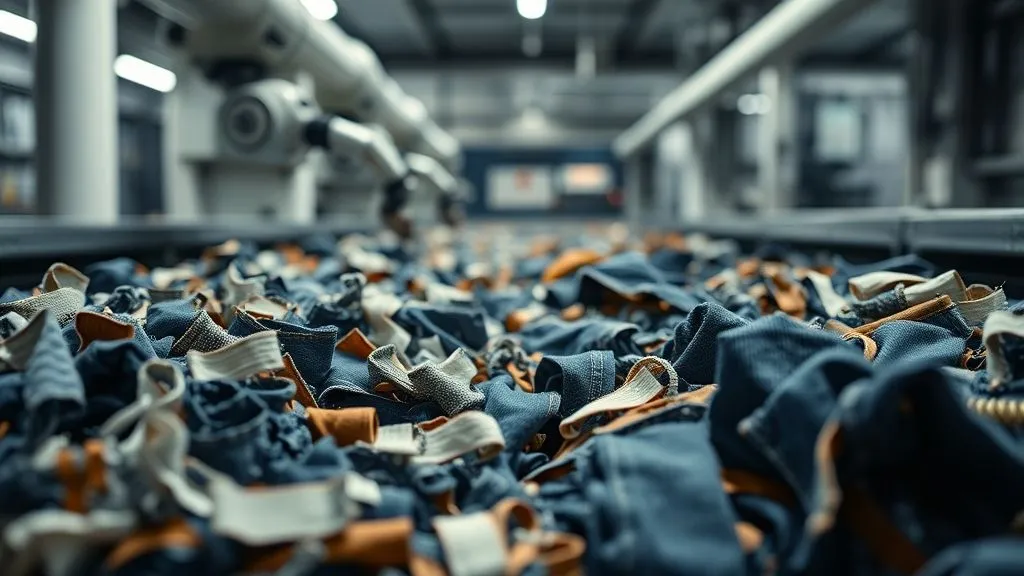
For over two decades in the textile innovation space, I've witnessed firsthand the accelerating pace of fashion's impact on our planet. We've gone from simple cotton and wool to an intricate tapestry of blended fabrics, each designed for specific performance or aesthetic, yet collectively creating a monumental problem for end-of-life management.
The sheer complexity of multi-material textiles—think poly-cotton blends, elastane-infused knits, or even garments with multiple fiber types in different components—has long been the Achilles' heel of textile recycling. These blends confound traditional mechanical recycling methods, leading to vast quantities of perfectly good material ending up in landfills or incinerators, rather than re-entering the production loop. It's a painful inefficiency, a bottleneck preventing true circularity in fashion.
But the tide is turning. In this definitive guide, I'll draw upon my extensive experience to demystify how to recycle multi-material fashion textiles efficiently. We'll explore cutting-edge technologies, strategic design principles, and collaborative frameworks that are not just theoretical but are actively shaping a more sustainable future for our industry. Prepare to gain actionable insights and a clear roadmap to tackle this pressing challenge.
Understanding the Multi-Material Menace: The Core Challenge
Before we delve into solutions, it's crucial to grasp the inherent difficulties presented by multi-material textiles. Unlike mono-material garments like a pure cotton t-shirt or a 100% polyester jacket, blends are a composite nightmare for recyclers.
The Blending Conundrum
Imagine trying to separate sugar from salt after they've been mixed. That's a simplified analogy for the challenge of separating cotton from polyester, or elastane from nylon. Each fiber type possesses unique chemical structures, melting points, and mechanical properties. When woven or knitted together, these differences become obstacles to conventional recycling processes.
“The very innovation that gives us stretchy jeans and wrinkle-free shirts is the same innovation that creates an intractable waste problem if not addressed at the design and end-of-life stages.”
The common multi-material blends like cotton-polyester, cotton-elastane, or wool-acrylic are particularly problematic. Mechanical recycling, which typically shreds and re-spins fibers, results in shorter, weaker fibers and a low-quality output if blends are present. The purity of the recycled material is compromised, limiting its application to lower-value products or even rendering it unrecyclable through this method.
- Separation Difficulty: Fibers are physically intertwined, making disentanglement challenging.
- Purity Requirements: Most high-value textile-to-textile recycling demands high purity.
- Scalability: Current solutions often struggle to process the vast quantities of mixed waste.
- Infrastructure Gap: Lack of widespread infrastructure for collecting and processing diverse textile waste streams.
Precision Pre-Sorting: The Foundation of Efficient Recycling
In my experience, no advanced recycling technology can truly shine without accurate pre-sorting. It's the critical first step, determining the viability and efficiency of subsequent processes.
Manual vs. Automated Sorting
Traditionally, textile waste sorting has been a labor-intensive manual process, relying on human eyes to identify fiber types. While some skilled sorters are incredibly accurate, this method is slow, expensive, and prone to error, especially with the subtle distinctions of modern blends.
Automated sorting, conversely, offers speed, consistency, and scalability. It's the non-negotiable prerequisite for tackling the volume of multi-material fashion textiles.
AI and Spectroscopy in Sorting
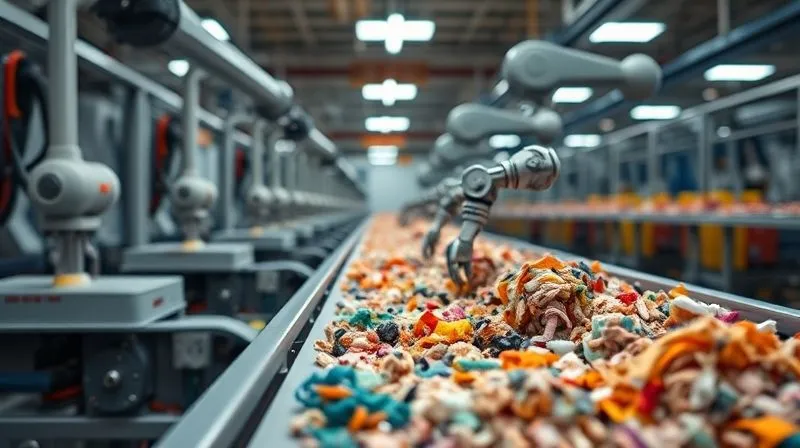
The real game-changer in pre-sorting is the integration of Artificial Intelligence with spectroscopic technologies. Near-Infrared (NIR) spectroscopy, for instance, can identify specific fiber compositions by analyzing their unique spectral fingerprints. Hyperspectral imaging takes this further, allowing for even more granular differentiation.
Here’s how to implement advanced sorting effectively:
- Invest in NIR/Hyperspectral Scanners: These systems can rapidly identify fiber types (e.g., cotton, polyester, nylon, wool) and even some common blends.
- Integrate with Robotic Pickers: Once identified, robotic arms can precisely separate garments into mono-material or specific blend categories.
- Develop Digital Libraries: Continuously update the system’s database with new fabric compositions and blends to improve accuracy.
- Establish Clear Segregation Streams: Design the sorting facility to create distinct output streams for different fiber types, ready for specific recycling pathways.
According to a report by the Ellen MacArthur Foundation, improving sorting infrastructure is one of the most impactful levers for achieving a circular economy in textiles, highlighting the urgent need for investment in these advanced technologies.
Advanced Separation Technologies: Beyond Mechanical Limits
Once accurately sorted, the next hurdle for multi-material textiles is separation. Mechanical recycling, while suitable for mono-materials, often falls short here. We need more sophisticated approaches.
Mechanical Disintegration with Purity Challenges
While often the first line of defense due to its relative simplicity, mechanical recycling for multi-materials involves shredding fabrics into fibers. The problem is that blending different fibers often leads to a mix of short, degraded fibers that are difficult to re-spin into high-quality yarn. The output typically has lower tensile strength and a less desirable hand feel, limiting its use to insulation, padding, or very low-grade textiles.
“Mechanical recycling is like trying to separate sand from gravel with a sieve that’s too coarse – you’ll get a mix, not pure components.”
Solvent-Based Dissolution
This is where chemical ingenuity comes into play. Solvent-based dissolution methods selectively dissolve one fiber component from a blend, leaving the other intact. For example, specific solvents can dissolve cellulose (cotton, viscose) while leaving polyester fibers untouched. The dissolved cellulose can then be regenerated into new fibers, and the polyester can be recovered.
- Process: Fabric is immersed in a solvent that targets one fiber.
- Benefits: Can achieve high purity of separated fibers; preserves fiber length/quality.
- Challenges: Solvent recovery and management; energy intensity; chemical compatibility.
| Method | Pros | Cons |
|---|---|---|
| Mechanical Recycling | Low initial cost, straightforward process for mono-materials | Low fiber quality for blends, purity issues, limited applications |
| Solvent-Based Separation | High fiber purity, preserves quality, enables fiber-to-fiber recycling | Higher operational cost, solvent management, energy-intensive |
Chemical Recycling: Unlocking Fiber-to-Fiber Potential
Chemical recycling is arguably the most promising avenue for how to recycle multi-material fashion textiles efficiently, particularly for synthetic blends. It offers a true fiber-to-fiber solution, allowing us to revert fabrics back to their original building blocks.
Depolymerization & Repolymerization
For synthetic fibers like polyester and nylon, depolymerization is a game-changer. This process breaks down the polymer chains into their constituent monomers. These monomers are then purified and re-polymerized to create virgin-grade fibers. This means a polyester-cotton blend can have its polyester component chemically recycled into new polyester, achieving a closed loop.
Companies like Patagonia, in collaboration with partners, are investing in these technologies to tackle their synthetic waste streams, demonstrating the industry's commitment to this advanced approach.
Cellulose Regeneration (e.g., Lyocell, Viscose)
For cellulose-based fibers like cotton and viscose, chemical processes can dissolve the cellulose and regenerate it into new, high-quality cellulosic fibers. This is particularly effective for cotton-rich blends where the cellulose can be extracted and then spun into new fibers like Lyocell or Viscose, often under brand names like Circulose.
Case Study: Re:NewCell's Circulose Innovation
Re:NewCell, a Swedish textile recycling company, has made significant strides with their Circulose® material. They take textile waste, including cotton-rich multi-material blends, and process it using a patented chemical recycling method. This method dissolves the cellulose in the waste, purifies it, and then dries it into a pulp sheet. This 'new' dissolving pulp can then be used by fiber producers to create new high-quality viscose or Lyocell textile fibers, effectively turning old clothes into new ones. This innovative approach demonstrates a viable pathway for high-quality, fiber-to-fiber recycling of challenging cellulose blends, closing the loop on cotton waste and offering a blueprint for the wider industry.

Enzymatic & Biological Solutions: The Green Frontier
Moving further into green chemistry, enzymatic and biological solutions represent an exciting, less energy-intensive frontier for multi-material textile recycling.
Targeted Enzyme Action
Enzymes are biological catalysts that can selectively break down specific molecules without harsh chemicals or extreme temperatures. Researchers are developing enzymes that can precisely target and degrade one fiber type in a blend while leaving others intact. For instance, cellulase enzymes can break down cotton into glucose, which can then be used as a feedstock for other bio-based materials or even repolymerized into new cellulose, all while preserving synthetic fibers like polyester.
- Advantages: Lower energy consumption, milder conditions, less hazardous waste, highly specific action.
- Potential: Could offer a more sustainable and environmentally friendly separation method.
- Challenges: Enzyme stability, cost of production, scalability, and efficiency for diverse blends.
Academic institutions and startups are actively exploring this space, with promising results that could revolutionize how we approach textile separation. For instance, research published in Nature Communications has highlighted advancements in enzyme-based textile recycling.
Biorefinery Approaches
Beyond separating fibers, biorefinery concepts aim to extract maximum value from textile waste. This involves using biological processes to convert textile components into valuable bio-products, such as biofuels, biochemicals, or even animal feed, rather than just new fibers. While still in early stages for multi-material textiles, this holistic approach views waste as a resource for a wide range of industries.
Designing for Disassembly: Upstream Innovation
As an industry specialist, I've always advocated that the most efficient recycling begins long before a product becomes waste. It starts at the design table. Designing for Disassembly (DfD) is a proactive approach to how to recycle multi-material fashion textiles efficiently.
Mono-Material Design
The simplest solution for multi-material recycling challenges is to avoid multi-materials where possible. Encouraging designers to prioritize mono-materiality—using 100% cotton, 100% polyester, or 100% wool—significantly simplifies end-of-life processing.
“True circularity isn’t just about better recycling; it’s about designing products that are inherently recyclable from the outset.”
Smart Blends & Traceability
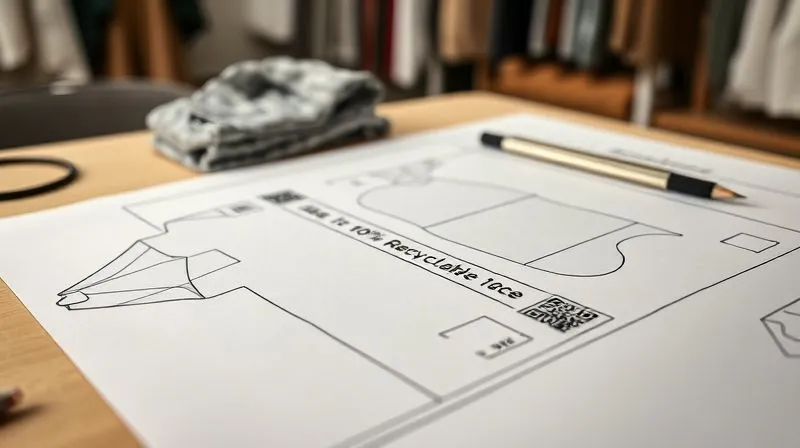
When blends are functionally necessary, designers should consider 'smart blends' that are easier to separate. This could involve using compatible fibers that can be chemically separated with existing technologies or minimizing the number of different fiber types in a single garment. Crucially, digital product passports (DPPs) and blockchain traceability can provide invaluable information about a garment's composition, enabling precise sorting and recycling.
- Specify Fiber Composition: Clearly list all fiber types and percentages.
- Avoid Complex Trims: Design garments with easily removable buttons, zippers, and labels made from compatible materials.
- Use Recyclable Dyes: Opt for dyes that don't hinder the recycling process or contaminate recycled output.
- Implement Digital Product Passports: Embed information about the garment's materials, origin, and recycling instructions, accessible via QR code.
Building a Circular Ecosystem: Collaboration & Infrastructure
No single company or technology can solve the multi-material textile recycling problem alone. A truly efficient system requires a holistic, collaborative ecosystem, underpinned by robust infrastructure.
Cross-Industry Partnerships
The entire value chain must work together: fiber producers, textile manufacturers, fashion brands, retailers, collection agencies, recyclers, and even consumers. Brands need to commit to using recycled content; recyclers need a consistent, clean feedstock; and technology providers need investment to scale their solutions. Initiatives like the Global Fashion Agenda are crucial in fostering these partnerships.
Investment in Collection & Processing Infrastructure
Even with perfect sorting and advanced separation technologies, we need the physical infrastructure to handle the massive volumes of textile waste. This means more collection points, regional sorting centers equipped with AI, and large-scale advanced recycling facilities. Governments and private investors have a vital role to play in de-risking these investments and accelerating deployment.
| Stakeholder | Role |
|---|---|
| Fashion Brands | Design for recyclability, invest in recycled content, support collection schemes |
| Textile Recyclers | Develop and scale advanced separation technologies, ensure quality output |
| Consumers | Sort and return textiles for recycling, demand sustainable products |
| Governments | Implement supportive policies (EPR), fund R&D, invest in infrastructure |
Overcoming Economic Hurdles: Investment & Policy
The journey to efficiently recycle multi-material fashion textiles is not without its economic challenges. The initial investment in advanced technologies and infrastructure can be substantial, but the long-term benefits far outweigh the costs of inaction.
The Cost of Innovation vs. Landfill
While chemical and enzymatic recycling technologies might seem expensive upfront, we must consider the true cost of landfilling and incineration: environmental damage, resource depletion, and lost economic value. As technologies mature and scale, their operational costs will decrease, making recycled materials more competitive with virgin alternatives. Furthermore, the market for sustainable products is growing, offering a premium for brands that genuinely embrace circularity.
“The investment in advanced recycling isn't just an expense; it's an investment in future resilience, resource security, and brand reputation.”
Extended Producer Responsibility (EPR) & Incentives
Policy frameworks, particularly Extended Producer Responsibility (EPR) schemes, are crucial drivers. EPR mandates that producers are responsible for the entire lifecycle of their products, including their end-of-life. This incentivizes brands to design for recyclability and to invest in recycling infrastructure.
- EPR Implementation: Introduce mandatory EPR schemes for textiles, shifting the burden from municipalities to producers.
- Tax Incentives: Offer tax breaks or subsidies for companies investing in textile recycling technologies or using recycled content.
- Green Procurement: Governments and large corporations can use their purchasing power to prioritize products made from recycled textiles.
- Research & Development Grants: Fund innovation in multi-material separation and recycling technologies.

Frequently Asked Questions (FAQ)
Is mechanical recycling completely obsolete for multi-materials? No, not entirely. While challenging for complex blends, mechanical recycling still plays a role for mono-material components once separated, or for creating lower-grade materials like insulation. Innovation in mechanical processes, such as improved shredding and defragmentation, continues, but for high-quality fiber-to-fiber recycling of blends, chemical or enzymatic methods are generally superior.
How does the quality of recycled multi-material fibers compare to virgin? This depends heavily on the recycling method. Mechanically recycled multi-material fibers often result in lower quality, shorter fibers. However, advanced chemical and enzymatic recycling processes, especially depolymerization, can produce fibers that are virtually indistinguishable from virgin materials in terms of performance and quality, enabling true closed-loop recycling.
What role do consumers play in efficient multi-material textile recycling? Consumers are critical. Their primary role is proper sorting and returning textiles to designated collection points, rather than discarding them in general waste. Educating consumers on what can be recycled and how to prepare items (e.g., removing non-textile components) significantly improves the efficiency of the entire recycling chain. Demanding sustainable products also drives brand innovation.
What's the biggest bottleneck in scaling multi-material textile recycling? Currently, the biggest bottleneck is a combination of accurate, large-scale automated sorting infrastructure and the economic viability of advanced chemical/enzymatic recycling processes at industrial scale. The high initial capital expenditure and the need for consistent, pre-sorted feedstock are major hurdles, alongside the fragmented nature of textile waste collection.
Are there any universal technologies for all multi-material blends? No, not yet. Due to the vast array of fiber types and blend compositions, a 'one-size-fits-all' solution remains elusive. Instead, the industry is moving towards a portfolio of specialized technologies (e.g., specific chemical processes for poly-cotton, enzymatic for cellulose-elastane) that work in conjunction, often after an initial, highly accurate sorting phase.
Key Takeaways and Final Thoughts
- Precision Sorting is Paramount: Invest in AI-powered, spectroscopic sorting technologies for accurate fiber identification.
- Embrace Advanced Separation: Chemical and enzymatic recycling offer the most promising pathways for high-quality fiber-to-fiber recycling of complex blends.
- Design for Circularity: Prioritize mono-material design and implement digital product passports to simplify end-of-life processing.
- Foster Collaboration: A truly circular economy requires seamless partnerships across the entire value chain, from designers to recyclers and policymakers.
- Drive Policy and Investment: EPR schemes and strategic investments are essential to scale innovative technologies and build robust infrastructure.
The challenge of how to recycle multi-material fashion textiles efficiently is immense, but it is far from insurmountable. As an industry, we are on the cusp of a textile recycling revolution, driven by ingenuity, collaboration, and a deep commitment to sustainability. By embracing these strategies and fostering a collective mindset of circularity, we can transform textile waste from a burden into a valuable resource, ensuring that the fashion of tomorrow is as kind to the planet as it is stylish.
Recommended Reading
- Stop the Slip: 7 Eyewear Accessories Active Users Swear By
- 7 Proven Strategies: Stop Bot Scalping on Limited Sneaker Drops Now!
- Unlock Digital Fashion: 5 Ways Blockchain NFTs Secure Your Ownership
- 7 Secrets: How Streetwear Brands Keep Bold Prints Timeless?
- Boost Sales: 5 Pillars for Training Luxury Eyewear Staff Effectively



Your email address will not be published. Required fields are marked *