

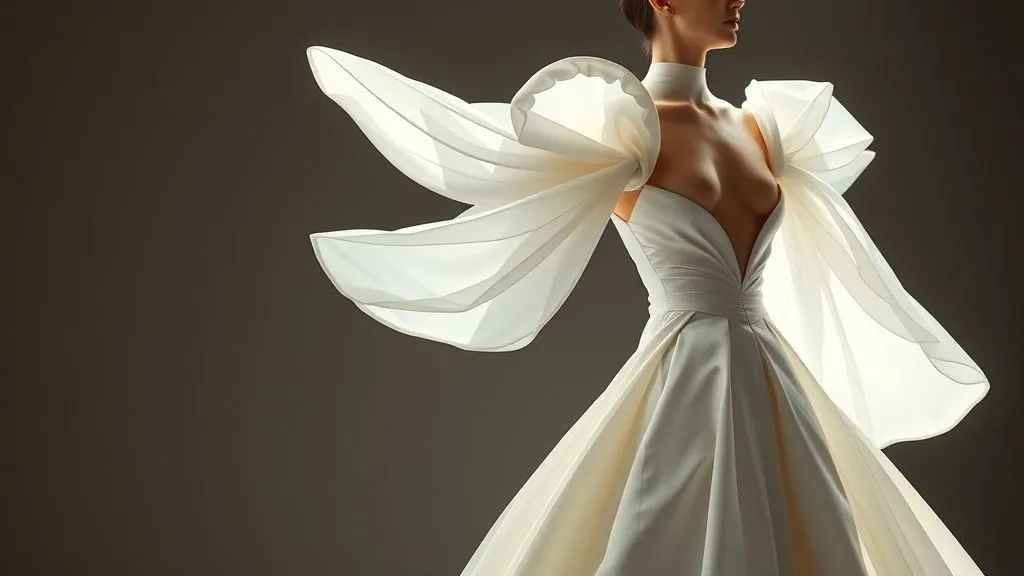
How to Stabilize Defying Gravity Haute Couture Silhouettes?
For over two decades in the rarefied world of haute couture, I've had the immense privilege of witnessing fashion's most audacious dreams take form. From the ethereal to the architectural, the goal is often to transcend the ordinary, to challenge perceptions of form and weight. Yet, I've also seen the silent tragedy of an exquisite garment, conceived with breathtaking vision, falter under its own ambition – a beautiful silhouette buckling, a gravity-defying element drooping, losing its magic.
This isn't just a design flaw; it's a profound heartbreak for the designer, a technical nightmare for the atelier, and a disappointment for the client who expects perfection. The pursuit of defying gravity in haute couture is a delicate dance between artistic vision and engineering prowess. Without a deep understanding of structural integrity, even the most innovative concepts can literally fall flat, compromising the very essence of haute couture's promise.
In this definitive guide, I will pull back the curtain on the closely guarded secrets and meticulous techniques that allow haute couture to achieve the impossible. You'll discover not just theoretical concepts but actionable frameworks, real-world case studies, and expert insights drawn from years of hands-on experience, all focused on how to stabilize defying gravity haute couture silhouettes with unwavering confidence and artistic finesse.
Understanding the Physics of Fashion: Beyond Aesthetics
Before we can build structures that defy gravity, we must first deeply understand the forces at play. Fashion, at its core, is applied physics. Every drape, every fold, every rigid element is subject to gravity, tension, compression, and shear forces. Ignoring these fundamental principles is akin to building a skyscraper without a foundation – destined for collapse.
In my experience, many designers intuitively understand form, but the true masters consciously engage with the physics behind it. They ask: How will this weight distribute? What is the leverage point here? Where will the garment want to sag or pull? This analytical approach is crucial for translating a two-dimensional sketch into a stable, three-dimensional marvel.
The Fundamental Principles of Structural Integrity
The pursuit of structural integrity in haute couture begins with recognizing that every garment is a micro-architectural project. We're not just creating clothing; we're sculpting wearable art that must maintain its intended form against the relentless pull of gravity and the dynamic movement of the wearer. This involves a deep dive into how weight is distributed, how forces are transferred, and how various components interact to create a cohesive, stable whole.
"True structural genius in couture lies not in what you see, but in the invisible engineering that allows the impossible to stand."
Understanding load-bearing points, the principles of cantilever, and how to create tension within fabric to achieve rigidity are paramount. It’s about creating a harmonious balance where the garment supports itself, rather than relying solely on the wearer. This is the bedrock upon which all gravity-defying designs are built.
The Invisible Scaffolding: Innovative Internal Support Systems
The magic of a gravity-defying haute couture silhouette often lies hidden beneath layers of exquisite fabric. It's not magic, however, but meticulous engineering. Just as a skyscraper relies on its steel skeleton, haute couture pieces with ambitious forms depend on sophisticated internal support systems – the invisible scaffolding that gives them their impossible shape and unwavering stability.
I've spent countless hours in ateliers, dissecting and analyzing how these internal architectures are conceived and constructed. The evolution from simple boning to complex, custom-fabricated armatures is a testament to the industry's relentless innovation in addressing how to stabilize defying gravity haute couture silhouettes.
Boning and Caging: Evolution and Modern Applications
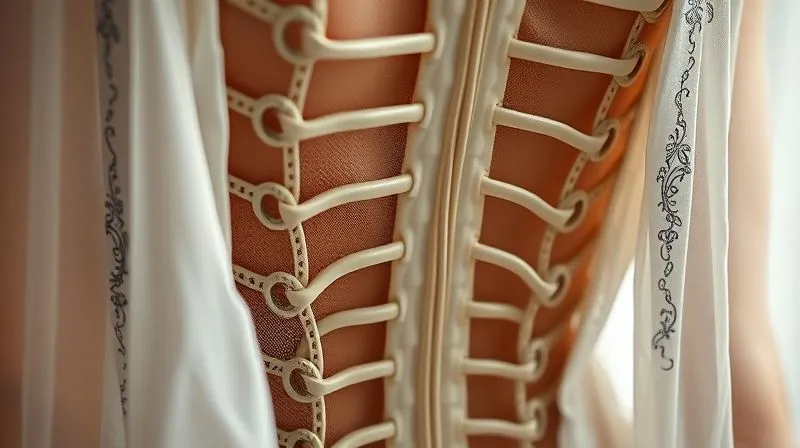
Boning, traditionally associated with corsetry, has undergone a revolutionary transformation. While steel boning still has its place for extreme rigidity, modern couture frequently employs a spectrum of synthetic options, each with specific properties for flexibility, strength, and weight. The choice of boning material and its strategic placement is critical.
- Spiral Steel Boning: Offers flexibility while maintaining strong vertical support, ideal for curved seams and comfort.
- Flat Steel Boning: Provides rigid, unyielding support, perfect for straight seams and preventing horizontal collapse.
- Synthetic Boning (e.g., Rigilene): Lightweight, flexible, and washable, suitable for lighter structures or areas needing gentle shaping.
- Plastic Boning: Economical and easy to work with, but generally less durable and offers less robust support than steel or Rigilene.
Caging, an extension of boning, involves creating a skeletal framework that defines the garment's outer silhouette. Historically seen in crinolines and bustles, today's cages can be incredibly lightweight and custom-molded, often integrated seamlessly into the garment's lining. This allows for grand volumes and dramatic extensions that appear to float unsupported.
Advanced Frameworks: From Crinolines to 3D-Printed Armatures
The evolution of internal support has been breathtaking. We've moved from the formidable crinolines of the 19th century to highly sophisticated, often bespoke, frameworks. Designers are now leveraging cutting-edge technology and materials to create structures that were once unimaginable. This innovation is key to truly understanding how to stabilize defying gravity haute couture silhouettes in the 21st century.
One significant advancement is the use of 3D printing to create custom armatures. These can be designed with incredible precision, optimized for weight, strength, and complex geometries. Imagine a delicate, filigree-like structure, perfectly contoured to support an expansive, sculptural sleeve or a gravity-defying collar. These frameworks can be made from lightweight plastics, resins, or even flexible metals, offering unparalleled control over the silhouette.
Furthermore, aerospace-grade materials like carbon fiber rods and specialized composites are finding their way into couture. These materials offer an exceptional strength-to-weight ratio, allowing for large, unsupported forms that remain incredibly light. The integration of such advanced materials often requires collaboration with engineers, pushing the boundaries of what's possible in textile construction. For more on innovative materials, explore this fascinating article on MaterialDistrict's insights into fashion materials.
Material Science: Choosing the Right Foundation
The choice of fabric in haute couture is never solely about aesthetics or drape; it is fundamentally about structure. The inherent properties of a textile – its weave, fiber content, weight, and finish – play a critical role in its ability to contribute to or detract from a garment's stability. In my career, I've observed that overlooking the structural potential of fabric is a common pitfall. The right material can be your ally in the quest to stabilize defying gravity haute couture silhouettes.
Lightweight Rigidity: The Role of Non-Traditional Textiles
When aiming for gravity-defying forms, designers often seek materials that offer rigidity without excessive weight. Traditional silks and satins, while luxurious, may lack the inherent stiffness needed for extreme shapes. This has led to the exploration of non-traditional and engineered textiles.
- Stiffened Silks and Organzas: Treated with special finishes or interwoven with stiff threads to create a crisp, self-supporting quality.
- Technical Meshes: Often used in sportswear, these can be surprisingly strong and lightweight, providing a hidden scaffolding effect.
- Bonded Fabrics: Two or more fabrics fused together to create a single, thicker, and more rigid material without adding significant bulk.
- Specialty Foams and Felts: Can be cut, molded, and layered to create three-dimensional forms that hold their shape.
These materials, when used strategically, can significantly reduce the need for heavy internal structures, making the garment lighter and more comfortable for the wearer. It's about finding that sweet spot where the fabric itself contributes meaningfully to the overall architectural integrity.
Interfacings and Underlinings: The Unsung Heroes
Beneath the visible layers of a haute couture garment lies a complex ecosystem of interfacings and underlinings – the unsung heroes of structural design. These foundational layers provide hidden strength, shape, and support, dictating how the outer fabric will behave. Their selection and application are critical for achieving and maintaining a crisp, gravity-defying silhouette.
Interfacings, typically non-woven or woven fabrics, are fused or sewn to the wrong side of the main fabric to add body, prevent stretching, and reinforce specific areas. Underlinings, often a full layer of fabric sewn to the main garment piece, provide overall stability, opacity, and a smooth base for embellishments.
"A perfectly chosen interfacing is like a whisper of steel – unseen, yet holding everything in its exquisite place."
The combination of various weights and types of interfacings can create differential stiffness across a single panel, allowing for soft drapes in one area and rigid extensions in another. This meticulous layering is a hallmark of truly stable haute couture. For example, a heavy canvas interfacing might be used in a collar to keep it standing tall, while a lightweight silk organza underpins a delicate sleeve to give it subtle volume without stiffness.
The Art of Weight Distribution and Balance
Creating a silhouette that appears to float or defy expectations is not just about building strong internal structures; it's equally about mastering the art of weight distribution and balance. An unbalanced garment, no matter how robust its internal framework, will always fight against itself, leading to discomfort for the wearer and potential collapse of the intended form. In my years, I've seen how a subtle shift in weight can transform a precarious design into a stable masterpiece.
This principle extends beyond the garment itself, considering how the wearer's body interacts with the design. A truly stable gravity-defying silhouette feels natural on the body, moving with it rather than against it, a testament to thoughtful engineering and an understanding of human kinetics.
Counterweights and Hidden Anchors
To stabilize defying gravity haute couture silhouettes, designers often employ ingenious techniques like counterweights and hidden anchors. These are strategically placed elements designed to counteract the natural pull of gravity on extended or voluminous parts of the garment. Think of it like a finely tuned mobile, where each element's weight and position contribute to the overall equilibrium.
Placement is paramount. A weight sewn into a hemline can prevent a voluminous skirt from flying up, while a carefully integrated counterweight in a back panel can balance a heavy, forward-jutting shoulder piece. These elements must be entirely invisible and comfortable against the skin.
- Lead Weights: Small, encapsulated weights sewn into hems, cuffs, or strategic internal points.
- Weighted Linings: Using heavier fabrics for internal linings in specific areas to add necessary ballast.
- Internal Straps/Harnesses: Discreetly integrated harnesses or straps that anchor the garment to the wearer's body, distributing weight and preventing shifting.
- Rigid Bases: For extreme forms, a rigid, weighted base that sits on the waist or hips can provide a stable foundation from which sculptural elements extend.
Ergonomics and Wearer Comfort: A Dual Challenge
The ultimate challenge in designing gravity-defying haute couture is to achieve spectacular visual effects without sacrificing wearer comfort or movement. A garment that looks incredible but is impossible to wear fails the couture test. This is where ergonomics – the science of designing for human interaction – becomes an invaluable partner to structural engineering.
The internal frameworks and support systems must be shaped to the human form, avoiding pressure points and allowing for natural movement. This often involves padding, strategically placed stretch inserts, and custom-molding elements to the individual client's body. The goal is to make the extensive internal support feel like a second skin.
Consider a sculptural sleeve that extends dramatically from the shoulder. Instead of a rigid, unyielding structure that restricts arm movement, a designer might engineer a multi-part armature with flexible joints, allowing the form to move fluidly with the arm while retaining its shape. This intricate balance ensures the garment is not merely a static sculpture but a dynamic, wearable work of art. For further reading on the intersection of fashion and ergonomics, explore articles from institutions like The Fashion Studies Journal.
Precision Pattern Making and Construction Techniques
The blueprint for any gravity-defying haute couture piece begins long before fabric is cut – it starts with precision pattern making. This is where the two-dimensional design intent is translated into a three-dimensional reality, and where the strategies for how to stabilize defying gravity haute couture silhouettes are meticulously planned. It’s an exacting science combined with an intuitive art, demanding an unparalleled understanding of form, fit, and engineering.
I've always believed that a truly exceptional patternmaker is akin to an architect, envisioning not just the exterior shell but the entire skeletal system that will hold it aloft. Every seam, dart, and panel line is a decision that impacts the garment's eventual stability and silhouette.
Draping for Structure: Sculpting in Three Dimensions
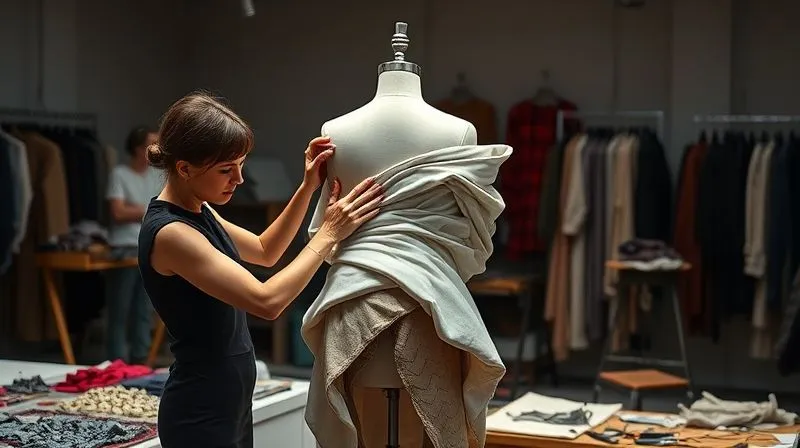
While flat patternmaking is crucial, draping on a mannequin often serves as the initial, highly iterative phase for complex, sculptural silhouettes. Draping allows the designer to directly sculpt with fabric, visualizing how gravity will affect the material and how tension and compression can be harnessed to create desired forms. It's an immediate feedback loop for structural integrity.
During draping, one can experiment with different grainlines, bias cuts, and fabric orientations to discover how the material naturally wants to hold its shape or fall. This informs the internal architecture – where boning might be needed, where an armature will sit, and how the fabric will interact with these supports. It's a hands-on, intuitive way to begin solving the structural puzzle.
"The mannequin is not just a form; it's a dynamic laboratory for structural experimentation."
This iterative process of draping, adjusting, pinning, and observing is indispensable for translating abstract ideas of defiance into tangible, stable forms. It helps identify potential stress points and areas that will require additional reinforcement or specific internal structures.
Seam Engineering: Reinforcing Stress Points
Seams are more than just joining points; in haute couture, they are structural elements. For gravity-defying designs, seams must be engineered to withstand significant stress and contribute actively to the garment's stability. A weak seam can undermine an entire silhouette, leading to sagging or tearing.
Specialized seam constructions are employed to provide invisible strength. These can include double-stitched seams, French seams with internal reinforcement, or seams that integrate boning channels directly into their construction. The choice of thread – often silk or high-tensile synthetic – and stitch length are also critical considerations.
Here are key steps for reinforcing seams in structural couture:
- Identify High-Stress Areas: Pinpoint seams that will bear significant weight or tension (e.g., shoulder seams for large sleeves, waistlines supporting voluminous skirts).
- Choose Appropriate Seam Allowance: Use generous seam allowances (e.g., 1-2 inches) in structural areas to allow for multiple stitching lines and internal support integration.
- Understitching and Topstitching: Apply understitching to anchor seam allowances and topstitching to add rigidity and a crisp edge to structural elements.
- Integrate Reinforcement: Sew in strips of stiff interfacing, twill tape, or even fine wire mesh along critical seams before stitching them.
- Boning Channels: Construct specialized channels directly into seam allowances to house boning, ensuring it is securely held and distributes stress effectively.
- Bar Tacks and Rivets: For extreme stress points, small, decorative bar tacks or even hidden rivets can provide additional reinforcement, especially where straps or heavy elements attach.
Case Study: The "Nebula Gown" – A Triumph of Structural Innovation
To truly illustrate the principles we've discussed, let me share a fictional yet highly realistic scenario from the world of Étoile Atelier, a renowned couture house known for its avant-garde designs. They faced the ultimate challenge: creating the "Nebula Gown," a piece designed to feature a vast, unsupported 'cloud' of fabric encircling the wearer's upper body, appearing to float effortlessly without visible means of support.
How Étoile Atelier Achieved the Impossible
The design brief was audacious: a voluminous, ethereal cloud of silk organza, seemingly detached from the wearer, yet entirely stable and comfortable. The initial prototypes, relying on traditional boning and stiffened fabrics, sagged under their own weight, failing to achieve the desired gravity-defying effect. The team at Étoile realized they needed to push beyond conventional couture techniques to truly stabilize defying gravity haute couture silhouettes of this magnitude.
Their solution involved a multi-pronged approach:
1. Custom 3D-Printed Armature: They collaborated with a product design firm to engineer a lightweight, flexible, yet incredibly strong armature. This was 3D-printed in sections from a specialized, aerospace-grade polymer, designed to precisely mimic the cloud's desired shape. The armature was perforated to reduce weight and allow for fabric attachment.
2. Invisible Tension Wires: Ultra-fine, high-tensile strength fishing line, strategically placed and anchored within the garment's internal corset, created an invisible web of tension. This distributed the weight of the organza cloud evenly across the armature and down to the wearer's core, rather than relying on the shoulders alone.
3. Differential Fabric Stiffness: The silk organza itself was treated with varying degrees of stiffening agents. The inner layers, closest to the armature, were more rigid, helping to hold the initial form, while the outer layers remained soft and flowing, creating the ethereal effect.
4. Ergonomic Harness Integration: Instead of a simple internal corset, a custom-molded, padded harness was designed to sit comfortably on the wearer's torso, distributing the armature's weight across the shoulders, back, and waist. This harness was breathable and virtually undetectable beneath the gown's lining.
The result was the breathtaking Nebula Gown, a masterpiece of engineering disguised as pure artistry. It floated, it moved, and most importantly, it held its impossible shape, proving that with innovative thinking and meticulous execution, even the most audacious visions can be brought to stable, wearable life.
| Challenge | Solution |
|---|---|
| Cloud-like volume without visible support | Custom 3D-printed armature |
| Preventing sag and maintaining shape | Invisible high-tension wires & differential fabric stiffness |
| Ensuring wearer comfort and stability | Ergonomic internal harness |
| Overall weight reduction | Aerospace-grade polymer for armature & strategic material choice |
This approach exemplifies how cross-disciplinary collaboration and a fearless embrace of new technologies can redefine the boundaries of haute couture. For more on how technology is revolutionizing fashion design, consider exploring publications from The Business of Fashion.
Testing and Refinement: The Iterative Process
No haute couture piece, especially one designed to defy gravity, is perfect on the first attempt. The journey from concept to a stable, wearable masterpiece is an iterative process of creation, rigorous testing, and meticulous refinement. This phase is where theoretical solutions meet practical challenges, and where the true resilience of the design is proven. In my career, I've seen countless hours dedicated to this crucial stage, where patience and precision are paramount.
Stress Testing and Prototyping
The creation of prototypes and mock-ups is indispensable for gravity-defying silhouettes. These initial versions, often made from less expensive fabrics, allow designers to test the structural integrity of their internal frameworks without committing to costly final materials. It's a critical step in understanding how to stabilize defying gravity haute couture silhouettes effectively.
Here’s a robust protocol for stress testing:
- Initial Mock-up Construction: Build a full-scale mock-up using similar weight/stiffness fabrics and the intended internal armature.
- Static Load Test: Place the garment on a mannequin and observe it over several days. Does it sag? Does the structure warp? Identify any weak points.
- Dynamic Movement Test: Have a model (or even the actual client, if possible) wear the mock-up and perform a range of movements – walking, sitting, raising arms, turning. Observe how the silhouette responds. Does it restrict movement? Does it lose shape?
- Weight Simulation: If the final garment will have heavy embellishments, temporarily add equivalent weights to the mock-up to simulate the final load.
- Environmental Stress Test: If the garment is for a specific event, simulate environmental conditions (e.g., heat, humidity, wind) if possible, to see how materials react.
- Feedback Loop: Document all observations, take photos, and make detailed notes. This feedback is crucial for refining patterns, adjusting internal structures, and selecting final materials.
Collaboration with Engineers and Artisans
Modern haute couture, particularly when pushing structural boundaries, is increasingly a multidisciplinary endeavor. The days of a single designer working in isolation are largely over when it comes to truly innovative, gravity-defying pieces. Collaborating with specialists is not a luxury; it's a necessity.
I've witnessed incredible synergy when fashion designers partner with mechanical engineers, material scientists, or even industrial designers. Engineers can provide invaluable insights into stress points, load distribution, and the properties of advanced materials. Artisans specializing in specific crafts, like metalworking or 3D printing, bring precision and expertise that elevates the internal structures to an art form in themselves. This collaborative spirit is what truly enables the creation of garments that redefine fashion's possibilities. For insights into collaborations, refer to publications by Vogue Haute Couture.
Frequently Asked Questions (FAQ)
Q: What are the most common mistakes designers make when trying to create gravity-defying silhouettes? A: From my experience, the most common mistakes include underestimating the power of gravity, leading to insufficient internal support; choosing inappropriate materials that lack inherent rigidity; neglecting proper weight distribution, causing imbalance; and failing to rigorously test prototypes for both static stability and dynamic movement. Often, designers prioritize aesthetic vision over structural feasibility, which can lead to heartbreaking results.
Q: How do you balance the need for structural integrity with keeping the garment lightweight and comfortable? A: This is the eternal dilemma in gravity-defying couture! The key lies in strategic material selection – opting for high-strength, low-density materials like carbon fiber rods or specialized polymers for armatures, and lightweight, stiffened silks or technical meshes for fabric layers. Precision engineering ensures that support is placed exactly where needed, avoiding unnecessary bulk. Furthermore, ergonomic design of internal harnesses and padding ensures weight is distributed comfortably across the wearer's body, making the structure feel like a part of them rather than an external cage.
Q: Are there sustainable options for structural materials in haute couture? A: Absolutely, and this area is seeing significant innovation. Designers are exploring bio-plastics for 3D-printed armatures, recycled metals for internal frameworks, and even natural fibers like stiffened hemp or innovative mycelium-based materials for lightweight, rigid elements. The challenge is often in scaling these options for couture-level quality and ensuring they meet the stringent structural demands, but the industry is moving rapidly towards more eco-conscious solutions.
Q: How important is the wearer's movement in designing these complex pieces? A: It's paramount. A haute couture garment, no matter how sculptural, must allow the wearer to move with grace and comfort. Ignoring movement leads to garments that are stiff, uncomfortable, and ultimately unwearable. Designers must anticipate every possible movement – walking, sitting, turning, gesturing – and engineer the internal structure to accommodate these actions without losing its form. This often involves creating flexible joints within rigid armatures, strategic placement of stretch panels, and ensuring the garment's weight is distributed to allow freedom of motion.
Q: What's the role of 3D printing in modern haute couture structural design? A: 3D printing has become a game-changer. It allows for the creation of incredibly precise, complex, and lightweight internal armatures that can be custom-designed to any silhouette. It offers unparalleled geometric freedom, enabling designers to create structures that would be impossible or prohibitively expensive with traditional methods. From intricate lattice-work to perfectly contoured supports, 3D printing provides a revolutionary tool for designers looking to truly stabilize defying gravity haute couture silhouettes with exactitude and innovation.
Key Takeaways and Final Thoughts
The journey to create and stabilize defying gravity haute couture silhouettes is a profound exploration of artistry, engineering, and innovation. It's a testament to the human desire to push boundaries, to challenge perception, and to transform the impossible into breathtaking reality. My hope is that this guide has illuminated the intricate processes and expert insights required to master this challenging yet incredibly rewarding facet of haute couture.
Let's recap the most critical elements:
- Embrace Physics: Understand gravity, tension, and compression as your fundamental design partners.
- Master Internal Engineering: From traditional boning to advanced 3D-printed armatures, the unseen structure is paramount.
- Leverage Material Science: Choose fabrics and interfacings not just for beauty, but for their inherent structural properties.
- Perfect Weight Distribution: Achieve balance through counterweights and ergonomic design for comfort and stability.
- Prioritize Precision: Meticulous pattern making, draping, and seam engineering are non-negotiable.
- Iterate and Test: Rigorous prototyping and stress testing are essential for refinement and success.
- Collaborate: Don't shy away from partnering with engineers and specialists to achieve truly groundbreaking results.
Remember, haute couture is about dreaming big, but it’s also about executing flawlessly. By integrating these principles of structural integrity and innovative thinking, you're not just creating garments; you're engineering wearable art that will captivate, inspire, and stand the test of time – literally. Go forth and defy gravity, not just with vision, but with unwavering expertise.
Recommended Reading
- Unveiled: Why Haute Couture Heritage Techniques Are Vital for Fashion's Future
- 5 Steps to Spot Profitable Emerging Streetwear Aesthetics for Your Brand
- 7 Ways to Spot Greenwashing in Textile Suppliers: A Buyer's Guide
- Scaling Unique Handcrafted Jewelry: 7 Proven Strategies for Growth
- Killer Fashion Blog Posts: Your Ultimate Writing Guide!

Your email address will not be published. Required fields are marked *