

How to Identify Profitable Emerging Streetwear Aesthetics for My Brand?
For over 15 years in the dynamic world of streetwear, I've seen countless brands rise and fall, often due to one critical oversight: failing to genuinely understand and adapt to the ever-shifting currents of cultural style. It's not enough to simply follow what's popular; true longevity and profitability come from anticipating what's next, from having a radar tuned to the subtle vibrations of emerging aesthetics.
The challenge is real. The streetwear landscape is a maelstrom of fleeting fads, influencer-driven spikes, and genuine cultural shifts. Without a structured approach, brands risk pouring resources into trends that evaporate overnight, alienating their core audience, or simply getting lost in the noise. This isn't just about missing an opportunity; it's about the very survival and growth of your brand in a hyper-competitive market.
In this definitive guide, I'll share the frameworks, insights, and actionable strategies I've honed over decades. You'll learn not just how to identify profitable emerging streetwear aesthetics for your brand, but how to integrate them authentically, ensuring your brand remains relevant, resonant, and most importantly, profitable. We're going to dive deep into the art and science of trend spotting, moving beyond superficial observations to truly understand the pulse of streetwear.
Understanding the Streetwear Ecosystem: Beyond the Hype
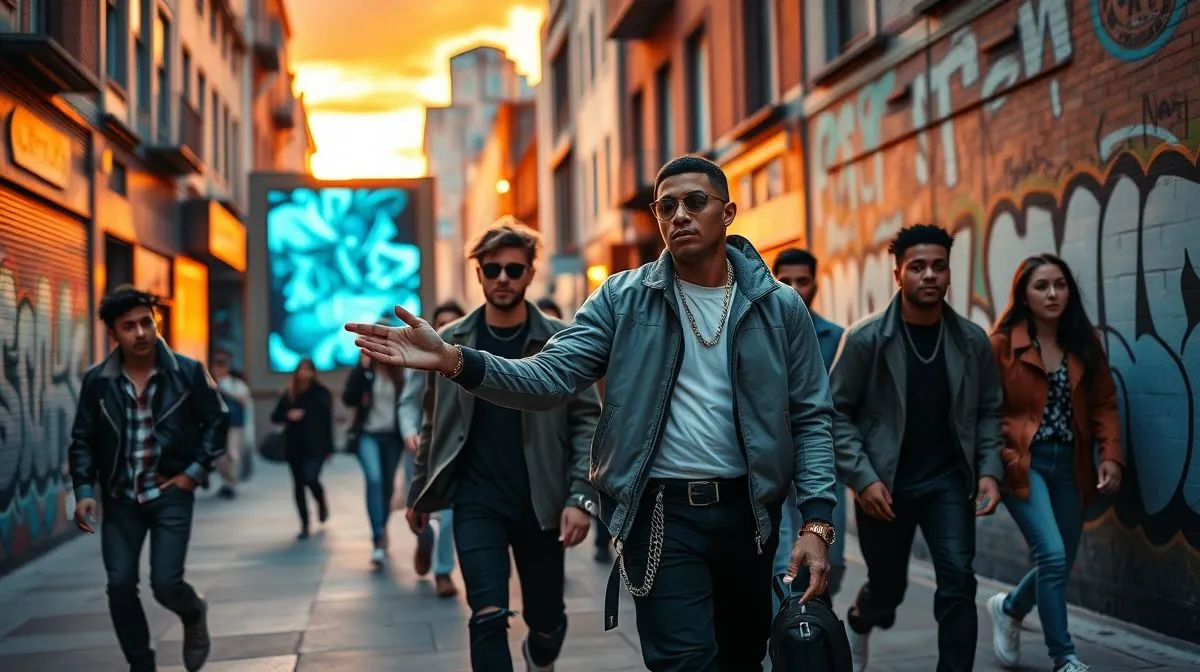
Before you can spot an emerging aesthetic, you must first comprehend the intricate ecosystem that nurtures streetwear. It's far more than just clothing; it's a cultural phenomenon, a reflection of youth movements, music, art, sports, and socio-economic shifts. I've witnessed brands stumble because they treated streetwear as a mere product category rather than a living, breathing culture.
At its core, streetwear thrives on authenticity and a rebellious spirit. It emerged from subcultures – skateboarding, hip-hop, punk – and continues to draw its vitality from the streets, not from corporate boardrooms. Understanding this foundational truth is paramount. It means that trends don't typically trickle down from high fashion; they bubble up from grassroots movements and influential micro-communities. As Business of Fashion often highlights, the lines between luxury and streetwear have blurred, but the genesis remains distinct.
Key players in this ecosystem include independent designers, niche boutiques, influential artists, musicians, athletes, and, increasingly, digital communities. These aren't just consumers; they are co-creators of the culture. Ignoring their influence or misinterpreting their signals is a fatal mistake. Your brand needs to be embedded within, or at least intimately aware of, these networks.
In my experience, the biggest error brands make is approaching streetwear with a 'top-down' mentality. This culture is inherently 'bottom-up.' You must listen intently to the voices from the ground to truly understand what's brewing.
Consider the cyclical nature of trends within this ecosystem. What was once niche can become mainstream, then oversaturated, and eventually, nostalgic. A truly profitable aesthetic often emerges from a niche, demonstrates organic growth, and possesses characteristics that allow for broader appeal without losing its core authenticity. It’s about identifying that sweet spot before mass adoption dilutes its power.
The Art of Cultural Immersion: Where Trends Are Born
This is arguably the most critical, yet often overlooked, aspect of identifying emerging trends. You can't just sit in an office and expect to understand what's moving the needle on the streets. Cultural immersion means actively engaging with the sources of new ideas, movements, and expressions. I've spent countless hours simply observing, listening, and participating in spaces where new aesthetics germinate.
Think of it as ethnographic research. It involves:
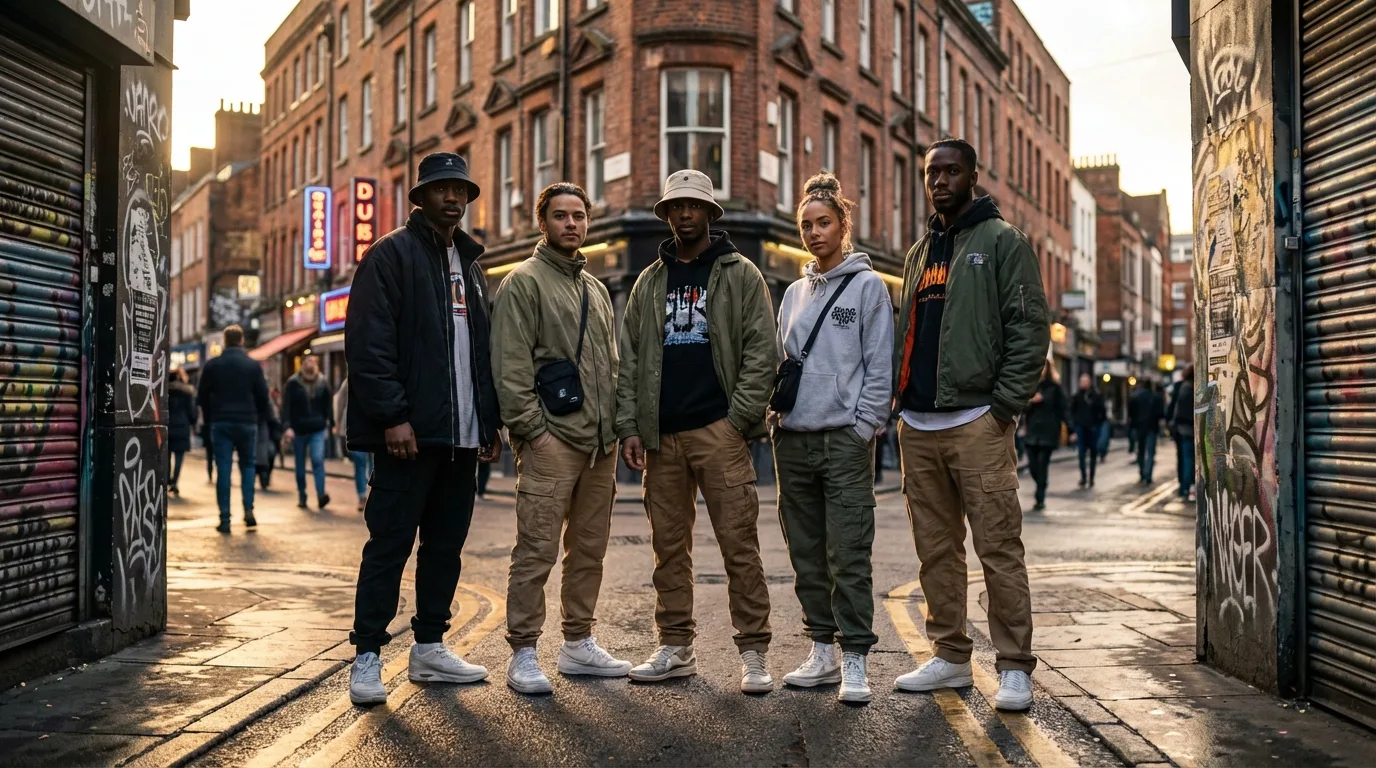
- Physical Presence: Regularly visit key urban hubs, independent art galleries, underground music venues, skate parks, pop-up events, and flea markets. Pay attention to how people are styling themselves, what brands they're wearing, and how they're customizing their looks.
- Digital Deep Dive: Move beyond mainstream social feeds. Explore niche online forums, private Discord servers, TikTok subcultures (e.g., #DarkAcademia, #Cottagecore, #Techwear), and emerging platforms. Follow micro-influencers who have genuine, engaged communities, not just large follower counts.
- Intersectional Observation: Streetwear is a melting pot. Look for influences from seemingly disparate fields: sustainable living, virtual reality, retro gaming, political movements, or even scientific advancements. The most interesting aesthetics often emerge at the intersections of these cultural forces. For instance, the rise of utilitarian aesthetics often correlates with growing environmental consciousness and a desire for durable, functional clothing.
- Engage with Creatives: Talk to young artists, designers, musicians, and photographers. Their work often reflects or anticipates shifts in aesthetic sensibilities. They are the early adopters and innovators.
This isn't about copying; it's about understanding the underlying sentiment, the core desire, or the cultural narrative that a new aesthetic represents. Is it a rejection of fast fashion? A yearning for nostalgia? A celebration of individuality? These deeper insights are what allow you to create products that genuinely resonate.
Leveraging Data & Analytics: The Science Behind the Style
While cultural immersion provides the qualitative 'why,' data and analytics offer the quantitative 'what' and 'how much.' In today's landscape, ignoring data is akin to navigating a ship without a compass. I've seen brands with great creative vision fail because they lacked the data to validate their hunches or scale their successes. The key is to use data not to replace intuition, but to amplify and validate it.
Here's how to harness the power of data:
- Social Listening Tools: Utilize platforms like Brandwatch, Meltwater, or even advanced searches on Twitter/Reddit to track mentions of specific styles, materials, themes, or emerging slang. Look for spikes in conversation volume, sentiment analysis, and key opinion leaders driving discussions. Pay attention to image recognition features to identify visual trends.
- Search Trend Analysis: Tools like Google Trends, Ahrefs, or Semrush are invaluable. Monitor search volume for specific keywords related to aesthetics, garment types, or cultural references. Look for consistent upward trends over several months, not just short-term spikes. For example, a sustained rise in searches for "oversized grunge" or "deconstructed denim" could signal a genuine shift.
- Sales and Inventory Data: Internally, analyze your own sales data. Which colors, silhouettes, and fabrications are selling out fastest? Which are lingering? Look for patterns in returns and customer feedback. Compare your performance against industry benchmarks if possible.
- Trend Forecasting Platforms: Subscriptions to professional trend forecasting services like WGSN, Stylesight, or Fashion Snoops can provide invaluable macro-level insights, color predictions, and market analysis. While expensive, the intelligence they offer can justify the investment for larger brands.
Case Study: How 'Apex Threads' Leveraged Data for Growth
Apex Threads, a mid-sized streetwear brand, had a strong reputation for graphic tees but struggled to expand beyond that niche. Their design team had a hunch about the rise of "utilitarian tech-wear" within the underground scene. Instead of blindly investing, they implemented a data-driven validation process. They used social listening to track conversations around terms like "Gorpcore," "functional fabrics," and "modular design" across niche forums and TikTok. Concurrently, they used Google Trends to see sustained growth in searches for terms like "cargo pants men," "waterproof hoodies," and "ripstop fabric." Their internal sales data also showed an unexpected uptick in their limited-release utility vests. Validated by this data, Apex Threads launched a capsule collection featuring multi-pocket cargo pants, convertible jackets, and durable, water-resistant fabrics. This resulted in a 40% increase in average order value and attracted a new segment of loyal customers, proving the profitability of their identified aesthetic.
Deconstructing Emerging Aesthetics: Identifying Core Elements
Once you've identified a promising emerging aesthetic, the next step is to break it down into its constituent parts. This deconstruction allows you to understand its essence and translate it into tangible product ideas for your brand. It’s not enough to say “I like that style”; you need to articulate *why* it works and *what* makes it unique.
I advise my clients to look at these key elements:
- Silhouette & Fit: Is it oversized, slim, structured, deconstructed, flowing? How do garments interact with the body? Think about the "drop shoulder" on a tee or the "wide-leg" on pants.
- Color Palette: Are there dominant colors? Specific combinations? Is it muted, vibrant, earthy, neon, monochromatic? The rise of specific shades of brown and green in recent years within streetwear is a prime example.
- Materials & Textures: What fabrics are prevalent? Technical nylons, distressed denim, heavyweight cotton, fleece, mesh, reflective materials? How do they feel and look? Are there unique finishes or washes?
- Graphics & Embellishments: What kind of prints, embroideries, patches, or hardware are being used? Are they minimalist, maximalist, illustrative, typographic? Are there recurring motifs or symbols?
- Layering & Styling Cues: How are individual pieces combined? Are there specific layering techniques? What accessories are key (bags, headwear, footwear)? How are people wearing their clothes (e.g., tucked vs. untucked, cuffed vs. stacked)?
- Underlying Philosophy/Narrative: What story does this aesthetic tell? Is it about comfort, rebellion, sustainability, futurism, nostalgia? This is the emotional core that makes an aesthetic resonate.
A true expert doesn't just see a trend; they dissect its DNA. By understanding the building blocks, you gain the power to innovate and adapt, rather than simply imitate. This allows for authentic integration into your brand's unique identity.
By meticulously cataloging these elements, you create a blueprint for product development. This detailed understanding ensures that your interpretation of the aesthetic is authentic and well-executed, rather than a superficial imitation that misses the mark.
The Profitability Lens: Market Viability & Scalability
Identifying an emerging aesthetic is only half the battle; ensuring it's profitable for your brand is the other. Many exciting trends remain niche for a reason – they might be too expensive to produce, have limited appeal, or face insurmountable competition. This is where your business acumen meets your creative vision.
Consider these factors:
- Niche Size vs. Market Potential: Is the identified aesthetic appealing to a sufficiently large segment of your target audience to justify production? A hyper-niche trend might be great for brand credibility, but can it generate the revenue you need? Conversely, a trend that's already too mainstream might be oversaturated and offer limited margin potential.
- Production Feasibility & Cost: Can you produce garments aligned with this aesthetic within your current manufacturing capabilities and budget? Does it require specialized machinery, new fabric sourcing, or complex techniques that significantly drive up costs? Assess the supply chain implications.
- Pricing Strategy: Can you price your products competitively while maintaining healthy profit margins? Will your target demographic perceive the value in your offering at that price point? According to a Deloitte report on the fashion industry, understanding consumer willingness to pay for new styles is crucial for market penetration.
- Competitive Landscape: Who else is operating in this space? Are there dominant players? Can your brand offer a unique twist, better quality, or a more compelling story that sets you apart? Don't just follow; innovate.
- Longevity & Adaptability: How long do you anticipate this aesthetic will remain relevant? Does it have the potential to evolve, or is it a fleeting fad? Investing in trends with longer lifecycles or those that can be subtly adapted to future shifts offers greater long-term profitability.
It’s a delicate balance. You want to be early enough to capture market share, but not so early that the market isn't ready, or so late that you're just another follower. This strategic timing is crucial for maximizing the return on your investment in a new aesthetic.
Strategic Adaptation & Iteration: Evolving Your Brand Identity
Successfully integrating a new aesthetic isn't about wholesale adoption; it's about strategic adaptation. Your brand has a unique DNA, a core identity that resonates with your existing audience. The goal is to weave the emerging aesthetic into this fabric, enhancing rather than diluting it. I’ve seen brands lose their way by chasing every shiny new trend, becoming a stylistic chameleon with no discernible identity.
Here's how to approach it:
- Identify Core Brand DNA: What are your brand's immutable values, aesthetic principles, and target audience? What is your unique voice? Every decision about integrating a new trend must be filtered through this lens.
- Selective Integration: You don't need to adopt every element of an emerging aesthetic. Perhaps it's just a new color palette, a specific silhouette, or a material innovation. Choose the elements that best align with and enhance your existing brand.
- Pilot Collections/Limited Drops: Before committing to a full seasonal collection, test the waters with smaller, limited-edition drops. This allows you to gauge consumer interest, gather feedback, and iterate quickly without significant financial risk. This agile approach is critical in fast-moving industries like streetwear.
- Feedback Loops: Actively solicit feedback from your core community. Use surveys, social media polls, and direct engagement to understand how your new aesthetic is being received. Are they excited? Confused? Does it still feel like 'your brand'?
- Iterative Design Process: Be prepared to refine your approach. The first iteration might not be perfect. Learn from what works and what doesn't, and continuously evolve your designs. This iterative mindset is what keeps a brand fresh and responsive.
As marketing guru Seth Godin often says, "The market chooses you." Your audience will tell you if your adaptation resonates. Listen intently.
Building a Trend-Spotting Team: Cultivating an Internal Radar
Identifying profitable emerging streetwear aesthetics isn't a one-person job, especially as your brand grows. It requires a collective, multidisciplinary effort. I always advise brands to cultivate an internal 'radar' – a team with diverse perspectives and skills dedicated to continuous trend monitoring and interpretation.
Consider these roles and responsibilities:
- Creative Director/Head Designer: The visionary. Responsible for aesthetic coherence, translating trends into tangible designs, and ensuring brand DNA integrity.
- Market Researcher/Analyst: The data expert. Responsible for social listening, search trend analysis, competitive benchmarking, and synthesizing quantitative insights.
- Community Manager/Social Media Lead: The frontline observer. Responsible for direct engagement with your audience, monitoring online subcultures, and identifying grassroots movements.
- Sales/Retail Team: The ground truth. They interact directly with customers, gather immediate feedback on product performance, and observe in-store trends.
- Supply Chain/Production Lead: The feasibility expert. Advises on the practicalities, costs, and timelines of new materials or production techniques required by emerging aesthetics.
Encourage cross-functional collaboration. Regular brainstorming sessions where these different perspectives converge can lead to more holistic and robust trend insights. Invest in continuous learning – send your team to relevant industry events, subscribe to trend reports, and foster a culture of curiosity and exploration.
The most successful streetwear brands I've worked with aren't just selling clothes; they're selling a lifestyle, a feeling, a connection. Their internal teams embody that connection, constantly scanning the horizon for what's resonating with their community.
Empower your team to be proactive. Give them the tools and the autonomy to explore, experiment, and bring new ideas to the table. A truly agile brand is one where trend spotting is embedded in its very culture, not just an annual exercise.
Navigating the Hype Cycle: From Niche to Mainstream (and Back)
Understanding the life cycle of a trend is crucial for sustained profitability. Not all emerging aesthetics will follow the same trajectory, but many will move through what I call the "Hype Cycle." This typically involves stages:
- Innovation/Niche: A trend emerges from a small subculture or a few avant-garde creators. Very low awareness, high authenticity. This is your prime identification window.
- Early Adopter: Influencers, tastemakers, and early-adopter brands pick up on the trend. Awareness grows within specific communities.
- Early Majority: The trend begins to gain wider traction. Mainstream media picks up on it. Larger brands start to incorporate elements. This is often the peak profitability window for brands that identified it early.
- Late Majority/Mass Market: The trend becomes ubiquitous. It's everywhere, often diluted and less authentic. Margins typically shrink due to saturation and competition.
- Laggard/Decline: The trend fades, becomes associated with being "out of date," or is replaced by new aesthetics.
Your brand's strategic timing within this cycle is critical. For a brand focused on profitability and scale, identifying trends in the "Innovation" or "Early Adopter" phase is ideal. This allows you to develop, produce, and launch products as the trend hits the "Early Majority" phase, maximizing your market capture and profit margins. Launching too late means you're just another fish in a crowded pond.
However, it's also important to understand when to gracefully exit a trend. Chasing a trend into its "Late Majority" or "Decline" phase can erode brand authenticity and lead to unsold inventory. The ability to pivot and embrace the next wave is a hallmark of truly enduring streetwear brands. This continuous cycle of identification, adaptation, and eventual graceful exit is what defines long-term success in this fast-paced industry.
Frequently Asked Questions (FAQ)
Question: How often should I reassess my brand's aesthetic direction based on emerging trends? I recommend a continuous, iterative process rather than a fixed schedule. Streetwear moves quickly. A formal quarterly review, combined with daily informal scanning and engagement, is a good rhythm. Your team should always have an ear to the ground.
Question: What's the fundamental difference between a 'fad' and a 'lasting trend' in streetwear? A fad is typically superficial, driven by a single event or celebrity, and lacks cultural depth or a compelling narrative. It burns bright and fades fast. A lasting trend, however, is rooted in broader cultural shifts, often reflects a deeper societal sentiment or need (e.g., sustainability, individuality, comfort), and can evolve over time. Look for underlying reasons, not just surface-level popularity.
Question: Can my brand successfully adopt multiple emerging aesthetics simultaneously? While possible, it's incredibly challenging and risky. Spreading yourself too thin can dilute your brand identity and confuse your audience. I advise focusing on one or two key emerging aesthetics that truly align with your brand's core DNA and target audience, allowing for deeper, more authentic execution. Niche focus often leads to stronger brand recognition and profitability.
Question: How do I ensure a new aesthetic aligns with my brand's core values and doesn't alienate my existing customer base? This is where your brand DNA filter is crucial. Before adopting any element, ask: Does this resonate with our brand's mission, vision, and established aesthetic? Will our core customers see this as an authentic evolution or a desperate chase? Engage your most loyal customers in early feedback loops; their insights are invaluable in maintaining authenticity.
Question: What if an emerging trend I invest in doesn't perform well? How do I mitigate the risk? Mitigation starts with the strategies outlined: rigorous data validation, starting with small pilot collections/limited drops, and maintaining an agile supply chain. If a trend doesn't perform, learn from the data (e.g., Was the timing off? Was the execution flawed? Was the market simply not ready?). Don't be afraid to pivot quickly. Unsold inventory is a greater risk than a failed experiment.
Recommended Reading
- Most Flattering Denim Wash for Men: Look Your Best!
- Sportswear Streetwear Style Mix: The Ultimate Fashion Fusion?
- Unlocking Time: How to Identify Authentic Retro Clothing Eras Like a Pro
- AR Revolution: How is AR Changing Fashion Retail Now? The Future!
- Mastering the Art: How to Effectively Age a Costume for Theater Production
Key Takeaways and Final Thoughts
- Immerse Yourself: Streetwear trends emerge from the streets and subcultures. Engage physically and digitally with the communities that define the culture.
- Validate with Data: Use social listening, search trends, and internal sales data to confirm your qualitative insights. Data amplifies intuition.
- Deconstruct & Adapt: Break down aesthetics into their core elements (silhouette, color, material, graphics) and selectively integrate them into your brand's unique DNA.
- Assess Profitability: Always evaluate market viability, production costs, pricing, and competitive landscape before committing significant resources.
- Build an Agile Team: Foster a cross-functional team dedicated to continuous trend spotting and iterative product development.
- Understand the Hype Cycle: Time your product launches to coincide with the "Early Majority" phase for maximum impact and profitability.
The world of streetwear is a thrilling, ever-evolving landscape. As a seasoned expert, I've learned that sustained success isn't about chasing every fleeting moment of hype. It's about developing a deep, empathetic understanding of the culture, validating your insights with robust data, and having the courage to adapt authentically. By applying the frameworks and insights I've shared, you're not just identifying profitable emerging streetwear aesthetics for your brand; you're building a resilient, relevant, and enduring presence in one of the most exciting sectors of fashion. Stay curious, stay connected, and keep creating the future of style.

Your email address will not be published. Required fields are marked *