

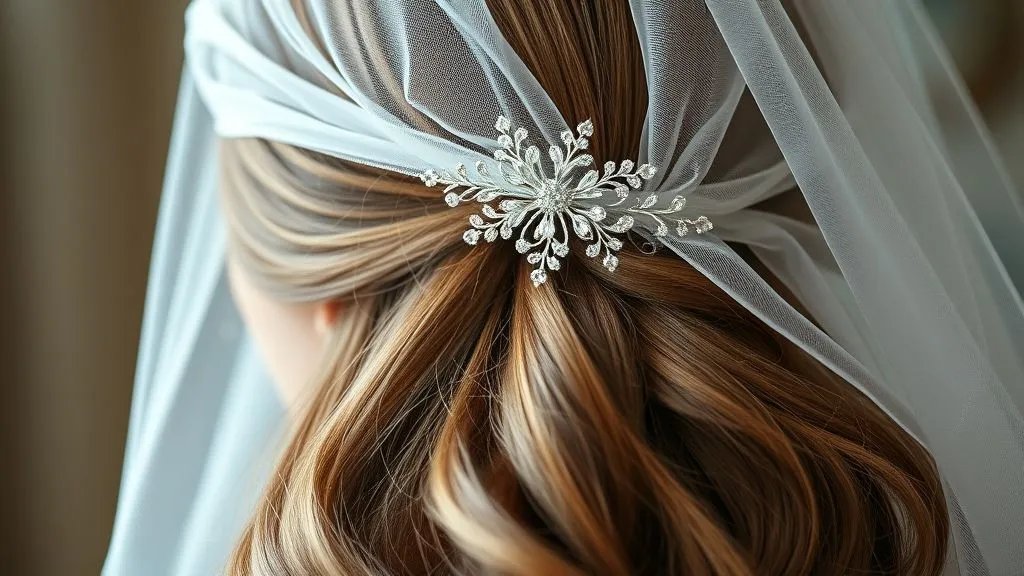
How to Secure a Heavy Bridal Veil on Fine, Slippery Hair All Day?
For over 15 years in the bustling world of bridal fashion, I've witnessed countless moments of joy, anticipation, and yes, a touch of panic. One of the most recurring anxieties for brides, especially those with exquisite but notoriously fine, silky hair, revolves around one critical element: the veil. The dream is a flowing, ethereal cascade; the fear is a rogue gust of wind or an enthusiastic hug sending it tumbling.
It's a genuine pain point, one I understand deeply. Fine hair, by its very nature, lacks the natural grip and texture that coarser hair types offer, making it a challenging canvas for anchoring anything weighty. Add to that the desire for a grand, often heavy, veil, and you've got a recipe for potential wedding day woes.
But here's my promise: you absolutely can have that breathtaking veil secured immaculately from your first steps down the aisle to your last dance. In this definitive guide, I'll share the precise, expert-level strategies, actionable frameworks, and insider tips I've honed over years of working with countless brides, ensuring your veil stays put, beautifully, all day long. Let's build a foundation of confidence for your big day.
Understanding the Challenge: Why Fine Hair & Heavy Veils Don't Mix (Naturally)
Before we dive into solutions, it's crucial to understand the 'why.' Knowledge is power, especially when it comes to outsmarting physics on your wedding day.
The Anatomy of Fine Hair
Fine hair strands have a smaller diameter compared to medium or coarse hair. This means fewer cuticle layers and a smoother surface. While beautiful and often incredibly soft, this smoothness is the primary culprit when it comes to slippage. Think of it like trying to grip a silk rope versus a rough hemp rope – the silk offers far less friction. Additionally, fine hair tends to be less dense, meaning there are fewer strands per square inch to anchor into.
The Weight and Structure of Bridal Veils
Bridal veils vary immensely in weight and construction. A simple, single-tier elbow-length veil made of soft tulle is relatively light. However, a cathedral-length, two-tier veil with lace appliqué, beading, or intricate embroidery can carry significant weight. The comb, typically plastic or metal, is the primary attachment point. A heavier veil exerts more downward pull, demanding a much stronger, more resilient anchor point in the hair to prevent it from sagging or detaching.
Pre-Wedding Hair Prep: The Foundation of Security
The success of securing your veil begins long before your stylist picks up a hairpin. It starts with strategic hair preparation.
Strategic Washing and Product Application
On your wedding day, avoid washing your hair. Freshly washed hair is often too soft and slippery. Ideally, wash your hair the day before, using a volumizing or clarifying shampoo. Skip heavy conditioners or conditioning masks on the roots, as these can make hair too slick. If you must wash on the day, use minimal conditioner only on the ends.
- Day Before Wash: Use a volumizing shampoo (e.g., "Volumizing Cleanse"). Focus on the scalp.
- Minimal Conditioner: Apply conditioner only from mid-shaft to ends. Rinse thoroughly.
- Texturizing Spray on Damp Hair: Apply a lightweight texturizing spray or sea salt spray to damp roots and mid-lengths. This adds crucial grip.
- Blow Dry for Volume: Blow dry with a round brush, lifting at the roots for maximum volume and texture.
Building a 'Grip' with Texture and Volume
Beyond washing, actively building texture and volume is paramount for fine hair. Your stylist will be your best friend here, but understanding the techniques helps.
- Backcombing/Teasing: This isn't just for volume; it creates a tangled, matted base that pins can grip onto. It's done strategically in the area where the veil comb will sit.
- Crimping (Subtly): For extreme cases, a subtle, fine-tooth crimper can be used on the under-layers of hair where the veil will be placed. This creates a "velcro" effect without being visible.
- Dry Shampoo/Texturizing Powder: Even on day-old hair, a light dusting of dry shampoo or a volumizing powder at the roots and through the mid-lengths can add significant grip and absorb excess oil.
The Art of the Secure Base: Anchoring Points
This is where the magic truly happens. You need more than just pins; you need a structural anchor.
The Hidden Braid Anchor
This is my absolute go-to technique for fine, slippery hair. It's virtually invisible and incredibly effective.
- Sectioning: Identify the exact spot where the veil comb will sit.
- Small Horizontal Section: Take a small, horizontal section of hair (about 1-2 inches wide) precisely where the comb will rest.
- Tight Three-Strand Braid: Braid this section very tightly. You can do a traditional three-strand braid or a small Dutch braid for extra grip, ensuring it lies flat against the scalp.
- Secure the Braid: Secure the end of the braid with a tiny, clear elastic band.
- Attach Veil to Braid: The veil comb is then woven *through* this braid, not just pushed into the surrounding hair. The braid acts as a sturdy, immovable anchor point, giving the comb something substantial to hold onto.
Silicone-Backed Hair Grips & Extensions
For added security, especially with very heavy veils, consider these:
- Silicone-Backed Grips: These small, rubberized clips or sections can be strategically placed beneath the top layer of hair where the veil comb will sit. The silicone provides excellent friction.
- Temporary Hair Extensions: If density is a major issue, your stylist might suggest adding a few small, temporary extensions (clip-ins) in the area where the veil will be anchored. This provides more hair to work with for braiding or backcombing.
"The secret isn't just one pin; it's a strategically built foundation that creates multiple points of friction and resistance. Think of it as building a small, hidden fortress for your veil."
Choosing the Right Tools: Pins, Combs, and Accessories
The quality and type of your styling tools make a significant difference.
The Power of Professional Hairpins (U-pins, Bobby Pins)
Forget flimsy drug-store pins. Professional-grade pins are essential.
- U-Pins (Hairpins): These are open-ended pins, perfect for weaving through hair and securing larger sections. Look for "heavy-duty" or "bridal" U-pins.
- Bobby Pins: Choose "professional grip" or "heavy-duty" bobby pins. The ridged side should always face down, against the scalp, for maximum hold.
- Cross-Pinning: Instead of pushing pins straight in, cross two bobby pins over each other in an 'X' shape. This creates tension and prevents slippage.
- Weaving Pins: When securing the veil comb, weave U-pins through the comb's teeth and then into the underlying hair/braid, alternating direction (e.g., left-to-right, then right-to-left).
- Pinning into the Anchor: Always aim to pin into your hidden braid anchor whenever possible.
Veil Combs: Types and Reinforcement
The comb itself is crucial. Metal combs are generally preferred over plastic for their durability and ability to be shaped if needed. Ensure the comb has plenty of teeth for maximum grip.
- Adding Loops: Some stylists will sew small thread loops onto the sides of the veil comb. These loops provide extra points to thread U-pins through, giving an even more secure attachment.
- Velvet Wrap: For very slippery hair, a small strip of velvet can be sewn around the base of the veil comb. The velvet's texture provides added friction against the hair.
| Pin Type | Best Use | Grip Factor | Notes |
|---|---|---|---|
| U-Pin (Hairpin) | Securing larger sections, weaving through veil combs | High, especially when woven | Professional-grade essential, comes in various lengths |
| Bobby Pin | Cross-pinning for extra tension, securing smaller pieces | Medium-High, dependent on quality | Ridged side down for maximum hold, choose heavy-duty |
| Silicone-Backed Clip | Added friction layer under veil comb | Very High | Invisible, provides non-slip surface |
| Hair Net/Elastic | Creating a dense base for pinning | High | Can be used to gather and secure hair for anchor points |
Strategic Veil Placement: Angle and Balance
Where and how the veil sits profoundly impacts its stability and overall aesthetic.
The Optimal Placement Zone
For fine hair, I generally recommend placing the veil comb slightly lower than the crown, often just above or at the occipital bone (the prominent bone at the back of your skull). This area provides a more stable, flatter surface for the comb to rest against, and it allows for a more robust hidden braid anchor to be created without being visible.
- Above Updo: If you have an updo, the veil comb can sit just above it, allowing the updo itself to provide a substantial base.
- Below Half-Up: For a half-up style, the comb should sit securely within the gathered section of hair, not on the loose, flowing hair.
Distributing Weight Evenly
A heavy veil, if not balanced correctly, can pull unevenly. Your stylist will fan out the veil's tulle slightly as it's attached to ensure the weight is distributed across the entire comb and its anchor points, rather than concentrating the pull in one small area. This prevents sagging and discomfort. For more insights on bridal hair styling, check out this comprehensive guide: Brides.com Bridal Hairstyles.
Reinforcement Techniques: The Extra Layer of Security
These are the "belt and suspenders" approaches for ultimate peace of mind.
The 'Netting' Method
For exceptionally heavy veils or very active brides, a fine hairnet (matching your hair color) can be used. After creating your anchored base, a small section of hair can be gathered into a mini ponytail, secured with an elastic, and then covered with a hairnet. The veil comb is then pinned through this dense, netted bundle, offering an almost unshakeable hold.
Stitching the Veil (Temporary)
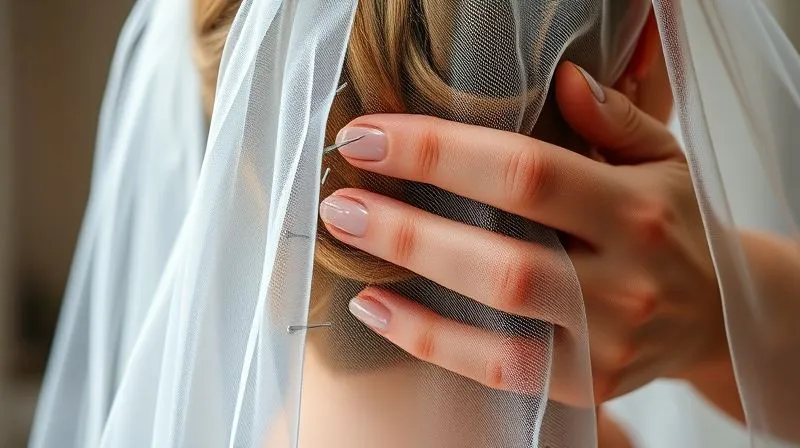
This is the ultimate security measure. Your stylist can use a needle and thread (matching your hair) to temporarily stitch the veil comb directly to your hidden braid anchor or to the securely pinned hair. This is a common practice in high-fashion bridal shows. The stitches are small, discreet, and easily snipped out at the end of the night without damaging your hair.
Hair Spray & Setting Products: The Final Seal
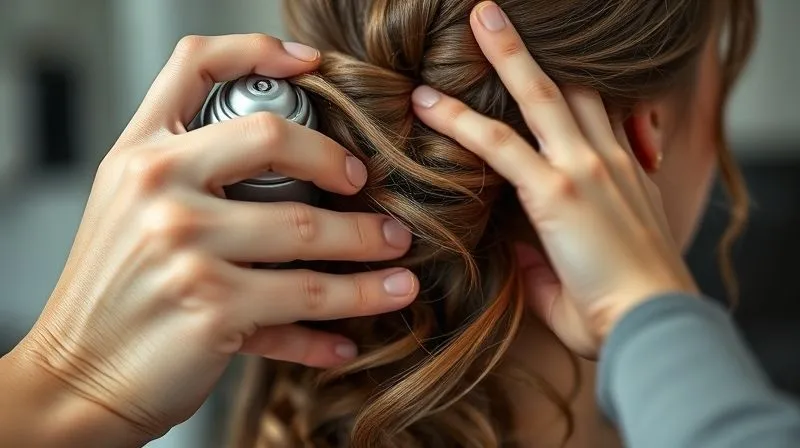
Once the veil is perfectly placed and secured, a strong-hold hairspray is your final line of defense. It helps to set the surrounding hair, further cementing the pins and preventing any stray hairs from loosening the grip. Look for "extra hold" or "finishing spray" products. Apply in light, even mists, not heavy blasts.
Case Study: Sarah's Seamless Veil Day
Case Study: Sarah's Seamless Veil Day
Sarah, a bride with notoriously fine, silky hair, dreamt of a cathedral veil adorned with delicate lace edging – a beautiful but weighty choice. Initially, her stylist expressed concerns about potential slippage, given Sarah's active personality and plans for an outdoor ceremony with potential breezes. By implementing a combination of the hidden braid anchor, strategically placed silicone grips tucked beneath the top layer of hair, and meticulous cross-pinning with professional U-pins, her veil remained perfectly in place. Her stylist also utilized the temporary stitching method, securing the veil comb directly to the hidden braid with a few discreet stitches. This meticulous approach allowed Sarah to move freely, dance with abandon, and enjoy every moment of her wedding day without a single worry about her veil. She later told me it was one less thing to think about, allowing her to truly be present.
Expert Tips from the Aisle: What I've Learned
Beyond the technical steps, there are invaluable insights gleaned from years of bridal experience.
The Pre-Wedding Hair Trial: Non-Negotiable
I cannot stress this enough: a hair trial is your dress rehearsal for perfection. This is your opportunity to test the veil's placement, the security techniques, and how your hair reacts to various products and styling. Bring your actual veil to the trial! Wear it for a few hours afterward, move around, shake your head gently. This will reveal any weak points before the big day. It's the best investment you'll make for veil security. For more on the importance of trials, see this article: The Knot Wedding Hair & Makeup Trial.
Emergency Kit Essentials
Even with the best planning, a small emergency kit is a smart move. Include:
- A few extra professional bobby pins and U-pins.
- A travel-size strong-hold hairspray.
- A small comb for touch-ups (though ideally, you won't need to touch the veil area).
- A trusted bridesmaid or coordinator who knows how to re-pin if absolutely necessary (after a quick tutorial from your stylist).
"Never underestimate the power of a thorough hair trial. It's your dress rehearsal for perfection, not just for the style, but for the unwavering confidence that your veil will stay exactly where it belongs."
Communication with Your Stylist
Be open and honest with your stylist about your concerns. Show them your veil, discuss its weight, and explain that your hair is fine and slippery. A good bridal stylist is an expert in these challenges and will have their own arsenal of techniques. Collaboration is key.
Common Mistakes to Avoid
Knowing what not to do is just as important as knowing what to do.
- Over-Conditioning on Wedding Day: As discussed, too much conditioner can make hair too slick to hold pins.
- Skipping the Hair Trial: This is the biggest gamble you can take.
- Using Cheap, Flimsy Pins: Drugstore pins often lack the grip and strength needed for a heavy veil.
- Not Communicating Veil Weight: Your stylist needs to know if your veil is exceptionally heavy to plan accordingly.
- Ignoring the Anchor Base: Relying solely on pushing pins into loose hair is a recipe for disaster.
- Trying New Products on the Wedding Day: Stick to what you've tested and know works.
- Forgetting About Movement: Remember you'll be hugging, dancing, and potentially facing wind. The security needs to withstand real-world conditions.
Frequently Asked Questions (FAQ)
Q: Can I still have soft, flowing hair *with* a secure veil on fine hair?
A: Absolutely! The key is to create a secure, texturized anchor point specifically where the veil comb sits, while allowing the rest of your hair to remain soft and flowing. Techniques like the hidden braid or subtle crimping are designed to be invisible beneath the veil, not to impact your overall style. Your stylist will ensure the visible parts of your hair are styled beautifully, while the hidden parts are engineered for maximum hold.
Q: What if my veil is exceptionally heavy, like a mantilla or a heavily beaded cathedral veil?
A: For exceptionally heavy veils, you'll need to employ multiple reinforcement strategies. I would strongly recommend the hidden braid anchor combined with temporary stitching of the veil comb directly to the braid. Additionally, your stylist might use a "netting" method or strategically place small, silicone-backed clips underneath for extra grip. The weight distribution will also be critical, so ensure the comb is wide enough and pinned across its entire width. A robust hair trial is non-negotiable for these veils.
Q: How do I remove the veil without damaging my hair or style?
A: The easiest way to remove a securely pinned or stitched veil is to have your stylist or a trusted bridesmaid carefully remove the pins one by one. If it's stitched, the threads will need to be snipped. Always remove pins in the reverse order they were inserted, gently easing them out. Avoid pulling or yanking the veil straight out, as this can cause discomfort and disrupt your hairstyle. If you plan to remove the veil for the reception, your stylist can often build a "reception-proof" style underneath that looks polished once the veil is off.
Q: Should I use hairspray before or after placing the veil?
A: You should use hairspray both before and after. Before placing the veil, a light mist of texturizing spray or volumizing powder on the roots and the area where the veil will sit will add grip. After the veil is perfectly placed and all pins are secured, a final mist of strong-hold finishing hairspray over the entire area (and your whole hairstyle) will help set everything in place and provide a protective layer against humidity or movement.
Q: What's the best way to handle wind on an outdoor wedding day?
A: Wind is the archenemy of a secure veil! While you can't control nature, you can prepare. Ensure your veil is secured with all the techniques discussed (hidden braid, cross-pinning, stitching). Discuss wind potential with your stylist during the trial. For photos, your photographer can guide you to more sheltered spots. During the ceremony, if it's breezy, consider having your maid of honor or a bridesmaid subtly assist with the veil's train as you walk. If the wind is truly strong, a "birdcage" or shorter, single-tier veil might be a more practical choice, or you might opt to remove a very long veil after the ceremony for comfort.
Key Takeaways and Final Thoughts
Securing a heavy bridal veil on fine, slippery hair might seem like a daunting task, but with the right knowledge and expert techniques, it's entirely achievable. My years in this beautiful industry have taught me that confidence on your wedding day comes from meticulous planning and trust in proven methods.
- Prep is Paramount: Begin with strategic hair washing and texture-building products.
- Build a Strong Anchor: The hidden braid is your best friend for creating a secure base.
- Use Professional Tools: Invest in high-quality pins and consider comb reinforcement.
- Strategic Placement: Lower placement and even weight distribution enhance stability.
- Reinforce Relentlessly: Don't shy away from extra measures like netting or temporary stitching.
- Trial, Trial, Trial: A hair trial with your actual veil is your ultimate safeguard.
- Communicate with Your Stylist: They are your expert partner in this journey.
Your wedding day is a celebration of love, joy, and new beginnings. The last thing you should be worrying about is your veil. By following these expert strategies, you'll not only secure your beautiful veil but also secure your peace of mind, allowing you to fully immerse yourself in every precious moment. As a study by the American Psychological Association on wedding-related stress highlights, minimizing small anxieties can significantly boost overall enjoyment of the day. Trust the process, trust your stylist, and walk down that aisle radiating confidence and grace. Your veil will be a stunning accessory, not a source of stress.
Recommended Reading
- The Ultimate Guide: How to Choose Comfortable Fabrics for Kids Wear
- Master Last-Minute Costume Alterations: 7 Pro Tips for Actor Changes
- Unlocking the Past: Researching 18th Century Dress Patterns
- Boost Profits: 7 Expert Strategies for Pricing Unique Secondhand Fashion
- 7 Proven Ways to Slash Toddler Outfit Returns: Sizing Solutions


Your email address will not be published. Required fields are marked *