

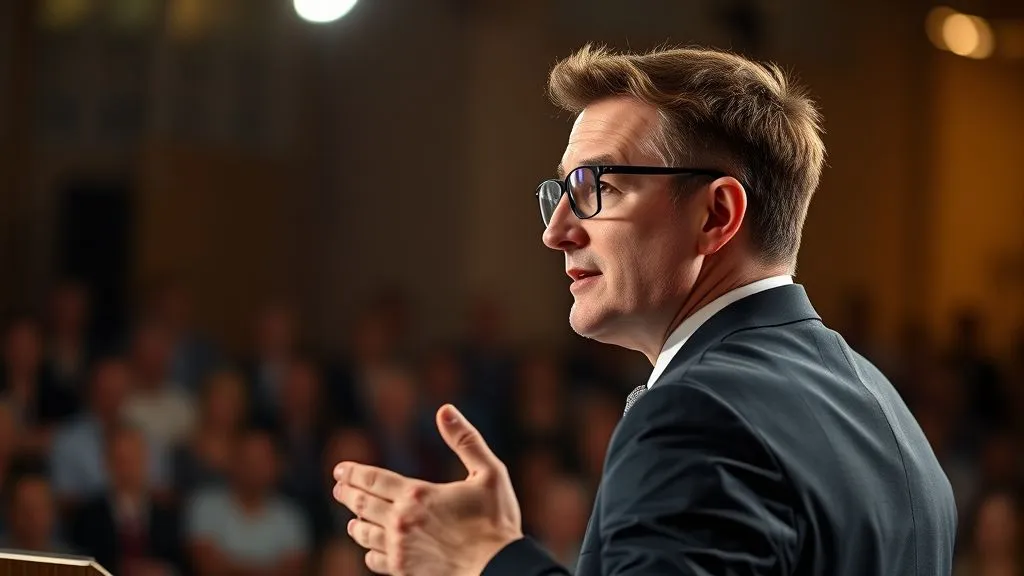
How to Prevent Progressive Lens Distortion During Public Speaking?
For over two decades in the eyewear industry, specializing in optical solutions for professionals, I've witnessed countless individuals struggle with their vision during critical moments. One of the most common, yet often unspoken, challenges arises when dynamic speakers try to command a stage while wearing progressive lenses.
The 'swim effect,' peripheral distortion, and the narrow intermediate viewing zone of progressive lenses can transform a confident presentation into a disorienting experience. This isn't just a minor annoyance; it can severely impact a speaker's presence, confidence, and ultimately, their message delivery.
This article isn't about giving up your progressive lenses. Instead, I'll share my insider strategies, honed through years of advising top executives and public figures, on how to prevent progressive lens distortion during public speaking. You'll gain actionable frameworks and expert insights to ensure your vision empowers, rather than hinders, your performance.
Understanding the Progressive Lens Challenge for Speakers
Progressive lenses, also known as no-line bifocals, offer a seamless transition between distance, intermediate, and near vision. They are a marvel of optical engineering, designed to provide multifocal correction without the visible lines of traditional bifocals.
However, this seamless transition comes with a trade-off: peripheral distortion. The optical design necessitates areas of blur or 'swim' at the edges of the lenses, particularly noticeable when moving your head or eyes rapidly. For a public speaker, whose role demands constant scanning of the audience, referring to notes, and interacting with visual aids, this can be profoundly disruptive.
"The subtle visual instability caused by progressive lenses can undermine a speaker's psychological comfort, turning their focus inward on their vision rather than outward on their audience."
I've seen firsthand how this can lead to hesitation, reduced eye contact, and a general lack of fluidity in movement. The challenge isn't the lens itself, but rather how its inherent characteristics interact with the dynamic visual demands of public speaking.
The Foundation: Optimal Lens Prescription and Quality
Before any adaptation techniques, the bedrock of preventing progressive lens distortion during public speaking lies in the lenses themselves. A faulty prescription or subpar lens quality will amplify every challenge.
Getting the Right Prescription for Your Speaking Needs
This might seem obvious, but a standard eye exam often doesn't account for the unique visual demands of public speaking. I always advise my clients to be explicit with their optometrist about their profession and the scenarios in which they'll use their glasses.
- Comprehensive Eye Exam: Ensure your prescription is up-to-date and accurate for all zones (distance, intermediate, near).
- Discuss Your Speaking Habits: Describe your typical speaking environment – stage size, teleprompter distance, note card use, audience interaction. This helps the optometrist fine-tune the intermediate and near zones.
- Specify Your Primary Need: If public speaking is a frequent and critical activity, ask about progressive designs optimized for wider intermediate viewing corridors.
Investing in High-Quality Lenses and Coatings
Not all progressive lenses are created equal. The quality of the lens material, design, and coatings significantly impacts the width of clear vision zones and the extent of peripheral distortion.
Premium digital progressive lenses, often referred to as 'free-form' lenses, are custom-made with advanced computer-controlled surfacing. This allows for a wider, clearer field of view and smoother transitions, drastically minimizing the 'swim effect' compared to conventional designs. According to a Vision Council report, advancements in lens technology have made progressive adaptation easier than ever, provided the right design is chosen.
- Anti-Reflective (AR) Coatings: Crucial for speakers. They eliminate glare from stage lights and camera flashes, ensuring your audience sees your eyes, not reflections.
- Anti-Smudge/Hydrophobic Coatings: Keep lenses clean, reducing distractions from smudges or moisture, which can exacerbate perceived distortion.
- Impact Resistance: For dynamic speakers, durable lenses are a practical necessity.
Consider this comparison:
| Feature | Standard Progressive | Premium Digital Progressive |
|---|---|---|
| Lens Design | Traditional, narrower corridors, more distortion | Wider, smoother corridors, minimal distortion |
| Coatings | Basic AR, prone to smudges | Advanced AR, anti-smudge, hydrophobic, scratch-resistant |
| Adaptation Time | Longer, more challenging | Shorter, easier |
| Visual Comfort for Speakers | Suboptimal, noticeable 'swim' | Significantly improved, clearer periphery |
As I often tell my clients, this isn't an area to cut corners. The investment in quality lenses pays dividends in confidence and clarity.
Frame Selection: A Crucial, Often Overlooked Factor
The frame you choose is more than a style statement; it's an integral part of your optical system, especially when trying to prevent progressive lens distortion during public speaking.
Wide Field of View Frames
For progressive lenses, the frame dimensions directly influence the usable viewing area. A larger, deeper frame allows for more space to accommodate all three viewing zones – distance, intermediate, and near – without feeling cramped. This can significantly reduce the sensation of peripheral distortion.
- Avoid Small, Narrow Frames: These restrict the progressive corridor, making the clear viewing zones feel much smaller and the distorted areas more prominent.
- Consider Frame Shape: Rectangular or slightly rounded square frames often provide ample vertical depth for progressive lenses.
- Aim for Optimal B-Dimension: The 'B' dimension (vertical height of the lens) should ideally be at least 30mm for comfortable progressive lens wear, giving adequate space for all focal points.
Proper Frame Fit and Adjustment
Even the best lenses in a perfectly sized frame will fail if the fit is incorrect. The optical center of your progressive lenses must align precisely with your pupils for optimal performance. Any deviation can introduce unwanted prism and distortion.
- Professional Dispensing: Always have your progressive lenses fitted by an experienced optician. They measure your pupillary distance (PD) and fitting height with extreme precision.
- Nose Pad Adjustment: Ensure the nose pads hold the frame securely at the correct height and angle. Too high or too low, and your eyes won't naturally align with the lens corridors.
- Temple Arm Adjustment: The temple arms should fit snugly but comfortably, preventing the glasses from slipping down your nose during movement. Slipping glasses mean shifting optical centers, leading to instant distortion.
- Regular Check-ups: Visit your optician periodically for adjustments, as frames can loosen or bend over time.
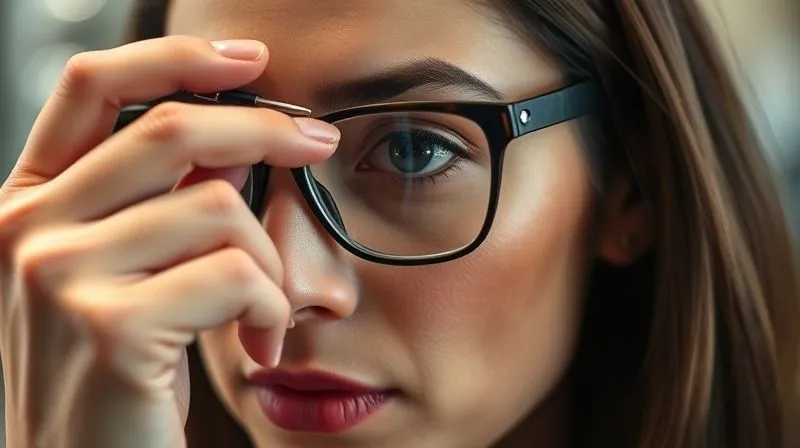
I cannot stress enough the importance of a meticulous fitting. It's the silent hero in your quest to prevent progressive lens distortion during public speaking.
Strategic Adaptation: Training Your Eyes for Public Speaking
Once you have the right prescription and frame, the next step is to train your eyes and head movements to work harmoniously with your progressive lenses. This is where personal adaptation truly makes a difference.
The "Nose-Pointing" Technique
This is a fundamental technique I teach to all my progressive lens wearers, especially those who need to scan effectively. Instead of moving just your eyes from side to side, you learn to move your head to 'point your nose' at whatever you want to look at. This ensures you are always looking through the clear, central corridor of your lens.
- For Distance: When scanning the audience, gently turn your head to face each section.
- For Intermediate: When looking at a teleprompter or presentation screen, adjust your head angle slightly to bring the screen into the intermediate zone.
- For Near: When glancing at notes, tilt your chin up slightly to look through the reading portion.
Practicing Eye and Head Movements
Adaptation is a skill, and like any skill, it improves with practice. Incorporate specific drills into your preparation routine.
- Simulated Presentation Practice: Practice your speech in front of a mirror or a small group, consciously applying the 'nose-pointing' technique.
- Scanning Drills: Set up visual cues (e.g., sticky notes) at various distances and angles. Practice smoothly transitioning your gaze and head to each cue.
- Teleprompter Practice: If using a teleprompter, practice reading at different distances and speeds, ensuring you're looking through the correct part of your lens. Adjust the teleprompter height if necessary.
Case Study: How Sarah Mastered Her Progressive Lenses for Keynotes
Sarah, a marketing director, frequently delivered keynotes but found her progressive lenses made her feel disoriented and less engaging. She would often stumble over words or lose her place when looking between her notes and the audience. After implementing the 'nose-pointing' technique and practicing specific eye-head movement drills for two weeks, Sarah reported a dramatic improvement. Her keynotes became fluid, her eye contact more consistent, and her confidence soared. She achieved this by meticulously practicing transitions between her note cards (near zone), the projector screen (intermediate zone), and her audience (distance zone), consciously moving her head rather than just her eyes. This resulted in a significant reduction in perceived distortion and a notable increase in her presentation effectiveness.

Patience and consistent practice are your allies here. Your brain needs time to rewire how it processes visual information through the new lens design.
Stage Presence and Ergonomics: Minimizing Visual Demands
Beyond your lenses and adaptation, optimizing your speaking environment and stage presence can significantly reduce the visual strain that exacerbates progressive lens distortion during public speaking.
Optimizing Visual Aids and Teleprompters
Your presentation materials should be designed to be progressive-lens friendly.
- Font Size and Contrast: Use larger font sizes on slides and teleprompters. Ensure high contrast between text and background. This reduces the need to hunt for the precise reading zone.
- Strategic Placement: Position your notes or teleprompter at a consistent, comfortable distance that falls within your intermediate or near vision zone. Avoid constantly shifting distances.
- Minimal Text: Keep slides concise. The less text you have to read or scan, the less your eyes need to work.
Managing Your Gaze and Body Language
Conscious control of your movements can help maintain clear vision.
- Deliberate Gaze: Instead of darting your eyes, make deliberate, slightly slower head turns to engage different sections of your audience. This keeps your gaze within the clear central corridor.
- Steady Posture: Maintain a stable posture. Excessive swaying or jerky movements can induce the 'swim effect.'
- Controlled Pacing: If you move around the stage, do so with purpose. Avoid rapid, uncontrolled movements that force your eyes to constantly re-adapt.
Remember, your audience is there to hear your message, not to observe your optical challenges. By managing your stage presence, you control the visual demands placed on your progressive lenses. For more insights on commanding the stage, I recommend exploring resources like Harvard Business Review's articles on public speaking.
Advanced Solutions and When to Consider Alternatives
Sometimes, despite all best efforts, the demands of public speaking might warrant a specialized approach or even a temporary alternative.
Dedicated "Speaking Glasses"
For individuals who speak frequently and find standard progressives still challenging, a dedicated pair of 'speaking glasses' can be a game-changer. These are often task-specific lenses.
- Intermediate/Distance Only: A common solution is a pair of lenses ground primarily for intermediate and distance vision, with a very wide intermediate corridor. This eliminates the near vision segment, expanding the usable area for teleprompters and audience interaction.
- Computer Progressives: Some opticians might suggest 'computer progressives' (also known as office lenses) if the primary need is for a wide intermediate and near zone, with less emphasis on far distance.
This approach allows you to optimize a pair of glasses specifically for the demands of the stage, leaving your everyday progressives for general use.
Contact Lenses vs. Glasses
For some, multifocal contact lenses can offer an alternative. They move with your eye, potentially reducing some of the fixed-point distortion issues of glasses. However, adaptation to multifocal contacts has its own learning curve and may not be suitable for everyone. It's a personal choice that should be discussed thoroughly with your optometrist, weighing the pros and cons for your specific needs.
"Knowing when to seek a specialized solution or even a temporary alternative is a sign of an experienced speaker. Don't let pride prevent you from exploring options that enhance your performance."
The goal is always clear, comfortable vision that supports your speaking goals, not hinders them. Consulting with your eye care professional to explore these advanced solutions is a smart step.
My Personal Journey & Expert Insights
As someone deeply immersed in the world of eyewear, I've had my own journey with various lens technologies, including progressives. I recall a time early in my career, presenting at a major industry conference, where my new progressive lenses felt like a foreign object. I was constantly aware of the 'swim' when I moved my head, making me feel hesitant and less authoritative.
It was a stark reminder that even with expertise, adaptation is personal. I learned the hard way that understanding the mechanics of the lens is only half the battle; the other half is training your own visual system and body to work with it. My own experience solidified my commitment to guiding others through these challenges, ensuring they don't face the same unnecessary struggles.
I often advise my clients to view their progressive lenses as a powerful tool that requires a specific operating manual. You wouldn't try to drive a high-performance car without understanding its controls. Similarly, mastering your progressive lenses for public speaking demands a conscious effort and a willingness to adapt.
Patience is paramount. Your brain is incredibly adaptable, but it needs consistent input and time to learn. Don't get discouraged if immediate perfection isn't achieved. Instead, focus on incremental improvements and celebrate small victories. For further scientific insights into visual adaptation, resources like the American Optometric Association provide excellent data.
Frequently Asked Questions (FAQ)
Q: Can my old progressive lenses cause more distortion during public speaking? Yes, absolutely. An outdated prescription can significantly worsen distortion and discomfort. As your eyes change, your progressive lens prescription needs to be updated. Even minor changes can impact the clarity and width of your viewing zones, making public speaking much harder. Always ensure your prescription is current.
Q: Is it better to use single-vision reading glasses for public speaking if I only need to see notes? It depends on your specific needs. If your speech relies heavily on notes at a fixed distance and you don't need to clearly see the audience or distant screens, dedicated reading glasses might reduce distortion. However, you'd sacrifice distance vision. For dynamic speakers who need to see both audience and notes, a tailored progressive or intermediate-distance lens is often superior.
Q: How long does it typically take to adapt to new progressive lenses for speaking? General adaptation for progressive lenses can take a few days to a few weeks. For the specific, dynamic demands of public speaking, it might take longer – perhaps 2-4 weeks of consistent practice. The key is consistent application of adaptation techniques like 'nose-pointing' in simulated speaking environments.
Q: Should I tell my audience I wear progressive lenses if I'm struggling? Generally, no. Drawing attention to a perceived weakness can undermine your confidence. Instead, focus on your preparation and adaptation techniques. If you've done your homework with your optician and practiced, your progressive lenses should be an invisible aid, not a distraction. Only if absolutely necessary, and in a lighthearted, self-deprecating way, might you briefly mention it, but it's usually best avoided.
Q: Are there specific progressive lens brands better for public speaking? While I cannot endorse specific brands, I can say that premium digital (free-form) progressive lenses from reputable manufacturers generally offer wider fields of view and smoother transitions, which are highly beneficial for speakers. Discussing 'occupational' or 'task-specific' progressive designs with your optician is key, as these are often optimized for intermediate and distance work, making them ideal for stage use.
Key Takeaways and Final Thoughts
Preventing progressive lens distortion during public speaking is entirely achievable with the right approach. It's a blend of precise optical science, careful frame selection, and strategic personal adaptation.
- Prioritize Precision: Start with a comprehensive eye exam and a high-quality, digitally designed progressive lens tailored to your speaking needs.
- Frame Matters: Choose a frame that offers ample vertical depth and ensures a perfect, stable fit to maintain optical alignment.
- Practice Adaptation: Master the 'nose-pointing' technique and practice dynamic eye-head movements to navigate your lens zones smoothly.
- Optimize Your Environment: Design your visual aids and manage your stage presence to reduce visual demands.
- Consider Specialization: Don't hesitate to explore dedicated 'speaking glasses' or other alternatives if your professional demands are high.
Your ability to connect with an audience is paramount, and your vision should be an asset, not an obstacle. By implementing these expert-backed strategies, you'll not only prevent progressive lens distortion but also enhance your overall confidence and command on any stage. Speak clearly, see clearly, and leave a lasting impression.
Recommended Reading
- Mastering Upcycled Quality: 6 Steps to Profitable Fashion Collections
- 7 Expert Tactics: Flatter Her Figure When She Hates Her Midsection
- Pro Re-glue: Fix Your Goodyear-Welted Sole Delamination Flawlessly?
- Why Couture Costs Millions: 7 Pillars Justifying Extreme Prices
- Why Dress Styles Fail Online? 5 Proven Ways to Skyrocket E-commerce Sales


Your email address will not be published. Required fields are marked *