

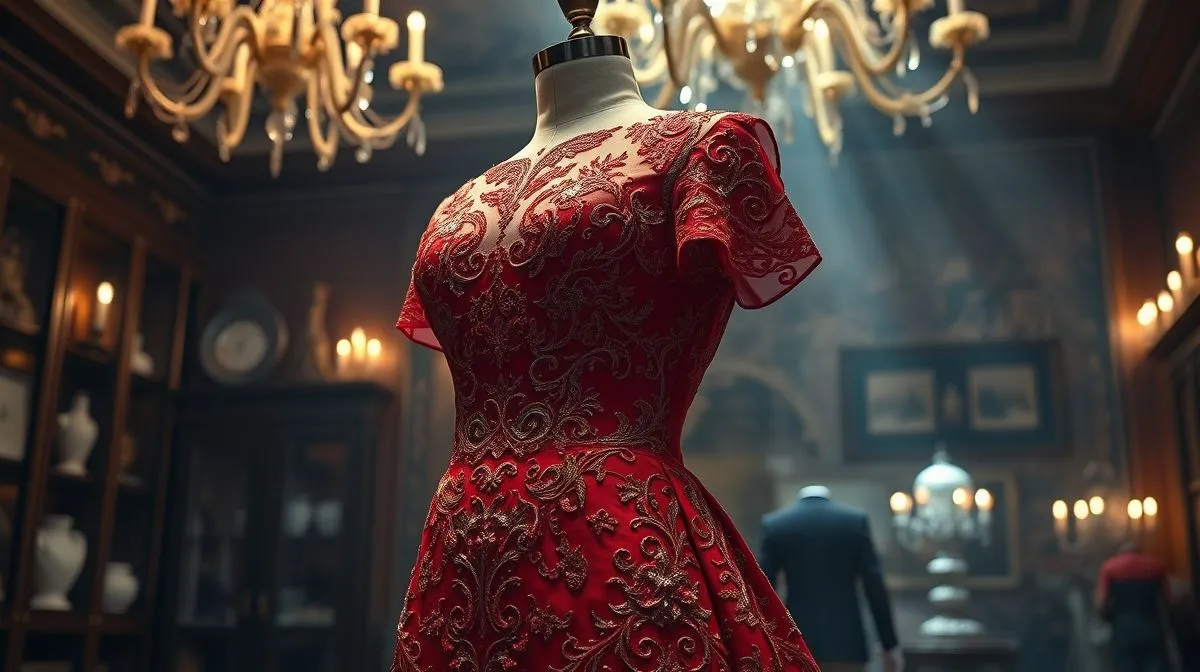
How to Justify Extreme Prices for Unparalleled Couture?
For decades, I've witnessed the bewildered gaze, the whispered question, and sometimes, the outright scoff, when the price tag of a true haute couture creation is unveiled. It’s a common misconception, even among those with a keen eye for fashion, that the astronomical figures attached to unparalleled couture are simply a matter of brand prestige or celebrity endorsement.
The truth, however, is far more complex and deeply rooted in a confluence of artistry, meticulous labor, rare materials, and an unparalleled commitment to perfection. Many struggle to articulate this intrinsic value, often reducing it to mere 'expensive clothes,' which fundamentally misunderstands the very essence of couture.
In this definitive guide, I will deconstruct the layers of value embedded within every bespoke stitch and hand-placed bead. You will gain a profound understanding of the frameworks, the hidden investments, and the irreplaceable human element that collectively answer the pivotal question: How to justify extreme prices for unparalleled couture? We'll explore actionable insights and real-world examples to empower you to articulate this value proposition with unwavering confidence.
The Invisible Labor: Beyond the Stitch
The journey of a haute couture garment begins long before the first stitch is sewn. It commences with an abstract idea, a fleeting muse, which then blossoms into countless hours of conceptualization, sketching, and design refinement. From the initial mood boards to the hundreds of detailed technical drawings, every element is meticulously planned.
This initial phase alone can consume weeks, even months, of a designer's and their team's time. Then comes the arduous process of pattern-making, which for a couture piece, is a three-dimensional sculpture of fabric, tailored precisely to the client's unique measurements. This isn't a factory template; it's a bespoke blueprint.
Multiple toiles (muslin prototypes) are created and painstakingly adjusted during repeated fittings with the client. These fittings are not mere try-ons; they are collaborative sessions where the garment is sculpted to the body, ensuring flawless drape, movement, and fit. Each alteration, no matter how minor, requires deconstruction and reconstruction, adding layers of unseen labor that are simply non-existent in ready-to-wear.
The true cost of couture often lies in the hours of unseen intellectual and physical labor, a relentless pursuit of perfection that transcends commercial timelines.
The Iterative Design Process
- Conceptualization & Research: Weeks dedicated to theme development, historical research, and material exploration.
- Sketching & Technical Drawings: Hundreds of detailed illustrations and precise technical specifications for every seam, dart, and embellishment.
- Pattern Drafting & Toile Creation: Crafting bespoke patterns and multiple fabric prototypes (toiles) to perfect the fit and silhouette.
- Client Fittings & Adjustments: Numerous private fittings where the toile, and later the actual garment, are sculpted to the client's unique physique, requiring significant deconstruction and re-stitching.
- Fabric Selection & Preparation: Sourcing, testing, and meticulously preparing the chosen high-value fabrics for cutting and manipulation.
Materials Mastery: The Rarity and the Refinement
One of the most tangible justifications for extreme couture prices is the unparalleled quality and rarity of the materials used. We're not talking about off-the-rack fabrics; we're discussing textiles woven from the finest silks, Cashmere from specific regions, or even threads spun from precious metals. These are often custom-milled exclusively for a single maison or collection, ensuring a unique hand and drape that cannot be replicated.
Beyond the base fabric, consider the embellishments. Thousands, sometimes tens of thousands, of individual beads, sequins, pearls, or feathers are often hand-applied. These are not mass-produced plastic; they are often antique, custom-dyed, or sourced from specialized ateliers that practice dying crafts. The meticulousness extends to the very structure, with internal corsetry and hidden supports built by hand to create architectural silhouettes that defy gravity, using techniques passed down through generations.
The materials in haute couture are not merely components; they are protagonists in the garment's narrative, chosen for their intrinsic beauty, rarity, and ability to elevate the design.
According to a report by The Business of Fashion, the sourcing and development of bespoke textiles and rare embellishments can account for a significant percentage of a couture piece's material cost, often involving intricate supply chains and specialized artisans. This commitment to unparalleled raw materials ensures that each piece is not just beautiful, but also robust and enduring.
Artisanal Expertise: The Human Touch of Centuries
The heart and soul of haute couture lie in the hands of the 'petites mains' – the master artisans who dedicate their lives to perfecting specialized crafts. These are not factory workers; they are highly skilled individuals, often trained for decades, who possess an encyclopedic knowledge of techniques that are fading in the age of mass production. Think of the intricate embroidery of Lesage, the delicate feather work of Lemarié, or the meticulous pleating of Lognon, all historic ateliers often owned by Chanel's Paraffection subsidiary to preserve these vital skills.
Every stitch, every bead placement, every feather arrangement is done by hand, often taking hundreds, if not thousands, of hours. A single couture gown can involve the work of multiple specialists: a tailor for the structure, a 'flou' expert for draping, an embroiderer, a feather worker, and more. This level of human touch is inimitable by machine, making each piece a unique work of art.
The value of couture is directly proportional to the mastery and time invested by its artisans, preserving a living heritage of craftsmanship that borders on the miraculous.
Case Study: Maison Aurélia's Heritage Revival
Maison Aurélia, a storied couture house, faced the challenge of justifying its increasing prices in a competitive luxury market. By transparently showcasing the multi-generational expertise of its artisans – specifically, its head embroiderer, Madame Dubois, whose family had practiced the art for five generations – they transformed client perception. They hosted private salon talks, created short documentaries on the hand-embroidery process, and invited clients to witness a master artisan at work. This direct connection to the human skill and heritage allowed them to unequivocally justify the premium, leading to a 15% increase in orders for their most elaborate pieces.
Exclusivity and Narrative: Crafting Scarcity and Desire
Haute couture, by definition, is exclusive. Each piece is typically one-of-a-kind or produced in extremely limited numbers, ensuring that the client possesses something truly unique. This scarcity inherently drives up value. It's not just about owning a beautiful garment; it's about owning a piece of fashion history, a wearable work of art that will likely never be replicated.
Beyond scarcity, there's the powerful narrative. Each couture collection tells a story, often drawing inspiration from art, history, or personal experiences. The designer imbues the pieces with meaning, creating an emotional connection that transcends mere aesthetics. Clients aren't just buying a dress; they're buying into a dream, a vision, a piece of the maison's legacy. This narrative, carefully woven into the fabric of the collection, adds an intangible yet profound layer of value.
Couture's allure isn't just in its beauty, but in its unique narrative and the promise of unparalleled exclusivity, transforming a garment into a personal legacy.
The Investment in Innovation: R&D in High Fashion
While often associated with tradition, haute couture is also a crucible of innovation. Couture houses invest significantly in research and development – not in the tech sense, but in pushing the boundaries of textile manipulation, garment construction, and new material applications. They experiment with unconventional materials, develop groundbreaking techniques for embellishment, or pioneer new ways to integrate technology into fabric.
For instance, some houses explore sustainable practices at the highest level, using innovative upcycling techniques for luxurious materials or developing biodegradable textiles that are both exquisite and environmentally conscious. This forward-thinking approach, which often trickles down to ready-to-wear, is a costly endeavor, requiring dedicated teams and extensive prototyping. This commitment to pushing creative and technical boundaries is a significant, often overlooked, component of couture's price tag.
As noted by articles in Vogue Business, the leading couture houses are increasingly investing in sustainable innovation, which, while beneficial for the planet, also adds to the complexity and cost of production, further justifying the premium pricing.
The Client Experience: Beyond the Garment
When you purchase haute couture, you're not just buying a dress; you're entering into an exclusive relationship with the maison. The client experience is as bespoke and luxurious as the garment itself. This includes private, personalized consultations, often in opulent salons. Designers themselves are frequently involved in the fittings, providing an unparalleled level of personal attention.
For international clients, maison representatives or even the creative director might travel to them for fittings, ensuring convenience and discretion. The delivery of the final garment is an event in itself, often hand-delivered, perfectly pressed, and presented in custom-made packaging. Post-purchase, the client receives ongoing care, from specialized cleaning advice to repair services, ensuring the longevity of their investment.
The couture experience is a holistic luxury journey, where every touchpoint is meticulously curated to reflect the exclusivity and value of the creation. It's an investment in unparalleled service and personal connection.
This white-glove service, the ultimate expression of personalized luxury, requires a dedicated team of client advisors, travel logistics, and specialized service staff, all of whom contribute to the overall cost and, crucially, the perceived value of the couture piece.
Economic Impact: Driving Trends and Sustaining Craft
Haute couture, though a niche market, plays a vital role in the broader fashion ecosystem. It acts as the ultimate research and development lab for the entire industry. The silhouettes, fabric innovations, and embellishment techniques pioneered in couture often inspire and influence ready-to-wear collections, trickling down to high-street fashion over subsequent seasons. Without couture, the cutting edge of fashion would dull considerably.
Furthermore, couture houses are crucial in sustaining dying artisanal crafts. By commissioning work from the 'petites mains' ateliers, they provide essential income and perpetuate skills that would otherwise be lost to time. These include intricate embroidery, feather work, pleating, and specialized lace-making. The high prices of couture directly enable the preservation of these invaluable cultural heritages, supporting entire communities of highly skilled artisans.
When considering how to justify extreme prices for unparalleled couture, it's vital to remember its role as a cultural patron. It is not merely commerce; it is the preservation of art, skill, and heritage. As often highlighted by cultural institutions and academic studies, the economic value of couture extends far beyond the transaction, contributing significantly to a nation's creative economy and cultural identity.
Framing the Value: Communicating the Unseen
Now, understanding these pillars is one thing; articulating them effectively to a potential client or a skeptical public is another. The key to justifying couture's extreme prices lies in shifting the narrative from 'cost' to 'value' and 'investment'.
Strategies for Effective Value Communication
- Emphasize the Time Investment: Quantify the hours of labor. Instead of 'it took a long time,' state 'this gown involved over 1,500 hours of hand-embroidery alone, requiring the expertise of three master artisans over four months.'
- Showcase Material Provenance: Highlight the rarity and bespoke nature of fabrics and embellishments. 'The silk for this piece was custom-loomed in Lyon, a process that took six weeks to achieve this unique drape and sheen.'
- Introduce the Artisans: Humanize the process. Share stories of the 'petites mains,' their training, their heritage, and their dedication. 'Our head embroiderer, Madame Dubois, descends from a lineage of master artisans, carrying techniques passed down for generations.'
- Detail the Bespoke Experience: Outline the personalized service, the multi-stage fittings, and the direct involvement of the design team. 'Beyond the garment, you receive unlimited private fittings, with our creative director overseeing every adjustment to ensure absolute perfection.'
- Position as Art and Investment: Frame the piece not just as clothing, but as a unique work of art or a collectible. Discuss its potential to appreciate in value, its heirloom quality, and its place in fashion history. 'This is not merely a gown; it is a wearable sculpture, a piece of contemporary art designed to be cherished for generations.'
- Highlight Innovation and Influence: Explain how the piece pushes boundaries, uses new techniques, or contributes to the broader fashion landscape. 'The innovative pleating technique developed for this collection is a first in haute couture, setting a new benchmark for fluidity in design.'
Frequently Asked Questions (FAQ)
Is haute couture truly an investment that appreciates in value? While not all pieces will appreciate like fine art, certain iconic designs, particularly those by legendary designers or from historically significant collections, can indeed hold or even increase their value over time. Factors include rarity, designer provenance, historical significance, and original condition. They are often considered collectible items by museums and private collectors.
Can't I get a similar look for a fraction of the price in ready-to-wear? While mass-produced fashion may mimic certain styles or silhouettes, it cannot replicate the unparalleled quality, bespoke fit, rare materials, or thousands of hours of hand-craftsmanship inherent in true haute couture. The attention to detail, internal construction, and personalized service are simply not comparable, leading to a fundamentally different product and experience.
Is haute couture sustainable, given its exclusivity and material use? This is a complex question. On one hand, couture's focus on longevity, quality, and often natural, high-grade materials makes it inherently less disposable than fast fashion. Many houses are also investing in ethical sourcing, upcycling, and preserving artisanal skills, which contributes to cultural sustainability. Its limited production also means a smaller environmental footprint compared to mass manufacturing, despite the use of luxurious materials.
How many fittings are typically involved for a haute couture gown? The number of fittings varies depending on the complexity of the design and the client's needs, but typically, a couture gown requires at least three to five fittings. The first involves a toile (muslin prototype), subsequent fittings involve the actual garment in various stages of completion, with meticulous adjustments made each time. For highly intricate pieces or destination clients, this number can be even higher.
Who buys haute couture, and how accessible is it? The clientele for haute couture is extremely exclusive, consisting of a few thousand individuals globally – predominantly wealthy private clients, often from royal families, high-net-worth individuals, and celebrities. While the price point makes it inaccessible to most, the true barrier is often the bespoke relationship and the invitation into this private world of luxury.
Recommended Reading
- Mastering Character Costume Design: How to Conceptualize Effectively
- The Ultimate Guide: How to Ensure Perfect Custom Bridal Gown Fit for Your Big Day
- Unmasking Souls: What Costume Details Reveal Character Backstory?
- 5 Rapid Fixes for Razor Burn Before Your Big Client Meeting
- The Secret to Soothing Comfort: How to Choose Newborn Clothes for Sensitive Skin
Key Takeaways and Final Thoughts
- Couture is Art, Not Just Clothing: It's a wearable sculpture, imbued with artistic vision and unparalleled craftsmanship.
- Labor is Invisible but Immense: Thousands of hours of design, pattern-making, and hand-finishing justify a significant portion of the cost.
- Materials are Unrivaled: Rare, custom-sourced, and meticulously embellished materials contribute profoundly to the value.
- Artisans are Irreplaceable: The multi-generational skills of the 'petites mains' are a dying art form, sustained by couture.
- Experience is Paramount: The white-glove, bespoke client journey is an integral part of the luxury proposition.
- It's an Industry Driver: Couture pioneers innovation and preserves essential artisanal heritage for the entire fashion world.
Understanding how to justify extreme prices for unparalleled couture means looking beyond the sticker shock and appreciating the intricate tapestry of human ingenuity, artistic dedication, and material excellence. It's about recognizing that these creations are not merely garments; they are profound statements of artistry, legacy, and an unwavering commitment to beauty that stands outside the fleeting trends of the everyday. As an industry expert, I've seen firsthand that once this multifaceted value is truly understood, the price ceases to be a barrier and becomes a testament to an extraordinary human achievement.


Your email address will not be published. Required fields are marked *