

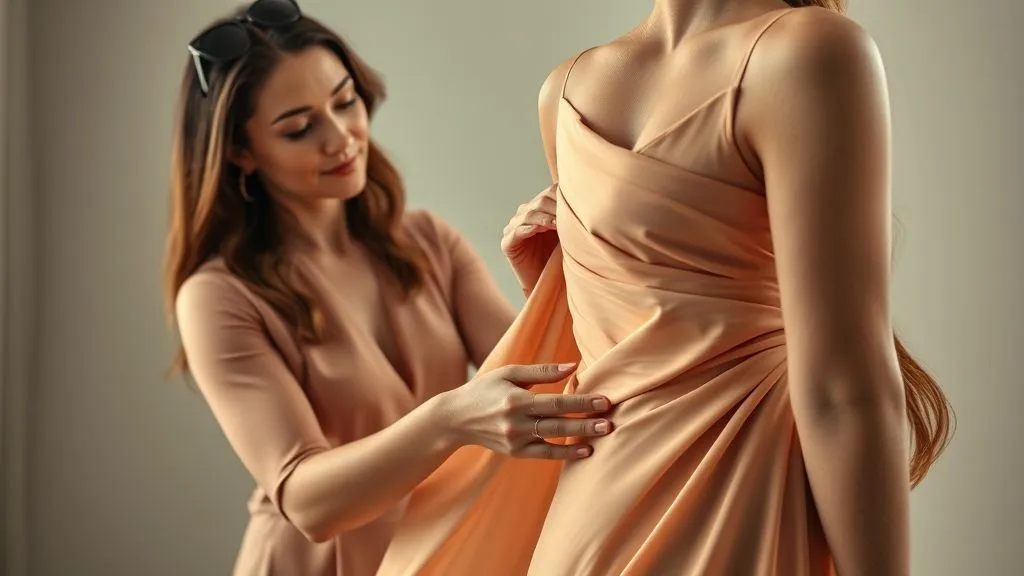
How to Flatter a Client's Figure When They Hate Their Midsection?
For over two decades in luxury womenswear and personal styling, I've witnessed a recurring moment in fitting rooms: the subtle flinch, the averted gaze, the quiet sigh when a client confronts their midsection. It's a deeply personal and often vulnerable experience, and as stylists, it's our paramount duty to approach it with profound empathy and expert solutions.
This particular area of the body can be a source of immense self-consciousness for many women, regardless of their overall size or shape. It’s not just about concealing; it's about transforming perception, fostering confidence, and empowering a client to feel beautiful and comfortable in their own skin, especially when they express a strong dislike for their core.
In this definitive guide, I will share my most effective, battle-tested strategies to not only address but elegantly resolve this common styling challenge. You'll learn actionable frameworks, delve into specific garment choices, and gain insights that will allow you to expertly flatter a client's figure when they hate their midsection, turning apprehension into absolute delight.
1. The Art of Deep Listening and Empathetic Engagement
Before any garment is even considered, the first and most crucial step is to truly listen to your client. Their words, body language, and subtle cues will reveal the depth of their feelings about their midsection. I've found that often, the dislike stems from a feeling of lack of control or a perceived divergence from an ideal.
Never dismiss or minimize their feelings. Acknowledge their concern directly but gently, then pivot to the positive. For example, 'I understand that area is a concern for you, and I assure you we have many beautiful options that will make you feel incredibly confident and comfortable.'
Building Trust Through Understanding
- Ask open-ended questions: 'What specifically about your midsection makes you uncomfortable?' or 'What kind of feeling are you hoping to achieve with your outfit?'
- Observe their reactions: Pay attention to what they gravitate towards or pull away from, even before trying anything on.
- Educate gently: Explain how certain cuts or fabrics work, without making it sound like a 'fix' for a 'flaw.' Frame it as enhancing their natural beauty.
"The most powerful styling tool isn't a garment; it's the ability to make a client feel seen, heard, and understood. When you connect on that level, the clothes become a vehicle for their inner confidence."
2. Mastering Strategic Silhouettes: Your Foundation for Flattery
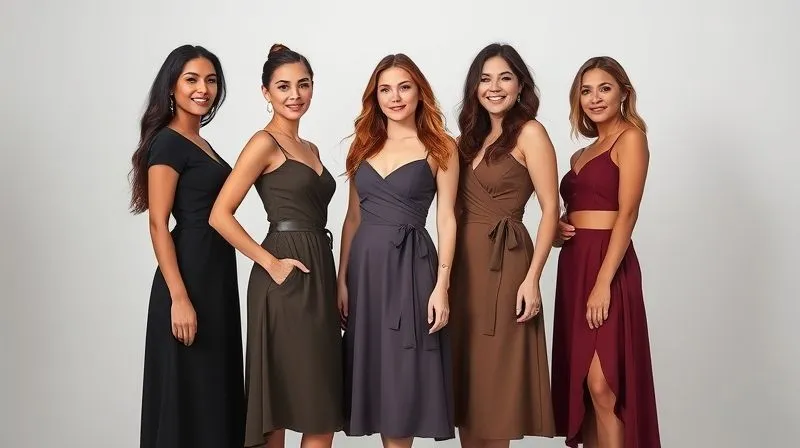
The right silhouette is paramount when aiming to flatter the midsection. Instead of trying to 'hide,' we aim to re-balance proportions and create a harmonious visual flow. My go-to silhouettes are those that gently skim, define above the waist, or create a vertical line.
Key Silhouettes to Employ:
- The Empire Waist: This cut defines the smallest part of the torso, just under the bust, and then flows loosely over the midsection. It elongates the body and creates a graceful drape.
- A-Line Dresses and Skirts: Starting fitted at the natural waist or slightly higher, the A-line flares out gradually, creating an elegant 'A' shape that skims over the hips and tummy without clinging.
- Wrap Dresses: A true styling hero. The adjustable waist allows for custom definition, cinching in at the narrowest point and creating a flattering V-neckline that draws the eye upwards. The overlapping fabric also provides a natural, soft camouflage for the midsection.
- Fit-and-Flare: Similar to A-line but often with a more pronounced flare. It emphasizes the waist, then flows away from the body.
3. The Power of Fabric and Drape: Elegant Concealment
The choice of fabric is just as critical as the silhouette. Stiff, unyielding fabrics can add bulk, while overly thin, clingy materials can highlight areas of concern. The goal is to select fabrics that drape beautifully and flow rather than cling.
Optimal Fabric Choices:
- Flowy Wovens: Think rayon, Tencel, modal, and soft silks. These materials have a natural fluidity that prevents them from clinging.
- Draped Knits: High-quality jersey, merino wool, or cashmere blends that have enough weight to drape smoothly without being bulky.
- Structured but Soft: Fabrics like a medium-weight linen blend or certain crepes can hold a shape without being stiff, offering a gentle structure that doesn't compress.
- Prints and Patterns: Strategic prints can be incredibly effective. Busy, abstract patterns or vertical stripes (thin, not wide) can create an optical illusion that distracts the eye and camouflages unevenness.
Avoid anything too thin, too stretchy (unless it's shapewear, which we'll discuss), or too stiff. The fabric should feel luxurious and move with the client, not against her.
4. High-Waisted Wonders: Elevating the Waistline
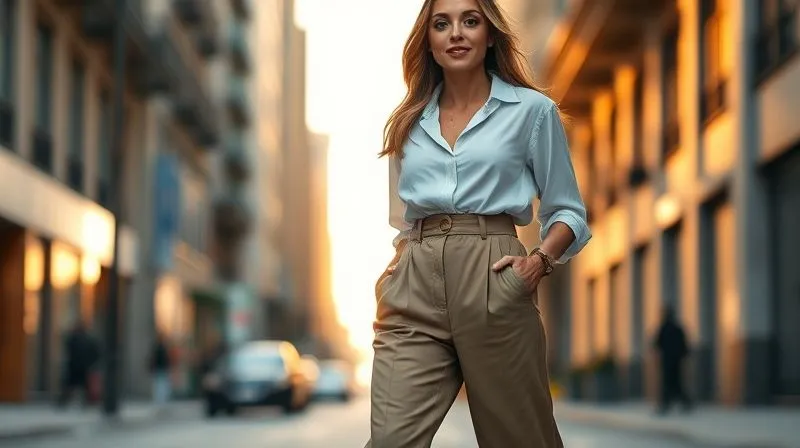
For clients who prefer separates, high-waisted bottoms are an absolute game-changer. They effectively elongate the leg line and, crucially, draw the eye to the narrowest part of the torso, which is often above the navel.
Styling High-Waisted Garments:
- High-Waisted Trousers/Skirts: Opt for styles that sit at or above the natural waist. Ensure the waistband is wide and comfortable, avoiding anything that digs in. Look for details like pleats that open up, providing extra room and drape over the tummy.
- Pair with Blouses: Tuck in blouses made of flowy fabrics, allowing for a slight blouson effect, or choose blouses that are designed to be worn untucked but end at the high waistline.
- Layer with Jackets/Cardigans: A well-fitted blazer or cardigan that ends at the hip or longer can create vertical lines that further slim and elongate, complementing the high-waisted bottom.
5. Layering Like a Pro: Creating Verticality and Dimension
Layering is a powerful tool in any stylist's arsenal, but it becomes particularly effective when addressing midsection concerns. The key is to create long, unbroken vertical lines that draw the eye up and down, rather than across.
Effective Layering Techniques:
- Longline Cardigans and Vests: A cardigan or vest that falls below the hip creates two vertical lines down the front of the body, visually slimming the silhouette.
- Open Blazers: Worn unbuttoned, a well-tailored blazer acts similarly, adding structure and verticality. Ensure it's not too tight across the midsection when open.
- Monochromatic Underlayers: Dressing in a single color underneath an open layer creates a seamless column, further enhancing the elongating effect.
- Peplum Tops: While often misunderstood, a well-designed peplum top can be a lifesaver. The flare of the peplum should start at the narrowest part of the waist and gently skim over the midsection, creating an hourglass illusion. Avoid overly voluminous or stiff peplums.
| Styling Challenge | Solution Strategy | Key Garments |
|---|---|---|
| Midsection self-consciousness | Strategic Silhouettes | Empire waist, A-line, Wrap dresses, Fit-and-flare |
| Clingy fabrics highlighting tummy | Fabric & Drape | Flowy wovens, Draped knits, Structured crepes |
| Unflattering waistline | High-Waisted Bottoms | High-waisted trousers/skirts, Blouses for tucking |
| Lack of verticality | Layering & Illusions | Longline cardigans/vests, Open blazers, Peplum tops |
6. Accessorizing to Distract and Delight
Accessories are not just embellishments; they are strategic focal points. When a client is self-conscious about their midsection, we can use accessories to draw attention to other areas they feel more confident about, or to create a visual diversion.
Strategic Accessorizing:
- Statement Necklaces and Earrings: Bold jewelry near the face and décolletage instantly draws the eye upwards, away from the midsection.
- Scarves: A beautifully draped scarf can add color and texture around the neckline, serving as another upward focal point.
- Belts (Used Judiciously): While a belt directly over the midsection might be avoided, a belt worn higher on an empire-waist dress or a loosely tied belt on a longline cardigan can define the waist without drawing attention to the tummy.
- Eye-Catching Shoes and Handbags: A vibrant pair of shoes or a chic handbag can anchor an outfit and draw the eye downwards or to the side, balancing the overall look.
"Every accessory, every fold of fabric, every line of a garment is an opportunity to tell a story of confidence and elegance. Direct the narrative with intention."
7. The Role of Shapewear: Friend or Foe?
Shapewear can be a powerful tool, but it must be approached with sensitivity and an understanding of its purpose. It's not about 'sucking it all in' uncomfortably; it's about providing a smooth, seamless foundation that allows garments to drape more beautifully.
Guiding Clients on Shapewear:
- Comfort is Key: Emphasize that shapewear should feel supportive, not restrictive. If it's uncomfortable, it won't be worn.
- Targeted Support: Recommend pieces that specifically target the midsection with gentle compression, such as high-waisted briefs, camisoles with tummy control, or full slips.
- Seamless Finishes: Ensure the shapewear is seamless to avoid VPL (visible panty line) or bulges under clothing.
- Educate on Benefits: Explain that shapewear helps clothes glide over the body, preventing cling and creating a more polished look, rather than drastically altering their size.
According to a survey by Statista, comfort and effectiveness are the top drivers for shapewear purchases. Always prioritize fit and comfort for your client.
Case Study: Eleanor's Confidence Transformation
How a Thoughtful Approach Changed Everything for Eleanor
Eleanor, a senior executive in her late 40s, came to me with a common complaint: 'I hate my stomach. Nothing looks good on me anymore.' She had a classic apple body shape and felt constantly frustrated by clothes that clung to her midsection, making her feel self-conscious and unprofessional. My initial consultation focused purely on listening to her concerns and understanding her lifestyle.
We started by incorporating empire-waist blouses made from luxurious silk blends, which she paired with high-waisted, wide-leg trousers. The trousers, with their comfortable, flat front and flowing drape, elongated her legs and drew attention away from her core. For formal occasions, I introduced her to wrap dresses in structured jersey, emphasizing how the adjustable waist allowed her to define her shape comfortably without feeling constricted. We also layered these with longline, open blazers to create strong vertical lines.
The transformation wasn't just in her wardrobe; it was in her demeanor. She reported feeling 'liberated' and 'powerful' in her new clothes. By focusing on strategic silhouettes, quality fabrics, and smart layering, we didn't 'hide' her midsection; we simply dressed her in a way that celebrated her entire figure, allowing her confidence to shine through. This resulted in Eleanor feeling more assertive in meetings and receiving compliments on her polished appearance, which further boosted her self-esteem.
Beyond the Clothes: Fostering Body Confidence
While our primary role is styling, we also have an opportunity to gently foster a more positive body image. Remind clients that bodies change, and fashion is a tool to adapt and celebrate those changes.
- Focus on Strengths: Draw attention to areas they love – their shoulders, their legs, their décolletage.
- Comfort Equals Confidence: A client who is physically comfortable in their clothes will naturally exude more confidence.
- It's Not About Size: Emphasize that flattering styles are about proportion and cut, not about shrinking their size.
As Vogue Business highlights, the movement towards body positivity is influencing how brands and stylists approach fashion. Embrace this shift by focusing on empowerment through thoughtful styling.
Frequently Asked Questions (FAQ)
Q: What's the biggest mistake stylists make when a client dislikes their midsection? The biggest mistake is either ignoring the client's concern or, conversely, trying too hard to 'hide' it with overly baggy or shapeless clothes. Both approaches often leave the client feeling unheard or even larger than they are. The key is empathetic acknowledgment followed by strategic, elegant solutions that re-balance proportions.
Q: Are horizontal stripes always a no-go for clients concerned about their tummy? Not necessarily! While wide, contrasting horizontal stripes across the midsection can broaden, thin, closely spaced horizontal stripes, especially on a top worn under an open blazer or cardigan, can actually create a subtle elongating effect. It's all about context and how the stripes are used within the overall outfit.
Q: How do I handle a client who insists on wearing very tight clothing that highlights their midsection? This requires delicate negotiation. Instead of outright telling them it's unflattering, focus on the benefits of different fits. Say, 'While this is a lovely piece, have you considered how a slightly different cut could enhance your natural shape even more beautifully and give you greater comfort?' Offer alternatives that provide gentle shaping or better drape, showing them the positive impact of those choices.
Q: What are some specific top styles that flatter the midsection? Beyond empire waists and peplums, look for tops with ruching or gathering at the side seams, which can create texture and camouflage. Also, asymmetrical hemlines or tops with strategic draping can be very effective. Tunic tops that skim over the hips are also excellent choices, especially when paired with slim-fitting bottoms.
Q: Should I always recommend shapewear if a client dislikes their midsection? No, not always. Shapewear is an option, not a mandate. It should only be suggested if it enhances the overall look and, crucially, if the client is open to it and finds it comfortable. Many clients prefer to achieve flattery solely through garment construction and fabric choice. Always prioritize their comfort and preference.
Key Takeaways and Final Thoughts
Addressing a client's concern about their midsection goes far beyond simply choosing clothes; it's about understanding, empathy, and applying expert knowledge to build confidence. As stylists, we hold a unique position to transform how women feel about themselves.
- Listen First, Style Second: Understand the emotional root of their concern.
- Strategic Silhouettes are Non-Negotiable: Empire, A-line, and wrap styles are your allies.
- Fabric Matters: Opt for drape and flow over cling or stiffness.
- High-Waisted is a Hero: Elevate the waistline to lengthen and define.
- Layer with Purpose: Create vertical lines and dimension.
- Accessorize Smartly: Direct the eye to areas of confidence.
- Shapewear as a Foundation: Offer comfortable, seamless options if appropriate.
By mastering these techniques and approaching each client with genuine care, you won't just be dressing a figure; you'll be empowering a woman to embrace her unique beauty, transforming a point of insecurity into a source of undeniable style and self-assurance. Remember, the goal is always to make them feel incredible, from the inside out.
Recommended Reading
- 7 Essential Formal Shoes for Your High-Stakes Interview Success
- Scaling WBP Fabric Production: 7 Ways to Maintain Peak Performance
- 7 Pro Lighting Fixes: Preventing Fabric Texture Loss in Studio Fashion Photography
- 7 Essential Steps: Safeguarding Your Fragile Vintage Dresses from Irreversible Damage
- Mastering Couture: 7 Strategies for Flawless Fit Despite Posture Issues


Your email address will not be published. Required fields are marked *