

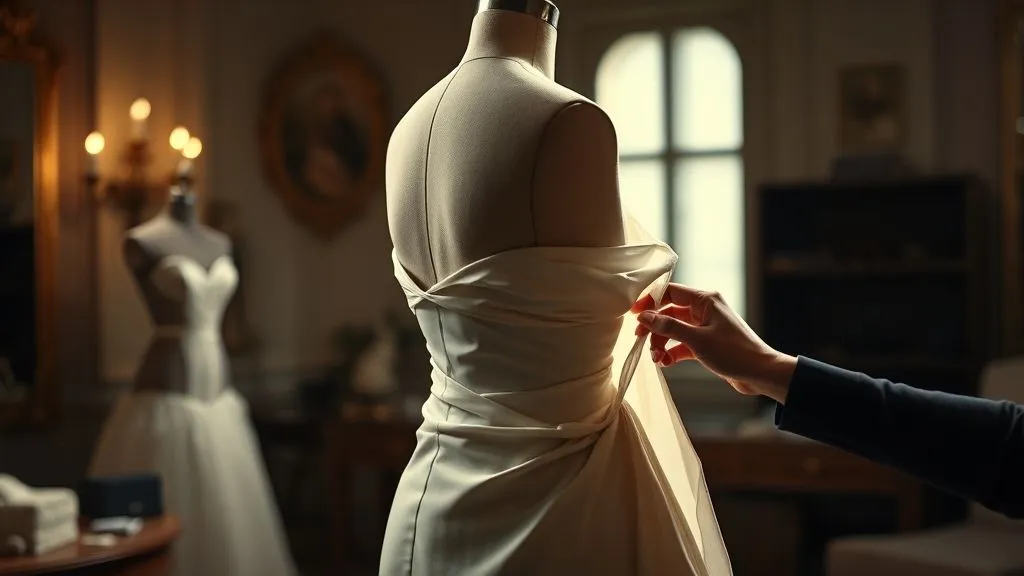
Achieving flawless haute couture fit despite client posture issues?
For over two decades in the rarefied world of haute couture, I've witnessed firsthand the exquisite artistry and the relentless pursuit of perfection that defines this craft. Yet, I've also seen a common, often underestimated adversary challenge even the most skilled ateliers: the nuances of individual client posture. It’s a silent, intricate dance between the garment’s intended design and the unique physical landscape of the wearer.
The problem isn't merely about taking accurate measurements; it's about understanding how a client's natural stance, spinal curvature, shoulder slope, and even the way they hold their head, profoundly impacts how a meticulously crafted garment drapes, balances, and feels. Ignoring these subtle yet critical postural variations can lead to pulling, gaping, wrinkling, and an overall sense of discomfort that betrays the very essence of bespoke luxury.
This article will delve deep into the strategic frameworks and expert insights I've honed over years to overcome these challenges. You'll learn not just about identifying posture issues, but about implementing actionable, precision-driven techniques – from initial consultation to final fitting – ensuring that every haute couture creation achieves a truly flawless fit, regardless of the client's unique postural landscape. We'll explore the art of observation, the science of pattern manipulation, and the psychology of client communication, all geared towards achieving that coveted, unparalleled bespoke perfection.
The Unseen Challenge: Why Posture Matters in Haute Couture
In haute couture, the garment isn't just worn; it's an extension of the individual, a second skin that moves with grace and confidence. This ideal is shattered when a client's natural posture isn't accounted for. Unlike ready-to-wear, which caters to an idealized average, couture embraces individuality, making postural variations a central, not peripheral, concern.
Consider the common postural deviations: a forward head posture can cause necklines to pull back; rounded shoulders (kyphosis) lead to fabric pooling at the front armscye and tightness across the back; a sway back (lordosis) can create horizontal wrinkles below the waist at the back and cause front panels to hang away from the body. Even subtle differences in shoulder height or hip tilt, often due to natural asymmetry, can throw off the balance of a perfectly symmetrical design.
From my experience, the biggest mistake is to treat these as 'flaws' to be corrected in the client, rather than design parameters to be embraced and accommodated within the garment. The fabric, cut, and construction must adapt to the body, not the other way around. This foundational understanding is the first step in achieving truly bespoke excellence.
Key Insight: Haute couture isn't about fitting a standard body into a standard garment; it's about crafting a standard-setting garment to flawlessly embrace a unique body, posture and all.
The Initial Consultation: Beyond Measurements
The journey to a flawless fit begins long before the first stitch. The initial consultation is your most critical data-gathering phase, extending far beyond the tape measure. I always approach this as a holistic assessment, engaging all my senses and observational skills.
First, observe the client as they enter the atelier, sit, and stand naturally. How do they carry themselves? What is their typical stance? I often ask them to walk a short distance, turn, and sit again, noting any habitual movements or asymmetries. Discreet photographs (with consent, of course) from various angles – front, back, and side – can be invaluable. These images serve as a crucial reference, allowing for a more objective analysis of their natural body alignment, shoulder slope, and spinal curvature.
Secondly, engage in a conversation about their comfort. Do they typically find sleeves tight? Do dresses pull at the back? This client feedback, often overlooked, provides critical clues about their posture and how it interacts with clothing. According to a study published in the Journal of the Textile Institute, subjective comfort perception is intrinsically linked to garment fit, reinforcing the need for this qualitative data. This deep dive into observation and client dialogue forms the bedrock for all subsequent design and fitting decisions.

Mastering the Muslin: The Posture-Aware Toile
The muslin, or toile, is the haute couturier's most potent weapon in achieving a flawless fit, especially when confronting posture issues. This is where theory meets reality, and where initial pattern adjustments are put to the test. My process for developing a posture-aware toile is meticulous and iterative.
Here’s my step-by-step approach:
- Initial Pattern Draft: Start with a basic block pattern, adjusted for the client's standard measurements. Do not attempt complex posture corrections at this stage; keep it foundational.
- First Muslin Construction: Construct the toile in an inexpensive, stable fabric (like unbleached cotton muslin) that mimics the drape of the final garment fabric as closely as possible. Ensure all seam allowances are generous, typically 1-2 inches, to allow for significant adjustments.
- The First Fitting (Observation Focus): Fit the muslin on the client. Resist the urge to fix every issue immediately. Instead, observe how the fabric interacts with their body. Look for drag lines, gaping, pooling, and areas of tension. Use a balance line tape (horizontal and vertical) to visually assess how the garment hangs in relation to their natural body lines.
- Pinning and Marking: Systematically pin out excess fabric and release areas of tightness. Use different colored chalks or threads to mark new seam lines, balance lines, and areas requiring additional ease or reduction. Pay close attention to the neckline, shoulder seams, armscye, and back panels, as these are often the first to reveal postural discrepancies.
- Documenting Changes: Crucially, photograph the client in the pinned muslin from all angles. Sketch the adjustments directly onto a copy of the pattern block or a detailed drawing. Note down every single change, no matter how small. This documentation is vital for translating muslin adjustments back to the flat pattern.
This iterative process allows for precise, controlled adjustments, ensuring that each modification addresses a specific postural need without compromising the overall design integrity. It’s a dialogue between the fabric, the body, and the designer's discerning eye.
Precision Pattern Adjustments: Engineering the Fit
Translating the muslin adjustments back to the flat pattern is where the engineering of haute couture truly shines. This isn't about guesswork; it's about systematic, calculated modifications that reshape the two-dimensional pattern to accommodate the three-dimensional body, posture included. I employ a range of techniques, often combining them for complex cases.
- Slash and Spread/Overlap: For issues like rounded backs (kyphosis), I'll slash the back pattern piece horizontally and vertically, spreading it to add length and width across the shoulder blades, creating a 'bubble' of fabric to accommodate the curve. Conversely, for a sway back (lordosis), I might overlap sections to remove excess fabric.
- Pivot and Slide: For uneven shoulders or a forward head, I might pivot the shoulder seam or neckline to rebalance the garment. This technique is particularly useful for adjusting the slope of a shoulder or the pitch of a sleeve.
- Dart Manipulation: Darts are fundamental for shaping. For a prominent bust or a forward shoulder, I might shift or add darts to redistribute fullness and achieve a smoother drape.
- Adding Ease Strategically: Sometimes, the answer isn't removal but addition. For clients with broader backs or a more pronounced lumbar curve, adding targeted ease in specific panels prevents tension and allows for natural movement.
These adjustments are not arbitrary; they are derived directly from the muslin fitting and informed by an understanding of body mechanics. It’s a precise art that requires patience and a deep knowledge of pattern drafting principles. For further insights into advanced pattern manipulation, I often refer to historical texts and contemporary guides on bespoke tailoring, such as those found through the Fashion Institute of Technology's extensive resources.
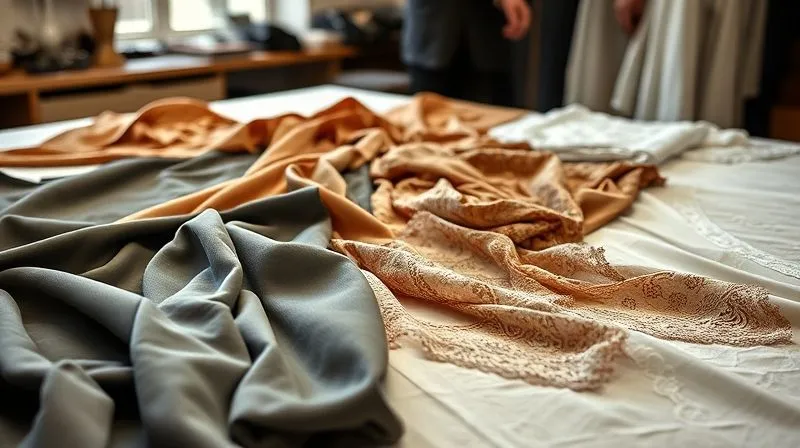
Strategic Fabric Selection: Working with the Body
The choice of fabric is not just about aesthetics; it's a critical tool in achieving flawless haute couture fit, especially when navigating client posture issues. Certain fabrics can either mitigate or exacerbate postural challenges, and understanding their properties is paramount. As an experienced specialist, I've learned to select fabrics not just for their beauty, but for their inherent ability to work with, rather than against, the body's unique contours.
For clients with significant spinal curvature or asymmetry, fabrics with a degree of natural stretch or a fluid drape can be a blessing. Think of bias-cut silks or certain finely woven crepes; their inherent give allows them to flow over curves without pulling or creating harsh lines. Conversely, very stiff, structured fabrics like heavy brocades or certain taffetas, while magnificent, demand absolute precision in pattern cutting and can highlight every postural nuance if not perfectly balanced.
I also consider the fabric's weight and stability. A heavier fabric might hang beautifully, masking minor irregularities, while a very lightweight, sheer fabric will reveal every detail. The goal is always harmony. A well-chosen fabric, combined with expert pattern work, can make the difference between a garment that merely fits and one that truly sings on the body. This approach aligns with the principles of ergonomic design in fashion, where material properties are considered for optimal interaction with the human form.
The Art of the Baste Fitting: A Dialogue with the Client
The baste fitting (or 'basting' in some regions) is the heart of the couture process for achieving flawless haute couture fit despite client posture issues. This is where the garment, now constructed in the actual fabric but held together with temporary stitches, truly comes alive on the client's body. It's a dynamic, interactive session, a dialogue between the garment, the client, and my expert eye.
My approach is to create an environment of trust and open communication. I encourage the client to move, sit, and even mimic actions they might perform while wearing the garment. I ask specific questions: 'Does this feel restrictive?' 'Do you feel balanced?' 'Is there any pulling here?' Their subjective feedback is as crucial as my objective observations of drape and balance.
During this fitting, I meticulously assess: the hang of the skirt or trousers, the balance of the bodice, the set of the sleeves, the symmetry of the neckline, and the overall silhouette. I use pins, chalk, and sometimes even temporary basting stitches to make micro-adjustments directly on the body. These adjustments are then meticulously transferred back to the pattern, ensuring that the final garment embodies every nuance of their unique posture.
Case Study: Perfecting 'The Empress Gown' for Madame Dubois
Madame Dubois, a distinguished client, commissioned an elaborate evening gown. Her elegant posture, however, included a subtle but noticeable forward head and rounded shoulders, combined with a slight sway in her lower back. Her initial muslin showed significant pooling at the front armscye, pulling across the upper back, and a tendency for the skirt's waistline to dip at the back.
During her baste fitting, instead of forcing the garment to a 'standard' shape, I focused on accommodating her natural lines. I strategically released fabric across the upper back and added a small amount of length to the back bodice, allowing the fabric to flow over her rounded shoulders without tension. For her forward head, I subtly adjusted the neckline, pivoting it slightly forward at the shoulder seam to prevent it from pulling back. For the sway back, I carefully took in a small amount of fabric at the lower back seam, creating a more contoured fit that eliminated the pooling. We chose a silk crepe that offered a graceful drape, further enhancing the fluidity. The final gown, dubbed 'The Empress Gown' by Madame Dubois, moved with her effortlessly, embodying a fit so natural, it appeared to be a part of her, not merely worn upon her.
Advanced Alteration Techniques: Correcting Asymmetry & Sway
Beyond the initial pattern adjustments and baste fittings, the final stages of haute couture often involve advanced alteration techniques to refine the fit, particularly for complex postural challenges like significant asymmetry or pronounced sway. This is where a deep understanding of garment construction and an almost surgical precision come into play.
My advanced toolkit includes:
- Internal Structure Engineering: For clients needing subtle posture support or to create a smoother silhouette over an uneven form, I often integrate internal structures. This can involve precisely shaped boning, strategically placed interlinings, or even custom-built foundation garments sewn directly into the couture piece. These elements provide invisible support, allowing the outer fabric to drape perfectly.
- Balanced Hemlines: Postural variations can cause hemlines to appear uneven, even if they are technically cut straight. This is especially true for clients with a hip tilt or a leg length discrepancy. I balance hemlines not just by measurement from the floor, but by observing how the fabric hangs dynamically. Sometimes, a seemingly 'uneven' cut is necessary to achieve a visually level hem on the moving body.
- Sleeve Pitch Adjustments: The way a sleeve sits is highly sensitive to shoulder posture. For rounded shoulders, the sleeve cap might need to be re-pitched, or the armscye reshaped, to prevent tightness and allow for full range of motion without distorting the bodice.
- Strategic Weighting: Occasionally, a subtle weighting of a hem or a panel can help a garment hang more smoothly, counteracting the effects of a specific posture. This is a delicate technique, used sparingly, but can be incredibly effective.
These techniques are not about 'fixing' the client's body, but about 'engineering' the garment to celebrate and enhance it, creating an illusion of effortless perfection. It requires not just skill, but an intimate knowledge of how gravity, fabric, and the human form interact.
| Posture Issue | Common Fit Problem | Couture Solution |
|---|---|---|
| Rounded Shoulders (Kyphosis) | Fabric pooling at front armscye, tightness across upper back | Add length to back bodice, re-pitch sleeve, strategic ease across shoulder blades |
| Sway Back (Lordosis) | Horizontal wrinkles below waist (back), front panels hang away | Remove length at lower back, contouring darts, internal shaping |
| Forward Head Posture | Neckline pulls back, gapping at front neck | Pivot neckline forward, add length to back neck, balance shoulder seams |
| Uneven Shoulders | One shoulder strap slips, diagonal drag lines | Adjust individual shoulder slope, rebalance armscye, custom padding |
Building Client Trust: Communication and Education
Achieving flawless haute couture fit despite client posture issues isn't solely a technical exercise; it's deeply rooted in human connection. As an industry specialist, I've found that building unwavering client trust through clear communication and empathetic education is just as vital as any pattern manipulation technique. Clients often arrive with preconceived notions about their bodies, sometimes even insecurities about their posture.
My role extends to being a mentor and a guide. I explain, in clear and respectful terms, how their unique posture influences the garment's drape, without ever making them feel 'flawed.' For instance, instead of saying, 'Your back is too rounded,' I'd explain, 'To ensure this exquisite fabric drapes perfectly over your unique spinal curve, we'll make a subtle adjustment here, which will enhance both comfort and the garment's flow.' This reframing is crucial.
I also set realistic expectations, particularly for very complex postural challenges. While couture can achieve near-miraculous fits, complete 'perfection' is a dynamic concept, especially when the body is in motion. By educating them on the process and showing them how each adjustment is made specifically for them, I empower them. This transparency, combined with consistent delivery of exceptional results, fosters a loyalty that transcends mere transactions. It transforms the fitting process into a collaborative journey towards sartorial excellence, cementing the trust essential for repeat clientele and referrals within the luxury market, as discussed by experts like Harvard Business Review in client relationship management.
Frequently Asked Questions (FAQ)
Q: Can haute couture truly accommodate severe posture issues like scoliosis? Absolutely. While challenging, couture is uniquely positioned to address severe posture issues. It involves highly specialized pattern drafting, extensive muslin fittings, and often the integration of internal garment structures or custom padding to create a balanced and comfortable fit that gracefully disguises asymmetries. It's a testament to the bespoke nature of the craft.
Q: How do you ensure comfort when making significant postural adjustments? Comfort is paramount and directly linked to fit. My process prioritizes ease of movement. By adding strategic ease where needed (e.g., across a rounded back), re-pitching sleeves for full arm rotation, and ensuring necklines don't pull, we prevent restriction. Client feedback during baste fittings is crucial here; if it's not comfortable, it's not a successful fit.
Q: What if a client's posture changes over time? This is a valid concern. For long-term clients, I maintain detailed records of their measurements and postural notes. If a significant change occurs (e.g., due to age, injury, or physical therapy), a new set of consultations and potentially a new toile would be recommended for future garments. Minor changes can often be addressed with expert alterations.
Q: Is it always necessary to photograph the client during the initial consultation? While not strictly 'necessary' in every single case, I highly recommend it (with client consent). Photographs provide an objective reference point that can be revisited throughout the design process. Our eyes can be deceptive, and a static image captures nuances that might be missed in real-time observation, especially for subtle asymmetries or spinal curves. It’s an invaluable tool for precision.
Q: How do you manage client expectations when their posture presents significant design challenges? Transparency and education are key. I clearly explain how their unique posture might influence certain design elements or require specific structural solutions. For instance, a very open back might not be ideal for a severely rounded back without significant internal support. By collaborating with the client and explaining the 'why' behind certain design choices, we arrive at a beautiful, functional, and flattering solution together.
Key Takeaways and Final Thoughts
Mastering the art of achieving flawless haute couture fit despite client posture issues is perhaps the ultimate demonstration of a couturier's skill and dedication. It transcends mere technical proficiency, demanding an empathetic understanding of the human form and a nuanced approach to design.
- Embrace Observation: The journey begins with meticulous observation and active listening during the initial consultation, going beyond standard measurements.
- Harness the Muslin: The toile is your iterative canvas for understanding and addressing postural nuances before cutting into precious fabric.
- Engineer with Precision: Leverage advanced pattern manipulation techniques to translate postural needs into a perfectly balanced garment.
- Select Fabrics Wisely: Choose materials that complement and accommodate the body's unique contours, enhancing drape and comfort.
- Foster Trust: Open communication, empathy, and education are as vital as technical skill in building lasting client relationships.
In my journey through haute couture, I've learned that true luxury lies not just in exquisite materials or intricate embellishments, but in the unparalleled comfort and confidence a perfectly fitted garment instills. By embracing the individuality of each client's posture, we elevate our craft, creating pieces that are not merely worn, but truly lived in – a testament to the enduring magic of bespoke fashion. Continue to refine your eye, trust your instincts, and never stop learning from the most complex and beautiful canvas of all: the human body.
Recommended Reading
- Why Aren't My Fashion Style Guides Converting to Sales? 7 Fixes.
- 7 Proven Strategies: Minimize Womenswear Seasonal Overstock Markdown Losses
- 7 Steps to Master Cinematic Noir Lighting & Banish Flat Shots
- The Secret to Soothing Comfort: How to Choose Newborn Clothes for Sensitive Skin
- Unlock Ageless Style: How to Create Womenswear for Every Generation


Your email address will not be published. Required fields are marked *