

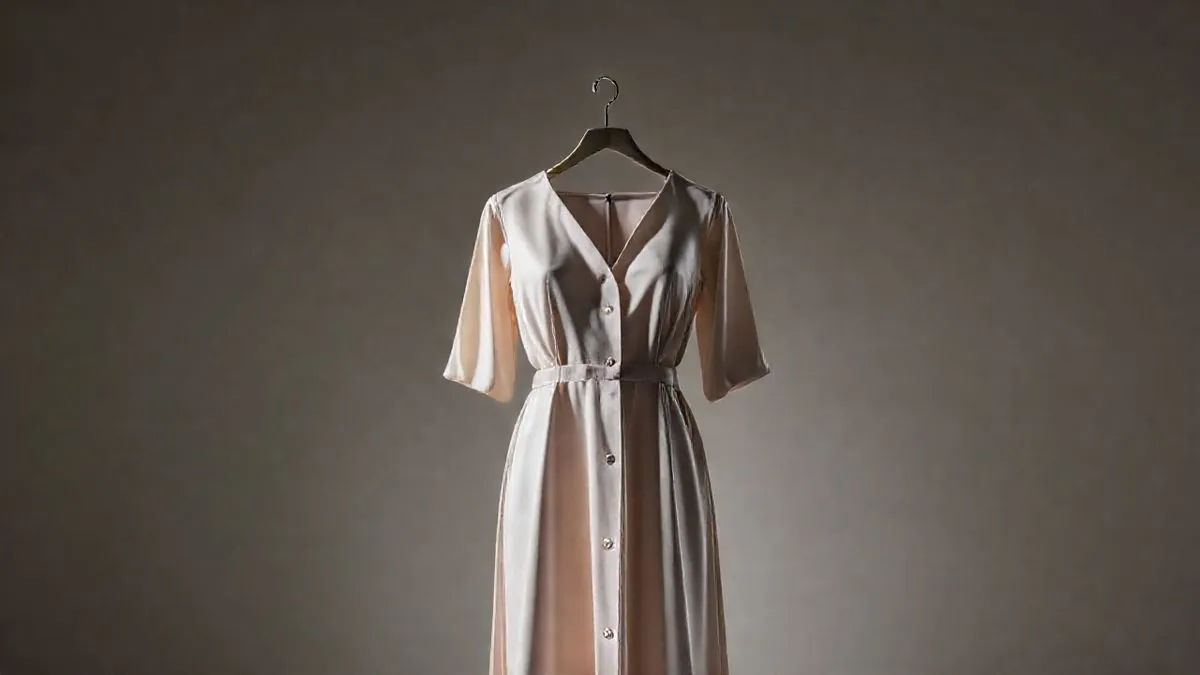
Why are specific dress styles underperforming in e-commerce sales?
In my fifteen years navigating the intricate world of womenswear e-commerce, I've observed a recurring phenomenon: certain dress styles, despite their inherent beauty or market potential, consistently underperform online. This isn't usually due to a flaw in the dress itself, but rather a fundamental disconnect in how it’s presented and perceived through a digital lens. A primary culprit is often the **visual misrepresentation** of a garment's true essence. Online shoppers cannot touch, feel, or drape a dress over their bodies. They rely entirely on images and videos to convey everything from fabric weight to how it moves. Consider a delicate, bias-cut silk slip dress versus a structured, tailored sheath. Static, front-on photography might flatter the sheath, highlighting its clean lines. However, the slip dress, which relies on its fluid drape and the way it shimmers with movement, will look flat and uninspiring without dynamic visuals."The digital storefront must translate the tactile and kinetic experience of a garment. If it fails to do so, a dress that's stunning in person becomes merely 'okay' online, and 'okay' doesn't convert."This visual disconnect extends to the styling and model choices. A common mistake I see is a lack of **diverse body representation** or unsuitable styling that fails to showcase a dress's versatility or its intended fit. For instance, a bohemian maxi dress designed for comfort and flow might be shot on a model in a stiff, unnatural pose, completely losing its appeal. Conversely, a bodycon dress on a model whose measurements don't align with the target customer can lead to fit anxiety and abandoned carts. * **Actionable Visual Solutions:** * **Video Content:** Essential for showing drape, movement, and texture. A 360-degree view and short clips of models walking or posing dynamically are crucial. * **Diverse Models:** Showcase dresses on a range of body types, heights, and skin tones to help customers visualize themselves in the garment. * **Lifestyle Photography:** Present the dress in context – a casual sundress at a picnic, a cocktail dress at an event – to inspire purchase intent. Beyond visuals, the **information vacuum** in product descriptions plays a significant role in underperformance. Shoppers need more than just fabric composition; they need a narrative that explains the dress's unique attributes and how it will enhance their life. I've seen countless instances where a dress with unique design features, like an adjustable drawstring waist or a hidden pocket, is merely described as "midi dress with V-neck." This generic approach completely overlooks the selling points that could differentiate it from competitors. * **Key Information Gaps to Address:** * **Fit Details:** Go beyond "true to size." Specify if it's relaxed, tailored, A-line, or bodycon. Mention stretch, lining, and closure types. * **Fabric Hand-Feel:** Describe the texture – "soft brushed cotton," "crisp poplin," "fluid crepe." This helps bridge the tactile gap. * **Styling Advice:** Offer suggestions on how to wear the dress for different occasions or seasons. This adds value and helps customers envision the garment in their wardrobe. Finally, a critical reason for underperformance is a fundamental **misunderstanding of the target customer and their lifestyle context**. A brand might launch a beautiful collection of occasion wear, but if their marketing channels and product descriptions don't speak to the specific events or life moments their customer is dressing for, those styles will languish. For example, a sophisticated work-to-dinner dress might be presented with casual styling, confusing the customer about its true purpose. Or, a brand might push a highly trend-driven style to a demographic that prioritizes timeless elegance, resulting in a significant mismatch. In my experience, brands often fail to segment their dress offerings effectively, applying a one-size-fits-all marketing strategy. Each dress style has an inherent personality and purpose, and successful e-commerce demands that this is communicated clearly and authentically to the right audience. Ignoring this nuanced approach inevitably leads to underperformance.
Understanding the Root of the Problem: Why Do Dress Styles Underperform in E-commerce?
In my 15 years navigating the intricate world of womenswear e-commerce, I've observed a recurring, often frustrating pattern: dresses consistently underperform online compared to other apparel categories. It’s a challenge many brands face, and it stems from a fundamental disconnect between the physical product and its digital representation.
The core issue isn't always the dress itself, but rather the inability of the online platform to convey its true essence. We're asking customers to make an emotional and often significant purchase without the crucial sensory information they rely on in a brick-and-mortar setting.
"Selling a dress online without adequate visual and descriptive information is akin to asking someone to buy a painting based solely on its title. They miss the texture, the brushstrokes, the true scale, and the emotional impact."
One of the most significant hurdles is the **tactile void**. Customers cannot touch the fabric, feel its weight, or assess its drape. Is it a crisp cotton, a flowing silk, or a structured ponte? Without this immediate sensory feedback, decision-making becomes fraught with uncertainty.
- Material Misconception: A dress described as "chiffon" can range from airy and delicate to stiff and synthetic. The online image rarely conveys this nuance.
- Weight and Drape: The way a fabric falls and moves is critical for a dress. A heavy jersey drapes differently from a light rayon, impacting fit and silhouette.
Another profound problem is the **fit enigma**. Unlike a top or trousers, a dress needs to fit across multiple points of the body simultaneously – bust, waist, hips, and often length. Sizing is notoriously inconsistent across brands, and a flat image simply cannot convey how a dress will adapt to a three-dimensional body.
I've seen countless brands struggle with this, leading to exasperated customers and skyrocketing return rates. A dress that looks stunning on a tall, slender model might overwhelm a petite frame or cling unflatteringly to a curvy figure.
- Body Shape Variation: Dresses are particularly sensitive to different body types. An A-line might flatter one shape, while a sheath dress suits another.
- Sizing Discrepancies: A size 8 in one brand is a 6 in another and a 10 in a third. This lack of standardization is amplified when trying to gauge an all-in-one garment.
Then there's the pervasive issue of **visual miscommunication**. Poor photography, inconsistent lighting, and a lack of comprehensive angles often lead to a distorted perception of the product. A single front-facing shot provides only a fraction of the necessary information.
In my experience consulting with brands, I’ve found that many underinvest in professional photography and videography for dresses. They fail to show the dress in motion, from the back, or with different styling options, leaving customers to guess.
Finally, there's the challenge of **information scarcity and styling paralysis**. Beyond basic measurements, customers need to understand the dress's intended context and how it can be integrated into their wardrobe. Is it a casual day dress, an office staple, or an evening gown?
Often, product descriptions are sparse, leaving customers to fill in the blanks. This leads to a lack of confidence in the purchase, as they can't envision themselves wearing it for a specific occasion or pairing it with existing accessories.
Frequently Asked Questions (FAQ)
It's a question I've heard countless times over my 15 years in womenswear: "My beautiful dresses just aren't converting online. Where should I start looking for the problem?" In my experience, the issue is rarely singular; it's often a confluence of factors that collectively create friction in the customer journey.The first place I always direct brands to look is their product presentation. This encompasses everything from the quality of your photography to the clarity and emotional resonance of your descriptions, and critically, the depth of your fit information. Think of your product page as your digital fitting room; if it's poorly lit, confusing, or lacks essential details, customers will walk out.
A common mistake I see is assuming a pretty dress sells itself. Online, it absolutely does not. You need to create an immersive, informative, and aspirational experience that helps the customer *feel* the fabric, *see* the movement, and *understand* the fit without physically touching it. Start by auditing your top 10 underperforming dress styles. Are their images compelling? Is the copy inspiring and informative? Is the fit data exhaustive?
Many brands wonder, "Is investing in professional photography really worth it for every single dress style?" My unequivocal answer is yes, it's a non-negotiable investment, especially for dresses. Dresses are often statement pieces, and their appeal is highly visual and emotional. Poor or inconsistent photography is a silent killer of conversion rates and a major driver of returns.
Consider this: a customer can't feel the drape or see the shimmer of a fabric through a screen. High-quality photography, however, can simulate this. I've seen brands boost conversion rates by upwards of 20% simply by upgrading their imagery, often coupled with a significant reduction in returns because expectations were set accurately.
"In the digital realm, your product imagery isn't just a picture; it's the closest thing your customer has to a physical interaction with your garment. It needs to be impeccable, inspiring, and transparent."
To truly excel, aim for a diverse range of shots:
- On-model shots: Show the dress on various body types, in different poses, and from multiple angles (front, back, side, movement).
- Detail shots: Close-ups of fabric texture, embellishments, stitching, and unique design features.
- Lifestyle shots: Contextualize the dress – show it styled for different occasions, perhaps with accessories, to inspire wearability.
- Video: Short, dynamic videos demonstrating movement and fabric drape are incredibly powerful for dresses.
Beyond basic measurements, what 'fit' information truly helps customers visualize a dress on themselves and reduce uncertainty? This is where many brands fall short. Providing only a size chart with bust, waist, and hip measurements is simply not enough for dresses, which often have unique silhouettes and drapes.
To truly empower your customer, you need to go deeper. In my experience, the most effective fit information includes:
- Model Measurements & Size Worn: Clearly state the model's height, bust, waist, hips, and what size she is wearing in the photo. This gives a direct point of reference.
- Garment Flat Measurements: Provide actual measurements of the dress itself for key points (e.g., length from shoulder, sleeve length, hem circumference). This is invaluable for customers who like to compare against their own clothing.
- Fabric Composition & Stretch: Detail the material makeup and indicate if the fabric has stretch. This impacts how a dress drapes and fits.
- Fit Recommendation: Use clear descriptors like "True to size," "Runs small, size up," "Relaxed fit," "Bodycon fit."
- Styling Notes: Offer suggestions on how the dress is intended to be worn, e.g., "Designed to be oversized," or "Best suited for a fitted silhouette."
This comprehensive approach acts like a virtual personal shopper, answering unspoken questions and building confidence in the purchase.
Many customers complain about the dress 'not looking like the photo'. How can I bridge this expectation gap and ensure what they see is what they get? This common complaint stems from a lack of transparency and an over-reliance on heavily styled or retouched imagery. The key here is authenticity and comprehensive visual storytelling.
Firstly, ensure your product photography accurately represents color. Screen calibration varies, but you can minimize discrepancies by shooting in consistent lighting and providing color swatches. Secondly, don't just show the dress perfectly posed. Show it in motion, from every angle, and consider incorporating user-generated content (UGC).
UGC is a powerful tool because it shows the dress on real people, in real environments, often unstyled. This builds immense trust and helps customers visualize the garment more realistically on themselves. Integrate customer photos and videos directly onto your product pages.
"The most successful online retailers understand that transparency is the new luxury. When selling dresses, showing the garment in its truest form—its texture, its movement, its real-world drape—is paramount to building trust and reducing disappointment."
Finally, utilize video not just for movement, but also for close-ups of fabric texture. A 15-second video highlighting the fabric's feel and how it catches the light can do more than a dozen static images to manage expectations and delight customers upon arrival.
How do I identify underperforming dress styles?
Identifying underperforming dress styles online isn't merely about glancing at top-line sales figures; it requires a deep dive into multiple data points, both quantitative and qualitative. In my fifteen years navigating the digital fashion landscape, I've observed that many e-commerce managers make the mistake of focusing solely on the bottom line, overlooking crucial early indicators of struggle.
The true art lies in understanding the customer journey and pinpointing precisely where a particular style loses its appeal. Think of your product catalog as a team of athletes: some are star performers, some are consistent, and others are warming the bench. Our job is to identify those benchwarmers and understand why they aren't playing their best game, or if they ever will.
A primary quantitative indicator to watch is the conversion rate (CR) for a specific product. This tells you how many visitors who viewed the product actually bought it. If a dress style consistently attracts high traffic but boasts a significantly lower conversion rate compared to similar items or your store's average, it's an immediate red flag.
However, conversion rate alone only tells part of the story. We need to dig deeper into pre-purchase engagement metrics:
- Add-to-Cart (ATC) Rate: A healthy ATC rate coupled with a poor conversion rate suggests friction in the checkout process, an unexpected shipping cost, or perhaps last-minute fit concerns that weren't addressed on the product page. The customer *wanted* it, but something stopped them.
- Bounce Rate: If visitors land on a dress page and quickly exit your site without engaging further, it signals a severe disconnect. The imagery, initial impression, or perhaps the perceived style isn't meeting their expectations, or the page loads too slowly.
- Time on Page: Low time on page, especially combined with a high bounce rate, indicates that the product isn't captivating attention. Conversely, an unusually *high* time on page with low ATC or CR could mean the customer is struggling to find critical information, leading to frustration and eventual abandonment.
- Product Page Views per Session: Does a customer view this dress and then move on to other dresses within your store, or do they leave your site entirely? This helps understand if the dress itself is the issue, or if the customer simply isn't finding what they need on your site in general.
Beyond these immediate engagement metrics, consider the post-purchase data, particularly the return rate. While returns are an inherent part of online retail, an exceptionally high return rate for a specific dress style often points to fundamental issues. For instance, if your average dress return rate is 15%, but a specific style consistently hits 30-40%, you're looking at a significant fit, quality, or expectation mismatch issue that's costing you money and eroding customer trust.
"Data without context is just noise. To truly identify underperforming styles, you must blend quantitative metrics with a deep understanding of your customer and the product itself. The 'why' behind the numbers is your gold."
Qualitative feedback is equally vital. Actively solicit and meticulously analyze customer reviews, not just the star ratings, but the actual comments. Are there recurring themes about fit ("runs small," "too baggy"), fabric ("looks cheap in person," "feels scratchy"), color accuracy, or occasion suitability ("not dressy enough for a wedding")? If multiple customers echo similar sentiments, you've found a critical flaw that needs addressing.
In my experience, a common mistake I see is neglecting the inventory turnover rate. If a dress style consistently sits in your warehouse for months while others fly off the shelves, regardless of its initial sales, it’s a clear underperformer. This isn't just about lost sales; it's about tying up valuable capital that could be invested in proven winners, creating a financial bottleneck for your business.
Finally, perform a regular, objective audit of your product presentation. Are the images high-quality, showcasing the dress on diverse body types and in lifestyle settings? Is the product description rich with details about fabric composition, care instructions, crucial fit notes, and styling suggestions? Often, a perfectly good dress fails simply because its story isn't being told effectively or accurately online, leading to missed opportunities and higher returns.
By systematically analyzing these facets – from initial clicks to post-purchase feedback and inventory movement – you move beyond guesswork and gain a clear, data-driven picture of which dress styles are truly underperforming and, crucially, *why*.
Can pricing strategy impact dress style performance?
Let me be unequivocally clear: pricing strategy doesn't just *impact* dress style performance online; it often *dictates* it. In my over 15 years navigating the complexities of womenswear e-commerce, I've seen countless well-designed dresses flounder or soar based almost entirely on their price point and the strategy behind it.
Your pricing is far more than a number; it's a powerful communicator of your brand's identity, the perceived quality of the garment, and its intended market position. A dress style's success hinges on a delicate balance between its intrinsic value and the price tag you affix.
A common mistake I observe is either underpricing or overpricing a dress style. Underpricing, for instance, can inadvertently signal lower quality or a lack of confidence in the product, even if the design and craftsmanship are excellent. Consumers become suspicious, questioning "why is it so cheap?"
“Pricing isn't merely a calculation of cost plus margin; it's a strategic declaration of your brand's worth and its promise to the customer.”
Conversely, overpricing a dress style can alienate your target audience, making it inaccessible despite perfect styling and imagery. You might have a fantastic design, but if it falls outside your customer's acceptable price bracket, it simply won't convert.
To truly optimize dress style performance through pricing, consider these actionable strategies:
-
Value-Based Pricing: Focus on what the customer perceives as value. Is your dress offering unique design, sustainable materials, exceptional fit, or versatility? Price it to reflect these benefits, rather than just cost-plus. For example, a dress made from organic silk with artisan detailing can command a higher price than a similar silhouette in synthetic fabric, provided the value story is clearly communicated.
-
Competitive Benchmarking with Differentiation: While you must understand competitor pricing, never just match it blindly. Identify your unique selling propositions (USPs). If your dress offers superior fit, better fabric, or exclusive prints compared to a competitor's similar style, justify a premium. If it's a staple, ensure your pricing is competitive without devaluing your brand.
-
Target Audience Alignment: This is crucial. If your brand targets Gen Z with disposable incomes, a $300 cocktail dress will likely fail. If you're aiming for the luxury market, a $50 dress will erode trust. Truly understand your customer's purchasing power and their perceived value for your offering.
-
Strategic Promotional Pricing: Use discounts and promotions judiciously. While they can clear inventory or drive traffic, constant sales can train customers to wait for markdowns, devaluing your full-price offerings. I've seen brands inadvertently "cheapen" their entire collection by too-frequent or too-deep discounts on hero dress styles.
-
Tiered Pricing and Bundling: For certain dress styles, consider offering variations or bundles. Perhaps a core dress style can be offered in a premium fabric at a higher price point, and a more accessible fabric at a lower one. Bundling a dress with a complementary belt or scarf can increase perceived value without drastically altering the core dress price.
In my experience, the sweet spot for a dress style's pricing is where the customer feels they are getting exceptional value for their money, aligning with their expectations for your brand. It’s a continuous process of analysis, testing, and refinement, but one that directly correlates to your online success.
Reading Recommendations:
- Unlocking the Future: How Self-Healing Fabrics Extend Garment Lifespan
- How to Maintain Luxury Brand Exclusivity for Designer Heels? 7 Proven Pillars.
- 5 Strategic Pillars: What to do when luxury handbag fakes erode brand exclusivity?
- Sweaty Feet? Discover the Best Shoe Materials for Ultimate Comfort!
- 9 Steps to Eradicate Razor Burn for a Confident Executive Presence



Your email address will not be published. Required fields are marked *