

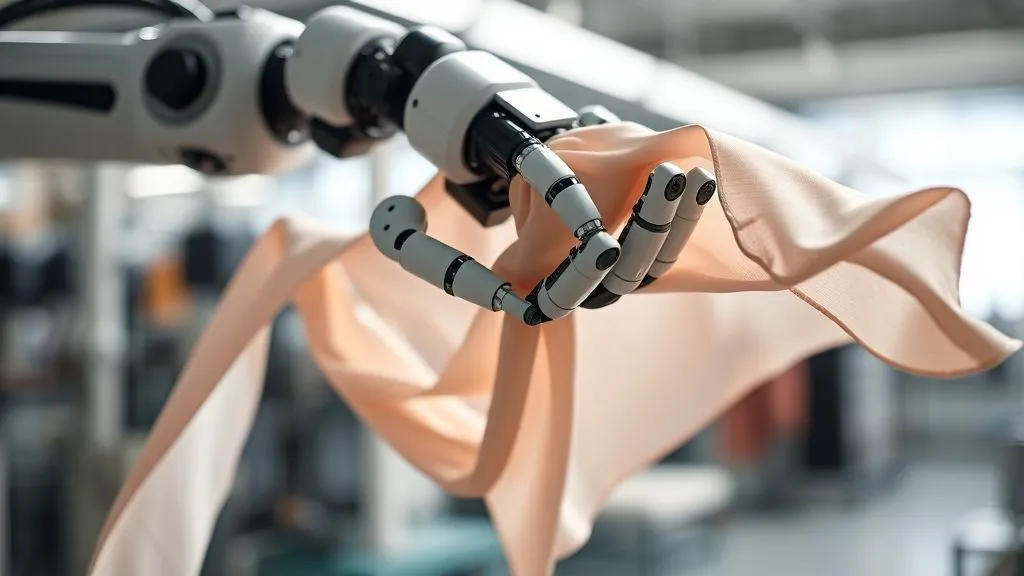
How to overcome robotic gripping issues with flexible fashion fabrics?
For over a decade witnessing the rapid evolution of fashion technology, I've observed a recurring bottleneck that often stifles the promise of full automation: the delicate dance of handling flexible fabrics. It's a challenge that many in robot manufacturing have grappled with, and frankly, it's one that demands a nuanced, multi-faceted approach.
The dream of fully automated garment production, from cutting to final assembly, often stumbles at a seemingly simple step: picking up and manipulating a piece of fabric without deforming, damaging, or misaligning it. Unlike rigid components, textiles are inherently unpredictable—they drape, stretch, crumple, and possess varying friction coefficients. This inherent variability makes reliable robotic gripping a formidable hurdle, leading to production inefficiencies and quality control nightmares.
In this deep dive, I'll share actionable frameworks, cutting-edge technologies, and expert insights drawn from my years in the field. My goal is to equip you with a comprehensive understanding and practical strategies to finally overcome robotic gripping issues with flexible fashion fabrics, paving the way for truly intelligent and efficient fashion manufacturing.
Understanding the Intricacies of Flexible Fabric Handling
Before we can solve the problem, we must truly appreciate its complexity. Flexible fashion fabrics are not uniform. They are anisotropic, meaning their properties vary with direction, and viscoelastic, exhibiting both viscous and elastic characteristics. These traits make them notoriously difficult for traditional robotics designed for rigid parts.
The Material Science Perspective
Consider a piece of flowing silk chiffon versus a structured denim twill or a stretchy knit jersey. Each presents a unique set of challenges. Silk is prone to static cling and wrinkling, while knits can easily stretch and deform under minimal pressure. Denim, though more stable, can still slip if not gripped correctly. The fabric's weave, fiber composition, thickness, and surface finish all play critical roles in how a gripper interacts with it.
In my experience, a fundamental misunderstanding of material science at the design phase of robotic systems is a primary reason for gripping failures. You can't apply a one-size-fits-all solution to a world of diverse textiles.
The friction between the gripper and the fabric, the fabric's inherent stiffness, and its ability to conform to a gripper's shape are all variables that must be meticulously considered. Ignoring these physical realities is like trying to catch smoke with a pair of pliers—futile and frustrating.
The Limitations of Traditional Robotic Grippers
Historically, industrial robots have relied on two main types of grippers: rigid jaw grippers and vacuum suction cups. While highly effective for hard, stable objects, their performance dramatically degrades when confronted with the unpredictable nature of textiles.
Rigid jaw grippers, often pneumatic or electric, exert significant localized pressure. For delicate fabrics, this can lead to crushing, tearing, or permanent marking. Even with soft pads, the clamping force required to prevent slippage often exceeds the fabric's tolerance. For thicker materials, they might simply push the fabric away or only grip a small portion, causing misalignment.
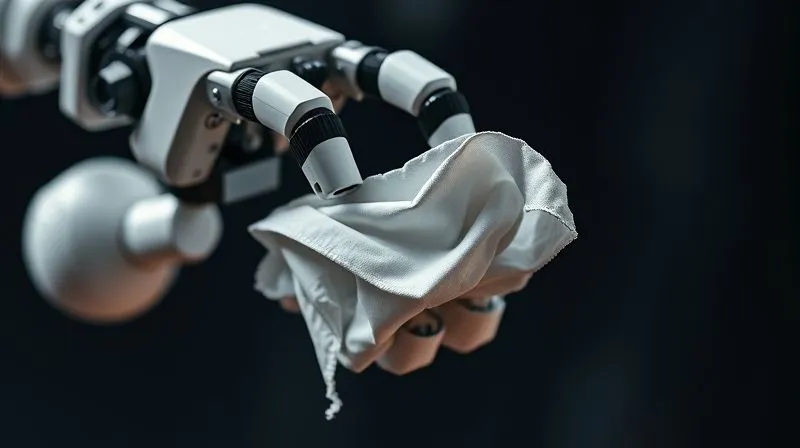
Vacuum suction cups, while seemingly gentler, also have severe limitations. They require a relatively flat, non-porous surface for effective adhesion. Many fashion fabrics, especially knits and open weaves, are inherently porous, allowing air to escape and breaking the vacuum seal. Furthermore, they can leave temporary marks or stretch delicate materials if not applied precisely and gently. Picking up a single ply from a stack of fabric using suction is another common failure point, as static electricity or slight imperfections can cause multiple layers to lift.
Breakthrough Gripper Technologies for Flexible Materials
The good news is that the field of robotics has made significant strides in developing specialized end-effectors designed specifically for compliant, deformable objects. These innovations are critical to overcoming robotic gripping issues with flexible fashion fabrics.
Soft Robotics & Compliant Grippers
This is where the magic truly begins. Soft robotics leverages compliant materials like silicone and rubber, often actuated pneumatically or hydraulically, to create grippers that can conform to the shape of an object. Unlike rigid grippers, these systems distribute pressure over a larger surface area, significantly reducing the risk of damage or deformation to delicate fabrics.
I've seen these grippers, often resembling octopus tentacles or multi-fingered hands, gently cradle textiles. Their inherent compliance allows for a more forgiving grasp, adapting to the fabric's contours rather than forcing it into a rigid shape. This is particularly effective for irregularly shaped fabric pieces or those with intricate details.
- Assess Fabric Properties: Understand the elasticity, thickness, and surface friction of your target fabrics. This dictates the required compliance and actuation force.
- Choose Actuation Method: Pneumatic (air pressure), hydraulic (fluid pressure), or even tendon-driven systems each offer different benefits in terms of speed, force, and precision.
- Design Finger Geometry: The shape and number of 'fingers' or 'chambers' on the gripper should be optimized for the specific fabric piece and task (e.g., flat sheets vs. intricate pattern pieces).
- Integrate Force Sensors: Implement tactile sensors to provide feedback on gripping force, allowing the robot to adjust its grasp in real-time and prevent over-squeezing.
Case Study: How TechStyle Innovations Mastered Silk Handling
TechStyle Innovations, a mid-sized luxury apparel manufacturer, faced immense challenges automating the handling of delicate silk panels for their blouses. Traditional vacuum and jaw grippers consistently damaged or misaligned the fabric. By implementing a custom-designed soft robotic gripper, featuring five pneumatically actuated silicone fingers with integrated pressure sensors, they achieved a remarkable 98% success rate in picking and placing silk pieces without any damage or deformation. This resulted in a 40% increase in throughput for that specific production line and a significant reduction in material waste, proving that the initial investment in advanced grippers paid off rapidly.
Advanced Vacuum & Bernoulli Grippers
While traditional vacuum cups struggle, advancements have brought forth more sophisticated solutions. Bernoulli grippers, for instance, utilize the Bernoulli principle to create a cushion of air between the gripper and the fabric. This allows for non-contact manipulation, effectively 'floating' the fabric without direct mechanical pressure or suction. They are excellent for handling very delicate, porous, or single-ply fabrics where even light contact could cause damage.
- Non-contact handling: Eliminates risk of marking or damage.
- Suitable for porous materials: Doesn't rely on airtight seal.
- Gentle on delicate fabrics: Ideal for silk, lace, or loosely woven materials.
Electrostatic and Adhesive Grippers
These are emerging technologies showing great promise. Electrostatic grippers use static electricity to create a temporary, gentle adhesion to the fabric surface, allowing for non-contact or ultra-light contact gripping. Adhesive grippers, often employing reversible adhesion materials or micro-suction arrays, offer another avenue for secure yet gentle handling without leaving residues.
These technologies are particularly intriguing for their ability to handle fabrics with complex textures or highly irregular shapes, where traditional mechanical or vacuum methods might fail. However, they often require careful environmental control (humidity, dust) and are still more prevalent in research labs than in widespread industrial adoption.
Enhancing Gripping with Vision Systems and AI
The gripper is only one part of the equation. To truly overcome robotic gripping issues with flexible fashion fabrics, robots need to 'see' and 'understand' the fabric's state in real-time. This is where advanced vision systems and Artificial Intelligence become indispensable.

Real-time Fabric Deformability Analysis
I've seen firsthand how a robot's ability to perceive the precise position, orientation, and even the current deformation state of a fabric piece transforms its gripping capability. High-resolution 2D and 3D vision systems, coupled with machine learning algorithms, can analyze the fabric's drape, identify wrinkles, and detect edges with unprecedented accuracy. This data then informs the gripper's approach, ensuring optimal contact points and minimal stress.
Adaptive Gripping Strategies
AI-powered control systems take this a step further. Instead of rigid pre-programmed movements, an adaptive gripping strategy allows the robot to adjust its grip force, orientation, and even the type of gripper engagement based on real-time visual feedback. If the system detects a slight slippage or an unexpected wrinkle, it can immediately modify its action, preventing errors before they occur. This level of responsiveness is crucial for the dynamic nature of fabric handling.
According to a Deloitte study on AI in manufacturing, companies leveraging AI for quality control and process optimization report significant gains in efficiency and defect reduction. For fashion, this translates directly to superior fabric handling.
Optimizing the Robotic Workcell Environment
It's not just about the robot or the gripper; the entire workcell environment plays a pivotal role in successful fabric manipulation. Even the most advanced gripper can struggle if the fabric is presented poorly or if environmental factors are not controlled.
Controlled Airflow and Static Management
Static electricity is a silent killer in fabric automation. It can cause multiple layers of fabric to stick together or make individual pieces cling to surfaces, leading to mispicks. Implementing anti-static measures, such as ionizers or specialized grounding, is critical. Similarly, controlled airflow, often through air tables or precision jets, can help flatten fabrics, separate layers, and guide them into optimal gripping positions without direct contact.
Fabric Presentation and Preparation
The way fabric is presented to the robot can make or break the operation. Flat, consistent presentation significantly reduces the complexity of the gripping task. This might involve:
- Automated Spreading Tables: Ensuring single-ply presentation.
- Tensioning Systems: Gently stretching fabric to remove wrinkles before gripping.
- Edge Alignment Systems: Using vision or mechanical guides to ensure fabric edges are consistently located.
Investing in these upstream processes simplifies the robotic task downstream, leading to higher success rates. It's about setting the robot up for success from the very beginning.
| Environmental Factor | Impact on Gripping | Solution |
|---|---|---|
| Static Electricity | Causes multi-ply picks, fabric cling | Ionizers, grounding mats |
| Fabric Wrinkles | Misalignment, damage risk | Tensioning, air flattening |
| Dust/Debris | Sensor interference, gripper contamination | Clean room conditions, air filtration |
| Humidity | Affects fabric properties, static | Climate control |
The Human-Robot Collaboration (Cobots) Advantage
Sometimes, full, lights-out automation isn't the most pragmatic solution, especially for highly variable or intricate tasks. This is where collaborative robots, or cobots, offer a compelling middle ground. I've advocated for cobots in many scenarios where human dexterity and judgment are still invaluable.
Cobots are designed to work safely alongside humans, sharing the workspace. In fashion, this means a cobot can perform the repetitive, strength-intensive, or precise parts of fabric handling, while a human worker handles the more nuanced or highly variable aspects. For instance, a cobot might use an advanced gripper to pick a delicate fabric piece and present it perfectly to a human for precise stitching or assembly.
- Leverages human dexterity: For tasks requiring fine motor skills and judgment.
- Enhances safety: Designed to stop or slow down when sensing human presence.
- Increases flexibility: Easily re-tasked for different garment styles or fabric types.
- Reduces capital investment: Often less complex and expensive than full automation cells.
As marketing guru Seth Godin often says, the goal isn't always to replace humans, but to amplify their capabilities. Cobots in fashion manufacturing do exactly that, marrying robotic precision with human intuition.
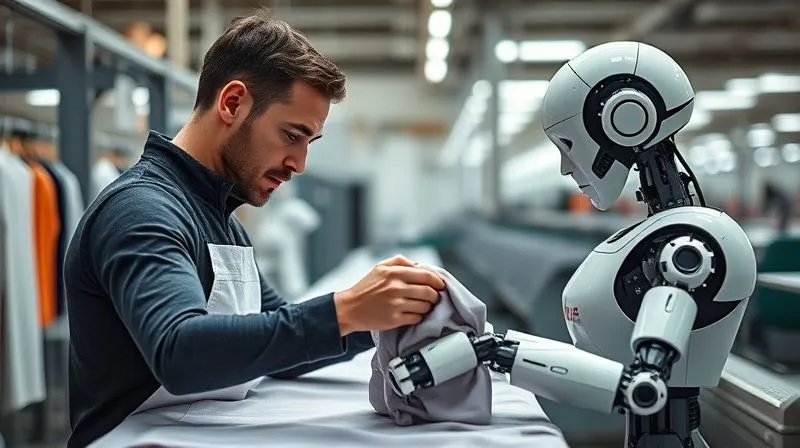
Implementing a Phased Approach to Automation
Embarking on the journey to automate fabric handling can seem daunting. My advice, based on years of observing successful and unsuccessful implementations, is to adopt a phased, iterative approach. Don't try to automate everything at once.
- Pilot Project Selection: Identify a specific, repetitive task involving a relatively stable fabric type as your initial pilot. This allows you to learn and refine your approach without overwhelming complexity.
- Data Collection & Analysis: Meticulously collect data on gripper performance, error rates, and throughput during the pilot phase. Use this data to inform adjustments and improvements.
- Iterative Refinement: Be prepared to iterate on gripper design, vision algorithms, and workcell layout. Automation is rarely a 'set it and forget it' process.
- Scalable Deployment: Once proven successful, gradually scale the solution to other tasks or fabric types, incorporating lessons learned from earlier phases.
This systematic approach minimizes risk, optimizes resource allocation, and builds internal expertise. It's about smart, sustainable growth in your automation capabilities.
| Fabric Type | Gripping Challenge | Recommended Solution |
|---|---|---|
| Denim (Thick) | Weight, stiffness | Robust soft gripper, strong vacuum |
| Silk (Delicate) | Slippage, wrinkling, static | Bernoulli, electrostatic, very soft compliant gripper |
| Knit (Stretchy) | Deformation, porosity | Low-pressure soft gripper, gentle vacuum |
| Lace (Porous/Fragile) | Tearing, porosity | Bernoulli, electrostatic |
For more in-depth research on soft robotics and their applications, I recommend exploring academic publications from leading robotics institutions, many of which are openly accessible through university research portals like this Harvard University Soft Robotics page.
Frequently Asked Questions (FAQ)
What's the biggest mistake companies make when trying to automate fabric handling? In my experience, the single biggest mistake is underestimating the complexity of fabric behavior and trying to force a generic robotic solution onto a highly specific material challenge. Many companies fail to invest adequately in specialized grippers, vision systems, and environmental controls, hoping a standard robot will magically adapt. This often leads to frustration, damaged materials, and ultimately, a failed automation project. You must tailor the solution to the fabric.
How do I choose the right gripper for my specific type of fashion fabric? The choice of gripper depends heavily on your fabric's properties: its weight, thickness, porosity, elasticity, and surface friction. For delicate, porous materials like silk or lace, Bernoulli or electrostatic grippers are often best due to their non-contact nature. For more robust but still flexible fabrics like denim or structured knits, a compliant soft gripper with multiple fingers and integrated force sensing can be highly effective. A thorough material analysis and small-scale testing are crucial steps in this selection process.
Is AI truly necessary for basic fabric handling tasks, or is it overkill? While not strictly necessary for every single basic task (e.g., picking a perfectly flat, stiff piece of fabric from a known location), AI becomes essential when dealing with any degree of variability or unpredictability. If your fabrics are prone to wrinkling, slight misalignments, or if you're handling a wide range of materials, AI-powered vision and adaptive control are not overkill—they are critical enablers for reliable and robust automation. They provide the 'intelligence' needed to overcome real-world challenges.
What's the typical ROI on investing in these advanced robotic gripping systems for fashion? The ROI can be significant, but it varies. Initial investment in advanced grippers, vision systems, and AI integration can be substantial. However, the returns come from reduced labor costs, increased throughput, improved product quality (fewer damaged garments), and lower material waste. I've seen companies achieve payback periods of 1-3 years, especially when automating high-volume, repetitive tasks involving delicate or expensive fabrics. A detailed cost-benefit analysis tailored to your specific production line is always recommended.
Can these solutions handle highly elastic fabrics like spandex or activewear knits? Yes, but with specific considerations. Highly elastic fabrics present unique challenges due to their propensity to stretch and deform significantly. For these, soft robotic grippers with very low, distributed pressure are paramount. Vision systems with advanced deformation tracking and AI-driven adaptive gripping are also critical to compensate for stretching during manipulation. The key is to design a system that can 'give' with the fabric, rather than resisting its natural elasticity, often by using compliant materials and intelligent force control. This often requires specialized programming and sensor feedback to manage the fabric's dynamic properties effectively.
For further insights into the broader impact of automation in the textile and apparel industry, a comprehensive report by a firm like McKinsey & Company can provide valuable context and future outlooks.
Key Takeaways and Final Thoughts
Overcoming robotic gripping issues with flexible fashion fabrics is no longer an insurmountable hurdle. It requires a blend of innovative technology, meticulous planning, and a deep understanding of material science. As an industry specialist, I've seen the landscape shift, and the tools are now available to transform your production lines.
- Embrace Soft Robotics: Move beyond traditional grippers to compliant, adaptive solutions.
- Integrate Vision and AI: Give your robots the 'eyes' and 'brains' to handle fabric variability.
- Optimize the Environment: Control static, airflow, and fabric presentation.
- Consider Cobots: Leverage human-robot collaboration for complex tasks.
- Adopt a Phased Approach: Implement automation iteratively to ensure success.
The future of fashion manufacturing is automated, precise, and sustainable. By strategically addressing these gripping challenges, you're not just improving a single process; you're future-proofing your operations, enhancing quality, and unlocking new levels of efficiency. The journey may be complex, but with the right strategies and technologies, the rewards are truly transformative. Let's build that future, one perfectly gripped fabric piece at a time.
Recommended Reading
- 7 Proven Strategies: Halting Fraudulent Chargebacks in Rare Sneaker Sales
- 7 Steps to Reliably Verify Cruelty-Free Ingredient Suppliers
- Precision Tailoring: How to Fix Subtle Fit Issues in Haute Couture
- Green Fashion Growth: Scale Ethically, Preserve Your Values
- 9 Ergonomic Footwear Choices: Stopping Nurse Foot Pain After 12-Hour Shifts




Your email address will not be published. Required fields are marked *