

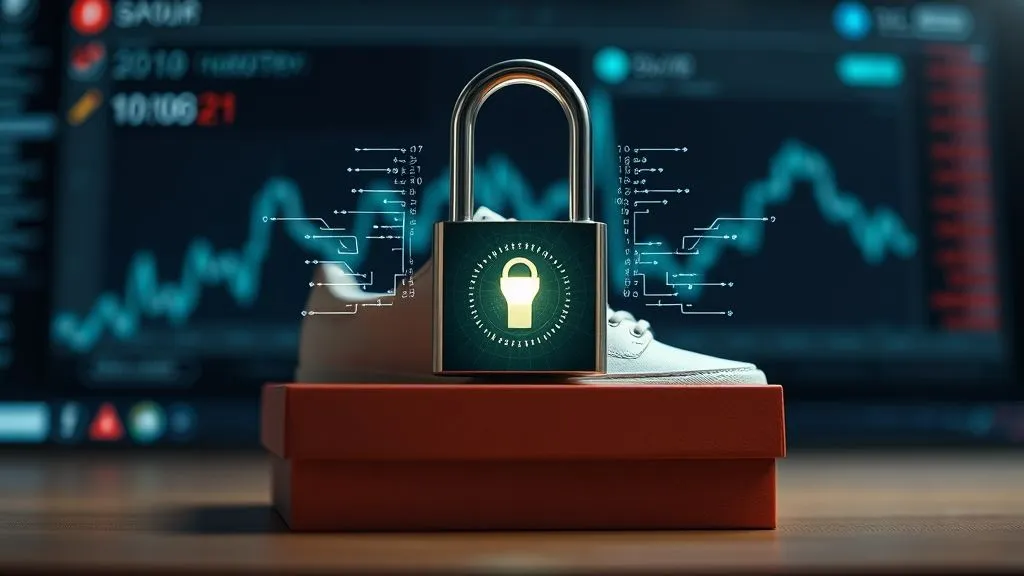
Preventing Fraudulent Chargebacks for Rare Sneaker Sales?
For over 15 years in the cutthroat world of streetwear and rare sneaker reselling, I've witnessed countless entrepreneurs build incredible businesses, only to see their hard-earned profits eroded by a silent, insidious threat: fraudulent chargebacks. It's a gut-wrenching experience to ship a grail-status pair of sneakers, only for the funds to be clawed back weeks later by a dishonest buyer claiming 'item not received' or 'unauthorized transaction.' I've seen businesses teeter on the brink because they didn't have the fortifications in place.
The pain point is palpable. You invest time, capital, and passion into sourcing, authenticating, and marketing these highly coveted items. You navigate a competitive market, deal with demanding customers, and then, just as success feels within reach, a chargeback strikes. It's not just the lost revenue from the sale; it's the lost product, the chargeback fees, the potential hit to your merchant account, and the emotional toll of feeling exploited.
But here's the good news: you don't have to be a victim. In this definitive guide, I'm going to share the battle-tested strategies, the insider knowledge, and the actionable frameworks I've developed and seen work effectively for high-volume, high-value rare sneaker sales. We'll dive deep into buyer verification, transaction security, ironclad documentation, and proactive dispute resolution to empower you in **preventing fraudulent chargebacks for rare sneaker sales** and safeguarding your business.
Understanding the Chargeback Landscape in High-Value Collectibles
Before we dive into solutions, let's dissect the problem. Chargebacks were originally designed as a consumer protection mechanism, a safety net for legitimate issues like unauthorized transactions or services not rendered. However, in the realm of high-value, easily liquidable items like rare sneakers, this safety net is often exploited by fraudsters, a practice known as 'friendly fraud' or 'chargeback fraud.'
The allure for scammers is clear: they get a highly valuable item for free, and often, reselling it is almost as easy as buying it. The process is typically initiated by the cardholder contacting their bank to dispute a transaction, citing reasons such as 'merchandise not received,' 'not as described,' or 'unauthorized purchase.' The merchant then bears the burden of proof, needing to demonstrate that the transaction was legitimate and the goods were delivered as promised.
"In the high-stakes world of rare collectibles, every transaction is a potential battleground. Your best defense is a proactive offense built on ironclad processes and undeniable evidence."
The consequences extend beyond the immediate loss. Too many chargebacks can lead to increased processing fees, holds on your funds, and even the termination of your merchant account, effectively shutting down your ability to process credit card payments. This is why a robust prevention strategy isn't just good practice; it's existential for businesses dealing in rare and expensive sneakers.
The Anatomy of a Fraudulent Sneaker Chargeback
Common Tactics Used by Fraudsters
To truly prevent these attacks, you need to understand how they operate. Fraudulent chargebacks aren't always sophisticated, but they rely on exploiting gaps in a merchant's process. Here are the most common scenarios I've encountered:
- "Item Not Received" (INR): The buyer claims they never received the package, despite tracking showing delivery. This is often an attempt to get the item for free.
- "Not as Described" (NAD): The buyer claims the sneakers were fake, damaged, or not the specific condition advertised, even if they were.
- "Unauthorized Transaction": The buyer claims someone else used their card without permission. This can be true fraud, but often it's a family member or the cardholder themselves denying knowledge to get out of a purchase.
- "Empty Box" or "Wrong Item": A particularly nasty tactic where the buyer claims to have received an empty box or a different, less valuable item.
According to data from LexisNexis, retail fraud costs are increasing, with chargeback fraud being a significant contributor, especially for digital goods and high-value physical items. Merchants often face an uphill battle due to the consumer-friendly nature of chargeback rules.
Fortifying Your Pre-Sale Verification Process
The first line of defense against **preventing fraudulent chargebacks for rare sneaker sales** starts long before the item is shipped. It's all about vetting your buyer.
Implementing Robust Buyer Authentication
- Address Verification System (AVS) & Card Verification Value (CVV): Always require these. AVS checks if the billing address provided matches the cardholder's address on file with their bank. CVV verifies the three or four-digit security code on the card. While not foolproof, they add a layer of security.
- IP Address & Geolocation Checks: Cross-reference the buyer's IP address with their shipping address. Discrepancies (e.g., IP from Nigeria, shipping to New York) are huge red flags.
- Social Media & Online Presence Vetting: For high-value sales, a quick check of the buyer's social media profiles (LinkedIn, Instagram) can offer insights. Are they a real person? Do they have a history related to sneakers or collectibles? This isn't about discrimination; it's about risk assessment.
- Past Purchase History Analysis: If you have repeat customers, analyze their history. Are they consistent? Have they ever initiated a chargeback before?
- Phone Verification for First-Time Buyers: For significant purchases from new customers, consider a quick phone call. It's a simple, human touch that can deter fraudsters who prefer anonymity.
This proactive approach helps weed out many potential fraudsters before they can even complete a purchase. It's about building a profile of trust.
Implementing Robust Transaction Security Protocols
Once a buyer passes initial vetting, the transaction itself needs to be secure.
Leveraging Payment Gateway Features
Your payment processor (e.g., Stripe, PayPal, Shopify Payments) offers a suite of fraud prevention tools you must utilize:
- Fraud Filters & Rules: Set up rules to automatically flag or decline transactions based on criteria like high order value, multiple failed attempts, shipping to high-risk countries, or suspicious email domains.
- 3D Secure (e.g., Verified by Visa, Mastercard SecureCode): This protocol requires buyers to complete an extra verification step with their card issuer, often a one-time password. It shifts liability for fraudulent transactions from the merchant to the card issuer, a massive win for you.
- Tokenization: Ensure your payment gateway uses tokenization to protect sensitive card data, reducing your PCI compliance burden and the risk of data breaches.

Case Study: Apex Kicks' Battle Against Chargeback Scams
Apex Kicks, a premium online retailer specializing in limited-edition sneakers, faced a 5% chargeback rate on transactions over $1,000, eroding their thin margins. By implementing a mandatory 3D Secure checkout for all high-value orders and integrating advanced fraud filters that flagged IP-address-to-shipping-address mismatches, they saw a dramatic reduction. Within six months, their chargeback rate for these high-value items dropped to under 1%. This resulted in an estimated annual saving of over $50,000, not including the value of lost inventory.
Documenting Every Step: Your Unassailable Evidence Trail
This is where most merchants fall short. When a chargeback hits, your documentation is your armor. You need to be able to prove unequivocally that you fulfilled your end of the bargain.
Creating an Ironclad Documentation Strategy
- High-Resolution Photos/Videos of the Item: Before packing, take detailed photos and a video of the exact pair of sneakers being shipped. Show all angles, the size tag, the box, and any unique features. Capture the item's condition, proving it matches your listing.
- Packing Process Documentation: Take photos/videos of the item being placed into the shipping box, the box being sealed, and the shipping label being affixed. This counters "empty box" claims.
- Matching Shipping Address: Always ship to the address provided by the payment processor. Never change it based on buyer request via email or message, as this voids seller protection.
- Signature Confirmation: For all rare sneaker sales, *always* require signature confirmation upon delivery. This is non-negotiable. It proves the item was received by someone at the designated address.
- Detailed Tracking Information: Use carriers that provide robust, real-time tracking. Keep records of tracking numbers, delivery dates, and any delivery exceptions.
- Communication Records: Archive all communications with the buyer (emails, chat logs, platform messages). This includes their initial purchase inquiry, any questions, and your responses.
As Seth Godin often emphasizes, building trust is paramount. Transparent and meticulous documentation is a cornerstone of that trust, both with your legitimate customers and with the payment processors when disputes arise.
Navigating the Chargeback Dispute Process
Even with the best prevention, some chargebacks might slip through. Your response is critical.
Crafting a Winning Representment Package
When you receive a chargeback notification, you typically have a limited window (often 7-10 days) to submit your evidence, known as 'representment.' Your goal is to provide a clear, concise, and compelling narrative supported by your meticulous documentation.
| Evidence Type | Required Document |
|---|---|
| Proof of Delivery | Signature confirmation, detailed tracking log |
| Proof of Item Condition | Pre-shipment photos/video, listing description |
| Proof of Authorization | AVS/CVV match, 3D Secure transaction ID, IP address match |
| Buyer Communication | All emails/messages, terms of sale acceptance |
| Merchant Policy | Return/refund policy, fraud policy |
Your representment package should ideally include:
- A detailed cover letter explaining your side of the story, referencing all attached evidence.
- The original order details (date, time, item, price).
- Proof of authorization (AVS/CVV match, 3D Secure successful completion).
- Proof of shipment and delivery (tracking, signature confirmation).
- Photos/videos of the item being packed and shipped.
- Your terms and conditions, highlighting any no-return or final sale policies (if applicable for rare items).
- Any relevant communication with the buyer.
Remember, the card issuer is looking for clear evidence that the merchant fulfilled their obligations and that the cardholder's claim is unfounded. A well-organized, comprehensive package significantly increases your chances of winning the dispute. Chargeback Gurus often highlight the importance of structured evidence.
Building a Community of Trust and Vigilance
Beyond individual transactions, fostering a trustworthy environment is key for **preventing fraudulent chargebacks for rare sneaker sales**.
Cultivating a Reputation and Educating Your Audience
- Clear Policies: Make your shipping, return, and fraud policies explicitly clear on your website. Transparency builds trust with legitimate buyers and deters fraudsters.
- Engage with Your Community: A strong social media presence and engagement can help identify suspicious activity and build a loyal customer base that reports issues.
- Share Fraud Prevention Tips: Occasionally share tips with your audience on how *they* can protect themselves from fraud, subtly reinforcing your own commitment to security.
- Blacklist Known Fraudsters: Maintain an internal database of buyers who have initiated fraudulent chargebacks. Do not do business with them again.
Leveraging Technology: AI and Advanced Fraud Tools
The landscape of fraud is constantly evolving, and so must your defenses. Modern technology offers powerful allies.
Integrating Advanced Fraud Detection Systems
Consider specialized fraud detection software or services that integrate with your e-commerce platform. These tools go beyond basic AVS/CVV checks:
- Machine Learning (ML) & Artificial Intelligence (AI): These systems analyze vast amounts of data points – device ID, browsing behavior, order velocity, shipping anomalies, email reputation – to identify patterns indicative of fraud in real-time. They can detect suspicious behavior that human eyes might miss.
- Device Fingerprinting: Identifies unique characteristics of a customer's device to detect if the same device is being used for multiple suspicious transactions.
- Proxy/VPN Detection: Flags buyers attempting to mask their true location.
- Behavioral Analytics: Monitors how a user interacts with your website (e.g., speed of checkout, number of items added/removed from cart) for signs of bot activity or fraudulent intent.
Companies like Riskified, Signifyd, and Sift Science specialize in this, often offering chargeback guarantees where they cover the cost if a transaction they approve turns out to be fraudulent. This can be a worthwhile investment for high-volume, high-value sellers. Forbes Advisor offers comparisons of leading fraud detection platforms.

Frequently Asked Questions (FAQ)
Q: What's the single most effective thing I can do to prevent chargebacks? A: While it's a multi-faceted approach, consistently using signature confirmation for all high-value shipments is arguably the most crucial step. It provides undeniable proof of delivery, which is often the linchpin in chargeback disputes, especially for 'item not received' claims.
Q: How long do I have to dispute a chargeback, and what happens if I lose? A: The timeframe for disputing a chargeback (known as representment) typically ranges from 7 to 45 days, depending on the card network and issuing bank. If you lose, the chargeback amount is permanently debited from your account, you lose the product, and you may incur additional chargeback fees (often $15-$50 per dispute). Too many losses can also negatively impact your merchant account standing.
Q: Is it worth investing in a third-party fraud detection service for my small rare sneaker business? A: If your average transaction value is high (e.g., over $500) and you're experiencing more than 1-2 fraudulent chargebacks per month, then absolutely. The cost of lost inventory, fees, and the time spent fighting disputes can quickly outweigh the monthly subscription of a good fraud detection service, especially those that offer chargeback guarantees. It's a scalable investment.
Q: Can a buyer initiate a chargeback even if they used 3D Secure? A: Yes, they can initiate it, but the liability shifts. With 3D Secure, if the transaction was authenticated by the cardholder (e.g., by entering a password or OTP), the liability for most fraud-related chargeback reasons (like 'unauthorized transaction') shifts from you, the merchant, to the card-issuing bank. This significantly protects you. However, disputes like 'item not as described' or 'item not received' can still occur, for which you'd need your other documentation. Visa Developer provides comprehensive details on 3D Secure liability shifts.
Q: What are the biggest red flags I should look out for in an order? A: Multiple red flags often appear together. Look for orders with a high value, different billing and shipping addresses, expedited shipping requests from new customers, mismatched IP addresses, generic email addresses (e.g., 'randomnumbers@gmail.com'), multiple failed payment attempts, and unusually large orders for a first-time buyer. Any combination of these should trigger heightened scrutiny.
Key Takeaways and Final Thoughts
Navigating the treacherous waters of rare sneaker sales requires more than just a keen eye for authenticity and market trends; it demands a fortress-like approach to transaction security and fraud prevention. **Preventing fraudulent chargebacks for rare sneaker sales** isn't a one-time fix but an ongoing commitment to vigilance, process, and smart technology.
- Proactive Verification: Vet your buyers thoroughly before the sale.
- Robust Security: Utilize advanced payment gateway features like 3D Secure.
- Meticulous Documentation: Photograph, video, and track every step of the shipping process.
- Strategic Dispute Resolution: Compile comprehensive representment packages.
- Community & Technology: Build trust and leverage AI-powered fraud tools.
In my experience, those who thrive in this niche are not just passionate about sneakers; they are meticulous business operators who understand that protecting their profits is as important as making the sale. By implementing these strategies, you're not just fighting fraud; you're building a more resilient, trustworthy, and ultimately, more profitable business. Stay sharp, stay secure, and keep those grails moving safely.
Recommended Reading
- Bio-Based Fashion: 7 Strategies to Mitigate Greenwashing Accusations
- 7 Ways to Halt Antimicrobial Fabric Degradation Post-Wash Cycles
- Find Your Perfect Look: Which Iconic Eyeglass Frames Suit My Face Shape?
- Stop Struggling: 6 Steps to Scale Apparel Repair Profitably
- 7 Proven Strategies to Differentiate Your Bridal Brand in a Saturated Market


Your email address will not be published. Required fields are marked *