

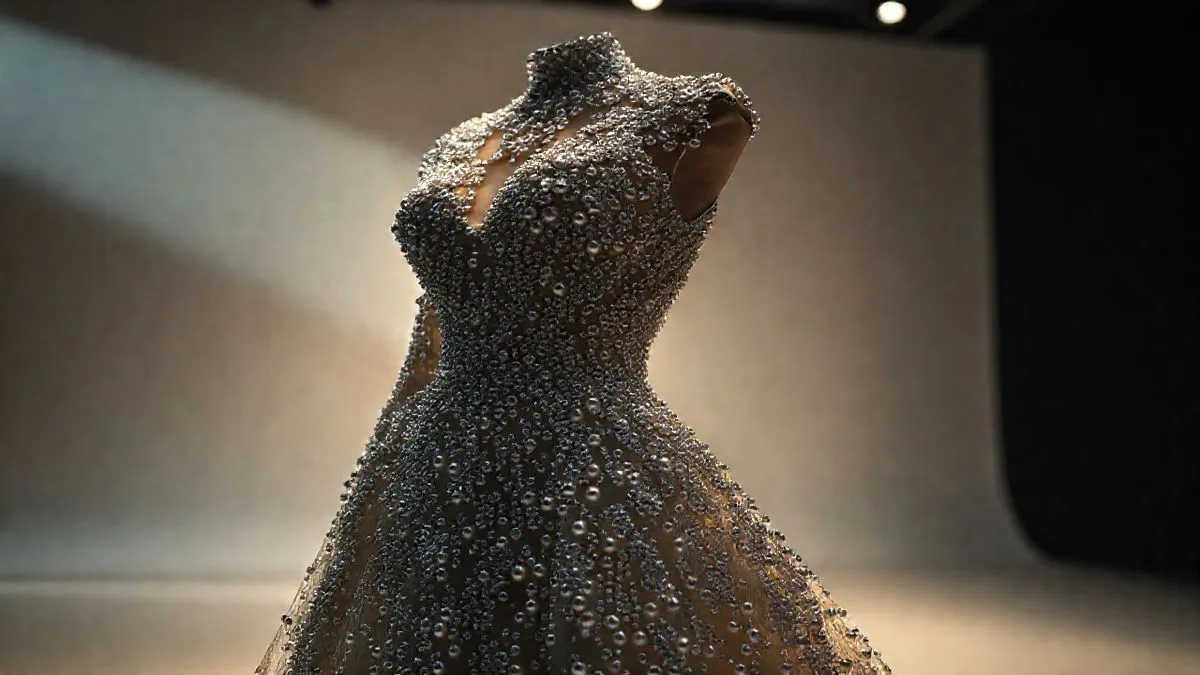
How to maintain structural integrity with heavy haute couture beadwork?
Heavy haute couture beadwork is undeniably breathtaking, transforming fabric into a shimmering tapestry of light and texture. However, this exquisite artistry introduces a significant challenge: maintaining the garment's structural integrity against the sheer weight of thousands of beads.
In my fifteen years in this demanding niche, I've seen countless pieces where the initial splendor quickly gives way to sagging and distortion if the foundational principles are ignored. It's a delicate balance of art and engineering, where every stitch and every choice of material contributes to the garment's longevity.
The first secret, and arguably the most critical, lies in the selection and preparation of your base fabric. A common mistake I see is underestimating the tensile strength required; a delicate silk organza, while beautiful, simply cannot bear the burden of extensive crystal embroidery without significant underlying support.
For any substantial beadwork, I advocate for a multi-layered approach, beginning with a robust interlining or backing fabric. This isn't merely about adding stiffness; it's about creating a stable canvas that distributes the weight evenly and prevents the outer fabric from stretching or tearing under stress.
Think of this understructure as the bedrock upon which your masterpiece is built. For instance, a heavy silk gazar or duchesse satin often serves as an excellent foundation, sometimes further reinforced with a layer of fine linen canvas or precisely backed silk organza. This composite fabric possesses formidable load-bearing capacity.
Beyond the fabric, the method and materials for bead application are paramount. The choice of thread is crucial; I exclusively use strong, non-stretch options like silk buttonhole twist, specialty nylon, or even fine Kevlar threads for exceptionally heavy elements.
Each bead, or cluster, must be secured with meticulous care, often involving multiple passes and strategic anchoring stitches that penetrate through the interlining. Simply attaching a single bead with one loop of thread is an invitation for disaster, as the thread will inevitably fray or snap under constant tension.
Furthermore, the distribution of weight during the beading process is an art form in itself. Designers and embroiderers must consider how heavy clusters will interact with the garment's silhouette and movement, often spreading the heaviest embellishments across areas with natural structural support, such as shoulders or waistlines.
The true marvel of haute couture often lies in its hidden architectural support. This internal scaffolding is what allows gravity-defying designs to maintain their form and prevents the beadwork from pulling the garment out of shape.
We frequently incorporate lightweight boning, crinoline, or horsehair braid not just for shaping, but specifically to bear the weight of heavy embellishments. These elements are strategically placed along seams or within panels to provide rigid support where the beadwork is most concentrated.
In garments with significant upper body beadwork, an internal couture bodice or corset is indispensable. This highly structured undergarment takes the entire load of the heavy embellishment, transferring the weight to the wearer's body rather than relying on the delicate outer fabric. It's an invisible engineering feat.
"The true strength of a heavily beaded gown is never just on the surface; it's woven into its very core, a testament to the unseen artistry and engineering that defines haute couture."
Once the masterpiece is complete, its longevity hinges on proper handling and storage. A common oversight is hanging a heavily beaded gown on a standard thin hanger, which puts immense stress on the shoulder seams, leading to stretching and distortion over time.
Instead, I insist on padded, wide hangers designed to distribute weight across the entire shoulder area. For exceptionally heavy or intricately embellished pieces, gravity is the enemy, making horizontal storage often the only acceptable method.
- Laying Flat: Store the garment flat in an acid-free archival box, ensuring the beadwork is not compressed or creased.
- Support Inserts: Use custom-shaped acid-free tissue or foam inserts to support specific structural elements and prevent distortion.
- Environmental Control: Maintain a stable, climate-controlled environment, free from humidity fluctuations that can degrade materials or loosen beadwork.
When transporting such garments, specialized form-fitting mannequins or custom-built crates are essential. These ensure the garment's shape is maintained and the beadwork remains undisturbed, protecting the countless hours of meticulous craftsmanship.
Ultimately, maintaining structural integrity in heavy haute couture beadwork is a holistic endeavor. It demands a deep understanding of materials, an unwavering commitment to meticulous technique, and a rigorous approach to preservation, ensuring these wearable works of art endure for generations.
Frequently Asked Questions (FAQ)
How frequently should a heavily beaded couture piece be inspected, and what specific areas demand the most attention?In my experience, a heavily beaded couture garment should undergo a meticulous inspection after each wear, and certainly before it is placed into long-term storage. For pieces that are stored for extended periods without use, an annual review is prudent to catch any subtle degradations.
The goal is **preventative care**, identifying potential issues before they escalate. Think of it like a vintage timepiece; regular, gentle checks ensure its intricate mechanisms remain flawless.
- Seams: Pay particular attention to high-stress areas like shoulder seams, armholes, and side seams, where the weight of the beadwork pulls against the fabric and stitching.
- Necklines and Cuffs: These areas experience frequent contact with skin and movement, leading to potential friction and loosening of threads or beads.
- Areas of High Friction: Any part of the garment that rubs against itself or other surfaces during wear – for instance, under the arms or where a handbag might rest – should be closely examined.
- Weight Distribution Points: Observe where the bulk of the beadwork's weight is supported by the underlying fabric. Look for subtle stretching, puckering, or distortion of the fabric weave.
Look for loose threads, shifting beads, stretched or distorted fabric, or any gaps appearing between embellishments. **Proactive vigilance** is paramount; a small, loose bead can quickly lead to a cascade of loss if not addressed.
What are the most detrimental storage and handling mistakes owners make with heavily beaded garments, and how can these be unequivocally avoided?A common mistake I see is the assumption that a heavily beaded garment can simply be hung like any other piece of clothing. This is a critical error. Gravity is the enemy of structural integrity in such pieces, causing the weight of the beads to pull and distort the fabric over time, leading to stretched seams and even tears.
Another pitfall is improper cleaning or, worse, attempting to clean it at home. These are not everyday garments; they require specialized care.
- Always Opt for Flat Storage: The garment should be stored flat in an acid-free archival box or on a clean, padded surface. If the piece is particularly large, it can be gently rolled with acid-free tissue paper, ensuring no beads snag or are compressed.
- Use Breathable Materials: Store within a breathable, acid-free garment bag or wrapped in unbleached cotton muslin to protect against dust and environmental pollutants, while allowing air circulation.
- Professional Cleaning Only: Entrust your couture piece only to highly specialized dry cleaners with expertise in haute couture and heavy embellishments. They understand the delicate nature of the materials and the specific techniques required.
- Immediate, Specialized Repair: Never ignore even minor bead loss or a loose thread. Such issues can quickly unravel. Seek out a skilled atelier or embroiderer for immediate, meticulous repair.
"The true longevity of a couture piece lies not just in its initial creation, but in the unwavering respect and meticulous care it receives throughout its life. Neglecting these principles is akin to investing in a masterpiece and then storing it in a damp basement."Beyond the visible embellishment, how crucial is the underlying foundation fabric and interlining to a heavily beaded garment's structural integrity?
The foundation fabric and interlining are the unsung heroes of a heavily beaded couture garment. They are, quite literally, the skeletal structure that gives the piece its form, supports the immense weight of the embellishments, and dictates its longevity. Without a robust and thoughtfully constructed foundation, even the most exquisite beadwork is doomed to sag, distort, and ultimately fail.
Think of it like the bedrock and steel framework of a skyscraper. The beautiful façade is what you see, but the integrity of the building depends entirely on what lies beneath. In couture, this means selecting and manipulating materials that can bear significant load without stretching or tearing.
- Foundation Fabric: This is the primary fabric to which the embellishments are directly applied. It must possess exceptional tensile strength, a dense weave, and minimal stretch. Materials like **silk gazar**, **heavy duchess satin**, or a robust **silk tulle** (often reinforced) are frequently chosen for their ability to hold shape and resist distortion under weight.
- Interlining and Underlining: These layers provide the invisible support system. Interlinings, often made from materials like crisp silk organza, horsehair canvas, or even buckram, are strategically placed to add rigidity and shape. An underlining is a full, separate layer of fabric sewn to the wrong side of the fashion fabric, providing an additional buffer of strength and stability.
- Couture Construction Techniques: The way these layers are assembled is equally critical. Techniques like **hand-pad stitching**, where layers are meticulously stitched together by hand to maintain shape and distribute stress, are indispensable. This creates a cohesive, supportive unit that moves as one, preventing individual layers from shifting and compromising the overall structure.
In my experience, neglecting the **internal architecture** is a recipe for premature structural failure. It's where the true strength resides, ensuring the garment not only looks magnificent but also maintains its sculptural form and integrity for decades.
What are the best interlining materials for heavy beadwork?
In my extensive career working with the most intricate and heavily beaded couture pieces, I’ve learned that the interlining isn't merely a supportive layer; it is the garment’s skeletal system. For designs laden with thousands of beads, choosing the correct interlining material is paramount to ensuring the piece not only drapes beautifully but also withstands the immense weight without distortion or premature sagging. It’s about building an invisible, robust foundation.
A common mistake I see is underestimating the sheer force exerted by heavy beadwork. You need materials that offer exceptional tensile strength and stability, capable of distributing weight evenly across the garment’s surface. Here are the materials I consistently turn to:
-
Multiple Layers of Silk Organza: This is often my first line of defense, especially for more delicate outer fabrics. While one layer might seem insufficient, stacking two or even three layers of high-quality silk organza (20-30 momme) provides incredible crispness and stability without adding significant bulk. It acts like a finely woven mesh, distributing the beadwork's weight across a larger area, preventing localized stress points that lead to puckering or tearing.
In my atelier, we once crafted a bridal gown with a fully beaded bodice and train, weighing over 15 pounds. The secret to its ethereal yet structured drape was five carefully cut layers of silk organza, each precisely aligned to the grain of the outer silk crepe. This created an unyielding, yet flexible, scaffold.
-
Heavyweight Cotton Muslin or Cotton Drill: For the most robust and dense beadwork, particularly on full-coverage areas like bodices or skirts, a heavyweight cotton muslin (8-10 oz) or even a sturdy cotton drill can be indispensable. These materials offer a dense, stable weave that can directly bear the brunt of the beadwork's weight. They are less prone to stretching or shifting, providing a solid anchor for thousands of stitches.
I often use this as a foundational layer, meticulously hand-tacked to the beaded fabric, before layering more luxurious interlinings or linings on top. It’s the unsung hero that truly prevents the 'gravity sag' over time.
-
Silk Doupioni or Silk Shantung: When the design calls for a more substantial hand and a bit of inherent body, but still demands the luxury of natural fibers, silk doupioni or shantung are excellent choices. Their slubby texture and slightly heavier weight provide a good middle ground between the crispness of organza and the more structural integrity of cotton canvas. They also offer a degree of opacity, which can be useful if the outer fabric is sheer and the beadwork is sparse in places.
-
Hair Canvas (Wool/Cotton Blend): For heavily beaded couture pieces that require tailored structure – think a sculpted jacket, a fitted bodice, or a dramatic collar – traditional hair canvas is irreplaceable. A blend of wool and cotton, often with horsehair woven in, it provides moldability, resilience, and superior shape retention. It allows for steam shaping and precise manipulation, ensuring the garment's silhouette remains impeccable even under extreme weight.
When working with hair canvas, I always advise choosing a lighter weight for the initial structure and then building up layers if more rigidity is needed, rather than starting with an overly stiff canvas that might fight the garment’s intended drape.
-
Crinoline (Horsehair Braid/Fabric): While not a primary full-garment interlining, crinoline is essential for specific structural elements. It's fantastic for creating volume and stiffness in hemlines, peplums, and underskirts, especially when these elements are also heavily beaded. Whether as a woven fabric or a braid, it provides an almost architectural support that cannot be replicated by softer materials, ensuring edges and flares maintain their crisp, intended form.
Ultimately, the best approach for heavy beadwork often involves a thoughtful combination of these materials. For instance, a heavyweight cotton muslin might form the core foundation, layered with silk organza for additional stability and a silk doupioni as the final interlining before the lining, providing both robust support and luxurious feel. Always consider the specific demands of the design and the inherent properties of your outer fabric.
How do you distribute beadwork weight evenly across a garment?
Weight distribution is the silent architect of a couture garment's grace and longevity. It's not merely about aesthetics; it's about engineering the garment to move fluidly with the wearer, preventing sag, distortion, and ultimately, damage to the exquisite embellishment.
In my experience, the secret lies not in the beads themselves, but in the unseen understructure. You must conceptualize the garment's foundation as a sophisticated support system, much like the skeleton of a building, designed to bear the load.
This crucial consideration begins at the very earliest stages of design and pattern-making. Attempting to compensate for poor weight distribution late in the process is a futile exercise, often leading to compromises in both beauty and structural integrity.
-
Strategic Layering: Employ multiple layers of strong, yet pliable, fabrics for the garment's base. Think silk organza, fine coutil, or specialized interlinings, each contributing to the load-bearing capacity without adding bulk.
-
Internal Corsetry and Boning: For bodices or fitted pieces, an integrated internal corset or a meticulously boned structure is indispensable. This redirects weight from delicate areas, like shoulder seams, to the more robust waist or hip.
-
Varying Bead Density and Size: It's rarely about uniform bead placement. Instead, create a gradient. Heavier, denser beadwork can be concentrated over areas of greater structural support (e.g., shoulders, waistbands), gradually tapering to lighter, more scattered elements in areas prone to stress or movement.
-
Reinforced Seams and Stress Points: Every seam that will bear significant beadwork weight must be considered a potential weak link. I always reinforce these with additional stitching lines, cording, or even fine strips of horsehair braid to prevent stretching or tearing.
-
Anchoring and Couching: Individual beads or clusters should not rely on a single thread. Couching techniques and multiple, invisible anchor points distribute the stress across a wider area of the fabric, preventing the threads from cutting through.
A common mistake I observe is the assumption that the outer fashion fabric alone can handle the immense weight of heavy beadwork. Without a robust internal scaffolding, even the most exquisite silk will inevitably sag, distort, and eventually tear under the strain.
Consider a heavily beaded gown akin to a suspension bridge. The beauty is in the visible structure, but the true strength lies in the hidden cables, the meticulously engineered anchors, and the distribution of tension across the entire span. Each bead, each stitch, is a calculated element.
"True haute couture artistry transcends mere embellishment; it is the mastery of invisible engineering, ensuring that a garment, no matter how heavily adorned, feels as light as a whisper and drapes with unwavering grace."
Crucially, toiles (muslin mock-ups) are invaluable. Creating a mock-up with simulated beadwork weight – perhaps using small weights or denser fabrics – allows us to observe how the garment behaves on the body before the delicate and time-consuming process of actual beading begins. This allows for adjustments to the internal structure and bead placement.
Distributing beadwork weight evenly is less about a rigid formula and more about an intuitive understanding of textiles, body mechanics, and structural principles. It's the hallmark of a truly master-crafted piece, where beauty and durability are inextricably linked.
Reading Recommendations:
- 7 Ways to Differentiate Men's Sustainable Denim & Dominate the Market
- Eco-Friendly Kids Clothes: Last Longer & Save You Money!
- Unlock the Secret: How to Pick Cute Outfits for Active Kids That Last!
- Unlocking the Past: How to Tell if Vintage Jewelry is Truly Valuable
- Unlock the Secret: How to Spot Quality Vintage Items for Timeless Wear



Your email address will not be published. Required fields are marked *