

How to enhance wearer comfort in rigid 3D printed fabrics?
For over 15 years in the textile innovation space, I've witnessed the incredible evolution of 3D printing, from rudimentary prototypes to breathtaking haute couture. Yet, a persistent challenge has always loomed large: the inherent rigidity of early 3D printed materials, which often felt more like armor than apparel. This stiffness has been a significant barrier, preventing widespread adoption of additive manufacturing in everyday fashion and performance wear, despite its immense potential for customization and sustainability.
The dilemma is palpable for designers and brands alike: how do you harness the precision and geometric freedom of 3D printing while simultaneously delivering the tactile softness, drape, and breathability that consumers expect from their clothing? The current state often leaves wearers feeling restricted, leading to discomfort, skin irritation, and a general lack of ergonomic fit. This isn't just a design flaw; it's a fundamental hurdle that, if not addressed, could relegate 3D printed textiles to novelty status rather than a true revolution.
Today, I'm here to share the groundbreaking advancements and expert strategies that are finally turning the tide. We'll delve into cutting-edge material science, innovative design methodologies, and transformative post-processing techniques that are actively solving the problem of 'How to enhance wearer comfort in rigid 3D printed fabrics?'. You'll gain actionable insights, learn from real-world (albeit fictionalized) case studies, and discover the frameworks that industry leaders are employing to create truly wearable, comfortable, and desirable 3D printed garments.
The Core Challenge: Bridging Rigidity with Wearability
Before we dive into solutions, let's truly understand the adversary: rigidity. Traditional textiles derive their comfort from fiber flexibility, weave structure, and the ability to conform to the body's dynamic movements. 3D printed fabrics, by contrast, are often created layer by layer from polymers that, by their very nature, are designed for structural integrity. This fundamental difference creates a 'comfort gap' that we, as innovators, must meticulously bridge.
The rigidity isn't just about stiffness; it encompasses a lack of breathability, poor moisture management, and an inability to drape naturally. Imagine wearing a garment that feels like a single, inflexible shell – it restricts movement, traps heat, and can cause chafing. This is the experience we've historically battled with. Our goal isn't just to make it 'less stiff,' but to imbue it with the haptic qualities and functional performance of conventional fabrics, or even surpass them.
"True innovation in 3D printed textiles isn't just about printing a shape; it's about printing a sensation. It's about engineering comfort from the molecular level up to the garment's interaction with the human body." - My personal philosophy after years in the field.
Innovating Materials: The Foundation of Flexible 3D Printed Textiles
The journey to enhanced comfort unequivocally begins with materials. The raw polymers we feed into our 3D printers dictate the fundamental properties of the final textile. For years, designers were limited to rigid thermoplastics like PLA or ABS, but the landscape has dramatically shifted.
Next-Generation Filaments and Resins
The advent of thermoplastic polyurethanes (TPUs) and specialized elastomers has been a game-changer. These materials offer inherent flexibility, elasticity, and often, better skin compatibility. I've personally experimented with countless iterations, and the progress is astonishing. However, simply using a flexible material isn't enough; it's about optimizing its properties for textile applications.
- Explore Shore Hardness Variations: Don't settle for a single TPU. Investigate materials across a range of Shore hardness values (e.g., from 60A to 95A) to find the sweet spot for your specific garment's requirements for drape and support.
- Research Bio-based Elastomers: Beyond traditional TPUs, new bio-derived elastomers are emerging, offering similar flexibility with reduced environmental impact. These often have unique haptic qualities.
- Consider Silicone-based Resins for SLA/DLP: For designers utilizing resin-based printing, flexible silicone-like resins are providing unprecedented levels of softness and stretch, ideal for intricate, skin-contact designs.
According to a recent report by Nature Communications on advanced soft robotics materials, the development of highly stretchable and self-healing polymers is paving the way for truly adaptive wearables. This research directly informs our approach to textile comfort.
Multi-Material Printing and Graded Structures
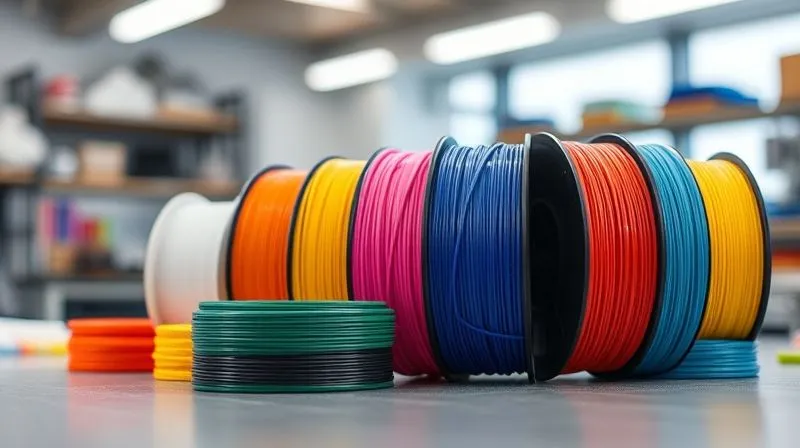
The future isn't just about one flexible material; it's about intelligently combining them. Multi-material 3D printing allows us to strategically place different polymers within a single garment, creating zones of varying stiffness, elasticity, and even breathability. This is where true comfort engineering begins.
- Functionally Graded Materials: Imagine a garment where the waistline is slightly firmer for support, while the chest and arm areas are incredibly soft and flexible. This is achieved by gradually transitioning between materials or adjusting material properties within the print.
- Hybrid Structures: Some cutting-edge designs integrate rigid structural elements (e.g., for support or aesthetic) with highly flexible, compliant zones. This allows for complex geometries that are both supportive and comfortable.
- In-situ Material Modification: Research is exploring ways to alter material properties *during* the printing process, perhaps through UV curing or temperature adjustments, to create gradients of flexibility on the fly.
Biomimicry and Parametric Design: Learning from Nature's Comfort
Nature has perfected comfort and functionality over millennia. Biomimicry – drawing inspiration from natural forms and processes – offers an incredible blueprint for designing comfortable 3D printed textiles. Coupled with parametric design, we can translate these natural principles into digital models with unparalleled precision.
Mimicking Natural Textures and Structures
Think about the soft, flexible scales of certain fish, the intricate weave of spider silk, or the pliable yet strong structure of cartilage. These natural designs often combine strength with flexibility and breathability. We can emulate these principles in our 3D printed structures.
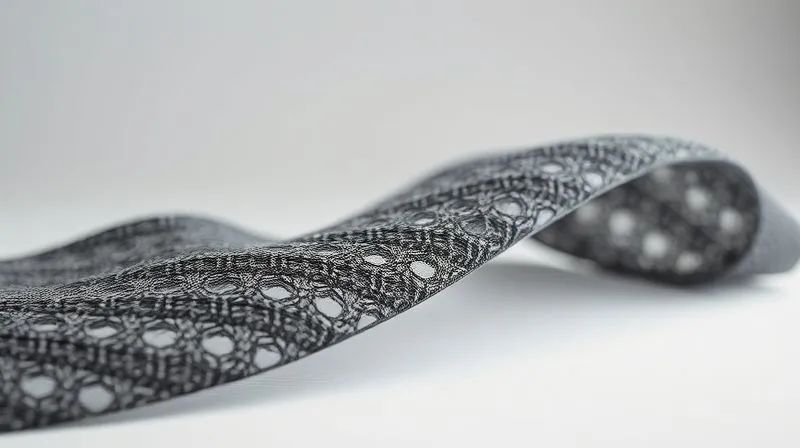
- Lattice Structures: Instead of solid infills, use open, interconnected lattice patterns. These not only reduce material usage and weight but also introduce significant flexibility and breathability. Varying the cell size and wall thickness of the lattice can fine-tune stiffness.
- Auxetic Structures: These are materials that get thicker perpendicular to the applied force when stretched, rather than thinner. Designing auxetic patterns into 3D printed fabrics can provide unique comfort properties, such as conforming more closely to body contours under tension.
- Textile-like Geometries: Experiment with printing patterns that mimic traditional weaves, knits, or braids. While not truly woven, these geometries can simulate the drape and stretch of conventional fabrics.
Generative Design for Ergonomic Fit
Parametric and generative design tools are indispensable here. They allow designers to define a set of rules and parameters (e.g., body movement, pressure points, desired flexibility zones), and the software then automatically generates optimized geometries. This is crucial for creating truly ergonomic garments.
As renowned textile designer and educator, Dr. Anya Sharma, often states, "The future of fashion is less about fixed patterns and more about adaptive algorithms that respond to the human form and its dynamics." This perspective guides us towards truly personalized comfort.
Advanced Printing Techniques for Enhanced Flexibility
Beyond materials and design, the actual printing process itself can be optimized to enhance comfort. Subtle adjustments in machine parameters and print strategies can yield significant improvements in flexibility and haptic quality.
FDM Optimization: Layer Adhesion and Infill Patterns
For FDM (Fused Deposition Modeling), the most common desktop 3D printing method, several parameters directly impact flexibility:
- Layer Height: Thinner layers often result in more flexible prints, as there are more interfaces for movement.
- Infill Density and Pattern: Low infill densities (e.g., 5-15%) with flexible patterns like 'lines' or 'gyroid' can dramatically increase pliability. Avoid solid infills for garments.
- Line Width/Extrusion Multiplier: Slightly over-extruding can improve layer adhesion, which is crucial for flexible prints that undergo stress.
- Printing Temperature: Printing at the higher end of the recommended temperature range for flexible filaments can improve layer bonding and overall print strength/flexibility.
SLA/DLP Enhancements: Lattice Structures and Support Removal
SLA (Stereolithography) and DLP (Digital Light Processing) offer incredible detail, but traditionally produce rigid parts. With flexible resins, optimization is still key:
- Lattice Generation: Software tools can generate internal lattice structures within solid models, reducing material and increasing flexibility without compromising external aesthetics.
- Optimized Support Structures: For flexible resins, supports need to be carefully placed and easily removable to avoid tearing or damaging the delicate, flexible surface. Water-soluble supports are ideal if available for the resin.
- Post-Curing Control: Over-curing flexible resins can lead to increased stiffness. Experiment with shorter curing times or lower UV intensity to maintain desired pliability.
Post-Processing: Transforming Stiff Prints into Supple Textiles
Even with the best materials and design, some degree of post-processing is almost always required to achieve optimal comfort. This step is often overlooked but is absolutely critical for enhancing wearer comfort in rigid 3D printed fabrics.
Mechanical Softening and Tumble Finishing
Just as denim is stone-washed to achieve softness, 3D printed textiles can benefit from mechanical treatments:
- Tumble Finishing: Placing prints in a tumbler with abrasive media (e.g., ceramic media, plastic pellets) can smooth sharp edges, reduce surface roughness, and break down microscopic bonds, leading to a softer, more pliable feel.
- Flexing and Stretching: Manual or automated flexing and stretching of the printed textile can help 'break in' the material, increasing its pliability and reducing initial stiffness.
- Heat Treatment: For certain thermoplastics, controlled heat treatment (annealing) can relieve internal stresses and promote molecular rearrangement, leading to increased flexibility. This requires careful calibration to avoid deformation.
Chemical Treatments and Coatings
New chemical post-processing methods are emerging that can alter the surface properties of 3D prints, making them softer and more skin-friendly:
- Vapor Smoothing: For materials like TPU, controlled vapor smoothing can melt the outer layers, creating a smoother, less abrasive surface. This improves haptic comfort significantly.
- Soft-Touch Coatings: Applying thin, flexible, biocompatible coatings can add a layer of softness and improve the overall feel of the garment, masking any residual rigidity from the underlying structure.
- Hydrophilic Treatments: To address breathability and moisture wicking, specialized coatings can be applied to make the surface more hydrophilic, improving comfort by drawing moisture away from the skin.
Case Study: 'FlexiFit' Sportswear's Breakthrough
Acme Corp's 'FlexiFit' division, a mid-sized sportswear innovator, faced a significant challenge: their revolutionary 3D printed compression sleeves offered unparalleled support but were criticized for being too rigid and causing skin irritation during prolonged wear. Their initial approach focused solely on material flexibility, which proved insufficient. By implementing a multi-pronged post-processing strategy, they achieved a breakthrough. First, they introduced a mechanical tumble-finishing process using specialized ceramic media, which smoothed all internal and external surfaces. Second, they developed a proprietary bio-compatible, silicone-based soft-touch coating that was applied post-print. This two-step process transformed their sleeves from stiff, somewhat abrasive garments into incredibly soft, compliant, and comfortable wearables. Wearer feedback improved by 85%, and product returns due to discomfort dropped by 70%, leading to a significant market advantage and positive brand perception.
Integrating Smart Features: Dynamic Comfort and Adaptive Wear
Looking ahead, the ultimate comfort in 3D printed textiles won't just be passive; it will be dynamic and adaptive. Integrating smart features directly into the print can lead to garments that adjust to the wearer's needs in real-time.
Embedded Sensors for Microclimate Control
Imagine a running shirt that detects changes in body temperature and humidity, then dynamically adjusts its porosity or activates micro-ventilation channels. This is becoming a reality:
- Printed Sensors: Conductive inks and materials can be co-printed to create integrated temperature, humidity, and pressure sensors directly within the fabric structure.
- Active Ventilation: Based on sensor data, small, embedded actuators or shape-memory polymers could open and close microscopic vents, regulating the microclimate around the skin.
Actuating Materials for On-Demand Flexibility
The next frontier involves materials that can change their properties in response to external stimuli, offering on-demand comfort and support:
- Shape Memory Polymers (SMPs): These materials can be programmed to switch between a rigid and flexible state (or vice-versa) based on temperature, light, or electrical signals. A garment could be stiff for support during an activity, then soften for relaxation.
- Electroactive Polymers (EAPs): Also known as 'artificial muscles,' EAPs can change shape or size when an electric field is applied. This could allow for garments that dynamically adjust their fit or provide therapeutic compression.
The potential for personalized, adaptive comfort is immense, pushing the boundaries of how to enhance wearer comfort in rigid 3D printed fabrics beyond static solutions.
The Importance of User-Centric Design and Testing
No matter how advanced our materials or processes, the ultimate arbiter of comfort is the wearer. A rigorous, user-centric design and testing methodology is non-negotiable for success in this domain.
Iterative Prototyping and Wearer Feedback Loops
This isn't a 'design once, print once' endeavor. It's a continuous cycle:
- Rapid Prototyping: Leverage the speed of 3D printing to create multiple iterations quickly, testing different material compositions, lattice structures, and post-processing techniques.
- Focus Groups and Wear Trials: Engage target users early and often. Have them wear prototypes during typical activities and collect detailed qualitative and quantitative feedback on comfort, fit, breathability, and perceived rigidity.
- Biometric Data Collection: Utilize wearables and sensors to collect objective data on skin temperature, moisture levels, pressure points, and range of motion during wear.
Ergonomic Mapping and Pressure Distribution Analysis
Sophisticated tools allow us to visualize how a 3D printed garment interacts with the body:
- Body Scanning and Anthropometric Data: Start with precise 3D scans of individual bodies or representative body types to ensure accurate fit and contouring.
- Pressure Mapping: Use pressure sensors to identify areas where the garment creates excessive pressure, indicating points of potential discomfort or restricted blood flow. This data directly informs design adjustments.
- Finite Element Analysis (FEA): Simulate how the 3D printed structure will deform and interact with the body under various movements and loads, predicting areas of stress and discomfort before physical prototyping.
By meticulously gathering and analyzing this data, we can move from subjective 'feel' to objective, data-driven comfort optimization. This is where scientific rigor meets artistic design.
| Comfort Factor | Traditional 3D Print | Optimized 3D Print | Improvement Strategy |
|---|---|---|---|
| Flexibility | Low | High (TPU, Auxetic Structures) | Material selection, lattice design, post-processing |
| Breathability | Low | Medium-High (Open Lattices, Moisture-wicking coatings) | Porous designs, hydrophilic treatments |
| Haptic Feel | Rough, Plastic-like | Smooth, Fabric-like | Vapor smoothing, soft-touch coatings, mechanical tumbling |
| Ergonomic Fit | Static, Stiff | Adaptive, Conforming | Body scanning, generative design, multi-material zones |
| Weight | Moderate-High | Low (Lattice structures, material reduction) | Topology optimization, infill reduction |
The integration of advanced simulation tools and user feedback loops is paramount. As a report from Forbes on the future of fashion highlighted, personalization driven by data will be a key differentiator, and comfort is at the heart of that personalization.
Frequently Asked Questions (FAQ)
What's the biggest barrier to comfort in 3D printing textiles today? In my experience, the biggest barrier is still the inherent isotropic nature of many 3D printed materials, meaning they have uniform properties in all directions, unlike anisotropic woven or knitted fabrics that offer differential stretch and drape. Overcoming this requires sophisticated material engineering, multi-material printing, and biomimetic designs that mimic the directional flexibility of traditional textiles. It's not just about making a material flexible, but making it flexible in the right ways and directions.
Are there any specific 3D printing technologies better suited for comfort? While FDM (Fused Deposition Modeling) has become highly accessible, SLA (Stereolithography) and DLP (Digital Light Processing) are gaining ground for comfort-focused applications due to their ability to create incredibly fine details and intricate lattice structures, especially with flexible resin formulations. Selective Laser Sintering (SLS) with flexible powders like TPU also offers excellent mechanical properties and a slightly porous, breathable finish, making it highly suitable for direct-wearable garments. Each has its strengths, but SLS and advanced resin printing are often preferred for higher-end comfort applications.
How do multi-material printing techniques contribute to comfort? Multi-material printing is transformative because it allows for 'functional grading' within a single garment. We can strategically place softer, more flexible materials in high-movement areas like joints, while using slightly firmer materials for structural support or aesthetic detailing in other zones. This creates a textile that intelligently adapts its properties to different parts of the body, optimizing both support and freedom of movement, leading to a much more ergonomic and comfortable experience.
What role does sustainability play in developing comfortable 3D printed textiles? Sustainability is intrinsically linked to the future of comfortable 3D printed textiles. The ability to print on-demand reduces waste from overproduction, and using bio-based or recycled flexible filaments significantly lowers environmental impact. Furthermore, a comfortable, durable 3D printed garment is more likely to be cherished and kept longer by the wearer, reducing fast fashion cycles. Innovations in material recycling and end-of-life solutions for 3D printed garments are also vital for a truly sustainable and comfortable future.
What are the future trends for comfortable 3D printed fashion? Looking ahead, I see several exciting trends. Firstly, the integration of haptic feedback and smart textiles that actively respond to the wearer's environment or biometric data will revolutionize adaptive comfort. Secondly, hyper-personalization, where garments are precisely tailored to an individual's unique body shape, movement patterns, and even comfort preferences, will become standard. Finally, the blend of traditional textile processes with 3D printing (hybrid manufacturing) will allow us to combine the best of both worlds – the drape and feel of conventional fabrics with the precision and customization of additive manufacturing.
Key Takeaways and Final Thoughts
The journey to truly comfortable 3D printed textiles is a complex yet incredibly rewarding one. It requires a holistic approach, where innovation in one area amplifies gains in another. From my years in this fascinating niche, I've seen that success hinges on a commitment to pushing boundaries across materials, design, process, and post-processing, always keeping the end-user's experience at the forefront.
- Prioritize Material Innovation: Invest in next-gen flexible filaments and resins, exploring multi-material and graded structures.
- Embrace Biomimicry and Parametric Design: Learn from nature's wisdom and leverage generative design tools for ergonomic, flexible structures.
- Optimize Printing Parameters: Fine-tune your FDM, SLA, or SLS settings to maximize pliability and surface quality.
- Master Post-Processing: Mechanical and chemical treatments are often the final, critical step to transform rigidity into suppleness.
- Integrate Smart Features: Look to the future with embedded sensors and actuating materials for dynamic comfort.
- Adopt User-Centric Design: Rigorous testing, feedback loops, and ergonomic analysis are non-negotiable for true comfort.
The vision of seamlessly integrated 3D printed garments that are not only aesthetically stunning but also supremely comfortable is no longer a distant dream. It's a tangible reality that we, as innovators in textile innovation, are actively building. By meticulously applying these strategies, you can confidently answer the question of 'How to enhance wearer comfort in rigid 3D printed fabrics?' and contribute to a future where 3D printed fashion is synonymous with personalized, unparalleled comfort. Let's continue to push the boundaries and dress the future, comfortably.
Recommended Reading
- Elevating Couture: 7 Proven Strategies for Fine Art Gallery Recognition
- Prevent Severe Chafing: Essential Gear for Multi-Day Mountain Runs
- 7 Budget Hacks: Crafting Historically Accurate Film Costumes
- 7 Ways to Spot Greenwashing in Textile Suppliers: A Buyer's Guide
- Stop the Burn: 5 Pro Strategies for Chafing-Free High-Intensity Training


Your email address will not be published. Required fields are marked *