

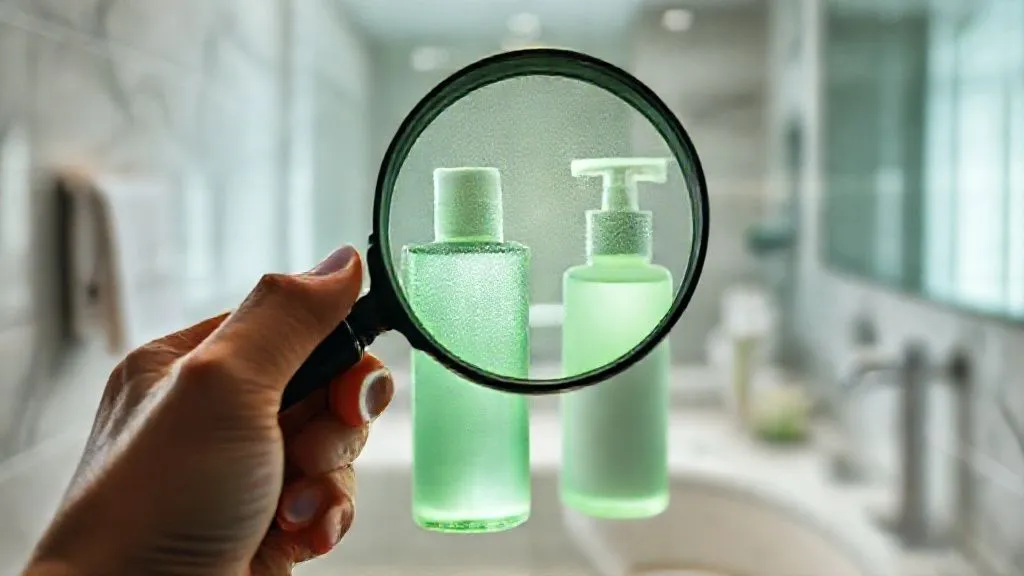
How to differentiate true clean beauty from prevalent greenwashing?
For over 15 years in the beauty and fashion industry, I've witnessed a seismic shift towards 'clean' and 'sustainable' products. It's a movement I passionately champion, yet I've also seen a concerning trend emerge: the insidious rise of greenwashing, making it incredibly difficult for conscious consumers to discern genuine efforts from clever marketing ploys.
The problem is profound. Brands, eager to capitalize on consumer demand for ethical products, often use vague terms, misleading imagery, and selective disclosures to appear 'green' without fundamentally altering their practices. This not only erodes trust but also undermines the tireless work of truly clean and sustainable brands, leaving consumers feeling frustrated and deceived.
In this definitive guide, I will share my expert framework, honed through years of analyzing product formulations, supply chains, and marketing strategies. You'll learn actionable steps, backed by real-world insights and a mini case study, to confidently navigate the clean beauty landscape and arm yourself against pervasive greenwashing. My goal is to empower you to become an informed advocate for your own health and the planet.
Understanding the 'Clean Beauty' Movement: More Than Just Buzzwords
Before we can differentiate, we must truly understand what 'clean beauty' aims to be. From my vantage point, it's not merely a trend; it's a philosophy advocating for products formulated without ingredients linked to harm for human health or the environment. This often includes parabens, phthalates, sulfates, synthetic fragrances, and certain heavy metals.
However, the term 'clean' itself is unregulated, which is precisely where the greenwashing opportunity arises. What one brand considers 'clean' might be vastly different from another, leading to a confusing marketplace. My experience has taught me that true clean beauty goes beyond a 'free-from' list; it encompasses ingredient sourcing, manufacturing processes, packaging, and a brand's overall ethical footprint.
Expert Insight: "True clean beauty isn't just about what's *not* in a product; it's equally about what *is* in it, how it got there, and its full life cycle impact."
The Art of Greenwashing: Recognizing Deceptive Tactics
Greenwashing is a deceptive marketing ploy used by companies to portray their products, services, or policies as environmentally friendly when they are not. In the beauty sector, this can manifest in countless ways, often subtly designed to appeal to our desire for ethical consumption.
I've seen brands use imagery of lush forests or pristine oceans on their packaging, even if their ingredients are petrochemical-derived or their factories pollute waterways. They might highlight a single 'natural' ingredient while overlooking a cocktail of synthetic ones. Identifying these tactics is the first crucial step in becoming a savvy clean beauty consumer.
Common Greenwashing Red Flags to Watch For:
- Vague Language: Terms like 'natural,' 'eco-friendly,' 'pure,' 'green,' or 'sustainable' without specific definitions or certifications.
- Green Imagery: Excessive use of leaves, earthy tones, or nature scenes on packaging that don't reflect the product's actual environmental impact.
- Irrelevant Claims: Highlighting an ingredient that is 'free-from' a substance that was never in the product category to begin with (e.g., 'CFC-free' on a shampoo).
- Hidden Trade-offs: Focusing on one small 'green' attribute while ignoring a much larger environmental harm (e.g., 'biodegradable' formula in a non-recyclable plastic bottle).
- Lack of Transparency: Unwillingness to provide detailed ingredient lists, sourcing information, or third-party certifications.
- Fake Labels: Creating their own 'eco-labels' that look official but are not recognized by independent organizations.
Decoding Ingredient Lists: Your First Line of Defense
The ingredient list, or INCI (International Nomenclature Cosmetic Ingredient) list, is your most powerful tool. It's legally mandated to list ingredients in descending order of concentration, which I always advise my clients to scrutinize. Don't be intimidated by the scientific names; with a little practice, you can decipher them.
My approach is to look for common irritants or questionable chemicals. For instance, parabens often appear as methylparaben, propylparaben, or butylparaben. Phthalates are less common on INCI lists as they are often part of 'fragrance' – a notorious loophole. This is why a commitment to 'fragrance-free' or 'naturally fragranced' is a strong indicator of cleaner formulations. When I'm evaluating a brand, I always cross-reference their ingredient claims with independent databases.
Actionable Steps for Ingredient List Scrutiny:
- Learn the 'Dirty Dozen' (or more): Familiarize yourself with a core list of ingredients to avoid, such as parabens, phthalates, sulfates (SLS/SLES), synthetic fragrances, formaldehyde-releasing preservatives, PEGs, and certain silicones.
- Prioritize Transparency: Look for brands that clearly explain each ingredient's purpose and source, not just list them.
- Utilize Databases: Use trusted resources like the Environmental Working Group (EWG) Skin Deep database or Think Dirty app to look up individual ingredients and product scores.
- Question 'Natural' Fragrances: Even 'natural' fragrances can be allergens for some. Look for brands that specify the source of their natural scent (e.g., essential oils of lavender, not just 'natural fragrance').
- Seek Full Disclosure: Be wary of brands that simply state 'fragrance' or 'parfum' without further detail, as this can hide numerous undisclosed chemicals.
According to a study published by the Journal of Environmental Psychology, consumers are more likely to trust brands that provide detailed, verifiable information about their environmental practices.
The Power of Third-Party Certifications: Beyond Self-Proclaimed Purity
In my years consulting with beauty brands, I've consistently emphasized the invaluable role of credible third-party certifications. These aren't just fancy stickers; they represent independent verification that a product or brand meets specific, rigorous standards for environmental and social performance. This is where true authority and trust are built.
While the beauty industry lacks a single, universally accepted 'clean' standard, several reputable organizations offer certifications that can guide your choices. These certifications often involve extensive audits, ingredient reviews, and supply chain assessments, providing a level of assurance that self-proclaimed 'green' claims simply cannot.
Key Certifications to Look For:
- USDA Organic: For agricultural ingredients, ensuring they are grown and processed according to federal guidelines.
- Ecocert/COSMOS Organic/Natural: International standards for natural and organic cosmetics, covering sourcing, manufacturing, and packaging.
- Leaping Bunny/PETA Cruelty-Free: Guarantees no animal testing at any stage of product development.
- B Corp Certification: A holistic certification assessing a company's entire social and environmental performance, transparency, and accountability.
- Fair Trade Certified: Ensures ethical sourcing and fair wages for ingredient producers.
- Made Safe: Certifies products are made without known behavioral toxins, carcinogens, developmental toxins, endocrine disruptors, neurotoxins, organ toxins, reproductive toxins, or heavy metals.
As marketing guru Seth Godin often says, "People do not buy goods and services. They buy relations, stories, and magic." In the context of clean beauty, that 'magic' is often the trust instilled by a credible third-party endorsement.
Beyond Ingredients: Packaging, Ethics, and Brand Values
True clean beauty extends far beyond the formulation inside the bottle. As an industry specialist, I often guide brands to consider their entire operational footprint. Greenwashing often focuses solely on ingredients while neglecting critical aspects like packaging and corporate ethics.
I've seen brands proudly proclaim 'natural ingredients' while encased in virgin plastic that will take centuries to decompose. Or they might tout 'eco-friendly' practices while their labor force operates under questionable conditions. A truly clean brand demonstrates commitment across its entire value chain.
Evaluating a Brand's Holistic Cleanliness:
- Packaging Materials: Look for glass, aluminum, recycled plastic (PCR), or innovative biodegradable materials. Question excessive, non-recyclable packaging.
- Refill Programs: Brands offering refillable options demonstrate a commitment to waste reduction.
- Supply Chain Transparency: Does the brand openly share where their ingredients come from and how they are sourced? Do they ensure fair labor practices?
- Manufacturing Practices: Do they use renewable energy, minimize water waste, or have closed-loop systems?
- Corporate Social Responsibility (CSR): Does the brand contribute to environmental causes, support local communities, or have clear ethical policies?

Case Study: How 'Veridian Glow' Battled Greenwashing with Transparency
Veridian Glow, a mid-sized skincare brand, faced intense market pressure to appear 'clean' amidst a sea of greenwashing competitors. Initially, they were tempted to use vague 'natural' claims. However, after consulting with me, they pivoted to a strategy of radical transparency.
They implemented a QR code on every product, linking directly to a detailed ingredient glossary, sourcing map, and their manufacturing facility's energy consumption report. They invested in B Corp certification and openly shared their progress towards 100% PCR packaging. This commitment, while challenging, allowed them to differentiate true clean beauty from prevalent greenwashing. Their sales increased by 40% in two years, and they built a fiercely loyal customer base who trusted their every claim. This resulted in Veridian Glow becoming a benchmark for genuine clean beauty in the industry.
The 'Trust Your Gut, But Verify' Framework
My final piece of advice: trust your intuition, but always back it up with verification. If a claim seems too good to be true, it often is. Greenwashing preys on our desire to do good, so equip yourself with the tools to see through the veneer.
I've developed a simple framework to help you quickly assess claims:
| Claim Type | Verification Method |
|---|---|
| Vague Green Term (e.g., 'Natural') | Check INCI list for specific, recognizable natural ingredients. Look for certifications. |
| Eco-friendly Packaging | Identify material (glass, PCR). Is it recyclable in your area? Does the brand offer refills? |
| Sustainable Sourcing | Look for Fair Trade, organic, or other ethical sourcing certifications. Does the brand detail their supply chain? |
| Cruelty-Free | Look for Leaping Bunny or PETA logos. Check their website for a clear policy. |
Remember, the burden of proof lies with the brand. If they can't provide clear, verifiable evidence for their 'clean' claims, it's likely a red flag.

FAQs: Deep Diving into Clean Beauty & Greenwashing
Question: Is 'fragrance-free' always better, or can natural fragrances be clean? While 'fragrance-free' minimizes allergen risk, it doesn't automatically mean 'clean.' Many synthetic fragrances contain undisclosed chemicals. However, naturally derived fragrances from essential oils or botanical extracts can be clean if sourced ethically and clearly identified. The key is transparency: a truly clean brand will specify the exact natural components, not just 'natural fragrance.' For those with sensitivities, 'fragrance-free' is often the safest bet.
Question: How can I tell if a brand's 'recyclable' claim is genuine, especially with complex packaging? This is a common greenwashing trap. First, check if the packaging has the universal recycling symbol with a number (1-7). Then, research your local recycling facility's guidelines – not all numbers are accepted everywhere. Many brands claim 'recyclable' for components that aren't widely accepted (e.g., small pumps, mixed materials). Look for brands that clarify which parts are recyclable and provide instructions, or better yet, offer take-back or refill programs.
Question: Are all 'organic' ingredients automatically 'clean'? Not necessarily, but it's a strong indicator. 'Organic' primarily refers to agricultural practices free from synthetic pesticides and fertilizers. While beneficial for the environment and often healthier, an organic ingredient itself might not be suitable for all skin types or could still be processed with non-clean methods. For instance, an organic essential oil is great, but if it's mixed into a formula with parabens, the overall product isn't 'clean.' Always check the full ingredient list and look for organic *certifications* like USDA Organic or Ecocert for the final product, not just individual ingredients.
Question: What about brands that reformulate their products to be 'cleaner' but still have some older inventory? How do I trust them? This is a valid concern, and it speaks to a brand's integrity. A truly transparent brand undergoing a reformulation will clearly communicate this to its customers. They might label new batches distinctly, provide clear timelines, or even offer information on how to identify the reformulated version. If a brand is vague or tries to pass off old stock as 'new and improved' without clear differentiation, it's a red flag. Look for brands that are proactive and honest about their transition.
Question: Is it possible for a truly clean beauty product to be affordable, or is it always a premium? While formulating with high-quality, ethically sourced ingredients and sustainable packaging can increase costs, 'clean' doesn't always equate to 'expensive.' Many smaller, indie brands prioritize accessible clean beauty. The key is to research and compare. Sometimes, premium pricing reflects innovative ingredients, cutting-edge research, or unique sourcing, but it's not a guarantee of 'cleanliness.' Conversely, a lower price doesn't automatically mean greenwashing. Focus on ingredient transparency and third-party certifications, regardless of the price point.
Key Takeaways and Final Thoughts
- Empower Yourself: Your journey to differentiate true clean beauty from prevalent greenwashing starts with informed skepticism and a commitment to learning.
- Scrutinize Ingredient Lists: The INCI list is your most powerful tool. Learn key ingredients to avoid and utilize trusted databases.
- Value Certifications: Reputable third-party certifications provide independent verification and build genuine trust.
- Look Beyond the Bottle: Evaluate a brand's commitment to sustainability across packaging, sourcing, and corporate ethics.
- Trust, But Verify: If a claim seems too good to be true, it probably is. Seek evidence and transparency.
Navigating the clean beauty landscape can feel like a minefield, but I assure you, with the right tools and a discerning eye, you can confidently make choices that align with your values. As consumers, our collective demand for transparency and genuine sustainability is the most powerful force for change in the beauty industry. Let's demand better, together, and support the brands truly committed to a cleaner, healthier future for all.
Recommended Reading
- 5 Smart Ways to Express Style in Strict Corporate Dress Codes
- 7 Proven Strategies: Solving Textile Art Degradation in Theatrical Costumes
- The Frustrating Truth: Why Does Seamless Activewear Roll Down During Workouts?
- Prevent Severe Chafing: Essential Gear for Multi-Day Mountain Runs
- Mastering Theatrical Quick Changes: 7 Solutions for Seamless Costume Transitions



Your email address will not be published. Required fields are marked *