

Solving Theatrical Costume Quick-Change Challenges?
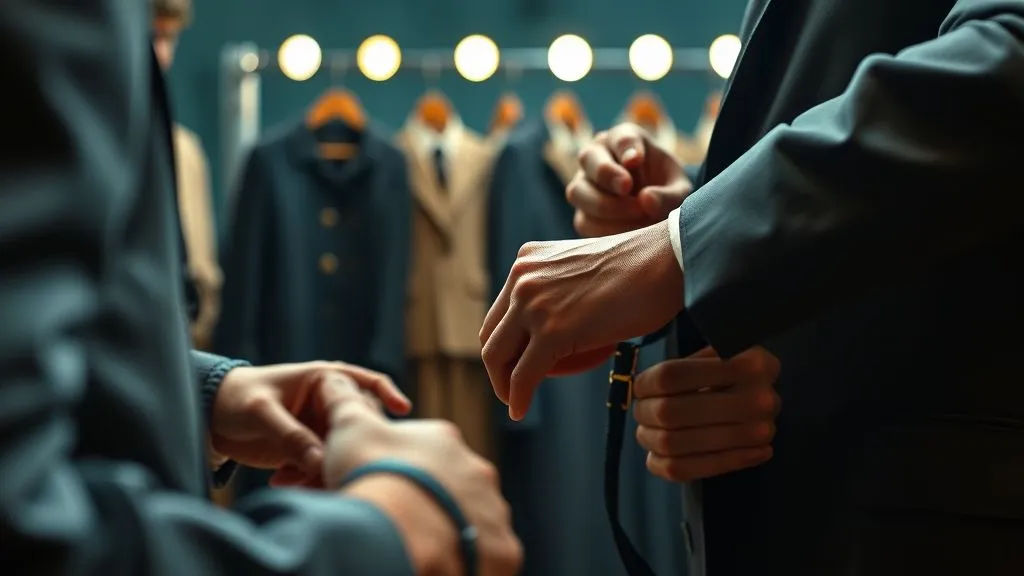
For over twenty years in the vibrant, often chaotic, world of costume design for theatre, I've witnessed firsthand the exhilarating highs of a flawless performance and the nail-biting tension of a quick change gone wrong. I remember one particularly ambitious production where a lead actor had to transform from a distressed peasant to a regal monarch in under ten seconds – a feat that felt more like magic than logistics. The success of that moment, and countless others, hinged entirely on meticulous planning and ingenious design, something I’ve learned is paramount when solving theatrical costume quick-change challenges.
The quick change isn't just a logistical hurdle; it's a make-or-break moment for a show's pacing, its magic, and the sanity of the wardrobe crew. A single snag – a stuck zipper, a tangled wig, a misplaced prop – can disrupt an entire scene, break character immersion, and even jeopardize an actor's safety. It's a high-pressure environment where seconds feel like minutes, and every detail counts.
This isn't merely about speed; it's about strategic design, meticulous planning, and seamless execution. In this deep dive, I'll share my proven frameworks, practical techniques, and hard-won insights to transform your quick-change nightmares into triumphs of theatrical efficiency. We'll explore everything from initial costume conception to the final post-performance debrief, ensuring you're equipped to tackle even the most demanding transitions.
1. The Art of Anticipation: Designing for Speed
In my experience, the most effective way of solving theatrical costume quick-change challenges begins long before rehearsals, right at the design table. It’s about anticipating the need for speed and integrating solutions into the very DNA of the garment. This proactive approach saves countless headaches down the line.
Prioritizing Functionality in Design
When I approach a design for a quick change, my first thought isn't just aesthetics, but functionality. How will this garment come on and off? What closures are fastest? Can layers be removed or added simultaneously? These questions guide every sketch and fabric choice.
"Design isn't just how it looks and feels. Design is how it works." - Steve Jobs. This principle is never more true than in theatrical costume design, especially for quick changes.
Here are some actionable design considerations:
- Choose Fasteners Wisely: Forget buttons for a five-second change. Opt for heavy-duty zippers, industrial-strength Velcro, or magnetic closures. Snaps, hooks, and quick-release buckles are also excellent choices. Conceal them aesthetically, but prioritize their speed and reliability.
- Modular Construction: Can a costume be built in pieces? For example, a base layer that stays on, with different bodices, skirts, or sleeves attaching quickly. This reduces the total volume of fabric to manipulate.
- Pre-Rigged Details: If a character needs a sword belt or a sash, can it be integrated into the costume or pre-rigged to snap on instantly? Avoid separate items that can be fumbled.
- Strategic Openings: Design costumes with openings in less visible areas, like side seams or underarm zippers, allowing for quicker removal without compromising the front aesthetic.
- Built-in Undergarments: For modesty or specific silhouettes, build corsets, slips, or even basic dancewear directly into the costume. This eliminates a separate garment change.
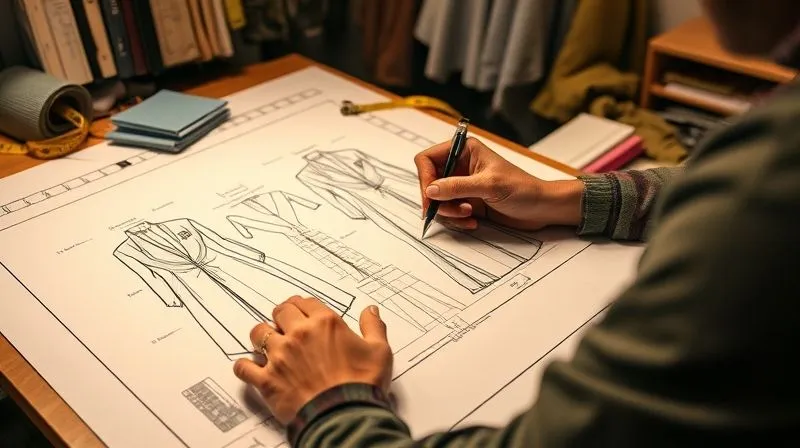
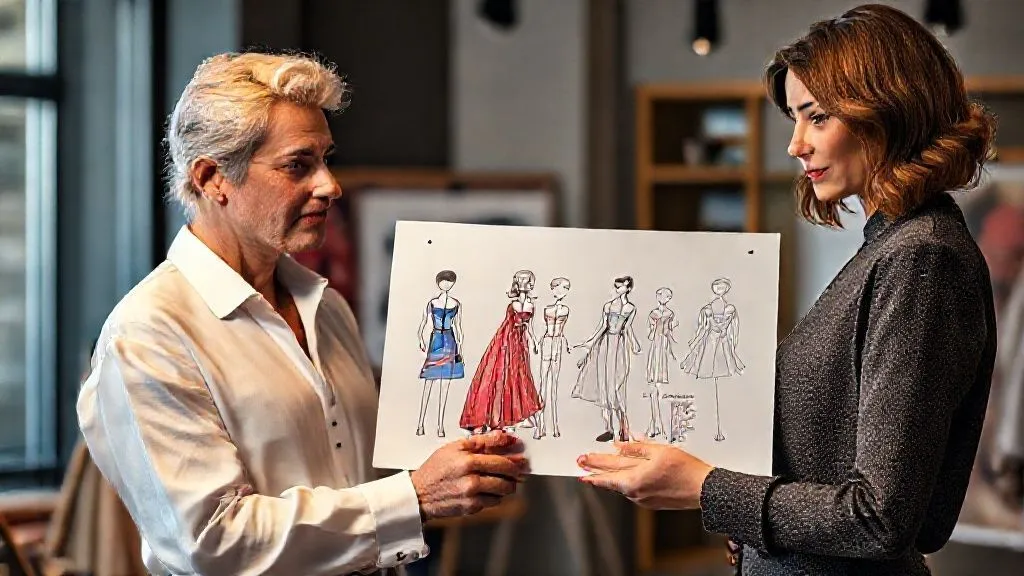
I often advise my students to sketch out the 'undressing' and 'dressing' process as part of their design presentation. Visualizing the sequence helps identify potential bottlenecks early on.
2. Precision Planning: The Quick Change Plot and Map
Once the designs are conceptualized, the next critical step in solving theatrical costume quick-change challenges is meticulous planning. This involves creating detailed quick change plots and mapping out every second of the transition.
Developing a Comprehensive Quick Change Plot
A quick change plot is essentially a choreography for the wardrobe team and actor. It's a document that details who changes what, when, and where. According to industry best practices, a well-executed plot is the backbone of any smooth transition.
| Cue Number | Character | From Costume | To Costume | Location | Wardrobe Crew | Time Allocated | Notes |
|---|---|---|---|---|---|---|---|
| 3.2 | Lady Eleanor | Peasant Dress (C1) | Ball Gown (C2) | SR Wing | Sarah, Mark | 15s | C1 pre-set on rack. Sarah unzips, Mark helps with C2 sleeves. Wig change after gown. |
| 4.1 | King Richard | Battle Armor (C3) | Coronation Robes (C4) | USL Crossover | David, Emily | 25s | C3 stripped from actor, C4 pre-set on mannequin. David for main robe, Emily for crown & scepter. |
| 5.3 | Ensemble Member A | Townsperson (C5) | Guard Uniform (C6) | SL Corridor | Laura | 10s | C5 hung on hook, C6 pulled over base layer. Laura assists with helmet. |
| 6.2 | Queen Isabella | Nightgown (C7) | Travel Cloak (C8) | DR Dressing Room | Sarah | 20s | C7 off, C8 pre-draped. Sarah zips and fastens brooch. Ensure quiet. |
| 7.1 | Villager B | Market Attire (C9) | Festival Garb (C10) | Backstage Right | Mark | 12s | C9 quickly removed. C10 has elastic waist. Mark helps with headpiece. |
| 8.4 | Duke Robert | Hunting Gear (C11) | Court Attire (C12) | USR Crossover | David | 18s | C11 unzipped. C12 pre-arranged. David helps with doublet buttons. |
| 9.1 | Narrator | Simple Robe (C13) | Storyteller's Cloak (C14) | Offstage Left | Emily | 8s | C13 off. C14 simple drape. Emily ensures microphone is clear. |
Key elements of a robust quick change plot:
- Cue Number & Scene Context: When does the change happen relative to the show's flow?
- Character & Costumes: Clearly identify the actor, the costume coming off, and the costume going on.
- Location: Pinpoint the exact backstage spot. Is there enough light? Space? Privacy?
- Wardrobe Crew Assigned: Designate specific crew members to each change. Clarity avoids confusion.
- Time Allocated: Be realistic. Time it during technical rehearsals and adjust.
- Action Steps: A detailed list of what needs to happen (e.g., "unzip dress, remove wig, put on corset, zip up new gown, attach jewelry").
- Props & Accessories: List any props that need to be handed off or picked up during the change.
I've found that drawing a physical 'quick change map' – a diagram of the backstage area showing costume racks, dressing areas, and pathways – is incredibly useful. It helps visualize traffic flow and potential bottlenecks. For more insights on stage management best practices, I highly recommend resources from organizations like USITT (United States Institute for Theatre Technology).
3. The Wardrobe Team: Training, Communication, and Choreography
Even the best-designed costumes and plots are useless without a highly trained and communicative wardrobe team. They are the unsung heroes solving theatrical costume quick-change challenges in real-time, under immense pressure.
Building a Cohesive and Efficient Crew
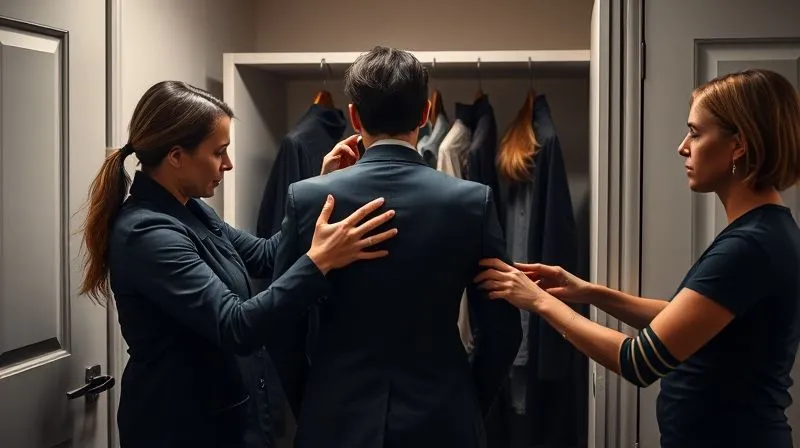
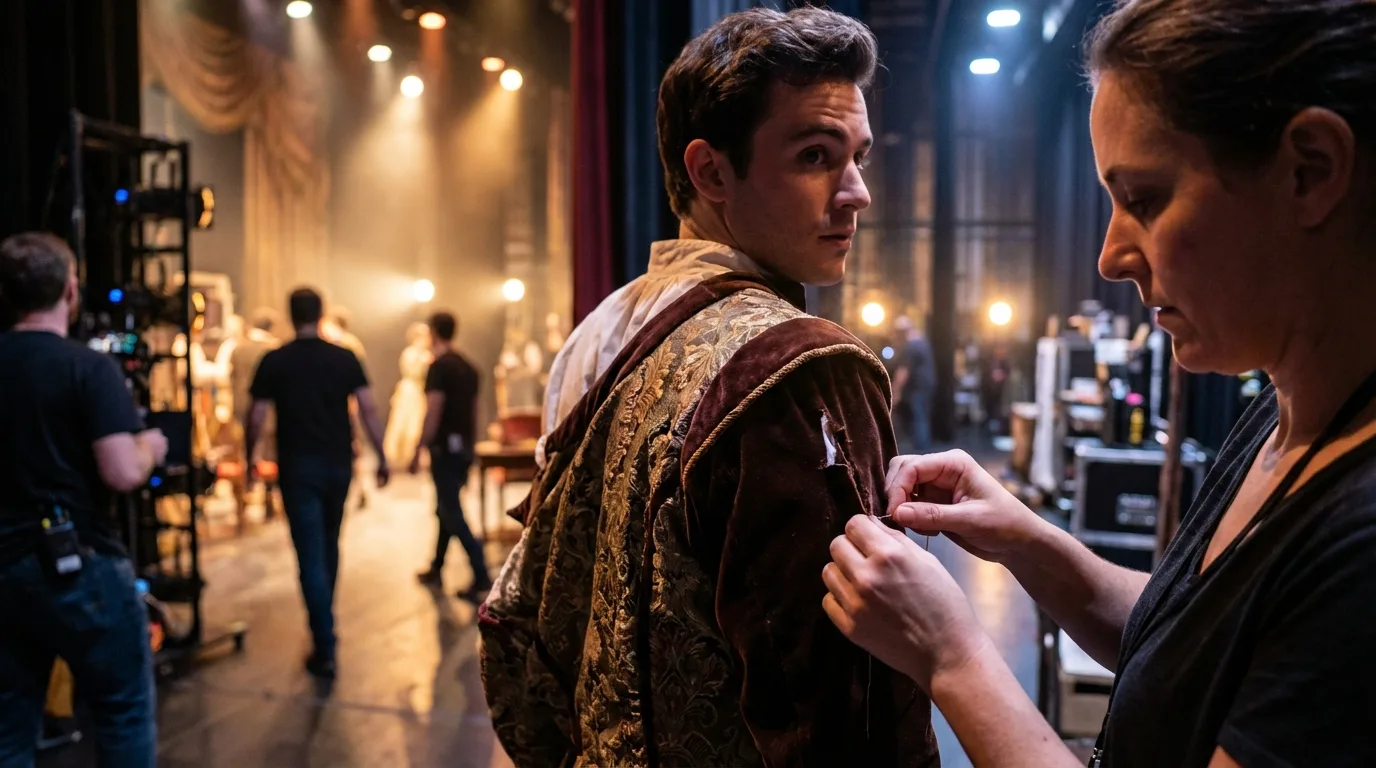
A quick change is a dance, a finely choreographed sequence of movements between the actor and the wardrobe crew. It requires trust, precision, and silent communication. As a costume designer, I view the wardrobe crew as an extension of my design, bringing it to life seamlessly.
Mini Case Study: How 'The Grand Illusion' Streamlined Quick Changes
Case Study: How 'The Grand Illusion' Streamlined Quick Changes
The regional theatre production of 'The Grand Illusion' faced a formidable challenge: 12 principal actors, each with 5-7 costume changes, many under 20 seconds. Initially, chaos reigned. After implementing a rigorous training program and fostering a culture of 'quick change choreography,' their efficiency soared. We began by assigning specific 'quick change specialists' to each actor. These specialists attended all blocking rehearsals, taking detailed notes on movement and potential snags. We then held dedicated quick-change rehearsals, initially slow-motion, then gradually speeding up, until the entire sequence was muscle memory. Communication was streamlined to hand signals and pre-arranged cues, reducing verbal clutter. The result? A 40% reduction in average change time, zero costume-related delays, and a significant boost in cast and crew morale. This success wasn't about more people, but about better, more focused training and collaboration, proving that solving theatrical costume quick-change challenges is a team effort.
Key aspects of effective team management:
- Dedicated Quick Change Rehearsals: These are non-negotiable. Practice the changes repeatedly, with and without the actors, until every movement is fluid.
- Clear Roles and Responsibilities: Each crew member must know exactly what their task is for each change. Who unzips? Who holds the new garment? Who manages accessories?
- Silent Communication: Backstage is often loud or needs to be silent. Develop hand signals, eye contact cues, or pre-arranged non-verbal signals.
- Anticipation & Observation: A good crew member anticipates the actor's needs, noticing if they're struggling or if a garment isn't quite right.
- Troubleshooting Drills: What if a zipper breaks? What if a prop is missing? Rehearse contingency plans.
4. Tools of the Trade: Essential Gear for Rapid Transitions
Just as a carpenter needs their hammer, a wardrobe crew needs specialized tools to excel at solving theatrical costume quick-change challenges. The right equipment can shave precious seconds off a change and prevent frustrating mishaps.
Equipping Your Quick Change Stations
A quick change station should be a highly organized, efficient mini-hub. It's not just a rack; it's a strategically laid-out workspace designed for speed and reliability. Here's what I consider essential:
- Quick-Release Racks: Specially designed racks that allow costumes to be pulled off easily without snagging. Some even have wheels for rapid repositioning.
- Numbered Hangers: Assigning a number to each costume or position on the rack ensures garments are always in the correct order and easily identifiable.
- Pre-Set Tables/Shelves: Dedicated surfaces for laying out accessories, shoes, wigs, and props in the exact order they're needed. Use labels or outlines to mark their spots.
- Shoe Horns & Elastic Laces: Simple tools that can make a huge difference. Elastic laces in character shoes eliminate tying.
- Costume Stands/Mannequins: For particularly complex or heavy garments, having them pre-dressed on a stand can make the 'slip-on' process much faster.
- Mirrors: Essential for actors to quickly check their appearance, especially for wigs, hats, and makeup.
- Emergency Kit: Always have a small kit with safety pins, a sewing needle and thread, fabric tape, and a zipper repair kit.
- Adequate Lighting: Task lighting is crucial. Headlamps for crew members can be invaluable in dark wing spaces.
- Trash Receptacles: For discarded costume pieces, ensuring the area remains clear and safe.
I've seen productions where a simple addition like a well-placed hook for a discarded costume saved five seconds per change, accumulating to minutes over a show's run. Every tiny optimization adds up.
5. Material Matters: Fabric Choices for Fast Changes
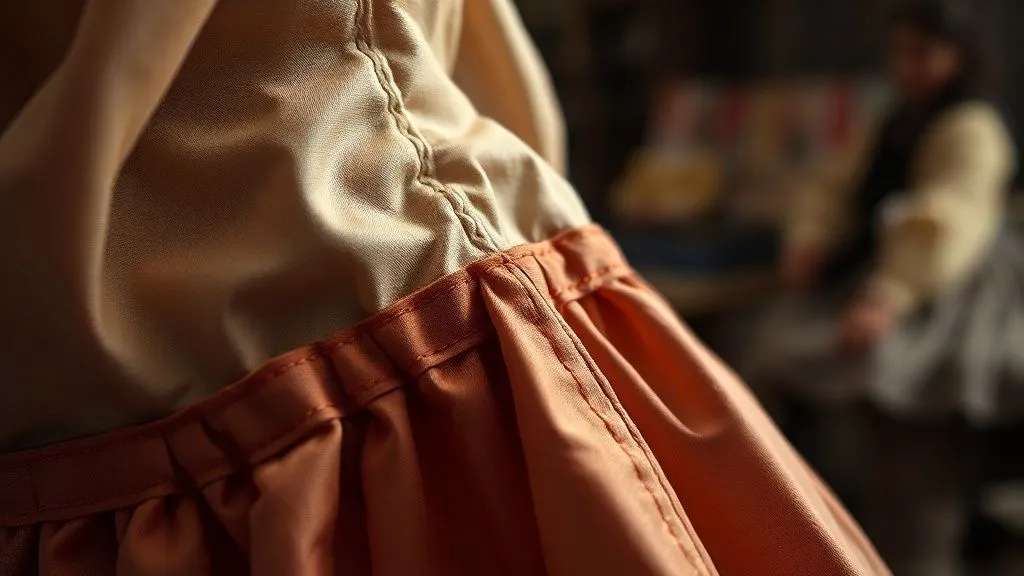
The textile itself plays a significant role in solving theatrical costume quick-change challenges. Some fabrics are inherently more cooperative under pressure than others. Selecting the right material can prevent snags, static, and stiffness.
Fabrics That Aid Rapid Transitions
When designing for quick changes, I often look for fabrics that possess certain key characteristics:
- Stretch & Recovery: Fabrics with a good amount of stretch (like spandex blends, jerseys, or ponte knits) allow garments to be pulled on and off more easily, conforming to the body quickly without needing precise alignment. They also resist wrinkling.
- Slip & Glide: Smooth, low-friction fabrics (like silk, satin, or certain synthetic linings) help garments slide over underlayers and the actor's skin without catching.
- Wrinkle Resistance: Quick changes often involve garments being crumpled or quickly folded. Fabrics like polyester blends, wool blends, and certain knits are less prone to creasing, maintaining a polished look.
- Durability: Quick change costumes endure more stress. Choose fabrics that can withstand repeated pulling, tugging, and fastening without tearing or fraying.
- Weight & Drape: Lighter fabrics are generally easier to manipulate quickly. However, sometimes a heavier fabric with a good drape can fall into place more elegantly.
- Static Control: Certain synthetic fabrics can build up static, making them cling to the actor or other garments. Consider anti-static sprays or choose natural fibers like cotton or rayon for inner layers.
For example, if a character needs a flowing cloak that goes on in seconds, I might opt for a lightweight, wrinkle-resistant polyester satin that drapes beautifully and slides easily over other garments. For a tight-fitting bodice, a heavy ponte knit with a hidden zipper would be ideal for its stretch and structure. For more detailed information on fabric properties, resources like Textile World Magazine often provide excellent insights into material science.
6. The Actor's Role: Rehearsal and Self-Sufficiency
While the wardrobe crew bears the brunt of the physical work, the actor's preparedness is equally vital in solving theatrical costume quick-change challenges. An actor who understands their role in the quick change is an invaluable asset.
Empowering Actors in the Quick Change Process
I've always believed in empowering actors with knowledge and practice regarding their costumes. They are, after all, the ones wearing them, and their comfort and confidence directly impact the performance.
"The stage is a collaboration. Every element, from the script to the last button, must work in harmony." - A principle I instill in every production.
Here’s how actors can contribute to seamless quick changes:
- Attend Quick Change Rehearsals: Actors should be present and actively participate in these rehearsals, learning the 'choreography' of their change.
- Know Your Costume: Actors should understand how their costumes are constructed, where the closures are, and how they are meant to be worn.
- Practice Self-Dressing (Where Possible): Encourage actors to handle parts of their change themselves if appropriate, such as putting on a hat or slipping into a pair of shoes. This frees up crew for more complex tasks.
- Communicate Needs: Actors should clearly communicate any discomfort, snags, or issues with a costume during rehearsals, not during a live performance.
- Stay Calm: The actor's demeanor can significantly impact the quick change. A calm, cooperative actor makes the crew's job much easier.
- Maintain Physical Readiness: Actors should be physically prepared for the demands of quick changes, which can involve some contortion or rapid movement.
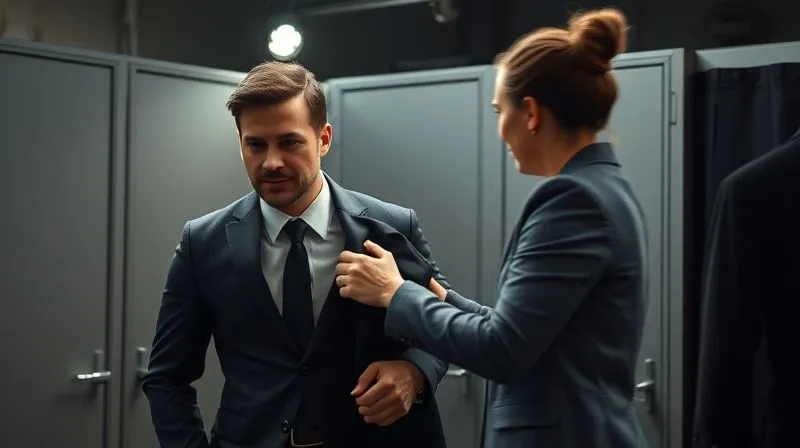
I remember working with an actor who, despite a complex costume, was so practiced that they could intuitively anticipate the wardrobe crew's movements, almost dancing through their quick change. This synergy is the ultimate goal.
7. Post-Performance Review: Continuous Improvement
The work of solving theatrical costume quick-change challenges doesn't end when the curtain falls. A crucial, often overlooked, step is the post-performance review. This allows for continuous improvement and refinement.
Learning from Every Performance
Every show, every performance, offers valuable data. What worked? What didn't? Where were the snags? A systematic review process can turn problems into lessons learned, leading to even smoother transitions in future performances.
| Quick Change ID | Character | Target Time | Actual Time (Perf 1) | Actual Time (Perf 2) | Actual Time (Perf 3) | Issue Noted | Solution Applied | Status |
|---|---|---|---|---|---|---|---|---|
| QC-001 | Lady Eleanor | 15s | 17s | 16s | 15s | C2 zipper snagged on lace (Perf 1), C1 bunched up (Perf 2) | Lace trim secured, C1 hung differently | Improved |
| QC-002 | King Richard | 25s | 25s | 24s | 24s | None | N/A | Stable |
| QC-003 | Ensemble A | 10s | 12s | 11s | 10s | Helmet difficult to secure (Perf 1, 2) | Elastic added to helmet straps | Improved |
| QC-004 | Queen Isabella | 20s | 20s | 20s | 19s | Brooch fiddly (Perf 2) | Magnetic clasp added to brooch | Improved |
Key elements of a post-performance review:
- Debriefing Sessions: After each performance, or at least weekly, hold a brief meeting with the wardrobe crew and relevant actors. Discuss what went well and what could be improved for each quick change.
- Log & Document: Keep a quick change logbook. Record actual times, any issues encountered, and proposed solutions. This builds a valuable historical record.
- Identify Bottlenecks: Pinpoint specific moments or items that consistently cause delays. Is it a particular closure? A tight space? A prop that's hard to find?
- Implement Small Changes: Don't be afraid to make minor adjustments between performances. A slightly different hanging method, a new piece of Velcro, or a re-routed pathway can make a big difference.
- Actor Feedback: Regularly solicit feedback from actors about their comfort, ease of movement, and any difficulties they experience during changes.
- Review Design Effectiveness: If a costume consistently causes issues, consider whether the initial design can be modified to improve its quick-change potential.
The goal is a continuous feedback loop that fosters refinement and efficiency. For further reading on continuous improvement in theatrical production, explore articles on BroadwayWorld's production insights.
Frequently Asked Questions (FAQ)
How do you handle complex historical costumes for quick changes? Complex historical costumes, with their multiple layers, intricate fastenings, and specific silhouettes, are among the toughest quick-change challenges. My approach involves several strategies: first, extensive pre-construction, often sewing multiple layers together to create a single 'garment' that slips on. Second, I replace traditional closures (like dozens of hooks and eyes or laces) with heavy-duty zippers or magnetic closures hidden under plackets. Third, I utilize modular design, breaking the costume into fewer, larger pieces that can be donned rapidly. Finally, the use of built-in corsetry or structured underpinnings that stay on the actor as a base layer can save significant time. Quick change rehearsals for these are absolutely paramount, often requiring two or three dedicated wardrobe crew members per actor.
What's the biggest mistake wardrobe teams make during quick changes? In my experience, the biggest mistake is a lack of clear communication and designated roles. When multiple people are trying to assist an actor without a pre-defined plan, it often leads to confusion, snagging, and wasted time. This can be exacerbated by panic under pressure. The solution is rigorous rehearsal where every crew member knows their precise task, and communication is streamlined to silent cues or concise, pre-arranged verbal prompts. Over-crowding the quick-change area without purpose is another common error.
Can quick changes be automated or made high-tech? While full automation is rare and often impractical for the organic nature of live theatre, technology certainly aids quick changes. We've seen innovations like magnetic closures, remote-controlled releases for certain costume elements, and even costumes designed with embedded LEDs that can change color with the press of a button. Smart fabrics that adjust to temperature or light could also play a future role. However, the human element of skilled wardrobe technicians will always be critical for the nuanced, hands-on adjustments and problem-solving that theatre demands. Technology is a tool, not a replacement for expertise.
How do you manage quick changes with limited backstage space? Limited backstage space is a constant challenge. The key is extreme organization and verticality. I recommend custom-built, multi-level costume racks that maximize vertical space, often on wheels for easy movement. Designating very specific, compact quick-change 'zones' with minimal necessary equipment is vital. Utilizing crossovers and even offstage hallways can be necessary, but always with strict traffic flow management. Sometimes, the solution involves the actor changing in a small, pre-set area on stage during a blackout, carefully lit and choreographed. It demands creativity and ruthless efficiency in space utilization.
What's the role of lighting in quick changes? Lighting plays a critical, yet often underestimated, role. Adequate, but subtle, practical lighting in quick-change areas is essential for the wardrobe crew to see what they're doing without spilling light onto the stage. Headlamps for crew members are invaluable. Furthermore, stage lighting can be strategically used to cover quick changes on stage during blackouts or dim transitions, allowing actors to make subtle adjustments or even full changes in plain sight if designed well. The lighting designer and costume designer must collaborate closely to ensure quick changes are both functional and aesthetically integrated into the show's visual landscape.
Key Takeaways and Final Thoughts
Solving theatrical costume quick-change challenges is an intricate dance of design, planning, team coordination, and continuous refinement. It's a testament to the collaborative spirit of theatre, where every department works in concert to create magic.
- Design with Foresight: Integrate speed and ease of change into the initial costume design.
- Plan with Precision: Develop detailed quick change plots and maps, leaving nothing to chance.
- Empower Your Team: Train your wardrobe crew meticulously and foster clear, silent communication.
- Equip for Success: Provide the right tools and organized quick-change stations.
- Choose Materials Wisely: Select fabrics that aid rapid, smooth transitions.
- Involve Your Actors: Ensure actors understand and practice their role in the quick change.
- Learn and Improve: Conduct post-performance reviews to continuously refine your process.
As an industry specialist, I can tell you that mastering quick changes isn't just about avoiding mistakes; it's about elevating the entire theatrical experience. It's about empowering your actors, building confidence in your crew, and ultimately, delivering a seamless, captivating performance for your audience. Embrace these strategies, and you'll transform what once seemed impossible into a hallmark of your production's professionalism and artistry. The stage awaits your triumph!
Recommended Reading
- Mastering Minimalist Fashion Photography: 7 Steps to a Distinctive Aesthetic
- 5 Power Frames: Elevate Your Executive Presence with Strategic Eyewear
- 7 Steps: Bridging 3D Garment Design to Flawless Production Reality
- AI & Greenwashing: 7 Ways to Validate Sustainable Fashion Claims
- Humidity vs. Luxury Leather: 7 Steps to Prevent Mold in Storage


Your email address will not be published. Required fields are marked *