


How to Avoid Greenwashing When Marketing a Slow Fashion Brand?
For over 15 years in the sustainable fashion space, I've witnessed the incredible passion and dedication of slow fashion brands striving to make a genuine difference. Yet, I've also seen a growing shadow loom over our industry: greenwashing. It's a pervasive problem that erodes consumer trust and undermines the very principles we hold dear.
The pain point for many authentic slow fashion brands is palpable. You pour your heart into ethical sourcing, meticulous craftsmanship, and minimizing environmental impact, only to be lumped in with brands making superficial claims. Consumers, rightly so, are becoming increasingly skeptical, making it harder for truly sustainable brands to cut through the noise and establish credibility.
In this definitive guide, I'll draw upon my extensive experience to provide you with actionable frameworks, real-world insights, and practical strategies. My aim is to equip you with the knowledge to not only avoid greenwashing but to build a marketing narrative that resonates with integrity, transparency, and unwavering authenticity. You’ll learn precisely how to avoid greenwashing when marketing a slow fashion brand, turning skepticism into trust.
Understanding the Greenwashing Trap in Slow Fashion
Before we can effectively avoid greenwashing, we must first understand its insidious nature. Greenwashing is the act of misleading consumers regarding the environmental practices of a company or the environmental benefits of a product or service. In slow fashion, this often manifests as vague eco-claims, selective disclosure, or an overemphasis on minor green attributes while ignoring significant environmental or social harm.
The slow fashion movement, by its very definition, champions sustainability, ethics, and mindful consumption. Ironically, this makes it a prime target for greenwashing, as brands feel pressured to appear 'green' to attract conscious consumers. Without a robust strategy for transparent and verifiable communication, even well-intentioned brands can inadvertently fall into the trap, or worse, be accused of it.
“Authenticity isn't just a buzzword in sustainable fashion; it's the bedrock of trust. Without it, even the most innovative eco-friendly initiatives will fail to connect with a discerning audience.”
I've seen countless brands struggle with this. They might use a single organic cotton component in a garment made predominantly from conventional materials, then market the entire product as 'organic.' Or they might highlight a small donation to an environmental charity while their core manufacturing practices remain opaque and potentially harmful. This isn't just misleading; it's damaging to the collective effort to build a truly sustainable industry.
The Foundation: Radical Transparency in Your Supply Chain
The cornerstone of avoiding greenwashing is unwavering transparency, particularly within your supply chain. Consumers want to know where their clothes come from, who made them, and under what conditions. As an industry specialist, I can tell you that a truly transparent supply chain is your most powerful marketing asset.
Tracing Materials from Seed to Stitch
It's no longer enough to simply state that your materials are 'sustainable.' You need to be able to trace them. This means understanding the origin of your fibers – whether it’s organic cotton from a specific farm, recycled polyester from a particular recycling plant, or regenerative wool from a certified ranch. Documenting this journey, including the processing and dyeing, provides irrefutable evidence of your claims.
- Map Your Supply Chain: Identify every supplier, from raw material producers to manufacturers and distributors. Tools like blockchain are emerging to help with this, but even detailed spreadsheets can be a start.
- Demand Certifications: Request certifications from your suppliers (e.g., GOTS for organic textiles, OEKO-TEX for harmful substances, RWS for wool). Don't just accept a claim; verify it.
- Share the Journey: Use your marketing channels to tell the story of your materials. Show photos, videos, and testimonials from your suppliers.
This level of detail moves your brand from vague claims to verifiable facts, fostering deep trust with your audience. It demonstrates that you not only care about the end product but also about every step leading up to it.

Ethical Labor Practices: Beyond the Checklist
Sustainability isn't just about environmental impact; it's profoundly about social equity. Ethical labor practices are non-negotiable for a slow fashion brand. This means ensuring fair wages, safe working conditions, reasonable hours, and no forced or child labor throughout your entire supply chain.
- Conduct Regular Audits: Partner with third-party organizations to conduct independent social audits (e.g., SA8000, Fair Trade certification).
- Engage with Workers: Go beyond audits. Build relationships with your manufacturing partners and, where possible, engage directly with workers to understand their conditions and needs.
- Publish Your Code of Conduct: Make your ethical labor code of conduct publicly available on your website. This sets clear expectations for your suppliers and demonstrates your commitment to consumers.
Transparency in this area can be challenging, especially with multi-tiered supply chains, but it’s crucial. Your marketing should reflect this commitment, sharing stories of the artisans and workers behind your garments, humanizing the production process.
| Transparency Area | Key Metrics to Share | Verification Method |
|---|---|---|
| Material Sourcing | Origin farm/mill, certifications (GOTS, OEKO-TEX), fiber composition breakdown | Supplier certificates, third-party audits, blockchain records |
| Manufacturing Process | Factory location, labor conditions (fair wage, safety), energy consumption, water usage | Social audits (SA8000, Fair Trade), environmental impact reports |
| Product Lifecycle | Durability testing, repair services offered, end-of-life options (recycling, composting) | Internal testing, partnership agreements with recyclers |
Verifiable Claims: Data-Backed Sustainability Storytelling
In an era of information overload, consumers are wary of unsubstantiated claims. To truly avoid greenwashing, your sustainability narratives must be backed by verifiable data and recognized standards. This is where your expertise shines through, demonstrating a commitment to factual communication.
Life Cycle Assessments (LCAs) Made Accessible
A Life Cycle Assessment (LCA) is a scientific methodology for assessing the environmental impacts associated with all stages of a product's life, from raw material extraction through materials processing, manufacture, distribution, use, repair and maintenance, and disposal or recycling. While complex, communicating key findings from LCAs in an understandable way can be incredibly powerful.
- Invest in LCAs: For your core products, consider commissioning an LCA. This provides a holistic view of your product's environmental footprint.
- Highlight Key Findings: You don't need to publish the full scientific report. Instead, extract the most impactful data points – for example, a 70% reduction in water usage compared to conventional cotton, or a 30% lower carbon footprint due to local manufacturing.
- Use Infographics: Translate complex LCA data into simple, visually appealing infographics for your website and social media.
As Harvard Business Review often highlights, genuine sustainability efforts require rigorous measurement and transparent reporting, not just aspirational statements.
Certifications: What to Trust and How to Use Them
Certifications from reputable third-party organizations act as powerful validators for your sustainability claims. They signal to consumers that an independent body has verified your practices against a set of stringent standards.
- Choose Reputable Certifications: Focus on widely recognized and respected certifications relevant to your specific claims (e.g., GOTS, Fair Trade, B Corp, Bluesign, Responsible Down Standard).
- Understand the Scope: Be clear about what each certification covers. Is it for the raw material, the entire product, or the company's overall operations? Communicate this specificity to your audience.
- Display with Context: Don't just slap a logo on your product. Explain what the certification means, why it matters, and how your brand adheres to its standards.
I've seen brands attempt to create their own 'eco-labels' or use obscure certifications. This often backfires, raising suspicions rather than building trust. Stick to the established, credible players in the certification landscape.
Honest Communication: Avoiding Exaggeration and Vague Language
One of the most common pitfalls in green marketing is the use of vague, exaggerated, or misleading language. To truly avoid greenwashing when marketing a slow fashion brand, your communication must be precise, truthful, and humble.
The Power of Specificity: 'Organic Cotton' vs. 'Eco-Friendly'
When describing your products or processes, specificity is your ally. Instead of broad, undefined terms, use concrete facts. For example:
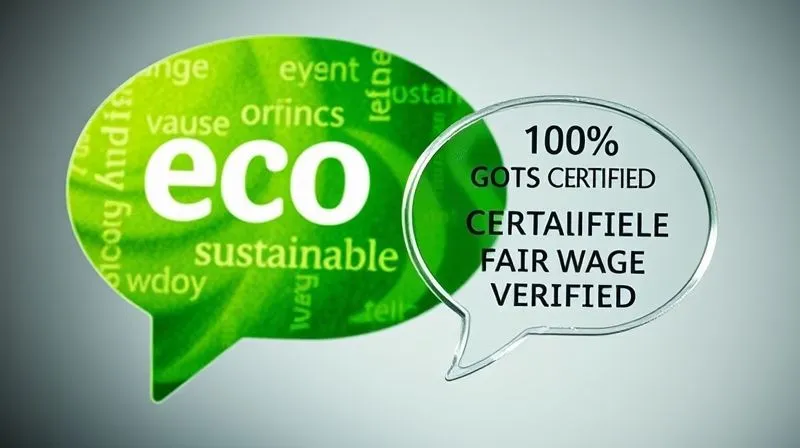
- Instead of: 'Eco-friendly fabric' – Use: '100% GOTS certified organic cotton'
- Instead of: 'Sustainable production' – Use: 'Manufactured in a facility powered by 80% renewable energy'
- Instead of: 'Ethical labor' – Use: 'Workers paid living wages, verified by Fair Trade certification'
Specific claims are verifiable claims. They demonstrate a deeper understanding and commitment than generic buzzwords, which often serve as red flags for savvy consumers.
Acknowledging Limitations: No Brand is Perfect
Perhaps the most powerful way to build trust and avoid greenwashing is to acknowledge your limitations. No brand, especially in fashion, is 100% sustainable. There are always trade-offs, challenges, and areas for improvement. Being open about these demonstrates integrity and a commitment to continuous improvement, rather than a facade of perfection.
For example, you might state: "While we strive for zero waste, our current packaging uses 70% recycled content and we're actively researching 100% compostable alternatives for next year." This kind of honesty disarms skepticism and builds a stronger connection with your audience.
Case Study: How 'EcoChic Apparel' Rebuilt Trust Through Honesty
EcoChic Apparel, a promising slow fashion startup, initially marketed its entire collection as 'sustainable' based on using a single organic cotton blend. Customer feedback and social media comments quickly accused them of greenwashing, leading to a significant drop in engagement and sales. Recognizing their misstep, EcoChic Apparel halted all marketing campaigns.
I advised them to conduct a full internal audit of their supply chain and environmental impact. They then relaunched with a radical transparency initiative. Instead of vague terms, they published detailed information on each product page: the exact percentage of organic, recycled, or upcycled materials, the specific certifications for each component, and even the names of their manufacturing partners and their social audit scores. Crucially, they also created a 'Our Journey to Sustainability' page, openly discussing current challenges, such as their use of conventional dyes for certain colors while actively researching non-toxic alternatives.
This honest, data-backed approach, coupled with a willingness to admit past mistakes, slowly but surely rebuilt consumer trust. Their sales recovered, and their community engagement became more positive and supportive, proving that authenticity, even with imperfections, wins out over polished but misleading claims.
Engaging Your Community: Education Over Promotion
Effective marketing for a slow fashion brand isn't just about selling clothes; it's about fostering a community around shared values. By prioritizing education, you empower your audience to make informed choices and become advocates for your brand, naturally sidestepping greenwashing.
Educating Consumers on Slow Fashion Principles
Many consumers are still learning about the nuances of sustainable fashion. Your brand can be a valuable resource, guiding them through complex topics without being preachy. This builds loyalty and positions you as a thought leader, not just a seller.
- Blog Content: Create articles explaining topics like 'What is a living wage?', 'The truth about recycled polyester,' or 'How to care for your organic cotton garments to extend their life.'
- Workshops & Webinars: Host online or in-person sessions on mending clothes, understanding textile certifications, or the impact of fast fashion.
- Social Media Series: Develop regular content series that break down complex sustainability concepts into digestible, engaging posts.
When you educate, you don't just market; you equip your audience with the knowledge to discern genuine sustainability from greenwashing, both in your brand and others.
Co-creating Sustainability Narratives
Invite your community into your sustainability journey. This isn't just about passive consumption; it's about active participation. Ask for feedback, share your challenges, and celebrate successes together.
- Customer Spotlights: Feature customers wearing and caring for your garments, sharing their reasons for choosing slow fashion.
- Feedback Loops: Actively solicit suggestions for improvement on your sustainability practices, and genuinely consider implementing them.
- Collaborative Content: Partner with sustainability influencers or experts within your community to create content that reinforces your values.
This collaborative approach moves beyond a transactional relationship, fostering a sense of shared purpose that is inherently authentic and resistant to greenwashing accusations.
Internal Alignment: Culture of Authenticity
Your marketing claims are only as strong as your internal practices. Greenwashing often stems from a disconnect between a brand's stated values and its operational realities. To truly avoid greenwashing when marketing a slow fashion brand, authenticity must permeate every level of your organization.
Training Your Team on Sustainability Claims
Every member of your team, from customer service to sales and marketing, needs to be fully educated on your brand's sustainability efforts. They should understand the specifics of your materials, your supply chain, and your certifications. Inconsistencies in messaging, even unintentional ones, can quickly undermine trust.
- Develop a Green Claims Handbook: Create a clear, concise document outlining all your sustainability claims, their evidence, and approved language.
- Regular Training Sessions: Conduct ongoing training to ensure everyone is up-to-date on new initiatives, certifications, or changes in your supply chain.
- Empower Questions: Encourage team members to ask questions and challenge assumptions. This fosters a culture of critical thinking around sustainability.
Integrating Values Across Departments
Sustainability should not be confined to a single department or a marketing initiative. It needs to be integrated into product design, procurement, operations, human resources, and finance. When sustainability is a core business strategy, rather than an add-on, your marketing naturally becomes more authentic.
“True sustainability isn't a department; it's a culture. When every decision, from design to delivery, is guided by ethical and environmental considerations, your marketing simply reflects your reality.”
This holistic approach ensures that your brand 'walks the talk,' making it virtually impossible to engage in greenwashing because your entire operation is built on genuine sustainable practices. It creates a seamless narrative that feels inherently trustworthy to consumers.
Monitoring and Adapting: Staying Ahead of Greenwashing Trends
The landscape of sustainable fashion is constantly evolving, with new materials, technologies, and consumer expectations emerging regularly. To consistently avoid greenwashing, your brand must commit to continuous monitoring, evaluation, and adaptation.
Regular Audits and Impact Reporting
Treat your sustainability claims as living documents, subject to regular review. This means conducting internal and external audits of your practices and publicly reporting on your progress and challenges.
- Annual Sustainability Report: Publish a detailed report outlining your environmental and social impact, setting new goals, and transparently reporting on previous targets. This is a powerful demonstration of accountability.
- Third-Party Verification: Beyond certifications, consider engaging third-party experts to verify your impact claims or to assess your overall sustainability strategy.
This proactive approach ensures that your claims remain accurate and relevant, preventing accusations of outdated or misleading information. According to a Deloitte study, consumers increasingly expect brands to provide transparent and verifiable sustainability information.
Listening to Consumer Feedback
Your community is often your first line of defense against potential greenwashing. Pay close attention to consumer comments, questions, and criticisms regarding your sustainability claims. View these as opportunities for improvement and clarification, rather than attacks.
- Active Social Listening: Monitor social media for mentions of your brand and sustainability-related discussions.
- Dedicated Feedback Channels: Provide clear ways for customers to ask questions or raise concerns about your environmental or social practices.
- Respond Thoughtfully: Address concerns openly and honestly. If a claim is unclear, clarify it. If a mistake was made, acknowledge it and explain how you're rectifying it.
This iterative process of listening and adapting is crucial for maintaining trust in a dynamic marketplace. It also allows you to stay ahead of new greenwashing tactics that might emerge.

Legal and Ethical Frameworks: Navigating the Regulatory Landscape
While much of avoiding greenwashing comes down to ethical marketing, there are also legal frameworks to consider. Understanding these regulations is vital for any slow fashion brand operating with integrity.
FTC Green Guides and International Standards
In the United States, the Federal Trade Commission (FTC) provides 'Green Guides' that outline principles for environmental marketing claims. These guides, while not legally binding regulations, offer critical guidance on how to avoid deceptive practices. Many other countries have similar guidelines or specific laws.
- Familiarize Yourself with the Green Guides: Understand the FTC's position on terms like 'biodegradable,' 'compostable,' 'recycled content,' and 'free-of.'
- Avoid General Environmental Benefit Claims: The FTC advises against broad claims like 'eco-friendly' or 'sustainable' without specific, verifiable substantiation.
- Be Mindful of Context: Ensure your claims are clear and don't omit material information that could mislead consumers.
Staying informed about these guidelines is crucial. For further details, refer directly to the FTC's Environmental Marketing Claims: What You Need To Know.
The Role of Industry Watchdogs
Beyond government regulations, various industry watchdogs and consumer protection groups actively monitor green claims. These organizations can call out brands for misleading marketing, leading to reputational damage and consumer backlash. Being proactive and adhering to best practices is your best defense.
- Self-Regulation: Adopt a strong internal policy for reviewing all marketing materials for potential greenwashing.
- Learn from Others' Mistakes: Pay attention to news reports and case studies where brands have been accused of greenwashing. Understand what went wrong and how to avoid similar errors.
- Seek Expert Advice: When in doubt, consult with legal counsel specializing in advertising law or sustainability marketing experts.
Navigating this landscape requires diligence, but it ultimately protects your brand's reputation and reinforces your commitment to genuine sustainability.
Frequently Asked Questions (FAQ)
Is it possible for a slow fashion brand to be 100% sustainable? In my experience, achieving 100% sustainability is an aspirational goal, not a current reality for any fashion brand. Every product has an impact, from resource extraction to disposal. True sustainability lies in a continuous journey of minimizing negative impacts and maximizing positive ones, and being transparent about where you are on that journey. Brands that claim 100% sustainability are often greenwashing by overstating their achievements. It's about progress, not perfection.
How can small brands afford extensive certifications or LCAs? I understand the financial constraints faced by smaller brands. While full LCAs and multiple certifications can be costly, there are incremental steps. Start with key certifications for your primary materials (e.g., GOTS for organic cotton). For LCAs, consider simplified assessments or focus on one or two flagship products. Prioritize transparency in your supply chain documentation, even if it's just detailed spreadsheets and direct communication with suppliers. Many smaller brands also find strength in collaborative efforts or open-source resources for sustainability data. Remember, authentic storytelling based on verifiable, even if limited, data is more powerful than vague claims.
What's the biggest mistake brands make when trying to avoid greenwashing? The biggest mistake I've observed is making broad, unsubstantiated claims without specific evidence. Phrases like 'eco-friendly' or 'good for the planet' are red flags. Brands often focus on a single 'green' attribute (e.g., using recycled packaging) and then imply the entire brand or product is fully sustainable, ignoring other significant impacts. This 'sin of hidden trade-offs' or 'sin of vagueness' is rampant. The solution is always specificity, data, and honesty about the full picture.
How do I handle negative feedback or accusations of greenwashing? First, don't panic. View it as an opportunity to demonstrate your commitment to transparency. Respond promptly, respectfully, and factually. Acknowledge the concern, provide specific evidence to support your claims, and if there's a legitimate point, admit it and explain your plan to address it. For example, 'Thank you for your question. Our organic cotton is GOTS certified, meaning no harmful pesticides were used in its cultivation (certificate #...). We are also working on transitioning our dyeing process to low-impact methods, aiming for completion by Q3 next year.' Engaging genuinely can turn a critic into an advocate.
Can I use recycled materials if my production process isn't perfect? Absolutely. No brand's production process is 'perfect.' The key is transparency. If you're using recycled materials, highlight that fact and provide details (e.g., 'made from 50% recycled post-consumer plastic bottles'). Simultaneously, acknowledge other areas where you're working to improve. For example, 'While our fabric is made from recycled content, we are actively researching renewable energy solutions for our manufacturing partner to further reduce our carbon footprint.' This approach is honest, realistic, and builds trust by showing a commitment to continuous improvement across multiple fronts.
Key Takeaways and Final Thoughts
- Radical Transparency is Non-Negotiable: Openly share details about your supply chain, materials, and labor practices.
- Substantiate Every Claim: Back up your sustainability statements with verifiable data, certifications, and measurable impact.
- Embrace Specificity Over Vagueness: Use precise language and avoid broad, undefined 'eco' terms.
- Acknowledge Imperfections: Be honest about your challenges and areas for improvement; it builds trust.
- Educate Your Community: Empower your audience with knowledge about slow fashion principles.
- Align Internally: Ensure your entire organization embodies your sustainability values.
- Monitor & Adapt: Continuously review your claims and practices, staying current with industry standards and consumer expectations.
As an experienced industry specialist, I can confidently say that the path to avoiding greenwashing when marketing a slow fashion brand isn't just about compliance; it's about building an authentic, resilient brand that truly stands for something. In a world craving genuine connection and purpose, your commitment to truth and transparency will not only safeguard your reputation but also foster a loyal community that champions your mission. Embrace this journey with courage and conviction, and your brand will not only survive but thrive in the conscious consumer landscape.
Recommended Reading
- 7 Visual Keys: Master Fabric Drape & Movement in Costume Sketches
- 7 Proven Ways to Stop Costume Jewelry Allergic Reactions & Irritation
- Master Last-Minute Costume Alterations: 7 Pro Tips for Actor Changes
- Haute Couture: Is Exclusive Design Investment a Smart Move?
- Unveiling the Secrets: Understanding Avant Garde Haute Couture Construction




Your email address will not be published. Required fields are marked *