


How to Avoid Greenwashing for Sustainable Activewear Brands?
For over 15 years in the activewear industry, I've witnessed the incredible rise of sustainability from a niche concept to a non-negotiable expectation. I've seen brands emerge with genuine passion for people and planet, and unfortunately, I've also seen others merely pay lip service, riding the 'green wave' without true commitment.
The challenge, however, is a pervasive skepticism among consumers. They've been misled too often by vague claims and clever marketing that masks a less-than-sustainable reality. This phenomenon, known as greenwashing, erodes trust and makes it harder for truly sustainable brands to shine.
This article isn't just a warning; it's a strategic blueprint. I'll share my expert insights and actionable frameworks to help your sustainable activewear brand not only avoid the greenwashing trap but also build an unshakeable foundation of authenticity, transparency, and genuine impact.
Understanding the Greenwashing Trap: More Than Just Misleading Ads
Before we can avoid greenwashing, we must deeply understand its many forms. It's not always overt deception; often, it's subtle, unintentional, or born out of a lack of comprehensive understanding of sustainability itself.
What Exactly is Greenwashing in Activewear?
Greenwashing occurs when a company expends more time and money marketing itself as environmentally friendly than it does actually minimizing its environmental impact. In activewear, this can manifest as highlighting a single eco-friendly attribute (e.g., recycled polyester) while ignoring the broader environmental footprint of the entire product lifecycle or supply chain.
"Greenwashing isn't just about what you say; it's about what you don't say, and the disproportionate emphasis on minor 'green' aspects while significant negative impacts remain unaddressed."
The activewear consumer today is savvier than ever. They're looking beyond buzzwords like 'eco-friendly' or 'natural' and demanding proof. They want to know the 'how' and 'why' behind your claims, and if you can't provide it, you risk alienating your most loyal and valuable customers.
- Vague claims: Using terms like 'all-natural' without specifying ingredients or processes.
- Irrelevant claims: Highlighting attributes that are legally mandated or universally true (e.g., 'CFC-free' for products where CFCs are banned).
- Lesser of two evils: Promoting a product as 'green' compared to an even worse alternative, without addressing its own significant environmental impact.
- Hidden trade-offs: Focusing on one sustainable aspect while ignoring other, more significant environmental or social issues.
- No proof: Making environmental claims without providing accessible, verifiable evidence or third-party certifications.

Pillar 1: Radical Transparency Across Your Supply Chain
In my experience, the single most powerful antidote to greenwashing is radical transparency. It's not enough to say your materials are sustainable; you must be able to prove their journey from raw material to finished product.
This means going beyond your direct suppliers (Tier 1) and delving into Tier 2 (fabric mills, dyeing facilities) and even Tier 3 (raw material producers, fiber farms). It's a daunting task, but an essential one for any brand serious about sustainability.
- Map Your Entire Supply Chain: Identify every single entity involved in creating your activewear. From the cotton farm or recycled plastic source to the cutting and sewing factories, shipping, and packaging.
- Demand Documentation: Request certifications, audit reports, and origin documentation from every supplier. Don't just take their word for it.
- Utilize Technology: Consider blockchain or other digital traceability platforms. These can provide an immutable record of your product's journey, which can be shared with consumers via QR codes on garment tags.
- Regular Audits: Conduct or commission independent third-party audits of your key suppliers to verify their social and environmental practices.
- Publish Your Findings: Be brave enough to share your supply chain map, supplier lists, and even audit summaries (redacting proprietary information where necessary).
Case Study: EcoFit's Journey to Supply Chain Clarity
EcoFit, a burgeoning sustainable activewear brand, faced initial challenges in tracing all its material origins. By implementing a blockchain-based tracking system for their recycled polyester and organic cotton, they were able to provide QR codes on garment tags linking directly to supplier certifications and environmental impact reports. This move not only boosted consumer trust but also uncovered a minor discrepancy in a tier-3 supplier's water usage data, which they then collaboratively rectified. EcoFit saw a 25% increase in repeat purchases from environmentally conscious consumers. As a study published by the Harvard Business Review highlights, genuine sustainability efforts, especially in supply chain transparency, build significant competitive advantage.
Pillar 2: Substantiated Claims with Verifiable Certifications & Data
Empty claims are the bedrock of greenwashing. To truly differentiate your brand, every sustainability claim you make must be backed by robust data and recognized third-party certifications. This isn't just about preventing accusations; it's about building genuine credibility.
Choosing the Right Certifications
There's a dizzying array of certifications, and not all are created equal. Focus on those that are relevant to your materials and processes, are internationally recognized, and involve rigorous auditing.
- Material-Specific Certifications: For organic cotton, look for GOTS (Global Organic Textile Standard). For recycled content, choose GRS (Global Recycled Standard). For responsible wool, RWS (Responsible Wool Standard).
- Chemical Safety Certifications: Oeko-Tex Standard 100 ensures products are free from harmful substances. ZDHC (Zero Discharge of Hazardous Chemicals) focuses on eliminating hazardous chemicals from the textile supply chain.
- Social & Environmental Performance: Certifications like Fair Trade or SA8000 address labor practices, while B Corp certification assesses a company's entire social and environmental performance.
- Displaying Certifications: Clearly display logos on your website and product pages. Explain what each certification means and why it's important. Don't just show a logo; educate your customer.
Organizations like GOTS (Global Organic Textile Standard) and Oeko-Tex provide rigorous standards and verification processes that are critical for consumer trust. Leveraging these not only demonstrates your commitment but also educates your customer base.
| Certification | Focus | Relevance for Activewear |
|---|---|---|
| GOTS (Global Organic Textile Standard) | Organic fibers, ecological & social criteria | Organic cotton, natural fiber blends |
| GRS (Global Recycled Standard) | Recycled content, social & environmental practices | Recycled polyester, nylon, elastane |
| Oeko-Tex Standard 100 | Absence of harmful substances | All textile components, dyes, finishes |
| Fair Trade Certified | Ethical labor, fair wages, community development | Supply chain, worker well-being |
| Bluesign® System | Sustainable textile production, resource productivity | Textile manufacturing, dyeing, finishing |
Pillar 3: Lifecycle Thinking - Beyond Just Materials
A common greenwashing pitfall is focusing solely on the material composition of activewear without considering its entire lifecycle. True sustainability encompasses design, production, distribution, consumer use, and end-of-life.
Embracing a Holistic Product Journey
As an industry veteran, I've seen brands proudly proclaim 'made from recycled bottles' but overlook the energy-intensive dyeing process, the use of virgin elastane, or the garment's eventual fate in a landfill. This narrow focus creates a misleading narrative.
- Design for Longevity & Circularity: Create durable, timeless activewear that lasts. Design for repairability and eventual recyclability. Can components be easily separated for recycling?
- Low-Impact Production: Invest in factories that use renewable energy, minimize water usage, and treat wastewater. Prioritize non-toxic dyes and finishes.
- Efficient Distribution: Optimize logistics to reduce shipping emissions. Consider localizing production where feasible.
- Consumer Care & Education: Educate your customers on how to properly care for their activewear to extend its life (e.g., cold wash, air dry). Promote repair services.
- End-of-Life Solutions: Implement take-back programs, partner with textile recyclers, or explore upcycling initiatives. What happens to your garments after their useful life?
Thinking in cycles, not linear paths, is fundamental. It requires a commitment to continuous improvement and a willingness to scrutinize every stage of your product's existence.

Pillar 4: Holistic Sustainability - People, Planet, Profit
Sustainability is a three-legged stool: environmental, social, and economic. Greenwashing often stems from an overemphasis on environmental aspects while neglecting the critical social dimension.
Ethical Labor Practices
Your activewear is made by people, and their well-being is paramount. Ethical labor practices are non-negotiable for a truly sustainable brand.
- Fair Wages & Working Conditions: Ensure all workers in your supply chain receive fair living wages and work in safe, healthy environments.
- No Forced or Child Labor: Implement strict policies and conduct regular checks to prevent any form of exploitation.
- Worker Empowerment: Support worker representation, provide training, and foster a culture of respect.
Community Engagement & Social Impact
Beyond your direct supply chain, consider your broader impact on communities.
- Local Initiatives: Support local communities where your products are made or sold through charitable donations, volunteer programs, or educational initiatives.
- Inclusive Practices: Promote diversity and inclusion within your own company and throughout your brand messaging.
- Transparent Reporting: Be open about your social impact initiatives and their measured outcomes.
Embracing the principles championed by B Corps can be a powerful framework for integrating social and environmental performance with transparency and accountability.
Pillar 5: Authentic Communication & Education, Not Just Marketing
How you communicate your sustainability efforts is just as crucial as the efforts themselves. Greenwashing often happens when brands prioritize marketing spin over genuine education and honest dialogue.
Speaking Your Truth, Imperfections and All
No brand is 100% sustainable, and consumers appreciate honesty about the journey. Admitting where you still need to improve builds far more trust than claiming perfection.
"Authentic communication acknowledges the complexities of sustainability. It's not about being perfect; it's about being honest, transparent, and genuinely committed to progress."
- Avoid Jargon & Hyperbole: Speak plainly and avoid overly technical terms or exaggerated claims. 'Eco-friendly' is less impactful than explaining *how* your product is eco-friendly.
- Educate, Don't Just Sell: Use your platform to educate consumers about sustainable practices, material science, and the challenges the industry faces. Empower them to make informed choices.
- Show, Don't Just Tell: Use visuals, videos, and stories to illustrate your efforts. Show your factory partners, your material sourcing, and your impact projects.
- Be Consistent: Ensure your sustainability message is consistent across all channels – website, social media, product descriptions, and customer service interactions.
- Engage in Dialogue: Be open to questions, feedback, and even criticism. Respond thoughtfully and use it as an opportunity to demonstrate your commitment to continuous improvement.
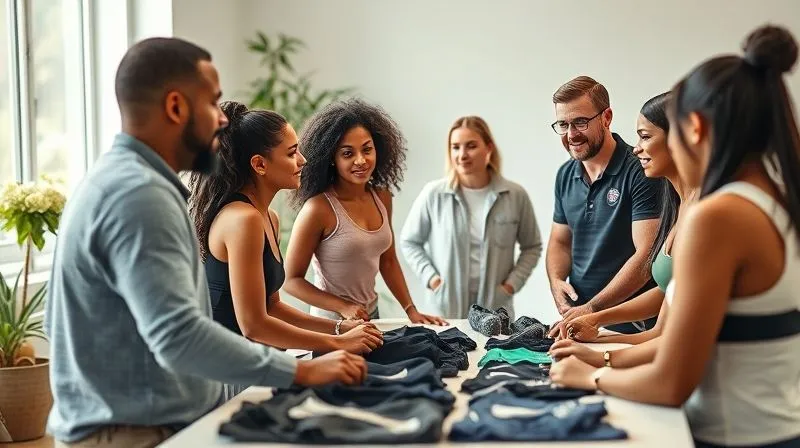
Building a Culture of Genuine Sustainability Internally
True sustainability starts from within. It needs to be embedded in your company culture, guiding every decision, from product development to marketing strategies. Without internal alignment, external claims will always feel hollow.
As a specialist in this niche, I've observed that brands with the strongest sustainability credentials are those where every team member, from design to sales, understands and champions the company's environmental and social mission.
- Leadership Commitment: Sustainability must be a top-down priority, championed by leadership and integrated into the company's core values.
- Employee Education & Training: Regularly educate your team on sustainability principles, your brand's specific initiatives, and the importance of avoiding greenwashing.
- Cross-Functional Collaboration: Foster collaboration between design, production, marketing, and sales teams to ensure sustainability is considered at every stage of product development and communication.
- Internal Green Audits: Regularly assess your internal operations for environmental impact, from office energy consumption to waste management.
- Incentivize Sustainable Practices: Integrate sustainability goals into performance reviews and reward systems for employees.
| Area | Internal Audit Question | Action Item |
|---|---|---|
| Energy Consumption | Are we tracking and reducing energy use in offices/warehouses? | Install smart meters; switch to LED lighting; explore renewable energy providers. |
| Waste Management | Do we have comprehensive recycling and composting programs? | Conduct waste audit; provide clear recycling bins; partner with specialized recyclers. |
| Water Usage | Are we minimizing water usage in our operations? | Install low-flow fixtures; educate staff on conservation; monitor water bills. |
| Procurement | Are our office supplies and services sourced sustainably? | Prioritize recycled content; choose local suppliers; reduce single-use items. |
| Employee Engagement | Do employees understand and contribute to sustainability goals? | Regular training sessions; green team initiatives; suggestion box for eco-ideas. |
Navigating the Future: Trends and Continuous Improvement
The landscape of sustainable activewear is constantly evolving. New materials, technologies, and consumer expectations emerge regularly. Staying ahead means committing to continuous learning and adaptation.
I advise brands to view sustainability not as a destination, but as an ongoing journey of improvement. What's considered best practice today might be baseline tomorrow. Regularly review your strategies and be prepared to innovate.
- Embrace Innovation: Research and experiment with emerging sustainable materials (e.g., bio-based fibers, regenerated cellulosics) and production methods.
- Circular Economy Models: Explore advanced recycling technologies, rental models, and repair services to keep activewear in use for longer.
- Digital Product Passports: Prepare for future regulations that may require detailed digital information about your product's origin and lifecycle.
- Collaborate & Advocate: Partner with other sustainable brands, NGOs, and industry bodies to drive systemic change and advocate for stronger industry standards.
Insights from publications like The Business of Fashion highlight the accelerating pace of change and the imperative for brands to not just react, but to proactively shape a more sustainable future. The commitment to avoid greenwashing for sustainable activewear brands is a long-term one, built on integrity and a forward-looking vision.

Frequently Asked Questions (FAQ)
Q: How can small activewear brands compete with larger brands on transparency? A: Small brands often have an advantage in transparency due to shorter, simpler supply chains. Focus on building personal relationships with your suppliers and sharing their stories. Leverage digital tools to trace materials and be exceptionally candid about your journey, including challenges. Authenticity often resonates more than scale.
Q: Is it possible for an activewear brand to be 100% sustainable? A: In my professional opinion, achieving 100% sustainability is an aspirational goal, as every process has some environmental or social footprint. The key is continuous improvement and striving for the lowest possible impact. Be honest about your progress and where you're still working to improve, rather than claiming an unattainable perfection.
Q: What's the role of consumer education in avoiding greenwashing? A: Consumer education is critical. An informed consumer is less susceptible to greenwashing. Brands should not just market their products but also educate their audience on what genuine sustainability looks like, how to identify greenwashing, and how to care for products to extend their life. This builds a community of informed advocates.
Q: How often should a brand audit its sustainability claims and practices? A: I recommend at least an annual internal review, with external third-party audits for key certifications or supply chain segments every 1-3 years, depending on the complexity and risk. The industry is dynamic, and what was true a year ago might not be today, so regular verification is essential to maintain credibility.
Q: What are common pitfalls in sustainable activewear marketing? A: Besides vague claims, common pitfalls include 'green-wishing' (expressing good intentions without concrete action), 'carbon tunnel vision' (focusing only on carbon emissions while ignoring other impacts), and 'image washing' (using eco-imagery without substantive environmental action). Always prioritize substance over style in your messaging.
Key Takeaways and Final Thoughts
Avoiding greenwashing for sustainable activewear brands isn't merely about compliance; it's about building a brand that stands for genuine integrity and lasting impact. It's a commitment that requires courage, transparency, and a deep understanding of what true sustainability entails.
- Radical transparency is your strongest defense against skepticism.
- Substantiated claims, backed by data and certifications, build undeniable credibility.
- Adopt a lifecycle thinking approach, extending beyond just materials.
- Embrace holistic sustainability, valuing people, planet, and responsible profit.
- Practice authentic communication, educating your customers with honesty.
As you navigate this complex but rewarding path, remember that every step towards greater transparency and genuine action reinforces your brand's reputation and contributes to a healthier industry. Your commitment to avoiding greenwashing for sustainable activewear brands not only protects your business but also empowers consumers and drives real positive change. Keep learning, keep evolving, and always lead with integrity.
Recommended Reading
- How Do Luxury Streetwear Retailers Verify Authenticity? 7 Expert Methods Revealed
- Unlock Your Best Look: Discover the Most Flattering Classic Vintage Silhouettes
- Unmasking Greenwashing: Your Ultimate Guide to Sustainable Fashion Authenticity
- Ultimate Guide: Best Travel Accessories to Secure Valuables Abroad
- Unlock the Secret: How to Pick the Perfect Activewear Size for Growing Kids





Your email address will not be published. Required fields are marked *