

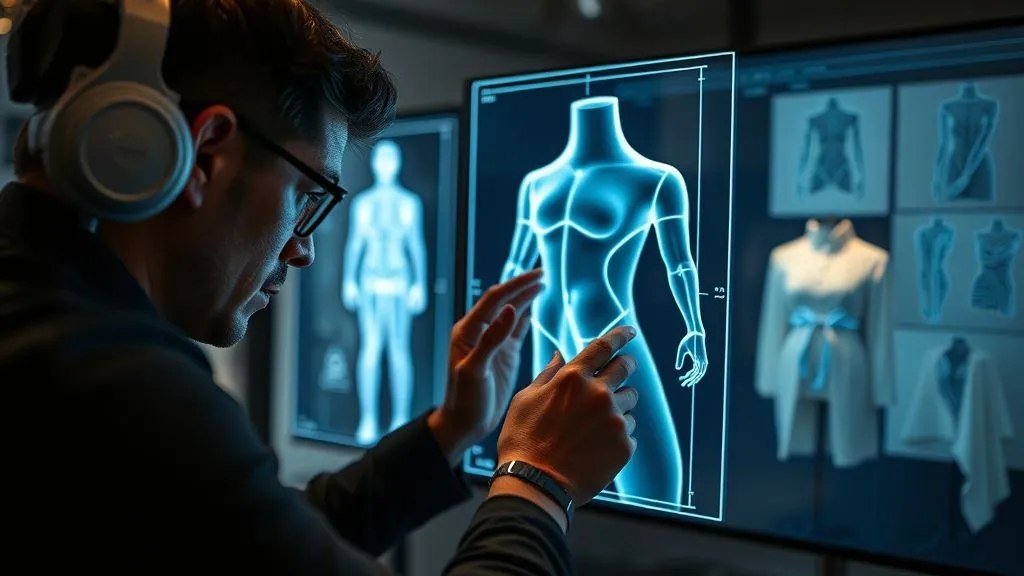
Fixing Inaccurate 3D Body Scans for Precise Custom Apparel Patterns?
For over 18 years in the dynamic realm of fashion technology, I’ve witnessed firsthand the incredible promise and the frustrating pitfalls of 3D body scanning. When this technology first emerged, it felt like the holy grail for custom apparel – an end to ill-fitting garments, a new era of bespoke fashion. Yet, time and again, I’ve seen companies invest heavily, only to be plagued by the very issue that undermines the entire premise: inaccurate 3D body scans.
The dream of perfect fit, achieved effortlessly through digital means, often clashes with the reality of measurement discrepancies, distorted body shapes, and ultimately, patterns that don’t quite match the customer’s unique physique. This isn't just a technical glitch; it translates directly into costly returns, wasted materials, damaged brand reputation, and a deeply unsatisfied customer base. It’s a problem that threatens to derail the custom apparel revolution before it truly takes hold.
But here’s the good news: the challenges of fixing inaccurate 3D body scans for precise custom apparel patterns are not insurmountable. In this definitive guide, I will share my accumulated expertise, offering you actionable frameworks, real-world insights, and practical strategies gleaned from years in the trenches. My goal is to equip you with the knowledge to transform your scanning workflow, ensuring every pattern you cut is as accurate as the customer’s unique form demands.
Understanding the Root Causes of 3D Scan Inaccuracy
Before we can fix a problem, we must understand its origins. Inaccurate 3D body scans don't just happen; they are the result of a confluence of factors, each contributing to potential deviations from reality. Identifying these root causes is the first critical step toward building a robust solution.
Hardware Limitations and Calibration
Even the most advanced 3D body scanners are complex machines susceptible to environmental factors and wear. Over time, components can drift out of alignment, laser emitters might lose precision, or camera sensors could develop minor calibration issues. A scanner that isn't meticulously maintained and regularly calibrated will inevitably produce inconsistent and inaccurate data. I've seen instances where slight temperature changes in a scanning booth were enough to throw off measurements by millimeters, which in custom apparel, can make all the difference between a perfect fit and a disappointing one.
Environmental Factors and Subject Positioning
The scanning environment plays a far greater role than many realize. Inconsistent lighting can create shadows that confuse optical sensors, leading to distorted mesh data. Vibrations from nearby machinery or even heavy foot traffic can introduce noise. Crucially, the subject's positioning and posture are paramount. Any slouching, shifting, or even slightly incorrect arm placement can drastically alter key measurements like chest circumference, sleeve length, or inseam. Ensuring a standardized, controlled environment and strict posing protocols is non-negotiable for reliable data.
Software Algorithms and Data Interpretation
Once the raw data is captured, it's the software's job to interpret it, reconstruct the 3D mesh, and extract anthropometric measurements. Different scanning software utilizes varying algorithms for noise reduction, hole filling, and measurement extraction. Some algorithms might be more prone to misinterpreting complex body shapes or intricate clothing folds, leading to systemic errors. Understanding the specific strengths and weaknesses of your software, and how it handles challenging data, is vital for predicting and mitigating potential inaccuracies.
Pre-Scan Protocols: Laying the Foundation for Accuracy
In my experience, the vast majority of scan inaccuracies can be traced back to poor preparation. It’s like trying to build a skyscraper on a shaky foundation – it’s bound to fail. Establishing rigorous pre-scan protocols is not just a best practice; it’s the cornerstone of accurate 3D body scanning for custom apparel.
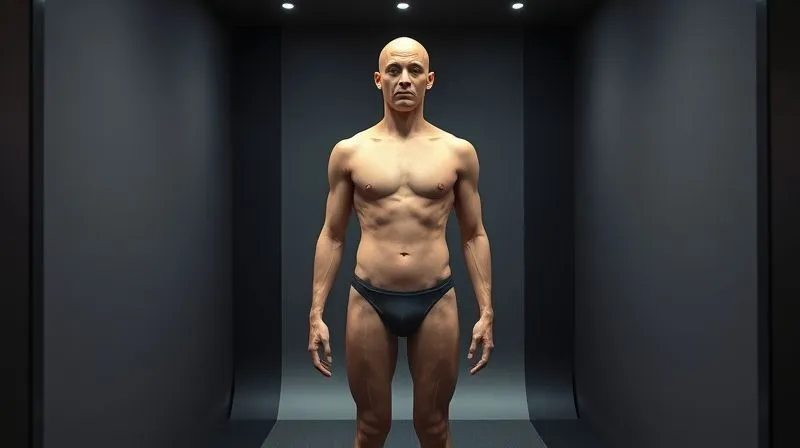
- Subject Preparation and Garment Choice: This is often overlooked. The subject should wear minimal, form-fitting clothing (e.g., swimwear, athletic compression wear) to avoid obscuring body contours. Loose clothing creates artificial bulk and folds that the scanner will interpret as part of the body, leading to erroneous measurements. I also recommend using specific markers or reflective tape on key anatomical landmarks if your scanner supports it, as this can greatly aid in post-processing measurement extraction.
- Standardized Posture and Posing: Develop a clear, repeatable posing protocol. The subject should stand naturally, feet shoulder-width apart, arms slightly abducted from the body to prevent contact with the torso, and looking straight ahead. Provide clear visual aids or even an audio guide within the scanning booth. Consistency here is key to ensuring comparative and accurate data across different scans and individuals.
- Scanner Calibration and Maintenance: This cannot be stressed enough. Implement a strict schedule for scanner calibration as recommended by the manufacturer, or even more frequently if your usage is high. This includes checking sensor alignment, laser integrity, and overall hardware performance. Treat your scanner like a precision instrument, because that's exactly what it is.
- Controlled Environmental Conditions: The scanning environment should be consistent. Maintain stable temperature and humidity, eliminate external light sources that could interfere with sensors, and ensure the scanning platform is stable and free from vibrations. A dedicated, purpose-built scanning room is ideal.
By investing time and discipline into these pre-scan protocols, you are proactively addressing many of the issues that lead to inaccurate 3D body scans for precise custom apparel patterns before data is even collected.
Advanced Post-Processing Techniques for Data Refinement
Even with the most meticulous pre-scan protocols, raw 3D scan data will rarely be perfect. It's often a bit like a rough diamond – full of potential but needing significant refinement. Advanced post-processing is where we truly begin fixing inaccurate 3D body scans for precise custom apparel patterns, transforming raw mesh into a clean, usable digital avatar.
Noise Reduction and Mesh Smoothing
Raw scan data often contains 'noise' – small, unwanted irregularities, spikes, or holes caused by sensor limitations, reflections, or even dust particles. Aggressive noise reduction and mesh smoothing algorithms can effectively clean up the surface. However, caution is advised: over-smoothing can erase critical anatomical details that are essential for precise pattern making. The goal is to remove noise without sacrificing authentic body contours.
Hole Filling and Topology Correction
Areas of the body that are obscured during the scan (e.g., underarms, between fingers, or where clothing creases heavily) often result in 'holes' in the 3D mesh. Filling these holes accurately is crucial. More advanced topology correction might involve re-meshing the entire scan to create a more uniform and predictable polygon structure, which is easier for subsequent software to process for pattern generation.
- Identify and Isolate Problem Areas: Use specialized 3D software (e.g., Geomagic Wrap, Artec Studio, MeshLab) to visually inspect the scan for noise, holes, and topological irregularities.
- Apply Targeted Noise Reduction: Instead of a blanket approach, apply noise reduction filters selectively to areas that genuinely require it. Experiment with different filter strengths to find the optimal balance between smoothness and detail preservation.
- Intelligent Hole Filling: For smaller holes, automatic algorithms often suffice. For larger, more complex holes, manual or semi-manual techniques that reconstruct the missing geometry based on surrounding data are often necessary. Some software uses 'spline' tools to intelligently bridge gaps.
- Mesh Optimization and Decimation: Reduce the polygon count of the mesh without losing significant detail. This makes the file lighter and easier to work with in CAD software, improving performance without sacrificing accuracy for pattern making.
- Verify Measurements Post-Correction: Crucially, after any significant post-processing, re-extract key measurements and compare them to the original raw data (and ideally, manual measurements if available). Ensure that your corrections haven't introduced new errors.
| Correction Type | Impact on Accuracy | Common Tools |
|---|---|---|
| Noise Reduction | High | Geomagic Wrap, Artec Studio |
| Hole Filling | Medium-High | Blender, MeshLab |
| Topology Correction | High | ZBrush, 3D Coat |
The Critical Role of Anthropometric Data Validation
A beautifully rendered 3D mesh is only as useful as the accurate measurements it provides. This is where anthropometric data validation becomes paramount. You simply cannot trust the machine implicitly; every measurement needs a reality check. This is a vital step in fixing inaccurate 3D body scans for precise custom apparel patterns.
Manual Measurement Cross-Verification
In my early days, I learned a simple truth: sometimes, the oldest methods are still the most reliable for verification. Regularly cross-verify a subset of key measurements extracted from the 3D scan with traditional manual measurements taken by a skilled tailor or anthropometrist. Focus on critical dimensions like bust, waist, hip, sleeve length, and inseam. Significant discrepancies (beyond an acceptable tolerance, typically 2-3mm for custom apparel) indicate a problem with either the scan, the extraction algorithm, or the manual measurement technique itself.
Statistical Outlier Detection
For high-volume operations, manual verification isn't always feasible for every scan. This is where statistical methods come into play. Build a database of known, accurate body measurements (perhaps from your existing customer base or industry standards). When a new scan comes in, compare its extracted measurements against this validated dataset. Outliers – measurements that fall significantly outside expected ranges for a given demographic or body type – should be flagged for manual review. This acts as an automated early warning system for potentially inaccurate scans.
"Trust, but verify." In fashion tech, this means every digital measurement needs a rigorous reality check. It’s the bridge between digital promise and physical perfection.
For deeper insights into the methodologies of anthropometric data collection and validation, I recommend exploring academic research in the field. A great starting point can be found through resources like the ISO 7250-1 standard for basic human body measurements, which provides foundational knowledge for accurate data collection.
Bridging the Gap: From Corrected Scan to Precise Pattern
Once you have a clean, validated 3D body scan, the next crucial step is translating that digital perfection into a tangible, precise apparel pattern. This transition is where the real magic of custom apparel happens, and it’s where all efforts in fixing inaccurate 3D body scans for precise custom apparel patterns culminate.
Integrating Scans with CAD Software
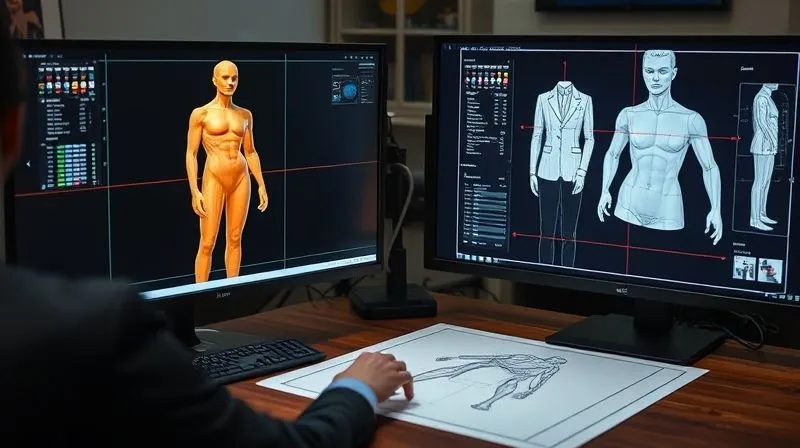
The corrected 3D body mesh needs to be seamlessly integrated into your Computer-Aided Design (CAD) software. Modern apparel CAD systems (e.g., Clo3D, Optitex, Lectra) are increasingly equipped to import 3D body models. The goal is to use the accurate body shape as the foundation upon which to draft 2D patterns. This often involves 'draping' virtual fabric onto the 3D avatar, allowing designers to visualize fit and style directly on the individual's form.
Parametric Pattern Generation
Leverage parametric pattern generation capabilities within your CAD software. This means creating patterns that are dynamically linked to the body scan's measurements. When a measurement from the scan changes (e.g., a larger bust or shorter arm), the pattern automatically adjusts. This significantly reduces the manual effort and potential for error in translating 3D data into 2D pattern pieces, ensuring precision and consistency.
Virtual Fitting and Iteration
Before cutting any fabric, utilize virtual fitting tools. These allow you to digitally 'try on' the garment pattern on the 3D body scan. You can identify areas of tension, gaping, or excess fabric. This iterative process of virtual fitting, pattern adjustment, and re-fitting is invaluable for perfecting the fit. It allows you to make precise, data-driven modifications to the pattern, ensuring that the physical garment will fit perfectly the first time around, minimizing costly physical samples.
Case Study: How 'FitRight Apparel' Revolutionized Custom Dressmaking
FitRight Apparel, a boutique specializing in bespoke dresses, struggled with a high rate of alterations and returns despite using 3D body scanning. Their issue wasn't the scanner itself, but the lack of robust post-processing and a disjointed scan-to-pattern workflow. I worked with them to implement a comprehensive strategy that included rigorous scan validation, advanced mesh cleaning, and a new parametric pattern system integrated with their CAD software. By focusing on fixing inaccurate 3D body scans for precise custom apparel patterns at every stage, they reduced alteration requests by 60% and returns by 45% within six months. This not only saved them significant costs but also boosted customer satisfaction and solidified their reputation for impeccable fit.
Leveraging AI and Machine Learning for Predictive Correction
The future of fixing inaccurate 3D body scans for precise custom apparel patterns lies increasingly in the intelligent application of Artificial Intelligence (AI) and Machine Learning (ML). These technologies can move us beyond reactive corrections to proactive, predictive accuracy.
AI-Driven Anomaly Detection
Imagine a system that can automatically identify subtle anomalies in a 3D scan that a human might miss. AI algorithms, trained on vast datasets of accurate and inaccurate scans, can learn to spot irregular mesh structures, inconsistent measurement correlations, or deviations from expected body shapes. This allows for immediate flagging of problematic scans, directing human experts to precisely where intervention is needed, significantly streamlining the quality control process.
Predictive Fit Algorithms
Beyond just correcting scan data, ML can be used to predict fit issues even before a pattern is generated. By analyzing historical data of body scans, garment patterns, and customer feedback on fit, AI can learn to anticipate how a particular pattern will fit a specific body type. This enables proactive adjustments to patterns or even recommendations for alternative styles, moving towards a truly personalized and error-free custom apparel experience. This is not just about fixing; it's about perfecting.
The integration of AI into fashion technology is rapidly evolving, offering unprecedented opportunities for accuracy and personalization. For a deeper dive into how AI is reshaping the industry, I highly recommend exploring insights from leading consulting firms like McKinsey's annual 'State of Fashion' reports, which often highlight these transformative trends.
Establishing Robust Quality Control Checkpoints
Achieving and maintaining precision in custom apparel requires more than just one-off fixes; it demands a systemic approach to quality control. Implementing clear, robust checkpoints throughout your entire scan-to-pattern workflow is non-negotiable for consistently fixing inaccurate 3D body scans for precise custom apparel patterns and ensuring customer satisfaction.
- Pre-Scan Checklist Enforcement: Before every scan, ensure all pre-scan protocols (subject attire, posture, environmental conditions) are rigorously followed. Use a digital checklist to ensure no step is missed.
- Immediate Scan Data Review: As soon as a scan is completed, a trained operator should perform an initial visual inspection of the raw mesh for obvious errors like large holes, severe noise, or incorrect posture. Flag these for immediate re-scan if possible.
- Automated Measurement Validation: Implement software that automatically extracts key measurements and compares them against predefined tolerance ranges or statistical norms. Any measurements falling outside these ranges should trigger an alert for expert review.
- Post-Processing Verification: After mesh cleaning and refinement, a second round of measurement extraction and comparison (against original scan data or manual measurements) should be performed to ensure corrections haven't introduced new errors.
- Virtual Fitting Review: Before any patterns are finalized, a designer or pattern maker should conduct a thorough virtual fitting on the 3D avatar, assessing the drape, tension, and overall fit of the digital garment.
- Feedback Loop Integration: Establish a clear feedback mechanism from production and customer returns back to the scanning and pattern-making teams. Analyze patterns of fit issues to identify systemic problems in your scanning or pattern generation process.
| QC Checkpoint | Frequency | Key Indicator |
|---|---|---|
| Scanner Calibration | Weekly/Before major project | Calibration Report Pass |
| Scan Data Review | Per Scan | No major holes/noise, correct posture |
| Pattern Validation | Per Pattern | Measurements match scan within tolerance |
The Human Element: Training, Expertise, and Continuous Learning
While technology provides powerful tools for fixing inaccurate 3D body scans for precise custom apparel patterns, it’s crucial to remember that the human element remains at the core of success. The most sophisticated software and hardware are only as effective as the skilled individuals operating them.
Investing in comprehensive training for your team is paramount. This includes not just how to operate the scanner, but also understanding body anatomy, identifying common scan errors, proficiency in 3D modeling and CAD software, and developing an 'eye' for fit. A well-trained operator can often spot a potential issue before it becomes a costly error, making proactive adjustments or re-scans. Continuous professional development, staying abreast of new software updates, and participating in industry workshops are all vital.
"The most sophisticated software is useless without a skilled hand and an expert eye guiding it. Human expertise is the irreplaceable ingredient in precision fashion tech."
Furthermore, fostering a culture of continuous learning and knowledge sharing within your organization will elevate the collective expertise. Encourage team members to share insights from challenging scans or successful problem-solving techniques. The human ability to interpret nuanced visual data and apply contextual knowledge often surpasses even advanced AI in complex scenarios, especially when dealing with the infinite variations of the human form. For insights into developing a skilled workforce in technological fields, resources like Harvard Business Review often publish valuable articles on talent management and skill development.
Frequently Asked Questions (FAQ)
Q: How much does professional 3D body scanning equipment cost? A: The cost of professional 3D body scanning equipment varies widely, ranging from around $10,000 for entry-level, structured-light systems to over $100,000 for high-precision, full-body laser or photogrammetry scanners. The price depends on accuracy, speed, features, and brand reputation. Beyond the initial purchase, consider ongoing costs for maintenance, calibration, and software licenses. It's an investment, but one that can yield significant returns in reduced returns and increased customer satisfaction when managed correctly.
Q: Can mobile phone 3D scanning apps be accurate enough for custom apparel? A: Currently, most mobile phone 3D scanning apps offer a level of accuracy that is generally insufficient for precise custom apparel patterns. While they are improving rapidly and are excellent for virtual try-on or general body tracking, the millimeter-level precision required for bespoke garments is still largely out of reach for consumer-grade mobile hardware and software. They often struggle with consistent lighting, subject movement, and detailed anatomical capture, leading to significant inaccuracies in critical measurements. For truly custom fit, dedicated professional scanners are still the gold standard.
Q: What are the key metrics to evaluate 3D scan accuracy? A: Key metrics include measurement deviation (the difference between scan-extracted measurements and manual measurements, ideally within 2-3mm), repeatability (consistency of measurements across multiple scans of the same subject), and mesh quality (low noise, minimal holes, accurate surface reconstruction). Visual inspection for anatomical correctness and absence of distortion is also crucial. Advanced users might look at point cloud density and resolution.
Q: How often should I re-calibrate my 3D body scanner? A: Calibration frequency depends on the scanner type, manufacturer recommendations, and usage intensity. Generally, a professional 3D body scanner should be calibrated at least monthly, or before any major project. If the scanner is moved, experiences significant temperature changes, or if you notice inconsistencies in your scan data, an immediate recalibration is warranted. Regular calibration is a non-negotiable step in fixing inaccurate 3D body scans for precise custom apparel patterns.
Q: What's the biggest mistake companies make when using 3D body scans for apparel? A: In my experience, the biggest mistake is failing to integrate a comprehensive quality control and validation process. Companies often assume the scanner provides perfect data out-of-the-box and neglect pre-scan protocols, post-processing, and cross-verification. This leads to a 'garbage in, garbage out' scenario, where the initial investment in scanning technology doesn't translate into the promised perfect fit, ultimately eroding trust and increasing costs. It's not just about having the technology; it's about mastering the entire workflow.
Key Takeaways and Final Thoughts
The journey to achieving truly precise custom apparel patterns through 3D body scanning is multifaceted, requiring a blend of technological mastery, meticulous process management, and expert human insight. It's about moving beyond simply acquiring a scanner to building a robust, end-to-end ecosystem that prioritizes accuracy at every single step.
- Prioritize Pre-Scan Protocols: The foundation of accuracy is laid even before the scan begins.
- Embrace Post-Processing: Raw data is rarely perfect; refinement is essential.
- Validate Anthropometric Data: Always cross-verify digital measurements with real-world checks.
- Integrate Seamlessly with CAD: Leverage parametric design and virtual fitting for optimal pattern generation.
- Explore AI and ML: Prepare for the future of predictive accuracy and anomaly detection.
- Implement Robust QC: Consistent quality checkpoints are non-negotiable for sustained precision.
- Invest in Your Team: Human expertise and continuous learning are irreplaceable assets.
Remember, the goal isn't just to produce a 3D model; it's to create a perfectly fitting garment that delights your customer. By diligently applying these strategies for fixing inaccurate 3D body scans for precise custom apparel patterns, you're not just solving a technical problem; you're elevating the entire custom apparel experience, paving the way for a future where every garment is a perfect fit. The technology is here; now it's up to us, the industry specialists, to wield it with the precision and expertise it deserves. Your customers, and your bottom line, will thank you for it.
Recommended Reading
- Unlocking the Future: What are Immersive Experiences in Fashion Retail?
- Unlock Your Best Look: Discover the Most Flattering Classic Vintage Silhouettes
- 7 Expert Steps: Authenticate Original 1970s Designer Denim from Fakes
- Mastering Minimalist Fashion Photography: 7 Steps to a Distinctive Aesthetic
- Haute Couture Pricing: 7 Keys to Valuing Ultra-Limited Collections




Your email address will not be published. Required fields are marked *