

How to Authenticate Original 1970s Designer Denim from Fakes?
For over two decades in the vintage fashion trenches, I've witnessed the exhilarating thrill of uncovering a genuine sartorial gem and the crushing disappointment of discovering a meticulously crafted fake. The 1970s, a decade of unparalleled denim innovation and rebellious style, produced some of the most sought-after designer jeans in history. Brands like Levi's, Lee, Wrangler, and later, the iconic 'designer' labels such as Jordache, Sasson, and Gloria Vanderbilt, transformed denim from workwear to high fashion.
The allure of these authentic pieces is undeniable: their unique washes, superior construction, and historical significance make them prized possessions for collectors and fashion enthusiasts alike. However, this high demand has unfortunately fueled a sophisticated market for counterfeits. The challenge today isn't just finding these rare pieces, but knowing with absolute certainty that what you're investing in is the real deal, not a cleverly disguised reproduction.
This guide is born from years of hands-on experience, countless hours of research, and a deep passion for preserving vintage integrity. I'm going to equip you with the expert techniques, visual cues, and historical knowledge necessary to confidently answer the question: How to authenticate original 1970s designer denim from fakes? We'll delve into the minutiae of fabric, stitching, hardware, labels, and provenance, transforming you from an eager buyer into a discerning authenticator.
The Allure and Challenge of 1970s Designer Denim
The 1970s was a pivotal decade for denim. It was the era when jeans moved beyond casual wear, becoming a symbol of individuality, rebellion, and high fashion. The silhouettes evolved dramatically, from the straight-leg styles of the late 60s to the ubiquitous bell-bottoms and flares that defined the decade. Washes became more diverse, and distressing started to gain traction, though often naturally achieved through wear rather than factory processes.
What makes 70s designer denim particularly special? It's the unique blend of robust, often raw, denim fabric with increasingly fashion-forward designs. Brands were experimenting with fits, pocket designs, and embellishments, creating pieces that were both durable and stylish. Early in the decade, established workwear giants like Levi's (especially their 'Big E' Red Tab jeans), Lee, and Wrangler continued to dominate, evolving their lines to meet new trends. By the late 70s, new 'designer' brands like Jordache, Sasson, and Gloria Vanderbilt exploded onto the scene, bringing sex appeal and a higher price point to denim, often with distinctive logos and fits.
This rich history and diverse market make authentication a complex, yet rewarding, endeavor. The problem of fakes isn't just about monetary loss; it's about preserving the integrity of fashion history. My goal is to empower you to navigate this market with confidence, ensuring your collection truly represents the iconic era it claims to.
Decoding the Denim Fabric: Beyond the Surface
The very soul of vintage denim lies in its fabric. Modern denim often incorporates stretch and lighter weights, a stark contrast to the robust, often rigid, and characterful denim of the 1970s. Understanding these tactile and visual nuances is your first line of defense against fakes.
The Feel and Weight: Authentic 70s Denim Characteristics
When you handle authentic 1970s denim, you'll immediately notice a difference. It typically feels heavier and more substantial than most contemporary jeans. The weave is often denser, and the fabric can be quite rigid, especially if it hasn't been extensively washed. Look for a discernible slubby texture—small irregularities in the yarn that give the fabric a unique, somewhat uneven feel and appearance. This is a hallmark of vintage production methods, where cotton was often less uniformly processed than today.
Selvedge vs. Non-Selvedge: The Edge of Authenticity
While not all 1970s designer denim was selvedge, many premium and early Levi's, Lee, and Wrangler models certainly were. Selvedge denim is recognizable by its self-finished edge, typically found on the outseam of the jeans, preventing fraying. This edge often features a colored line (most famously red for Levi's, but other colors exist). If a pair claims to be premium vintage and lacks selvedge where it historically should be, it's a major red flag. Always check the inside of the outseam for this distinctive detail.
Wash and Dye: Natural Fading vs. Artificial Distressing
Authentic 70s denim, particularly those that have seen years of wear, will exhibit natural fading patterns. These fades are organic, developing in areas of high stress like the thighs, knees, and seat, creating unique 'whiskers' and 'honeycombs.' The indigo dye often has a deep, rich hue that softens over time. Fakes, on the other hand, frequently display artificial, often uniform, distressing that lacks the genuine depth and character of natural wear. Pay close attention to the authenticity of the indigo bleed and the nuanced color variations that only time can create.

Scrutinizing the Stitching and Construction
The devil is truly in the details when it comes to vintage denim construction. Authentic 1970s designer denim boasts a level of craftsmanship that is often absent in modern fast fashion, and certainly in most fakes. Examining the stitching can reveal a wealth of information about a garment's true age and origin.
Chain Stitching: A Sign of Quality
Chain stitching, characterized by its interlocking loop formation, is a strong indicator of vintage quality. It was commonly used on hems, waistbands, and sometimes on pocket seams. This type of stitching creates a durable, yet flexible, seam that often develops a distinctive 'roping' effect on the hem as the denim fades. Look closely at the bottom hem of the leg openings and the top of the waistband. If you see single-needle lock stitching in these areas where chain stitching should be, it warrants further investigation.
Thread Type and Color: Historical Accuracy
Authentic 1970s denim typically used 100% cotton threads, which age and fade differently than modern polyester threads. Cotton threads will often show some wear and even breakage over decades, unlike the more resilient synthetic alternatives. Pay attention to thread colors. For example, early to mid-70s Levi's often featured a combination of orange and yellow stitching, with specific patterns for different seams. Replicas frequently get these color combinations or thread types wrong, using generic polyester threads in incorrect hues.
Seams and Rivets: Durability and Placement
Inspect the internal seams. Many high-quality 70s jeans utilized double-felled seams, especially on the inseam and outseam, for enhanced durability. This construction creates a very clean, flat seam. Rivets, typically made of copper or brass, were strategically placed at stress points like pocket corners and the base of the fly. Their quality, material, and secure attachment are crucial. Fakes often use flimsy, poorly attached, or incorrectly sized rivets.
Case Study: The Misplaced Stitch on a 'Big E'
I once had a client bring me a pair of Levi's, supposedly a rare early 70s 'Big E' model. On first glance, the denim felt right, and the Red Tab had the correct 'E'. However, as I meticulously examined the coin pocket, I noticed the stitching pattern was slightly off. The top corner of the coin pocket, which on genuine early 70s Levi's should have a distinct bartack stitch, instead had a simple lock stitch. This subtle deviation, combined with a slightly too-perfect fade, immediately raised a red flag. Further inspection of the internal chain stitching on the hem confirmed it was a very convincing, but ultimately fake, reproduction. This experience taught both me and my client the critical importance of knowing the exact stitching patterns of specific models.
Examining Hardware: Buttons, Zippers, and Rivets
The metal components of your denim are miniature time capsules, often holding crucial clues to their authenticity and age. Counterfeiters frequently overlook or incorrectly replicate these intricate details, making hardware a powerful authentication tool.
Branded Buttons: Specific Fonts and Back Stamps
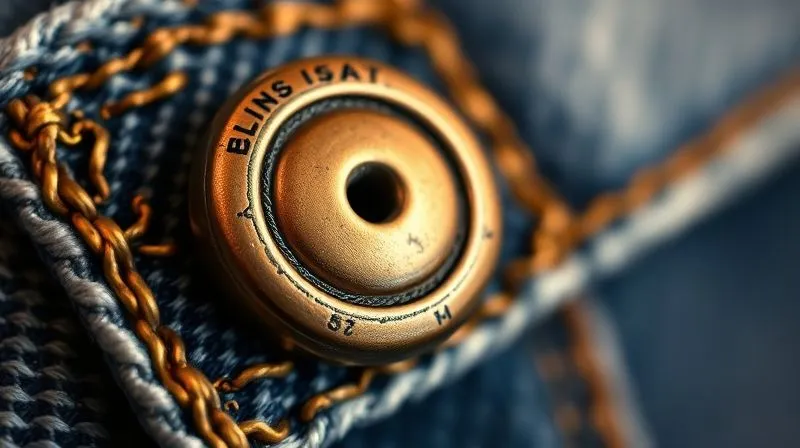
The main waist button is often the first thing I inspect. For 1970s Levi's, look for copper 'donut' style buttons with specific two or three-digit numbers stamped on the back (e.g., 6, 8, 2, 5, 16). These numbers correspond to the factory where the jeans were made. Lee jeans often feature brass 'donut' or 'wobbly' buttons with 'Lee' embossed on the front. Wrangler buttons will also be branded. Pay close attention to the font, clarity of the stamping, and the quality of the metal itself. Fakes often have generic, poorly stamped, or incorrect button designs.
Zipper Authenticity: Brands and Date Codes
Zippers are a goldmine of information. In the 1970s, key zipper manufacturers included Talon (especially the Talon 42 model), Scovill, and Gripper Zipper. Later in the decade, YKK became more prevalent. Each brand had distinct pull tabs, teeth designs, and sometimes even date codes or specific markings on the slider. For example, Talon 42 zippers are identifiable by their square-shaped pull tab and often have '42' stamped on the back of the slider. Scovill zippers might have 'GRIPPER ZIPPER' or their specific logo. Counterfeiters rarely invest in historically accurate zipper hardware, often using modern YKK zippers or unbranded, flimsy alternatives. Always check the brand, model, and any specific markings on the zipper pull and slider.
Rivet Details: Material, Branding, Placement
Rivets, as mentioned earlier, reinforce stress points. Authentic 70s rivets are typically made of copper or brass and are securely fastened. For Levi's, the back of the copper rivets often feature 'L.S. & Co. S.F.' (Levi Strauss & Co. San Francisco). The 'burr' or washer on the inside of the rivet also has a specific look and feel. Lee and Wrangler also had branded rivets, though sometimes more subtly. Examine the dome shape of the rivet, the clarity of any branding, and the consistency of its application across all stress points. Any signs of cheap, unbranded, or inconsistently applied rivets are major red flags.
| Brand | Buttons | Zippers | Rivets | Red Tab |
|---|---|---|---|---|
| Levi's (1970s) | Copper 'donut' style, often with back numbers (e.g., 6, 8, 2, 5, 16) | Talon 42, Scovill, YKK (later 70s) | Copper, often stamped with 'L.S. & Co. S.F.' | Big 'E' (early 70s), then small 'e' (mid-late 70s) |
| Lee (1970s) | Brass 'donut' or 'wobbly' buttons, often with 'Lee' embossed | Talon 42, Gripper Zipper, Scovill | Brass, often with 'Lee' or 'H.D. Lee' embossed | Leather or 'Hair-on-hide' with 'Lee Riders' branding |
| Wrangler (1970s) | Brass buttons with 'Wrangler' or specific logo | Talon, Scovill, often with 'Wrangler' pull tab | Brass, often unmarked or subtly branded | 'W' shape on back pockets |
| Jordache (Late 70s) | Metal buttons, often branded with the horse logo | YKK, Talon | Metal, often branded or plain | Horse head logo on back pocket, iconic 'Jordache' stitch |
Labels, Tags, and Brand Markings: The Paper Trail
Labels and tags are often the first thing a buyer looks for, and for good reason. They are the brand's official signature. However, they are also one of the easiest elements for counterfeiters to replicate, so a deep understanding of their historical accuracy is paramount when you're trying to figure out how to authenticate original 1970s designer denim from fakes.
Inner Labels: Material, Printing Quality, Care Instructions
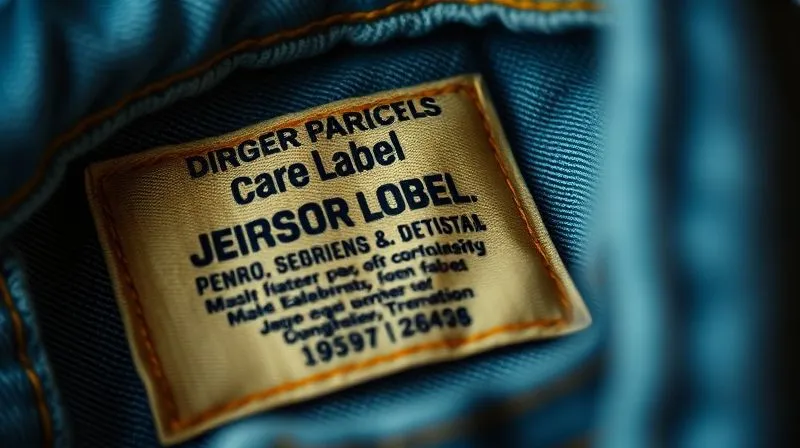
Vintage inner labels, found inside the waistband or side seam, are a treasure trove of information. They are typically made of cotton or a blend, and the printing quality, while not always perfect, should be consistent and clear for its age. Look for care instructions that reflect the era – often simpler and less extensive than modern labels. Sizing conventions were also different; vintage sizes can run smaller than their modern counterparts. Pay attention to the font, spacing, and any specific brand logos. Fakes often use incorrect fonts, cheap synthetic label materials, or misspellings.
Red Tabs (Levi's Specific Example): Placement, Font, Capitalization
For Levi's, the iconic Red Tab on the right back pocket is critical. For early 1970s jeans, you'll be looking for the 'Big E' Red Tab, where the 'E' in 'LEVI'S' is capitalized. Around 1971, Levi's transitioned to the 'small e' tab ('Levi's'), a change that is a key dating indicator. The font, stitching, and placement of the tab are all precise. The tab should be firmly sewn into the seam, not merely tacked on. Any deviation in color, font, or the capitalization of 'E' needs close scrutiny. Heddels offers an excellent historical overview of the Levi's Red Tab, which is an invaluable resource for collectors.
Pocket Flasher/Hang Tags: Graphics and Information
While most vintage denim won't come with its original hang tags or pocket flashers (the cardboard tag on the back pocket), if they are present, they are a huge bonus. These original tags often feature vibrant graphics, model numbers, sizing, and pricing information. Researching period-correct graphics and text for the specific brand can help authenticate. However, be wary, as these are also relatively easy to reproduce. Their presence should be a supporting factor, not the sole basis for authentication.
Understanding Era-Specific Silhouettes and Design Cues
Beyond the minute details, the overall cut, style, and embellishments of 1970s denim are distinctive. A deep understanding of these era-specific design cues can help you immediately spot an anachronism or a poorly conceived replica.
Bell Bottoms and Flares: Proportions and Leg Opening
The 1970s were synonymous with bell bottoms and flares. These weren't just wide-leg jeans; they had specific proportions. Bell bottoms typically flared out dramatically from the knee down, often with a very wide leg opening. Flares were generally a more subtle, gradual widening from the knee. Pay attention to where the flare begins and its overall width. Fakes might get the general idea but miss the precise proportions that define an authentic 70s silhouette. The inseam and rise were also typically higher than many modern jeans.
High-Waisted Fits: Typical Rise Measurements
High-waisted styles were predominant throughout the 1970s. The rise (the measurement from the crotch seam to the top of the waistband) was significantly higher than the low-rise trends of later decades. For women's designer denim, this was particularly true, emphasizing a longer leg line. Measure the rise and compare it to known authentic examples. An unexpectedly low rise on a supposed 70s pair is a serious warning sign.
Embroidery and Embellishments: Common Motifs and Quality
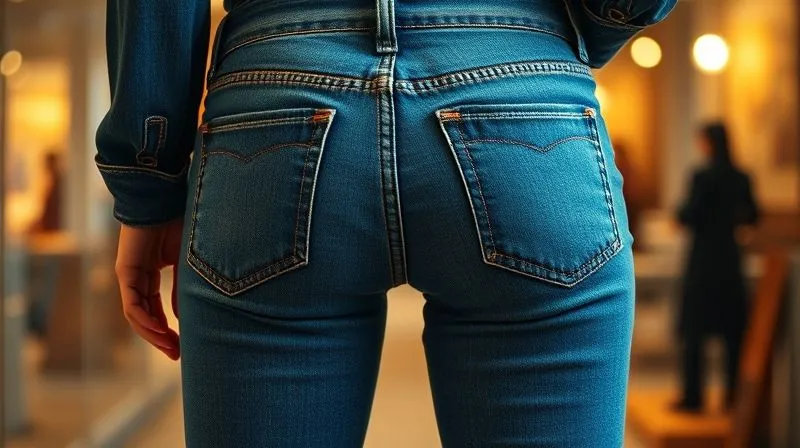
Embroidery, patches, and other embellishments were popular ways to personalize or distinguish designer denim in the 70s. Look for common motifs of the era: floral designs, psychedelic patterns, peace signs, or brand-specific logos. The quality of the embroidery should be consistent with the overall garment – neat, tightly stitched, and well-executed. Sloppy or poorly designed embellishments, or motifs that don't align with 70s aesthetics, are often giveaways of a fake. For instance, the iconic Jordache horse head logo on the back pocket had a very specific look and feel that reproductions often fail to accurately capture.
Provenance and Seller Credibility: The Human Element
Authentication isn't solely about the physical item; it's also about the story behind it and the trustworthiness of the source. In my experience, a significant portion of successful vintage finds comes from reputable sellers and a clear understanding of an item's history.
Asking the Right Questions: Source, History, Previous Repairs
Don't be afraid to ask questions. A knowledgeable and honest seller should be able to provide details about the item's provenance. Where did they acquire it? Do they know its history? Has it undergone any repairs or alterations? Genuine vintage pieces often have a story, and a seller who can share it adds immense credibility. Vague answers or an unwillingness to provide details should make you cautious. As marketing guru Seth Godin often says, "People do not buy goods and services. They buy relations, stories and magic." This is profoundly true in the vintage market.
Seller Reputation: Reviews, Return Policy, Specialization
Always research the seller. Look for customer reviews, their return policy, and how long they've been in business. Does the seller specialize in vintage denim or 1970s fashion? Specialists are far more likely to have the expertise to authenticate their own stock and will stand by their products. A seller with a long history of positive feedback and a clear, fair return policy is a safer bet. Forbes offers practical tips on online shopping safety that apply equally to the vintage market.
Documentation and Photography: Clear, Detailed Photos
When buying online, high-quality, detailed photographs are non-negotiable. Request multiple angles, close-ups of all hardware (buttons, zippers, rivets), labels, stitching, and any areas of wear or repair. Good lighting is essential. If a seller provides only blurry, limited photos, or refuses to provide more, walk away. They might be hiding imperfections or, worse, attempting to pass off a fake. According to a Deloitte study on the luxury resale market, transparency and detailed product information are key drivers of consumer trust.
Always buy the seller, not just the item. A trusted source is often as valuable as the item itself.
The Actionable Authentication Checklist
Bringing all these elements together, here's a step-by-step checklist I use to authenticate 1970s designer denim:
- Assess the Fabric: Feel for weight and rigidity. Look for a slubby texture. Check for selvedge edges on outseams if applicable to the brand/model. Observe natural fading patterns versus artificial distressing.
- Inspect Stitching Quality: Examine chain stitching on hems and waistbands. Verify thread type (cotton) and correct colors for the brand. Check for double-felled seams.
- Examine Hardware Details: Verify main button branding, font, and back stamps (e.g., Levi's factory numbers). Identify zipper brand (Talon 42, Scovill) and specific pull tab/slider markings. Confirm rivet material (copper/brass), branding, and secure attachment.
- Scrutinize Labels and Tags: Check inner label material, font, care instructions, and sizing. For Levi's, confirm 'Big E' vs. 'small e' Red Tab accuracy, placement, and stitching.
- Verify Silhouette and Design Cues: Confirm era-appropriate bell-bottom/flare proportions and high-waisted rise. Evaluate embroidery or embellishment quality and period accuracy.
- Investigate Provenance: Ask the seller about the item's history, source, and any repairs. Seek detailed answers.
- Evaluate Seller Credibility: Check reviews, return policy, and specialization. Ensure clear, comprehensive photos are provided.
Frequently Asked Questions (FAQ)
Question: Are all 1970s Levi's 'Big E' selvedge? No, not all. While early 70s Levi's (pre-1971) were indeed 'Big E' and many were selvedge, the transition to 'small e' occurred around 1971. Also, not every Levi's model, even in the 70s, was selvedge. It became less common as production scaled. Always check the outseam for the selvedge ID line, and the Red Tab for the 'E' to date.
Question: How much should I expect to pay for authentic 1970s designer denim? Prices vary wildly based on brand, rarity, condition, size, and specific model. A well-preserved pair of early 70s 'Big E' selvedge Levi's can fetch hundreds, sometimes thousands, of dollars. Later 70s designer brands like Jordache or Sasson might be less, but still command a premium over modern fast fashion. Always compare prices from reputable vintage dealers.
Question: Can I authenticate from photos alone? While detailed photos are crucial, they are not always sufficient for 100% authentication. Tactile elements like fabric feel and weight are impossible to assess from photos. However, with enough high-resolution images showing all the critical details discussed, you can make a very strong educated guess. For high-value items, in-person inspection or a trusted third-party authenticator is always recommended.
Question: What if a piece has been repaired? Does that affect its authenticity? Repairs are common and often expected on genuine vintage denim. Well-executed, period-appropriate repairs (e.g., patching with similar denim, darning) do not negate authenticity and can even add to the item's story and character. However, extensive, poorly done, or modern repairs might devalue the piece or suggest a past attempt to conceal damage or alter the original garment. Always disclose and inspect repairs thoroughly.
Question: Are there any specific regional variations to consider for 1970s denim? Absolutely. Denim production was global, and specific factories in different countries (e.g., USA, Canada, Japan, Europe) often had subtle variations in stitching, hardware, and even fabric. For example, some European Levi's models might differ slightly from their US counterparts. Researching these regional nuances for specific brands and models can provide even deeper authentication insights. Vintage Denim Forum is a great place to explore such specific discussions.
Key Takeaways and Final Thoughts
Authenticating original 1970s designer denim from fakes is a skill honed through knowledge, keen observation, and experience. It's a journey into the intricate world of textile history, craftsmanship, and brand evolution. As an industry specialist, I've seen the confidence that comes with knowing you've made a genuine find, and I want that for you.
- Detail is King: Every stitch, every rivet, every label holds a story. Learn the specific details for the brands you collect.
- Trust Your Gut, Then Verify: If something feels off, it probably is. Use this guide as your comprehensive verification framework.
- Invest in Knowledge: The more you learn about 1970s fashion history and denim production, the better equipped you'll be.
- Build Relationships: Connect with reputable sellers and fellow collectors. Their experience is invaluable.
The pursuit of authentic vintage denim is more than just collecting clothes; it's about preserving a tangible piece of cultural heritage. Armed with the insights from this guide, you are now better prepared to navigate the vintage market with discernment and confidence. May your next vintage denim hunt be fruitful and, above all, authentic!
Recommended Reading
- 5 Pillars: Choosing Contemporary Menswear for Professional Impact
- The Ultimate Guide: What to Know Before Buying a Vintage Wedding Dress?
- Price Bespoke Jewelry: 5 Strategies for Profit & Design Commissions
- 7 Proven Strategies to Effectively Upsell Premium Progressive Lens Optical Frames
- Stale Fashion Blog Outfits? 7 Fresh Angles to Innovate Your Content Now

Your email address will not be published. Required fields are marked *