

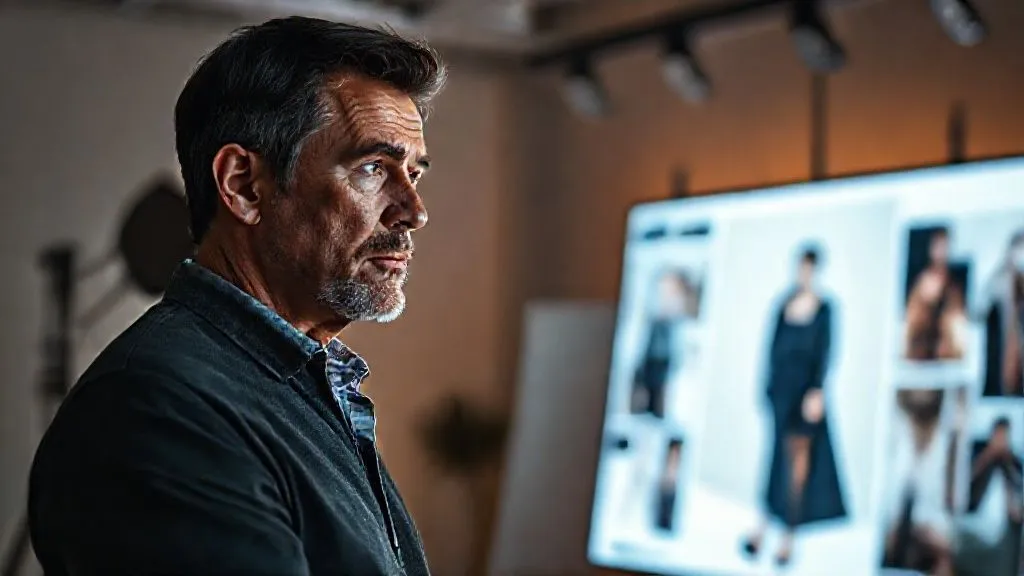
Why Isn't My Fashion Photography Aesthetic Landing Editorial Work?
For over two decades in the dynamic world of fashion photography, I've witnessed countless talented photographers emerge, brimming with passion and technical skill. Yet, time and again, I've seen a common, heartbreaking pattern: incredible visual artists pouring their hearts into their craft, only to find their meticulously curated portfolios repeatedly overlooked by editorial gatekeepers. It's a frustrating, often isolating experience that many mistake for a lack of talent.
The truth is, it's rarely about a lack of talent or even a 'bad' aesthetic. More often, it's a subtle misalignment – a gap between what you're creating and what the editorial landscape genuinely demands. You might be producing stunning imagery, but if it doesn't speak the unique language of editorial, it will struggle to find its home in the pages of a magazine.
This article isn't just about identifying the problem; it's about equipping you with the actionable frameworks, real-world insights, and expert guidance to bridge that gap. We'll explore the critical shifts you need to make, from refining your vision to mastering the art of submission, ensuring your aesthetic not only stands out but also lands the coveted editorial work you deserve.
The Editorial Gaze: Understanding What Magazines Truly Seek
Before we can fix what isn't working, we must first understand the target. Editorial photography isn't merely about beautiful clothes or striking models; it's about telling a story, evoking a mood, and contributing to a larger narrative within the magazine's identity. Commercial work sells a product; editorial work sells a dream, an idea, a lifestyle. This fundamental difference is where many photographers first stumble.
Magazines, whether print or digital, are curated experiences. They seek photographers who can contribute a distinct voice that aligns with their brand while pushing creative boundaries. They're looking for originality, depth, and a perspective that resonates with their readership. It's less about showcasing every item in a collection and more about creating an immersive visual journey.
"Editorial photography is a conversation, not a monologue. Your images must engage, question, and inspire, not just display." - Industry Veteran Insight
Understanding a publication's aesthetic goes beyond glancing at their latest issue. It requires deep research into their history, their target demographic, their regular contributors, and even their advertising partners. Are they avant-garde, minimalist, classic, or rebellious? Your aesthetic needs to speak their language, but with your own unique accent.

Commercial vs. Editorial: A Crucial Distinction
Many photographers start in commercial work, which often emphasizes clarity, product focus, and brand messaging. These skills are valuable, but the translation to editorial isn't always direct. Here's a quick comparison:
| Characteristic | Commercial Photography | Editorial Photography |
|---|---|---|
| Primary Goal | Sell a product or service; brand promotion | Tell a story; convey a mood; inspire; educate |
| Creative Control | Often dictated by client brief and brand guidelines | Significant creative freedom, driven by photographer/stylist vision |
| Focus | Product, model, brand identity | Narrative, atmosphere, artistic expression, cultural commentary |
| Post-Production | Often highly retouched for perfection and consistency | Can be more raw, artistic, or stylized to enhance narrative |
This table highlights why a portfolio heavy in commercial work, while demonstrating technical proficiency, might not immediately signal editorial readiness. It's about shifting your mindset and execution.
Beyond Pretty Pictures: Defining Your Unique Vision & Narrative
In a saturated market, 'pretty pictures' are a baseline, not a differentiator. What truly sets editorial photographers apart is their ability to cultivate and consistently express a unique visual voice. This isn't something you 'find' overnight; it's developed through introspection, experimentation, and a deep understanding of your own creative impulses.
I've seen photographers spend years mimicking trends, only to feel hollow and unrecognized. The moment they turned inward, exploring their personal interests, cultural background, or even their deepest anxieties, their work transformed. Suddenly, their images carried a weight, an authenticity that resonated far beyond surface-level aesthetics.
Exercises for Cultivating Your Vision:
- The 'Why' Exercise: For your favorite images (both yours and others'), ask yourself: "Why does this image resonate with me? What emotion does it evoke? What story does it tell?" Dig deep into the underlying themes, colors, and compositions.
- Mood Board Mastery: Go beyond just fashion. Collect images, textures, colors, art, film stills, and even poetry that inspire you. Look for patterns, recurring motifs, and emotional threads that tie them together. This is your aesthetic DNA.
- Personal Project Power: Dedicate time to personal projects with no client brief. Shoot what truly excites you, experimenting with concepts, lighting, and styling that reflect your nascent vision. These are often the seeds of your most impactful editorial work.
"To stand out, you must first stand for something," as I often advise my mentees. Your unique vision becomes your signature, making your work instantly recognizable and memorable. This is the bedrock of landing significant editorial opportunities.
Mastering the Art of Storytelling: From Concept to Capture
Editorial photography is inherently storytelling. Every shoot, every frame, should contribute to a cohesive narrative. This means moving beyond simply styling and shooting to actively conceptualizing and directing a visual journey. Editors aren't just looking for a collection of strong images; they're looking for a compelling visual essay.
My experience has shown that the most successful editorial photographers are often brilliant conceptualizers. They start with an idea – a feeling, a historical period, a social commentary – and then build every element of the shoot around it. This includes location, casting, styling, hair and makeup, lighting, and even the post-production aesthetic.
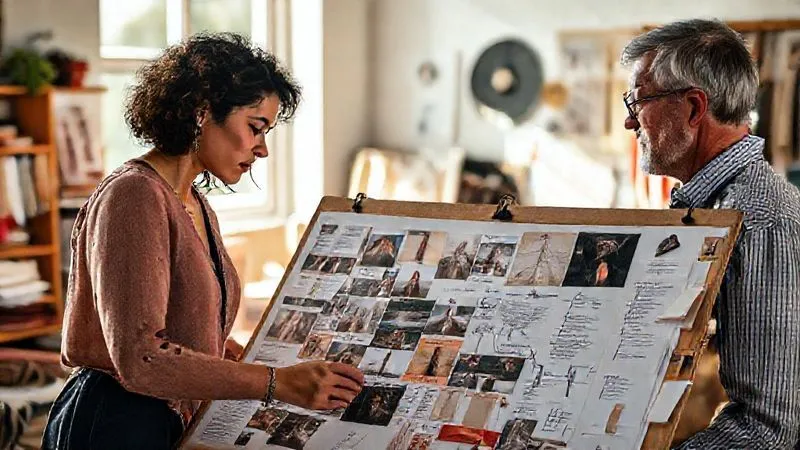
Case Study: How Elara Vance Transformed Her Editorial Prospects
Elara Vance, a talented photographer I mentored, consistently produced technically flawless fashion imagery. However, her portfolio lacked a distinct point of view. Her work, while beautiful, felt interchangeable with many others. We identified that her personal passion for vintage cinema and melancholic portraiture wasn't translating into her fashion shoots.
I challenged Elara to create a personal editorial project titled 'Faded Glamour,' drawing directly from her love for 1940s film noir and forgotten Hollywood stars. She meticulously researched era-appropriate styling, found a unique, atmospheric location (an abandoned theater), and directed her model to embody the quiet drama and introspection of the period.
The resulting series was a revelation. Each image was imbued with a deep narrative, a sense of longing and elegance that was uniquely hers. This project, a departure from her previous commercial-leaning work, became the centerpiece of her updated portfolio. It wasn't long before a prominent indie fashion magazine, known for its cinematic aesthetic, featured her 'Faded Glamour' series, launching her into the editorial space she had long sought.
Refining Your Technical & Post-Production Prowess to Editorial Standards
While concept and vision are paramount, editorial work also demands impeccable technical execution and a sophisticated approach to post-production. Editors need to trust that you can deliver images that are not only creatively brilliant but also technically sound and ready for print or high-resolution digital display. This is where your professionalism truly shines.
I've seen stunning concepts fall flat due to poor lighting, inconsistent color grading, or sloppy retouching. Editorial standards are high, and anything less than perfection in these areas can be a deal-breaker. It's about mastering your tools to serve your vision, not letting technical limitations hinder your creative expression.
Key Areas to Focus On:
- Lighting Mastery: Understand how different light qualities (hard, soft, natural, artificial) impact mood and shape. Practice controlling light to sculpt your subjects and create dramatic or ethereal effects that enhance your narrative.
- Color Theory & Grading: Develop a cohesive color palette that supports your aesthetic. Learn advanced color grading techniques to achieve consistent mood and tone across your entire series. This is often the subtle difference between amateur and professional output.
- Retouching for Purpose: Editorial retouching is about enhancing, not erasing. It should be subtle, maintaining authenticity while perfecting skin tones, removing distractions, and ensuring garments drape perfectly. Avoid over-smooth skin or unrealistic body alterations.
- File Management & Delivery: Professionals understand the importance of organized files, correct color profiles (e.g., sRGB for web, Adobe RGB for print), and meeting specific delivery specs. This demonstrates reliability and attention to detail.
Investing in workshops, online courses, and continuous practice in these areas will elevate your work significantly. Your technical proficiency should be so ingrained that it becomes an invisible support for your artistic vision. Mastering color grading, for instance, can drastically alter the emotional impact of your images.
Portfolio Perfection: Curating for Impact and Industry Relevance
Your portfolio is your most powerful marketing tool. It's not just a collection of your best images; it's a carefully curated narrative that tells editors who you are, what you stand for, and what unique value you can bring to their publication. This is where many photographers falter, presenting a broad, unfocused collection rather than a tightly edited, compelling statement.
In my experience, less is often more. An editor would rather see 10-15 exceptional images that perfectly encapsulate your unique editorial vision than 50 good but inconsistent ones. Every image must earn its place, actively contributing to the overall story your portfolio tells.
Actionable Steps for Portfolio Curation:
- Target Your Audience: Tailor your portfolio to the specific publications you aspire to work with. Research their style and select images that would feel at home in their pages, while still showcasing your unique voice.
- Tell a Story: Arrange your images to create a flow, a visual journey. Consider grouping images from cohesive series or projects that demonstrate your ability to execute a complete editorial concept.
- Lead with Your Strongest: Your first few images should be your absolute best, instantly grabbing the editor's attention and leaving a lasting impression.
- Show, Don't Tell: Let your images speak for themselves. Avoid verbose captions or explanations. If an image needs a lengthy explanation, it might not be strong enough.
- Seek Critical Feedback: Share your portfolio with trusted mentors, creative directors, or other experienced photographers. Be open to honest, constructive criticism – it's invaluable for refinement.
Remember, your portfolio isn't a retrospective of everything you've ever shot. It's a forward-looking statement of the work you want to do. Vogue Business often emphasizes the importance of a clear, concise portfolio for emerging talent.
Networking & Submission Savvy: Navigating the Editorial Landscape
Once your aesthetic is refined and your portfolio polished, the next challenge is getting it in front of the right people. This isn't just about cold emailing; it's about strategic networking, understanding industry protocols, and presenting your work professionally. The fashion industry, despite its glamour, is built on relationships.
I've seen countless brilliant photographers struggle because they either didn't know how to approach editors or they presented their work in a way that didn't respect industry norms. It's a nuanced dance of professionalism, persistence, and genuine connection.
Strategies for Effective Networking and Submissions:
- Attend Industry Events: Fashion weeks, photography exhibitions, and industry talks are prime opportunities to meet editors, stylists, and creative directors in person. Be prepared with a concise elevator pitch and a digital portfolio ready to share.
- Collaborate with Stylists & HMUAs: Building a strong creative team is crucial. Collaborate on test shoots with talented stylists, hair and makeup artists, and models who share your vision. Their networks can also open doors.
- Craft a Personalized Pitch: Generic emails are immediately deleted. Research the editor and the publication thoroughly. Reference specific features or photographic styles you admire and explain how your work aligns with and enhances their vision.
- Follow Submission Guidelines Religiously: Every publication has specific submission requirements. Adhere to them precisely – file size, format, number of images. Ignoring these details signals unprofessionalism.
- Be Patient and Persistent (But Not Annoying): The editorial world moves slowly. Follow up politely after a reasonable waiting period, but avoid daily emails. A well-timed, thoughtful follow-up is far more effective.
Remember, every interaction is an opportunity to build a relationship. Approach networking with genuine interest, not just a desire to get something. Harvard Business Review offers excellent advice on strategic networking that applies across industries.
Embracing Feedback and Evolving Your Aesthetic
The journey to landing consistent editorial work is not a straight line; it's an iterative process of creation, feedback, and refinement. I've seen the most successful photographers, even those at the pinnacle of their careers, remain open to critique and constantly strive to evolve their aesthetic. The moment you believe you've 'arrived' is often the moment your growth stagnates.
Receiving rejection or constructive criticism can be tough, especially when your work is deeply personal. However, learning to detach emotionally and view feedback as a tool for improvement is a hallmark of a true professional. It's not about changing who you are, but about refining how you communicate your vision.
"Rejection is not a judgment on your worth, but a compass pointing towards refinement. Embrace it as part of the creative journey." - Personal Mentorship Philosophy
Leveraging Feedback for Growth:
- Seek Specifics: If you receive a rejection, politely ask for specific reasons. "It's not quite right for us" isn't helpful. Push for insights into what exactly felt misaligned.
- Analyze Trends (Without Mimicking): Stay informed about current fashion and photographic trends by reading publications like The Business of Fashion. Understand the zeitgeist, but filter it through your unique aesthetic rather than simply copying.
- Experiment Continuously: Dedicate time to 'play' – trying new techniques, exploring different genres, or collaborating with artists outside your usual circle. This keeps your creative spirit alive and your aesthetic fresh.
- Self-Critique Rigorously: Develop a critical eye for your own work. Step away from a project for a few days, then return to it with fresh eyes, asking yourself if it truly communicates what you intended and if it meets the highest editorial standards.
Frequently Asked Questions (FAQ)
Q: How long does it typically take to break into editorial fashion photography? A: There's no fixed timeline, as it depends on many factors including your existing skill level, networking efforts, and the uniqueness of your aesthetic. For some, it can happen within a year or two of dedicated effort; for others, it might take five years or more. Focus on consistent growth and building genuine relationships rather than arbitrary deadlines.
Q: Should I work for free to gain editorial experience? A: This is a complex ethical debate. While I generally advocate for fair compensation, early in your career, collaborating on 'test shoots' with a strong creative team (stylists, HMUAs, models) can be invaluable for building your editorial portfolio without a client brief. Ensure these collaborations are mutually beneficial and clearly defined. Avoid working for free for established publications or brands who can afford to pay.
Q: Is having a niche aesthetic better than being versatile? A: For editorial work, a strong, recognizable niche aesthetic is often more advantageous. Editors are looking for unique voices. While versatility is good for commercial work, an editorial portfolio should clearly articulate your specific vision and style. Once you've established your niche, you can gradually expand, but start by mastering a distinct point of view.
Q: How important is my social media presence for landing editorial work? A: Extremely important in today's digital age. Social media, particularly Instagram, acts as a dynamic, constantly updated portfolio and a window into your creative process. Editors often scout talent on these platforms. Ensure your feed is curated, professional, and reflects the editorial aesthetic you aspire to. Engage thoughtfully with the community and other creatives.
Q: What if I feel my city/location doesn't have enough fashion opportunities? A: While major fashion hubs offer more direct opportunities, talent and vision transcend geography. Focus on creating compelling, conceptual work that can travel. Leverage digital platforms for networking and submissions. Consider collaborating remotely or planning strategic trips to major cities for networking and portfolio reviews. Your unique aesthetic can be a magnet, regardless of your physical location.
Key Takeaways and Final Thoughts
- Understand that editorial photography is about storytelling and unique vision, not just pretty pictures.
- Invest deeply in defining and consistently expressing your personal aesthetic.
- Master both the technical aspects of photography and the nuanced art of post-production.
- Curate a highly focused portfolio that speaks directly to the editorial market you target.
- Develop strong networking skills and approach submissions with professionalism and persistence.
- Embrace feedback as a critical tool for continuous growth and aesthetic evolution.
The journey to landing editorial work is challenging, but immensely rewarding. It demands introspection, relentless refinement, and a deep understanding of the industry. As someone who has navigated these waters for decades, I can assure you that your unique voice is your greatest asset. Don't be discouraged by initial setbacks; instead, see them as opportunities to sharpen your vision, elevate your craft, and ultimately, carve out your indelible mark in the world of fashion photography. Your aesthetic isn't failing; it's simply waiting for its moment to be truly seen and understood. Go forth and create that moment.
Recommended Reading
- Decoding Meticulous Tailoring: 7 Pillars of Haute Couture Perfection
- 7 Proven Metrics: How to Prove ROI of Personalized Fashion Tech Investments?
- The Ultimate Guide: Best Strategies for Copping Streetwear Drops
- 7 Strategies for Profitable Pricing in Organic Kids Clothing
- 5 Steps: Fixing Traditional Bridal Gown Alteration Disasters


Your email address will not be published. Required fields are marked *