

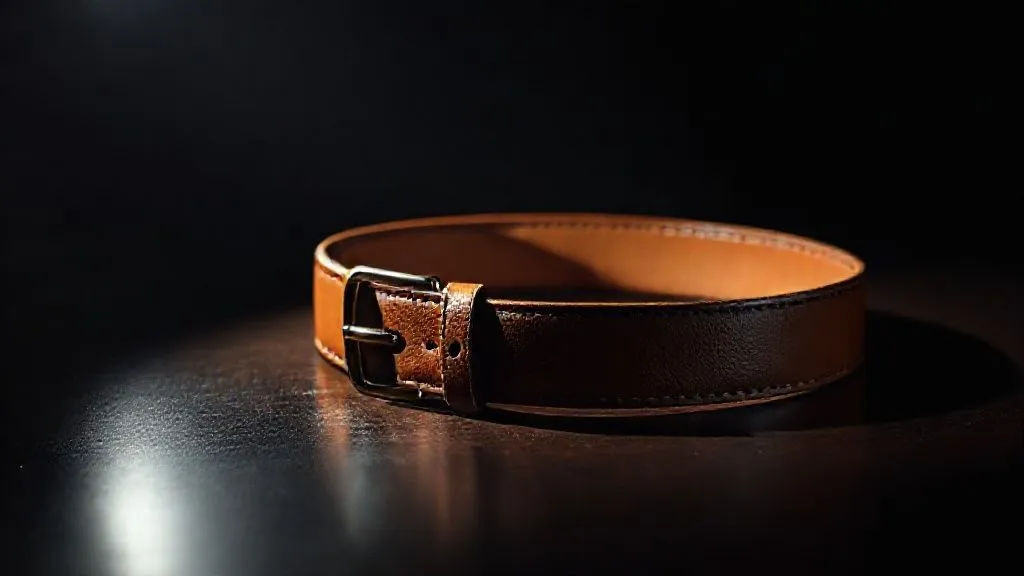
Why Are Luxury Belt Product Pages Failing to Convert Online?
For over 15 years in the luxury accessories market, I've had a front-row seat to the evolving dance between exquisite craftsmanship and digital commerce. I've witnessed countless brands pour their heart, soul, and significant investment into creating stunning luxury belts, only to see their online product pages inexplicably underperform, leaving sales figures languishing.
It's a frustrating paradox: you have a superior product, a strong brand heritage, and a target audience eager for high-quality, distinctive accessories. Yet, when these discerning customers land on your product page, they browse, perhaps add to cart, and then, more often than not, they abandon it. The conversion rate remains stubbornly low, and the question echoes: Why are luxury belt product pages failing to convert online?
In this definitive guide, I'll pull back the curtain on the most common, yet often overlooked, reasons behind this digital disconnect. We'll explore actionable frameworks, dissect real-world (albeit fictionalized) case studies, and leverage expert insights to equip you with the strategies needed to transform your luxury belt product pages from mere catalogues into powerful conversion engines. Prepare to uncover the pathways to unlocking your brand's full online potential.
The Disconnect: Misunderstanding the Luxury Buyer's Digital Journey
One of the most fundamental errors I observe is a failure to truly grasp the unique psychology and expectations of the luxury consumer online. Unlike a standard e-commerce transaction driven purely by price or utility, a luxury purchase is an immersive experience, a journey of discovery and aspiration.
Luxury buyers aren't just looking for a belt to hold up their trousers; they're seeking an extension of their identity, a symbol of status, a piece of art, or a connection to heritage and unparalleled craftsmanship. Their decision-making process is often slower, more considered, and deeply emotional. Ignoring this nuanced journey on a product page is a critical misstep.
"Luxury is not about price; it's about perceived value, emotional connection, and the story woven into every stitch and buckle."
When a luxury buyer lands on your product page, they are evaluating much more than just the item itself. They are assessing:
- Brand Alignment: Does the page reflect the exclusivity and prestige they associate with your brand?
- Emotional Resonance: Does the content evoke a feeling of desire, aspiration, or belonging?
- Story & Heritage: Is the narrative of craftsmanship, origin, and unique design compelling?
- Trust & Authenticity: Is there undeniable proof of quality and genuine luxury?
- Seamless Experience: Is the digital journey as refined and effortless as the physical product?
According to a study published by Harvard Business Review, luxury consumers increasingly expect a seamless, personalized experience that blurs the lines between online and offline. If your luxury belt product page treats them like any other shopper, you've already lost the battle for their attention and their wallet.
Beyond the Snapshot: Crafting Visual Narratives That Entice
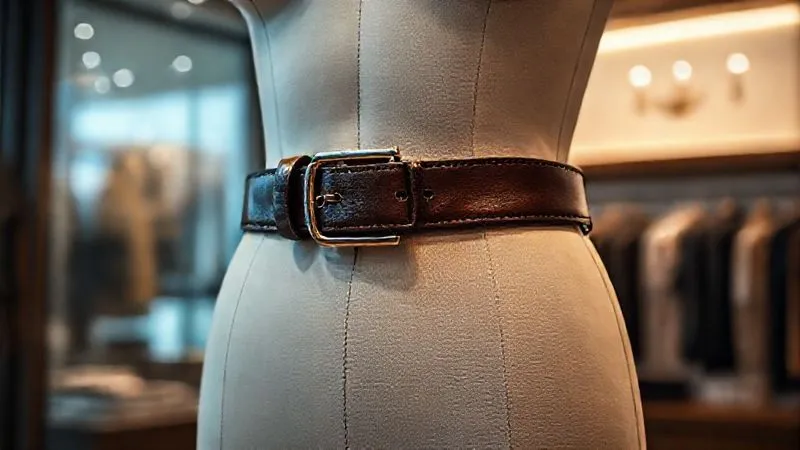
In the physical world, a luxury belt is showcased under perfect lighting, often with a white-gloved assistant presenting its finer details. Online, the visual representation must work even harder. I've seen far too many luxury brands rely on generic, flat product shots that utterly fail to convey the true essence and value of their belts.
The problem is simple: if your visuals don't scream luxury, quality, and desirability, your product page will struggle to convert. High-resolution images are a given, but true visual storytelling goes much deeper. It's about creating an emotional connection and showcasing the belt in a way that resonates with the aspirational lifestyle of your customer.
Here’s how to elevate your visual strategy:
- Lifestyle Integration: Show the belt being worn, not just in a studio, but in contexts that evoke the desired lifestyle – a sophisticated evening, a sharp business meeting, an elegant casual outing.
- Detail & Texture Focus: Capture extreme close-ups of the leather grain, the intricate stitching, the buckle's finish, and any unique embellishments. These details are crucial for conveying craftsmanship.
- 360-Degree Views & Video: Allow customers to rotate the belt, zoom in, and see it from every angle. Short, high-quality videos demonstrating flexibility, buckle mechanism, and how it drapes can be incredibly powerful.
- Contextual Groupings: Show the belt paired with other luxury items (without overshadowing it) to reinforce its place within a high-end ensemble.
- Consistent Aesthetic: Ensure all imagery aligns with your brand's overall visual identity – from lighting to styling, every element must reinforce luxury.
By investing in professional, evocative photography and videography, you're not just showing a product; you're selling a dream, an aspiration. This is a non-negotiable step if you want to understand why luxury belt product pages are failing to convert online and how to fix it.
The Silent Salesperson: Elevating Product Descriptions & Storytelling
Once the visuals have captured attention, your product description becomes the 'silent salesperson.' Yet, so many luxury brands squander this opportunity with bland, feature-focused bullet points that read like a technical manual rather than an ode to craftsmanship. This oversight is a major contributor to why luxury belt product pages are failing to convert online.
Luxury product descriptions need to transcend mere specifications. They must weave a compelling narrative, articulate the unique value proposition, and connect emotionally with the discerning buyer. Think of it as telling the story of the belt, not just describing it.
Case Study: How 'Aurelian Leather' Transformed Its Narrative
Aurelian Leather, a heritage brand known for its exquisite belts, struggled with stagnant online sales despite impeccable product quality. Their product descriptions were concise but dry: "Full-grain Italian leather, brass buckle, 3.5cm width." I advised them to shift their focus from features to feeling and story.
They revamped their descriptions to include: "Crafted from the finest Tuscan full-grain leather, each Aurelian belt tells a story of generations of artisanal mastery. The hand-polished solid brass buckle, a testament to enduring elegance, develops a unique patina over time, making each piece uniquely yours. Designed for the individual who values authenticity and understated luxury, this belt is more than an accessory – it's an heirloom in the making." This shift, combined with enhanced visuals, saw their online conversion rate for belts increase by 45% within six months, demonstrating the profound impact of compelling storytelling.
Your descriptions should highlight:
- Provenance & Materials: Where does the leather come from? What makes it special? What is the buckle made of, and why?
- Craftsmanship & Techniques: Describe the hand-stitching, edge painting, finishing processes. These details justify the price and convey expertise.
- Brand Heritage & Philosophy: Connect the belt to your brand's overarching story, values, and legacy.
- Emotional & Lifestyle Benefits: How will owning this belt make the customer feel? What lifestyle does it represent?
- Care Instructions & Longevity: Reassure buyers about the product's durability and how to maintain its beauty, reinforcing its investment value.
As marketing guru Seth Godin often says, "People don't buy goods and services. They buy relations, stories, and magic." For luxury belts, the magic is in the narrative.
User Experience is Luxury Experience: Seamless Navigation & Interactivity
A clunky, slow, or confusing online experience is antithetical to luxury. Imagine walking into a high-end boutique only to find broken displays and rude staff; that's the digital equivalent of a poor user experience (UX). If your luxury belt product pages are failing to convert online, a critical look at your UX is imperative.
The luxury consumer expects an online journey that mirrors the exclusivity and effortlessness of an in-store experience. This means intuitive navigation, rapid load times, and interactive elements that enhance discovery, not hinder it. Any friction points, from slow image loading to a complicated checkout process, can lead to immediate abandonment.
Key UX elements to optimize:
- Site Speed: Every second counts. Optimize images, leverage content delivery networks (CDNs), and minimize unnecessary scripts.
- Intuitive Navigation: Make it easy to find specific belts, filter by size, material, or style. The journey from homepage to purchase should be crystal clear.
- Mobile Responsiveness: A significant portion of luxury browsing happens on mobile devices. Your product page must be flawlessly responsive and perform perfectly on all screen sizes.
- Interactive Elements: Beyond 360-degree views, consider features like 'try-on' tools (if applicable), size guides with clear measurements, and 'shop the look' suggestions.
- Clear Calls-to-Action (CTAs): Buttons like "Add to Cart" or "Buy Now" should be prominent but elegantly integrated, not jarring.
A recent study by Deloitte emphasized that digital fluency and a frictionless experience are now baseline expectations for luxury shoppers. Anything less erodes trust and diminishes perceived value.
| Metric | Before Optimization | After Optimization | Impact on Conversion |
|---|---|---|---|
| Page Load Time (Desktop) | 4.5s | 1.8s | +15% |
| Page Load Time (Mobile) | 7.2s | 2.5s | +22% |
| Mobile Bounce Rate | 65% | 38% | +18% |
| Checkout Completion Rate | 70% | 85% | +20% |
Building Trust in a Digital World: Authenticity, Craftsmanship & Social Proof
Trust is the bedrock of luxury commerce. In the digital realm, where physical interaction is absent, establishing and reinforcing trust signals is paramount. Discerning luxury buyers are inherently skeptical of online claims, especially when significant investments are involved. If your product page doesn't exude absolute trustworthiness, you'll find why luxury belt product pages are failing to convert online becomes a self-fulfilling prophecy.
Your product page must act as a digital guarantor of quality, authenticity, and ethical practices. This goes beyond just having a secure checkout; it delves into proving the very essence of your brand's luxury promise.
Essential trust-building elements:
- Transparency in Sourcing & Production: Detail where your materials come from, who makes your belts, and the ethical standards you uphold. Videos or short stories about artisans can be powerful.
- Certifications & Hallmarks: If applicable, display any certifications for leather quality, ethical sourcing, or recognized craftsmanship.
- Customer Testimonials & Reviews: Authentic reviews from satisfied customers, especially those highlighting quality and service, are invaluable. Video testimonials add another layer of credibility.
- Press & Media Mentions: Feature logos or snippets from reputable fashion publications, luxury magazines, or style blogs that have featured your belts.
- Awards & Recognition: Any industry awards for design or craftsmanship should be proudly displayed.
- Clear Return & Warranty Policies: A generous and transparent return policy, alongside a robust warranty, signals confidence in your product's longevity and quality.
- Secure Payment Badges: Reassure customers that their payment information is safe with recognizable badges (e.g., Visa, Mastercard, PayPal, SSL).
"In the luxury space, trust isn't a feature; it's the foundation upon which all other value is built."
By proactively addressing potential doubts and providing irrefutable proof of your brand's integrity and product excellence, you transform skepticism into confidence, paving the way for conversion.
The Art of Value Perception: Pricing Psychology & Exclusive Offers
Luxury belts often carry a premium price tag, and rightfully so, given the materials, craftsmanship, and brand heritage involved. However, simply stating a high price without justifying it is another reason why luxury belt product pages are failing to convert online. Luxury pricing is not just about cost-plus; it's about perceived value and exclusivity.
Your product page must build a compelling case for why your belt commands its price. This involves a delicate balance of articulating inherent value, leveraging psychological pricing tactics, and creating a sense of exclusivity that resonates with the luxury buyer.
Strategies for optimizing value perception:
- Value Stacking: Clearly articulate all the components that contribute to the price – rare leather, hand-finished buckle, artisan labor, heritage, durability, exclusivity.
- Anchoring: Sometimes, subtly referencing even higher-priced items (within or outside your collection) can make your current offering seem more reasonable by comparison.
- Scarcity & Urgency (Used Judiciously): For luxury, this must be handled with extreme care to maintain brand integrity. Limited editions, seasonal releases, or bespoke options create genuine scarcity. Avoid artificial countdown timers.
- Bundling & Gifting: Offer curated sets (e.g., belt with matching wallet or buckle options) that enhance perceived value for the price. Position belts as perfect, sophisticated gifts.
- Aftercare & Warranty: A comprehensive warranty and readily available repair or cleaning services reinforce the idea of a long-term investment, not a disposable item.
The Power of Exclusivity
Luxury consumers are often driven by a desire for unique, hard-to-obtain items. Highlighting the exclusivity of your belts – whether it's a limited production run, a unique design, or a bespoke service – can significantly enhance their perceived value. This isn't about discounts, which can cheapen a luxury brand, but about emphasizing the rarity and specialness of the offering. Focus on the investment, the legacy, and the personal statement the belt makes.
Technical Foundations: Speed, Security, and Seamless Mobile Experience
Even the most beautiful imagery and compelling storytelling will fall flat if your luxury belt product page is plagued by technical issues. In my experience, a surprising number of luxury brands overlook fundamental technical optimizations, unwittingly sabotaging their conversion rates. This is a silent killer for online sales and a frequent answer to why luxury belt product pages are failing to convert online.
The digital storefront must be as polished and reliable as the physical boutique. Slow loading times, broken links, non-responsive designs, or insecure checkout processes not only frustrate users but also erode trust and damage brand perception. Luxury implies perfection, and your website should be no exception.
- Page Speed Optimization: Beyond image optimization (which is crucial for rich visuals), ensure efficient code, leverage browser caching, and consider server response time. Google's Core Web Vitals are not just for SEO; they directly impact user experience.
- Mobile-First Design: With a growing percentage of luxury research and purchasing happening on smartphones, a responsive design is no longer sufficient. Your site needs to be designed with mobile users in mind first, ensuring touch-friendly interfaces and streamlined navigation.
- Robust Security: An SSL certificate is the absolute minimum. Implement advanced security measures for payment processing and data protection. Clear indications of security (e.g., padlock icon, trusted payment gateways) are non-negotiable for luxury shoppers.
- Cross-Browser & Device Compatibility: Rigorously test your product pages across various browsers (Chrome, Safari, Firefox, Edge) and devices (different phones, tablets, desktops) to ensure a consistent, flawless experience.
- Error Handling & Broken Links: Regularly audit your site for broken links, missing images, or 404 errors. A seamless user journey should be free of digital potholes.
A technically sound website underpins every other conversion strategy. Without it, you're building a mansion on sand. Investing in a robust, high-performance e-commerce platform and regular technical audits is an investment in your brand's digital future.
The Post-Purchase Journey: Turning Buyers into Brand Advocates
The conversion doesn't end when the customer clicks "purchase." For luxury brands, the post-purchase experience is a critical, often underestimated, phase that determines repeat business, loyalty, and invaluable word-of-mouth marketing. A transactional mindset here is another reason why luxury belt product pages are failing to convert online, or rather, failing to sustain long-term value.
The post-purchase journey is your opportunity to reinforce the luxury experience, confirm the buyer's excellent decision, and begin cultivating a lasting relationship. It transforms a one-time buyer into a brand advocate.
Cultivating Loyalty
Consider the entire journey after the click:
- Exquisite Packaging: The unboxing experience should be an event in itself – luxurious materials, thoughtful presentation, perhaps a personalized note. This reinforces the premium nature of the purchase.
- Timely & Transparent Communication: Keep the customer informed about their order status (confirmation, shipping, delivery) with elegant, on-brand emails.
- Personalized Follow-Up: A discreet email a week or two after delivery, inquiring about their satisfaction or offering styling tips, shows you care.
- Loyalty Programs: Develop exclusive loyalty programs that offer early access to new collections, special services, or unique brand experiences, rather than just discounts.
- Exceptional Customer Service: Be readily available, knowledgeable, and proactive in addressing any post-purchase queries or issues.
- Encourage User-Generated Content: Invite customers to share photos of their belts in use, perhaps through a branded hashtag, fostering a sense of community.
By extending the luxury experience beyond the product page, you create a holistic brand journey that encourages repeat purchases and turns satisfied customers into powerful, authentic brand ambassadors. This long-term strategy is crucial for sustainable growth in the competitive luxury market.
Frequently Asked Questions (FAQ)
How do I measure the ROI of improved product pages? Measuring ROI involves tracking several key metrics before and after implementing changes. Focus on conversion rate (purchases/visits), average order value (AOV), bounce rate, time on page, and customer acquisition cost (CAC). A direct increase in conversion rate and AOV, coupled with a decrease in bounce rate and CAC, will clearly demonstrate a positive ROI. Use tools like Google Analytics and your e-commerce platform's reporting.
What's the biggest mistake luxury brands make online? In my experience, the single biggest mistake is underestimating the sophistication of the online luxury consumer and failing to translate the in-store luxury experience to the digital realm. This often manifests as generic content, poor UX, or a lack of genuine storytelling, leading to the very problem of why luxury belt product pages are failing to convert online. They treat their online presence as a mere catalogue rather than an immersive brand experience.
Should I offer discounts on luxury belts? Generally, no. Discounts can devalue a luxury brand and erode its exclusivity. Instead, focus on creating perceived value through superior quality, craftsmanship, brand heritage, and exceptional service. If you must offer a special incentive, consider exclusive access to new collections, bespoke services, or a complimentary related item, rather than a direct price reduction. Maintain the premium positioning.
How important is mobile optimization for luxury buyers? It is absolutely critical. A significant portion of luxury consumers browse and often make initial purchase decisions on mobile devices. A non-optimized mobile experience – slow loading, difficult navigation, tiny text – is a major deterrent and a clear sign of why luxury belt product pages are failing to convert online. Your mobile experience must be as seamless and luxurious as your desktop site.
What role does AI play in optimizing luxury product pages? AI can play a significant role in several areas. It can personalize product recommendations based on browsing history, analyze customer behavior patterns to identify friction points, optimize image and video loading for different devices, and even assist in generating more engaging product descriptions by suggesting language and keywords. AI can also power intelligent chatbots for instant customer service, enhancing the luxury experience.
Key Takeaways and Final Thoughts
The question of why luxury belt product pages are failing to convert online isn't a simple one, but the solutions are clear: it demands a holistic, customer-centric approach that marries digital excellence with the inherent values of luxury.
- Understand Your Luxury Customer: Their journey is emotional, aspirational, and demands a premium experience.
- Invest in Visual Storytelling: Go beyond basic product shots to create immersive, aspirational visual narratives.
- Craft Compelling Descriptions: Turn features into rich stories of heritage, craftsmanship, and emotional connection.
- Prioritize Flawless UX: A seamless, intuitive, and fast online experience is non-negotiable for luxury.
- Build Unshakeable Trust: Authenticity, transparency, and social proof are paramount for high-value purchases.
- Justify Value, Don't Discount: Leverage pricing psychology and exclusivity to reinforce perceived value.
- Optimize Technical Foundations: Speed, security, and mobile responsiveness are the bedrock of digital luxury.
- Extend the Luxury Post-Purchase: Transform buyers into advocates through exceptional packaging and service.
By meticulously addressing each of these areas, you're not just fixing a leaky funnel; you're building a robust, engaging, and genuinely luxurious digital experience that converts. The online landscape for luxury is competitive, but with these strategies, your brand can not only survive but thrive, turning every luxury belt product page into a testament to your brand's enduring appeal and a powerful engine for growth. The time to act is now – elevate your digital presence and watch your conversions soar.
Recommended Reading
- 7 Steps to Ethically Source Sustainable Fabrics Without Greenwashing
- 7 Steps to Advise Clients on Adapting Beauty for Fashion Trends
- The Ultimate Secret: How to Properly Prevent Pilling on Yoga Leggings
- 7 Creative Lenses: Revitalizing Stagnant Fashion Campaigns with Visual Stories
- 7 Steps: Translate Abstract Script Themes to Conceptual Costume Design


Your email address will not be published. Required fields are marked *