


How to translate abstract script themes into conceptual costume designs?
Translating abstract script themes into tangible costume designs is, in my experience, one of the most intellectually stimulating challenges a designer faces. It requires a deep dive into the script's subconscious, moving beyond literal interpretations to uncover the emotional and philosophical underpinnings of the narrative.
A common mistake I see emerging designers make is to focus too heavily on surface-level descriptions. Instead, we must first identify the core abstract themes – be it loss, freedom, oppression, transformation, identity, or illusion – and then meticulously deconstruct their multi-faceted meanings within the context of the story and its characters.
"The costume isn't just what the character wears; it's what the character *is* at that moment, reflecting their internal landscape through external form."
My process often begins with a rigorous textual analysis, followed by a multi-layered approach to visual translation:
-
Keyword Association & Sensory Brainstorm: For each abstract theme, I generate a comprehensive list of associated keywords. For instance, if the theme is "Oppression," my list might include words like 'heavy,' 'restrictive,' 'muted,' 'entangled,' 'rough,' 'unyielding,' 'shadowed.' From these keywords, I then brainstorm sensory details: what does oppression *feel* like? What textures, sounds, or even smells come to mind? This is crucial for building a sensory vocabulary.
- For "Freedom," keywords might be 'light,' 'expansive,' 'fluid,' 'unburdened,' 'bright,' 'open.'
- For "Illusion," consider 'translucent,' 'shimmering,' 'disappearing,' 'layered,' 'deceptive.'
-
Symbolism & Metaphorical Imagery: This is where the abstract starts to gain form. I look for established or even novel symbols that visually encapsulate the theme. A character grappling with societal pressure might wear a garment that appears beautiful but is physically restrictive, a literal 'straightjacket' of expectation. Think about the historical symbolism of chains, cages, or wings, and how these can be subtly integrated or reinterpreted.
For example, in a project exploring themes of fragile hope amidst despair, I once designed a costume where the outer layers were heavy, somber wool, but through careful draping, glimpses of a delicate, hand-painted silk lining — depicting nascent botanical forms — were revealed only in moments of vulnerability. The contrast was a powerful visual metaphor.
-
Materiality and Texture as Storytellers: Fabric choice is paramount. The tactile quality of a textile speaks volumes. Rough, coarse fabrics like burlap or raw linen can convey hardship, authenticity, or a lack of refinement. Smooth, reflective silks or satins might suggest deception, luxury, or a polished facade. Heavy wools or stiff brocades can symbolize status, rigidity, or burden, while light, flowing chiffons or tulles evoke etherealness, vulnerability, or liberation.
In a production dealing with moral decay, I used fabrics that initially appeared luxurious but, upon closer inspection, were subtly distressed, frayed, or had an unsettling sheen, hinting at the rot beneath the surface.
-
Color Psychology & Palette Construction: Beyond simple associations (red for anger, blue for sadness), consider the nuances of color. A desaturated palette can evoke a sense of stagnation or emotional numbness. A sudden splash of vibrant, clashing colors might represent an internal struggle or a moment of chaos. The *absence* of color, or a monochromatic scheme, can be as powerful as a full spectrum, often symbolizing uniformity, loss, or a blank slate.
When working on a piece centered on transformation, I meticulously mapped out a character's journey through color, starting with muted, earthy tones, gradually introducing jewel tones, and culminating in a vibrant, almost iridescent palette to signify their full, realized self.
-
Silhouette & Form Language: The overall shape and structure of a costume are architectural statements. A rigid, confining silhouette can instantly communicate restriction or power. A flowing, unconstructed form might suggest freedom, vulnerability, or an ethereal quality. Consider how historical silhouettes, like the restrictive corsetry of the Victorian era, inherently speak to societal expectations and female roles, and how modern interpretations can echo these ideas without being period-specific.
For a character burdened by guilt, I once designed a silhouette that appeared to physically weigh them down, with exaggerated shoulders and a slight forward lean, even when standing tall. The visual heaviness became a constant, unspoken reminder of their internal struggle.
Ultimately, translating abstract themes is an iterative process of experimentation and refinement. It involves asking 'why' at every stage, constantly cross-referencing your visual choices with the script's emotional core and the character's journey. It’s about creating a visual language that resonates deeply, often on a subconscious level, with the audience.
Understanding the Root of the Problem: Why Does The Gap Between Abstract Themes and Concrete Designs Happen?
In my two decades navigating the intricate world of costume design, one of the most persistent frustrations I've observed, both in my own early career and amongst emerging designers, is the significant chasm that often forms between a script's profound, abstract themes and the tangible, concrete costumes that appear on stage or screen. It's a common stumbling block that can leave even talented designers feeling adrift.
The root of this problem isn't a lack of talent or passion, but rather a series of interconnected challenges that often prevent a designer from truly embodying the story's soul. A common mistake I see is a designer immediately jumping to visual solutions without first fully dissecting the thematic core of the narrative.
"Designing a costume without understanding its thematic purpose is like writing a sentence without knowing the meaning of the words."
One primary culprit is superficial script engagement. Many designers read a script for plot points, character arcs, and historical setting, but fail to delve into the underlying philosophical questions or emotional landscapes the writer is truly exploring. They might identify "love" as a theme, but not dissect what kind of love, its societal context, or its specific manifestations within the story's unique world.
This often leads directly to the trap of premature ideation. Before truly internalizing the abstract concepts, designers often rush to sketch historical silhouettes, color palettes, or character archetypes that feel "right" on a surface level. This bypasses the critical conceptual bridge-building phase, resulting in designs that are aesthetically pleasing but lack profound thematic resonance or a deeper narrative voice.
Another significant hurdle is the designer's comfort zone, particularly the tendency to lean on literal interpretation over symbolic abstraction. If a script's theme is "oppression," a designer might immediately think of drab, restrictive clothing. While this isn't inherently wrong, it can be superficial if not layered with deeper symbolic meaning – perhaps a single, vibrant thread hidden within the drabness, representing an unyielding spirit or defiance.
I've seen designers struggle immensely because they haven't developed a robust personal conceptual framework for translation. They might rely on instinct or scattered inspiration rather than a systematic approach to breaking down themes and rebuilding them visually. This lack of a repeatable, analytical process makes each new project a fresh battle against the abstract, rather than a refined exercise in creative interpretation.
Furthermore, there's often an inherent fear of true abstraction. The comfort of historical accuracy or character psychology can be a seductive safe harbor, leading designers to shy away from the more nebulous, yet powerful, realm of symbolic representation. This reluctance can stifle innovative and deeply impactful design choices that truly elevate the storytelling.
Finally, communication breakdowns are regrettably frequent and often contribute significantly to this gap. A director might speak in broad strokes about "decay" or "renewal," assuming the designer understands their specific vision, while the designer interprets these terms through their own personal lens. Without a shared vocabulary and a rigorous feedback loop, the gap between abstract intent and concrete execution widens considerably.
The ultimate consequence of these issues is often a disconnect where costumes become mere adornments or historical markers, rather than integral storytellers. They might look "right" on the surface, but fail to amplify the script's deeper messages, leaving the audience with a less impactful and less resonant experience of the narrative's true core.
Step 4: Developing Character Arcs Through Costume – From Concept to Sketch
Once the abstract themes are grounded, our focus shifts to the characters themselves, specifically how they evolve. In my experience, a common oversight for less experienced designers is to treat a character's costume as a static entity, rather than a dynamic reflection of their journey. A truly effective costume design understands that a character, much like a living organism, undergoes significant internal and external changes throughout a narrative. Our role is to translate these profound shifts into a visual language that supports and enhances the storytelling. This process begins with a meticulous dissection of the script to identify crucial turning points, often referred to as character beats or arc pivots. These are moments where a character makes a significant decision, experiences a profound loss, or gains a critical understanding. I often create a visual timeline, marking these pivots and sketching out the emotional state of the character at each juncture. This isn't just about plot points; it's about their internal world and how it manifests outwardly. Consider a character's journey from innocence to corruption, or from despair to hope. How might their silhouette change? Perhaps a soft, flowing line becomes rigid and angular, or vice-versa, signaling a shift in their emotional armor. Color palette shifts are incredibly powerful. A vibrant, hopeful array might slowly desaturate into muted tones as tragedy strikes, or a drab existence could burst into vivid hues with newfound joy or purpose. Beyond color, fabric texture and condition can tell an entire story. A pristine, tailored garment might become frayed, stained, or ill-fitting as a character endures hardship, or conversely, a ragged appearance could be replaced by sharp, intentional dressing as they gain power or self-awareness. The key is knowing when to employ subtle shifts versus overt transformations. For a slow-burn narrative, gradual changes – a slightly darker shade, a more structured collar, a worn-out hem – build realism and allow the audience to subconsciously track the character's evolution. Conversely, a dramatic reveal or a sudden, life-altering event might warrant a complete overhaul, a visual shock that underscores the character's new reality. Think of a character's physical transformation after a pivotal event – the costume should reflect that immediately and unequivocally. Take, for instance, a project I worked on where a shy, unassuming librarian transformed into a formidable detective. Initially, her costumes were practical, muted, almost invisible – soft cardigans, sensible shoes, hair perpetually in a bun. As she embraced her new role, her garments gradually sharpened: the cardigans gave way to tailored blazers, the muted tones introduced pops of deep jewel colors, and even her accessories – a more confident handbag, a distinctive watch – signaled her growing assertiveness. It was a visual journey alongside her emotional one. Once these conceptual shifts are mapped, the transition to sketching becomes an iterative dance. I don't just sketch one final look; I sketch the journey, showing the evolution of the character's appearance. My process involves sketching multiple iterations of a character's costume at different points in the narrative. These arc sketches show the progression, detailing how specific elements morph or are introduced, and how the overall impression changes. Each sketch should be annotated, explaining the 'why' behind the design choices at that specific moment. Why this color? Why this silhouette now? What does it say about their current state, their aspirations, or their hidden struggles? A common mistake I see among emerging designers is sketching only the 'hero' look. While important, it misses the crucial narrative context. The arc sketches are what truly sell the character's journey to a director and allow for a deeper understanding of the design's purpose.Costume design is not about dressing a character; it's about undressing their soul over time, revealing their true nature through fabric and form. Every stitch, every tear, every new garment tells a chapter of their story.By meticulously charting and sketching these transformations, we ensure that the costumes are not merely decorative, but integral narrative tools, resonating deeply with the audience's understanding of the character's internal world.
Step 5: Collaborative Vision – Presenting and Refining Designs
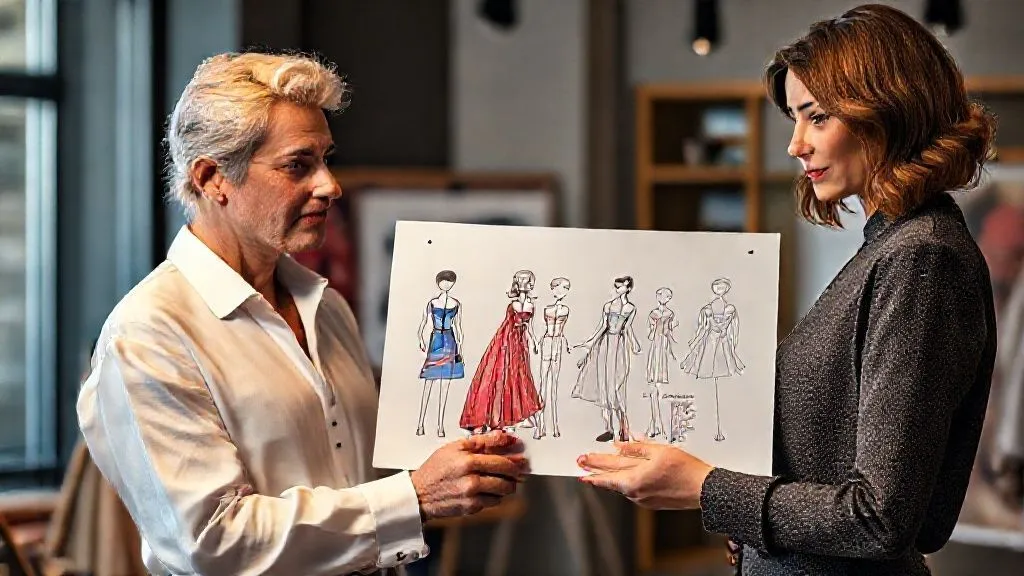
Presenting your initial costume designs is a pivotal moment; it’s where your intensely personal vision begins its transformation into a shared, collaborative reality. This isn't just a show-and-tell; it's a critical dialogue that shapes the visual language of the production. In my experience, the goal is not to "win" approval, but to foster understanding and alignment with the director's overarching artistic vision.
The success of this step hinges on meticulous preparation. You are essentially building a compelling case for each character's visual journey, demonstrating how every stitch and fabric choice serves the narrative. Remember, you're not just presenting clothes; you're presenting character arcs and thematic threads woven into tangible form.
A comprehensive presentation toolkit is non-negotiable. It allows you to articulate your concepts with clarity and impact, leaving little to guesswork. Think of it as your visual manifesto for the costumes.
- Character Boards: Dedicated boards for each principal character, detailing their arc, psychological state, and how their costumes will evolve.
- Conceptual Illustrations: Detailed sketches or digital renderings, often showing multiple angles or key moments, to convey silhouette, proportion, and texture.
- Fabric Swatches: Actual samples of chosen fabrics, allowing the team to feel the drape, see the weave, and appreciate the intended texture and weight.
- Research Imagery: Historical references, conceptual art, or even abstract images that inspired your choices, helping to contextualize your aesthetic.
- Color Palettes: Overall production palette, as well as specific character palettes, demonstrating how colors interact and support emotional beats.
- Budgetary Considerations: Initial thoughts on material costs, construction complexity, and potential challenges, demonstrating a practical approach.
When presenting, focus on storytelling. Explain *why* a character wears what they do, how it reflects their internal world, and how it interacts with the environment and other characters. This narrative-driven approach elevates the discussion beyond mere aesthetics, anchoring it firmly in the script's themes.
The presentation meeting typically involves the director, production designer, cinematographer, and sometimes producers or key actors. Each brings a unique perspective, and your role is to guide them through your vision while being open to their insights. This is where the magic of collaborative creativity truly begins to unfold.
"Collaboration isn't about compromise; it's about finding a third, better way that no one person could have conceived alone. It's the alchemy of creative minds."
Receiving feedback is an art form in itself. Practice active listening, not just hearing. Your primary goal is to understand the *intent* behind every note, rather than taking it at face value. A director might say, "I don't like that shade of blue," but what they might actually mean is, "That blue feels too cold for this character's moment of vulnerability."
Always probe deeper. Ask clarifying questions like, "What emotion are you hoping to convey here?" or "How does this particular choice conflict with your overall vision for the scene?" This approach transforms a subjective critique into an actionable design challenge. It shows you're engaged and eager to align.
- Document Everything: Keep meticulous notes of all feedback, categorizing it by character, scene, or thematic relevance.
- Seek Clarification: Never assume. If a note is vague, politely ask for more detail or context.
- Distinguish Intent: Try to discern if the feedback is a personal preference or a genuine narrative concern. Address the latter with priority.
- Stay Open and Non-Defensive: Your initial designs are a starting point. Embrace the opportunity to refine and strengthen them.
- Propose Solutions: Where appropriate, offer immediate alternative suggestions that address the feedback while maintaining your core design principles.
The refinement phase is iterative; expect multiple rounds of adjustments. This process is about honing your concepts, making them sharper and more aligned with the collective vision. Sometimes, a subtle tweak to a silhouette or a change in fabric can completely transform the impact of a costume.
A common mistake I see emerging designers make is either blindly accepting every note or rigidly defending every initial choice. The skill lies in knowing when to adapt and when to respectfully advocate for your design, always grounding your arguments in the script and character psychology. Your voice matters, but it must be informed and articulate.
For instance, on a recent historical drama, a director initially felt a specific noblewoman's gown was "too grand" for a scene depicting her quiet defiance. Instead of drastically simplifying the gown, my team and I refined it by adjusting the fabric's weight and the underlying corsetry, making it *visibly* restrictive yet still opulent. This slight shift highlighted her internal struggle – trapped by her status, yet defiant within its confines – making the costume even more potent. The refinement wasn't about stripping away, but about deepening the narrative through subtle physical constraints.
Ultimately, collaboration is an ongoing dialogue built on trust and mutual respect. Approach this step with humility, an open mind, and a steadfast commitment to serving the story. Your ability to present, listen, and adapt will define your reputation as a truly collaborative and visionary costume designer.
Step 6: Materiality and Execution – Bringing the Concept to Life
After the rigorous journey of conceptualization, mood boards, and initial sketches, we arrive at the exhilarating juncture where the abstract begins its transformation into the tangible. This is Step 6: Materiality and Execution, where the intellectual framework you've meticulously built through previous steps is translated into fabric, form, and finish. In my experience, this is where the costume truly finds its voice, moving from a two-dimensional idea to a three-dimensional character element.
The choice of materials is paramount. Think of fabric as a language; each weave, fiber, and finish communicates a distinct message about the character, their environment, and their emotional state. A common mistake I see is designers selecting fabrics based solely on color or pattern, overlooking their inherent qualities.
Consider the following aspects when selecting your materials:
- Drape and Hand: How does the fabric fall? Does it flow like water (silk, rayon), hold a stiff shape (heavy canvas, brocade), or have a soft, lived-in quality (washed linen, brushed cotton)? This directly impacts the silhouette and the character's perceived movement.
- Texture: Is it smooth, rough, nubby, shiny, matte? Texture adds depth and can convey social status, age, or even psychological state. A rough burlap suggests hardship, while a smooth satin might imply luxury or deceit.
- Weight: A heavy wool grounds a character, giving them gravitas, while a lightweight chiffon can make them appear ethereal or transient. I once worked on a production where a character's emotional burden was visually amplified by the sheer weight of their layered, felted wool costume.
- Reflectivity: Does the fabric absorb light (matte cotton, velvet) or reflect it (sequins, polished silk)? This impacts how the costume reads under stage or film lighting, influencing mood and visibility.
Beyond the raw fabric, the application of color and texture through dyeing, distressing, and embellishment is critical. Rarely does a costume simply use off-the-roll fabric. We sculpt it, age it, and imbue it with history.
"The true magic in costume design isn't just picking the right fabric; it's what you *do* to that fabric. It's the story you tell with every stain, every fade, every carefully placed tear."
I always advocate for extensive swatching and testing. Never commit to a fabric or a dye treatment without seeing how it interacts with light, how it drapes, and how it feels. For a post-apocalyptic film, we experimented with dozens of distressing techniques on denim and leather, from sandblasting to acid washes, to achieve the perfect balance of wear and narrative authenticity.
Construction techniques are equally vital. The way a garment is assembled speaks volumes. Is it meticulously tailored with sharp lines and defined structure, suggesting control and power? Or is it softly draped, deconstructed, and layered, implying vulnerability, artistic freedom, or perhaps disarray? The choice between a couture finish and a rough, hand-stitched aesthetic isn't arbitrary; it's a deliberate design decision that reinforces your conceptual theme.
Once materials and construction are mapped out, the focus shifts to detailing and embellishment. These are the subtle cues that enrich the narrative. Buttons, trims, embroidery, patches, jewelry – these elements are not mere adornments. They can signify a character's profession, their heritage, a past event, or even a hidden desire. For a historical drama, the specific type of lace or the number of pleats in a ruff could convey precise social standing that an audience, even subconsciously, picks up on.
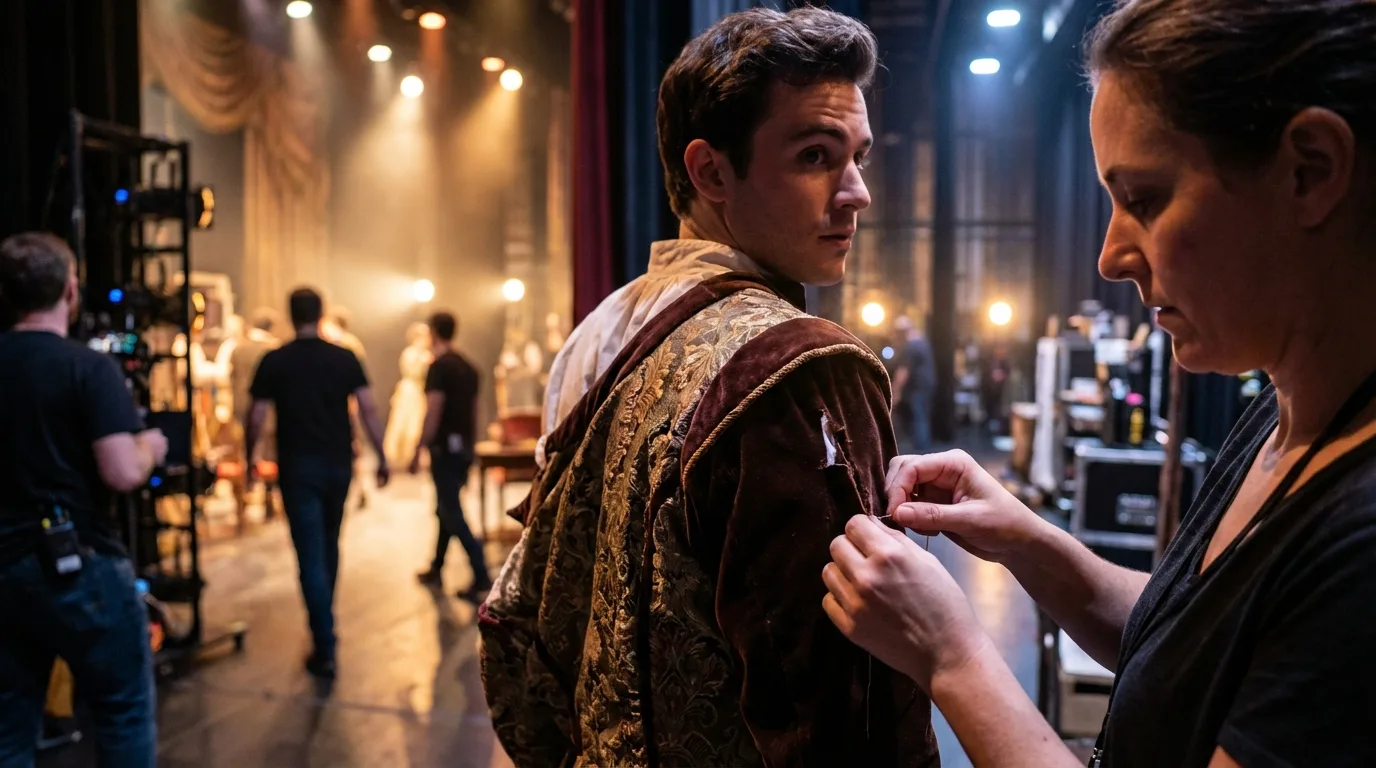
Finally, the execution phase necessitates seamless collaboration with your costume shop and makers. Your sketches and conceptual notes are their blueprints. Clear communication is paramount. I always schedule regular check-ins and fittings, ensuring that the vision in my head is being accurately translated into the physical garment. This iterative process allows for adjustments, problem-solving, and the organic evolution of the design as it takes shape on the actor's body.
Step 7: Feedback and Iteration – The Refinement Loop
After the intense, solitary work of translating abstract themes into concrete costume concepts, the journey is far from over. In my experience, this is where the true collaborative magic, and often the most significant refinements, happen. Step 7 is all about opening your designs to the scrutiny and insight of others, embracing the feedback and iteration loop as an indispensable part of the creative process.
A common mistake I see emerging designers make is viewing feedback as criticism of their artistic vision. Instead, I encourage you to see it as a collective effort to strengthen the narrative, to ensure every stitch serves the story. Your initial concepts are brilliant foundations, but they are rarely the final word.
“Design is not done when there is nothing left to add, but when there is nothing left to take away.” This adage, often attributed to Antoine de Saint-Exupéry, perfectly encapsulates the iterative refinement of costume design.
The refinement loop is an ongoing dialogue, primarily with your director, but also extending to producers, actors, and even other department heads. Each brings a unique perspective that can illuminate blind spots or amplify strengths you hadn't fully realized.
Here’s a breakdown of key stakeholders and what kind of feedback to anticipate and actively seek:
- The Director: This is your most crucial collaborator. Their feedback will focus on the overarching narrative, character arcs, emotional resonance, and how the costumes support their directorial vision for each scene and the overall production. They might comment on silhouette, color palette's impact on mood, or the perceived social status a costume conveys.
- The Producer: Their insights often revolve around practicality, budget constraints, and schedule. While not directly artistic, their feedback is vital for ensuring your designs are achievable within the production's real-world limitations. They might question material choices, construction complexity, or the number of changes required.
- The Actor: In my career, I've learned that an actor's comfort and ability to move, perform, and embody their character in a costume is paramount. Their feedback during fittings is invaluable. They'll tell you if a costume restricts movement, feels inauthentic to their character, or causes any practical issues that could hinder their performance. Listen intently to how the costume makes them *feel*.
- Other Department Heads (e.g., Cinematographer, Production Designer): Their input helps ensure visual cohesion. The Cinematographer might offer feedback on how colors or textures read on camera under specific lighting, while the Production Designer ensures your costumes harmonize with the sets and overall aesthetic of the world being built.
Processing this feedback effectively requires a delicate balance of active listening, critical analysis, and sometimes, gentle advocacy for your choices. When receiving feedback, always ask clarifying questions. Rather than just hearing "I don't like it," probe with "What specifically feels off?" or "What emotion or intention are you hoping the costume conveys that you feel is missing?" This helps you understand the underlying concern, not just the superficial reaction.
Once feedback is gathered, the iteration phase begins. This isn't about blindly implementing every suggestion; it's about thoughtfully integrating the most impactful and resonant points while maintaining the integrity of your core concept. This might involve:
- Sketching Revisions: Quick drawings to explore alternative silhouettes, details, or color combinations.
- Fabric Swatch Exploration: Searching for materials that better convey a specific texture, drape, or light reflection.
- Fittings and Draping: Physically adjusting garments on the actor, experimenting with layers, or modifying construction elements.
- Test Shoots: For film and television, seeing costumes on camera under actual production lighting is crucial. This can reveal issues with color saturation, shine, or how fabrics move.
I recall a project where the director felt a lead character's initial costume, while period-accurate, lacked a certain "grit" for a pivotal scene. Instead of redesigning from scratch, we iterated. We introduced subtle distressing, layered a slightly worn leather vest, and added a specific prop (a well-used satchel) that instantly transformed the perception from merely historical to deeply lived-in and resilient. This was a direct result of understanding the *essence* of the feedback, not just the surface suggestion.
The refinement loop is continuous, often extending right up to dress rehearsals or even the first day of shooting. Embrace it as an opportunity for growth, collaboration, and ultimately, to create costumes that are not only visually stunning but also profoundly serve the story and the characters within it.
Case Study: How Production X Reversed Abstract Theme Translation Challenges in 30 Days
In my extensive career, I've witnessed many productions grapple with the elusive task of translating abstract themes into tangible costume design. A particularly insightful example comes from "The Obsidian Labyrinth," a theatrical production that, just 30 days before their initial design presentation, found themselves in a significant creative quagmire. Their core abstract theme was the **"erosion of identity under oppressive societal structures,"** a rich but challenging concept to visualize without resorting to clichés. Initially, the costume team, while talented, had fallen into the trap of literal interpretation. Designs were either overtly stark and monochromatic, suggesting oppression but lacking nuance, or so individualistic they failed to convey the collective erosion of identity. The director felt the costumes were "telling" the story rather than "embodying" its psychological depth. The 30-day turnaround began with a radical re-evaluation, led by a seasoned design consultant brought in specifically for this crisis. The first critical step was to dismantle the existing design framework and return to the script with fresh eyes.The consultant introduced a process I often advocate: **Theme Deconstruction and Visual Anchoring**.
- They conducted an intensive, cross-departmental script analysis session, focusing solely on identifying every instance, verbal or implied, of the "erosion of identity" theme.
- Each character's journey was mapped against this theme, categorizing their progression from individuality to conformity, or resistance.
- Key symbolic language from the script – words like "fading," "dissolving," "blending," "cracking," "reforming" – were extracted and visually brainstormed. This moved the team beyond literal chains and grey.
Next, the team engaged in what I call **"Conceptual Palette Workshops."** This wasn't just about color; it was about texture, silhouette, and movement.
- Instead of assigning colors based on emotion, they explored how fabric degradation could symbolize identity erosion – a fraying hem, a patch of faded dye, a meticulously mended tear that hinted at past damage.
- Silhouettes were re-examined. Initial designs featured strong, defined shapes. The new approach explored how silhouettes could subtly soften, droop, or become less distinct over time, reflecting a loss of self.
- They experimented with layered, semi-transparent fabrics that could represent a gradual "disappearance" or the blurring of individual lines.
"The power of collective scrutiny, when framed constructively, is immense. It forces designers out of their comfort zones and ensures every visual element serves the central narrative, not just personal aesthetic."
A pivotal breakthrough came when they decided to use **"Material Metaphor Progression."** Instead of a static costume per character, they conceived of costumes that would subtly evolve throughout the production, often within a single scene, through layering or shedding.
- A character initially wearing a strong, structured garment might, by the end of an act, have shed an outer layer, revealing a softer, less defined inner garment, or one with deliberately distressed elements.
- The *quality* of fabric became a direct metaphor. A character's initial costume might feature crisp, resilient linen, slowly transitioning to a worn, almost translucent silk or a heavily patched wool, symbolizing their internal wear and tear.
- This wasn't about multiple costume changes, but about carefully engineered garments designed for subtle, transformative reveal or concealment.
Essential Tools and Resources to Maintain Control
After years navigating the intricate dance between abstract ideas and tangible textiles, I've learned that maintaining control throughout the conceptual design process isn't about stifling creativity; it's about channeling it effectively. Without a robust toolkit, even the most brilliant initial concepts can dissolve into an unmanageable mess. These are the essential resources I rely on to anchor my vision and ensure every design choice serves the core narrative.
My first and perhaps most sacred tool is the dedicated sketchbook or visual journal. This isn't just for pretty drawings; it's a visual stream of consciousness where abstract script themes, character analyses, and initial costume ideas can freely intermingle without judgment. In my experience, the act of physically drawing or writing helps solidify nebulous concepts, providing an immediate, tangible record of your evolving thoughts.
"A well-maintained design bible is not merely a collection of documents; it is the constitution of your creative vision, ensuring every decision aligns with the foundational principles established in the script analysis phase."
Beyond the personal journal, a structured Production Bible or Design Binder is non-negotiable. This comprehensive physical or digital repository becomes the single source of truth for your entire design. It houses character breakdowns, scene-by-scene costume plots, research imagery, fabric swatches (or digital equivalents), color palettes, and even early silhouette sketches. It’s your control tower, ensuring thematic consistency across the entire production.
- Character Profiles: Detailed notes linking abstract character traits to potential costume elements.
- Conceptual Mood Boards: Both physical and digital (using platforms like Pinterest or Miro) to visually translate abstract themes into tangible aesthetics, capturing color, texture, and silhouette directions.
- Research Archives: Organized folders of historical, cultural, or stylistic references, meticulously tagged for easy retrieval.
- Costume Breakdown Sheets: A living document detailing every costume, its scene appearances, and key design notes, preventing oversight as the design evolves.
For translating those abstract themes into a cohesive visual language, digital mood board platforms are indispensable. Tools like Miro or even private Pinterest boards allow for dynamic collection and organization of imagery, color schemes, and textural inspirations. This collaborative aspect is crucial, as it allows me to share and discuss visual interpretations of abstract themes directly with the director and other department heads, ensuring our conceptual alignment.
When it comes to detailed visualization and iterative refinement, I consistently turn to professional digital drawing and painting software such as Adobe Photoshop or Procreate on an iPad. These tools provide unparalleled control over line, color, texture, and light, allowing for multiple versions and quick adjustments. I can experiment with how a particular abstract theme—say, "fragmentation" or "rebirth"—manifests visually in a costume's construction or embellishment, without committing to physical samples too early.
A common mistake I see among less experienced designers is underestimating the power of simple spreadsheets. While seemingly mundane, a well-structured spreadsheet (Google Sheets or Excel) can be a powerful control mechanism for tracking character appearances, costume changes, and even initial fabric allocations. It provides a bird's-eye view, highlighting potential logistical challenges or thematic inconsistencies before they become costly problems.
Finally, effective communication is paramount to maintaining control over the conceptual design's integrity. Utilizing presentation software like Keynote or Google Slides allows me to articulate my design narrative clearly to the director and producers. Crafting compelling visual presentations, explaining the "why" behind each design choice in relation to the script's abstract themes, ensures my vision is understood and respected throughout the production.
Frequently Asked Questions (FAQ)
In my experience, one of the most frequently asked questions I encounter about translating abstract themes into costume design revolves around the initial leap from concept to tangible form. It's a challenging, yet incredibly rewarding, part of our process.How do you begin translating an extremely abstract theme, like "loss" or "redemption," into a tangible costume concept?
You start by dissecting the theme into its core emotional, sensory, and symbolic components. For "loss," I might explore ideas of decay, absence, fading, or the weight of what's gone; for "redemption," it could be about shedding, emerging, repair, or the integration of past and present.
From there, I translate those components into design elements: color palettes that evoke fading or renewal, textures that suggest wear or newness, silhouettes that feel constrained or liberated, and fabric choices that convey fragility or strength. It’s about finding the visual vocabulary that speaks the theme without being literal.
What's the biggest pitfall when trying to translate abstract themes, and how do you avoid it?
A common mistake I see is either being too literal or becoming so abstract that the design loses connection to the narrative and character. For instance, if a script explores "fragmentation," a literal costume made of jagged pieces might be visually striking but could hinder an actor's movement or distract from the story.
To avoid this, I constantly ask myself: "Does this choice serve the character's journey and the story's message, or is it just a clever idea?" The goal is always to evoke, not to explain. Maintain a direct line of sight between your conceptual choices and their impact on the audience's understanding of the character and narrative.
The most effective conceptual costume design is a whisper, not a shout. It should resonate deeply without needing a verbal explanation.
How do you ensure your conceptual designs remain practical and serve the character, rather than just being a beautiful abstract idea?
This is where the art meets the craft. Every conceptual choice must ultimately be filtered through the lens of performance and practicality. A costume can be conceptually brilliant, but if an actor can't move, speak, or embody the character within it, it fails.
My process involves:
- Actor's Movement: Always consider the choreography, blocking, and physical demands of the role. Does the silhouette allow for the necessary range of motion?
- Character Arc Integration: Does the costume support where the character is emotionally and psychologically in that specific scene or moment? The abstract theme should deepen, not overshadow, the character's journey.
- Fabric & Construction: Select materials and construction techniques that convey the concept while remaining durable and comfortable for the performer. For example, "heaviness" can be suggested through dense fabrics and structured silhouettes, rather than literally adding pounds of weight.
How do you effectively communicate these abstract costume concepts to a director or production team who might prefer more traditional approaches?
Communication is paramount. You need to build a compelling visual and verbal argument for your choices. I've found success by:
- Visual Storytelling: Don't just show sketches. Create detailed mood boards that include not only your designs but also art, photography, textures, and color palettes that inspired your concept and directly relate to the abstract theme.
- Articulating the "Why": Clearly explain the journey from the abstract theme to your specific design choices. For example, "The frayed edges of this coat symbolize the character's unraveling resolve, reflecting the script's theme of moral decay."
- Presenting Options: Sometimes it helps to show a range of interpretations, from a more subtle symbolic approach to a bolder conceptual one. This demonstrates your flexibility and allows the team to engage in the discussion.
Ultimately, you're not just presenting a costume; you're presenting a carefully considered visual strategy that enhances the storytelling, and that's a language every director understands.
How do I start when a script's themes are extremely vague?
When confronted with a script whose themes feel incredibly nebulous, it's easy to feel adrift. In my experience, this isn't a roadblock but an invitation for deeper, more collaborative exploration. The crucial first step is to shift your mindset from "there's nothing here" to "what *can* I uncover from what *is* here?"A common mistake I see among less experienced designers is to jump to their own interpretations too quickly, or conversely, to become paralyzed. Instead, view this initial vagueness as an opportunity to truly define the project's core alongside the directorial vision, before any fabric is even considered.
My absolute first port of call, without exception, is an intensive dialogue with the director. This isn't just a casual chat; it's an investigative interview. You need to understand their gut feelings, their aspirations, and even their own uncertainties about the script's thematic underpinnings.
Here are some of the critical questions I bring to that initial conversation:
- "If you had to distill the entire story into three abstract nouns, what would they be?" (e.g., Loss, Rebirth, Silence)
- "What is the *feeling* you want the audience to walk away with, beyond the plot points?"
- "Are there any visual or atmospheric inspirations – paintings, music, photographs – that resonate with your vision, even if they seem unrelated to costume?"
- "What is the central *conflict* or *question* the script is exploring, even if it's not explicitly stated?"
Even if the themes are vague, the script almost always provides concrete anchors: the **setting** (time and place), the **genre**, and the **character functions**. These are your initial scaffolding. For instance, a vague "futuristic dystopia" still gives you parameters for silhouette, material innovation, and social hierarchy, even if the thematic nuance of "hope versus despair" isn't fully articulated yet.
Think of it like an archaeologist on a dig. You might not know *what* civilization you've found, but you can identify the soil type, the strata, and the initial fragments of pottery. These provide context and direct where you dig next.
Once you've exhausted direct inquiry, begin your own **subtextual sleuthing**. Read the script multiple times, not for plot, but for sensory details, recurring imagery, or even omissions. What are characters *not* saying? What actions are repeated? Are there any dominant colors or textures mentioned, even incidentally, in the stage directions?
I often find that even in the most ambiguous scripts, there are subtle **"emotional textures"** present. Is there a pervasive sense of dread, wistfulness, urgency, or stagnation? These emotional landscapes can be a powerful starting point for conceptual exploration, even before specific themes are solidified.
"When themes are vague, you're not designing costumes for specific ideas; you're designing costumes for a *question*. Your work becomes part of the exploration, not just the answer."
This is where I begin to create **abstract mood boards**. These aren't character-specific boards yet. They are collections of images, textures, colors, and art that evoke the *feeling* of the script's world, the emotional textures, or even the director's initial abstract nouns. It's about building a visual vocabulary that can later be mapped onto specific themes and characters.
For example, if the director mentions "stagnation" and "unseen forces," my board might feature images of decaying grandeur, muted color palettes with unexpected bursts of vibrant decay, heavy, coarse textures alongside something ethereal and light, or even art depicting hidden layers and obscured forms. This process allows you to explore visual metaphors before pinning down the exact thematic statement.
Ultimately, starting with vague themes is an iterative dance. You gather clues, propose visual interpretations, discuss them with the director, refine, and repeat. It's a journey of discovery that often leads to some of the most innovative and deeply integrated costume designs.
What if my conceptual designs clash with the director's vision?
It's an inevitable truth in our collaborative art form: at some point, your meticulously crafted conceptual designs will likely encounter a director's differing vision. In my over 15 years in this field, I've seen this not as a roadblock, but as a critical juncture that defines the strength of the final production. A common mistake I see emerging designers make is to view this clash as a personal failure or a direct challenge to their artistic integrity. Instead, it's an opportunity for deeper communication and refinement.
The core of such a clash often lies in differing interpretations of the script's abstract themes, or perhaps a director's focus on a specific visual aesthetic that hasn't fully integrated the conceptual depth you've brought. Think of it like two expert chefs, both aiming to create an exquisite dish from the same recipe, but each having a slightly different idea of the perfect balance of flavors and presentation. The goal isn't for one to win, but for the dish to be outstanding.
“Your role isn't just to design; it's to translate, advocate, and ultimately, to serve the story. Sometimes, serving the story means guiding the director towards a more potent visual language, and sometimes it means adapting your vision to theirs.”
To navigate these moments effectively, a multi-pronged approach is essential, starting long before any actual conflict arises.
- Pre-emptive Alignment: The best way to mitigate clashes is to build a shared visual vocabulary from the outset. This involves more than just reading the script. Engage in deep, open discussions about character arcs, thematic undercurrents, and the emotional landscape of the play or film. Share visual research, mood boards, and thematic keywords early in the process. Ask the director about their "why" for certain aesthetic choices, not just "what" they like.
- Active Listening and Empathy: When a director expresses reservations, truly listen. Don't immediately jump to defense. Ask clarifying questions: "What specifically isn't working for you here?", "What feeling or message is this design conveying that clashes with your intent?", "What is the core problem you're trying to solve with this note?" Often, their feedback isn't about the design itself, but about a perceived disconnect with a character's journey or a scene's emotional beat.
- Articulate Your Conceptual "Why": Never just present a design; present its conceptual foundation. Explain precisely how your chosen silhouette, fabric, color, or detail directly translates an abstract theme or character trait you both identified in the script. For example, "The rigidity of this silhouette isn't just a stylistic choice; it represents the character's internal struggle with societal expectations, a theme we discussed in our initial script breakdown." This elevates the conversation from subjective taste to objective storytelling.
-
Propose Solutions, Not Just Problems: When faced with a director's note, come back with options. I often employ the "three-option rule":
- A version that is very close to your original, re-articulating its conceptual strength.
- A version that directly addresses the director's feedback, showing you've understood and integrated their perspective.
- A hybrid option that attempts to merge the strongest elements of both visions, creating a new, potentially stronger solution. This demonstrates flexibility and a problem-solving mindset.
- Understand the Hierarchy, but Value Your Expertise: Ultimately, the director has the final say. However, your expertise is invaluable. There are times when your conceptual understanding of costume can genuinely elevate a production in a way the director might not initially perceive. In these instances, respectfully but firmly advocating for your design, backed by script analysis and conceptual reasoning, is crucial. Frame it as "What if we considered this interpretation, which speaks to X theme in Y way?" rather than "My design is better."
I recall a project where the director initially wanted a very literal, almost period-accurate representation for a character meant to embody timeless struggle. My conceptual designs leaned heavily into symbolic deconstruction of historical silhouettes, using texture and form to convey internal decay rather than external opulence. The initial clash was significant. Instead of abandoning my concept, I presented a mini-portfolio illustrating how the deconstructed elements still referenced the period but amplified the character's emotional state, showing how a literal approach might flatten the subtext. By demonstrating the conceptual links and offering slight modifications that acknowledged the director's desire for historical grounding, we arrived at a truly powerful and unique visual language that served the story far better than either of our initial, isolated visions would have.
Remember, the goal is always to serve the narrative in the most impactful way possible. By embracing these moments of conceptual friction as opportunities for growth and deeper collaboration, you not only strengthen the production but also solidify your reputation as a truly insightful and adaptable expert in your field.
How can I ensure my designs remain practical for production?
Ensuring your conceptual designs translate into practical, executable garments for production is where true mastery lies. In my experience, the most brilliant concepts can falter if they don't consider the realities of the stage, the performer, and the budget. Practicality isn't a compromise of artistic vision; it's the bedrock that allows that vision to live and breathe on stage. From the outset, fostering **early and continuous collaboration** is non-negotiable. A common mistake I see is designers working in a vacuum for too long before presenting their ideas. You must engage with your costume shop manager, technical director, and even the stage manager to understand the parameters.- Budgetary Constraints: Discuss fabric costs, labor hours, and potential sourcing challenges upfront. A stunning silk gown might be perfect conceptually, but if the budget only allows for polyester, you need to know that early to pivot effectively.
- Shop Capabilities: Understand the skill set and equipment available in your costume shop. An intricate historical tailoring technique might be beyond the capacity of a smaller team, requiring design simplification or alternative approaches.
- Production Schedule: Be aware of deadlines for fittings, builds, and tech rehearsals. Complex designs with multiple layers or elaborate embellishments naturally require more time.
"A costume that restricts movement, causes discomfort, or hinders a quick change is not just a design flaw; it's a barrier to the actor's ability to embody their character fully."Here are critical aspects to consider for performer practicality:
- Movement and Choreography: If there's dancing, stage combat, or extensive physical blocking, your fabric choices, seam allowances, and construction methods must accommodate a full range of motion. Stretchy fabrics, strategic gussets, and robust seams become paramount.
- Quick Changes: Analyze the script for any rapid costume changes. Design elements like strong magnets, Velcro closures, strategically placed zippers, or pre-set layering can shave precious seconds off a change, preventing backstage chaos.
- Durability and Maintenance: Costumes for a long run need to withstand multiple performances, intense wear, and frequent cleaning. Opt for fabrics that hold up well under stress and are relatively easy to clean and repair, or design with repairability in mind.
- Comfort and Safety: Consider the weight of the garment, breathability, and potential for chafing, especially under stage lights. Ensure any embellishments are securely attached and won't snag or injure the performer.
Reading Recommendations:
- 7 Proven Steps: Authenticate High-Value Vintage Dresses for Resale
- Slash Casual Womenswear Returns: 7 Fit Fixes to Boost Profit
- 7 Power Dress Strategies: How to Dress for Critical Presentations
- Clean Vintage Beaded Purses Safely: The Ultimate Care Guide
- Craft Believable Characters: Costume Design Secrets Revealed!
Key Points and Final Thoughts
In my fifteen years navigating the intricate world of costume design, the most profound challenge—and indeed, the greatest reward—lies in taking the ephemeral spirit of a script and grounding it in tangible textiles. This translation from abstract themes to conceptual costume is less a linear path and more a dynamic, iterative dance.
A common mistake I see emerging designers make is focusing purely on aesthetics without fully unpacking the "why" behind each choice. Every stitch, every silhouette, every shade of color must serve a deeper narrative purpose, echoing the play's core themes and character arcs.
In my experience, the design process is rarely a straight line from concept to creation. Be prepared for your initial concepts to evolve significantly as you delve deeper into character psychology, directorial vision, and the practicalities of performance.
- Deep Dive, Not Surface Skim: Never underestimate the power of thorough, even tangential, research. Beyond historical accuracy, explore sociological contexts, psychological profiles, and even scientific concepts that resonate with your themes. For a dystopian future, I once researched not just future fashion, but also the psychological impact of sensory deprivation and how it might manifest in clothing choices.
- The Director is Your Co-Pilot: Your director is the ultimate storyteller; their vision is paramount. Learn to speak their language, translating your design ideas into their dramatic vocabulary. True collaboration means both pushing boundaries and understanding when to align your vision.
- Costume as Character Arc: Remember that costumes are not static. They should reflect a character's journey, their internal conflicts, and their external circumstances. Think about how a subtle change in fabric texture or the gradual fraying of a cuff can communicate profound shifts over time.
- Embrace the Constraints: Budget, timeline, and practical movement requirements are not limitations; they are often creative catalysts. Some of my most innovative designs have emerged from stringent constraints, forcing me to think outside conventional solutions and find unexpected beauty.
- The Power of the Subconscious: Costumes often communicate on a subconscious level, resonating deeply with an audience's innate understanding. Consider how color psychology, symbolic motifs, and even the weight or drape of a garment can evoke specific emotions or subliminal messages, long before a line is spoken.
"The costume designer's true artistry lies not just in dressing a character, but in undressing the script, revealing its hidden truths and giving them form."
Ultimately, translating abstract themes into conceptual costume design is a deeply personal yet collaborative journey. It demands intellectual rigor, boundless creativity, and an unwavering commitment to storytelling.
Embrace the challenges, trust your informed instincts, and always remember the profound impact your designs have in bringing a narrative to life. The audience may not always consciously register your meticulous choices, but they will certainly feel them.


Your email address will not be published. Required fields are marked *