

How to Reliably Authenticate High-Value Vintage Dresses for Resale?
For over two decades in the vintage fashion market, I've witnessed the exhilarating highs of discovering a hidden gem and the devastating lows of encountering a sophisticated counterfeit. The stakes have never been higher, especially when dealing with high-value vintage dresses. A single misidentified piece can cost you not just money, but your reputation, which, in our niche, is priceless.
The problem is rampant: an increasing influx of convincing fakes, reproductions, and mislabeled items designed to deceive even the most discerning eye. Without a robust, systematic approach to authentication, resellers are vulnerable. Buyers demand trust, and delivering it requires a level of scrutiny that goes far beyond a quick glance at a label.
This guide is born from years of hands-on experience, countless hours of research, and a deep understanding of historical fashion. I will equip you with a definitive, multi-layered framework for how to reliably authenticate high-value vintage dresses for resale. We’ll delve into the tangible and intangible markers of authenticity, providing actionable steps, real-world insights, and the critical knowledge you need to protect your investments and build unwavering buyer confidence.
The Indispensable Foundation: Research & Provenance
Before you even touch a garment, the authentication process begins with meticulous research. This foundational step is often overlooked in the rush to acquire, but it's where countless red flags, or green lights, emerge. In my experience, neglecting this stage is like building a house without a blueprint; it’s destined for structural issues.
Deep Dive into Designer Signatures and Eras
Every major designer, and indeed, every fashion era, has a distinct signature. This isn't just about their aesthetic, but their construction methods, preferred fabrics, and even the subtle evolution of their labels. For instance, a Christian Dior dress from the 1950s will have vastly different construction details and internal finishing than one from the 1980s. Understanding these nuances is paramount.
Actionable Steps:
- Immerse Yourself in Archival Resources: Consult museum collections, fashion history books, and academic papers. Institutions like the Metropolitan Museum of Art's Costume Institute or the Victoria and Albert Museum offer extensive digital archives of authentic garments.
- Study Designer Biographies & Brand Histories: Learn about the designer's training, their ateliers, and the periods during which specific lines or techniques were employed. When did they use particular types of zippers? Did they ever outsource production?
- Analyze Auction Records and Reputable Dealer Listings: Observe how authentic pieces are described, photographed, and priced. Pay attention to the details highlighted by experts.
Unearthing Provenance: The Dress's Story
Provenance, the documented history of ownership, is the gold standard for authentication, especially for truly high-value pieces. While not always available, when it is, it provides irrefutable evidence of a garment's authenticity and often its historical significance. I've seen dresses that were otherwise unremarkable become treasures simply due to their documented lineage.
“Provenance is the silent witness to a garment's journey through time, often revealing more about its true identity than any label ever could.”
Even if a full provenance chain isn't available, any hint of its past can be valuable. Was it owned by a known socialite? Was it part of a specific collection? These details, while not authentication in themselves, add layers of credibility and desirability.
The Fabric of Truth: Material Analysis
The very fibers of a vintage dress tell a story. Textiles evolve, and understanding the materials prevalent in different eras is a critical authentication tool. A dress purporting to be from the 1940s made of stretch polyester is an immediate red flag, as that fabric simply didn't exist in that form then.
Identifying Natural vs. Synthetic Fibers Over Time
Early synthetics like rayon (viscose) emerged in the early 20th century, followed by nylon in the late 1930s, and polyester in the 1950s. Their characteristics, drape, and feel are distinct. Natural fibers like silk, wool, cotton, and linen also have specific qualities that vary with processing techniques of the era. For example, pre-mid-century rayon often has a heavier, more fluid drape than later iterations.
- Silk: Genuine silk has a distinctive soft hand, a subtle sheen, and often a slight slub or irregularity. It also feels warm to the touch.
- Wool: Vintage wools can range from fine crepe to heavy tweed. Look for natural lanolin feel and a strong, resilient fiber.
- Cotton/Linen: These natural fibers can show age through subtle fading, softening, and a less uniform weave than modern counterparts.
According to textile historian Dr. Sarah Fee, author of 'Textile Production in North Africa,' the subtle shifts in fiber production and processing are often the most reliable, albeit minute, indicators of a garment's true age and origin. Modern synthetic fabrics, while mimicking natural fibers, often lack the nuanced imperfections and specific feel of their vintage predecessors.
Patina, Wear, and Age-Appropriate Deterioration
True vintage items will exhibit a certain 'patina' – a gentle softening, subtle fading, or minor imperfections that come with age and wear. This isn't damage, but evidence of a life lived. Be wary of items that appear 'too perfect' unless they are deadstock (never worn, stored perfectly). Conversely, excessive or inconsistent wear can indicate a heavily used reproduction or a poorly cared-for item.
Look for: even fading, slight softening of seams, minor stress at typical wear points (armpits, cuffs), and age-appropriate discoloration on linings or inner facings.
Stitch by Stitch: Construction & Craftsmanship
This is where the true detective work begins. Vintage couture and high-end ready-to-wear often boast construction techniques rarely seen in modern mass production. The way a garment is assembled can be a more reliable indicator of its authenticity and era than any label.
Hand-Finishing vs. Machine-Made Indicators
Prior to the widespread adoption of industrial sewing machines and later, sergers, much of garment construction involved significant hand-finishing. True couture pieces, even into the late 20th century, exhibit exquisite hand-sewn details.
- Hand-sewn Hems: Look for tiny, almost invisible stitches that are slightly uneven.
- Hand-picked Zippers: Stitches are visible but tiny and precise, attaching the zipper tape to the fabric.
- Bound Buttonholes: Often found on higher-end garments, these are meticulously crafted.
- French Seams: Common in fine vintage garments, especially those without linings, where raw edges are fully enclosed.
- Pinking Shears: Before sergers became common, pinking shears were often used to finish raw edges to prevent fraying.
Seams, Hems, and Zipper Evolution
The type of zipper used (metal vs. plastic, brand, pull tab style), seam finishes (pinking, French seams, serging), and hem styles (hand-rolled, machine-stitched, width) all provide vital clues. For example, invisible zippers became popular much later in the 20th century. Early plastic zippers often feel brittle compared to modern ones.
Case Study: The Mystery of the 'Chanel' Little Black Dress
I once had a client bring in a seemingly pristine 'Chanel' little black dress, supposedly from the early 1960s, that she'd acquired at an estate sale for a significant sum. The label looked convincing, and the fabric felt right. However, upon closer inspection of the interior, I noticed a machine-stitched zigzag finish on the seam allowances. While some designers experimented, genuine Chanel couture from that era was known for its impeccable hand-finished silk lining and weighted chain hem. Furthermore, the zipper was a modern nylon invisible zipper, a technology not widely adopted for high-end garments until decades later. My construction analysis revealed it was a high-quality reproduction, likely from the 1980s, not a true vintage Chanel. This insight saved my client from a potentially devastating financial loss and preserved her reputation as a reseller.
Labels, Tags, and Hidden Markers: Decoding Authenticity
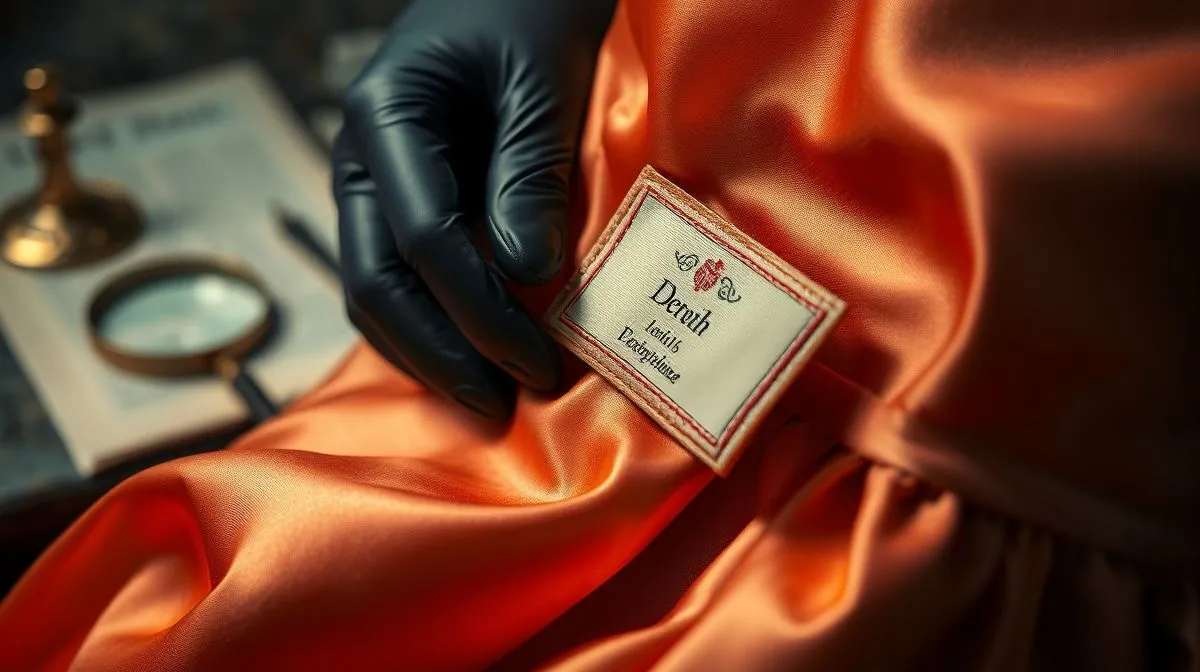
While often the first thing people look for, labels can be surprisingly misleading. Fakes often mimic labels perfectly. However, authentic vintage labels have their own set of characteristics that, when understood, can be invaluable.
The Anatomy of a Vintage Label
Vintage labels offer a wealth of information beyond the brand name. Examine:
- Material: Is it woven, printed, embroidered? What type of fabric is the label itself?
- Font and Typography: Are the fonts period-appropriate? Do they match known examples of the designer's labels from that era?
- Stitching: How is the label attached? Is it machine-stitched or hand-tacked? The number of stitches, their regularity, and color can be telling.
- Placement: Where is the label typically placed for that designer and era (e.g., center back neck, side seam, waistband)?
- Evolution: Labels often change over a brand's history. Knowing these changes (e.g., 'Christian Dior New York' vs. 'Dior') helps pinpoint the precise era. The Vintage Fashion Guild's Label Resource is an indispensable tool for this research.
Union Labels, Care Tags, and Hidden Markings
Beyond the main designer label, secondary labels can be powerful authenticators:
- Union Labels: In the U.S., the International Ladies' Garment Workers' Union (ILGWU) labels, with their changing designs and codes, can precisely date a garment.
- Care Tags: Early care instructions were often printed directly on the main label or a very small fabric tag. Dedicated, multi-symbol care tags became common later.
- Size Tags: Vintage sizing differs significantly from modern sizing. Be wary of modern size indicators on ostensibly very old pieces.
- RN Numbers: (Registered Identification Numbers) on U.S. garments, starting in the 1950s, can trace the manufacturer.
- Hidden Markers: Some designers used discreet internal numbering, special lining fabrics, or unique hang tags.
Silhouette, Style, and Period Accuracy
Fashion is cyclical, but true vintage pieces possess a distinct silhouette and design language unique to their era. Anachronisms are often glaring indicators of a fake or mislabeled item.
Matching Design to Era: Avoiding Anachronisms
A deep understanding of fashion history allows you to instantly recognize if a garment's cut, details, and overall aesthetic align with its purported age. For example, the nipped-waist, full-skirted 'New Look' of the late 1940s/early 1950s is distinctly different from the shift dresses of the 1960s or the power shoulders of the 1980s.
“Fashion history isn't just about dates; it's about the feeling, the movement, the very spirit of an era embodied in fabric and form.”
Pay attention to:
- Waistlines: Empire, natural, dropped, no waist.
- Skirt Silhouettes: A-line, pencil, full circle, bias cut.
- Sleeve Styles: Puff, bell, dolman, leg-of-mutton.
- Necklines: Scoop, boat, keyhole, portrait.
The Devil in the Details: Buttons, Trims, and Embellishments
Hardware and embellishments are often tell-tale signs. Vintage buttons, buckles, zippers, and trims have unique characteristics that are hard to replicate perfectly. Look for:
- Buttons: Often made of natural materials like shell, bone, wood, or early plastics like Bakelite. Modern plastic buttons often feel lighter and cheaper.
- Beading/Sequins: Hand-sewn beads, specific types of glass beads, and early plastic sequins have a different weight, sheen, and attachment method than their modern counterparts.
- Lace/Embroidery: The quality, pattern, and technique of lace or embroidery can be highly indicative of an era and craftsmanship level.
The 'Sniff Test' and Beyond: Sensory & Intuitive Cues
This is where your accumulated experience truly shines. Beyond the tangible, there are sensory and intuitive cues that seasoned authenticators learn to recognize. It’s not about magic, but about pattern recognition built over years of handling countless authentic and inauthentic pieces.
Odor, Feel, and Drape as Indicators
- Odor: Genuine vintage often has a faint, distinct 'old' smell – not musty or mildewy, but reminiscent of aged fabric. A strong chemical smell, or no smell at all on an old garment, can be suspicious.
- Feel (Hand): How does the fabric feel against your skin? Does it have the weight, softness, or crispness appropriate for its purported age and fiber content? Modern fabrics often have a different 'hand' due to chemical treatments or blend compositions.
- Drape: How does the fabric hang and flow? Vintage silks, wools, and rayons often have a superior drape compared to modern equivalents, particularly those produced before advancements in stretch fibers.
Trusting Your Gut (Backed by Knowledge)
Your intuition, honed by countless hours of handling authentic pieces, becomes a powerful tool. If something 'feels off' – the weight, the way it folds, a subtle inconsistency in the stitching – it warrants deeper investigation. This isn't a substitute for methodical authentication, but a vital first alarm. As renowned art authenticator Thomas Hoving once said, "The first rule of authentication is: If it looks wrong, it is wrong." This applies equally to vintage fashion, provided your 'looks wrong' is informed by deep expertise.
Leveraging Technology and Expert Networks
While much of authentication relies on traditional methods, modern tools and collaborative networks can significantly enhance your accuracy and confidence.
UV Light, Microscopes, and Digital Databases
- UV Light: Can reveal repairs, fabric inconsistencies, or the presence of optical brighteners (common in modern fabrics but rare in older ones).
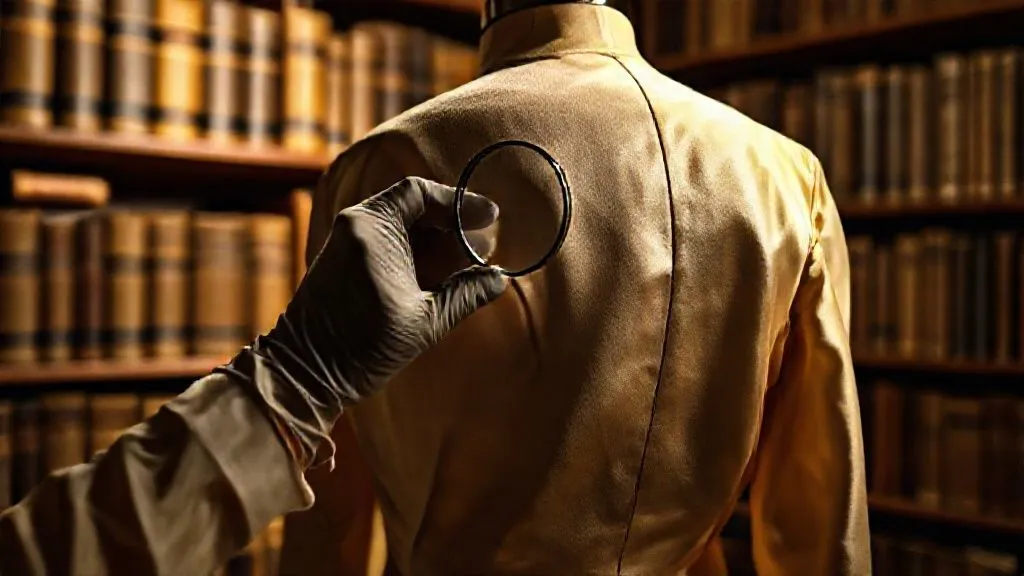
- Microscopes/Loupes: A jeweler's loupe or a small microscope can help examine fiber structure, stitching consistency, and minute details on labels or trims.
- Digital Databases: Online archives, forums, and specialized databases of vintage labels and construction techniques are invaluable resources for cross-referencing.
The Power of Peer Consultation and Professional Appraisals
No one knows everything. Building a network of trusted vintage dealers, collectors, and textile conservators is crucial. When in doubt, a second, expert opinion can be invaluable. For exceptionally high-value or historically significant pieces, consider a professional appraisal from a certified vintage fashion appraiser. Organizations like the Appraisers Association of America or the American Society of Appraisers have members specializing in costume and textiles.
As Forbes magazine often emphasizes in articles on luxury goods, professional authentication is not merely a cost, but an investment in credibility and risk mitigation. For high-value items, the peace of mind and protection against fraud far outweigh the appraisal fee.
Protecting Your Investment: Documentation and Presentation
The final stage of reliable authentication isn't just about identifying a genuine piece; it's about preserving its integrity and presenting it ethically to the market. This builds long-term trust and enhances resale value.
Creating an Authentication Dossier
For every high-value vintage dress you authenticate, create a comprehensive dossier. This should include:
- Detailed photographs of all authentication points (labels, seams, fabric close-ups, unique details).
- Notes from your research and analysis.
- Any provenance documentation (receipts, letters, historical photos).
- Copies of appraisal certificates, if applicable.
This dossier serves as verifiable proof for prospective buyers, demonstrating your rigor and transparency. It's a powerful sales tool and a safeguard against future disputes.
Ethical Resale Practices
Transparency is the cornerstone of ethical resale. Always disclose everything you know about a garment, including any minor imperfections, repairs, or if provenance is incomplete. Buyers appreciate honesty. Providing a clear, detailed description of your authentication process, backed by your dossier, will elevate your standing in the vintage community and attract serious, discerning buyers. This is how to reliably authenticate high-value vintage dresses for resale and thrive in this competitive market.
Frequently Asked Questions (FAQ)
Question: Can a dress be too perfect to be vintage? Absolutely. If a garment purporting to be decades old shows absolutely no signs of age, wear, or even the subtle patina of time, it should raise a significant red flag. While 'deadstock' (unworn old stock) exists, it's rare for high-value designer pieces to remain in pristine, never-touched condition without some slight softening of fabric or very minor storage marks. Extreme perfection often indicates a modern reproduction or a heavily restored piece that might not have original integrity.
Question: How do I handle missing labels or damaged tags? Missing or damaged labels make authentication significantly harder but not impossible. In such cases, you must rely heavily on construction analysis, fabric identification, silhouette, and hardware. You’ll need to compare every detail meticulously against known authentic examples from specific designers and eras. It's often safer to price such pieces based on their intrinsic quality and design, rather than attributing them to a specific high-value designer, unless you have overwhelming corroborating evidence.
Question: What if I find inconsistencies during authentication? Inconsistencies are your biggest warning signs. If the label points to one era but the zipper or seam finish points to another, or the fabric content doesn't align with the purported age, you likely have a problem. It could be a reproduction, a heavily altered piece, or a misattributed item. When faced with inconsistencies, it's always best to err on the side of caution. Do not present it as fully authentic if doubts remain.
Question: Should I always get a professional appraisal for every high-value vintage dress? Not necessarily for every single piece, but for items that are truly high-value (e.g., above a certain monetary threshold you set, or historically significant pieces), or when you have strong doubts that you cannot resolve yourself, a professional appraisal is a wise investment. It adds an impartial layer of expertise and provides official documentation that protects both you and your buyer. For most pieces, a thorough self-authentication process informed by the methods discussed here will suffice.
Question: Are there specific eras that are harder to authenticate than others? Generally, pieces from the early to mid-20th century (e.g., 1900s-1950s) can be challenging due to less standardized labeling, lack of extensive digitized records for many lesser-known designers, and the prevalence of custom-made garments. However, the rise of sophisticated reproductions in the late 20th and 21st centuries also makes identifying fakes from the 1960s-1990s particularly tricky, as manufacturing techniques became more accessible. Each era presents its own unique set of authentication challenges.
Recommended Reading
- Unraveling the Truth: Is Organic Cotton Truly Sustainable for Fashion?
- 5 Steps to Guarantee Quality in Outsourced Fashion Photo Retouching
- Apple Picking Perfection: Best Fall Accessories for Your Outfit
- The Ultimate Guide: How to Remove Pen Ink from Your Designer Handbag Safely
- The Ultimate Guide: Repairing Small Tears in Cashmere Gloves Yourself
Key Takeaways and Final Thoughts
Authenticating high-value vintage dresses for resale is a complex, multi-faceted skill that blends historical knowledge, meticulous observation, and a keen intuitive sense. It’s a craft refined over years, demanding patience and a commitment to integrity.
- Research is Non-Negotiable: Build your knowledge of fashion history, designer signatures, and textile evolution.
- Examine Every Detail: From fabric hand to stitch count, every element tells a story.
- Trust Your Senses: The look, feel, and even smell of a garment offer crucial clues.
- Leverage Your Network: Don't hesitate to consult peers or seek professional appraisals for critical pieces.
- Document Everything: Your authentication dossier is your proof and your promise to buyers.
By mastering these principles, you not only protect yourself from costly mistakes but also elevate your status as a trustworthy, knowledgeable vintage fashion expert. The vintage market thrives on authenticity, and your commitment to this rigor will be your most valuable asset. Go forth, authenticate with confidence, and continue to bring these beautiful pieces of history back to life responsibly.

Your email address will not be published. Required fields are marked *