

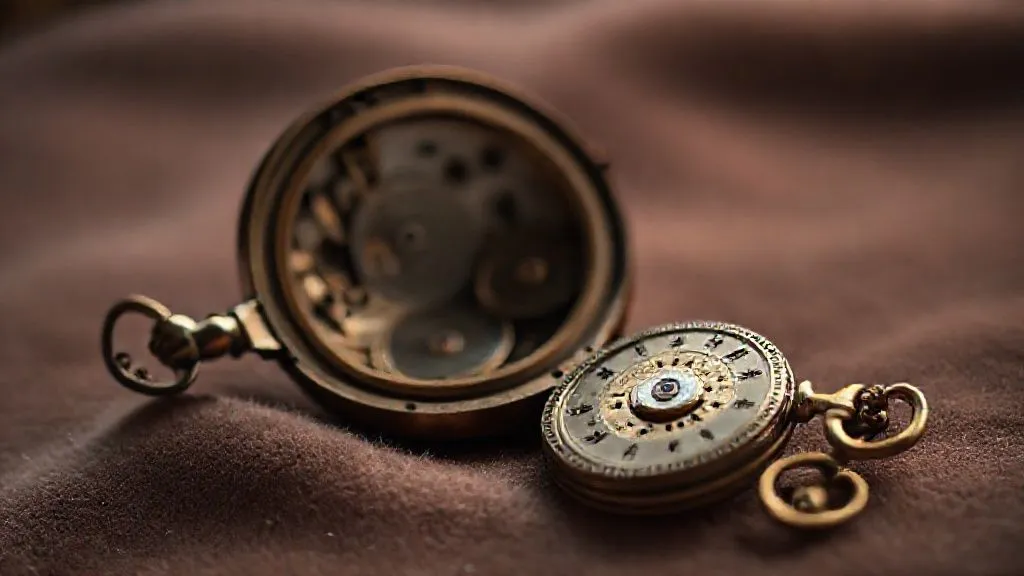
What to do when vintage jewelry parts are irreplaceable?
For over two decades in the intricate world of jewelry design and restoration, I've encountered countless breathtaking vintage pieces – each with a story, each a whisper from the past. Yet, there's a particular kind of heartbreak that resonates deeply with both collectors and artisans: the moment we realize a crucial part of a beloved vintage jewel is, quite simply, irreplaceable.
This isn't just about a missing clasp or a chipped stone; it's about the unique, often hand-fabricated components that define a piece's era, style, and soul. Modern mass production simply doesn't yield the same intricate filigree, hand-cut facets, or proprietary mechanisms found in heirlooms from the Art Deco, Victorian, or Edwardian periods. The emotional weight of these pieces, often passed down through generations, amplifies the challenge, making the search for a solution more than just a repair – it's a quest to preserve history and sentiment.
But despair not. In this definitive guide, I will share the strategies, insights, and creative approaches I've honed over my career to address this very dilemma. You'll learn not just what to do when vintage jewelry parts are irreplaceable, but how to approach these challenges with a blend of reverence, ingenuity, and expert craftsmanship, ensuring your treasured pieces continue their journey through time.
Understanding the "Irreplaceable" Challenge in Vintage Jewelry
Before we dive into solutions, it's crucial to grasp the true nature of what makes a vintage jewelry part 'irreplaceable.' It's rarely about a simple shortage; it's about a confluence of historical, material, and artisanal factors that defy easy modern substitution.
The Nature of Vintage Components
Vintage jewelry components are often characterized by their unique manufacturing processes. Many were hand-fabricated, requiring specialized tools and techniques that are no longer common. Think of the delicate hand-engraving, the intricate milgrain work, or the specific alloys used in different eras. These aren't just parts; they are expressions of their time, imbued with the craftsmanship of forgotten masters.
Why Modern Replacements Fail
Attempting to replace a vintage component with a modern, off-the-shelf equivalent often results in a glaring mismatch. The aesthetic integration is poor, the material properties might differ significantly, and the overall integrity of the piece can be compromised. It's akin to putting a plastic button on a bespoke silk garment – it simply doesn't belong and detracts from the original's value and charm.
The true beauty of vintage jewelry lies in its singular character, a direct result of its historical context and the individual touch of its creator. To respect this, any intervention must honor that originality, especially when facing irreplaceable elements.
Strategy 1: The Art of Preservation and Stabilization
Sometimes, the best solution isn't to replace, but to preserve what remains. This strategy focuses on stabilizing the existing, fragile components, preventing further damage, and ensuring the piece's longevity with minimal intervention.
When to Choose Preservation
Preservation is ideal when the irreplaceable part is still present but compromised – perhaps cracked, worn thin, or partially detached. It's also the go-to approach for pieces where the historical integrity outweighs the desire for a 'perfect' restoration. My philosophy here is always to do the least amount necessary to achieve stability.
- Thorough Assessment: Begin with a meticulous examination under high magnification. Identify all points of weakness, cracks, or areas of material loss. Document everything with detailed photographs.
- Gentle Cleaning: Remove any surface dirt or grime using methods appropriate for the materials. Often, this means specialized ultrasonic baths for certain metals or very soft brushes and distilled water for delicate stones.
- Structural Reinforcement: For thin areas or cracks, microscopic laser welding can add strength without visible seams. For loose settings or components, careful re-tightening or very subtle additions of supportive metal might be necessary.
- Protective Coatings: In some cases, a reversible, protective coating can be applied to very fragile surfaces to prevent further wear. This is a specialized technique and must be done by an expert.
- Archival Storage: Advise clients on proper storage – acid-free tissue, individual pouches, and stable environmental conditions – to minimize future degradation.
Strategy 2: Meticulous Sourcing and Ethical Salvage
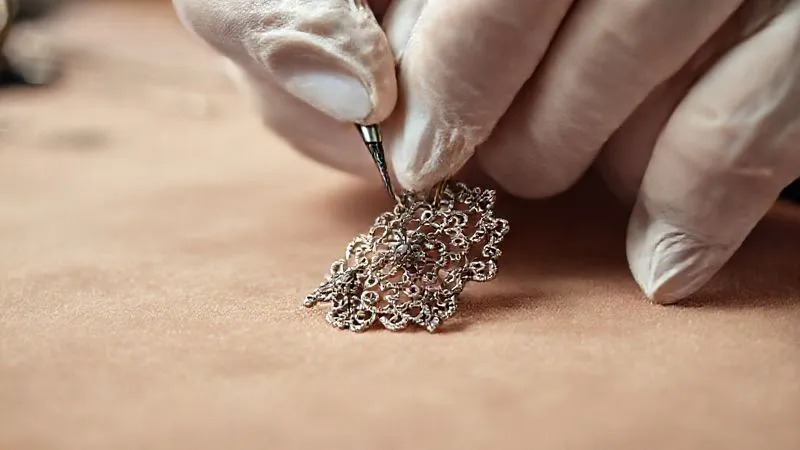
Before declaring a part truly irreplaceable, an exhaustive search for a period-correct component is imperative. This often requires patience, a vast network, and a keen eye for historical accuracy.
Hunting for Period-Correct Parts
This isn't about browsing Amazon; it's a deep dive into the specialized corners of the vintage and antique jewelry world. I've spent countless hours sifting through estate sales, working with auction houses, and connecting with a global network of dealers and collectors. Sometimes, the 'irreplaceable' part is simply incredibly rare.
- Specialized Dealers: Cultivate relationships with antique jewelry dealers who specialize in specific eras. They often have 'parts' boxes or uncatalogued pieces that might contain what you need.
- Online Forums & Communities: Niche online groups dedicated to vintage jewelry restoration can be invaluable. Members often share leads or even have spare parts from their own collections.
- Auction Houses & Estate Sales: Keep an eye on local and international auctions. Sometimes, a severely damaged piece might yield the single component you require.
- Deconstruction of Lesser Pieces: In ethical salvage, a less valuable or irreparably damaged piece from the same era might sacrifice a component for a more significant heirloom. This is a delicate decision, always prioritizing the overall historical and monetary value.
The Ethics of Salvage
When considering salvage, ethical considerations are paramount. We must ensure that we're not destroying a piece of equal or greater historical significance. Transparency with the client about the source and nature of the salvaged part is crucial.
- Value Assessment: Always weigh the historical and monetary value of the donor piece against the piece being restored. The donor should ideally be beyond reasonable restoration itself or of significantly lower value.
- Provenance Documentation: Keep meticulous records of where and when a salvaged part was acquired, and from what type of piece. This adds to the provenance of the restored item.
- Client Consent: Full disclosure and explicit client consent are essential before proceeding with any salvage operation.
- Sustainable Practices: Consider the broader impact. Is the salvage contributing to a circular economy for vintage items, or is it merely expedient?
For further reading on ethical sourcing in the broader jewelry industry, the Gemological Institute of America (GIA) offers excellent resources on responsible practices: GIA: Ethical Sourcing.
Strategy 3: Bespoke Replication and Custom Fabrication
When sourcing fails and preservation isn't enough, the next frontier is to recreate the irreplaceable part. This is where modern technology meets traditional craftsmanship, demanding immense skill and precision.
Reverse Engineering the Original
Replication isn't about guessing; it's about meticulous reverse engineering. If a counterpart exists (e.g., one earring of a pair), it serves as the blueprint. If not, historical references, photographic evidence, and an expert understanding of period-specific techniques become vital.
- 3D Scanning and CAD Modeling: For complex geometric shapes, 3D scanning can capture precise dimensions. CAD software then allows for digital recreation, which can be refined to exact specifications.
- Lost-Wax Casting: Once a model (physical or 3D printed) is created, lost-wax casting is often employed to reproduce intricate metal components. This ancient technique is still indispensable for fine jewelry.
- Hand-Fabrication: For simpler forms or when a part needs to be integrated seamlessly into existing hand-wrought elements, a master jeweler will hand-fabricate the component using traditional tools and techniques. This ensures the new part matches the original's unique 'hand.'
Case Study: Recreating a Filigree Clasp
I once had a client with a stunning Art Nouveau necklace, a family heirloom, but its delicate, hand-fabricated filigree clasp was completely missing. There was no way to find an exact match due to its unique design. My approach involved:
- Reference Analysis: We scoured period catalogs and photographs of similar Art Nouveau pieces to understand common clasp styles and filigree patterns of the era.
- Sketching and Prototyping: Based on the necklace's existing elements, I sketched several clasp designs that would feel authentic. We then created a resin prototype to test its functionality and aesthetic harmony.
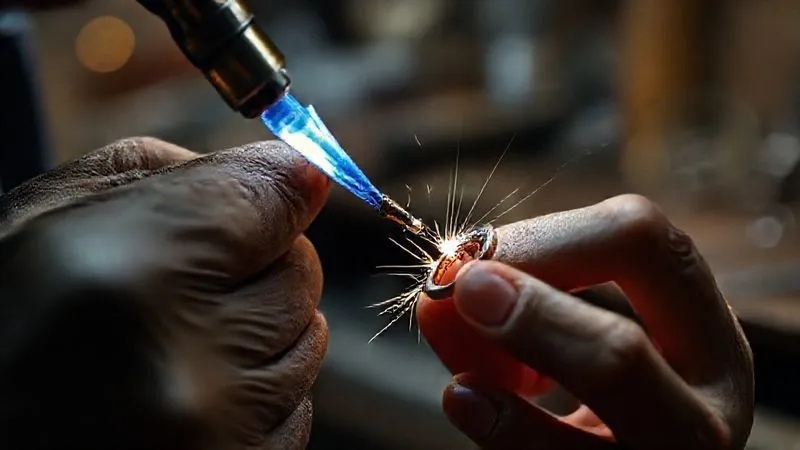
- Hand-Fabrication: Using fine gold wire, I meticulously hand-formed the filigree pattern, soldering each delicate joint under magnification. This ensured the new clasp not only functioned perfectly but also blended seamlessly with the original necklace's artistry.
- Patina Matching: After fabrication, the new clasp was carefully treated to match the subtle patina and oxidation of the original gold, making it virtually indistinguishable. This resulted in a revived heirloom, its narrative continued without compromise.
The choice of replication method depends heavily on the part's complexity, material, and the desired level of historical accuracy. Here's a quick comparison:
| Method | Pros | Cons | Best For |
|---|---|---|---|
| 3D Scanning/CAD/Printing | High precision, complex geometries, digital archive | Can lack 'hand-wrought' feel, material limitations | Intricate mechanical parts, detailed bezels |
| Lost-Wax Casting | Excellent for organic shapes, various metals, traditional finish | Requires a master model, multiple steps | Figurative elements, complex settings, small components |
| Hand-Fabrication | Perfect for matching existing hand-wrought, authentic feel | Highly skilled labor, time-consuming | Wirework, simple bezels, unique structural elements |
Strategy 4: Creative Adaptation and Sympathetic Integration
Sometimes, a perfect replication isn't feasible or desired. In these instances, a creative adaptation can breathe new life into a piece, integrating a new, complementary element that respects the original's spirit without being an exact copy.
Embracing the "Wabi-Sabi" Aesthetic
This approach often leans into the Japanese aesthetic of Wabi-Sabi, finding beauty in imperfection and the natural processes of aging. Instead of hiding the repair, it can be celebrated as part of the piece's ongoing story, a testament to its resilience and continued journey.
- Complementary Materials: Introduce a new material that harmonizes with the original. For example, replacing a missing pearl with an antique mother-of-pearl inlay, or a broken gemstone with a period-appropriate cabochon of a different but harmonious stone.
- Design Integration: Instead of a direct replacement, design a new, small element that acts as a bridge or a decorative accent where the original part was. This could be a tiny, hand-engraved plaque, a small bezel-set gem, or a subtly textured metal component.
- Minimalist Solutions: Sometimes, a simple, elegant solution is best. For instance, if a decorative element is missing, a clean, polished piece of metal that matches the original's alloy might be integrated, allowing the remaining original elements to shine.
Transformative Redesign
This strategy involves a more significant design intervention, where the 'irreplaceable' part's absence becomes an opportunity for a thoughtful evolution of the piece. The core essence is preserved, but its form or function might subtly shift.
For inspiration on how modern designers integrate vintage elements into contemporary creations, exploring current trends in sustainable jewelry can be insightful: Vogue: Sustainable Jewelry Trends.
Strategy 5: Deconstruction, Reimagining, and New Narratives
In cases where a piece is too damaged, or the irreplaceable part's absence fundamentally compromises its original intent, a complete deconstruction and reimagining can be the most respectful and creative path forward. This isn't destruction; it's transformation.
When to Consider a Complete Transformation
This strategy is often chosen for pieces that have lost their primary function (e.g., a single earring from a pair, a brooch with a broken pin mechanism that cannot be safely repaired), or when the cost of replicating multiple irreplaceable parts becomes prohibitive compared to the piece's inherent value.
- From Brooch to Pendant: A magnificent vintage brooch missing its pin mechanism can be expertly converted into a stunning pendant, allowing it to be worn and admired in a new way.
- Single Earring to Ring or Charm: A lone antique earring, perhaps with a unique gemstone or intricate metalwork, can be transformed into a bespoke ring or a charm for a bracelet.
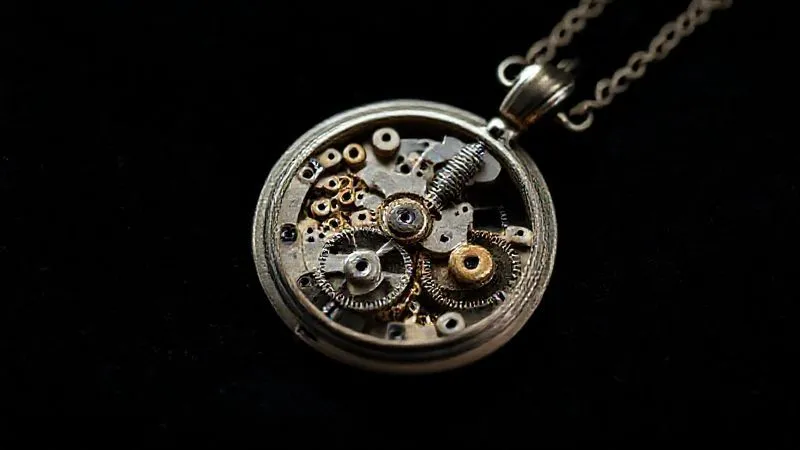
- Components to Assemblage: If a larger piece has several unique, but isolated, irreplaceable elements (e.g., a few intact links from a broken necklace), these can be carefully extracted and assembled into a new, smaller, and equally meaningful piece.
The Power of Storytelling Through Redesign
The beauty of reimagining lies in its ability to extend the narrative of the piece. It acknowledges the past, embraces the present, and creates a future for elements that might otherwise be relegated to a drawer. It's about respecting the materials and craftsmanship by giving them a new purpose.
Sometimes, the most profound act of preservation is not to restore a piece to its original state, but to liberate its most beautiful elements to tell a new story, ensuring its legacy endures.
Partnering with the Right Artisan: A Trust Factor
Regardless of the strategy chosen, the success hinges entirely on the skill, experience, and integrity of the jeweler or restorer you entrust with your vintage piece. This is not a job for just any bench jeweler; it requires a specialist.
Qualities of a Master Vintage Jewelry Restorer
Finding someone who understands the nuances of vintage jewelry is paramount. I've seen countless pieces devalued or damaged by well-meaning but inexperienced hands. Look for a professional with a deep appreciation for historical techniques and materials.
- Specialization: Seek out jewelers who explicitly advertise expertise in antique or vintage jewelry restoration. Ask about their experience with specific eras or materials relevant to your piece.
- Portfolio Review: Request to see examples of their previous restoration work, especially pieces that presented similar 'irreplaceable part' challenges. Look for seamless repairs and respectful interventions.
- Technical Proficiency: Inquire about their equipment and techniques. Do they use laser welding for delicate repairs? Are they proficient in traditional hand-fabrication methods?
- Communication & Transparency: A good restorer will clearly explain the proposed strategy, potential risks, cost implications, and timelines. They should also provide regular updates.
- Insurance & Credentials: Ensure the jeweler is properly insured and ideally holds certifications from reputable organizations like the American Gem Society (AGS) or Jewelers of America (JA).
For guidance on finding a reputable jeweler, organizations like the American Gem Society offer valuable resources and directories: American Gem Society.
To help you in your search, consider this checklist when interviewing potential restorers:
| Criterion | Yes/No | Notes |
|---|---|---|
| Specialization in Vintage/Antique | Look for specific era expertise | |
| Portfolio of Similar Work | Visual evidence of quality and approach | |
| Transparent Communication | Clear explanation of process, risks, costs | |
| Insurance & Accreditation | Protects your valuable piece | |
| References/Testimonials | Feedback from past clients | |
| Written Estimate & Contract | Details scope of work and guarantees |
Frequently Asked Questions (FAQ)
Question? Can 3D printing truly replicate tiny vintage details, or will it always look too 'modern'?
Answer: 3D printing technology has advanced remarkably, and with high-resolution printers and skilled CAD designers, it can replicate incredibly fine details. The key is in the finishing. A part that's 3D printed then cast still needs to be hand-finished, polished, and possibly engraved by a master jeweler to achieve the authentic 'hand' and patina of a true vintage piece. Without that final artisanal touch, it might indeed look too sharp or uniform.
Question? How do I know if a part is genuinely irreplaceable or just hard to find?
Answer: This is where an experienced vintage jewelry specialist is crucial. They possess the historical knowledge of manufacturing techniques, material compositions, and design trends of different eras. What might seem 'hard to find' to a general jeweler could be truly unique to a specialist. They will conduct an exhaustive search through their networks and archives before deeming a part irreplaceable, distinguishing between rarity and genuine singularity.
Question? What's the cost implication of custom fabrication vs. finding a similar part?
Answer: Custom fabrication, especially bespoke hand-fabrication or 3D modeling and casting, is almost always more expensive than finding an existing similar part. This is due to the labor-intensive nature of design, modeling, and meticulous execution. However, the value of a perfectly restored or sympathetically reimagined heirloom often far outweighs the cost, especially for pieces with significant emotional or historical value.
Question? Will altering a vintage piece diminish its value?
Answer: This is a nuanced question. If the alteration is a clumsy, non-period-correct repair, it absolutely can diminish value. However, a thoughtful, expert restoration or a creative transformation that maintains the piece's integrity and aesthetic can often enhance its wearable value and emotional significance. In some cases, a well-executed conversion (e.g., a brooch to a pendant) can make a previously unworn piece desirable again, increasing its overall utility and perceived value. Transparency and documentation of any changes are key.
Question? Are there ethical considerations in using salvaged parts?
Answer: Yes, absolutely. The primary ethical consideration is ensuring that the donor piece from which a part is salvaged is of lesser historical or monetary value, or is beyond reasonable repair itself. It's important not to dismantle one significant historical piece to repair another unless there's a clear justification. Full transparency with the client about the origin of the salvaged part is also crucial to maintain trust and provenance.
Key Takeaways and Final Thoughts
Navigating the challenge of irreplaceable vintage jewelry parts requires more than just technical skill; it demands a blend of historical knowledge, creative problem-solving, and a deep reverence for the piece's journey. As an industry veteran, I've learned that every 'irreplaceable' situation presents not just a problem, but an opportunity to deepen our understanding and connection to these magnificent objects.
- Preserve First: Always consider stabilization and minimal intervention to maintain the piece's original integrity.
- Source Meticulously: Exhaust all avenues for period-correct components before considering alternatives.
- Replicate with Precision: Leverage both modern technology and traditional hand-craftsmanship for bespoke fabrication.
- Adapt Creatively: Embrace sympathetic integration and transformative redesign to give pieces new life.
- Partner Wisely: Entrust your heirlooms only to experienced specialists who share your passion and commitment.
Your vintage jewelry, with its unique story and irreplaceable elements, deserves a future. By applying these expert strategies and partnering with the right artisans, you're not just repairing a piece; you're continuing its legacy, ensuring its beauty and narrative endure for generations to come. Embrace the challenge, and watch as your cherished heirlooms are given a new lease on life, ready to tell their stories anew.
Recommended Reading
- 7 Ways to Differentiate Men's Sustainable Denim & Dominate the Market
- 7 Strategies: How to Prevent Luxury Accessory Stock from Depreciating?
- 7 Smart Ways to Verify Organic Cotton Claims Without Costly Audits
- 7 Essential Steps: How to Safely Restore Delicate Vintage Lace Wedding Dresses
- 7 Agile Strategies: Rapidly Adapt Activewear Designs to Emerging Trends

Your email address will not be published. Required fields are marked *