

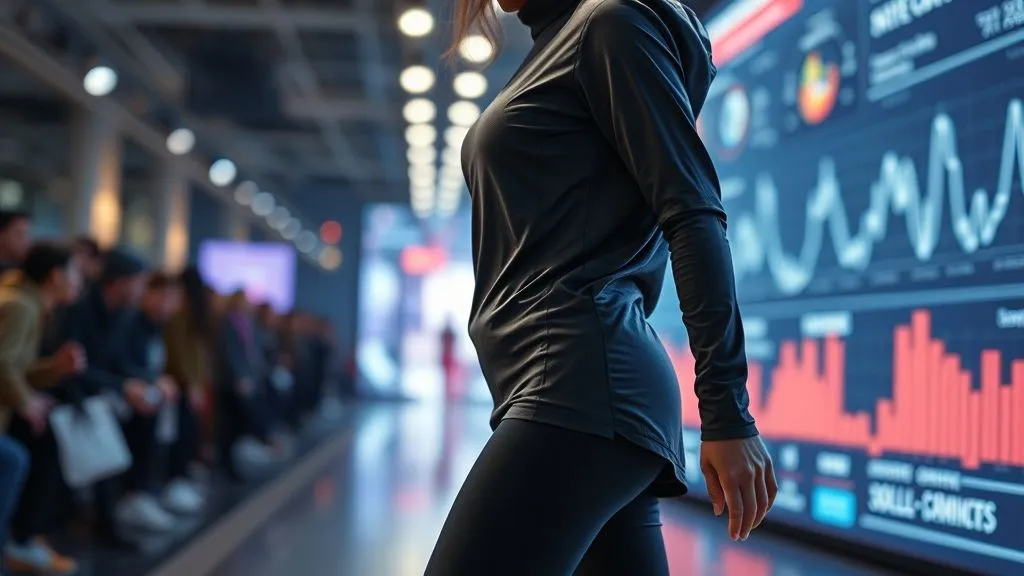
How to Rapidly Adapt Activewear Designs to Emerging Trends?
For over 15 years in the activewear and sportswear fashion industry, I've seen countless brands, both large and small, struggle with a fundamental challenge: the relentless pace of change. What's 'in' today can be 'out' tomorrow, and nowhere is this more acutely felt than in activewear, where performance, aesthetics, and lifestyle converge and evolve at lightning speed. The brands that thrive aren't just creating great products; they're masters of adaptation.
The pain point is palpable: slow design cycles, missed trend windows, inventory bloat from outdated styles, and ultimately, a loss of market share and brand relevance. It's a high-stakes game where agility isn't just an advantage; it's a prerequisite for survival. I've witnessed the frustration of design teams scrambling, supply chains faltering, and marketing efforts falling flat because they couldn't pivot fast enough.
In this definitive guide, I will share the actionable frameworks, expert insights, and practical strategies I've honed over years of navigating this dynamic landscape. You'll learn how to transform your activewear design process into a lean, responsive machine, ensuring your brand stays ahead of the curve and consistently delivers what consumers crave. This isn't just about catching trends; it's about shaping them and building a resilient, future-proof activewear business.
Mastering the Art of Trend Forecasting: Beyond the Hype Cycle
Effective trend adaptation begins not with design, but with foresight. True mastery of trend forecasting goes far beyond simply observing what's popular today; it's about understanding the underlying cultural shifts, technological advancements, and consumer psychology that drive future preferences. I've found that a multi-faceted approach, blending quantitative data with qualitative observation, yields the most robust predictions.
Leveraging Data Analytics for Predictive Insights
In today's digital age, data is your most powerful ally. Predictive analytics can illuminate emerging patterns long before they hit mainstream consciousness. This involves analyzing vast datasets from social media trends, e-commerce search queries, sales data (both your own and aggregated market data), and even macroeconomic indicators. Look for micro-trends gaining traction, regional variations, and unexpected spikes in product categories or material interests. Tools that track consumer sentiment and keyword frequency on platforms like Instagram, TikTok, and Pinterest are invaluable. Don't just look at what people are buying; understand what they're searching for, talking about, and aspiring to.
Key Data Sources to Monitor:
- Social Listening Tools: Track hashtags, mentions, and engagement around activewear, fitness, and lifestyle topics.
- E-commerce Analytics: Analyze search terms, abandoned carts, product views, and sales data by category, color, and feature.
- Industry Reports: Subscribe to specialized trend forecasting services like WGSN or Fashion Snoops.
- Google Trends: Identify rising search queries related to activewear styles, materials, or activities.
- Competitor Analysis: Observe product launches, marketing campaigns, and consumer reactions to rivals.
According to a report by The Business of Fashion, data-driven decision-making is no longer a luxury but a necessity for fashion brands aiming for agility and relevance.

The Human Element: Cultural & Subcultural Observation
While data provides the 'what,' understanding the 'why' often requires a human touch. I always encourage my teams to engage in direct cultural observation. This means more than just scrolling through feeds; it involves immersing yourselves in target communities, attending fitness events, observing street style in diverse urban centers, and even participating in the activities your activewear is designed for. Pay attention to subcultures – what are athletes, artists, and influencers wearing when they're not in the spotlight? These often serve as early indicators of broader shifts.
"True trend forecasting is a blend of scientific data analysis and intuitive cultural empathy. Without both, you're either blind or guessing."
Building an Agile Design & Development Workflow
Once you have a clear understanding of emerging trends, the challenge shifts to translating that foresight into tangible designs with speed. Traditional, linear design processes are often too slow. This is where an agile workflow becomes transformative, allowing for rapid iteration and responsiveness.
Iterative Prototyping and Micro-Collections
Instead of designing entire collections months in advance, adopt an iterative approach. Develop small, focused 'micro-collections' or capsule drops that address a specific emerging trend. This significantly reduces lead times and risk. For each design, prioritize rapid prototyping. Don't wait for perfect samples; get working prototypes in hand quickly, even if they're not fully refined. This allows for immediate feedback and adjustments.
- Concept Sprint: Rapid brainstorming and sketching sessions focused on a single trend theme.
- Digital Prototyping: Utilize 3D design software to create virtual samples (more on this later).
- First-Stage Physical Sample: Produce a basic, functional sample for fit and initial material assessment.
- User Testing: Get early samples into the hands of target consumers for real-world feedback.
- Rapid Iteration: Implement feedback, refine design, and move to the next sample stage quickly.
- Limited Drop: Launch small quantities to gauge market reaction before scaling production.
Cross-Functional Collaboration: Breaking Down Silos
Agility demands seamless communication. Break down the traditional silos between design, product development, sourcing, marketing, and sales. When these teams work in parallel, sharing information and making decisions collectively, the entire process accelerates. Daily stand-ups, shared digital platforms, and a culture of open feedback are crucial. Everyone needs to understand the trend insight, the design vision, and the production capabilities simultaneously.
Case Study: Agility at 'Stride & Style' Activewear
Stride & Style, a mid-sized activewear brand, faced increasing competition and slow market response, with their average design-to-market cycle taking 10-12 months. By implementing a new agile workflow, they shifted to a micro-collection strategy, launching 4-6 small drops annually instead of two large seasonal collections. Their design team, previously isolated, began daily syncs with sourcing and marketing. They invested in 3D design software, cutting physical sample rounds by 50%. This resulted in a reduced design-to-market cycle of 3-4 months for their capsule collections, allowing them to capitalize on fleeting trends like 'lounge-luxe' activewear and 'sustainable performance fabrics' with unprecedented speed. Their market share for these trend-responsive items saw a 15% increase within the first year.
| Process Stage | Avg. Time (Weeks) | Key Challenges | Market Responsiveness |
|---|---|---|---|
| Traditional Workflow | 40-48 | Slow feedback, high inventory risk | Low |
| Agile Workflow | 12-16 | Initial setup, cultural shift | High |
For a deeper dive into agile methodologies in business, explore insights from the Harvard Business Review.
The Power of Digital Tools: From 3D Design to Virtual Showrooms
The digital revolution has provided activewear designers with unprecedented tools to accelerate adaptation. Embracing these technologies is no longer optional; it's a competitive imperative for how to rapidly adapt activewear designs to emerging trends.
Accelerating Design with 3D Software (e.g., Clo3D, Optitex)
3D design software has transformed the sampling process. Instead of waiting weeks for physical samples, designers can create incredibly realistic virtual prototypes in hours or days. This allows for instant visualization of fit, drape, colorways, and material textures. Changes can be made on the fly, drastically reducing the number of physical samples required, saving time, materials, and shipping costs. It also enables designers to experiment with more radical ideas without the financial burden of physical production.
Benefits of 3D Design in Activewear:
- Faster Iteration: Make design changes and see results instantly.
- Cost Reduction: Significantly fewer physical samples needed.
- Improved Collaboration: Share realistic visuals with all stakeholders globally.
- Enhanced Creativity: Experiment freely without production constraints.
- Sustainability: Reduce waste associated with physical sampling.
Virtual Fitting & Consumer Feedback Loops
Beyond internal design, 3D technology extends to consumer engagement. Virtual fitting rooms allow customers to 'try on' garments digitally, providing valuable feedback on fit and style preferences before mass production. This data is gold for refinement and ensuring market resonance. Virtual showrooms also enable buyers to preview collections remotely, accelerating sales cycles and reducing travel-related delays.
Supply Chain Flexibility: The Backbone of Rapid Adaptation
Even the most agile design team will falter if their supply chain can't keep pace. For activewear, where specialized materials and performance features are key, a flexible and responsive supply chain is critical for how to rapidly adapt activewear designs to emerging trends.
On-Demand Manufacturing & Local Sourcing
The era of massive, long-lead-time orders is waning. Explore on-demand or 'just-in-time' manufacturing models, especially for trend-driven items. This allows you to produce smaller batches in response to actual demand, minimizing inventory risk and enabling quick replenishment of popular styles. Additionally, consider near-shoring or local sourcing for components or even finished goods. While potentially higher in unit cost, the reduced shipping times and increased control often outweigh the difference, especially for urgent trend adaptations.
Strategic Partnerships with Material Innovators
Activewear trends are often driven by material innovation – new performance fabrics, sustainable textiles, or smart technologies. Foster strong, collaborative relationships with your material suppliers. Engage them early in the design process to understand their upcoming innovations and explore custom developments. A supplier who acts as a partner, rather than just a vendor, can significantly accelerate your access to cutting-edge materials and help you adapt designs to leverage these advancements.
"Your supply chain isn't just a cost center; it's a strategic asset that dictates your speed to market and your ability to innovate."
Insights from Deloitte's reports on supply chain resilience highlight the importance of agility and digital integration for modern businesses.
Consumer-Centric Design: Listening, Learning, and Co-Creating
To truly adapt rapidly, you must deeply understand your consumer. This goes beyond demographics; it's about psychographics, lifestyle, values, and aspirations. Activewear is inherently personal, and designs that resonate are those that genuinely meet evolving needs and desires.
Harnessing Social Media & Direct Feedback Channels
Social media is a direct line to your customer. Beyond passive listening, actively engage your community. Run polls, ask open-ended questions, solicit feedback on prototype designs, and create a sense of co-creation. Brands that invite customers into the design process not only gain invaluable insights but also build stronger brand loyalty. Implement feedback loops through your website, email surveys, and customer service interactions.
Effective Consumer Feedback Methods:
- Instagram/TikTok Polls: Quick feedback on colorways, features, or style preferences.
- Wear-Testing Programs: Send prototypes to a select group of loyal customers for rigorous real-world testing.
- Online Forums/Communities: Create dedicated spaces for discussion and ideation.
- Direct Surveys: Targeted questions about performance, comfort, and style expectations.
Limited Edition Drops & A/B Testing Designs
Use limited edition drops as a powerful tool for market testing. Launch a small quantity of a new, trend-forward design and closely monitor its performance. This low-risk approach allows you to gauge demand and collect real sales data before committing to larger production runs. Similarly, A/B test different design elements, such as color combinations, print placements, or minor feature variations, on your website or through targeted ads to see which resonates most with your audience.
Sustainable Innovation: A Trend That's Here to Stay
Sustainability is no longer a niche concern; it's a foundational expectation for modern consumers, particularly in activewear. Integrating eco-conscious practices isn't just a trend; it's a permanent shift that also drives innovation and can differentiate your brand.
Integrating Eco-Conscious Materials and Processes
Rapid adaptation also means being ahead of the curve on sustainable materials. Research and adopt recycled synthetics (RPET, regenerated nylon), organic cotton, natural fibers like Tencel or hemp, and innovative bio-based materials. Look for suppliers with certifications like GRS (Global Recycled Standard) or OEKO-TEX. Beyond materials, consider sustainable dyeing processes, water-saving manufacturing techniques, and ethical labor practices throughout your supply chain.
Circularity and Longevity in Activewear Design
Design for durability and repairability. Fast fashion's disposable model is incompatible with activewear's performance demands and consumer values. Focus on timeless designs that integrate trend elements subtly, allowing for longevity. Explore circularity – designing products that can be easily recycled or repurposed at the end of their life cycle. This might involve monomaterial construction or clearly labeled components for disassembly.
"Sustainability in activewear is not a compromise on performance or style; it's the next frontier of innovation and a key driver of consumer loyalty."
For comprehensive information on sustainable fashion practices, refer to resources from the Ellen MacArthur Foundation.
Cultivating a Culture of Continuous Learning & Experimentation
Ultimately, a brand's ability to adapt rapidly is a reflection of its internal culture. It requires a mindset that embraces change, values learning, and isn't afraid to experiment.
Investing in R&D and Skill Development
Allocate resources for research and development, not just for new products, but for new processes and technologies. Invest in continuous education for your design, product development, and sourcing teams. Train them on new software, sustainable materials, and agile methodologies. A skilled and knowledgeable team is your greatest asset in navigating a fast-changing market.
Embracing Failure as a Learning Opportunity
Not every trend adaptation will be a runaway success, and that's okay. What's crucial is to treat every outcome, positive or negative, as a learning opportunity. Conduct post-mortems on product launches – what worked, what didn't, and why? Foster an environment where honest feedback is encouraged, and where designers feel safe to experiment without fear of punitive consequences for ideas that don't pan out. This iterative learning cycle is fundamental to sustained agility.
- Encourage & Reward Innovation: Create incentives for new ideas and approaches.
- Allocate 'Experimentation Budget': Dedicate resources specifically for testing new concepts.
- Regular Knowledge Sharing: Implement sessions where teams share insights from market research, industry events, or new technologies.
- Cross-Departmental Workshops: Facilitate collaborative problem-solving across different functions.
- Feedback Culture: Establish clear, constructive feedback mechanisms at all levels.

Measuring Success: Metrics for Trend Responsiveness
How do you know if your efforts to rapidly adapt activewear designs to emerging trends are paying off? Beyond traditional sales figures, specific metrics can provide insights into your agility and market responsiveness.
Key Performance Indicators (KPIs) Beyond Sales
While sales are important, they're often a lagging indicator. Focus on KPIs that reflect your speed and efficiency:
- Design-to-Market Cycle Time: Track the average time from initial concept to product launch.
- New Product Introduction (NPI) Rate: The number of new, trend-responsive styles launched per quarter/year.
- Inventory Turn-Over Rate for Trend Items: How quickly specific trend-driven products sell through.
- Sell-Through Rate for New Collections: Percentage of initial inventory sold within a specified period.
- Customer Feedback Score for Newness/Relevance: Surveys or sentiment analysis on how well new designs resonate.
- Supplier Lead Time Reduction: Track improvements in raw material or component delivery times.
Post-Launch Analysis and Iteration
The launch of a new product is not the end; it's the beginning of the next learning cycle. Conduct thorough post-launch analyses. What was the initial market reaction? Did it align with your trend predictions? Use this data to inform subsequent design iterations, refine your forecasting models, and optimize your agile processes further. This continuous loop of design, launch, measure, and learn is the hallmark of a truly adaptive activewear brand.
| Metric | Baseline (Weeks) | Target (Weeks) | Impact |
|---|---|---|---|
| Design-to-Market Cycle | 40 | 16 | Faster trend capture |
| New Product Intro Rate | 8 | 20 | Increased market relevance |
| Trend Item Sell-Through | 60% | 85% | Reduced inventory risk |
| Customer Sentiment (Newness) | 3.5/5 | 4.2/5 | Stronger brand connection |
Frequently Asked Questions (FAQ)
How can smaller activewear brands compete with larger corporations in terms of rapid adaptation? Smaller brands actually have an inherent advantage in agility due to fewer bureaucratic layers and faster decision-making. Focus on niche trends, leverage direct-to-consumer feedback loops, and utilize local, flexible manufacturing partners. Your strength lies in speed and authenticity, not scale. Embrace digital tools like 3D design to minimize physical sampling costs and lead times, giving you a lean, responsive edge.
Is it possible to balance rapid trend adaptation with a strong, consistent brand identity? Absolutely. Rapid adaptation doesn't mean chasing every fleeting fad. It means understanding which emerging trends align with your brand's core values and aesthetic, and then interpreting them through your unique lens. Your brand identity should act as a filter, ensuring that while your designs evolve, they always remain unmistakably 'you'. Think of it as evolving within your brand's DNA, not abandoning it.
What role does Artificial Intelligence (AI) play in future activewear trend adaptation? AI is poised to revolutionize trend adaptation. It can analyze vast amounts of data (social media, sales, cultural signals) at speeds and scales impossible for humans, identifying micro-trends and predicting shifts with high accuracy. AI-powered design tools can also generate initial concepts, optimize patterns for fit and material usage, and even personalize designs at scale, further accelerating the design process and enhancing responsiveness.
How do I manage the increased costs associated with faster production cycles and potentially smaller batch runs? While some aspects, like smaller batch runs, might have higher per-unit costs, these are often offset by reduced inventory holding costs, fewer markdowns on unsold stock, and increased full-price sales due to market relevance. Investing in 3D design significantly cuts sampling costs. Strategic partnerships with flexible manufacturers and smart inventory management become crucial to optimize cost efficiencies in an agile model. It's a shift from 'cheapest per unit' to 'most profitable overall.'
How can activewear brands ensure sustainability while also adapting rapidly to trends? Sustainability should be integrated into your agile strategy, not viewed as a separate challenge. Focus on using readily available sustainable materials, designing for longevity and circularity, and partnering with suppliers committed to ethical practices. Rapid adaptation allows for smaller, more controlled production runs, which can inherently reduce waste compared to large, speculative orders. The key is mindful innovation – designing for both speed and responsibility.
Key Takeaways and Final Thoughts
The activewear industry is a dynamic arena, demanding not just innovation but also unparalleled agility. The question of how to rapidly adapt activewear designs to emerging trends is no longer a strategic option but a fundamental requirement for success. As an industry veteran, I've seen firsthand that the brands that embrace this challenge are the ones that not only survive but truly thrive.
- Prioritize Foresight: Combine data analytics with cultural observation for robust trend forecasting.
- Embrace Agility: Implement iterative design, micro-collections, and cross-functional collaboration.
- Leverage Digital Tools: Utilize 3D design and virtual technologies to accelerate development.
- Build a Flexible Supply Chain: Explore on-demand manufacturing and strategic material partnerships.
- Stay Consumer-Centric: Engage your audience directly through social media and feedback loops.
- Integrate Sustainability: Make eco-conscious design and circularity core to your strategy.
- Cultivate Learning: Foster a culture of continuous experimentation and skill development.
- Measure Smart: Track KPIs that reflect speed, efficiency, and market relevance.
The path to rapid adaptation is a journey of continuous improvement and strategic evolution. It requires commitment, investment, and a willingness to challenge traditional paradigms. But the rewards – increased market relevance, stronger brand loyalty, reduced waste, and sustained profitability – are immeasurable. By adopting these expert-backed strategies, your activewear brand can confidently navigate the ever-changing landscape, not just responding to trends, but leading the charge into the future of performance fashion.
Recommended Reading
- 5 Strategies to Slash Returns: Adaptable Kids' Wear Fit Solutions
- 7 Proven Strategies: Slash Kids' Wear Returns Due to Discomfort
- 7 Proven Steps: Crafting Editorial Fashion Narratives for Publication Success
- 7 Steps: Verify Sustainable Jewelry Material Sourcing Claims Effectively
- Emergency Costume Repair: 7 Intermission Fixes for Torn Period Garments

Your email address will not be published. Required fields are marked *