

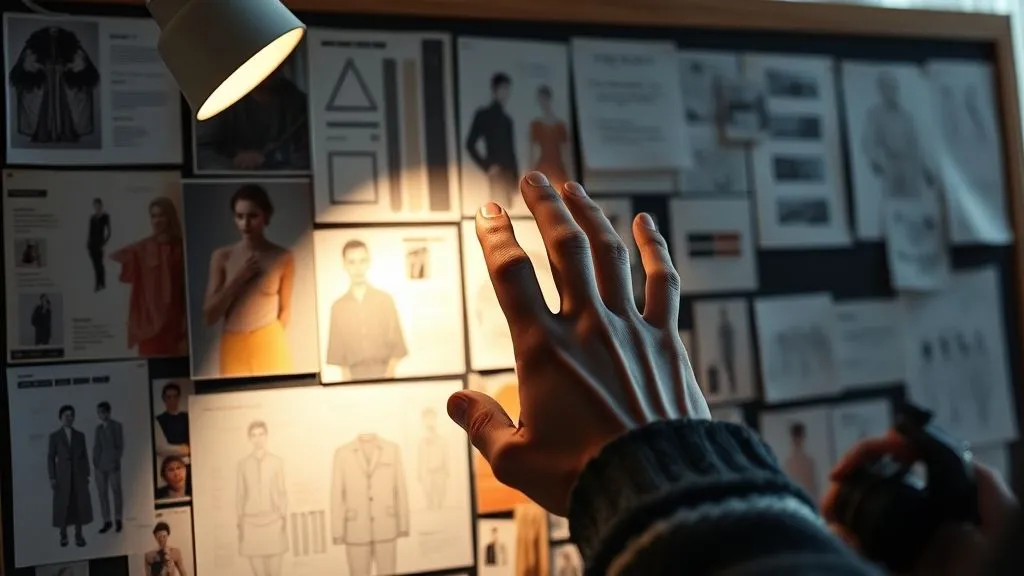
How to Craft Compelling Editorial Fashion Narratives for Publication?
For over two decades in the dynamic world of fashion photography, I've witnessed countless photographers with undeniable talent capture breathtaking images. Yet, I've also seen a frustrating pattern: many of these visually stunning portfolios struggle to land coveted spots in leading fashion publications. The missing ingredient, more often than not, isn't technical skill but a profound understanding of narrative.
It's a common misconception that a beautiful photograph is enough. In the hyper-competitive realm of editorial fashion, editors aren't just looking for pretty pictures; they're searching for stories, for concepts that resonate, challenge, and inspire. Without a compelling narrative, even the most exquisite shot can fall flat, lacking the depth and purpose required to captivate an audience and earn a publisher's endorsement.
This comprehensive guide will demystify the process, offering you the actionable frameworks, real-world insights, and expert strategies I've honed over my career. You'll learn not just how to take great photos, but how to weave them into powerful editorial fashion narratives that demand publication, transforming your vision into compelling visual journalism.
The Foundation: Understanding the Editorial Mindset
Before you even pick up your camera, it's crucial to grasp what makes an editorial truly 'editorial.' This isn't about commercial campaigns selling products directly; it's about art, culture, and storytelling through fashion. Editors are curators of culture, seeking fresh perspectives and meaningful dialogues.
Beyond Pretty Pictures: What Editors Seek
Editors are looking for originality, relevance, and a strong point of view. They want stories that align with their publication's aesthetic and readership, offering something new, thought-provoking, or visually groundbreaking. Your work must contribute to a larger conversation, not just showcase garments.
"An editorial isn't just a collection of images; it's a conversation between the photographer, the fashion, and the audience, orchestrated by the editor's vision."
To truly understand what resonates, immerse yourself in the publications you admire. Analyze their editorials: the themes, the styling, the models, the locations, and the overall mood. This deep dive will reveal the unspoken criteria that guide editorial selections.
- Originality: Does your concept offer a fresh perspective or challenge conventions?
- Relevance: Is it timely, culturally significant, or aligned with current trends (even if subverting them)?
- Narrative Depth: Does it tell a clear, engaging story from beginning to end?
- Visual Cohesion: Do all elements – styling, location, casting, lighting – work together harmoniously?
- Technical Excellence: Is the photography of the highest professional standard?
Developing Your Core Concept: The Narrative Blueprint
Every compelling editorial begins with a robust concept. This is the bedrock upon which your entire visual story will be built. It's about finding your unique voice and translating it into a tangible idea.
Brainstorming & Research: Finding Your Story's Heartbeat
Start with extensive research. Look beyond fashion trends to art, history, sociology, current events, and even personal experiences. What cultural shifts are happening? What emotions do you want to evoke? What message do you want to convey? This broad approach fuels truly unique ideas.
I often advise my mentees to create a 'concept journal' where they jot down ideas, attach tear sheets, fabric swatches, and even song lyrics. This organic process helps disparate elements coalesce into a cohesive vision.
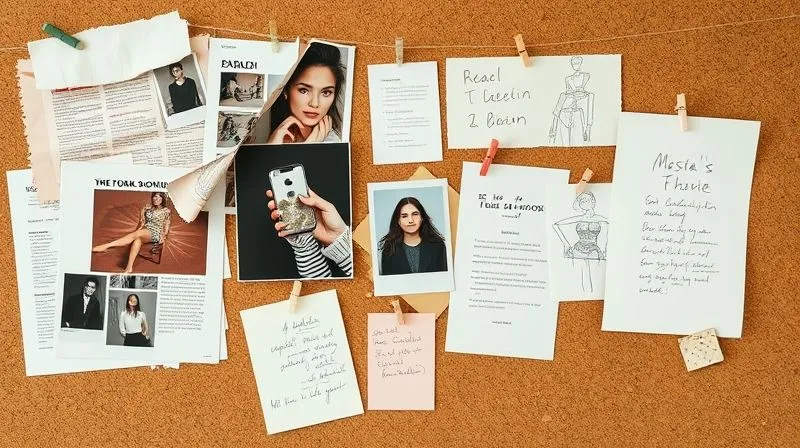
Consider the 'why' behind your story. Is it a commentary on consumerism? A celebration of a forgotten era? An exploration of identity? The stronger your 'why,' the more profound and memorable your narrative will be.
Defining Your Theme, Mood, and Message
Once you have a nascent idea, refine it into a clear theme. Is it 'Rebellion,' 'Serenity,' 'Urban Nomads,' or 'Future Folklore'? This theme will guide every subsequent decision. Next, establish the mood: dramatic, playful, melancholic, ethereal? The mood dictates your aesthetic choices, from lighting to post-production.
Finally, articulate your core message. What do you want the viewer to feel or understand? This message should be subtle, woven into the fabric of your visuals, rather than explicitly stated. It's the emotional resonance that lingers long after the pages are turned.
Visual Storytelling: Translating Narrative to Image
This is where the magic happens – transforming your conceptual blueprint into a tangible visual experience. Every element in front of your lens is a word in your story.
Casting, Styling, and Location: The Narrative Pillars
Casting: Your model isn't just a hanger for clothes; they are your protagonist. Their look, their expressions, their ability to embody the character and mood are paramount. Seek models who can convey emotion and carry the narrative weight. Sometimes, an unconventional face can tell a more powerful story than a 'perfect' one.
Styling: This is where fashion truly speaks. Collaborate closely with your stylist to ensure every garment, accessory, and hair/makeup choice reinforces your theme and mood. Avoid generic looks; every detail should be intentional, contributing to the narrative. As Anna Wintour famously said, "Fashion is about dressing according to what's fashionable. Style is more about being yourself." Your styling should reflect your story's 'self'.
Location: The backdrop is more than just scenery; it's a character in itself, setting the stage and influencing the mood. Whether it's a crumbling mansion, a bustling city street, or a stark natural landscape, the location must enhance, not detract from, your narrative. Scout thoroughly to find places that offer visual interest and thematic relevance.
"Every choice, from the model's gaze to the texture of the fabric, must whisper the story you intend to tell."
Composition & Lighting: Enhancing Emotional Resonance
Your technical prowess in composition and lighting becomes a powerful narrative tool. Use composition to guide the viewer's eye, create tension, or convey intimacy. Leading lines, rule of thirds, negative space – these aren't just rules, they're storytelling devices.
Lighting is the emotional brushstroke of your narrative. Harsh, direct light can create drama and intensity, while soft, diffused light can evoke serenity or mystery. Cinematic lighting, in particular, can transform a simple scene into a powerful narrative moment, emphasizing mood and character. Experiment with natural light, artificial setups, and modifiers to achieve precise emotional tones.
Building the Editorial Arc: Pacing and Sequence
A successful editorial isn't just a collection of great shots; it's a journey. The sequence of images is crucial to guiding the reader through your narrative, building anticipation, and delivering impact.
The Power of the Opening Shot and the Climactic Spread
Your opening image (or spread) is your hook. It must immediately grab attention, establish the mood, and hint at the story to come. It should be strong, intriguing, and representative of your overall concept. Think of it as the first chapter of a novel.
Throughout the editorial, build a visual rhythm. Introduce new elements, shift perspectives, and vary shot types (wide, medium, close-up) to maintain interest. The climactic spread should be the peak of your story – the most dramatic, impactful, or emotionally resonant image. It's the moment the narrative fully unfolds, leaving a lasting impression.
| Image Type | Narrative Purpose | Example |
|---|---|---|
| Establishing Shot | Introduce setting/mood, hook viewer | Wide shot of model in unique environment |
| Character Introduction | Focus on model's expression/styling | Mid-shot, strong gaze, key fashion detail |
| Action/Interaction | Develop story, show movement | Model interacting with prop or environment |
| Detail Shot | Highlight key styling element, add texture | Close-up of accessory or fabric |
| Climax/Resolution | Peak emotional impact, narrative turning point | Dramatic pose, powerful composition |
| Concluding Shot | Leave lasting impression, tie up loose ends | Reflective pose, subtle narrative closure |
Editing for Impact: Curating Your Narrative Flow
The editing process is where you truly craft the narrative arc. Don't just pick your 'best' individual photos; select the images that collectively tell the most coherent and compelling story. Sometimes, a technically 'imperfect' image might be essential for narrative continuity or emotional impact.
Lay out your selected images in sequence, either physically or digitally. Observe the flow, the transitions, and the pacing. Does the story unfold naturally? Are there any redundant shots? Does it build to a satisfying crescendo? Be ruthless in your selection; less is often more when it comes to narrative clarity.
Post-Production with Purpose: Elevating the Narrative
Post-production is not merely about fixing flaws; it's an integral part of your storytelling. It's where you refine the mood, enhance the emotional resonance, and ensure visual consistency across your entire editorial.
Color Grading & Retouching: Maintaining Consistency and Mood
Color Grading: This is perhaps the most powerful tool in post-production for narrative enhancement. A consistent color palette, whether warm and inviting, cool and melancholic, or desaturated and stark, unifies your story and reinforces its mood. Develop a distinct color grade that serves your concept, ensuring every image speaks the same visual language.
Retouching: Approach retouching with a light hand and a clear purpose. The goal is to enhance, not to erase. Maintain the authenticity of your model and the integrity of your story. Excessive retouching can strip an image of its humanity and emotional depth, making it feel artificial and disconnected from the narrative. Focus on cleaning, enhancing textures, and ensuring consistency without over-processing.
"Post-production should be an extension of your artistic vision, not a bandage for a flawed concept. It's about refinement, not recreation."
In my experience, many emerging photographers fall into the trap of over-retouching, believing it makes their work 'magazine-ready.' However, editors often prefer a more natural, authentic aesthetic that allows the narrative and the fashion to shine through.
Crafting the Pitch: Presenting Your Narrative to Publications
You've poured your heart and soul into creating a compelling narrative; now it's time to present it professionally and strategically to publications. This step is as crucial as the shoot itself.
Researching Your Target Magazine: A Strategic Approach
Do not blanket-email every magazine. This is a waste of your time and theirs. Instead, meticulously research publications that align with your aesthetic, theme, and target audience. Study their past editorials, understand their contributors, and identify their unique voice. A submission that clearly demonstrates you understand their publication's style has a much higher chance of success.
Consider niche publications as well as major players. Sometimes, a smaller, more specialized magazine can be an excellent stepping stone and offer more creative freedom. Resources like The Business of Fashion can provide insights into industry trends and key players.
The Art of the Editorial Proposal: What to Include
Your proposal is your opportunity to articulate your narrative before the editor even sees the full spread. It should be concise, compelling, and professional.
- Cover Letter: A personalized introduction, stating your intent, highlighting your unique concept, and demonstrating your understanding of their publication.
- Synopsis: A brief, engaging summary of your editorial's theme, mood, and core message.
- Mood Board/Visual Reference: A curated selection of images (not from your shoot, but inspirational) that convey the aesthetic and emotional tone.
- Select Images: 5-10 of your strongest, most narrative-driven images from the editorial. Ensure they are low-res for initial review.
- Team Credits: A list of all collaborators (stylist, MUA, hair, models, assistants) with their contact info and social media handles.
- Usage Rights: Clearly state if the editorial is exclusive, previously unpublished, and available for their specific usage.
Case Study: From Concept to Cover – The 'Urban Bloom' Story
Case Study: 'Urban Bloom' – A Narrative of Resilience
I worked with a photographer, Anya, who developed a concept called 'Urban Bloom.' Her initial idea was simply 'flowers in the city.' Through our mentorship, we refined this into a narrative exploring the resilience and unexpected beauty of nature thriving amidst urban decay, reflecting human adaptability.
Anya carefully selected a model with a quiet strength and styled her in flowing, organic garments contrasted with structured, architectural accessories. The locations were derelict industrial sites intertwined with bursts of wild flora. Her lighting was soft yet dramatic, emphasizing the delicate beauty against harsh backdrops.
Her pitch focused on the metaphorical journey of growth and survival. She included a concise synopsis, a mood board featuring images of brutalist architecture alongside botanical illustrations, and six powerful initial images. One image, a close-up of the model's face partially obscured by a vibrant green vine growing through a cracked wall, became the anchor of her proposal.
She submitted this to 'Veridian Magazine,' known for its focus on sustainable fashion and environmental narratives. The editor was immediately captivated by the depth of the story and the visual execution. 'Urban Bloom' was not only published as a full editorial spread but also secured the cover, praised for its profound narrative and stunning visuals. This success wasn't just about beautiful photos; it was about Anya’s ability to weave a truly compelling and relevant story.
Navigating Rejection and Building Relationships
The path to publication is rarely linear. Rejection is a part of the process, but it's also an opportunity for growth and refinement.
Persistence and Professionalism: Learning from Feedback
Don't let rejection deter you. Instead, view it as feedback. If possible, politely ask for constructive criticism. What specifically didn't resonate? Was it the concept, the styling, or the timing? Use this information to refine your approach for future projects. Persistence, coupled with a professional demeanor, is a hallmark of successful creatives.
According to a study by Harvard Business Review on creative industries, resilience and the ability to adapt to feedback are key differentiators for long-term success. It's not about never failing, but about how you respond to it.
Building a Network: Editors, Stylists, and Art Directors
Cultivate genuine relationships within the industry. Attend fashion events, portfolio reviews, and workshops. Engage with editors, stylists, art directors, and other photographers on social media and in person. A strong network can lead to collaborations, assignments, and invaluable insights.
Remember, this is a collaborative industry. Respect, professionalism, and a positive attitude will open more doors than raw talent alone. Collaborate with other emerging talents; sometimes, the strongest narratives come from a collective vision.
Legal and Ethical Considerations in Fashion Photography
As you move towards publication, understanding the legal and ethical landscape is paramount to protecting your work and your collaborators.
Model Releases, Copyright, and Usage Rights
Model Releases: Always secure signed model releases from every individual appearing in your editorial. This document grants you permission to use their likeness for commercial and editorial purposes and is non-negotiable for publication. Without it, your work cannot be published legally.
Copyright: As the photographer, you generally own the copyright to your images upon creation. However, when submitting to publications, clearly define the usage rights you are granting. Is it a one-time use? Exclusive? Non-exclusive? For print only, or digital too? Be explicit in your agreements.
Usage Rights: Discuss and agree upon the specific usage rights with the publication before your editorial goes to print. This includes where the images will appear (print, online, social media), for how long, and in what context. A clear understanding prevents future disputes.
For more detailed information on photography rights and contracts, resources like the American Society of Media Photographers (ASMP) offer invaluable guidelines and legal templates.
Frequently Asked Questions (FAQ)
Question: How do I find unique concepts in a saturated fashion photography market? Finding unique concepts requires looking beyond current trends. Dive into history, sociology, art, or even personal experiences. Combine seemingly disparate elements – for instance, 18th-century portraiture techniques with modern streetwear. The more you draw from diverse influences and infuse your own perspective, the more original your narrative will be. Don't be afraid to be conceptually bold.
Question: What if my team is small or I have a limited budget for an editorial? A limited budget doesn't mean limited creativity. Focus on resourcefulness. Collaborate with emerging stylists, makeup artists, and models who are also building their portfolios. Seek out unconventional locations that are free or low-cost. Utilize natural light to its fullest. A strong concept and passionate team can often outweigh lavish budgets. Prioritize the narrative over excessive production value.
Question: How important is a strong social media presence for getting published? While not a direct prerequisite for publication, a strong and curated social media presence (especially on platforms like Instagram and Behance) can act as a powerful portfolio and networking tool. Editors and art directors often scout talent online. It demonstrates your consistency, aesthetic vision, and ability to engage an audience. Ensure your online presence aligns with the professional quality you aim to achieve in print.
Question: Should I shoot an entire editorial on spec or wait for assignments? For emerging photographers, shooting on spec (speculation) is often the best way to build a strong, narrative-driven portfolio. It gives you complete creative control to develop your unique vision without client constraints. Once you have a compelling body of work, you can use it to pitch specific publications and eventually secure paid assignments. Start with spec work to define your voice, then leverage that to get assigned.
Question: What's the biggest mistake new photographers make when pitching an editorial? The biggest mistake is sending generic, untargeted pitches. Many photographers fail to research the publication thoroughly, resulting in submissions that are clearly not a good fit. Another common error is sending too many images or a disorganized presentation. A concise, tailored pitch with a strong, clear narrative and a few impactful images is far more effective than a scattergun approach.
Key Takeaways and Final Thoughts
- Narrative is King: Always prioritize storytelling over mere aesthetics. Every image must contribute to a cohesive story.
- Concept First: Develop a strong, unique concept through deep research and introspection.
- Collaborate Wisely: Build a strong team whose vision aligns with yours.
- Curate & Edit Ruthlessly: Select images that collectively tell the most impactful story, ensuring a natural flow.
- Strategic Pitching: Research publications thoroughly and tailor your proposals specifically.
- Embrace Resilience: Learn from feedback, stay persistent, and continuously refine your craft.
- Understand Your Rights: Protect your work and your collaborators with proper legal documentation.
Crafting compelling editorial fashion narratives for publication is an art form that blends creative vision with strategic execution. It demands more than just taking beautiful pictures; it requires you to be a storyteller, a curator, and a strategic thinker. By embracing the principles outlined in this guide, you're not just creating fashion photography; you're crafting visual journalism that resonates, inspires, and ultimately, earns its rightful place in the pages of leading publications. Go forth, tell your stories, and leave your indelible mark on the world of fashion.
Recommended Reading
- 7 Smart Ways to Liquidate Unsold Winter Accessories Without Devaluing Your Brand
- Reinventing Your Walk: 7 Pillars of Modern Bridal Elegance Unveiled
- 6 Ways to Unmask Greenwashing in 'Cruelty-Free' Beauty Claims
- The Ultimate Guide: How to Get Your Fashion Photos Published in Top Magazines
- Unmasking Greenwashing: Your Ultimate Guide to Sustainable Fashion Authenticity


Your email address will not be published. Required fields are marked *